 Printable Scholar
The pH Scale
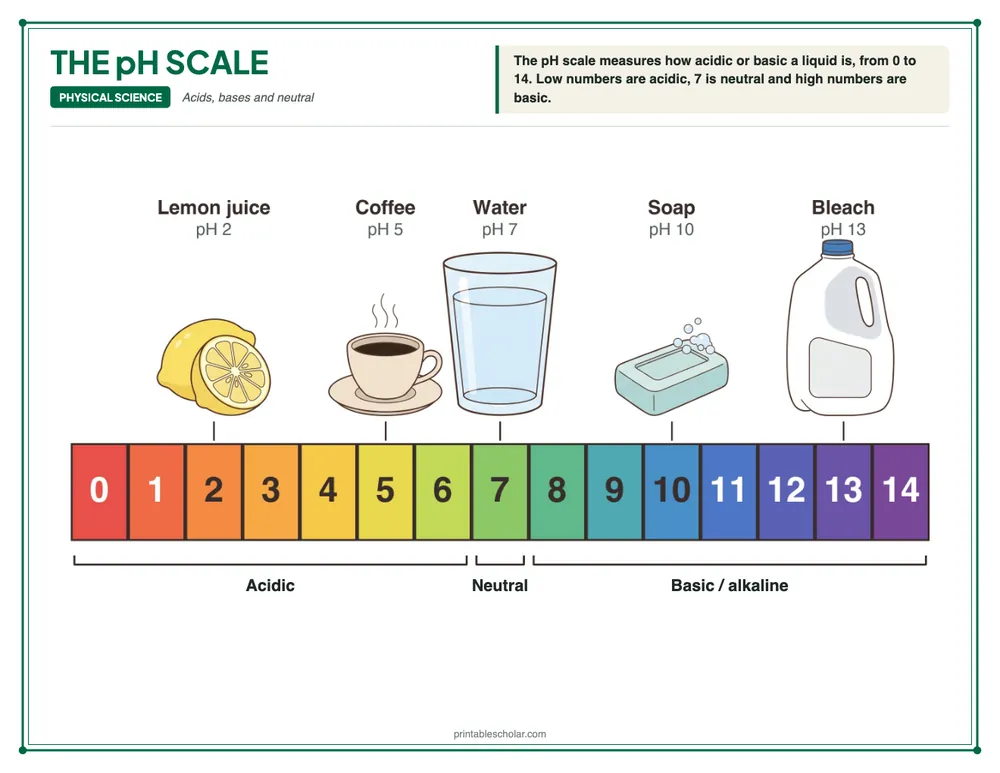
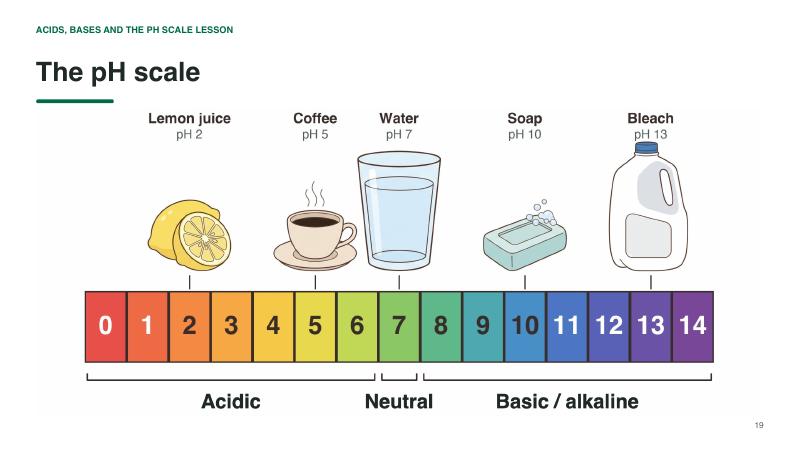
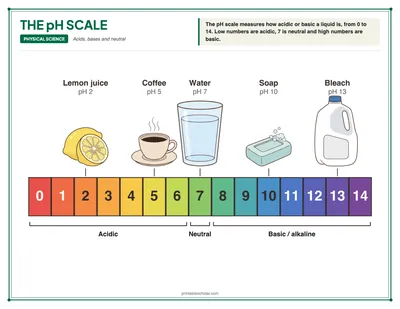
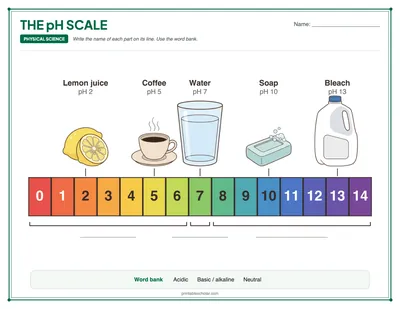
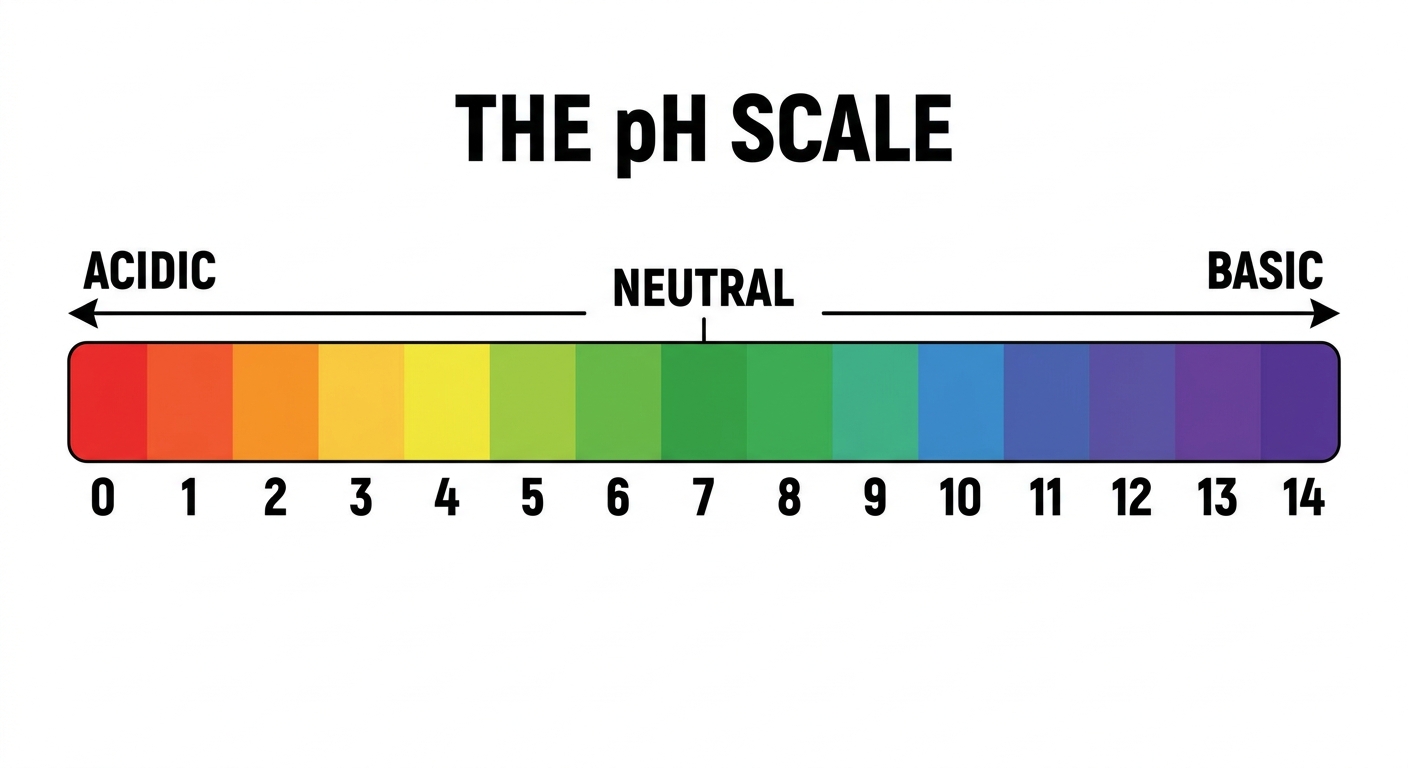
Free printable pH scale diagram — the 0 to 14 scale colored from acidic red to basic purple, with the neutral point at 7. Download a high-resolution PDF or PNG for Letter paper.
Part of the Acids, Bases and the pH Scale teaching pack for grades 6 to 8 (introductory level): 24 lesson slides and 8 printables with answer keys. The diagram and the blank one to label are free.
Teaching ideas for Acids, Bases and the pH Scale
Pick the ideas that suit your class, then follow the plan or use the sheets in any order.
- Line up the scale. Mark 0 to 14 along the floor or the board. Students hold cards for lemon juice, black coffee, pure water, soap and bleach and stand at the right numbers.
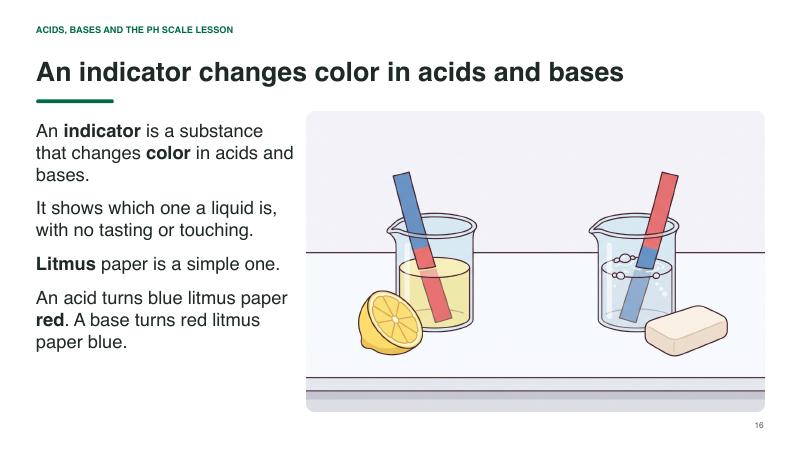
- Use cabbage juice. Soak chopped red cabbage in water at home and bring in the purple water. A little vinegar turns it pink. A little baking soda turns it blue or green.
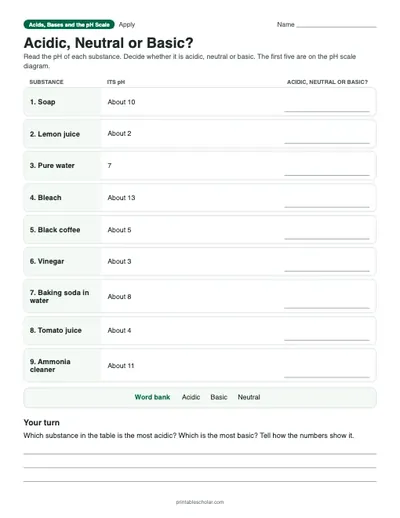
- Sort the cards. Write the nine substances from “Acidic, Neutral or Basic?” on cards. Groups sort them into acidic, neutral and basic piles.
A plan for the week
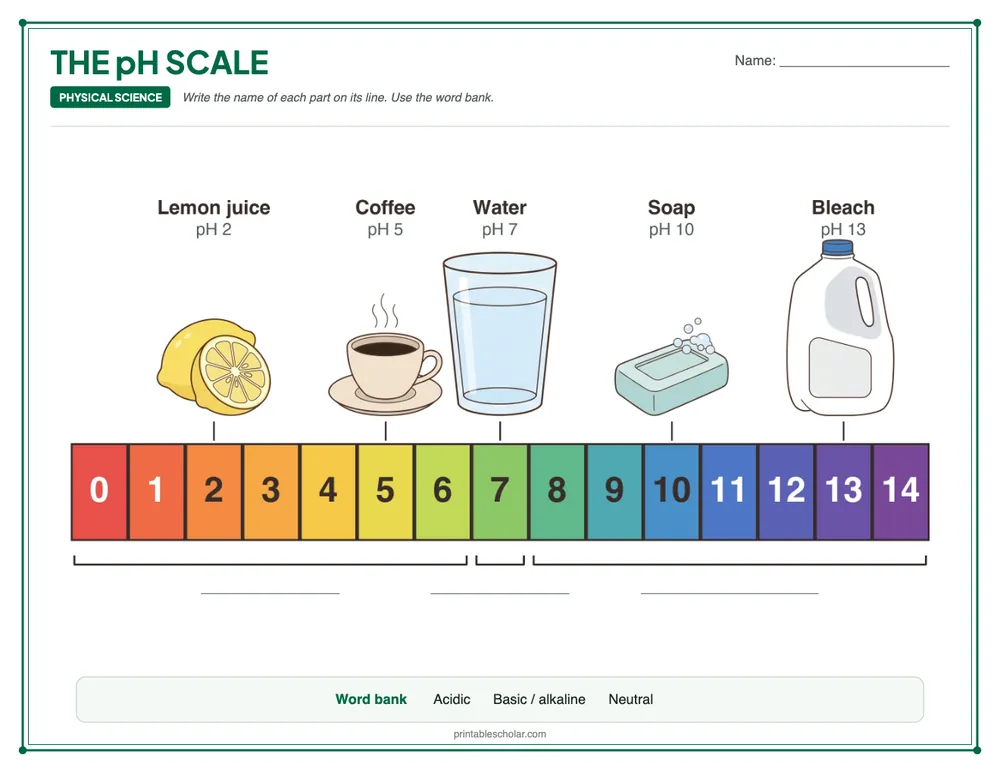
| Day 1 | Open with one of the ideas above. Teach the lesson with the slides while students fill in the guided notes. Then students label the blank diagram. | Lesson slides (PowerPoint) (in the pack) Acids, Bases and the pH Scale Guided Notes (in the pack) pH Scale Diagram Blank pH Scale |
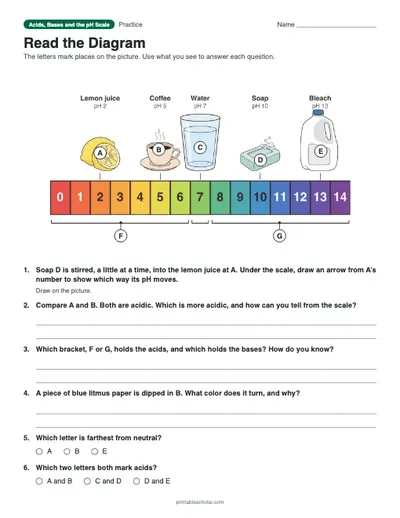
| Day 2 | Students read the pH scale on “Read the Diagram”: which liquid is more acidic, which way the pH moves when a base is added and what litmus paper would do. | Read the Diagram (in the pack) |
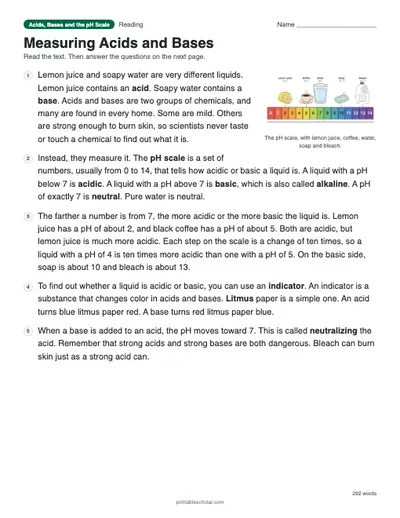
| Day 3 | Read “Measuring Acids and Bases” and answer the questions. | Measuring Acids and Bases (in the pack) |
| Day 4 | Students read the pH of nine everyday substances and decide whether each is acidic, neutral or basic. | Acidic, Neutral or Basic? (in the pack) |
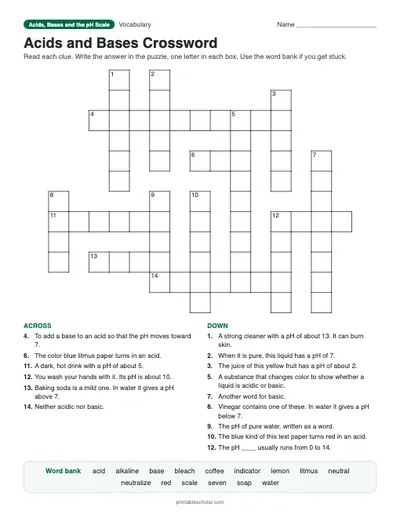
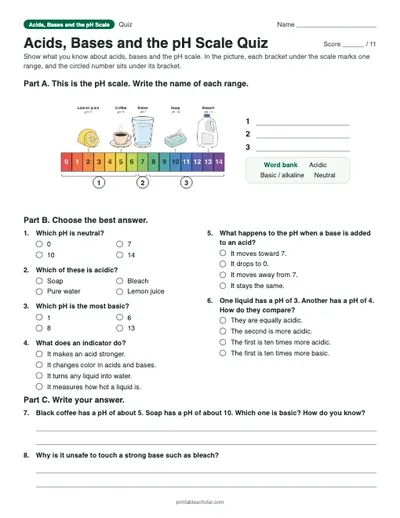
| Day 5 | Review with the crossword, then give the quiz. | Acids and Bases Crossword (in the pack) Acids, Bases and the pH Scale Quiz (in the pack) |
The sheets marked “in the pack” are in the Acids, Bases and the pH Scale teaching pack below.
Acids, Bases and the pH Scale teaching pack
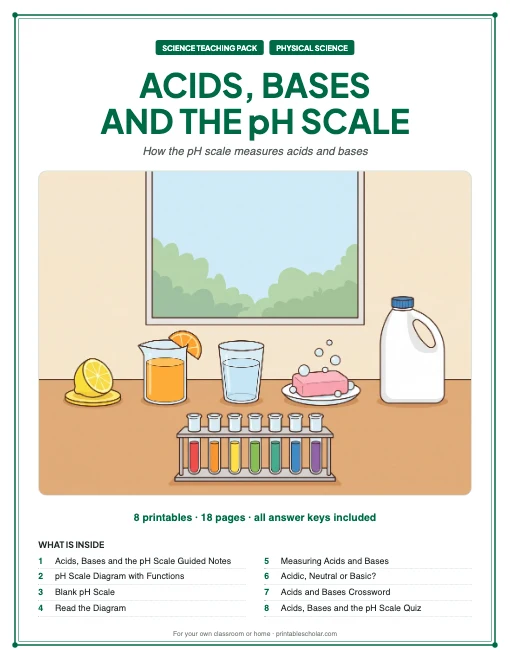
Teaching acids, bases and the pH scale? Here is a ready-to-teach lesson. 24 slides and 8 printables that cover the whole topic, from the guided notes to the quiz. Present the slides while students fill in the guided notes, then use the worksheets, crossword and quiz, with every answer key.
Free on this page: the diagram and the blank one to label, marked Download below. The whole pack is $7: 18 pages in one print-ready file, the 24 lesson slides, the practice sheets, the crossword, the quiz and every answer key.
OnlineThe pack also comes as an online lesson for Google Classroom: every part on screen for students, plus a self-grading Google Forms quiz.
One-time purchase. Instant download. Secure checkout by Stripe. Want to see a whole pack first? The Parts of an Atom pack is free.See all 18 packs in the bundle
- Cells
- Mitosis
- DNA
- Heredity and Punnett Squares
- Carbon Cycle and Greenhouse Effect
- The Nitrogen Cycle
- Excretory System
- Endocrine System
- Immune System
- Layers of the Skin
- Plate Tectonics and Earthquakes
- Life Cycle of a Star
- Parts of an Atom
- The Periodic Table
- Physical and Chemical Changes
- Balancing Chemical Equations
- Waves and the Electromagnetic Spectrum
- Acids, Bases and the pH Scale (this pack)
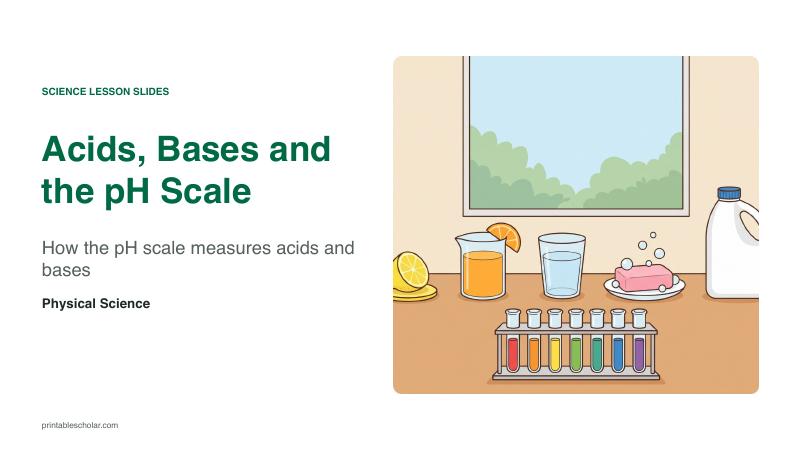
Teach Acids, Bases and the pH Scale with 24 ready-made slides
Open the PowerPoint and teach: an opening question, the parts one at a time on the diagram, quick checks and an exit question. Students fill in the guided notes sheet as you go.
Every slide comes with teacher notes: what to say, what to ask, and sample answers.
The slides (PowerPoint and a PDF copy) and the guided notes sheet come with the pack.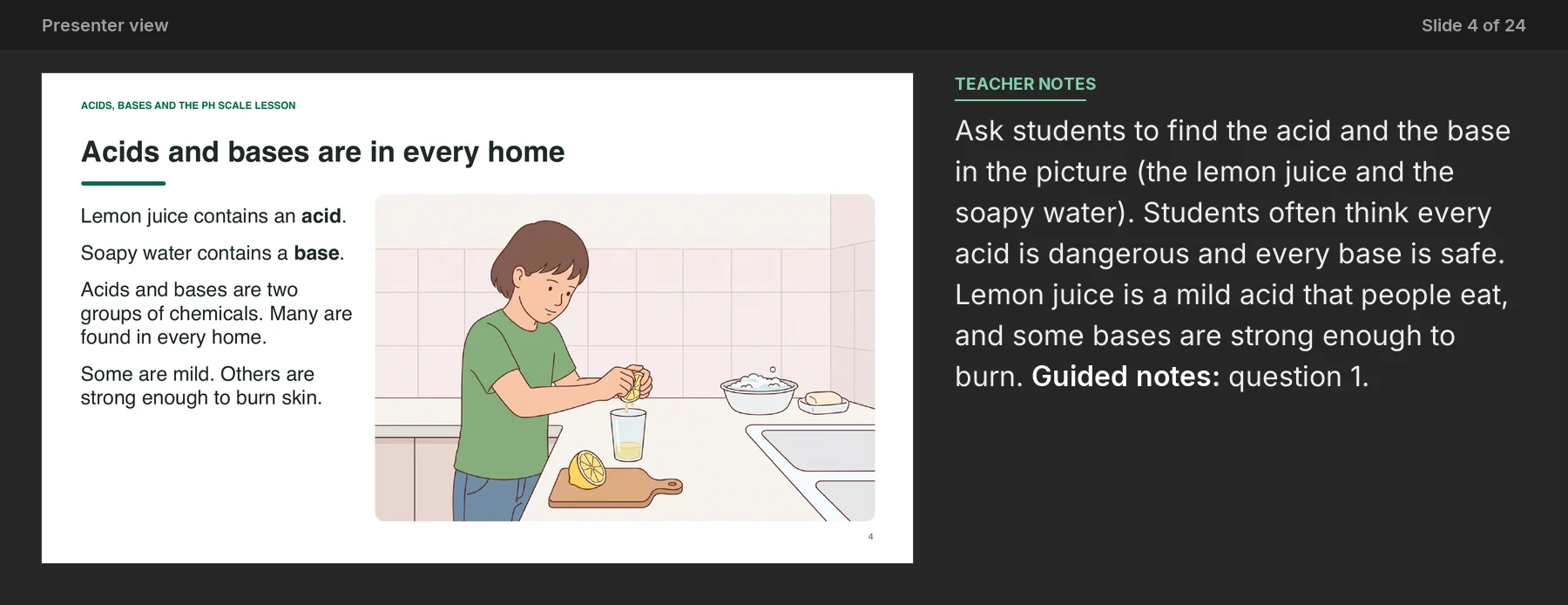
What is in the pack, in teaching order
 In the pack
1. TeachLesson Slides24 slides to present, with your notes for each one.In the $7 pack
 In the pack
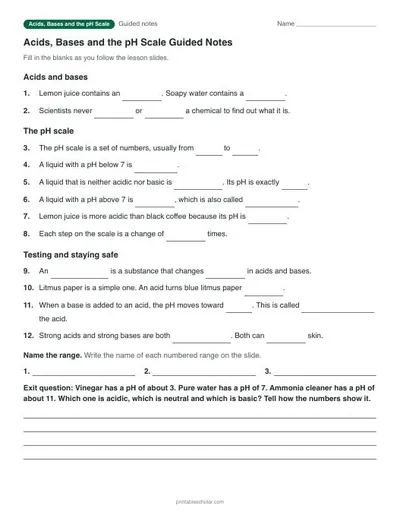
1. TeachAcids, Bases and the pH Scale Guided NotesStudents fill in the blanks as you present. With answer key.In the $7 pack
 Free
 Free
 In the pack
3. ReasonRead the DiagramRead the pH scale picture: tell which liquid is more acidic, which way the pH moves when a base is added, and what litmus paper would do.In the $7 pack
 In the pack
4. ReadMeasuring Acids and BasesA one-page text on acids, bases and how the pH scale measures them, with eight questions.In the $7 pack
 In the pack
5. ApplyAcidic, Neutral or Basic?Read the pH of nine everyday substances and decide whether each is acidic, neutral or basic.In the $7 pack
 In the pack
6. ReviewAcids and Bases CrosswordFifteen acid, base and pH words with clues and a word bank.In the $7 pack
 In the pack
7. CheckAcids, Bases and the pH Scale QuizLabel three ranges of the pH scale, six multiple choice and two written answers. Scored out of 11.In the $7 pack
Acids, Bases and the pH Scale worksheets, crossword and quiz
The Acids, Bases and the pH Scale teaching pack is 24 lesson slides (PowerPoint and PDF) and 8 printables with answer keys for grades 6 to 8 (introductory level), in the order you would teach them: the guided notes for the lesson slides, the labeled diagram and the blank one to label, then “Read the Diagram” (a worksheet), “Measuring Acids and Bases” (a reading passage), “Acidic, Neutral or Basic?” (a worksheet), a vocabulary crossword and a quiz.
The sheets are in a suggested teaching order: teach the lesson, have students label the blank diagram, then work through the practice sheets and finish with the quiz. Use them all over a week or pick the ones you need. The answer keys are together at the back.
The diagram and the blank one to label are free to download on this page. The other sheets come with the pack ($7), which is also in the Middle School Science bundle (grades 5 to 10).
Reading the pH scale
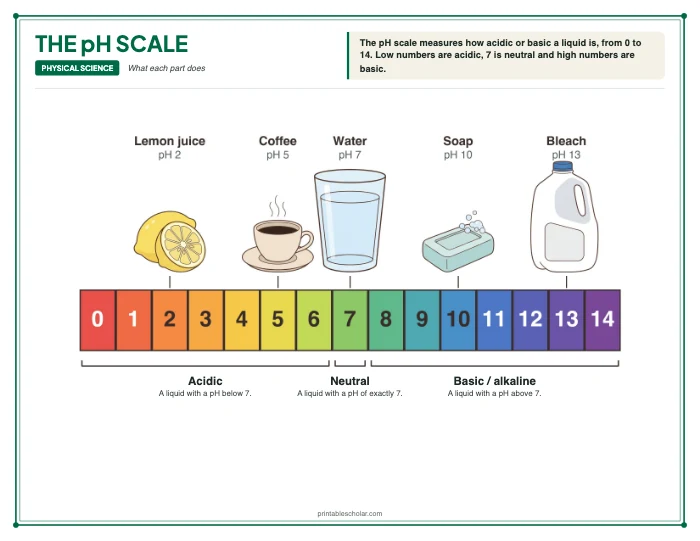
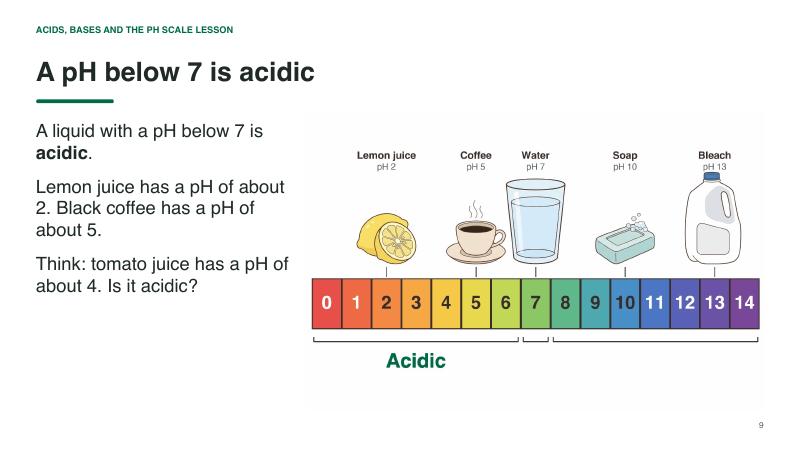
The pH scale measures how acidic or basic a liquid is, from 0 to 14. Low numbers are acidic, 7 is neutral, and high numbers are basic (also called alkaline). Here is what happens at each labeled part of the diagram:
| Range | What it does | Why it matters |
|---|---|---|
| Acidic | pH 0 to 6. Acids such as lemon juice, vinegar and stomach acid. The lower the number, the stronger the acid. | Your stomach relies on a very strong acid (around pH 2) to break down food and kill harmful bacteria — without it, digestion would stall and dangerous microbes could survive. Acids in everyday foods like citrus fruit and yogurt also give them their sharp, tangy flavor. |
| Neutral | pH 7. Neither acidic nor basic. Pure water is neutral. | Pure water sits at the exact midpoint because it carries no extra acid or base — which is exactly why your body uses it to safely transport nutrients and waste without triggering unwanted reactions. If your blood drifted even slightly away from near-neutral, your cells would start to shut down. |
| Basic / alkaline | pH 8 to 14. Bases such as baking soda, soap and bleach. The higher the number, the stronger the base. | Strong bases like bleach work by chemically breaking apart the molecules in grease and germs, which is why they're powerful cleaners — but also why they're dangerous to touch or swallow. Even a mild base like baking soda reacts with acids in cooking, releasing bubbles of carbon dioxide that make cakes rise. |
How to print
Choose Download PDF for a ready-to-print file that fits US Letter paper (8.5 × 11") in landscape, or Download PNG for the high-resolution image.
Frequently asked questions
What does the pH scale measure?
It measures how acidic or basic a liquid is, on a scale from 0 to 14. Below 7 is acidic, 7 is neutral, and above 7 is basic (alkaline).
What is a neutral pH?
A pH of 7 is neutral — neither acidic nor basic. Pure water has a pH of 7.
What paper size should I print this on?
The diagram is sized for standard US Letter paper (8.5 × 11") in landscape orientation. Use "Download PDF" for a print-ready file that fits the page automatically.
Are there Acids, Bases and the pH Scale worksheets to go with the diagram?
Yes. The Acids, Bases and the pH Scale teaching pack, for grades 6 to 8 (introductory level), has 24 lesson slides and 8 printables with answer keys: the guided notes for the lesson slides, the labeled diagram and the blank one to label, then “Read the Diagram” (a worksheet), “Measuring Acids and Bases” (a reading passage), “Acidic, Neutral or Basic?” (a worksheet), a vocabulary crossword and a quiz. The diagram and the blank one to label are free to download on this page. The other sheets come with the pack ($7), which is also in the Middle School Science bundle (grades 5 to 10).