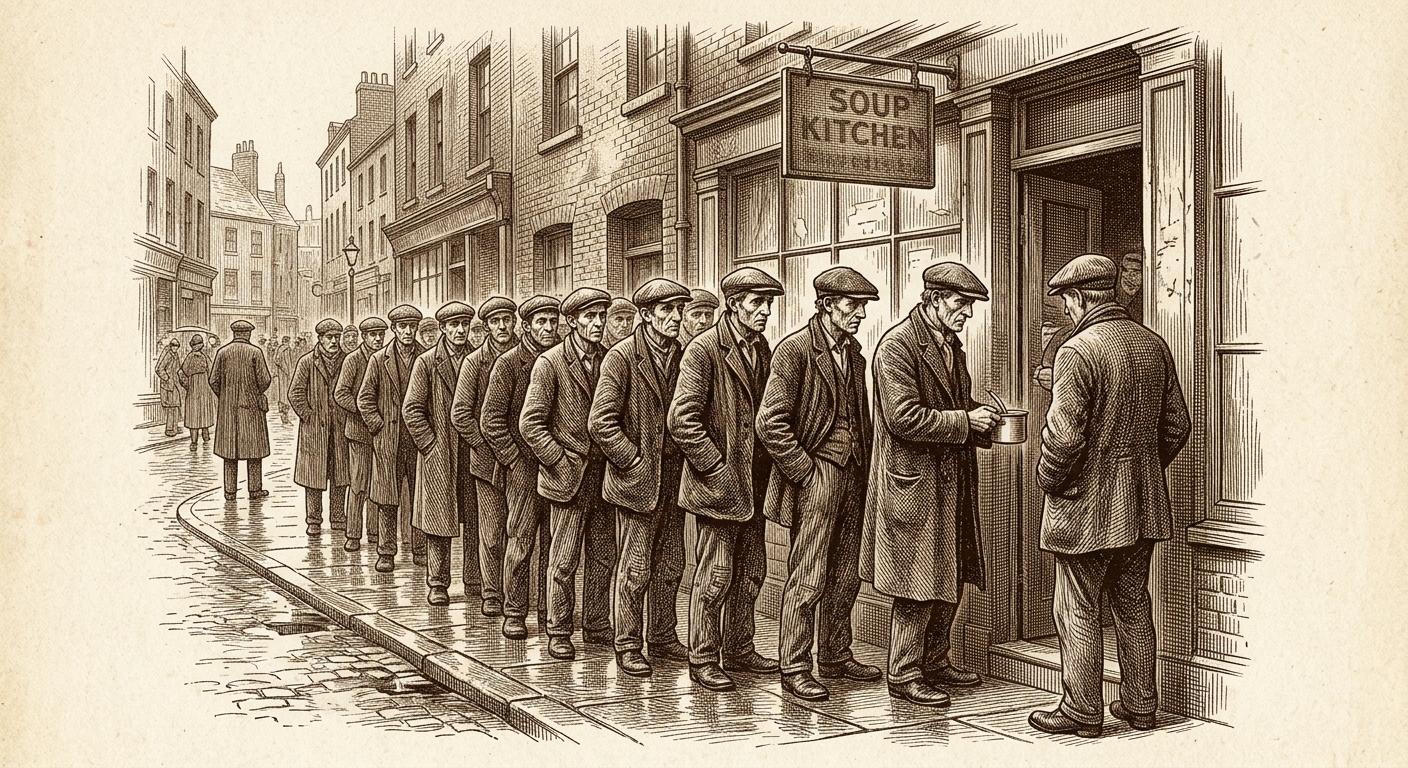
Great Depression Timeline
The Great Depression was the worst economic crisis in American history, beginning with the 1929 stock market crash and lasting through the 1930s.
In October 1929 the American stock market collapsed, wiping out billions of dollars of wealth almost overnight. Banks failed, businesses closed, and by 1933 one in four American workers had no job. Families lost their savings, their farms, and their homes. On the Great Plains, a severe drought turned fields to dust and forced thousands of families to pack up everything they owned and head west. President Franklin Roosevelt came to power in 1933 promising a New Deal — a sweeping program of government relief and reform — that put millions back to work and created programs still with us today. But it took the economic surge of World War II to finally end the Depression entirely.
- 1929
The Stock Market Crash
On October 29 — Black Tuesday — the US stock market collapses, wiping out billions of dollars of wealth in a single day.
Why it mattered: The crash destroyed the savings of millions of investors and triggered a chain reaction of bank failures and business closures that plunged the country into depression.
- 1930
The Dust Bowl Begins
Severe drought turns the Great Plains into a wasteland of blinding dust storms, destroying farms and forcing families to abandon their land.
Why it mattered: Thousands of farm families lost everything and headed west — their desperate journeys became symbols of suffering and resilience during the Depression.
- 1930
Smoot-Hawley Tariff
Congress raises tariffs on imported goods to protect American industry.
Why it mattered: The tariff backfired: foreign countries retaliated with their own tariffs, choking off world trade and deepening the depression globally.
- 1931
Bank Failures Spread
Thousands of American banks fail as desperate customers try to withdraw their savings all at once.
Why it mattered: When banks collapsed, people lost everything they had saved — there was no government insurance on deposits, and the failures made the depression far worse.
- 1932
Hoovervilles
Unemployed Americans build makeshift shantytowns of cardboard and scrap wood on the edges of cities, mockingly named Hoovervilles after President Herbert Hoover.
Why it mattered: The shantytowns became a visible symbol of how badly the government had failed ordinary Americans.
- 1932
Franklin Roosevelt Elected
Franklin D. Roosevelt wins the presidential election in a landslide, promising Americans a New Deal.
Why it mattered: Roosevelt's election gave a desperate country hope and set the stage for the largest peacetime expansion of the federal government in American history.
- 1933
The New Deal Begins
President Roosevelt launches a sweeping program of government relief, economic recovery, and financial reform in his first hundred days in office.
Why it mattered: The New Deal put millions back to work through programs like the CCC and WPA, and created lasting institutions including the SEC, FDIC, and Social Security.
- 1933
Bank Holiday and the FDIC
Roosevelt closes all banks for four days to stop the panic, then signs a law creating the Federal Deposit Insurance Corporation.
Why it mattered: For the first time, Americans' bank deposits were guaranteed by the government — ending the devastating bank runs that had wiped out savings across the country.
- 1935
Social Security Act
Congress creates a national system of retirement benefits for older workers and assistance for the unemployed and disabled.
Why it mattered: Social Security became the most enduring program of the New Deal, providing a financial safety net that remains a cornerstone of American life today.
- 1939
War Ends the Depression
As the United States begins preparing for World War II, massive government defense spending sends unemployment plummeting.
Why it mattered: The military buildup did what the New Deal alone could not — it finally returned unemployment to pre-Depression levels and ended the decade-long crisis.
Great Depression Quiz
Check what you learned — read on screen, or use the Printable quiz button above for a worksheet version with an answer key.
What happened on Black Tuesday, October 29, 1929?
- A) The Dust Bowl began
- B) President Roosevelt was elected
- C) The stock market collapsed, wiping out billions in wealth
- D) The FDIC was created
What were Hoovervilles?
- A) New Deal government relief offices
- B) Makeshift shantytowns of unemployed Americans named after President Hoover
- C) Dust Bowl refugee camps in California
- D) Banks closed during the Depression
What was the Dust Bowl?
- A) A stock market term for a financial crash
- B) A severe drought that turned Great Plains farms into dusty wastelands
- C) A federal program to feed unemployed workers
- D) Breadlines that formed outside relief offices
What was the New Deal?
- A) A tariff to protect American industry
- B) A bank rescue plan only
- C) Roosevelt's sweeping program of relief, recovery, and financial reform
- D) The peace treaty that ended the Depression
What did the FDIC do?
- A) Put unemployed Americans to work on public projects
- B) Raised tariffs on imported goods
- C) Insured Americans' bank deposits against bank failures
- D) Created the Social Security retirement system
What did the Social Security Act of 1935 create?
- A) A system of retirement and unemployment benefits
- B) The Federal Deposit Insurance Corporation
- C) A program to build highways and bridges
- D) A new tariff on imported goods
Why did the Smoot-Hawley Tariff make the Depression worse?
- A) It caused the stock market to crash
- B) Other countries retaliated with tariffs of their own, choking off world trade
- C) It closed all American banks
- D) It raised taxes on farmers during the Dust Bowl
What finally ended the Great Depression?
- A) The New Deal programs alone
- B) The Social Security Act
- C) Roosevelt's re-election in 1936
- D) Massive government spending to prepare for World War II
Show answer key
1. C · 2. B · 3. B · 4. C · 5. C · 6. A · 7. B · 8. D
Related timelines
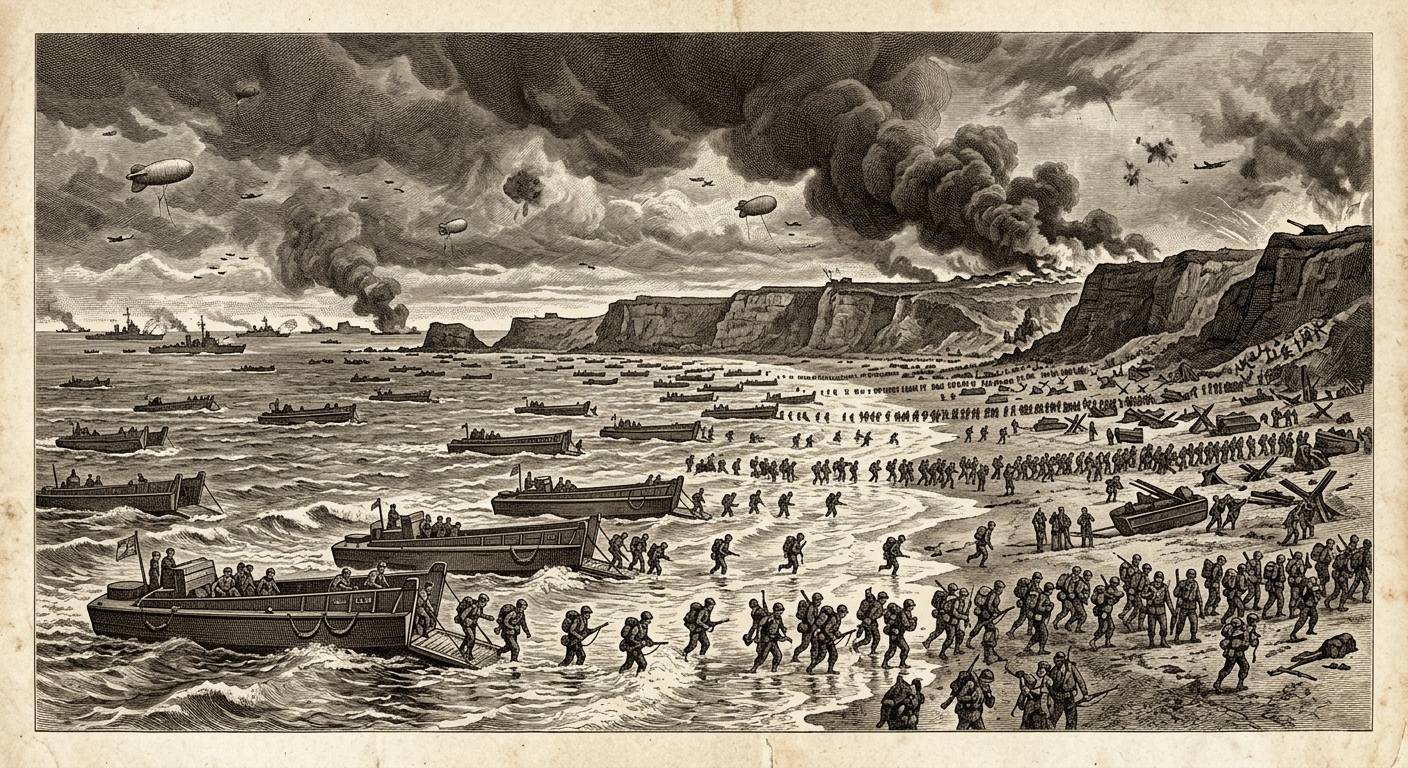 World War II Timeline — World War II was the largest war in history, fought across Europe, Asia, and the Pacific. The United States entered the war in December 1941 after Japan attacked the US naval base at Pearl Harbor. Open →
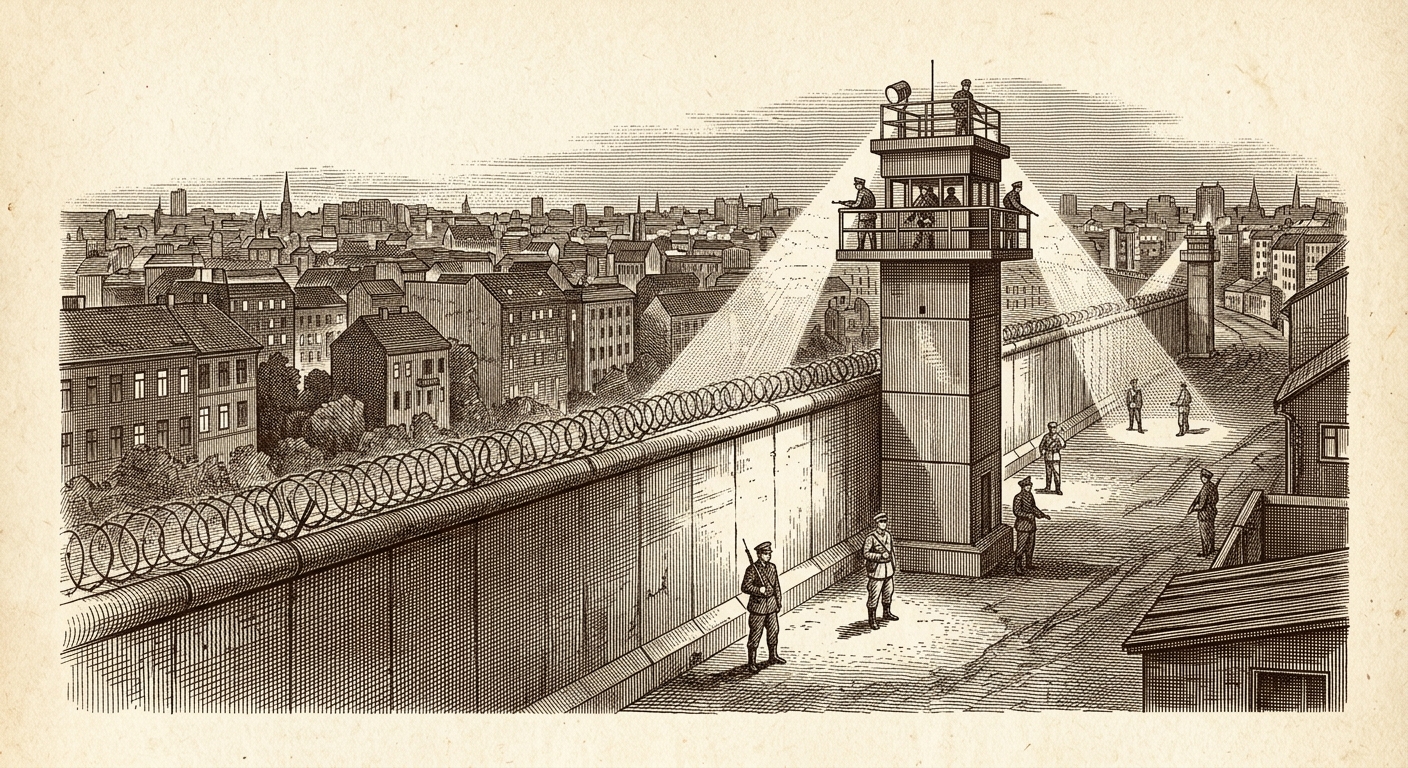 Cold War Timeline — The Cold War was a decades-long rivalry between the United States and the Soviet Union, fought through arms races, proxy wars, and the constant threat of nuclear destruction. Open →
How to print
Choose Download PDF for a ready-to-print timeline that fits US Letter paper (8.5 × 11"). The blank fill-in version keeps the dates and gives students empty lines to write each event — great for review and quizzes.
Frequently asked questions
What caused the Great Depression?
The Great Depression had several causes that reinforced each other: the 1929 stock market crash wiped out investor wealth, thousands of bank failures destroyed savings, high tariffs choked off international trade, and severe drought devastated farming across the Great Plains. These problems fed on each other, turning a financial panic into a decade-long economic collapse.
How did the New Deal help during the Great Depression?
President Roosevelt's New Deal created jobs through public works programs, regulated banks and the stock market, provided relief for the unemployed, and established lasting programs like Social Security and the FDIC. It restored confidence and relieved enormous suffering, though full economic recovery did not come until the government spending of World War II.
What paper size should I print this on?
The timeline is sized for standard US Letter paper (8.5 × 11 in.). The Download PDF button gives you a print-ready file that fits the page automatically.