Cold War Timeline
The Cold War was a decades-long rivalry between the United States and the Soviet Union, fought through arms races, proxy wars, and the constant threat of nuclear destruction.
After World War II ended in 1945, the United States and the Soviet Union — once allies against Hitler — quickly became rivals. They disagreed about almost everything: democracy vs. communism, free markets vs. state control, and which system should spread across the world. The tension was called cold because the two superpowers never fought each other directly, but they came terrifyingly close during the Cuban Missile Crisis of 1962. For more than forty years, the world lived under the shadow of nuclear weapons, with both sides capable of destroying human civilization. The Cold War finally ended in 1991 when the Soviet Union collapsed under the weight of its own failures.
- 1947
The Cold War Begins
The United States and Soviet Union, wartime allies against Hitler, become rivals in a global struggle between democracy and communism.
Why it mattered: The Cold War would shape world politics for more than four decades — a constant standoff between two superpowers, each with enough nuclear weapons to destroy civilization.
- 1949
Soviet Union Tests the Atom Bomb
The Soviet Union successfully tests its first nuclear weapon, ending America's monopoly on the atomic bomb.
Why it mattered: Now both superpowers could destroy each other — the era of nuclear deterrence, and the constant threat of annihilation, had begun.
- 1950–53
The United States and its allies fight to defend South Korea from a communist North Korean invasion backed by China.
Why it mattered: Korea became the first hot war of the Cold War, showing that superpower rivalry could explode into real fighting at any time — and ending in a divided Korea that still exists today.
- 1957
Sputnik Shocks America
The Soviet Union launches the world's first artificial satellite, Sputnik, shocking Americans who feared the Soviets had pulled ahead in technology.
Why it mattered: Sputnik set off a space race and a massive US investment in science education — and ultimately led to the American moon landing.
- 1961
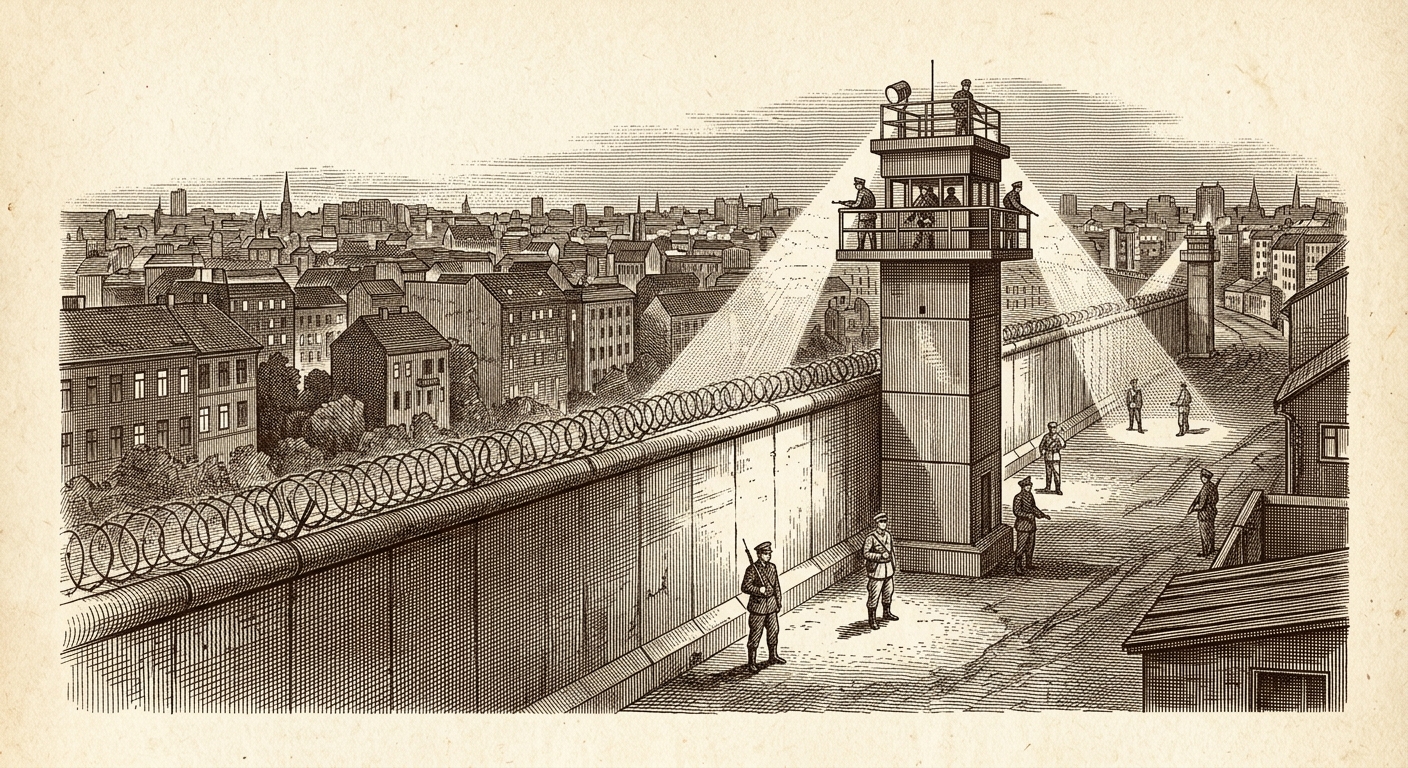
Berlin Wall Built
East Germany builds a concrete wall dividing Berlin overnight, trapping its citizens in the communist east.
Why it mattered: The Berlin Wall became the defining symbol of the Iron Curtain — the physical divide between free Western Europe and communist Eastern Europe.
- 1962
Cuban Missile Crisis
The US discovers Soviet nuclear missiles in Cuba; for thirteen days the world stands on the brink of nuclear war.
Why it mattered: The crisis was the most dangerous moment of the Cold War — it ended when the Soviets agreed to remove the missiles, and both sides pulled back from the edge.
- 1965–73
The US commits hundreds of thousands of troops to Vietnam to prevent a communist takeover of South Vietnam.
Why it mattered: The deeply divisive war ended in US withdrawal and communist victory, shaking American confidence and reshaping public attitudes toward military intervention.
- 1969
Moon Landing
American astronauts Neil Armstrong and Buzz Aldrin land on the Moon on July 20.
Why it mattered: The moon landing was the defining triumph of the Space Race — the United States had clearly outpaced the Soviet Union in the contest for technological prestige.
- 1979–89
Soviet War in Afghanistan
The Soviet Union invades Afghanistan and gets stuck in a brutal guerrilla war that drains its military and economy for a decade.
Why it mattered: The failed war — sometimes called the Soviet Union's Vietnam — accelerated the economic and political collapse of the USSR.
- 1991
Soviet Union Collapses
The Soviet Union officially dissolves on December 25, 1991, ending the Cold War.
Why it mattered: The peaceful collapse of the USSR ended 45 years of Cold War tension; the United States emerged as the world's sole superpower.
Cold War Quiz
Check what you learned — read on screen, or use the Printable quiz button above for a worksheet version with an answer key.
What two countries were the main rivals in the Cold War?
- A) Germany and Japan
- B) Britain and France
- C) The United States and the Soviet Union
- D) China and the United States
Why was the Soviet atomic bomb test of 1949 significant?
- A) It started the Korean War
- B) It ended America's nuclear monopoly, beginning the era of mutual nuclear deterrence
- C) It caused the Berlin Wall to be built
- D) It launched the Space Race
What did the Berlin Wall divide?
- A) North and South Korea
- B) The United States and Cuba
- C) East and West Berlin, and symbolically all of communist and free Europe
- D) The Soviet Union and Western Europe
What was the Cuban Missile Crisis?
- A) The US invasion of Cuba
- B) A 13-day standoff after the US discovered Soviet nuclear missiles in Cuba
- C) Cuba's decision to join the Soviet Union
- D) A naval battle in the Caribbean
What did the launch of Sputnik in 1957 trigger?
- A) The Korean War
- B) The Cuban Missile Crisis
- C) A space race and a massive US investment in science education
- D) The construction of the Berlin Wall
What happened on July 20, 1969?
- A) The Soviet Union launched Sputnik
- B) The Berlin Wall fell
- C) American astronauts landed on the Moon
- D) The Cuban Missile Crisis ended
How did the Soviet war in Afghanistan contribute to the Cold War ending?
- A) It gave the Soviets a military victory that intimidated the West
- B) The brutal failed war drained Soviet resources and accelerated the collapse of the USSR
- C) It caused the US to withdraw from Vietnam
- D) It led to the building of the Berlin Wall
When did the Cold War officially end?
- A) 1969, when the US landed on the Moon
- B) 1973, when the Vietnam War ended
- C) 1989, when the Berlin Wall fell
- D) 1991, when the Soviet Union collapsed
Show answer key
1. C · 2. B · 3. C · 4. B · 5. C · 6. C · 7. B · 8. D
Related timelines
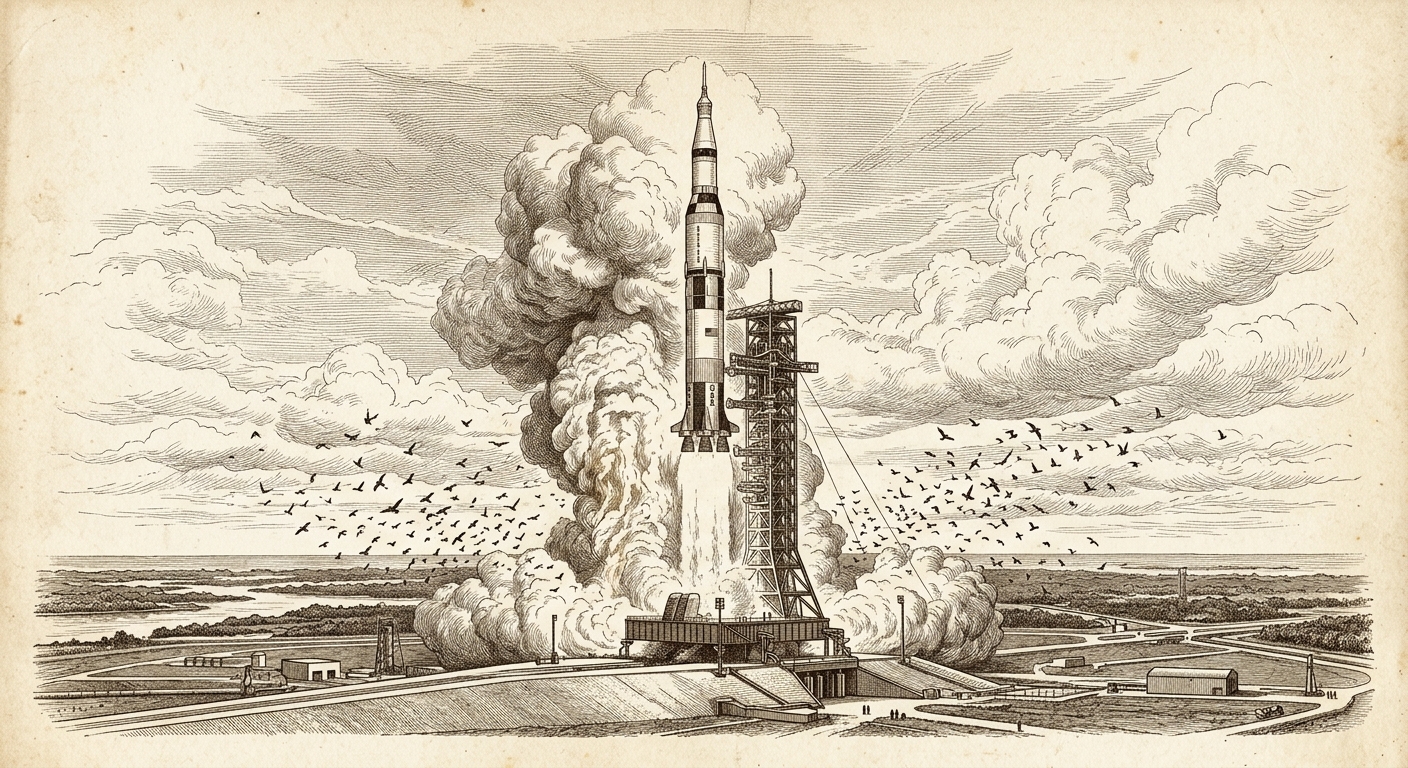 Space Race Timeline — The Space Race was a Cold War competition between the United States and the Soviet Union to achieve milestones in space exploration, culminating in the Apollo 11 moon landing. Open →
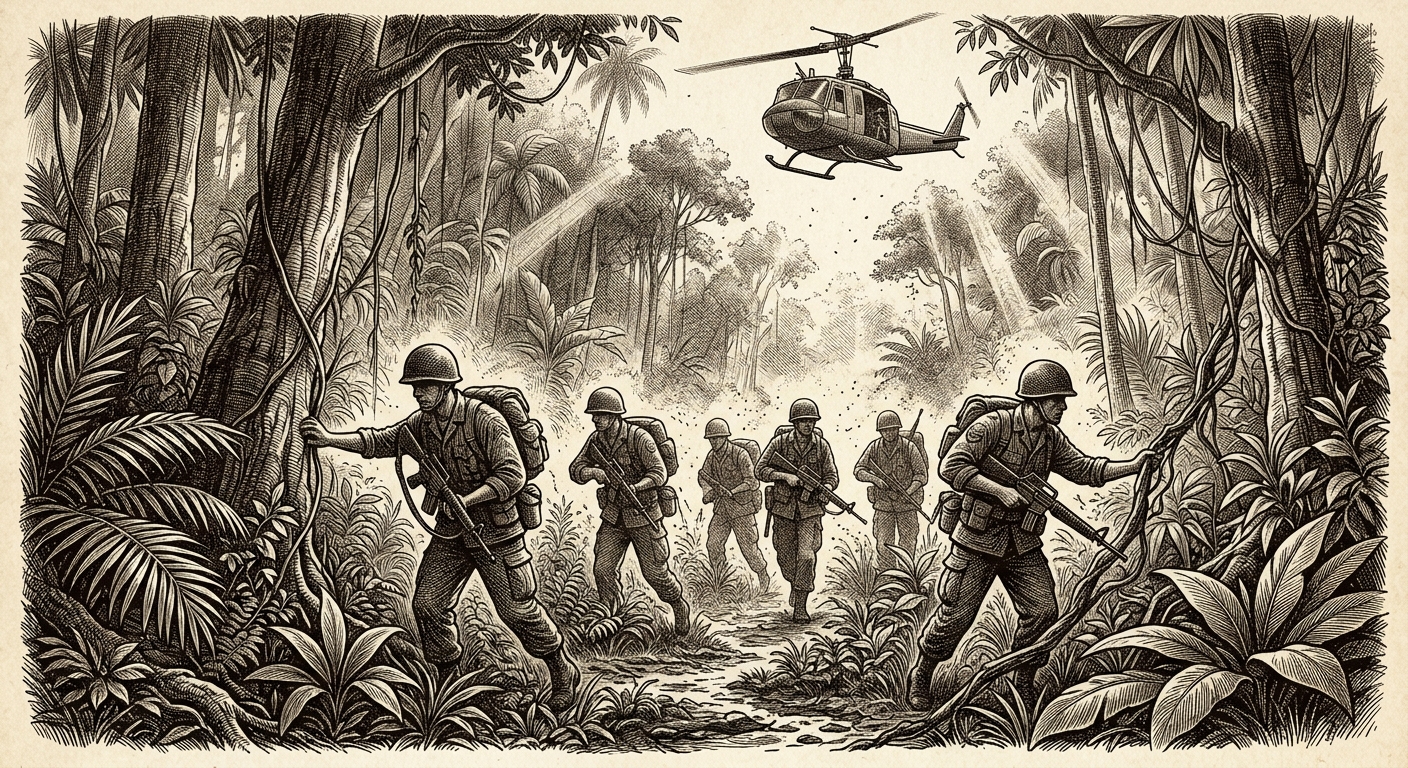 Vietnam War Timeline — The Vietnam War was a long and deeply divisive conflict in which the United States spent two decades trying to prevent a communist takeover of South Vietnam — and ultimately failed. Open →
How to print
Choose Download PDF for a ready-to-print timeline that fits US Letter paper (8.5 × 11"). The blank fill-in version keeps the dates and gives students empty lines to write each event — great for review and quizzes.
Frequently asked questions
What was the Cold War?
The Cold War was a period of intense rivalry between the United States and the Soviet Union lasting from roughly 1947 to 1991. It was called cold because the two superpowers never fought each other directly, though they came dangerously close during the Cuban Missile Crisis. Instead they competed in arms races and the space program, and by supporting opposing sides in conflicts around the world.
Why did the Cold War end?
The Soviet Union collapsed in 1991 after decades of economic stagnation, military overstretch (especially in Afghanistan), and growing pressure from citizens in Soviet-controlled countries demanding freedom. Reforms introduced by Soviet leader Mikhail Gorbachev in the 1980s accelerated the process, and by December 25, 1991, the USSR had ceased to exist.
What paper size should I print this on?
The timeline is sized for standard US Letter paper (8.5 × 11 in.). The Download PDF button gives you a print-ready file that fits the page automatically.