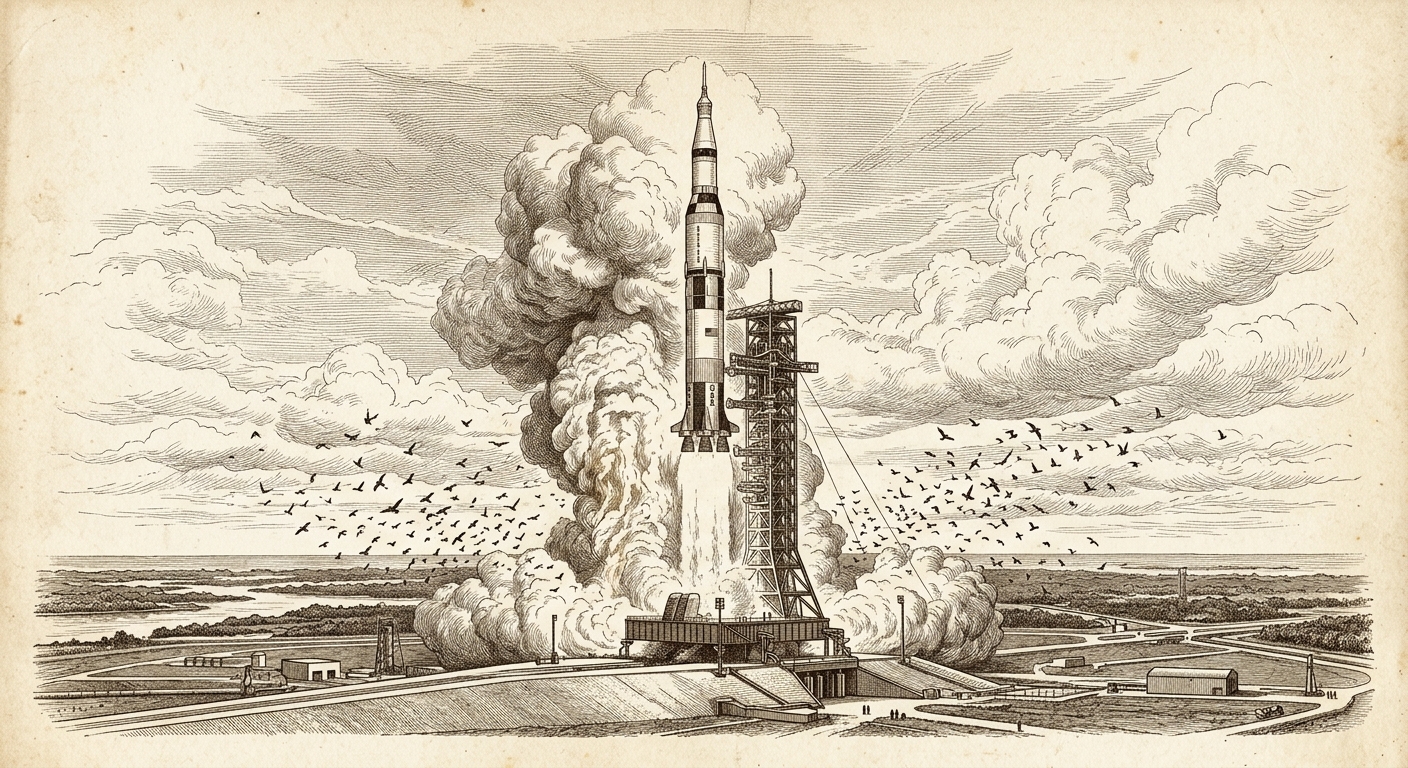
Space Race Timeline
The Space Race was a Cold War competition between the United States and the Soviet Union to achieve milestones in space exploration, culminating in the Apollo 11 moon landing.
On October 4, 1957, the Soviet Union launched a small metal sphere called Sputnik into orbit around the Earth — and Americans were stunned. If the Soviets could put a satellite in space, could they also deliver a nuclear weapon to any city in the world? The Space Race was born, fueled not just by scientific curiosity but by Cold War fear and national pride. The Soviets struck first again and again — the first animal in space, the first human in orbit. But President Kennedy set a goal that would prove decisive: put Americans on the Moon by the end of the decade. On July 20, 1969, Neil Armstrong stepped onto the lunar surface, and the United States had won.
- 1957
Sputnik — The First Satellite
The Soviet Union launches Sputnik, the world's first artificial satellite, on October 4.
Why it mattered: Sputnik shocked the United States — it proved the Soviets had rockets powerful enough to reach space, and possibly to deliver nuclear weapons anywhere on Earth.
- 1957
Laika in Space
The Soviet Union sends a dog named Laika into orbit aboard Sputnik 2, proving a living creature can survive a rocket launch.
Why it mattered: Laika's flight showed that living organisms could survive spaceflight — a crucial step toward sending humans into space.
- 1958
NASA Founded
The United States creates the National Aeronautics and Space Administration to lead its space program.
Why it mattered: NASA gave the US a dedicated agency to compete with the Soviet program — it became one of the greatest scientific organizations in history.
- 1961
Gagarin — First Human in Space
Soviet cosmonaut Yuri Gagarin completes one orbit of Earth on April 12, becoming the first human being in space.
Why it mattered: Gagarin's flight stunned the world — the Soviets had pulled ahead again, and President Kennedy responded by committing the US to landing on the Moon.
- 1961
Kennedy's Moon Pledge
President John F. Kennedy pledges before Congress that the United States will land a man on the Moon and return him safely before the end of the decade.
Why it mattered: Kennedy's bold commitment focused the entire US space program on a single goal — and gave NASA the funding, urgency, and national will to achieve it.
- 1962
John Glenn Orbits Earth
Astronaut John Glenn becomes the first American to orbit the Earth, completing three orbits on February 20.
Why it mattered: Glenn's flight gave America its own orbital hero and demonstrated that the US was closing the gap with the Soviet space program.
- 1965
First Spacewalk
Soviet cosmonaut Alexei Leonov becomes the first person to walk in space, floating outside his spacecraft for twelve minutes.
Why it mattered: The spacewalk proved that humans could work outside a spacecraft — an essential capability for any future lunar mission.
- 1967
Apollo 1 Fire
A fire during a launch rehearsal kills three Apollo astronauts — Gus Grissom, Ed White, and Roger Chaffee — and grounds the program for 18 months.
Why it mattered: The tragedy forced NASA to redesign the Apollo spacecraft, adding critical safety improvements that ultimately made the Moon landing possible.
- 1968
Apollo 8 Orbits the Moon
Astronauts Frank Borman, James Lovell, and William Anders orbit the Moon on Christmas Eve, broadcasting a reading from Genesis watched by millions.
Why it mattered: Apollo 8 showed humans could reach the Moon and return safely — and produced the iconic Earthrise photograph, one of the most influential images ever taken.
- 1969
Moon Landing
Neil Armstrong and Buzz Aldrin land on the Moon on July 20; Armstrong becomes the first person to walk on the lunar surface.
Why it mattered: The Moon landing was one of humanity's greatest achievements — the United States had won the Space Race, fulfilling Kennedy's pledge with five months to spare.
Space Race Quiz
Check what you learned — read on screen, or use the Printable quiz button above for a worksheet version with an answer key.
What was Sputnik?
- A) The first American satellite
- B) The first human-crewed spacecraft
- C) The first artificial satellite, launched by the Soviet Union in 1957
- D) A Soviet spy plane shot down over the US
Why did the United States create NASA in 1958?
- A) To respond to Sputnik by creating a dedicated space program agency
- B) To train military pilots for combat missions in space
- C) To build nuclear missiles to counter the Soviet threat
- D) To study the long-term effects of space travel on animals
Who was Yuri Gagarin?
- A) The first American to orbit the Earth
- B) The Soviet cosmonaut who became the first human being in space
- C) The US astronaut who first walked on the Moon
- D) The Soviet scientist who designed Sputnik
What did President Kennedy pledge in 1961?
- A) That the US would build more nuclear weapons than the Soviets
- B) That the US would launch a satellite before the Soviet Union
- C) That the US would land a man on the Moon and return him safely before the end of the decade
- D) That the US would create NASA to run the space program
Who was the first American to orbit the Earth?
- A) Neil Armstrong
- B) Buzz Aldrin
- C) Gus Grissom
- D) John Glenn
What happened during the Apollo 1 fire in 1967?
- A) Three astronauts were killed in a launch rehearsal fire, grounding the program for 18 months
- B) The first American satellite was destroyed on launch
- C) Neil Armstrong's first Moon landing attempt failed
- D) A Soviet saboteur destroyed an American rocket
What was significant about Apollo 8 in December 1968?
- A) It landed the first humans on the Moon
- B) It was the first crewed spacecraft to orbit the Moon, producing the Earthrise photograph
- C) It carried the first American to orbit the Earth
- D) It was the first Apollo flight after the fire
Who were the three astronauts on Apollo 11?
- A) John Glenn, Buzz Aldrin, and Michael Collins
- B) Neil Armstrong, Buzz Aldrin, and Michael Collins
- C) Yuri Gagarin, Neil Armstrong, and John Glenn
- D) Gus Grissom, Ed White, and Roger Chaffee
Show answer key
1. C · 2. A · 3. B · 4. C · 5. D · 6. A · 7. B · 8. B
Related timelines
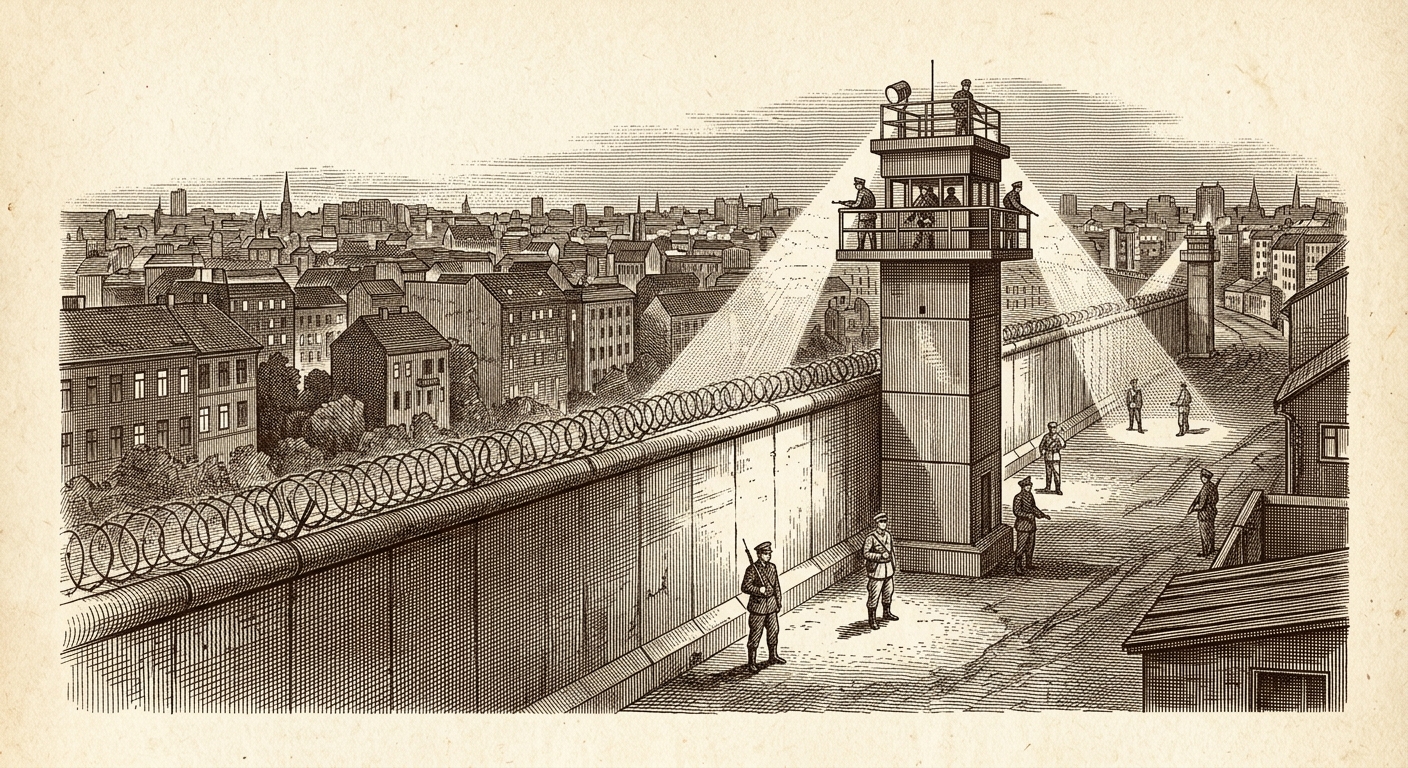 Cold War Timeline — The Cold War was a decades-long rivalry between the United States and the Soviet Union, fought through arms races, proxy wars, and the constant threat of nuclear destruction. Open →
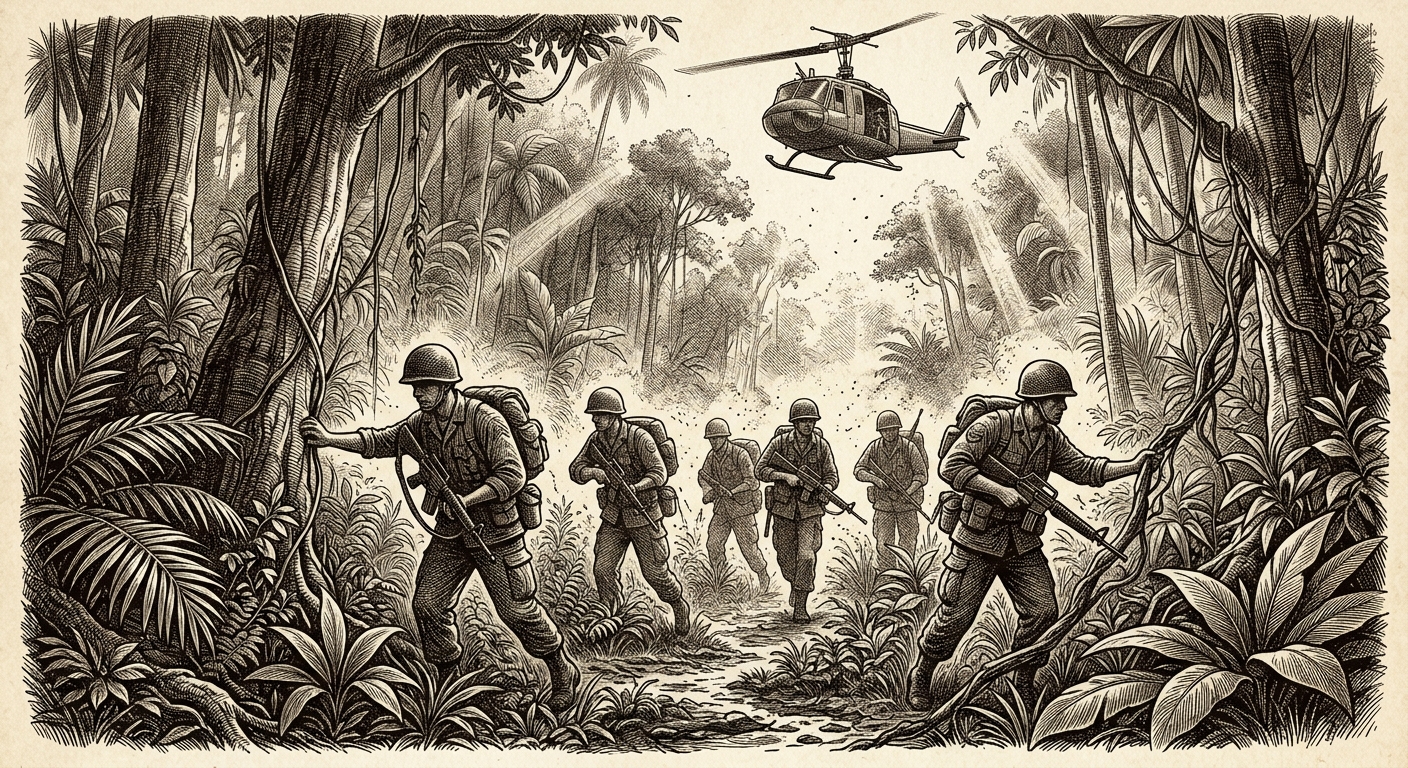 Vietnam War Timeline — The Vietnam War was a long and deeply divisive conflict in which the United States spent two decades trying to prevent a communist takeover of South Vietnam — and ultimately failed. Open →
How to print
Choose Download PDF for a ready-to-print timeline that fits US Letter paper (8.5 × 11"). The blank fill-in version keeps the dates and gives students empty lines to write each event — great for review and quizzes.
Frequently asked questions
What was the Space Race?
The Space Race was a competition between the United States and the Soviet Union, from roughly 1957 to 1969, to achieve major milestones in space exploration. It was part of the broader Cold War rivalry between the two superpowers. The Soviets led early — launching the first satellite, the first animal, and the first human into space — but the United States won the race by landing astronauts on the Moon in July 1969.
Why did the US want to land on the Moon?
The Moon landing was partly about winning the Cold War Space Race — after the Soviet Union's early achievements, the US needed a dramatic victory to demonstrate its technological power. President Kennedy set the goal in 1961 specifically to leapfrog the Soviets, and the entire American space program organized around achieving it. It was also a genuine scientific and engineering triumph that humanity had never attempted before.
What paper size should I print this on?
The timeline is sized for standard US Letter paper (8.5 × 11 in.). The Download PDF button gives you a print-ready file that fits the page automatically.