 Printable Scholar
Free Printable Math Worksheets
Math worksheets for kindergarten through 7th grade: counting, addition and subtraction, multiplication and division, place value, fractions, decimals, geometry, measurement, time and money. One-page lessons explain the idea first, and every set comes with an answer key. Print-ready PDFs, no sign-up.
Browse by Grade Level
Math Morning Work and Weekly Review
One two-sided spiral review sheet a week for 36 weeks, in the order the grade is taught, with every answer key. The first 4 weeks of each grade are free. A full year is $15 a grade, or $39 for all five.
 1st Grade
 2nd Grade
 3rd Grade
 4th Grade
 5th Grade
Games & Logic
Multiplication Games
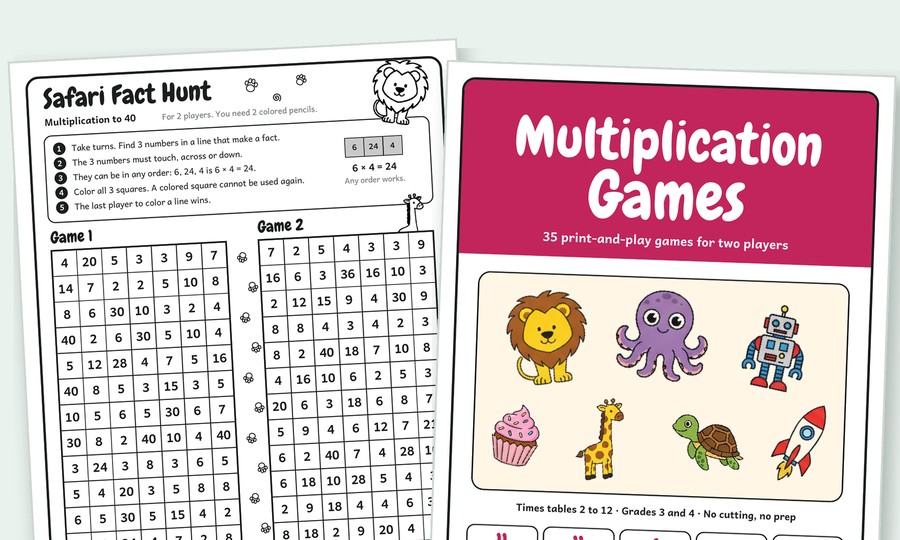
One-page games for two players, for the 2 to 12 times tables. No cutting: print and add pencils or dice. Five free games. Grades 3–4.
Color by Math Facts: Mystery Pictures
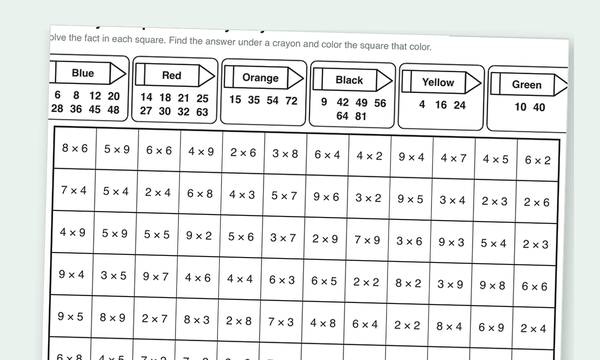
Solve the fact in each square and color by the crayon key to uncover a hidden picture. 24 pictures for addition, subtraction and multiplication facts, with holiday pictures. Answer keys. Grades 1–4.
Math Puzzles
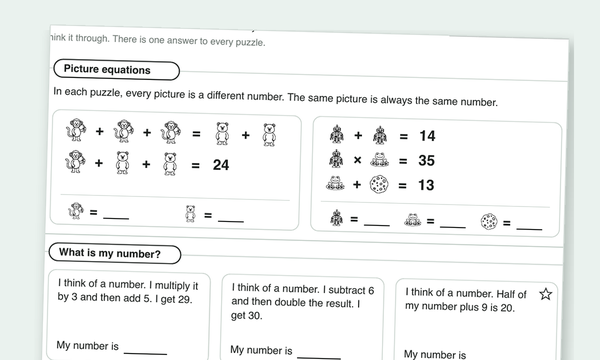
Picture equations, "what is my number?" riddles, how-many-of-each puzzles and number patterns. Six sheets with answer keys. Grades 1–4.
Be the Teacher: Find the Mistake
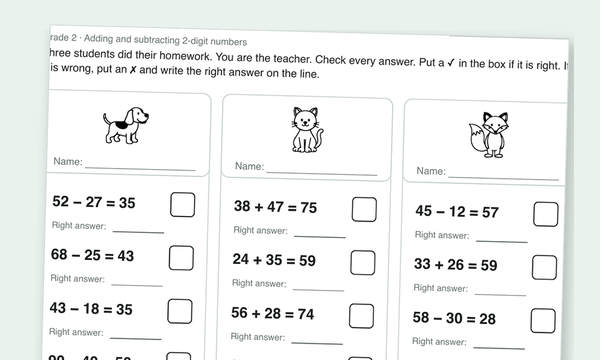
Mark three students' homework, fix the wrong answers and say what went wrong. Answer keys. Grades 1–3.
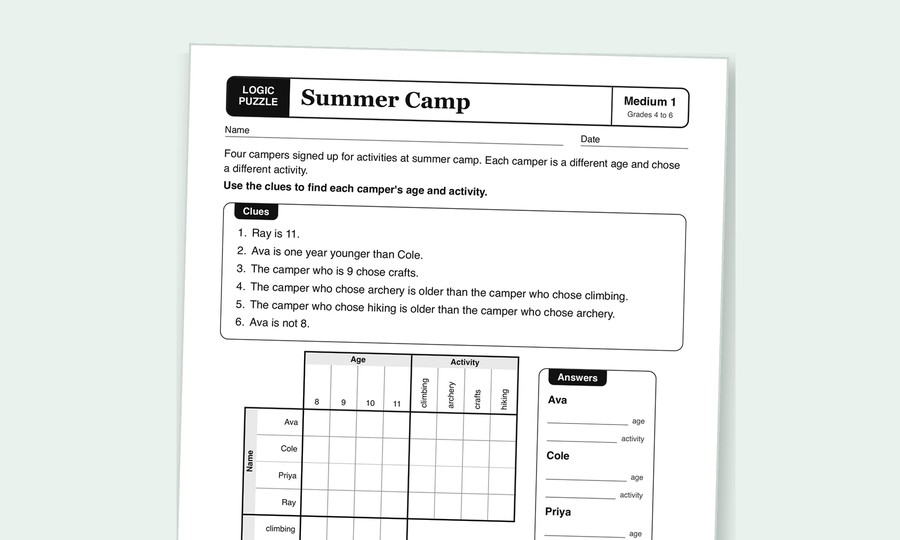
Logic Puzzles
48 logic grid puzzles in four levels, each with a story, clues and a ready-drawn grid, plus a lesson on how to solve them. Answer keys. Grades 2 and up.
Counting & Number Sense
Counting to 10 with Pictures
Count the pictures and write, circle or match the number. Five picture worksheets and a numbers chart. Preschool and kindergarten.
Counting to 20 with Pictures
Count pictures from 11 to 20, with every group shown as a ten and some more. Four worksheets and a numbers chart. Kindergarten.
More and Fewer
Compare two groups of pictures: which has more, which has fewer, or are they the same? Four worksheets and a chart. Preschool and kindergarten.
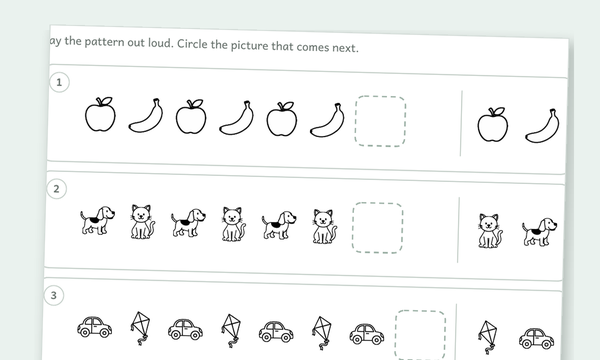
Patterns
What comes next? Picture patterns from simple two-part ones to three-part ones, plus finding the part that repeats. Preschool and kindergarten.
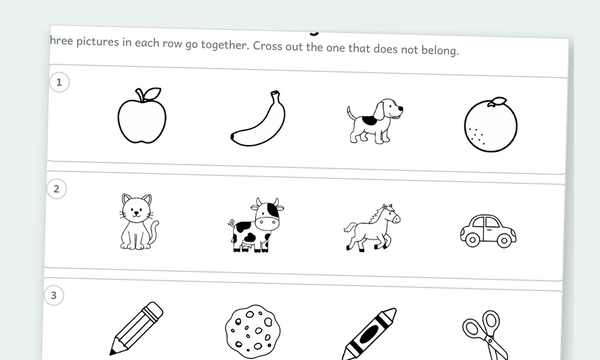
Sorting
Which things go together? Circle the group, find the one that does not belong, sort and count, and a cut and paste sort. Preschool and kindergarten.
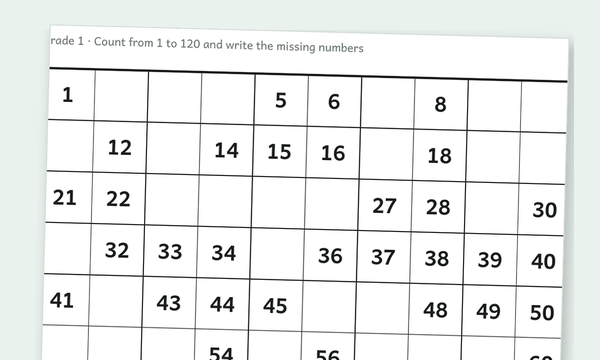
Counting to 120
A 120 chart, a fill-in chart, counting on from any number, before and after, and tens and ones past 100. Answer keys. Grade 1.
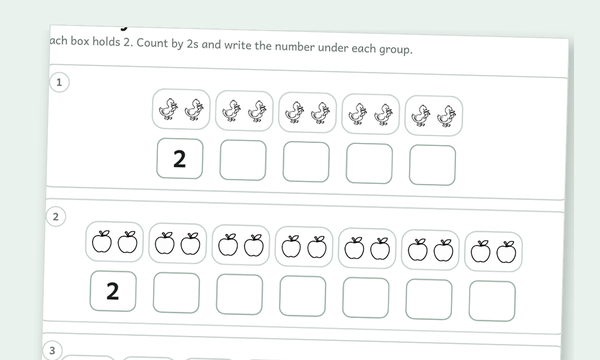
Skip Counting
Count by 2s, 5s and 10s with pictured groups, missing-number strips and a hundreds chart to color. Kindergarten to 2nd grade.
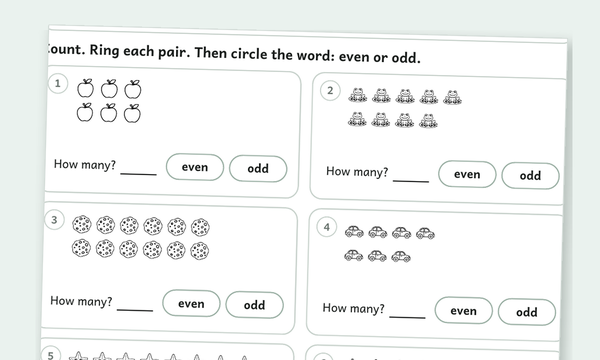
Even and Odd
Pair up pictures to tell even from odd, sort numbers to 20, count by 2s, and write even numbers as doubles. Answer keys. Grade 2.
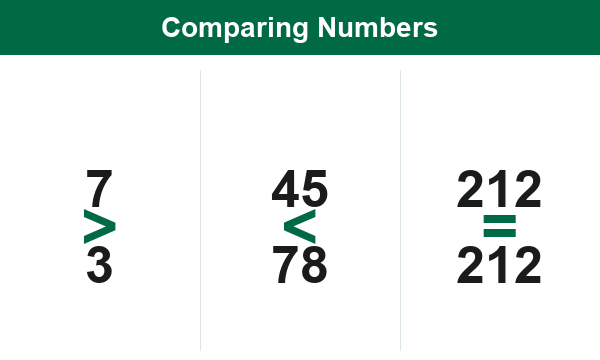
Comparing Numbers
Greater than, less than and equal to: a symbols chart, then pictures, tens and ones, two- and three-digit numbers, and ordering. K–2.
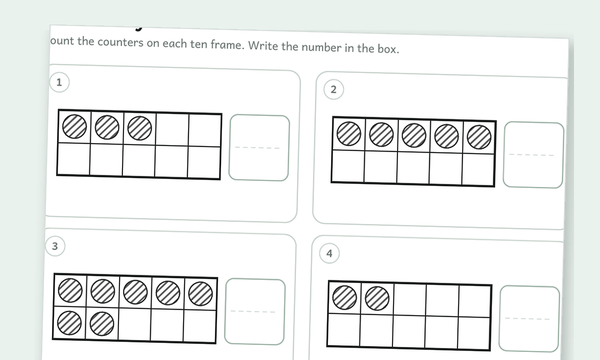
Ten Frames
Blank and double ten frames, a 1 to 10 chart, and six worksheets: count, draw, make 10, teen numbers and adding. Kindergarten and 1st grade.
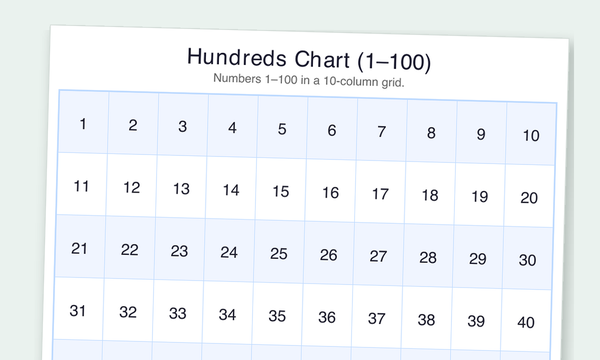
Hundreds Chart
1–100 and 0–99 grids for counting, skip-counting, and number sense. Color, B&W, and blank fill-in.
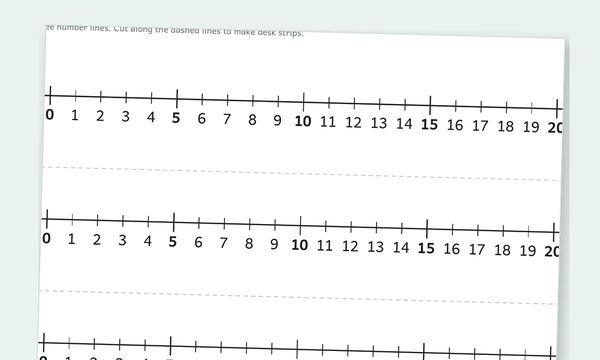
Number Line Printable
Number lines 0–10, 0–20, 0–100, negative, fraction and blank, with large numbers for desk strips. Plus four worksheets.
Addition & Subtraction
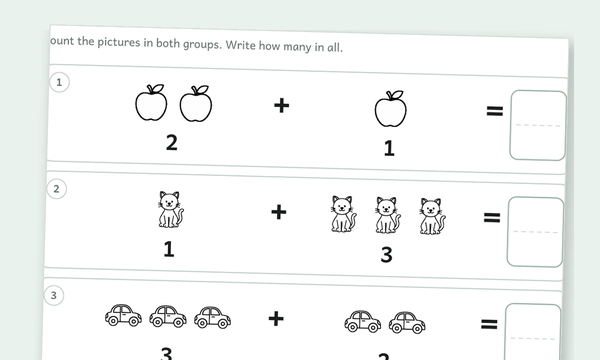
Picture Addition
Add two groups of pictures and write how many in all. Sums to 5 and to 10, number sentences, and draw to add. Kindergarten and 1st grade.
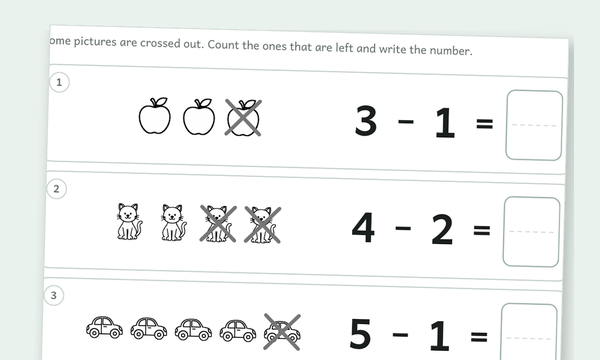
Picture Subtraction
Subtract by crossing out pictures and counting what is left. Within 5 and within 10, plus number sentences. Kindergarten and 1st grade.
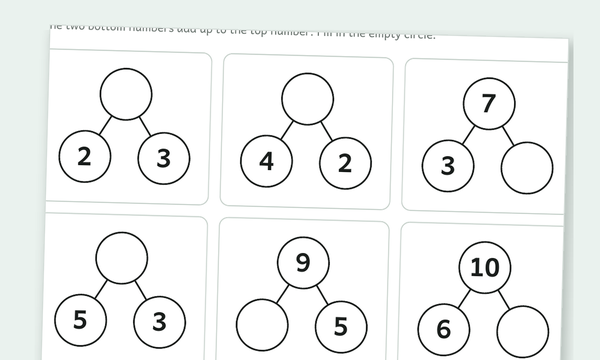
Addition
Number bonds, doubles and make ten, then practice sets from sums to 10 up to 3-digit addition with regrouping. Plus true or false equations, missing addends, adding three numbers, adding tens, three or four 2-digit numbers, and multi-digit addition. Answer keys.
Subtraction
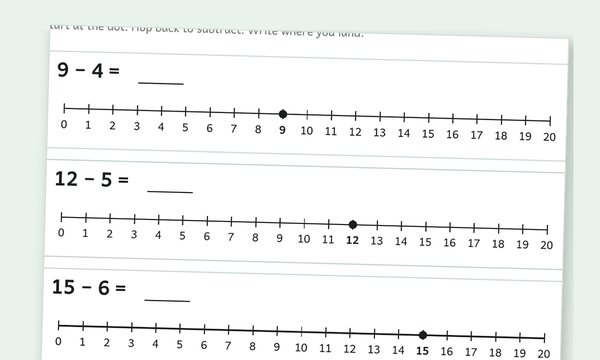
Number line and fact family sheets, then practice sets from subtraction within 10 up to 3-digit subtraction with regrouping. Plus missing numbers, subtracting tens, multi-digit subtraction and subtracting across zeros. Answer keys.
Regrouping
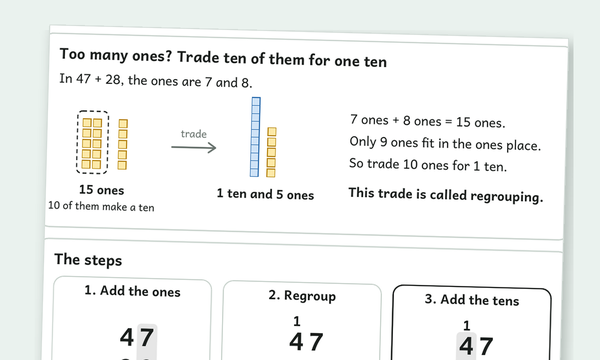
Carrying and borrowing shown with base-ten blocks and step by step on paper, then guided and independent practice. Answer keys. Grades 2–3.
Fact Families
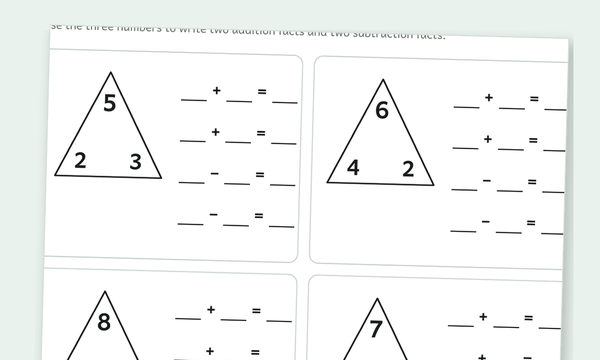
Number triangles for addition and subtraction (grades 1–2) and for multiplication and division (grade 3): write the four facts for each family. Answer keys.
Addition Word Problems
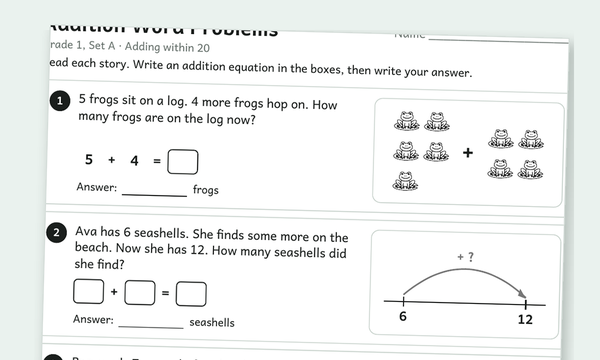
Picture-based addition word problems for kindergarten to grade 2: pictures to count, ten frames, number bonds and bar models. Six premade sheets with answer keys.
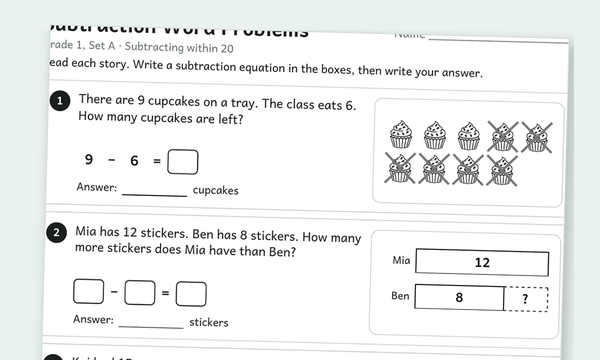
Subtraction Word Problems
Picture-based subtraction word problems for kindergarten to grade 2: taking away, comparing and missing numbers. Six premade sheets with answer keys.
Multiplication & Division
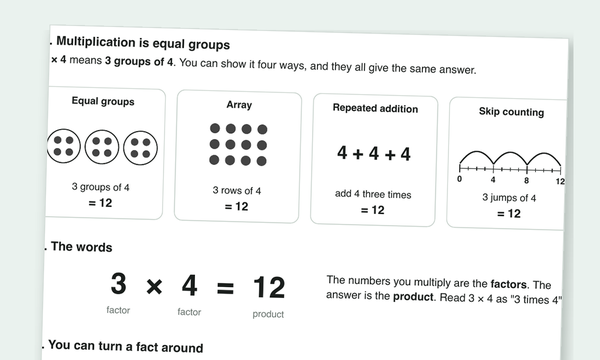
Multiplication
Arrays, strategies, times table fact sets, a 60-fact drill, multiples of 10, 2-digit, 3-digit and 4-digit multiplication, the area model and story problems. Answer keys.
Multiplication Games
One-page games for two players, for the 2 to 12 times tables. No cutting: print and add pencils or dice. Five free games. Grades 3–4.
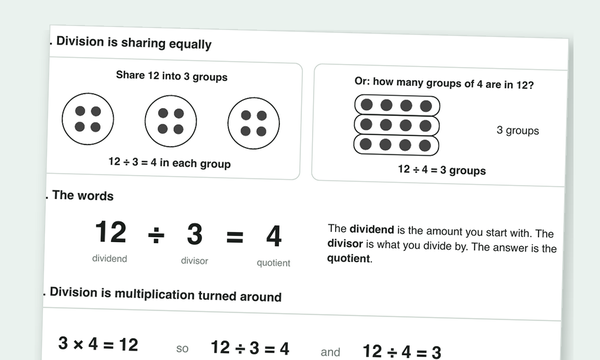
Division
Equal groups, division fact sets, a 60-fact sheet, remainders and story problems. Answer keys. Grades 3–4.
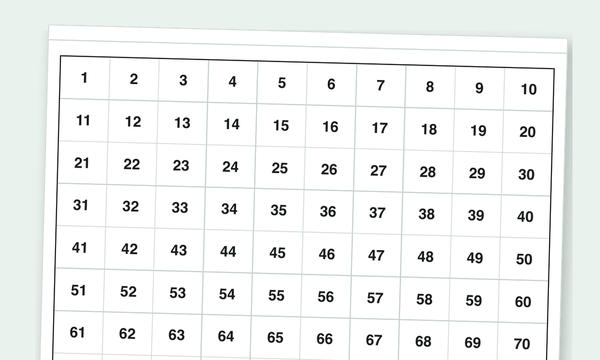
Factors and Multiples
A lesson sheet and guided practice, then factor pairs, listing and finding multiples, a prime number chart to 100, and prime or composite. Answer keys. Grade 4.
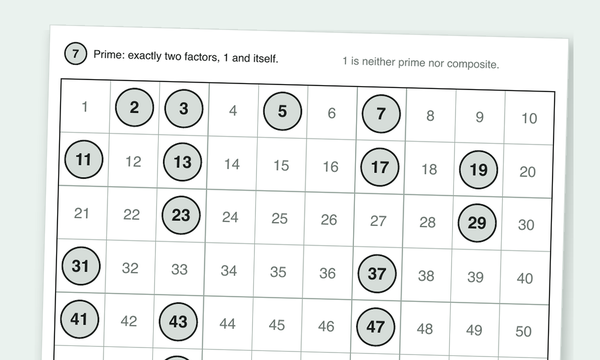
Prime Numbers Chart
The primes from 1 to 100 circled on a hundred chart, a large-print list, all 168 primes below 1,000, and a blank chart. Grades 4–6.
Fact Families
Number triangles for addition and subtraction (grades 1–2) and for multiplication and division (grade 3): write the four facts for each family. Answer keys.
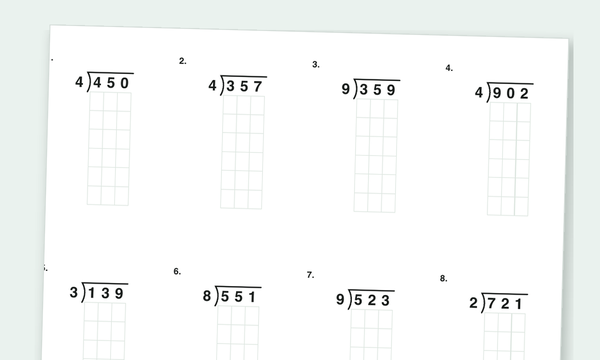
Long Division
The four steps shown one at a time, guided practice, then five practice sets on a grid up to 2-digit divisors. Answer keys show every step. Grades 4–5.
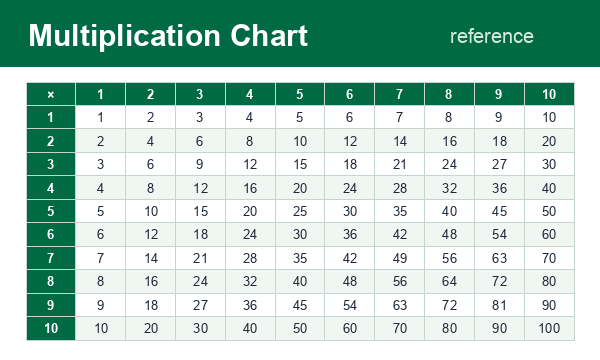
Multiplication Charts
Charts from 10×10 to 30×30 and single times tables, in color, black & white, or blank.
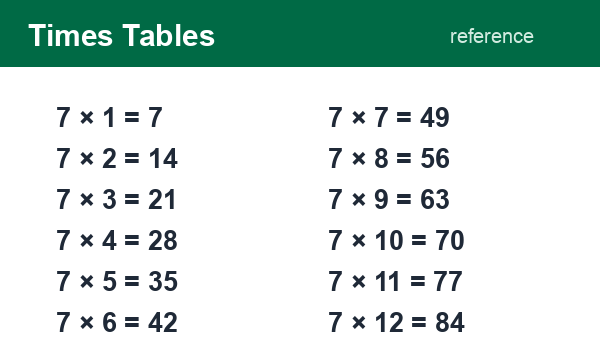
Times Tables
Each table, 2× through 12×, for practice and reference.
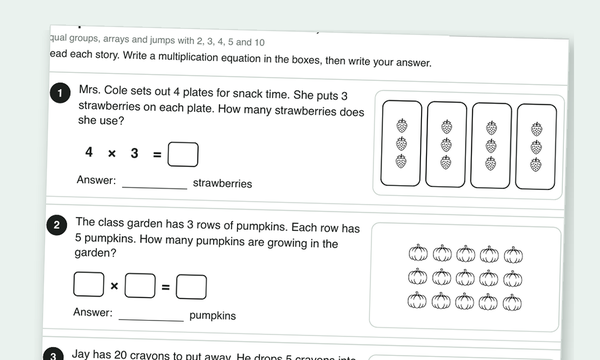
Multiplication Word Problems
Picture-based multiplication word problems for grades 2 to 4: arrays, equal groups, comparing and two-step stories. Seven premade sheets with answer keys.
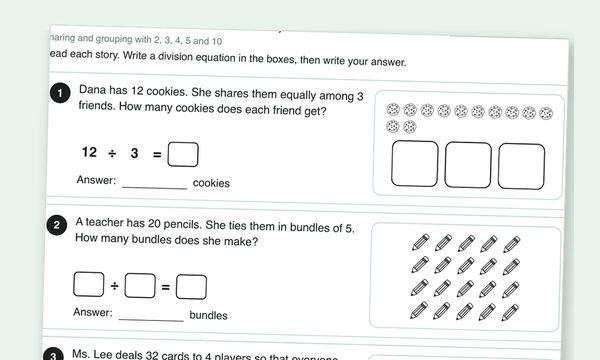
Division Word Problems
Picture-based division word problems for grades 3 and 4: sharing, grouping, comparing, two-step stories and remainders. Six premade sheets with answer keys.
Place Value & Rounding
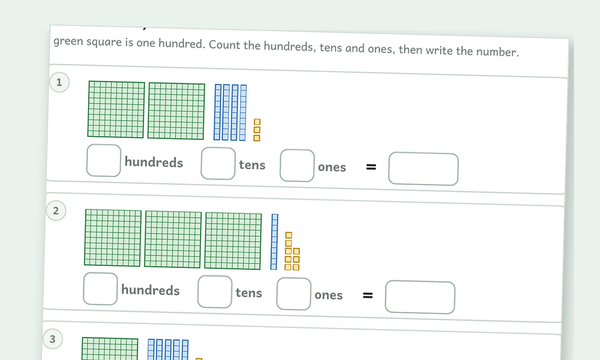
Place Value
Base-ten blocks, tens and ones, ten more and ten less, hundreds, 10 and 100 more and less, expanded form, the value of a digit, thousands, number words, and place value, comparing and ordering to one million. Answer keys. Grades 1–4.
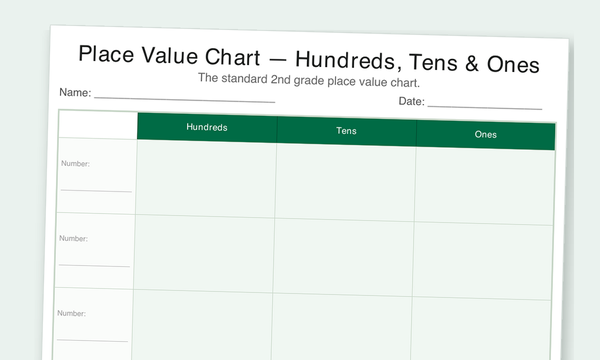
Place Value Chart
Five sizes from Tens & Ones through Millions, plus a decimal chart. Each row has a Number line. K–5.
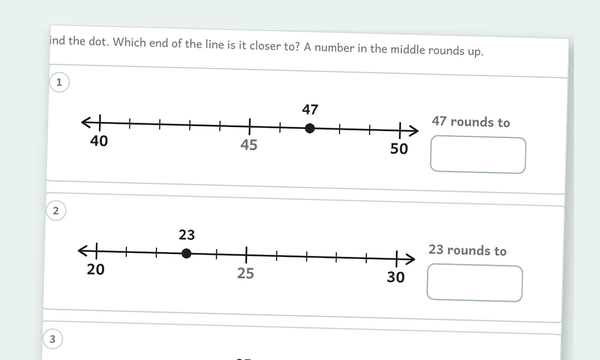
Rounding
Round to the nearest ten, hundred and thousand, on number lines and with the digit rule, then large numbers to any place. Grades 3–4.
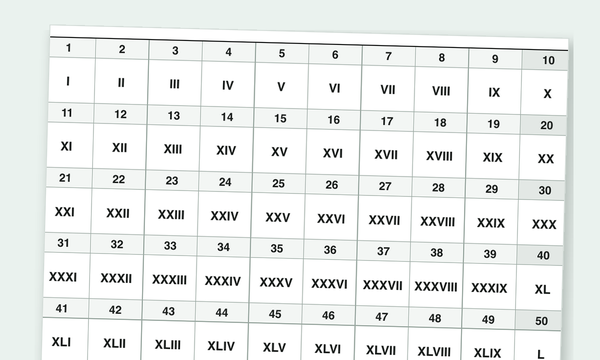
Roman Numerals Chart
Roman numerals 1–100, 1–20 and the rules up to 1,000, blank charts to fill in, and four worksheets with answer keys. Grades 3–5.
Fractions & Decimals
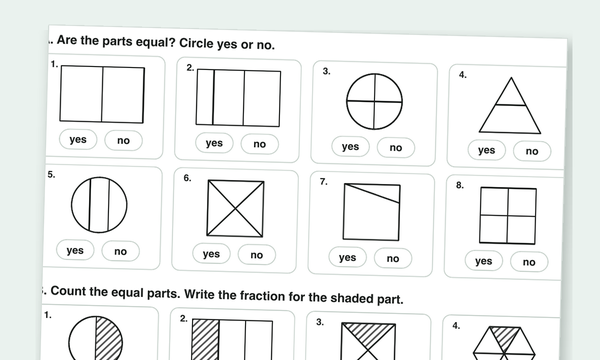
Equal Parts
Halves and fourths, thirds, rows and columns of squares, equal or not equal, sixths and eighths, and naming the fraction for one part. Answer keys. Grades 1–3.
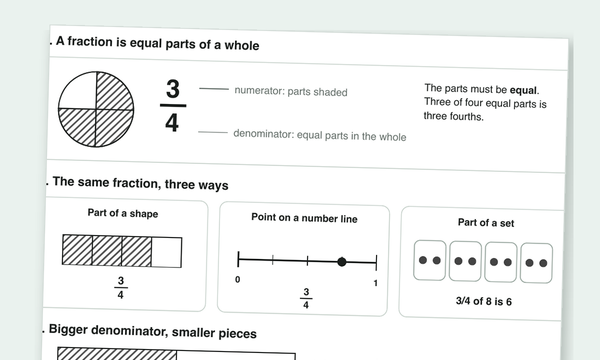
Fractions
Name and color fractions, number lines, fractions of a set, and adding and subtracting with like and unlike denominators. Answer keys. Grades 3–5.
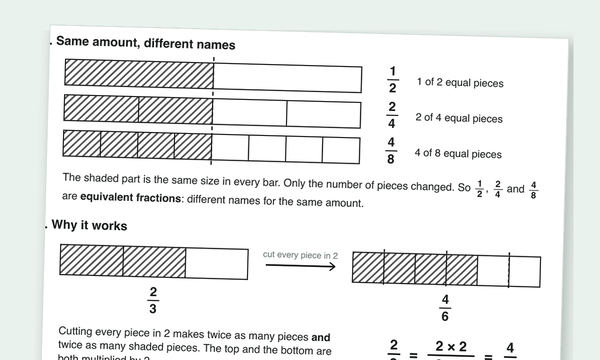
Equivalent Fractions
A one-page explanation of equivalent fractions with bar models, then guided and independent practice. Grades 3–5.
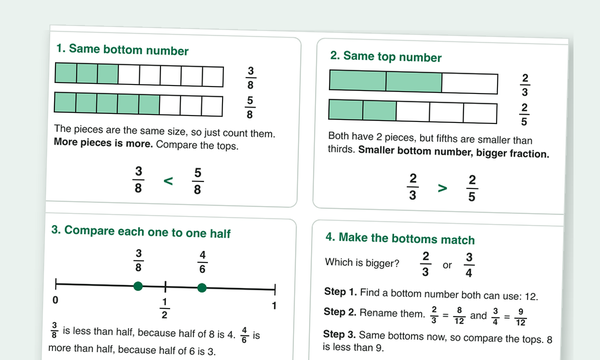
Comparing Fractions
Four ways to tell which fraction is bigger, on one page, then guided and independent practice. Grades 3–5.
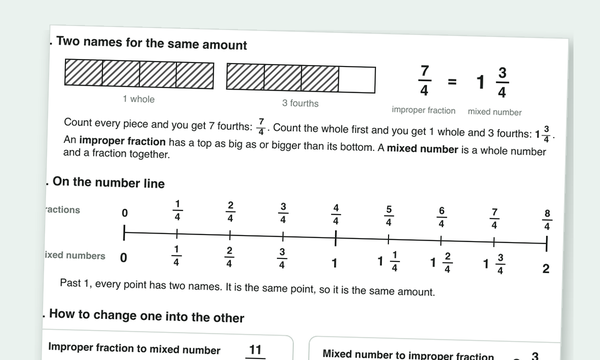
Improper Fractions and Mixed Numbers
Two names for amounts bigger than one, and how to change between them. Explanation plus guided and independent practice. Grades 4–5.
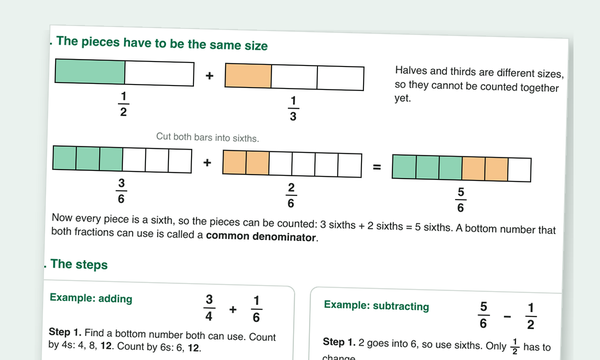
Adding and Subtracting Fractions
Unlike denominators: why the bottoms have to match, the steps on one page, then guided practice and two practice sheets. Answer keys. Grade 5.
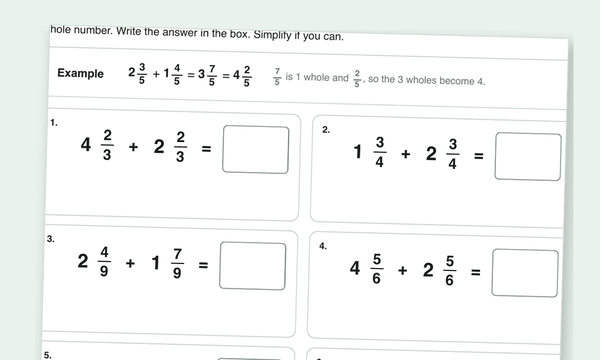
Adding and Subtracting Mixed Numbers
A one-page explanation, then same denominator, regrouping, borrowing and unlike denominators. Answer keys. Grades 4–5.
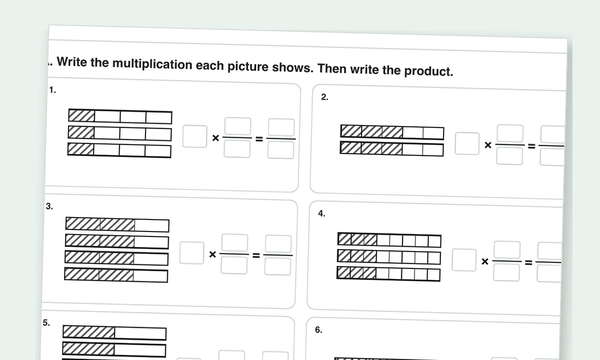
Multiplying Fractions
A lesson sheet and guided practice, then a fraction times a whole number, a fraction times a fraction with area models, mixed numbers, and multiplication as scaling. Answer keys. Grades 4–5.
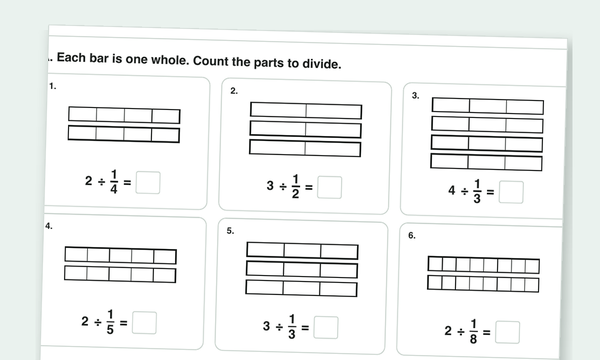
Dividing Fractions
A lesson sheet and guided practice, then a whole number divided by a unit fraction and a unit fraction divided by a whole number: models, practice and word problems. Answer keys. Grade 5.
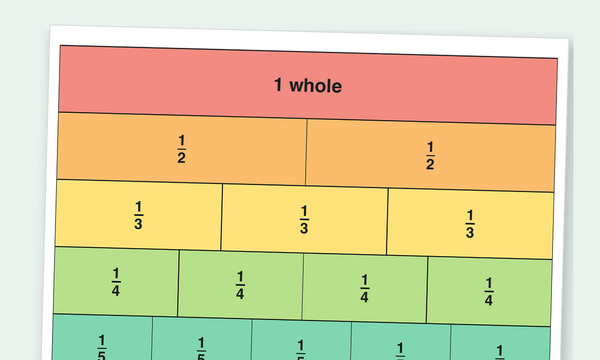
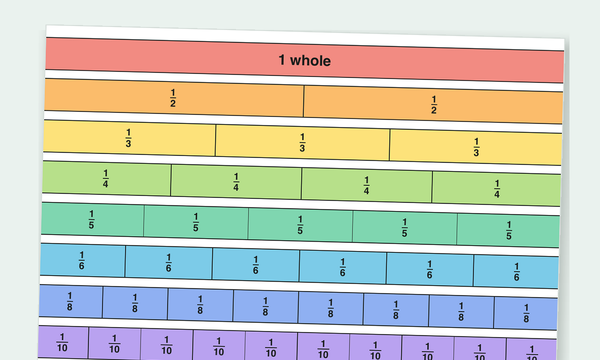
Fraction Chart
Fraction wall from one whole to twelfths, plus equivalent fractions and fraction-decimal-percent charts. Grades 3–5.
Fraction Strips
Cut-apart fraction strips and fraction circles from one whole to twelfths, in color, black and white, or blank. Grades 2–5.
Fraction Word Problems
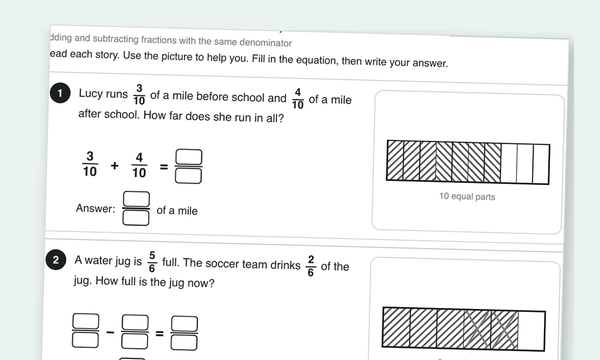
Picture-based fraction word problems for grades 3 to 5: parts of a whole, comparing, adding, subtracting and multiplying. Seven premade sheets with answer keys.
Decimals
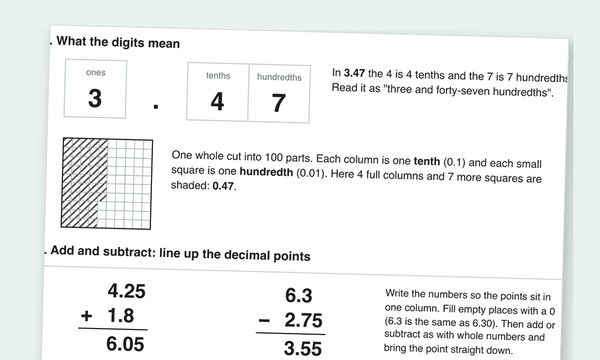
Place value to thousandths, comparing, rounding, powers of 10, then adding, subtracting, multiplying and dividing decimals. Answer keys. Grades 4–5.
Geometry
Kindergarten Shapes
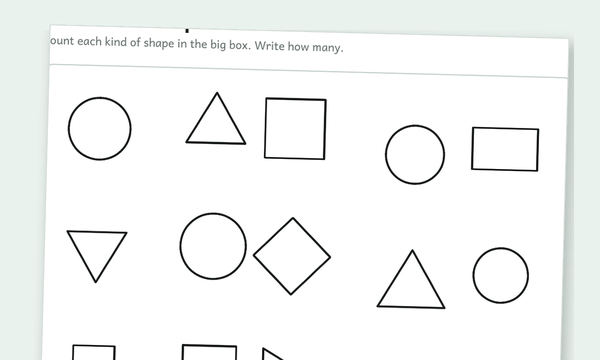
Name, match, count and color circles, squares, triangles, rectangles and hexagons. Five color worksheets and a shapes chart. Preschool and kindergarten.
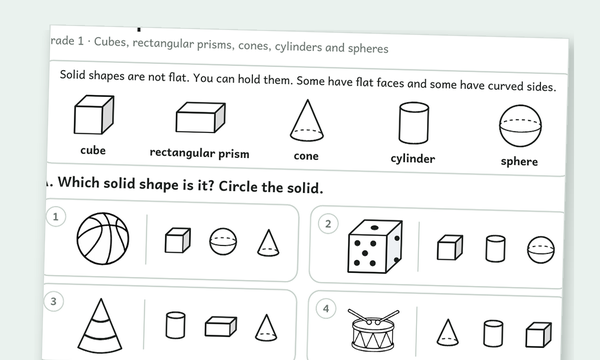
2D and 3D Shapes
What makes a triangle, rectangle, square and hexagon, drawing shapes on dot paper, cubes, cones, cylinders and spheres, and putting shapes together. Answer keys. Grade 1.
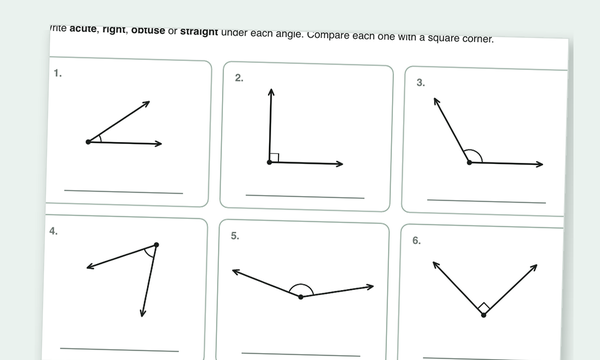
Geometry
A lines-and-angles chart, then lines and rays, kinds of angle, reading a protractor, adding angles, missing angles, symmetry, polygons and coordinate points. Grades 3–6.
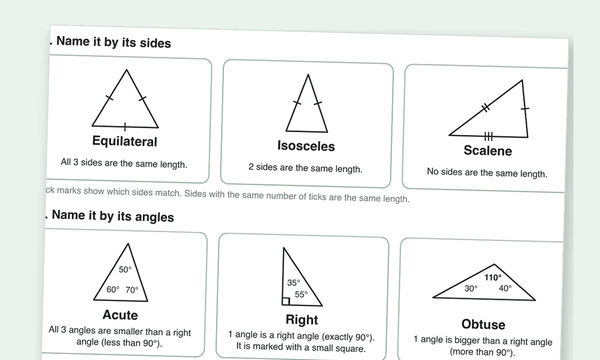
Types of Triangles
Equilateral, isosceles and scalene, then acute, right and obtuse. One page of explanation, then guided and independent practice. Grades 4–5.
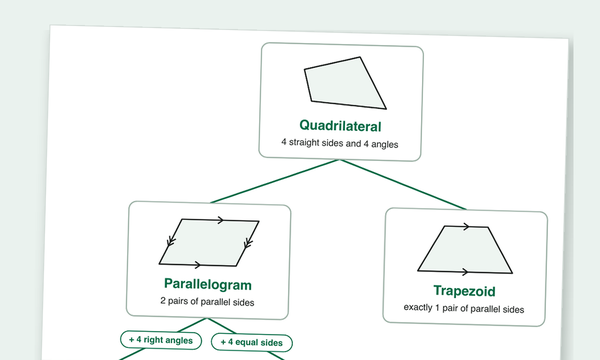
Types of Quadrilaterals
Is a square a rectangle? A family tree and properties chart, then two practice worksheets. Grades 3–5.
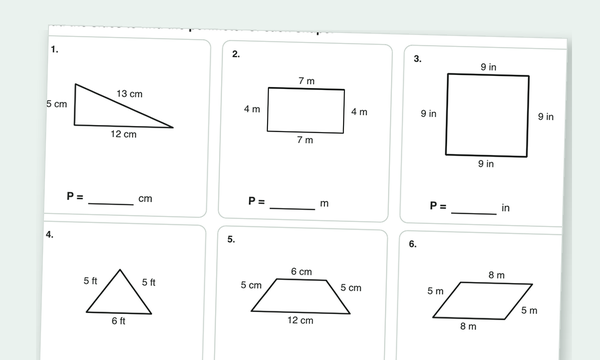
Perimeter
A lesson sheet and guided practice, then add the sides, rectangles and squares, find the missing side, same perimeter with different areas, and story problems. Answer keys. Grade 3.
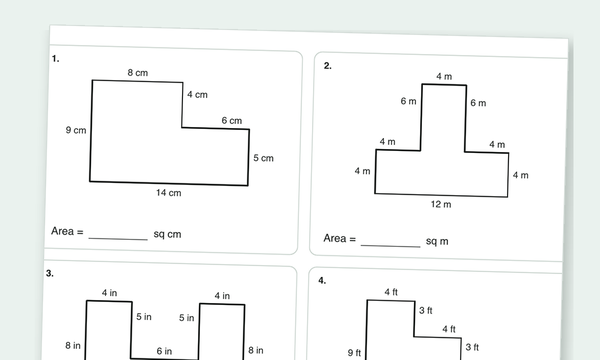
Area
Unit squares, rectangles, missing sides, three sets of composite figures, area and perimeter, story problems. Answer keys. Grades 3–5.
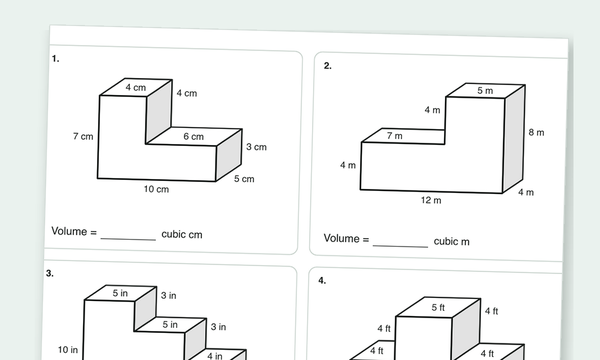
Volume
Unit cubes, rectangular prisms, base area × height, missing edges, two sets of composite solids, story problems. Answer keys. Grade 5.
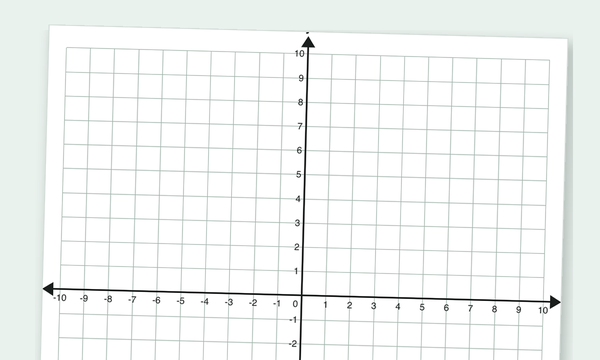
Coordinate Plane
Four-quadrant coordinate grids numbered -10 to 10, blank planes, a first-quadrant grid, and 4 or 6 per page. Grades 5–8.
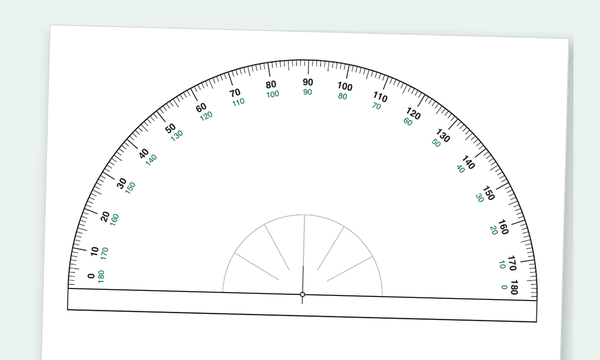
Printable Protractor
180° protractors with inner and outer scales, a six-per-page class set, and a 360° circle protractor. Grades 4–8.
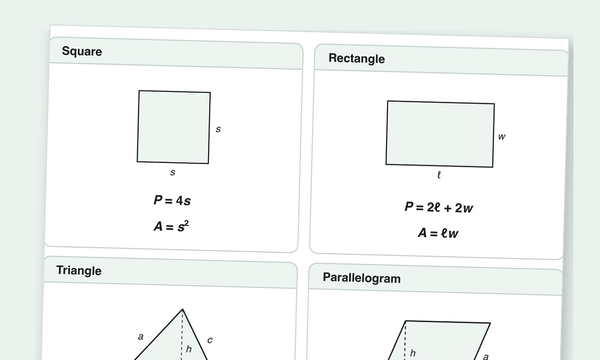
Geometry Formula Sheet
One-page geometry reference plus illustrated area, volume, triangle and coordinate geometry formula sheets. Grades 6–10.
Measurement, Time & Money
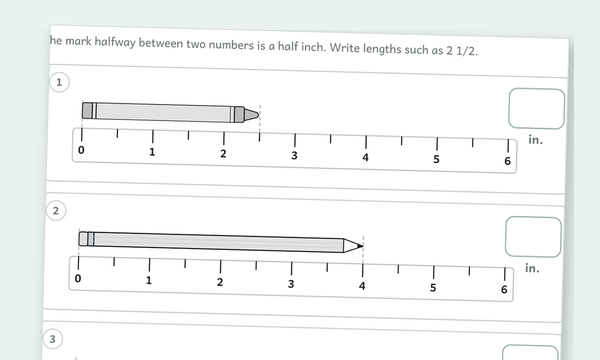
Measurement Worksheets
How to read a ruler, then measuring to the nearest inch, half inch, quarter inch and centimeter on true-size rulers. Plus estimating length, length story problems, liquid measures, grams, kilograms, liters and milliliters. Grades 1–4.
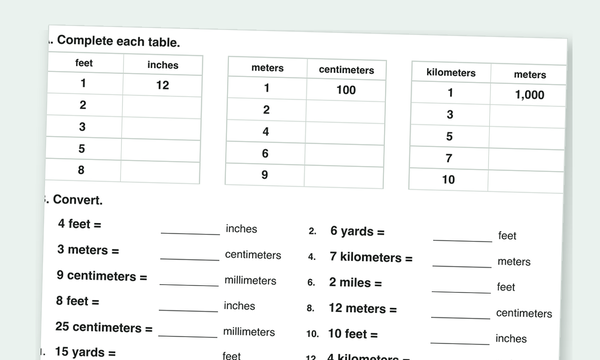
Unit Conversions
A lesson on when to multiply and when to divide, guided practice, a measurement conversion chart, then conversions both ways for length, weight, liquid volume and time, with decimals and fractions, plus word problems. Answer keys. Grades 4–5.
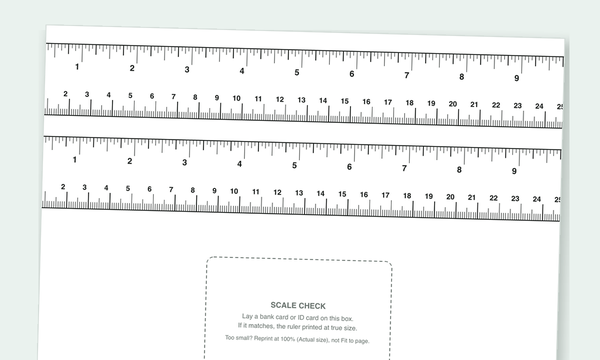
Printable Ruler
True-size paper rulers in inches and centimeters, with a built-in scale check. 6-inch, 12-inch and 25 cm.
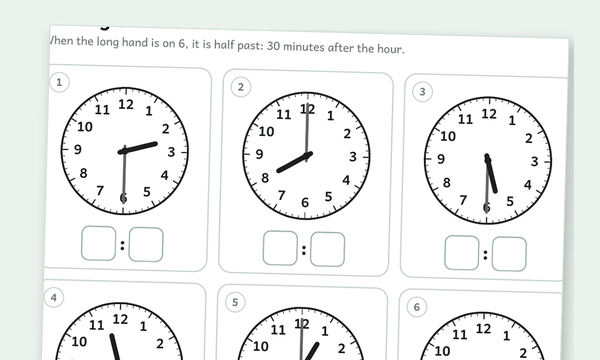
Telling Time Worksheets
Large clocks with color-coded hands: to the hour, half hour, quarter hour, five minutes and minute, plus draw the hands. Grades 1–3.
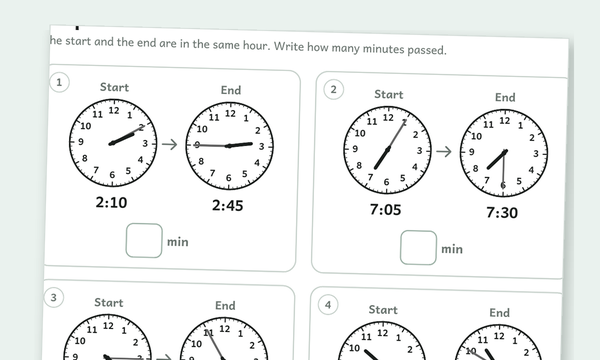
Elapsed Time Worksheets
How much time has passed, in hours and minutes and on a number line. Plus finding the end time and start time, and word problems. Grades 2–4.
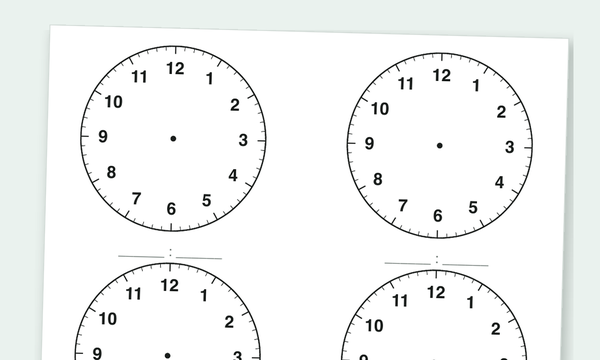
Blank Clock Face
Blank analog clocks: large, with minutes marked, no numbers, movable hands, and 6 or 12 per page. Grades K–3.
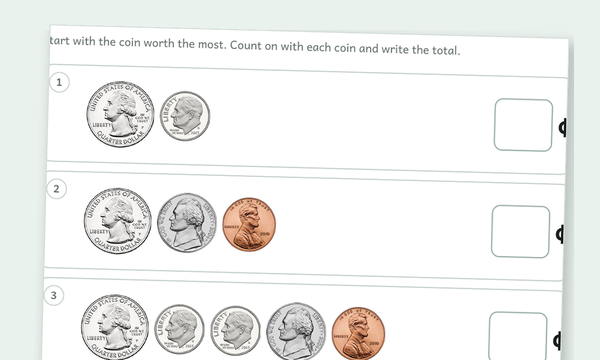
Money Worksheets
Real coin pictures at life size: a coin chart, counting pennies to quarters, bills and coins, and making change. K–3.
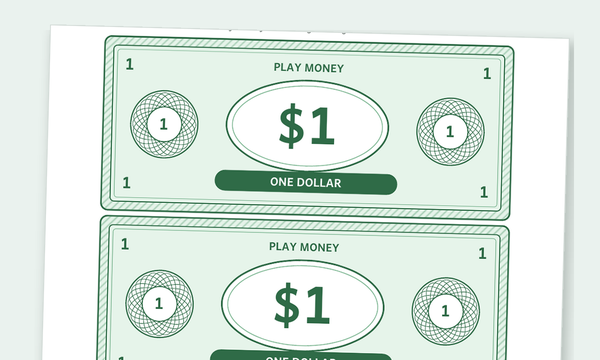
Play Money
Bills from $1 to $100 in color or black and white, real-size coins to cut out, and shop price cards for a classroom store.
Data & Pre-Algebra
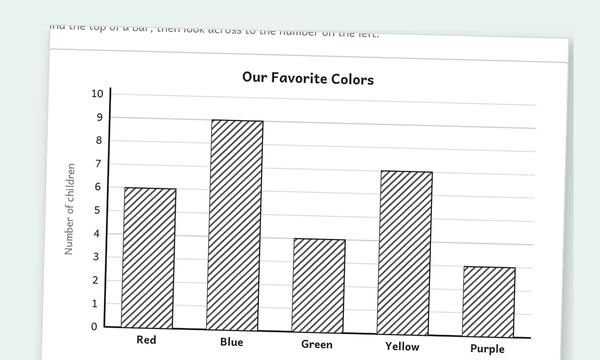
Graphing Worksheets
Tally charts, picture graphs, bar graphs and line plots to read and to make, including line plots with fractions, plus a blank graph template. Grades 1–5.
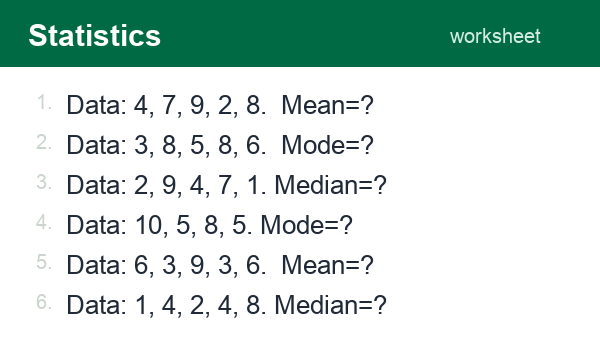
Mean, Median & Mode
A lesson sheet, finding the mean, median and mode, all four with range, and real data problems. Answer keys. Grade 6.
Order of Operations
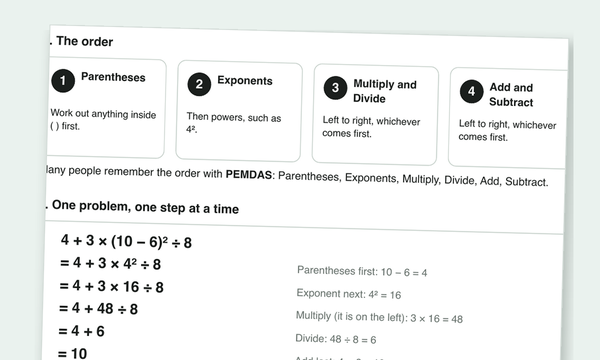
A PEMDAS lesson sheet, four practice sets from no parentheses to exponents, a puzzle sheet, and writing and reading expressions. Answer keys. Grades 5–6.
Integers
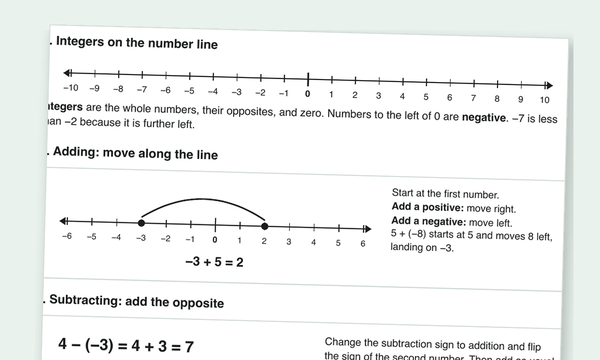
A lesson sheet with number lines, comparing and ordering, then adding, subtracting, multiplying and dividing integers. Answer keys. Grades 6–7.
Ratios
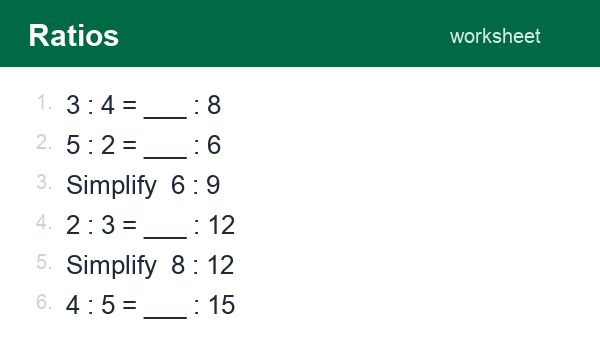
A lesson sheet, ratios from pictures, ratio tables, simplifying ratios and ratio word problems. Answer keys. Grades 6–7.
Percents
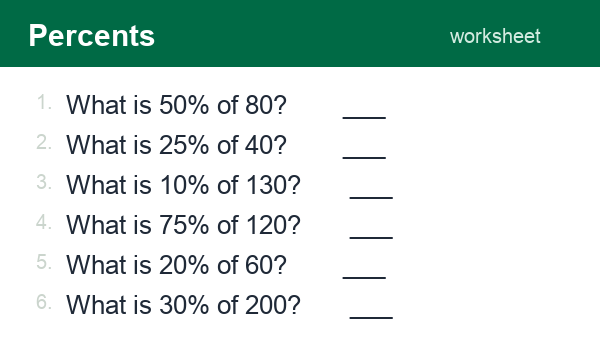
A lesson sheet, percents on hundred grids, conversions, percent of a number in two levels, and word problems. Answer keys. Grades 6–7.
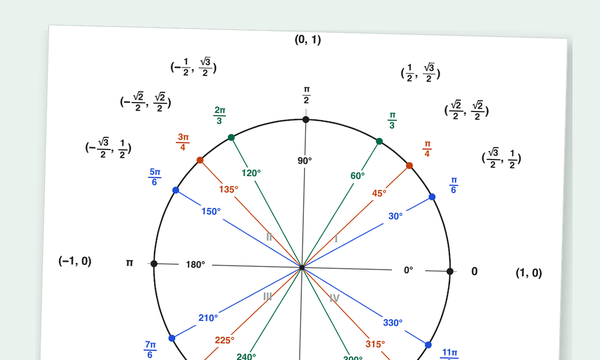
Unit Circle
Filled-in and blank unit circles with degrees, radians and coordinates, plus a sine, cosine and tangent table. High school.
Mixed Practice & Word Problems
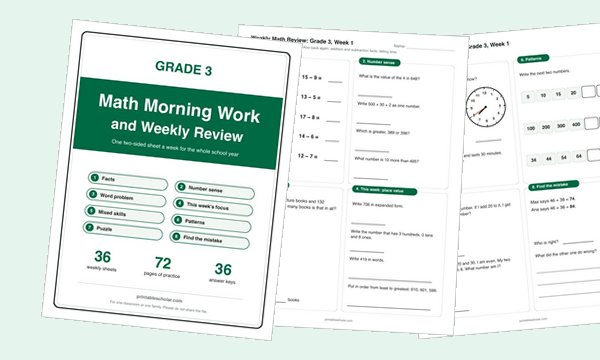
Math Morning Work and Weekly Review
One two-sided spiral review sheet a week for 36 weeks, with answer keys. The first four weeks of every grade are a free PDF. Grades 1–5.
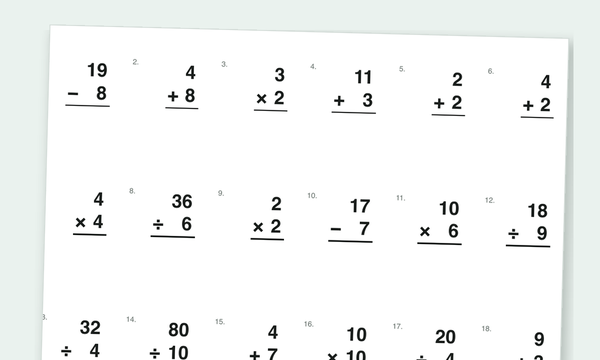
Mixed Operations
Sets that mix + and −, × and ÷, then all four, plus a 60-fact sheet, missing signs and in-out tables. Answer keys. Grades 2–5.
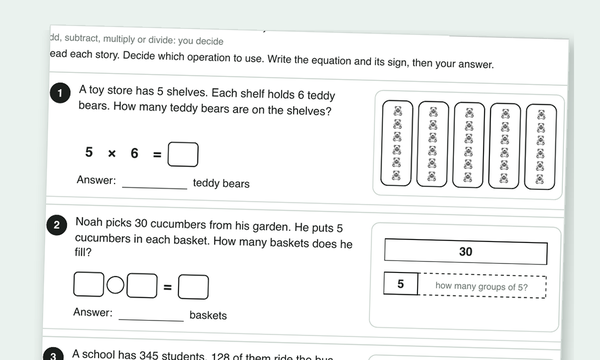
Mixed Word Problems
Mixed word problems for kindergarten to grade 5. The operation sign is left blank, so students decide whether to add, subtract, multiply or divide. Twelve premade sheets with answer keys.
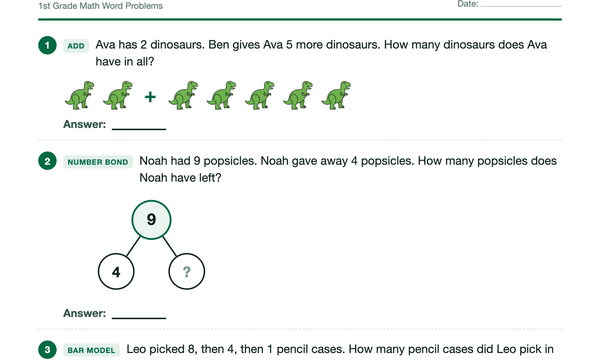
All Word Problems
Every picture-based word problem set in one place, grouped by grade from kindergarten to 5th.
All Charts & Printables
About Our Math Worksheets
The arithmetic drills (addition, subtraction, multiplication, division, fractions, decimals and more) make a fresh set of randomized problems each time you download, in easy, medium, and hard levels. The picture worksheets for kindergarten and 1st grade, and the geometry, measurement, graphing, time and money sets, are ready-made sheets designed page by page. Every set includes an answer key.
The collection runs from counting to 10 in kindergarten through ratios, percents and equations in 7th grade, with one-page lessons for topics like long division, fractions and triangles that explain the idea before the practice. Each worksheet is sized for standard US Letter paper and prints cleanly on any home printer.
All worksheets are completely free. No sign-up, no email, no watermarks. Just click, download the PDF, and print as many copies as you need.