Multiplication worksheets that go in the order students learn it: what multiplication means, arrays, strategies for the harder facts, three sets of times table practice, then multi-digit multiplication from 2-digit by 1-digit up to 4-digit by 2-digit, and story problems. Every practice sheet has its answer key on the second page.
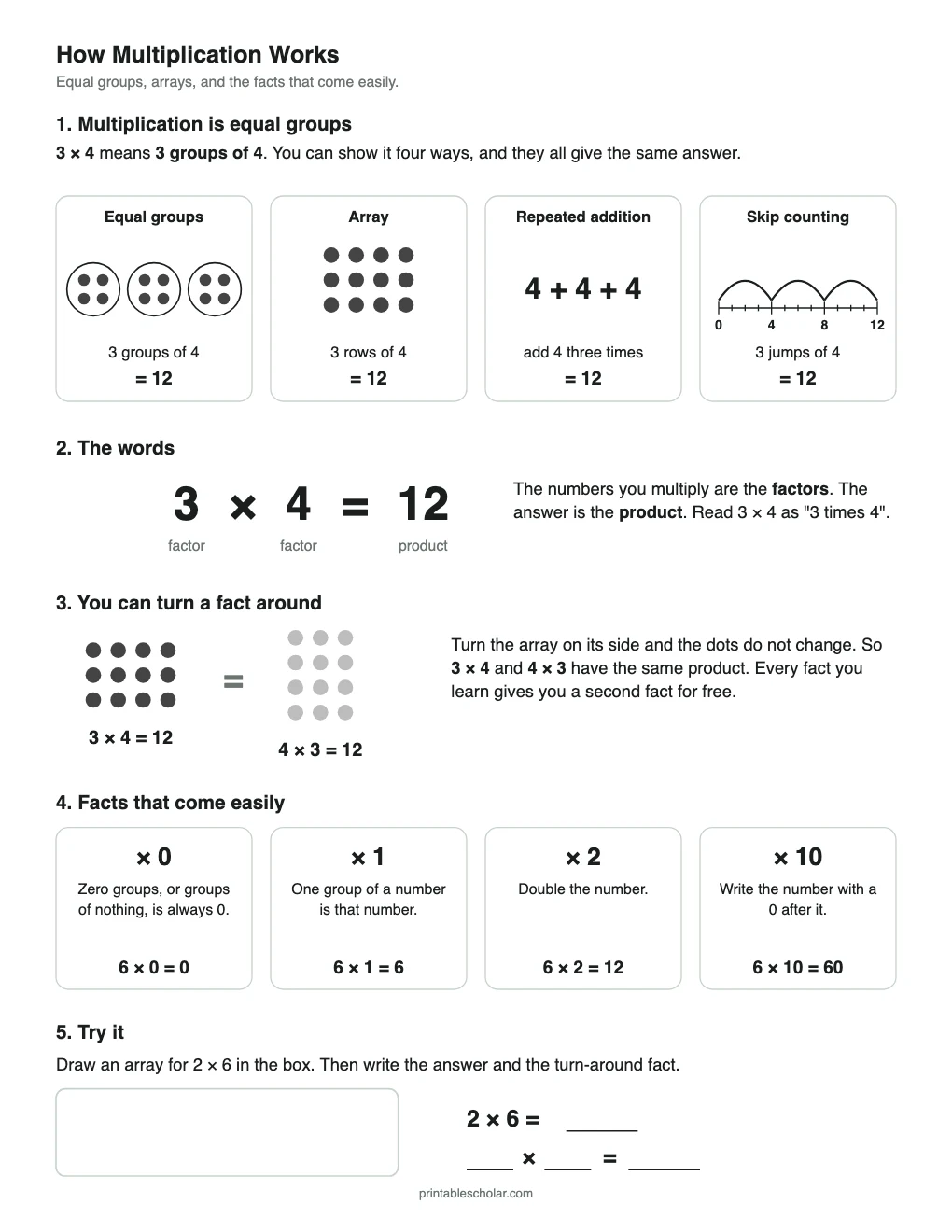
Equal groups, arrays, repeated addition and skip counting, shown on the same fact. Plus turn-around facts and the easy tables.
Download PDF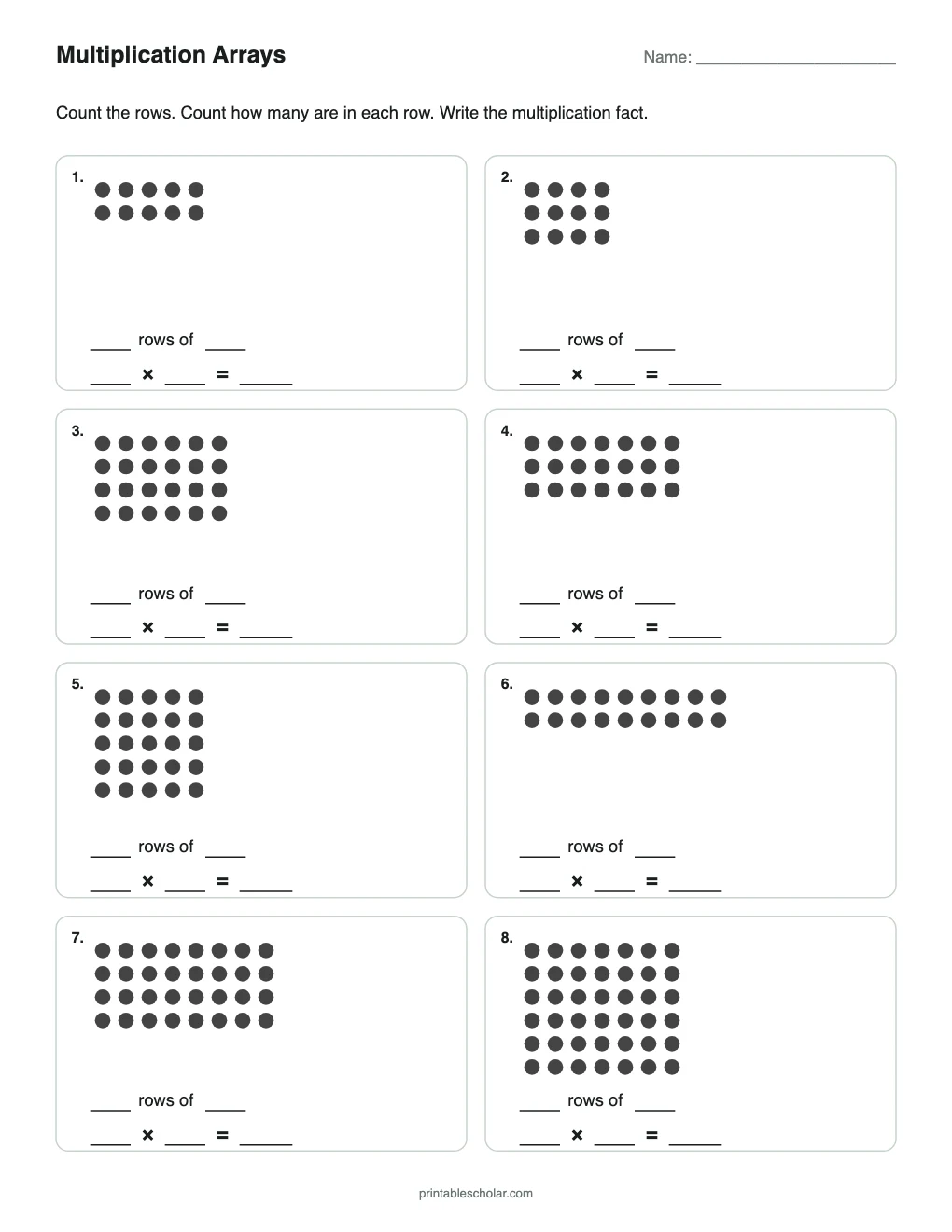
Eight dot arrays. Count the rows and columns and write the multiplication fact. Includes answer key.
Download PDF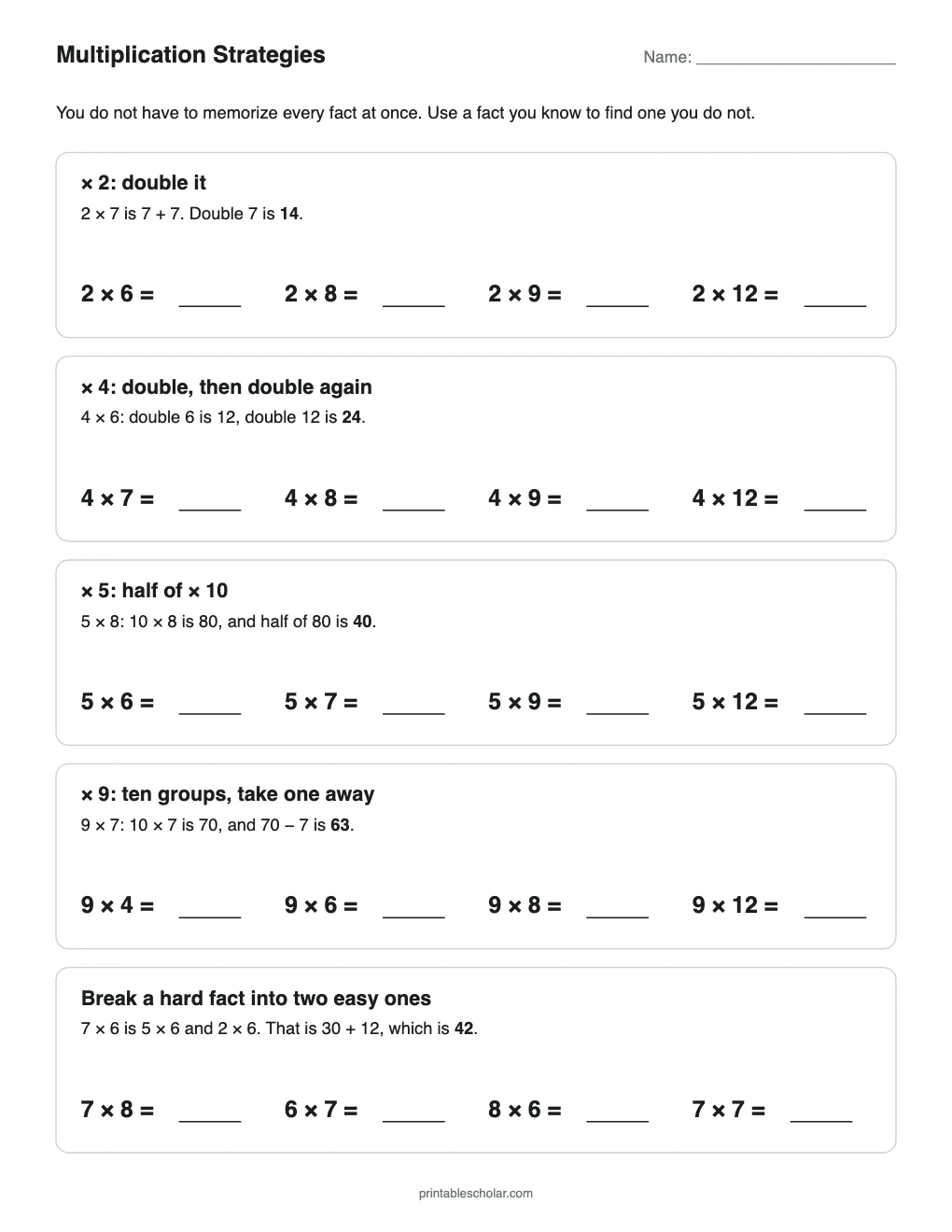
Doubles, double-doubles, half of ten, nines, and breaking a fact apart, each with four facts to try. Includes answer key.
Download PDF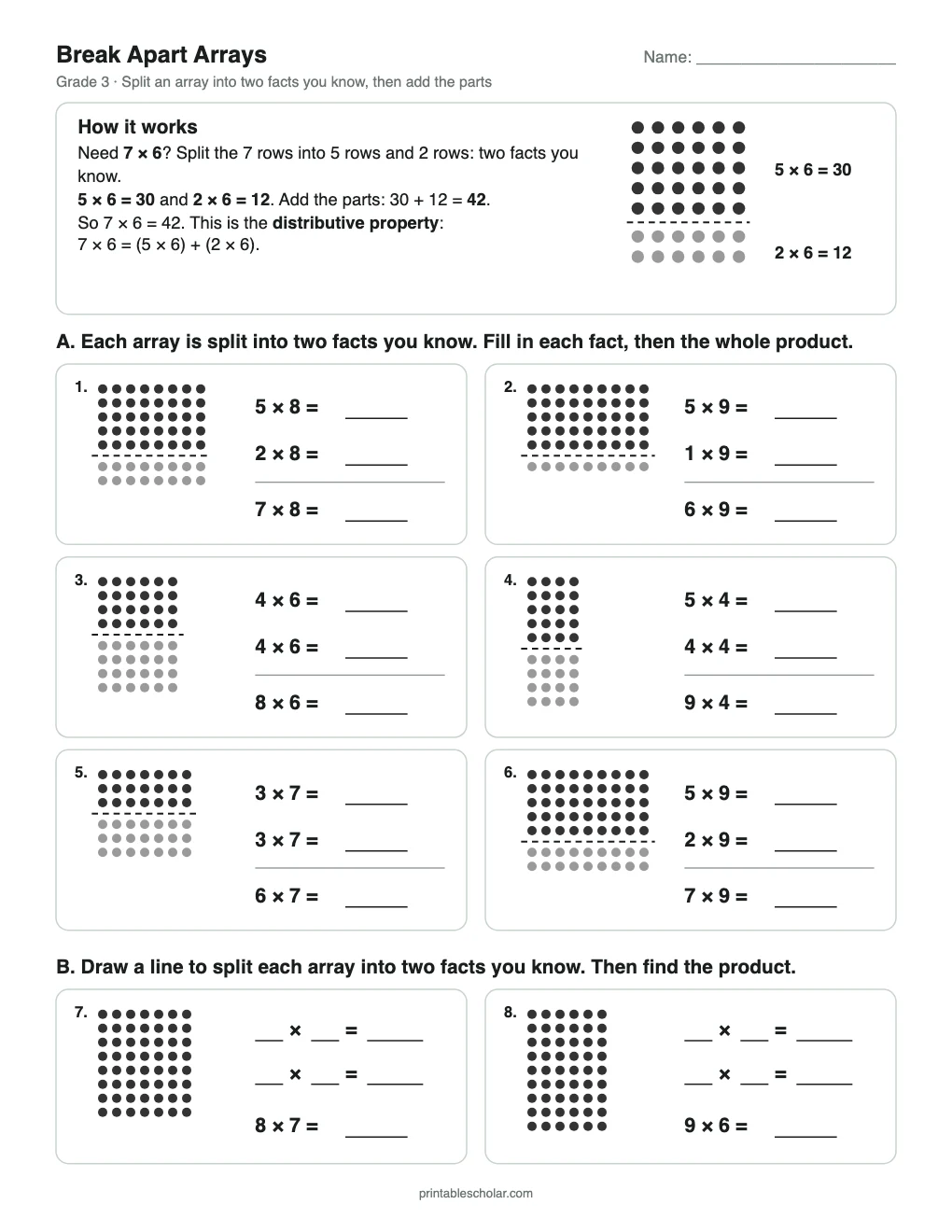
How 7 × 6 splits into 5 × 6 and 2 × 6, six split arrays to finish, and two to split yourself. Includes answer key.
Download PDF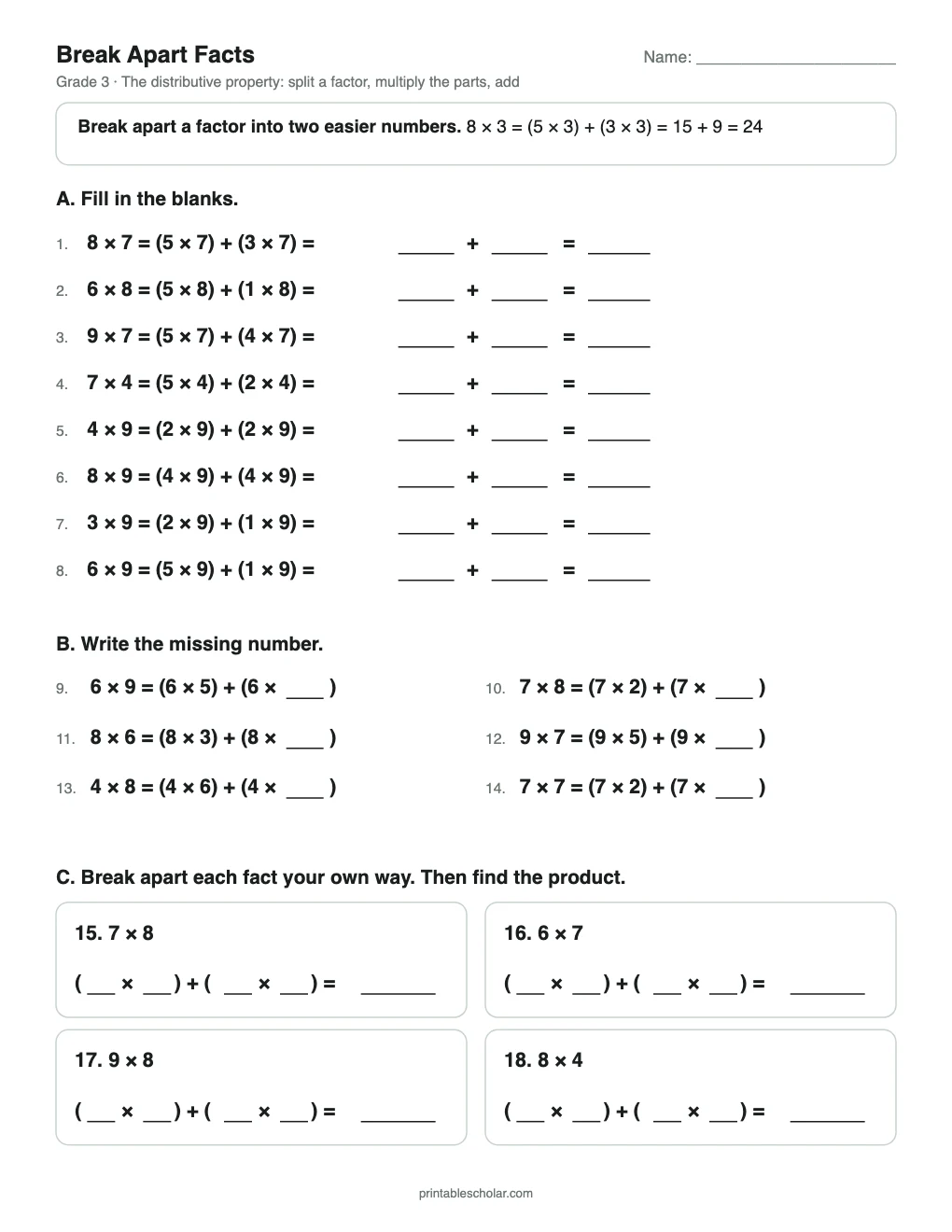
The distributive property in equations such as 8 × 7 = (5 × 7) + (3 × 7): eight to fill in, six missing numbers and four to split your own way. Includes answer key.
Download PDF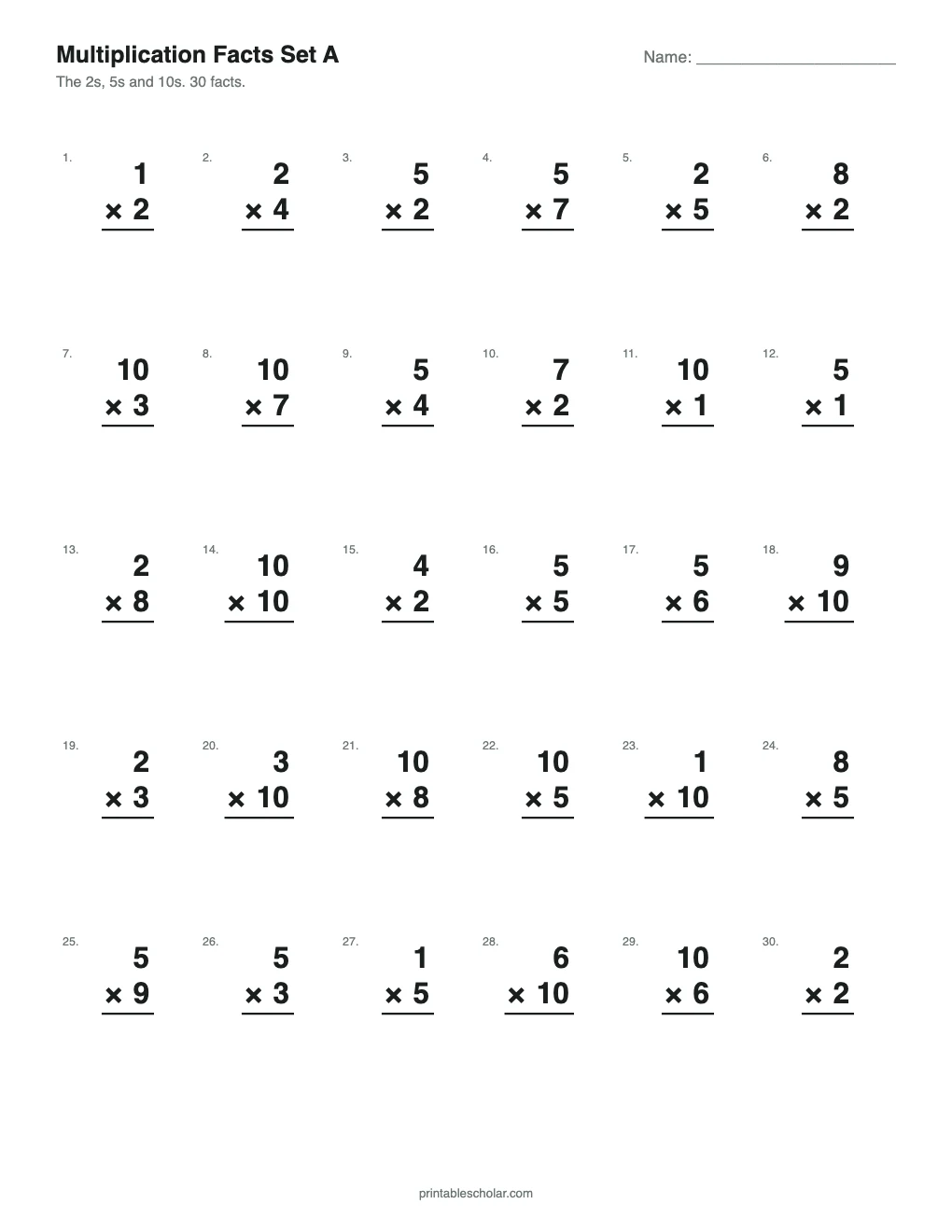
Thirty facts from the first tables students learn. Includes answer key.
Download PDF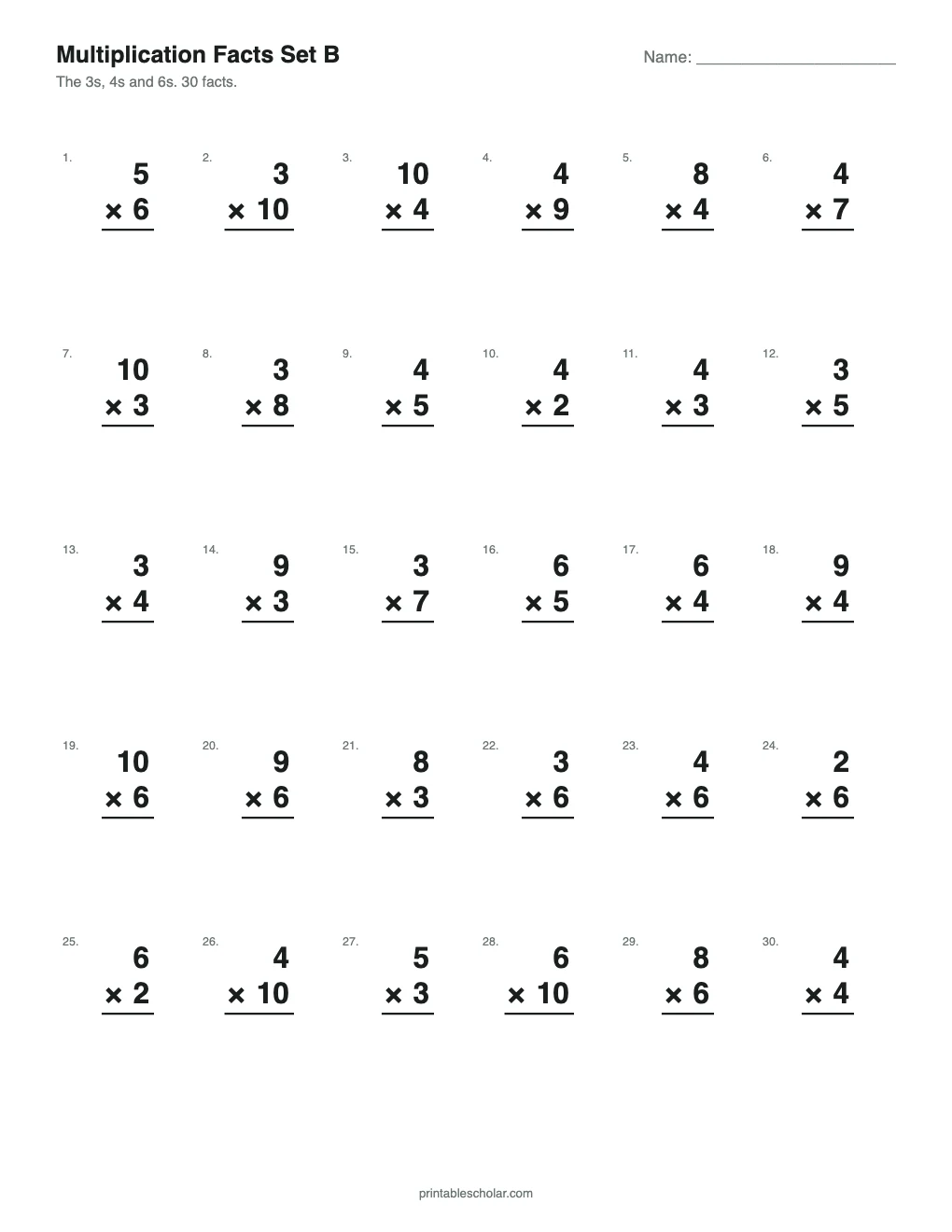
Thirty facts from the 3, 4 and 6 times tables. Includes answer key.
Download PDF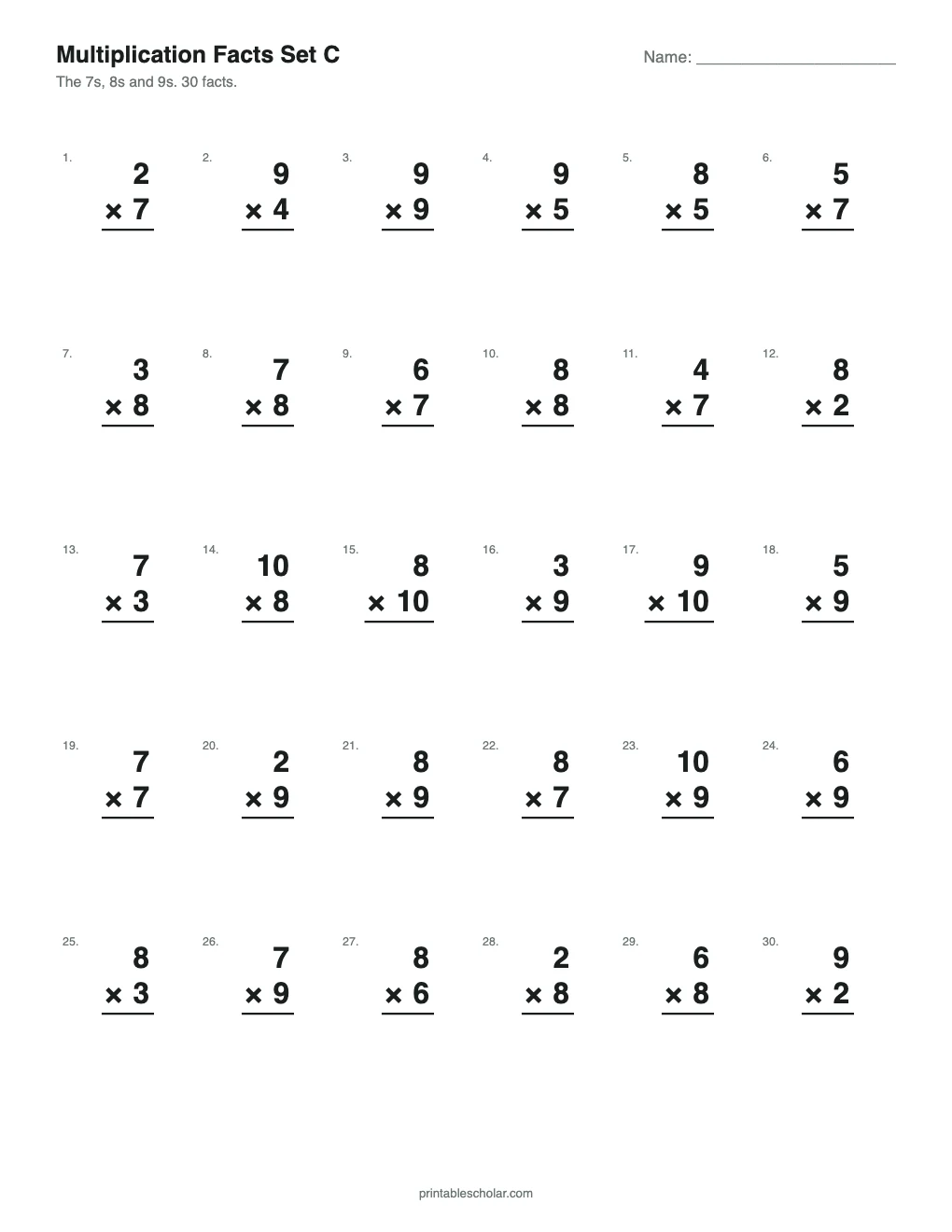
Thirty facts from the tables most students find hardest. Includes answer key.
Download PDF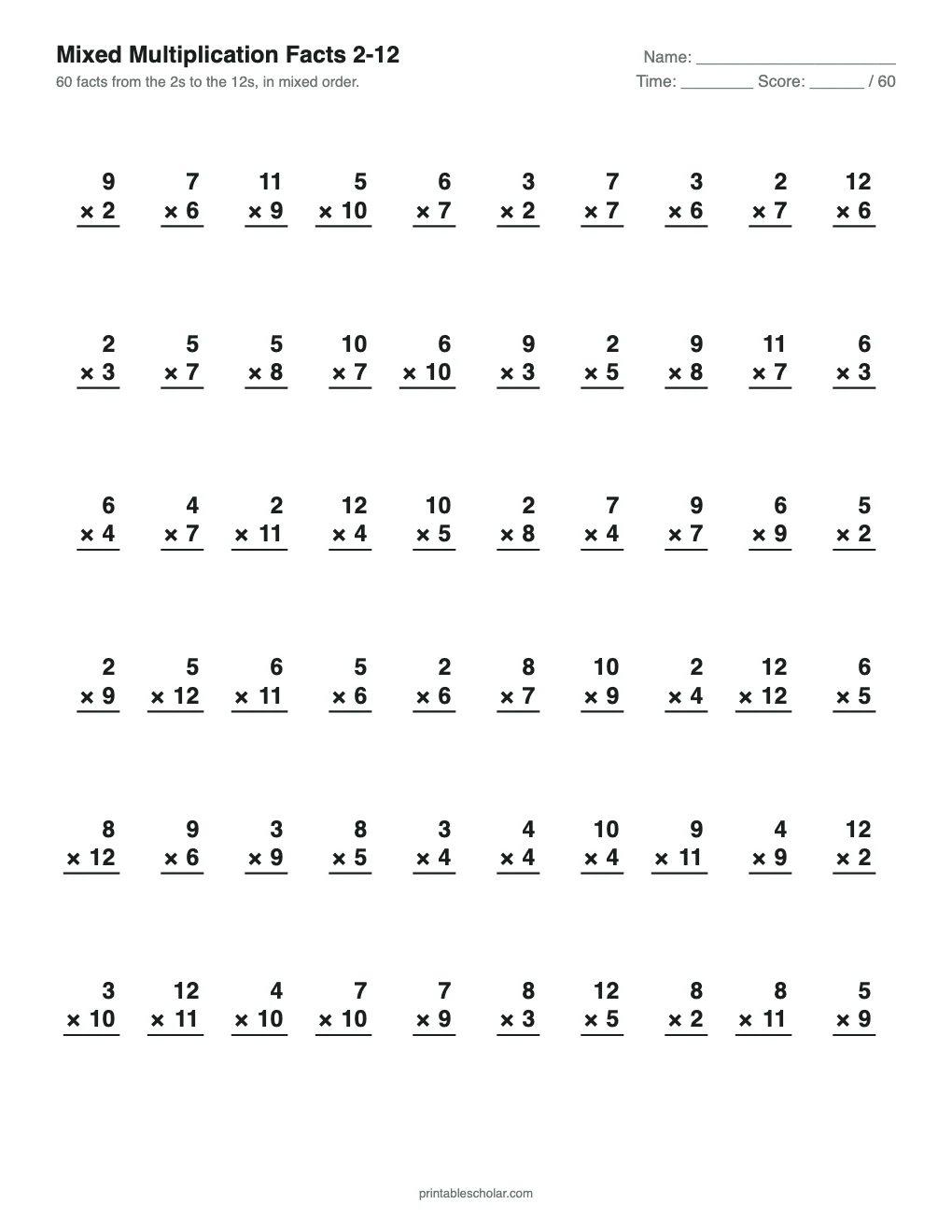
Sixty mixed facts with a place to write the time and score. Works as a timed test. Includes answer key.
Download PDF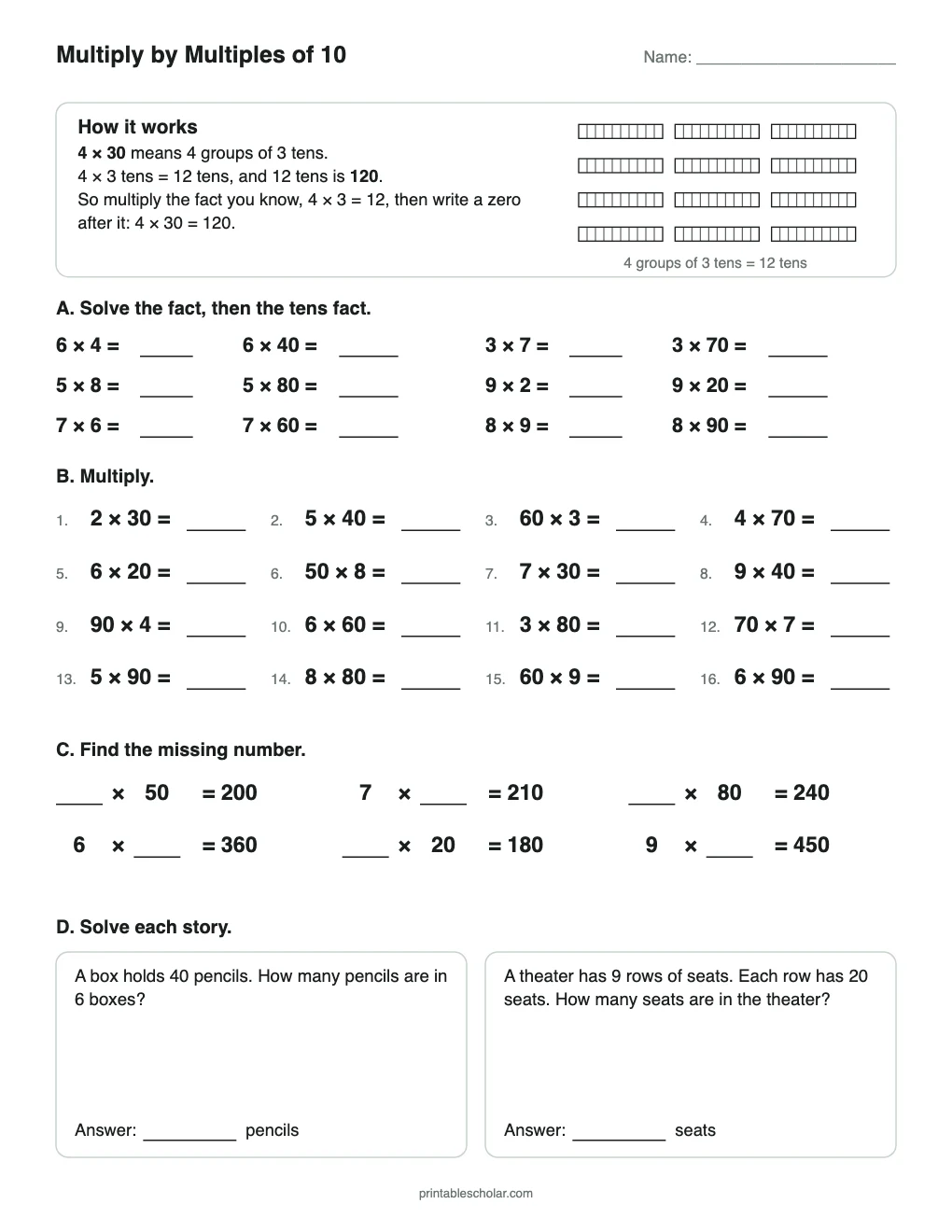
Why 4 × 30 is 4 × 3 with a zero: fact pairs, sixteen problems, missing numbers and two stories. Includes answer key.
Download PDF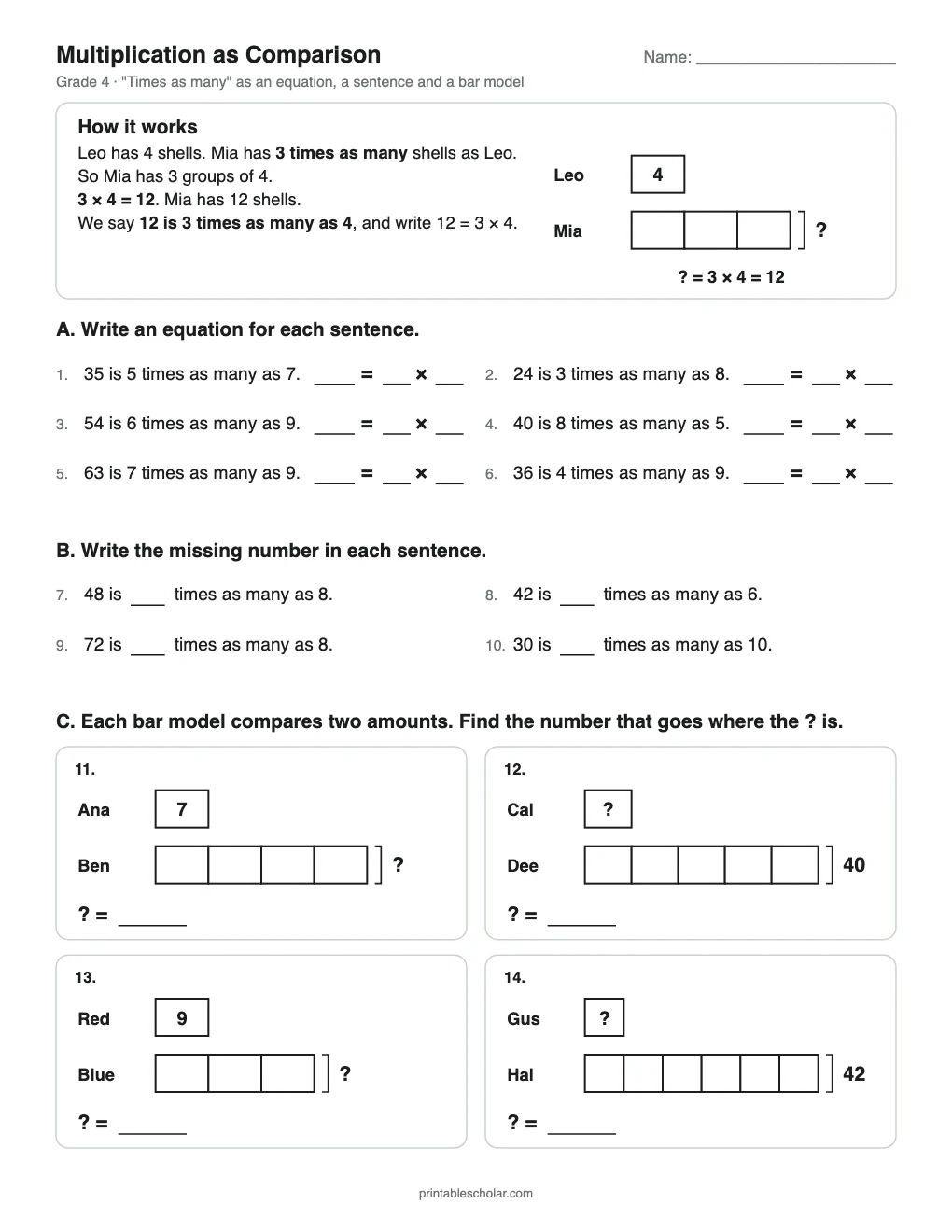
What "3 times as many" means, six sentences to write as equations, four sentences to finish, and four bar models. Includes answer key.
Download PDF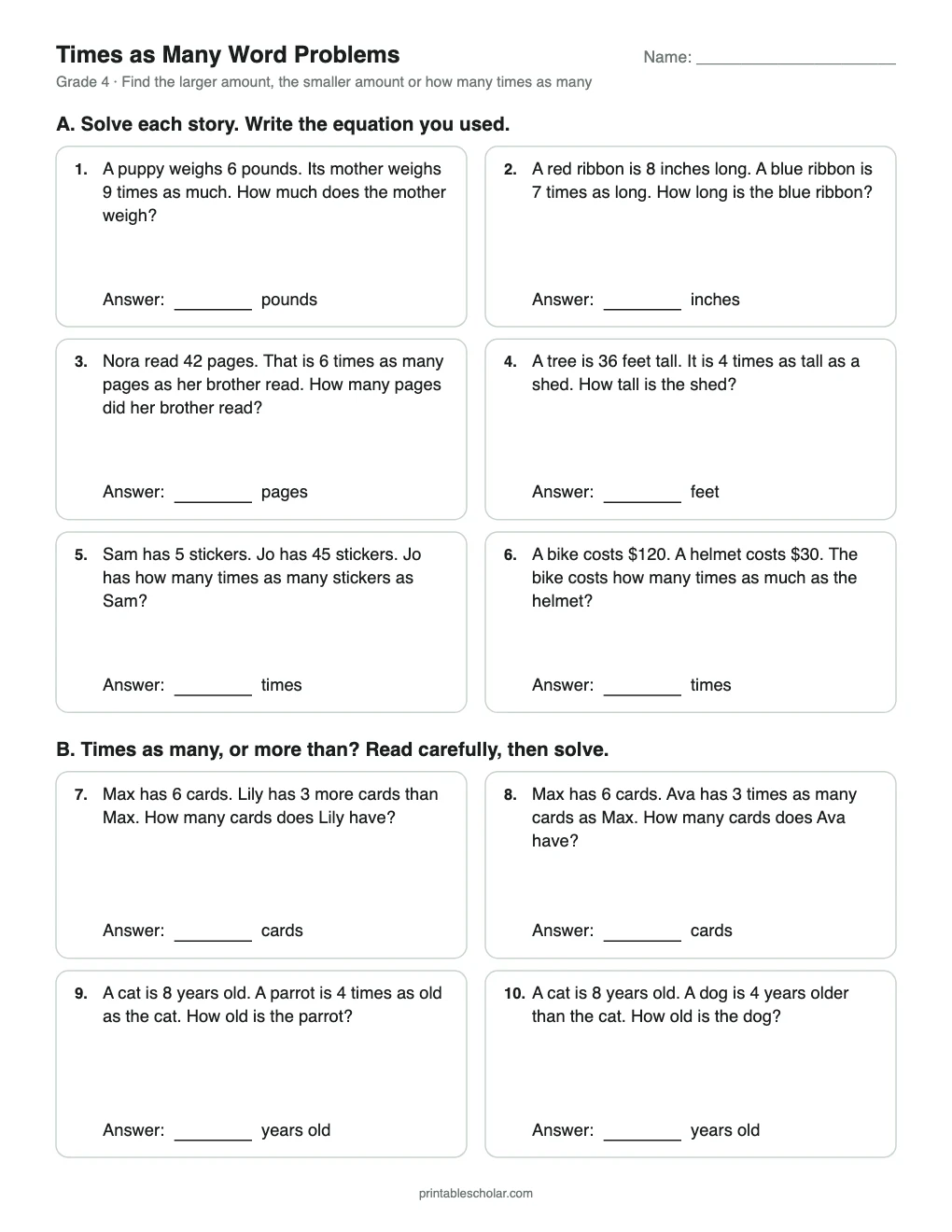
Six stories that find the larger amount, the smaller amount or how many times as many, then four that mix "times as many" with "more than". The key shows each equation.
Download PDF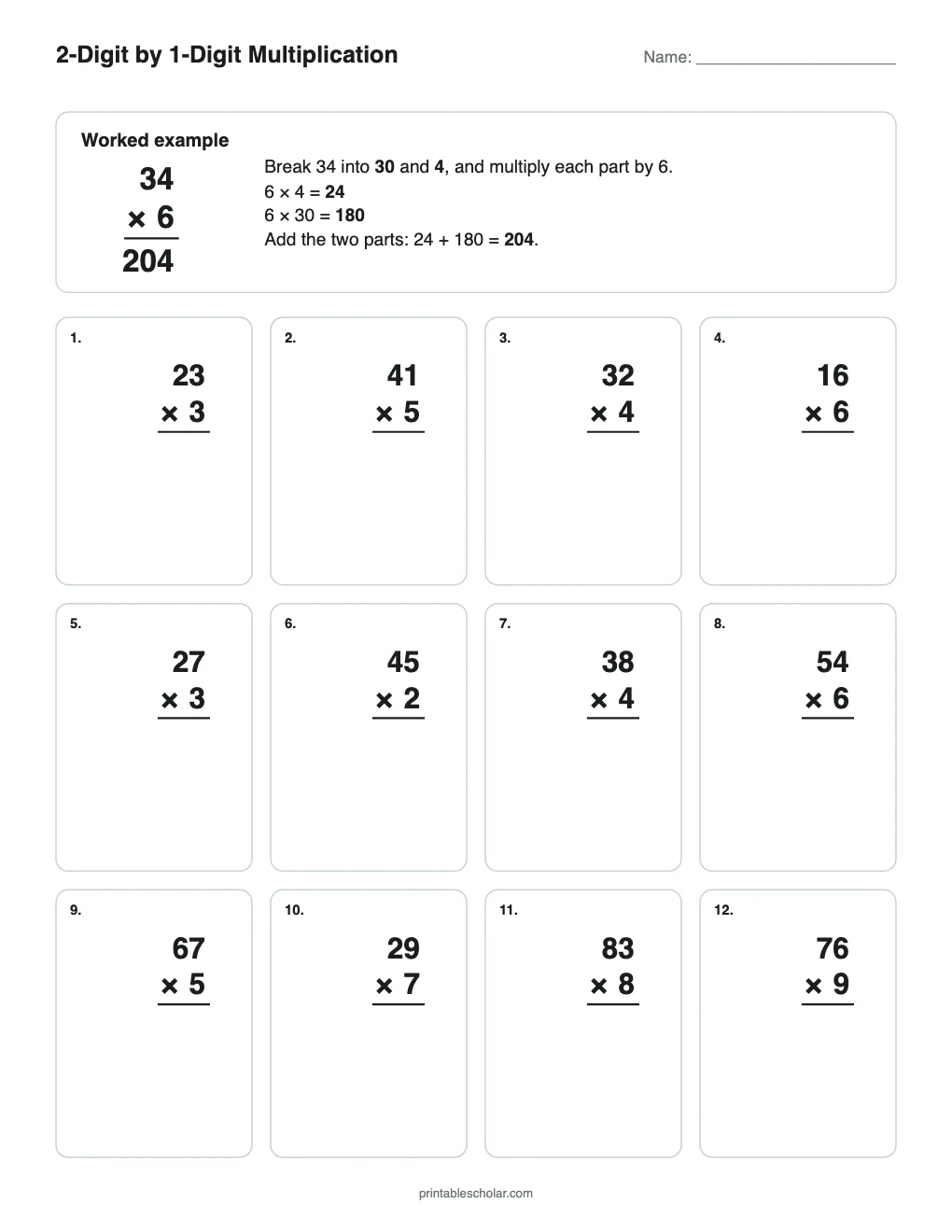
A worked example, then twelve problems with room to work. The key shows both partial products.
Download PDF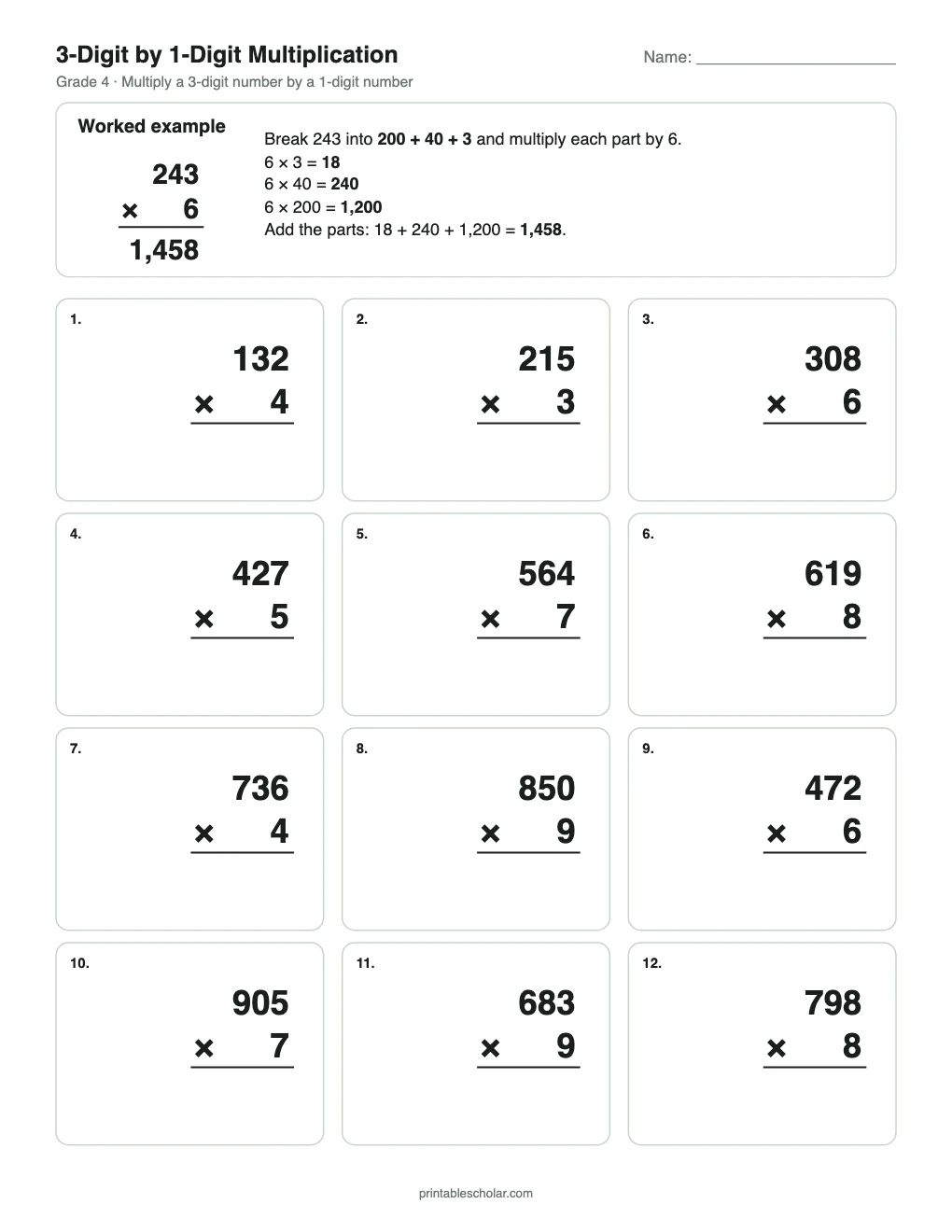
A worked example, then twelve problems such as 564 × 7, set large with room to work. The key shows every partial product.
Download PDF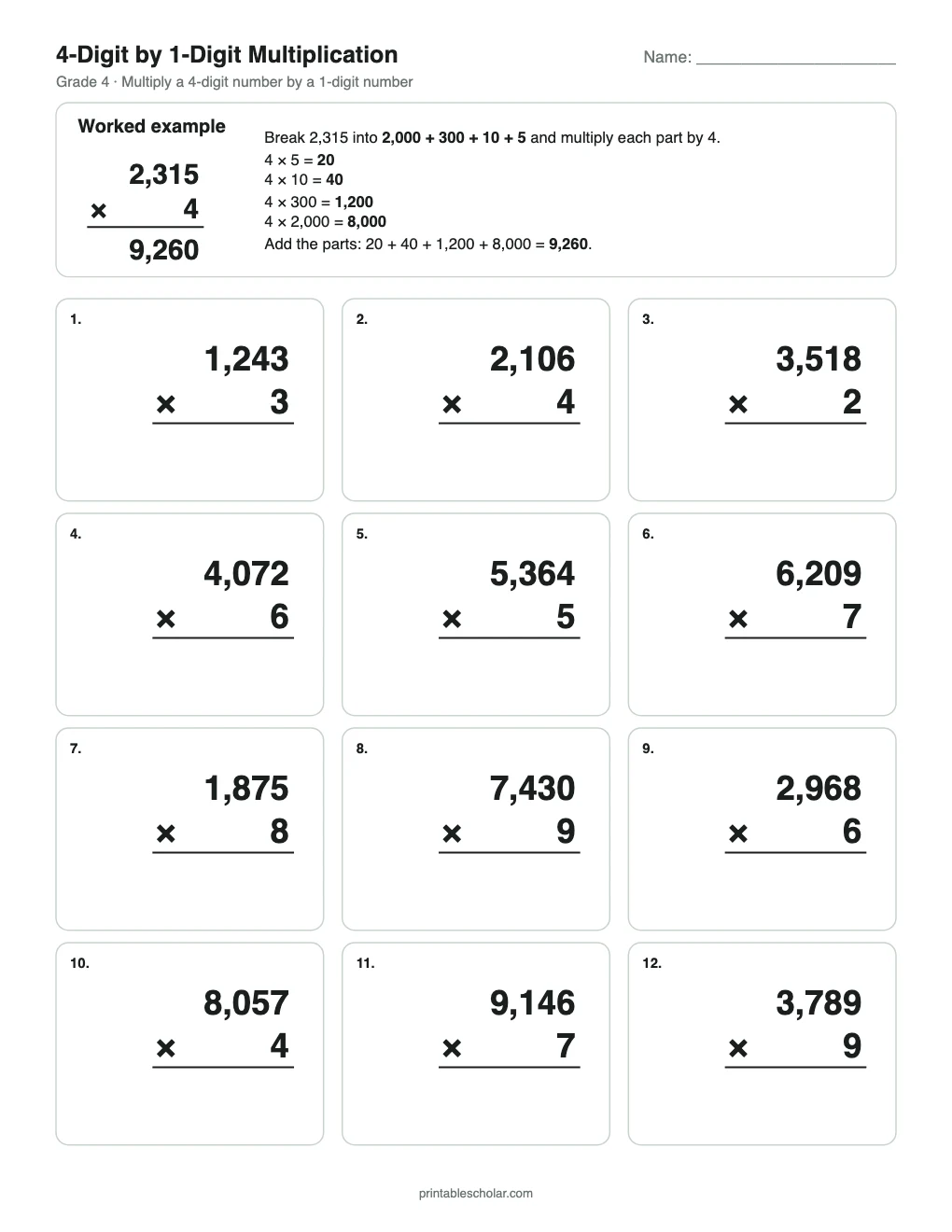
A worked example, then twelve problems such as 5,364 × 5, set large with room to work. The key shows every partial product.
Download PDF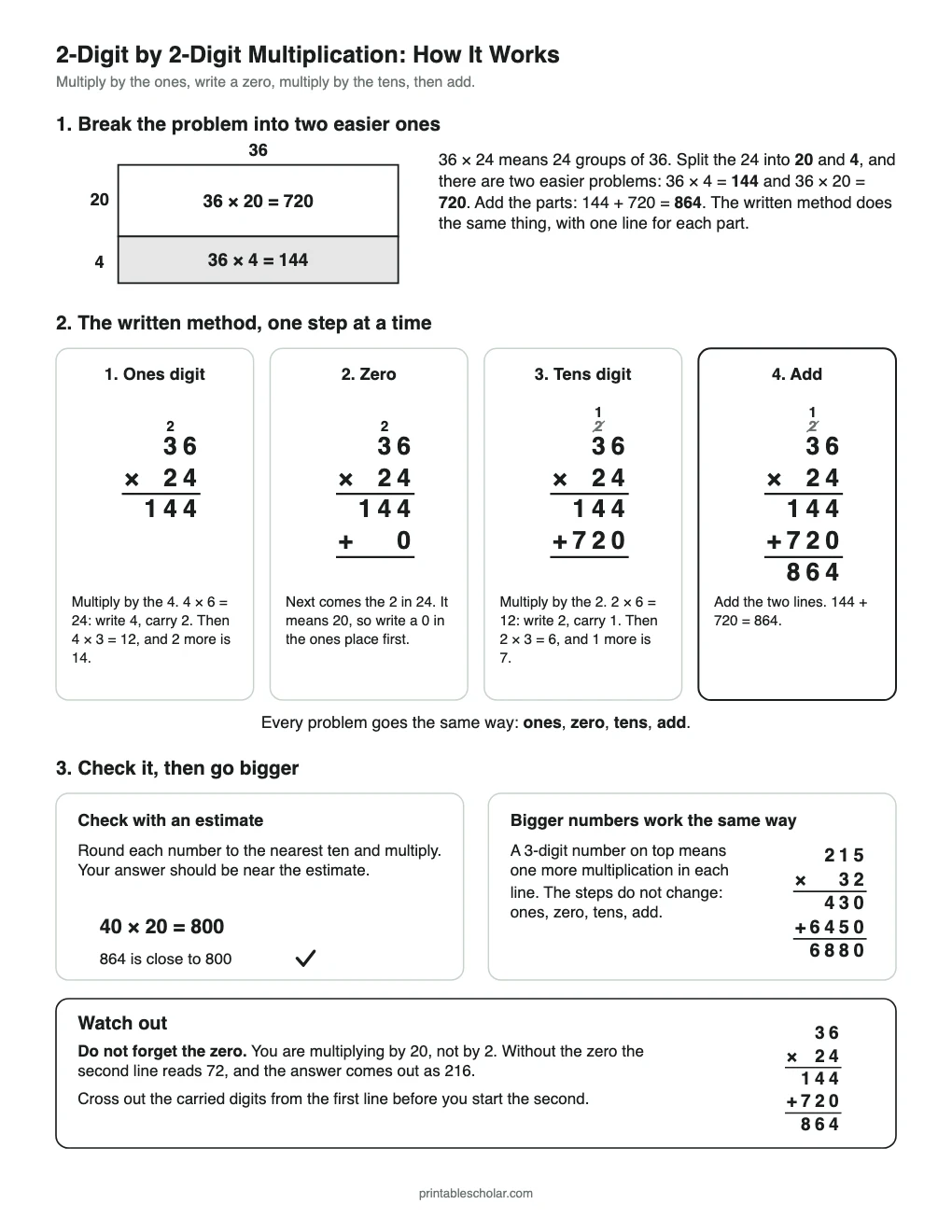
A box model of 36 × 24, then the written method in four steps on the same problem. Plus estimating to check and the zero mistake.
Download PDF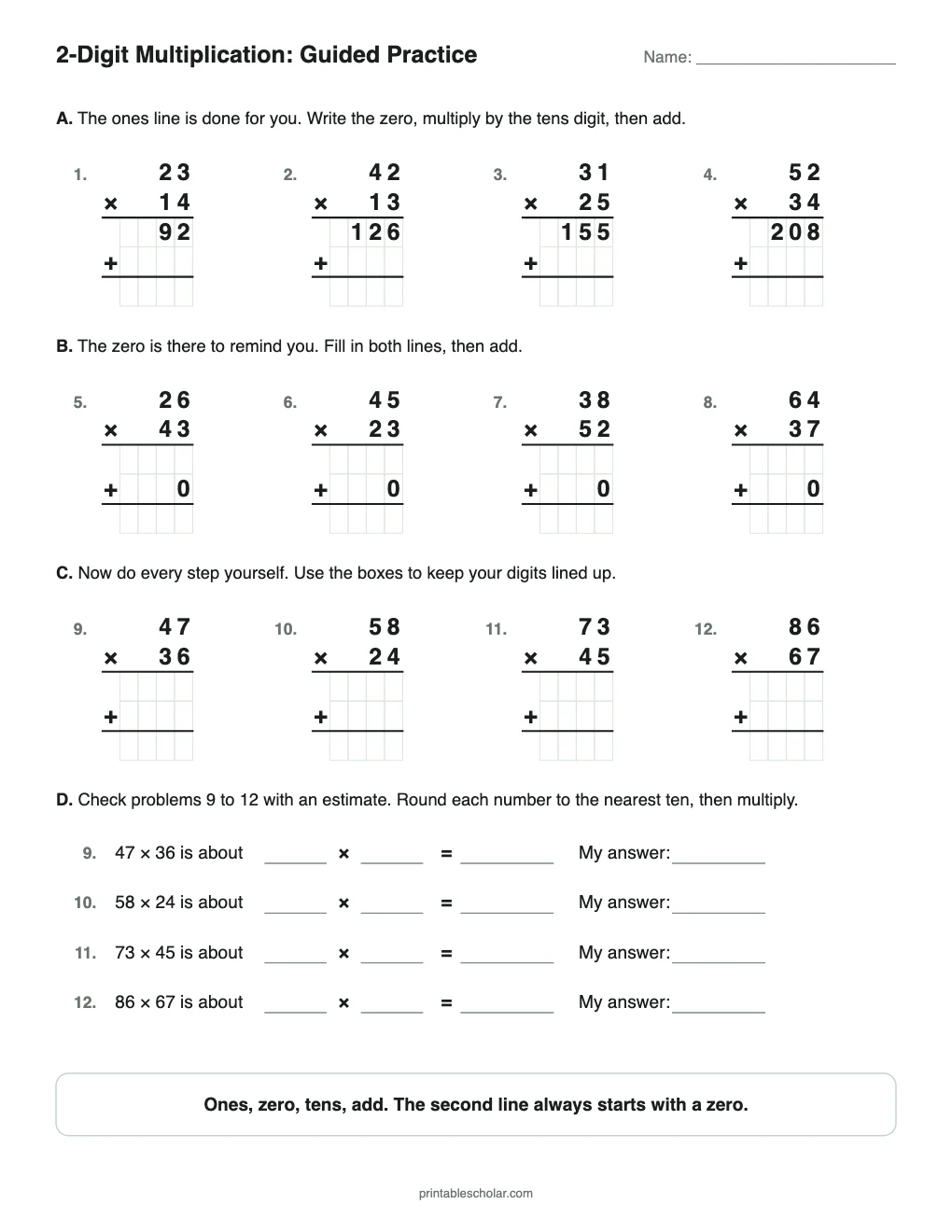
Twelve problems on a grid. The first four have the ones line done, the next four have the zero. Includes answer key.
Download PDF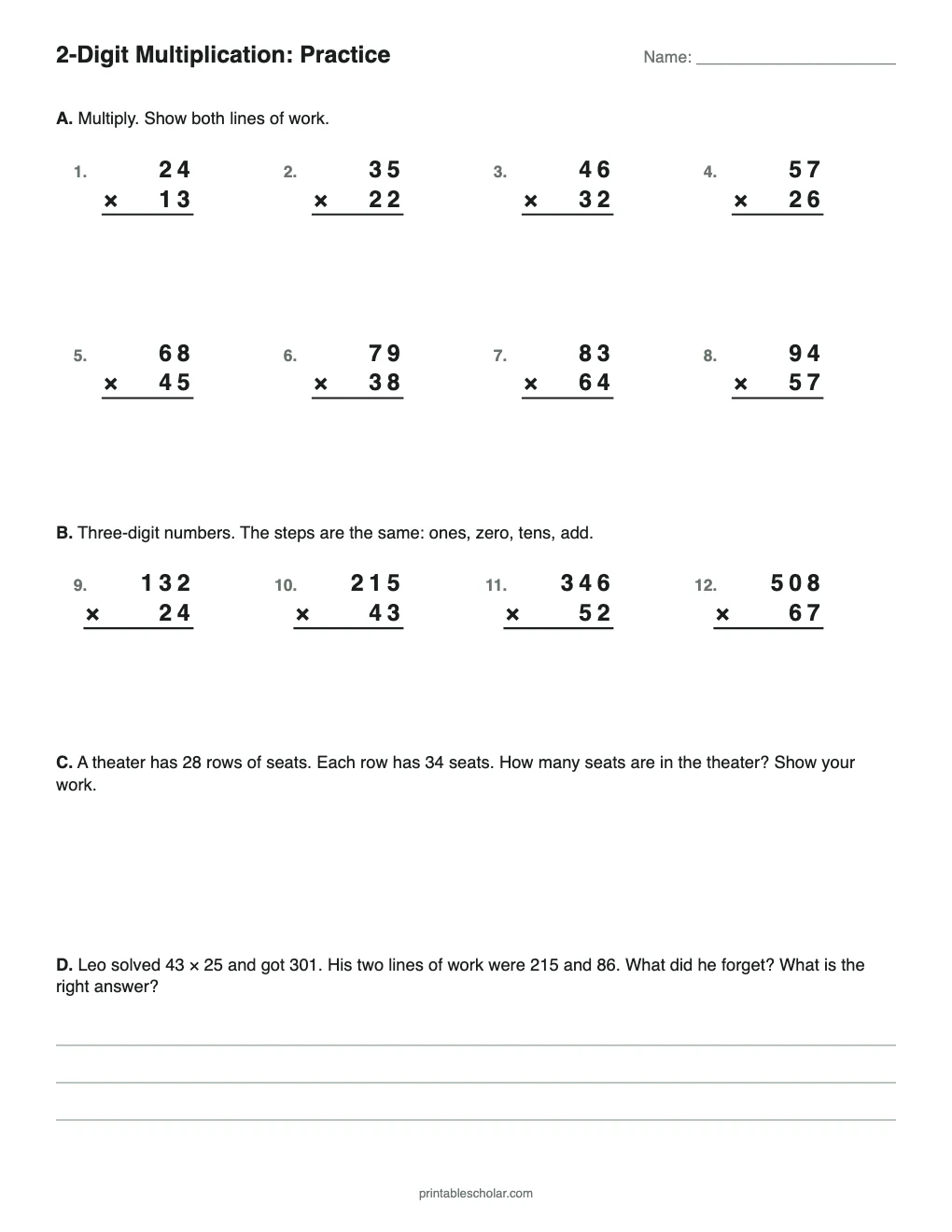
Eight 2-digit problems, four 3-digit by 2-digit, a word problem and one mistake to explain. The key shows both lines of work.
Download PDF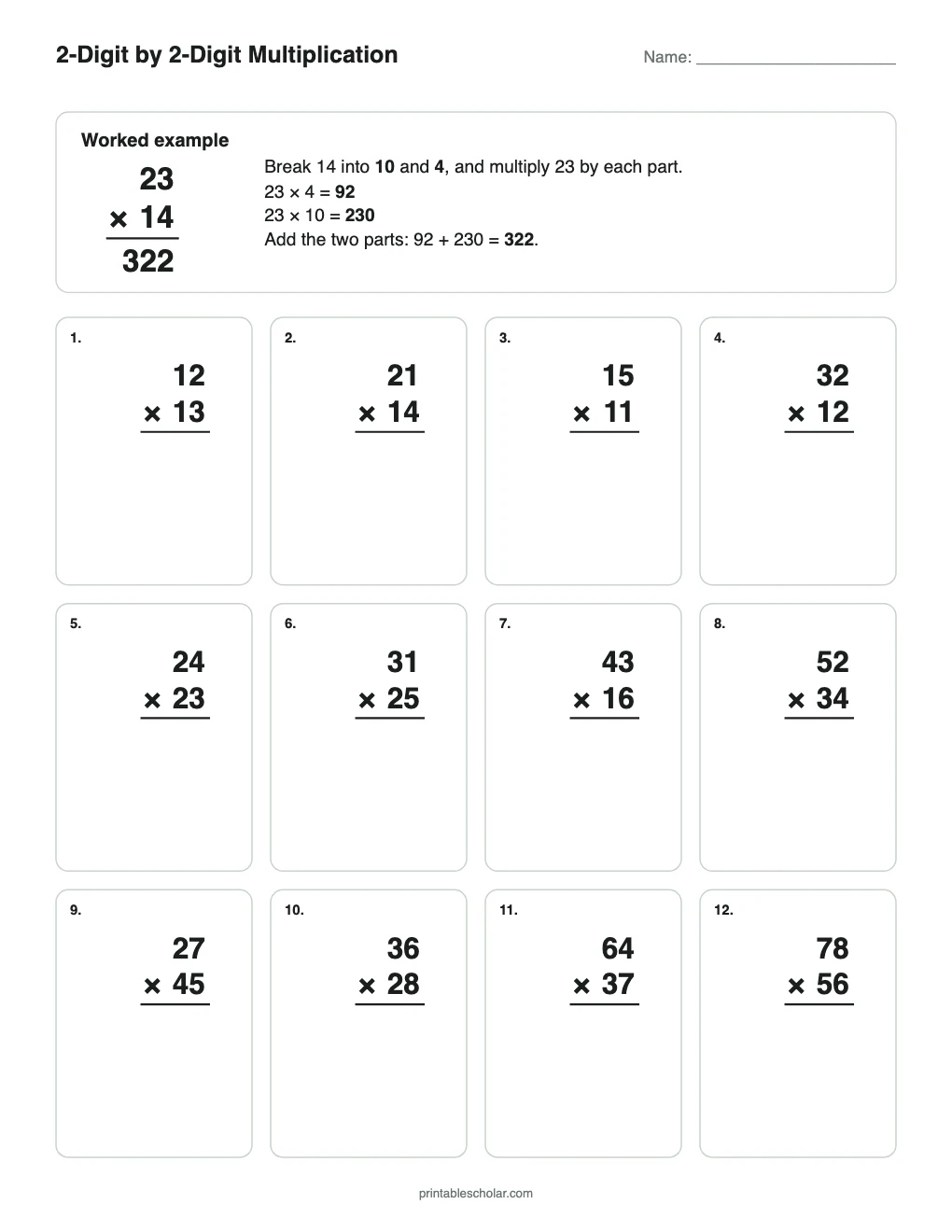
A worked example, then twelve problems with room to work. The key shows both partial products.
Download PDF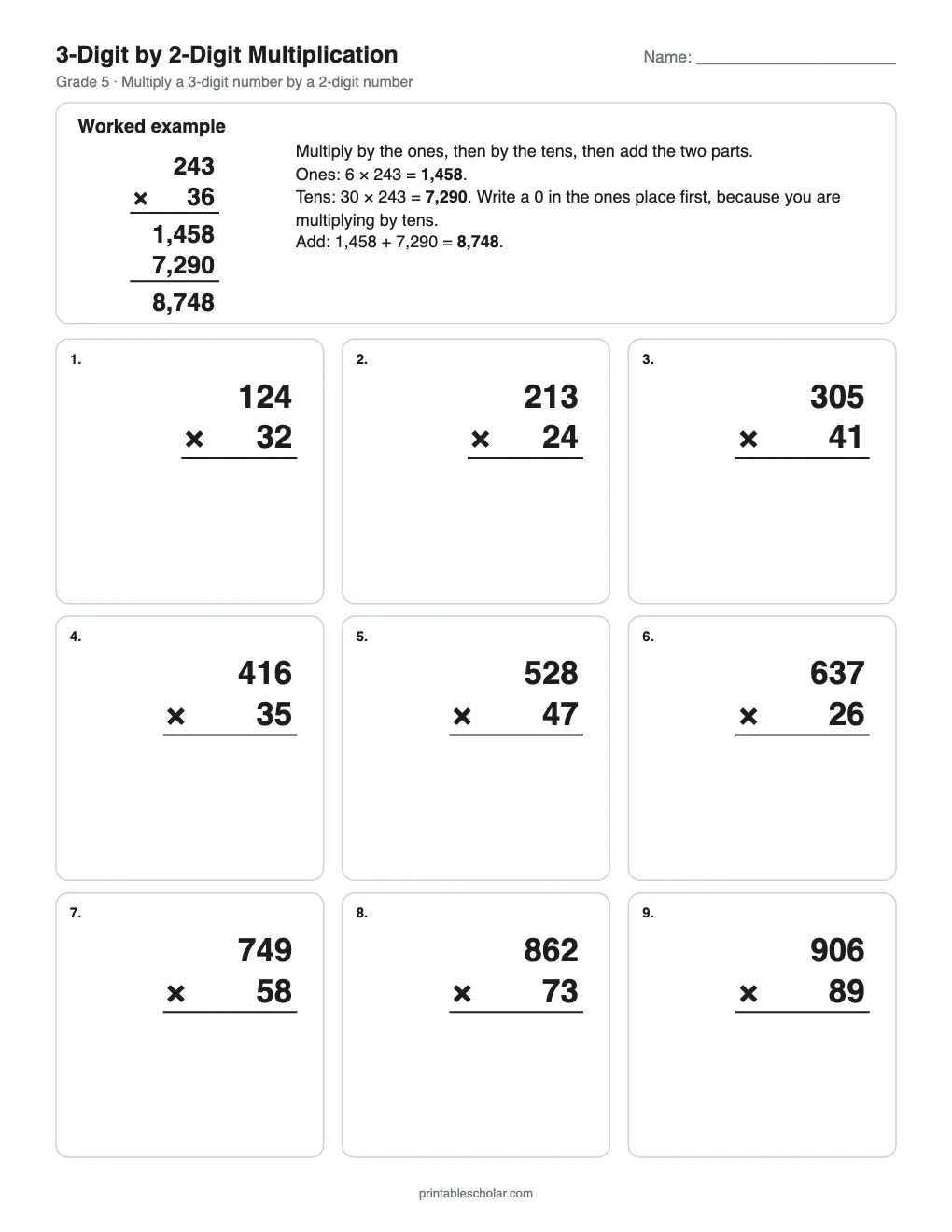
A worked example, then nine problems such as 528 × 47, set large with room for both rows of work. The key shows both partial products.
Download PDF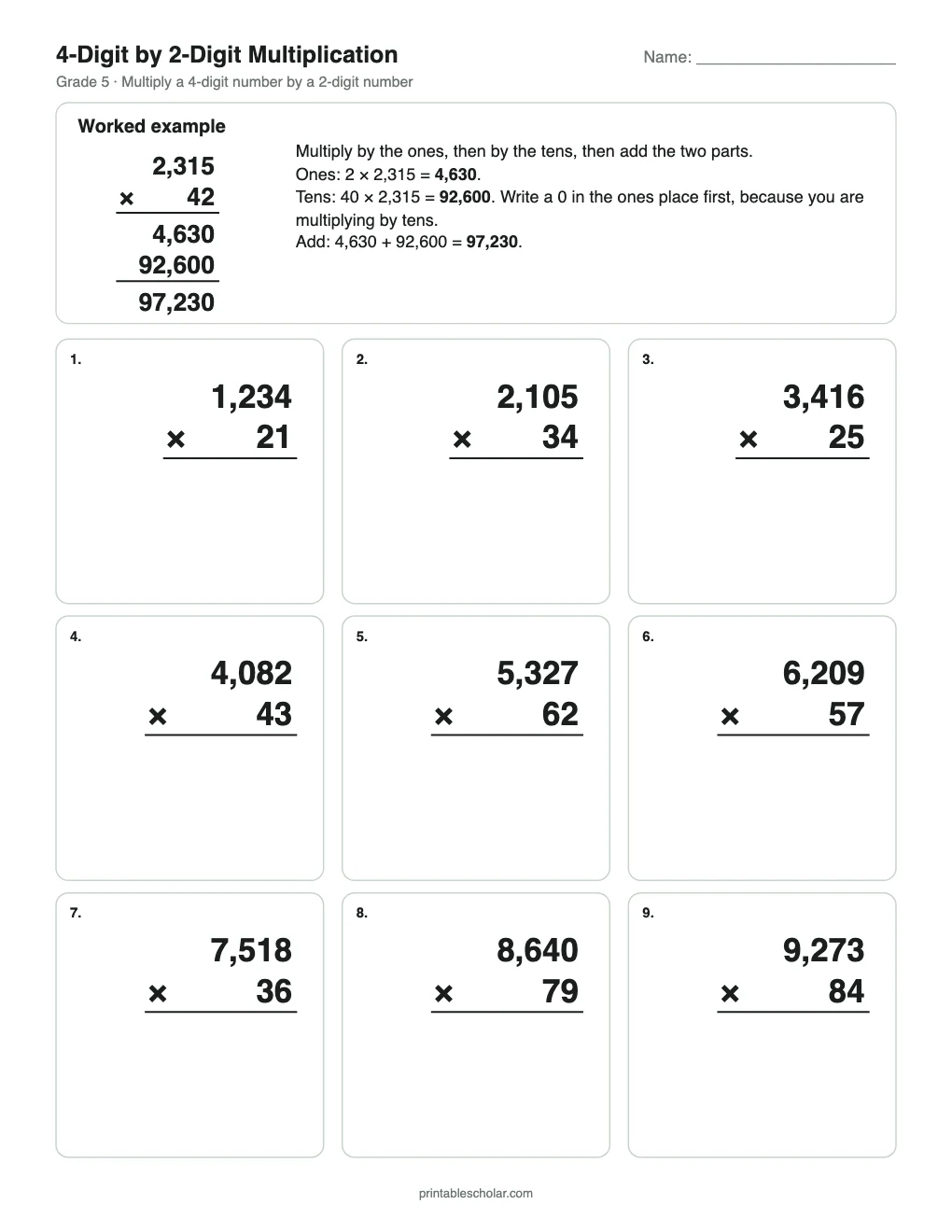
A worked example, then nine problems such as 3,416 × 25, set large with room for both rows of work. The key shows both partial products.
Download PDF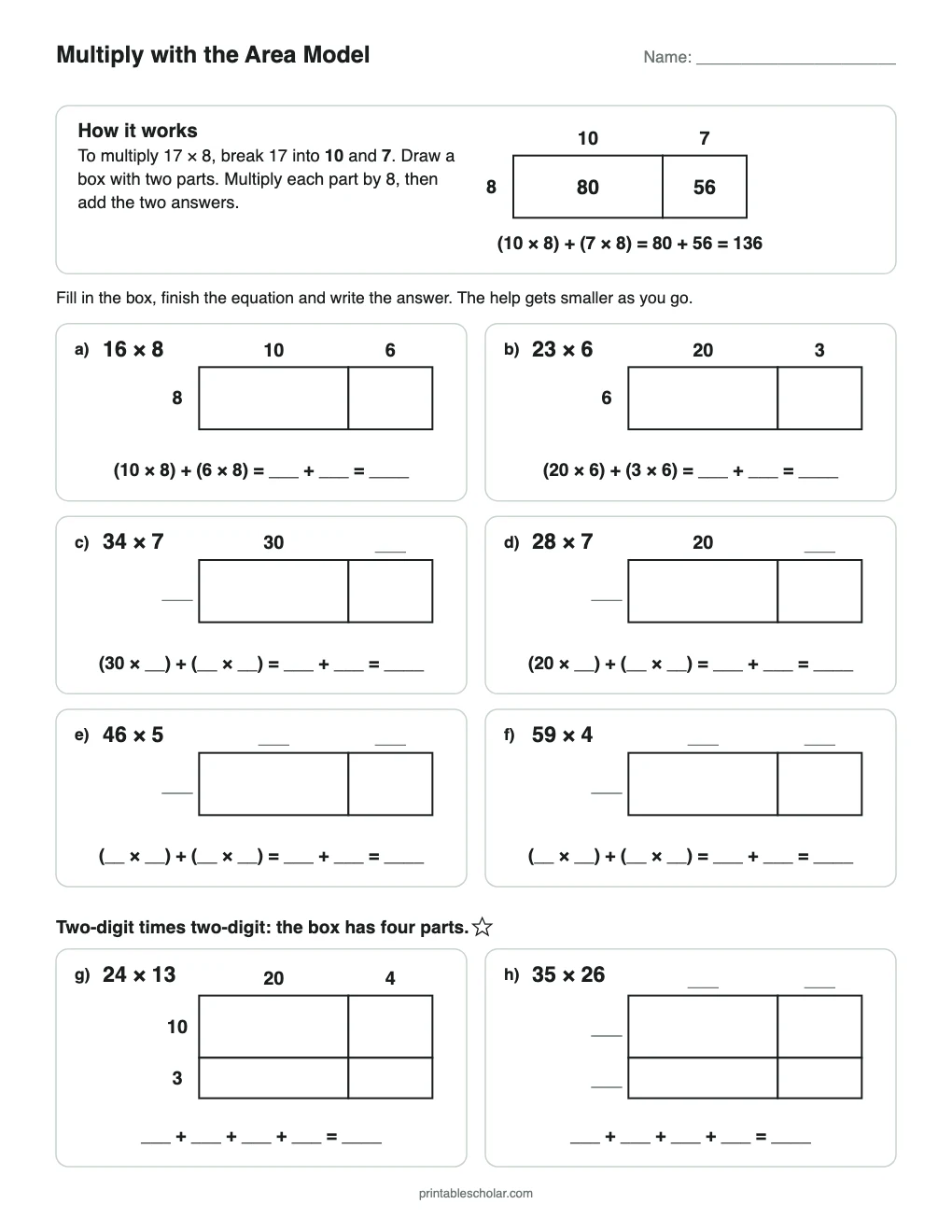
Break a number into tens and ones in a box. Six problems where the help fades, then two with a four-part box. Includes answer key.
Download PDF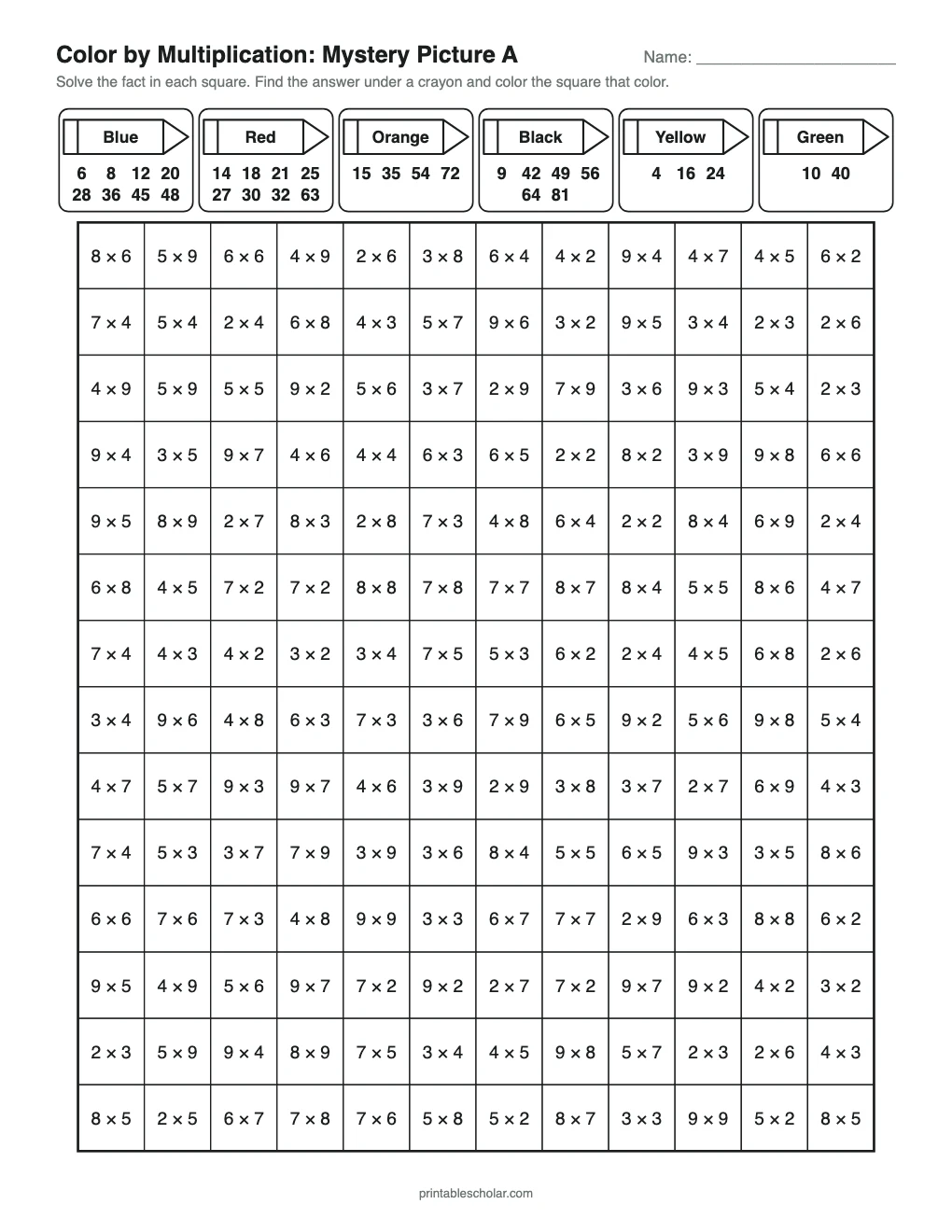
Solve 168 facts from the 2 to 9 times tables and color each square by the crayon key to uncover a hidden picture. Includes answer key.
Download PDF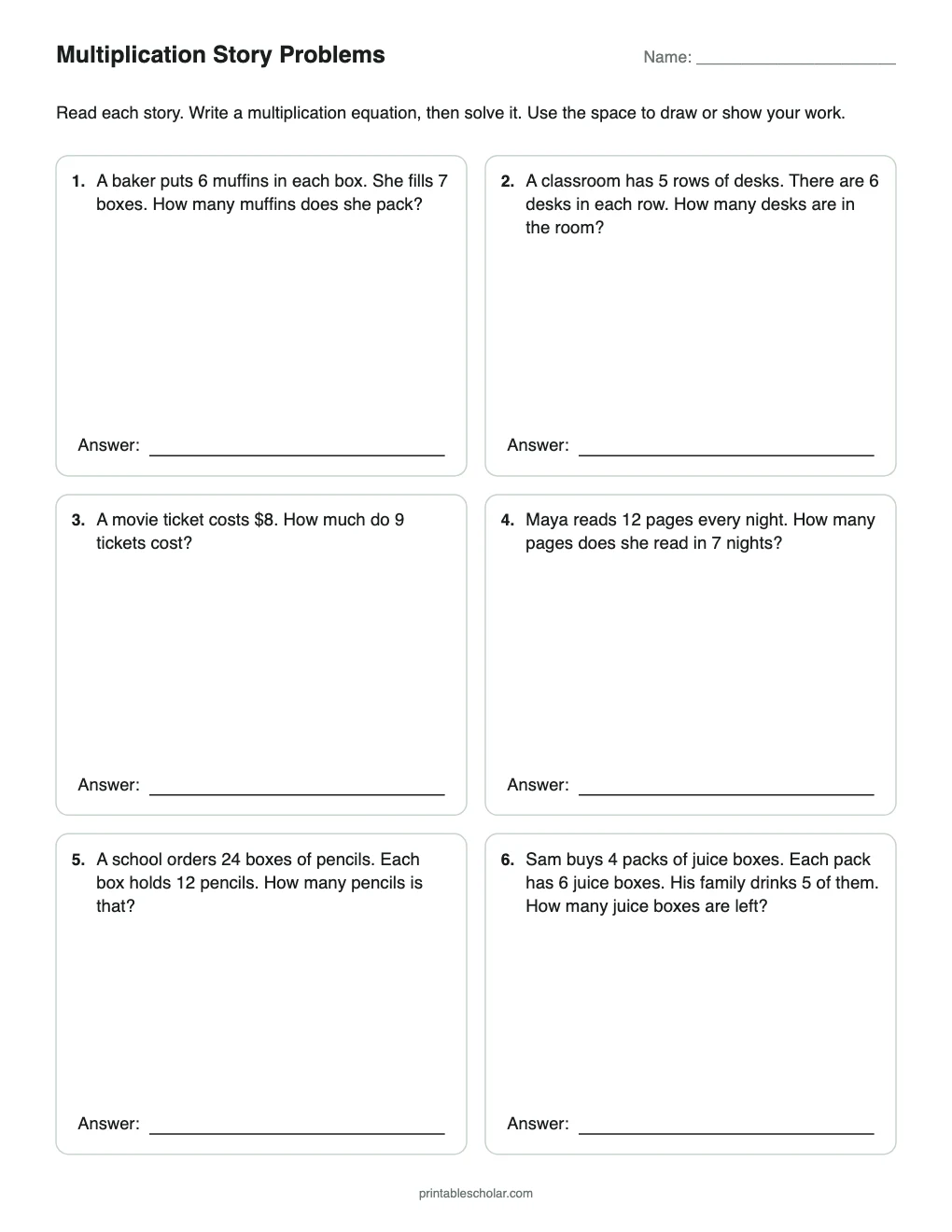
Six word problems, one with two steps, with space to draw or show work. The key shows each equation.
Download PDFThe sheets follow the order multiplication is usually taught. How Multiplication Works shows one fact, 3 × 4, as equal groups, an array, repeated addition and jumps on a number line, so students see that all four mean the same thing. The arrays sheet then has them write the fact for a picture.
The strategies sheet is for the stage between understanding and memorizing. It shows how to get a fact you do not know from one you do: double for the 2s, double twice for the 4s, take half of ten times for the 5s, take one group away from ten times for the 9s, and split a hard fact such as 7 × 6 into 5 × 6 and 2 × 6.
That last strategy, breaking a fact apart, gets two sheets of its own because it is the distributive property, which students use again in multi-digit multiplication and the area model. Break Apart Arrays shows the split on dots: an array of 7 rows of 6 cut into 5 rows and 2 rows, two facts that add to 42. Students finish six split arrays, then draw the line themselves on two more. Break Apart Facts writes the same idea as an equation, 8 × 7 = (5 × 7) + (3 × 7), with missing numbers and four facts to split any way they like.
The three fact sets group the times tables by difficulty. Set A is the 2s, 5s and 10s. Set B is the 3s, 4s and 6s. Set C is the 7s, 8s and 9s. The sets are fixed, so a student can repeat the same sheet and see the time or score improve. The mixed 60-fact sheet covers the 2s through the 12s and can be used as a timed test.
The 2-digit sheets open with a worked example that breaks one number into tens and ones, and the answer keys show both partial products for every problem so mistakes are easy to find. 3-Digit by 1-Digit and 4-Digit by 1-Digit Multiplication carry the same idea up to the thousands: 564 × 7 is 7 × 4, 7 × 60 and 7 × 500 added together, and the keys list each part.
In 4th grade multiplication is also a way to compare. Multiplication as Comparison reads "24 is 3 times as many as 8" as 24 = 3 × 8, and draws it as a bar model: one bar of 8 beside three bars of 8. Times as Many Word Problems asks for the larger amount, the smaller amount or how many times as many, and ends with pairs of stories that differ by one phrase, "3 more than" and "3 times as many", because mixing the two is the mistake students make most.
2-digit by 2-digit multiplication gets a short lesson of its own. The How It Works sheet splits 36 × 24 into 36 × 20 and 36 × 4 in a box, then shows the written method on the same problem in four pictures: the ones line, the zero, the tens line and the total. Each picture adds only the next thing to write. Guided practice follows on a grid, with less help in each section, and then practice without the grid.
For a reference to keep on the desk, print a multiplication chart. For more stories, see multiplication word problems. To practice the facts with a partner, try the multiplication games.
The mystery picture is fact practice with a reason to finish: each square has a fact, the answer says which crayon to use, and a picture shows up as the squares fill in. There are more multiplication pictures, and holiday ones, on the mystery pictures page.
 Printable Scholar