About the Multiplication Games
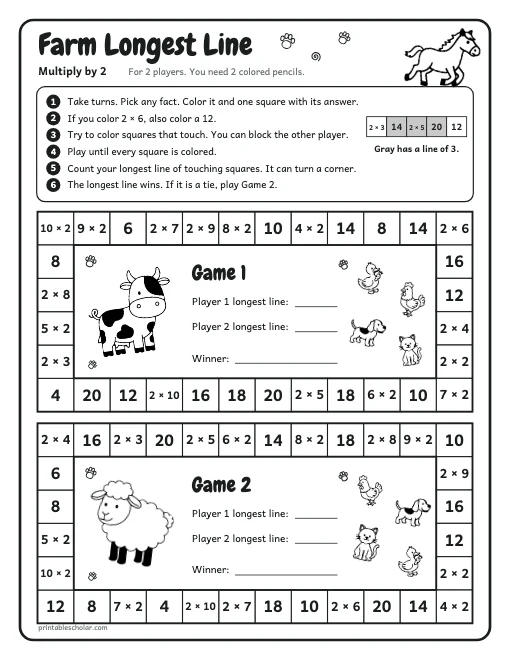
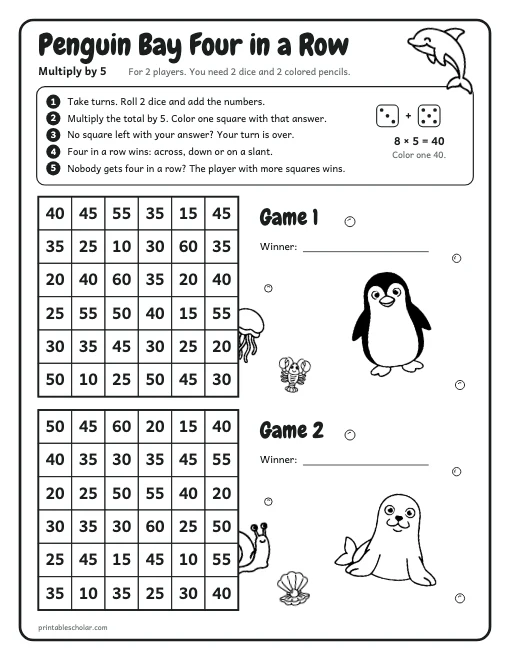
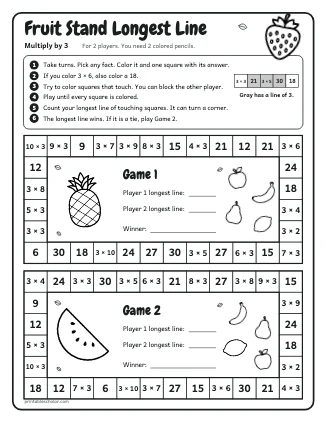
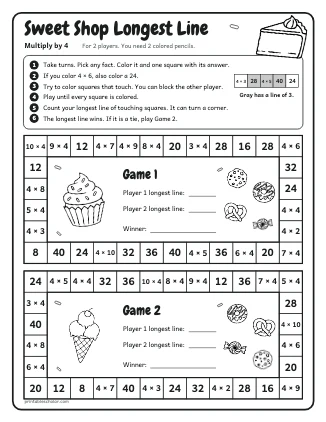
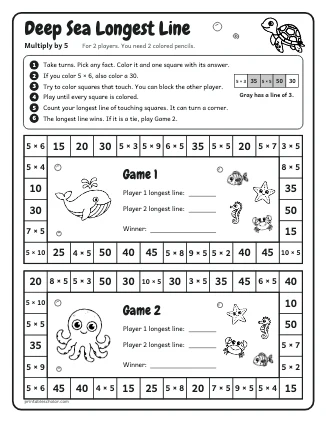
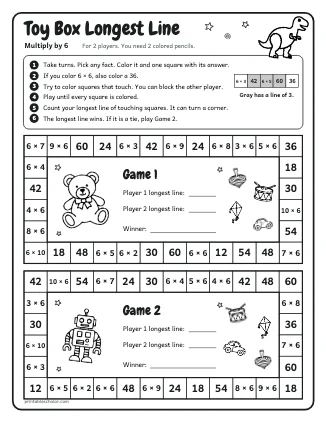
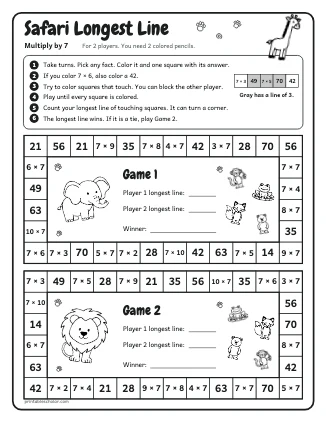
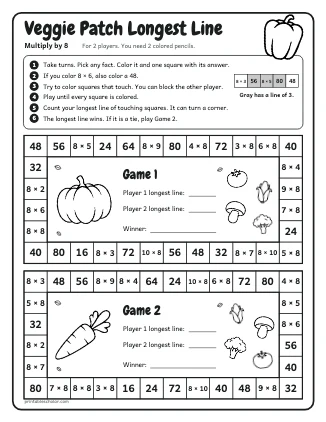
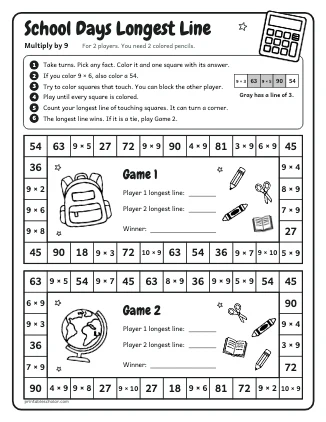
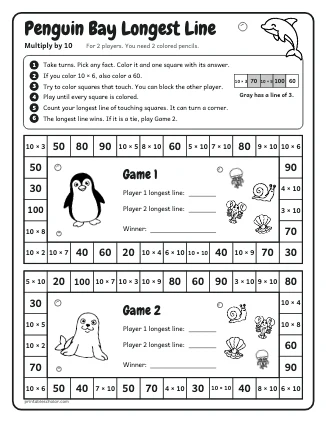
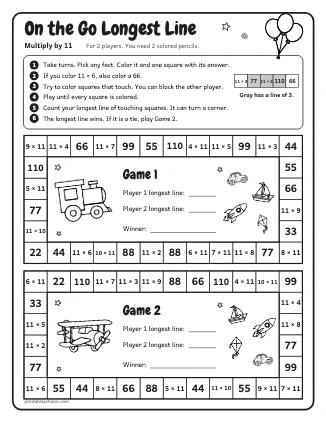
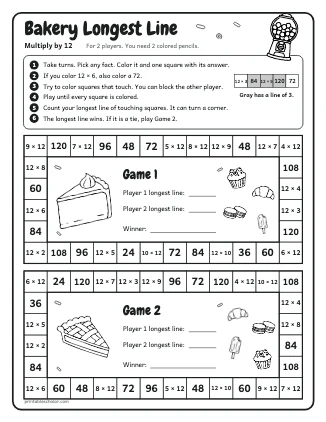
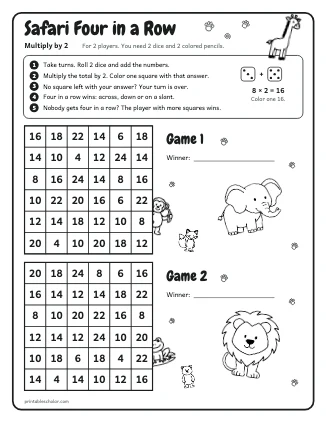
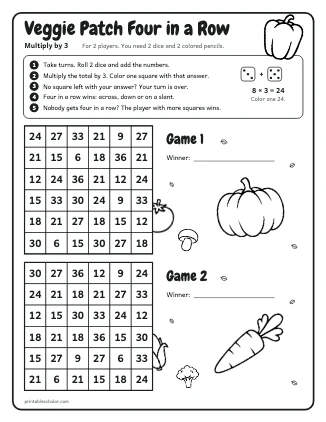
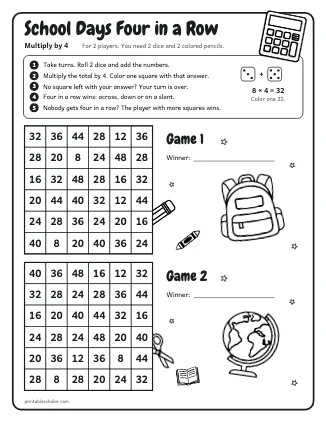
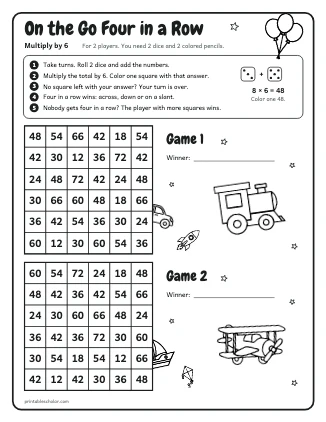
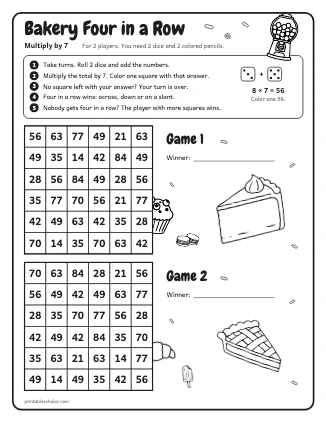
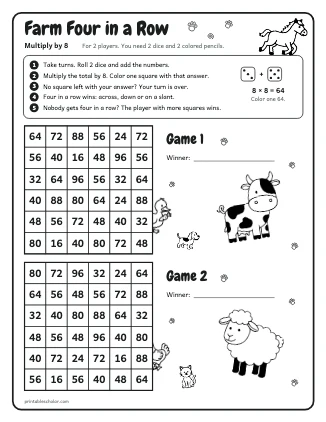
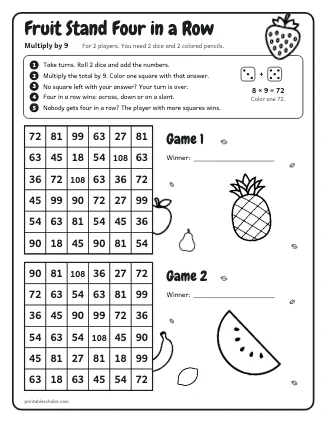
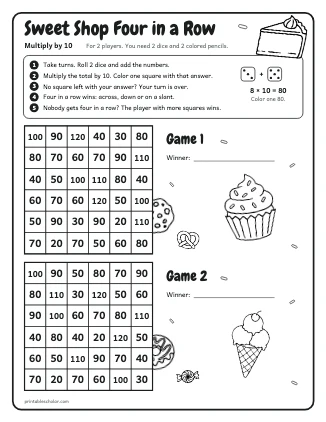
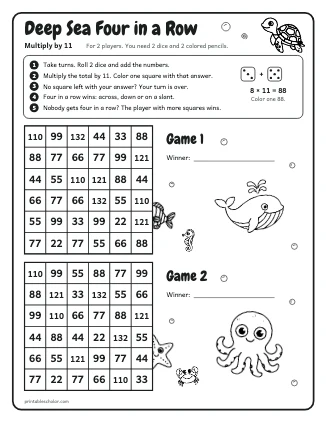
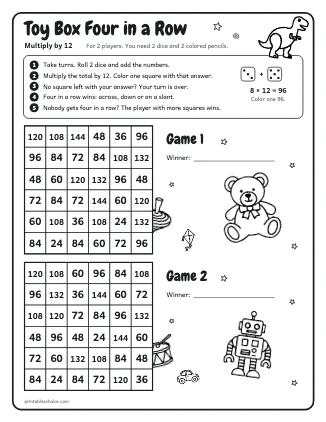
There are five kinds of game. In Longest Line, players take turns coloring a fact and its answer on a track, and try to build the longest line of touching squares. In Four in a Row, they roll two dice, add them, multiply by the table number and color the answer. The pack has both for each times table from 2 to 12.
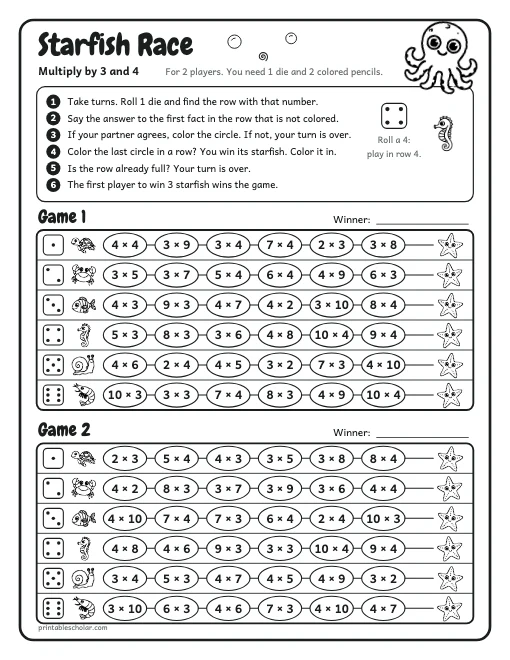
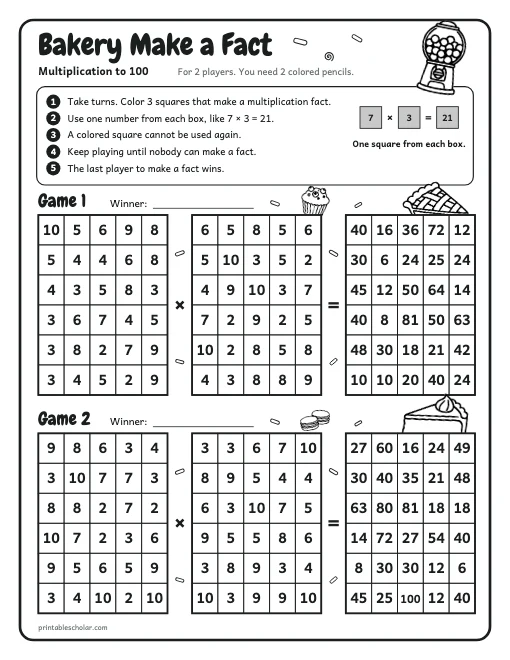
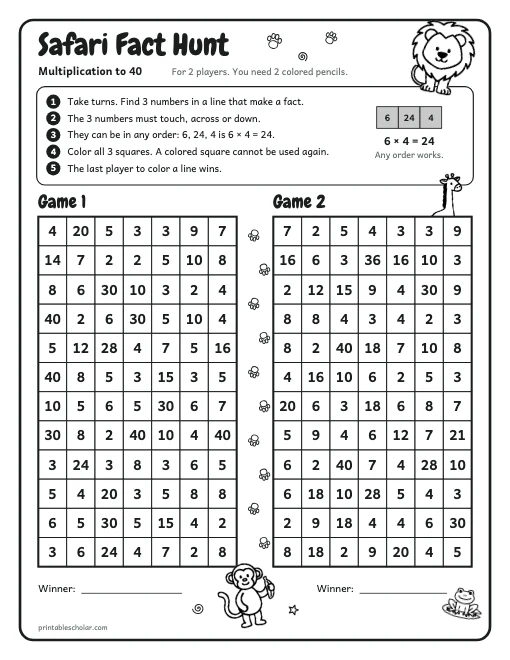
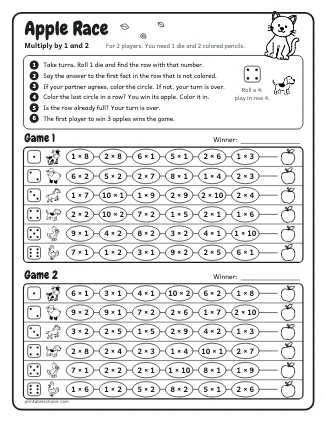
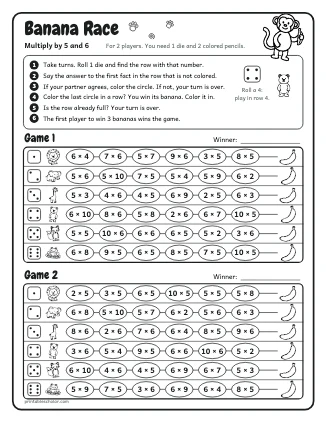
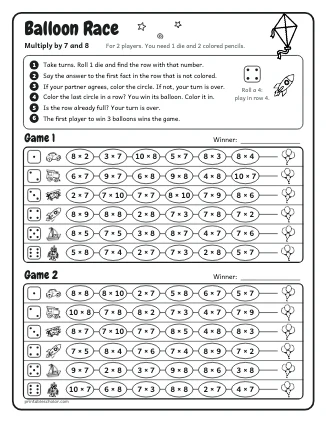
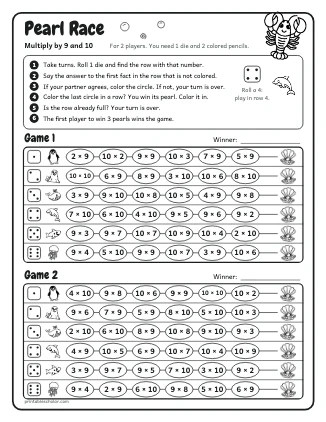
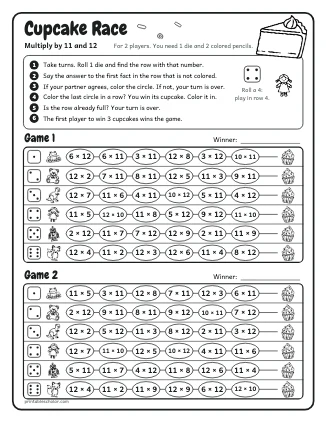
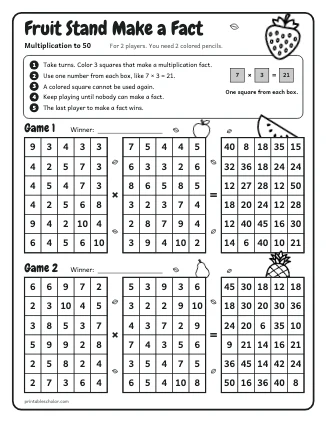
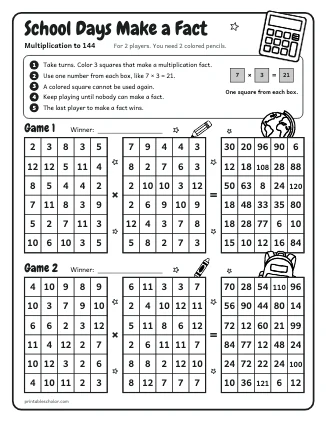
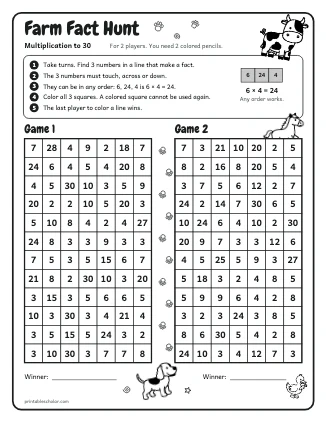
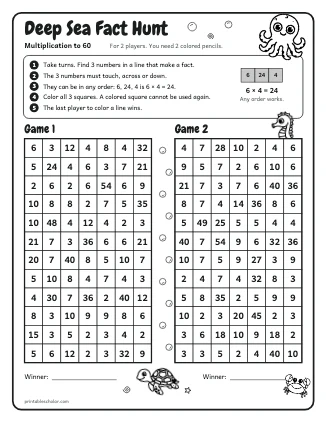
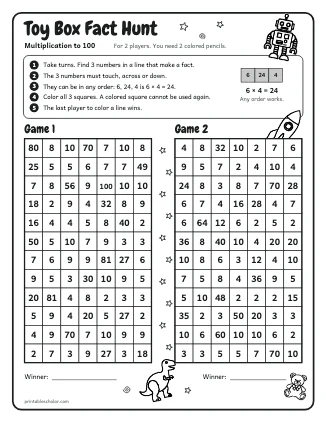
The Race games cover two tables on one sheet. Roll a die to pick a row, answer the next fact in it, and win the prize at the end of any row you finish. Make a Fact and Fact Hunt mix all the tables: players look for three numbers that make a multiplication fact, and the last player to find one wins.
The games give the same practice as a page of facts, but with a reason to do it. A player who wants the square marked 28 has to work out which fact makes 28, and a partner is checking every answer. Because the boards are fixed, a pair can play the same sheet again and get faster.
Every sheet is black and white. The pictures are outlines, so early finishers can color them in. For written practice, see the multiplication worksheets, and keep a multiplication chart on the table for checking answers.
Frequently Asked Questions
What do you need to play?
Two colored pencils or crayons in different colors. The Four in a Row games also need two dice and the Race games need one die. Nothing has to be cut out.
What grade are these multiplication games for?
Third and fourth grade, when students are learning the times tables. The sheets for the 2s, 5s and 10s suit the end of 2nd grade, and the 11s and 12s suit 4th and 5th grade.
How long does a game take?
About ten minutes. Each sheet has two boards, so a pair can play twice in a 20-minute math center or as a fast-finisher activity.
How do players check the answers?
They check each other. A turn only counts if the partner agrees with the answer. Give each pair a multiplication chart to settle any disagreement.
Which games are free?
Five, one of each kind: Longest Line for the 2s, Four in a Row for the 5s, the Starfish Race for the 3s and 4s, Make a Fact to 100 and Fact Hunt to 40. The Multiplication Games Pack has all 35 games in one PDF.
Can more than two play?
Four in a Row, the Race games, Make a Fact and Fact Hunt work with three players. Longest Line is best with two.