Every clue is locked behind a page of math. Students solve the facts, decode the clue, and cross out drawn suspects until only the culprit is left. Grade 3, black and white, answer keys included.
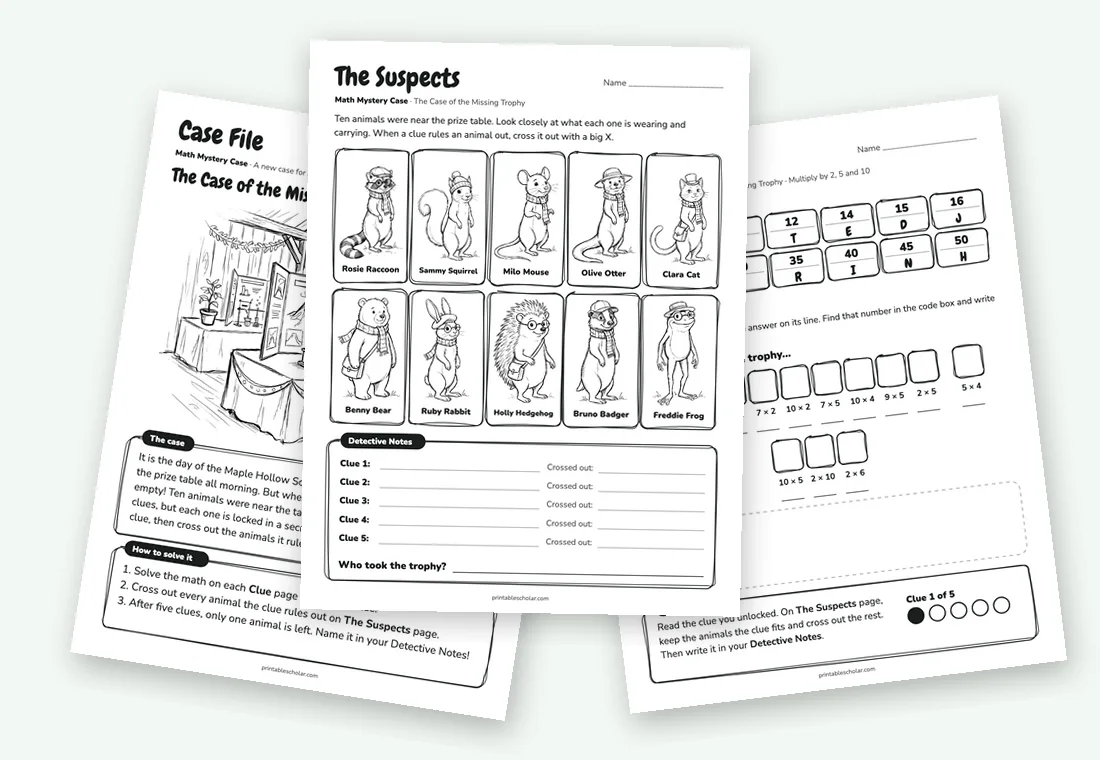
Five clue pages, one culprit. Every answer is checked, so one suspect always survives.
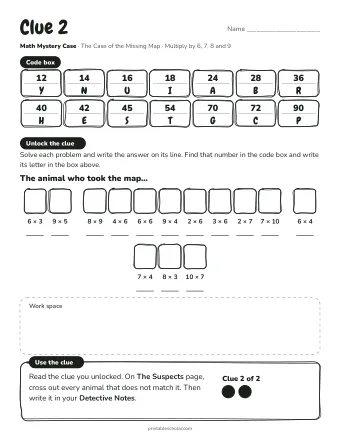
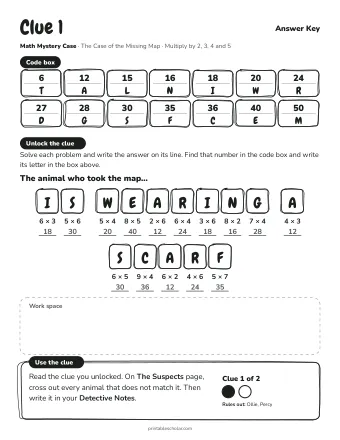
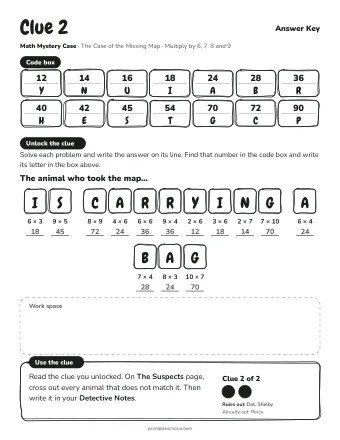
Each clue page has 12 to 15 facts. Students write each answer on its line.
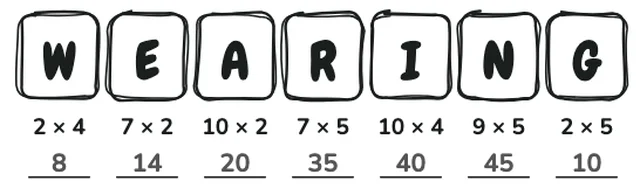
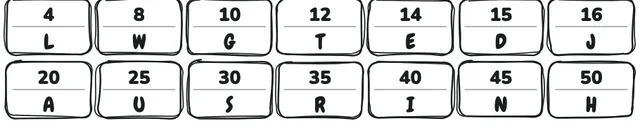
Each answer is a number in the code box. Its letter goes in the box, and the letters spell the clue.
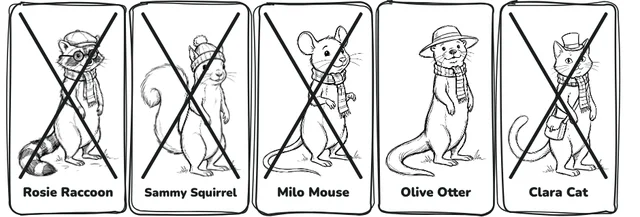
The clue says what the culprit wears. Cross out every animal that does not fit.
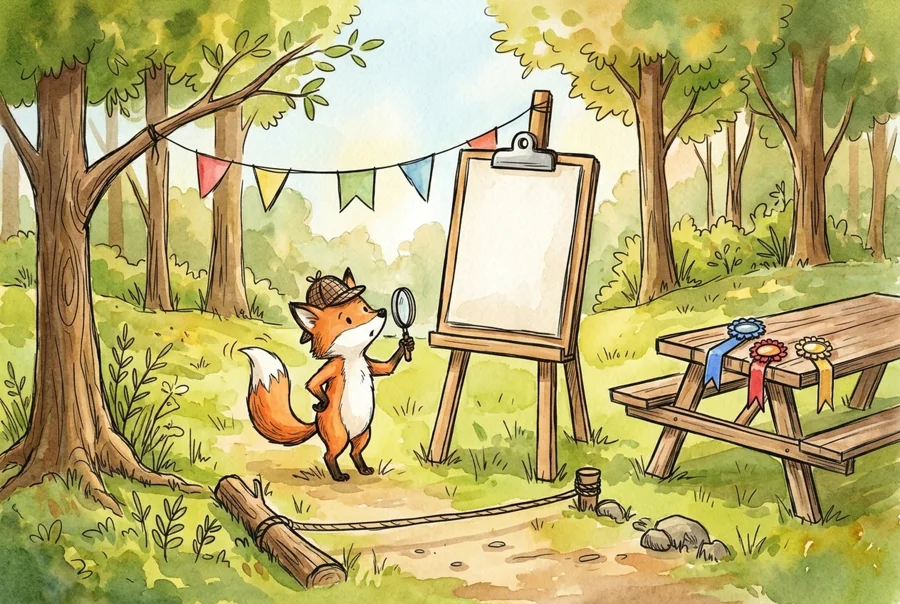
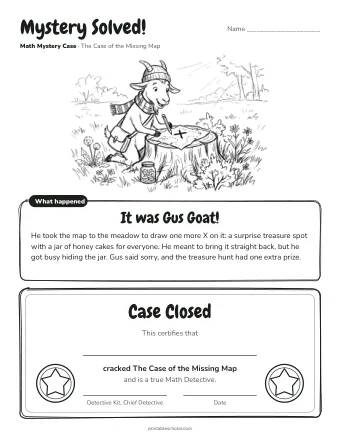
The Field Day treasure map has vanished from the starting line. Five drawn suspects, two secret-code clues with ×2 to ×9 facts, the reveal and a Case Closed certificate. Teacher notes and answer keys included.
Download free (PDF)All 9 pages:
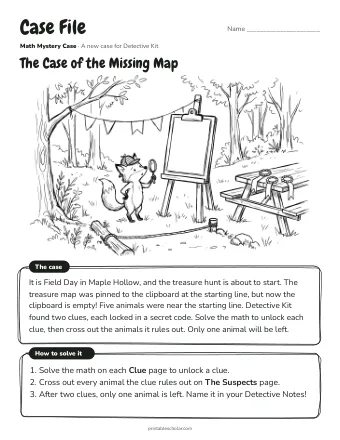
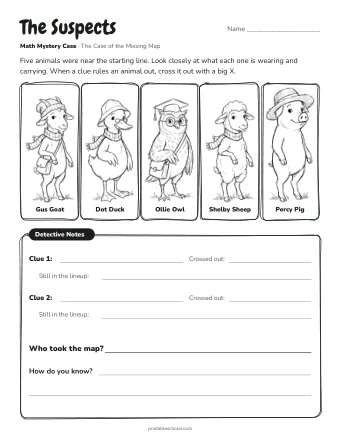
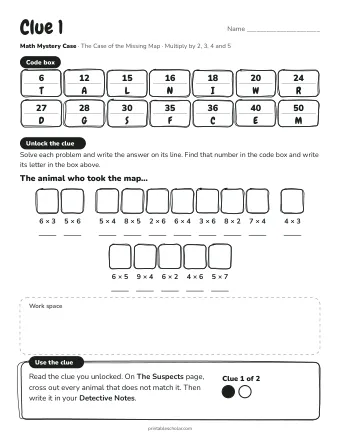
Grade 3 · 15 pages each · US Letter and A4 · instant download
One case for every big grade 3 math unit: multiplication, division, fractions, area and perimeter, and time. Fifty suspects, twenty-five clue pages, five reveals and certificates, teacher notes and answer keys. 75 pages, US Letter and A4.
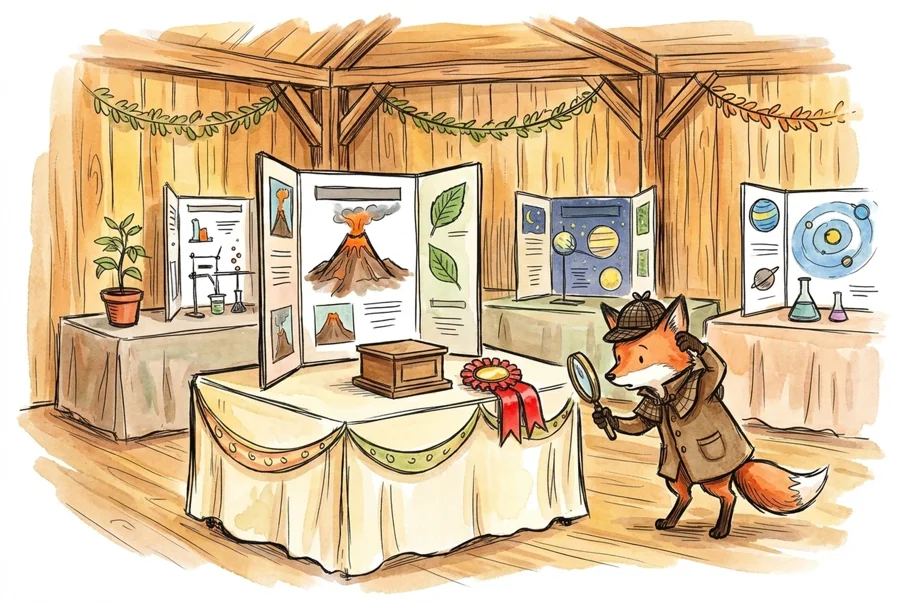
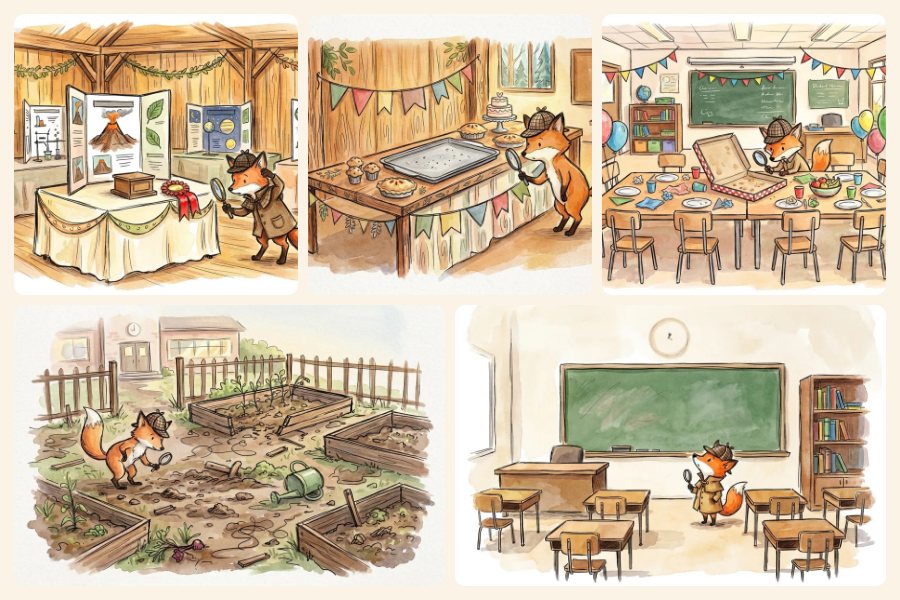
The gold trophy vanished from the science fair prize table, and ten animals were nearby.
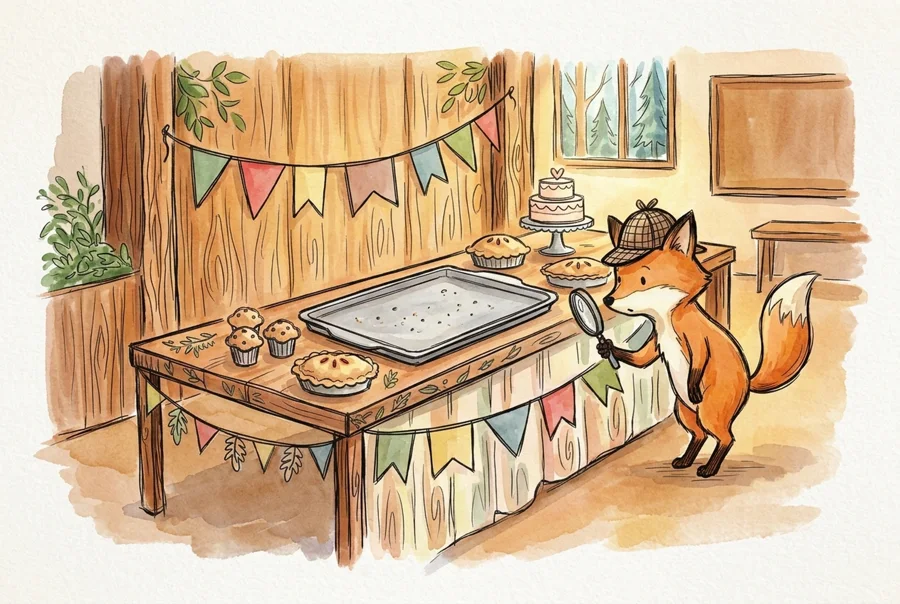
A tray of 60 bake sale cookies vanished before it could be shared out.
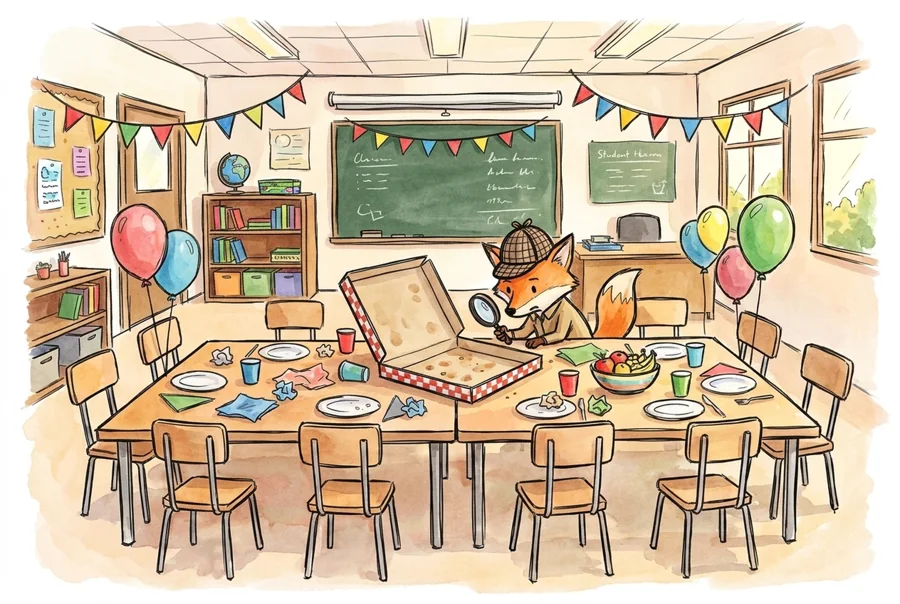
The party pizza vanished from the table before anyone had a slice.
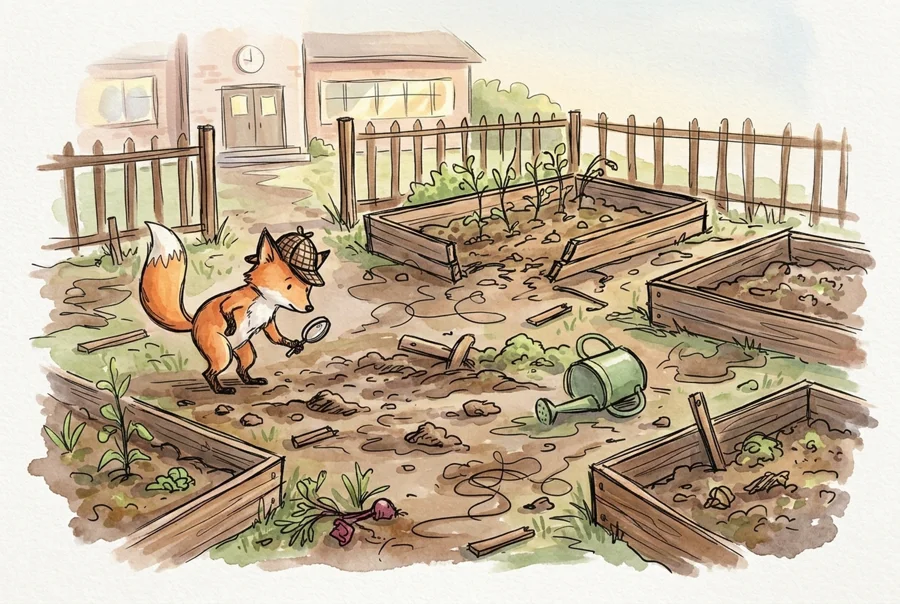
The school garden was dug up overnight, and string and sticks lay everywhere.
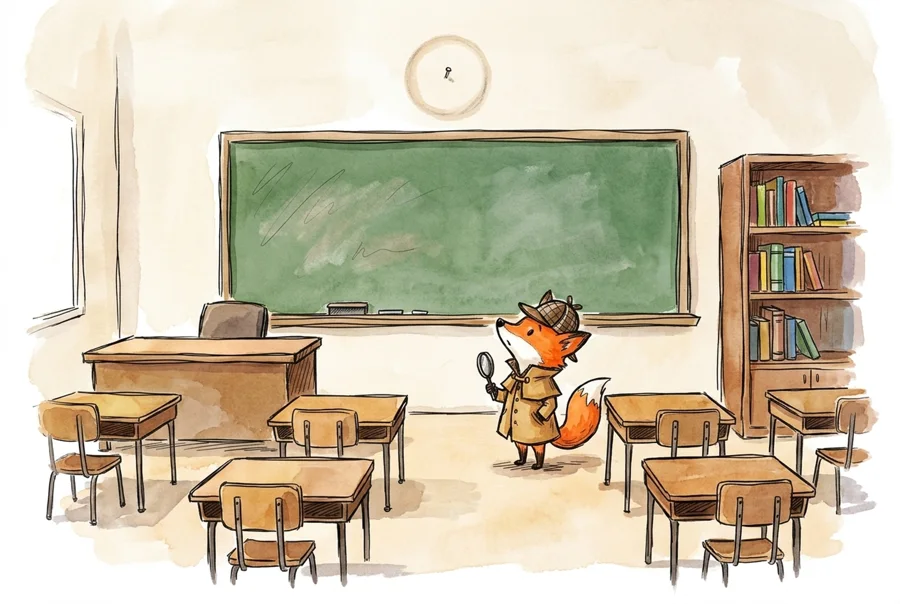
The classroom clock vanished from the wall, and now nobody knows when lunch is.
One-time purchase. Secure checkout by Stripe.
A math mystery turns fact practice into a reason to keep going. Every answer is a letter in a clue, and every clue gets the class closer to the culprit, so children check their own work: a wrong product spells nonsense, and they go back to find it.
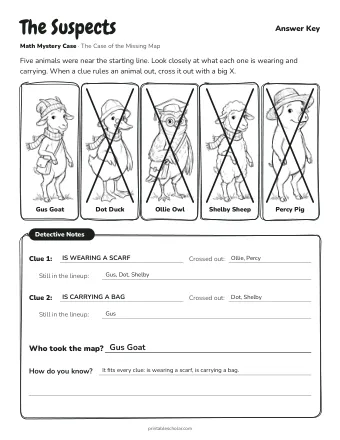
The suspects are drawn, not listed in a table. Each clue is about something you can see, like a hat, glasses, a scarf, a bag or a long tail, so children read the clue and then look closely at every suspect. Two of the clues are "no" clues ("wears no glasses"), which is good practice in reading carefully: keep the animals the clue fits and cross out the rest.
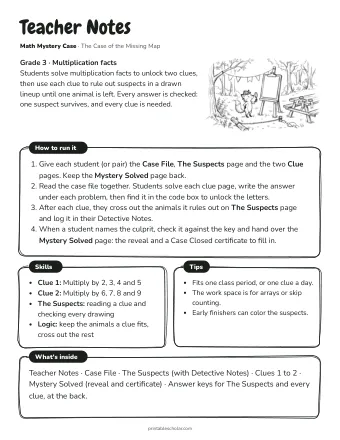
The facts go in the order most classes learn them: the 2s, 5s and 10s first, then the 3s and 4s, the 6s and 7s, the 8s and 9s, and a mixed review to finish. One clue a day makes a week of fact practice; the whole case fits in an hour.
For more practice with the same facts, see the multiplication worksheets, the multiplication games and the multiplication chart.
 Printable Scholar