Measurement worksheets for 1st to 4th grade. Every ruler is printed at its real size with a pencil, crayon or ribbon lying on it, so reading the length works the way it does on a desk. Also here: measuring with blocks, comparing lengths, estimating length, length story problems, and gallons, quarts, pints and cups.
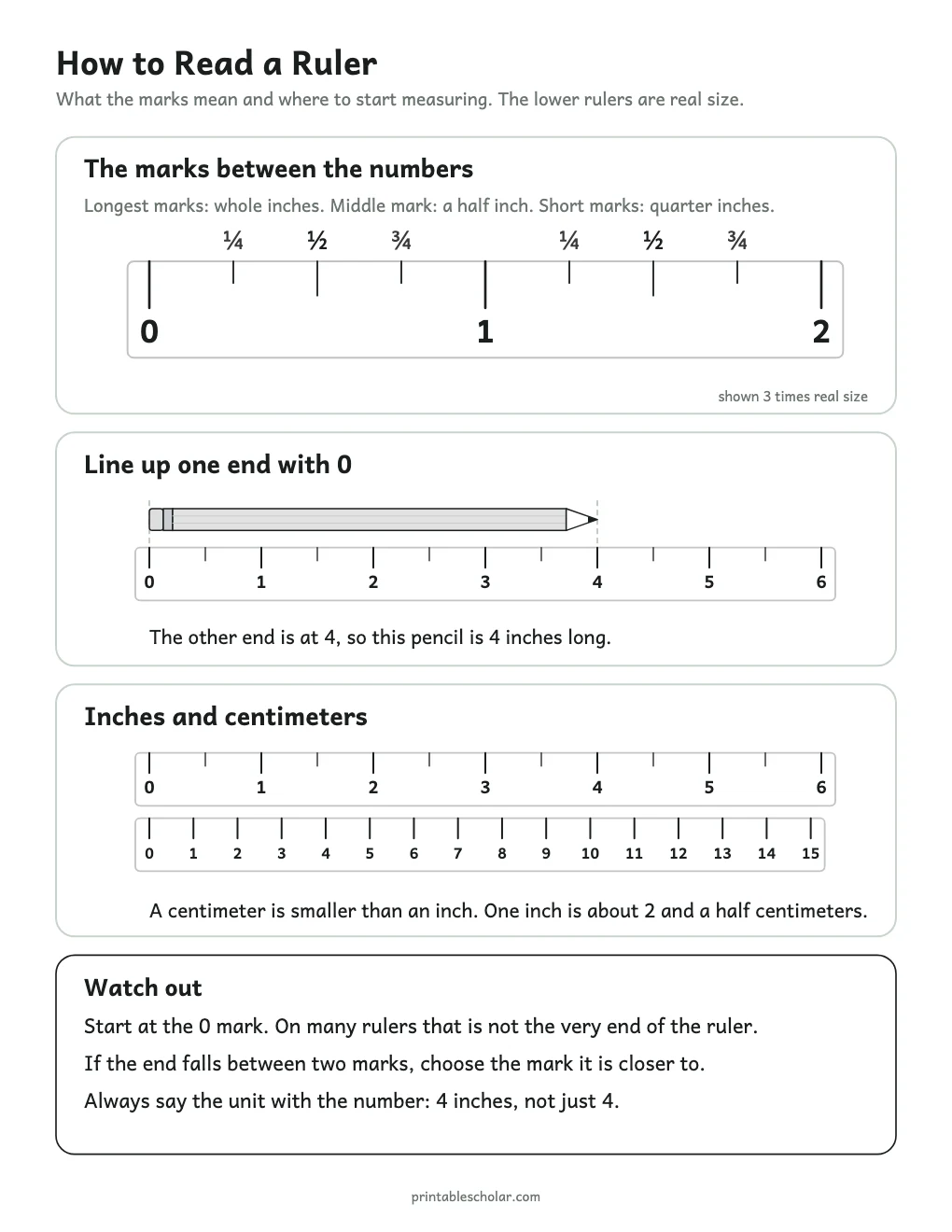
What the long, middle and short marks mean, where to start measuring, and inches beside centimeters.
Download PDF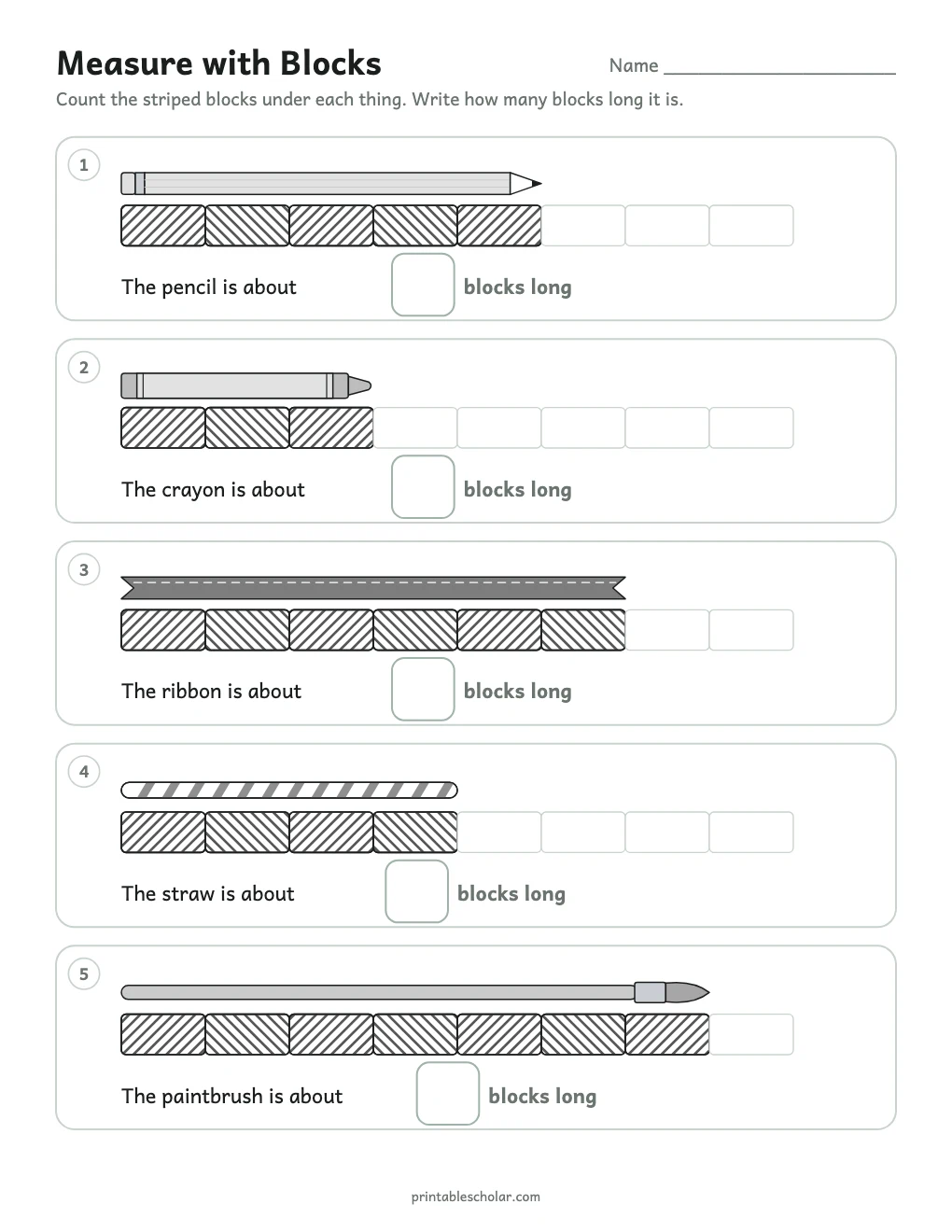
Five things with a row of blocks under each. Count the blocks to say how long it is. Includes answer key.
Download PDF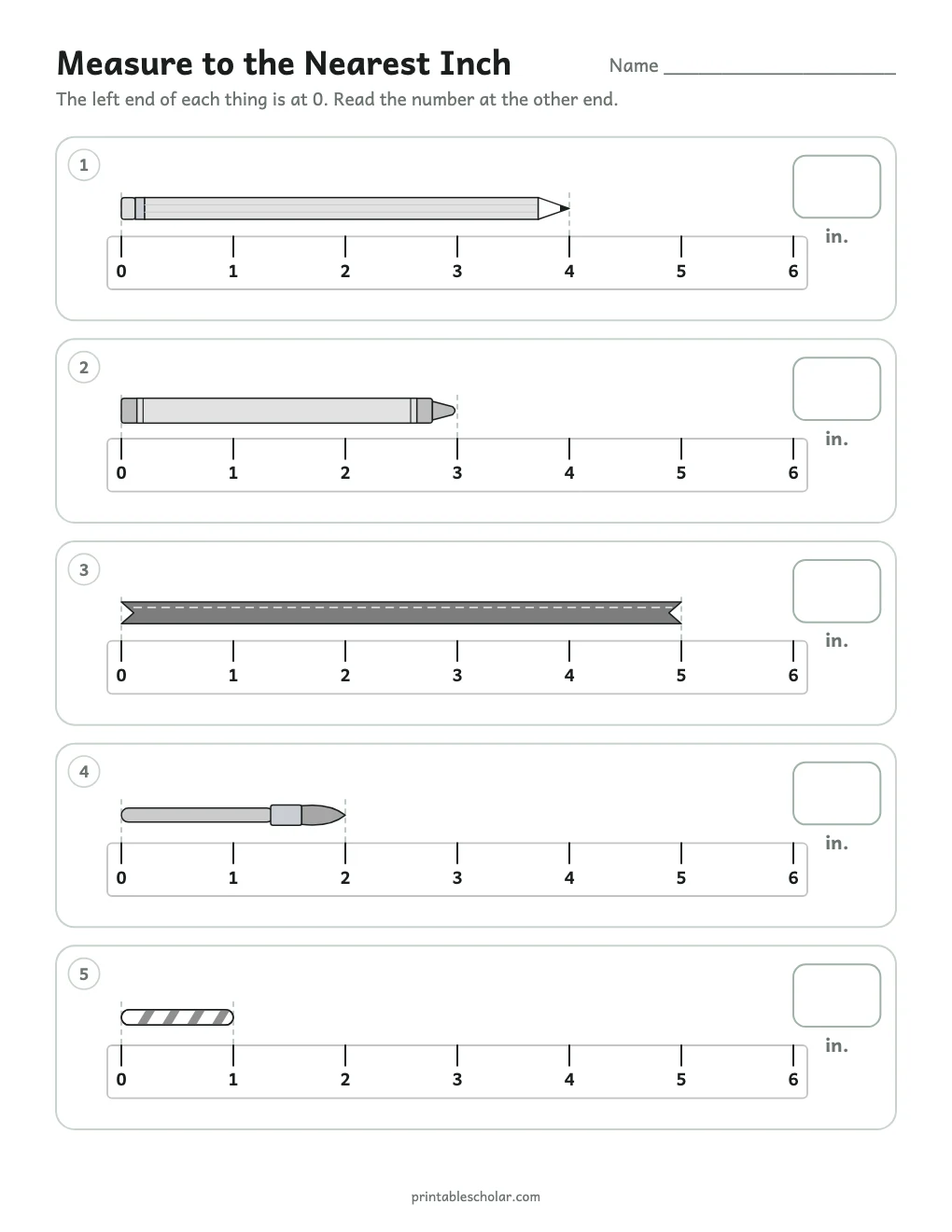
Five things on a six-inch ruler marked in whole inches. Includes answer key.
Download PDF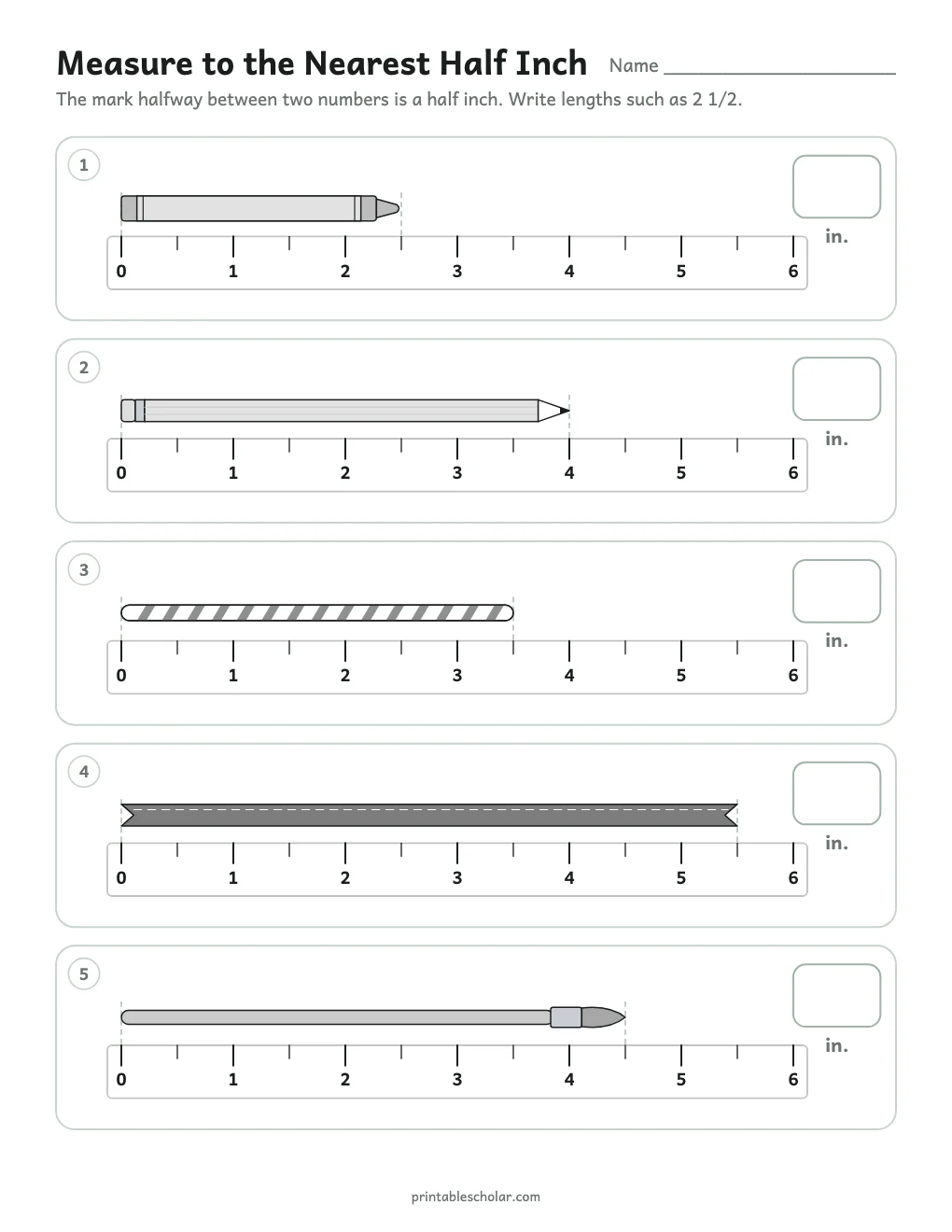
Five things on a ruler with half-inch marks, with lengths such as 3 1/2 inches. Includes answer key.
Download PDF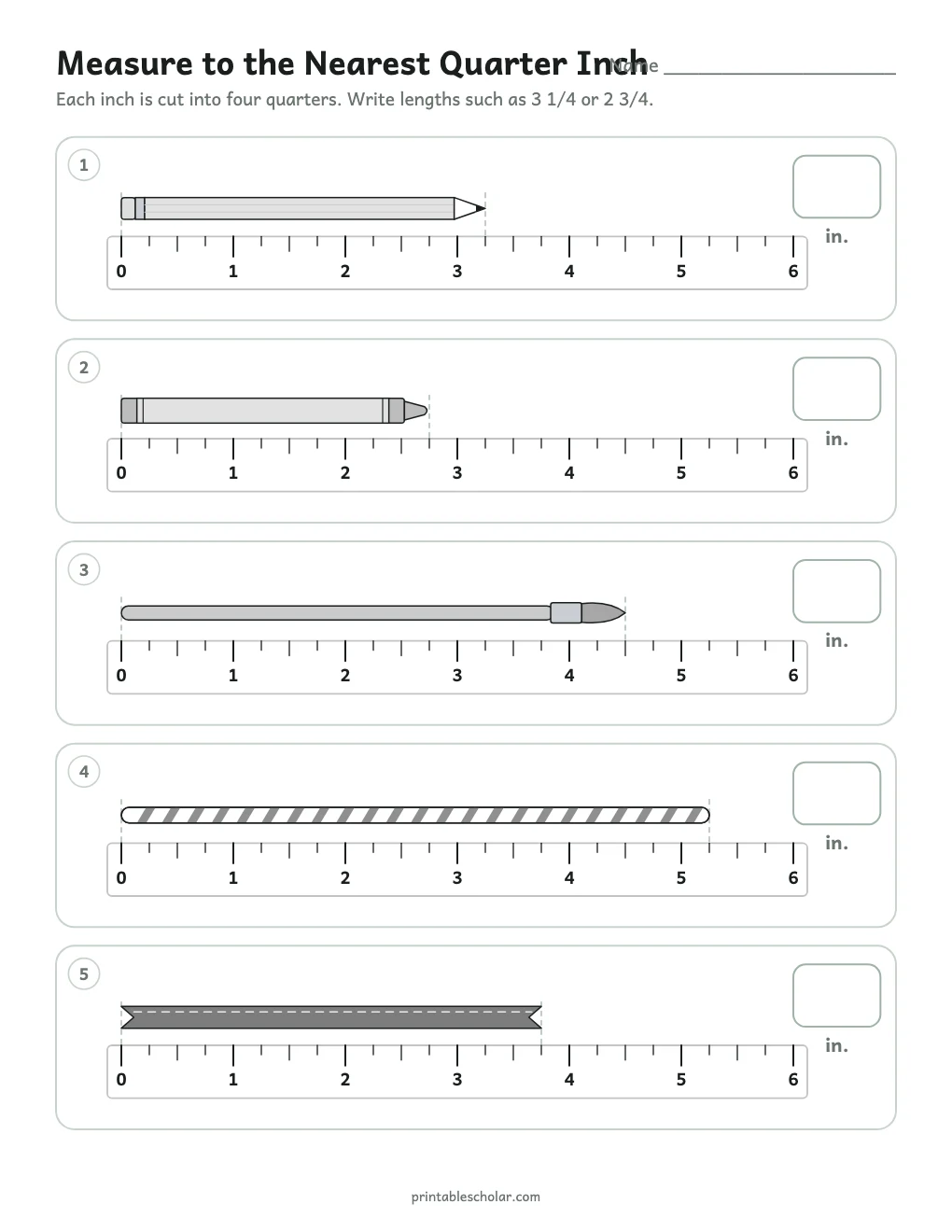
Five things on a ruler with quarter-inch marks, with lengths such as 2 3/4 inches. Includes answer key.
Download PDF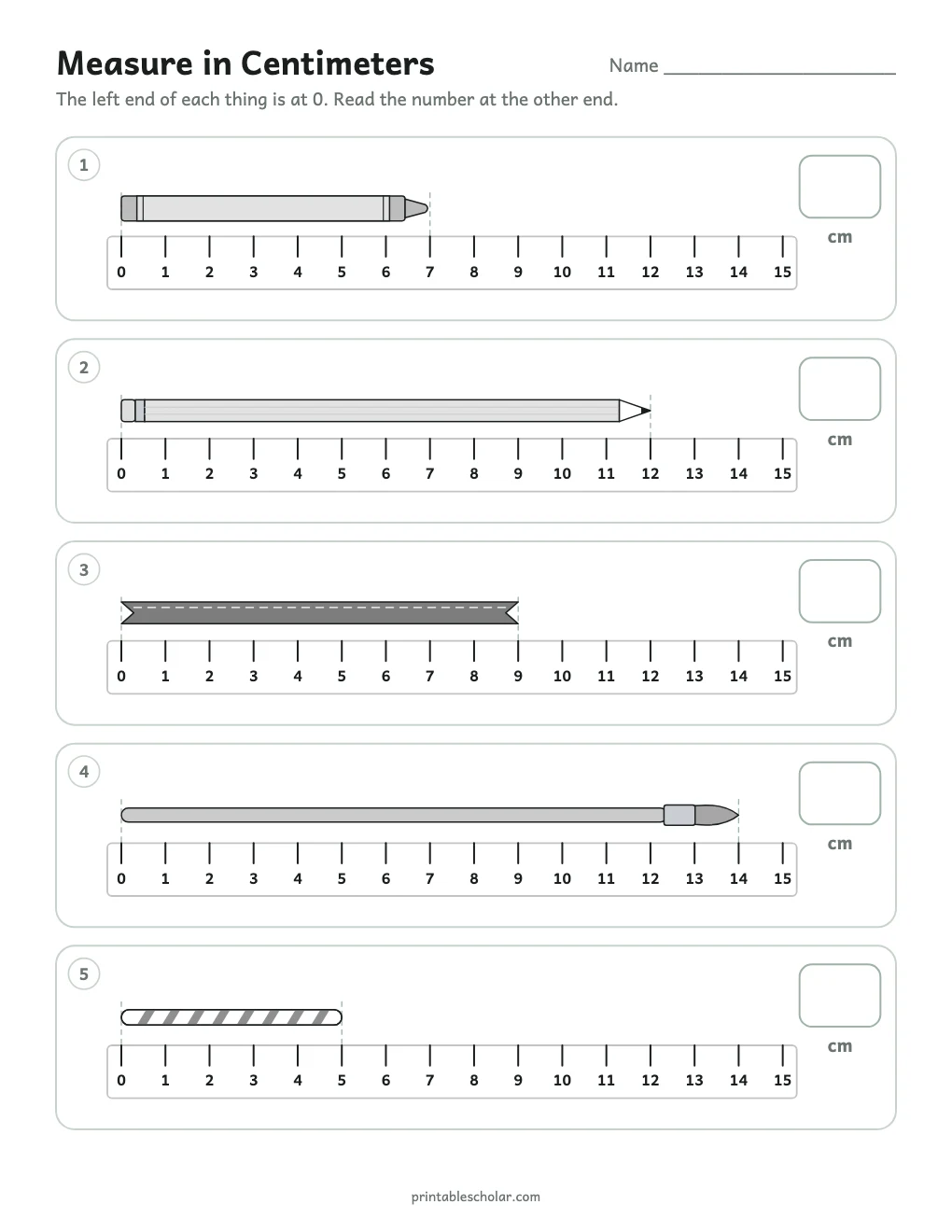
Five things on a 15-centimeter ruler. Includes answer key.
Download PDF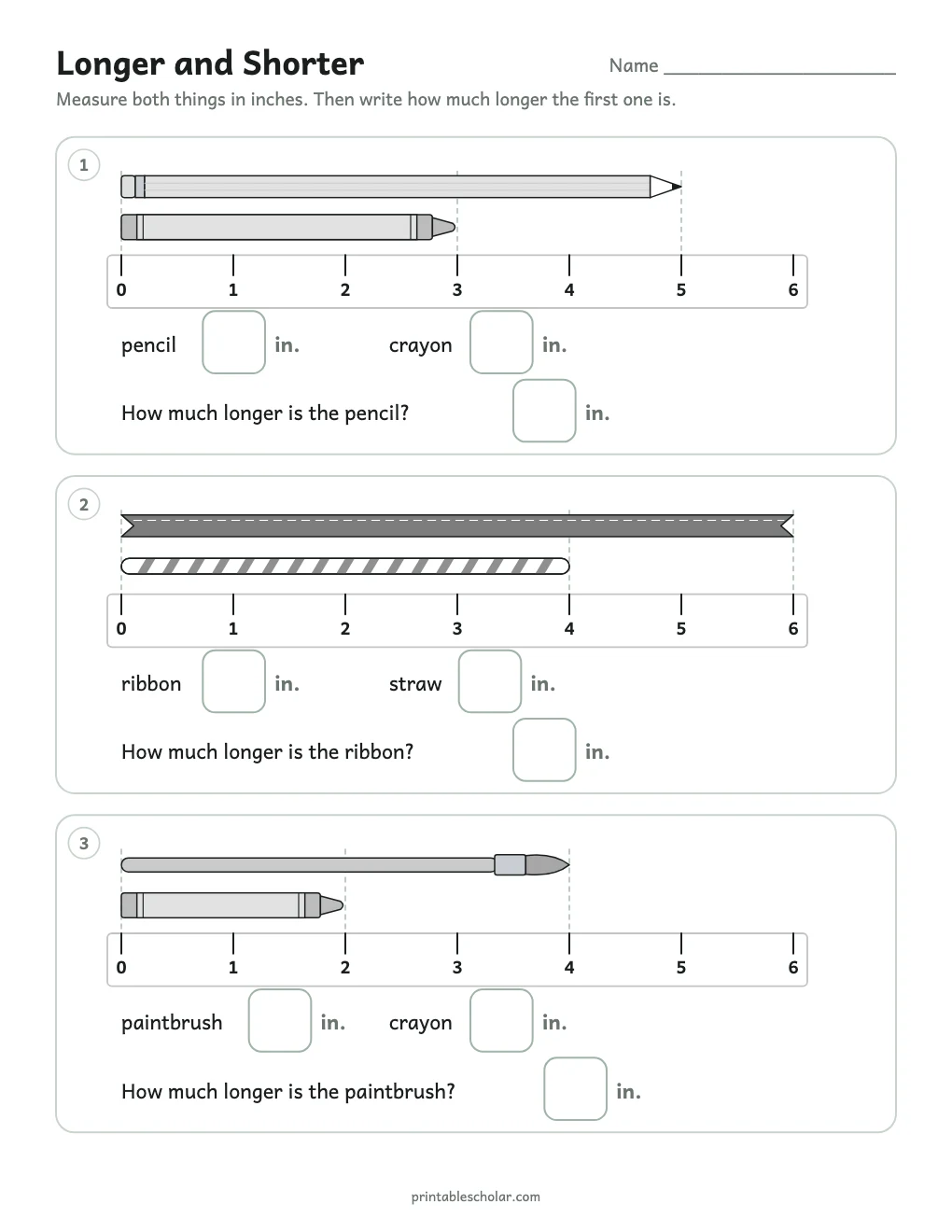
Measure two things on the same ruler and work out how much longer one is. Three problems with answer key.
Download PDF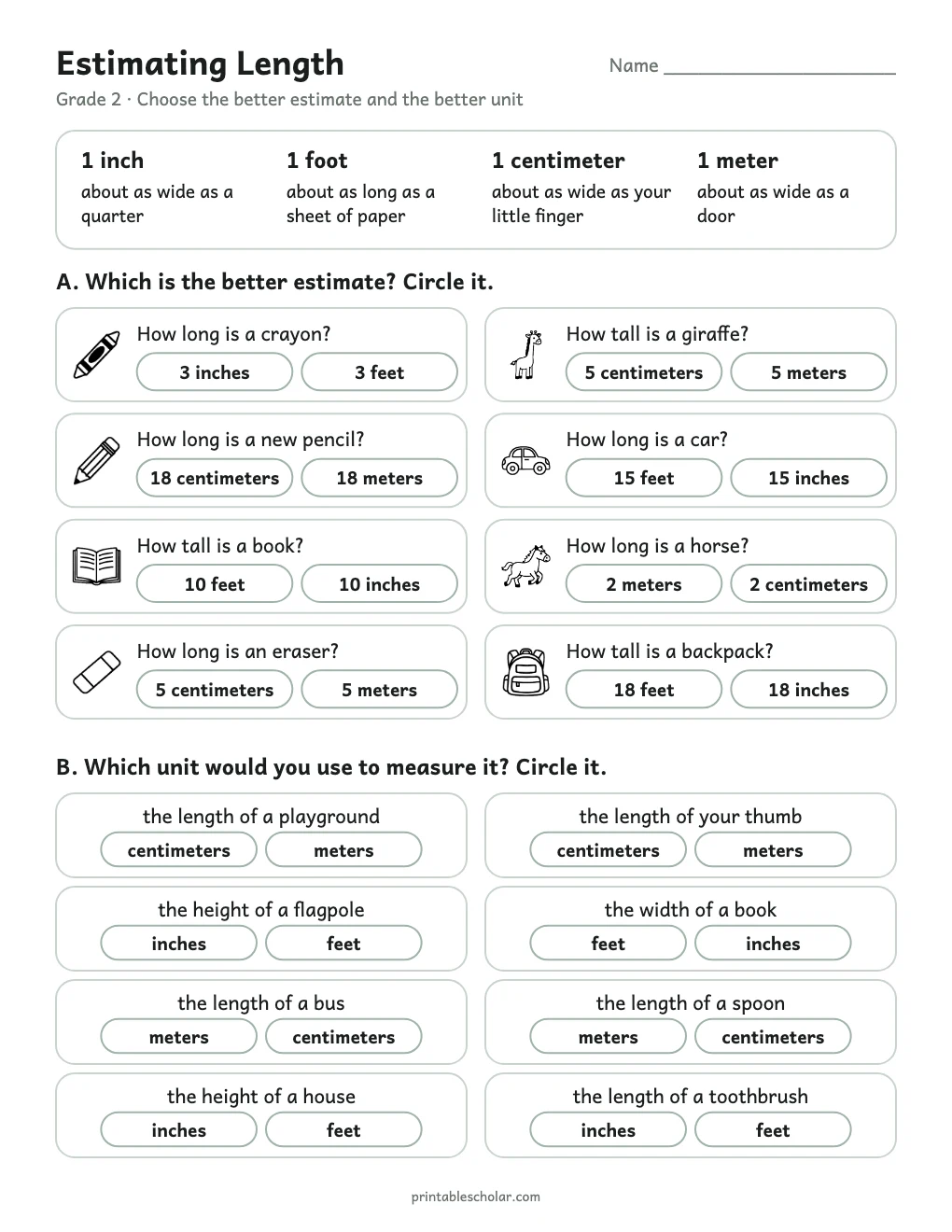
Everyday sizes for an inch, a foot, a centimeter and a meter, then eight better-estimate questions and eight which-unit questions. Includes answer key.
Download PDF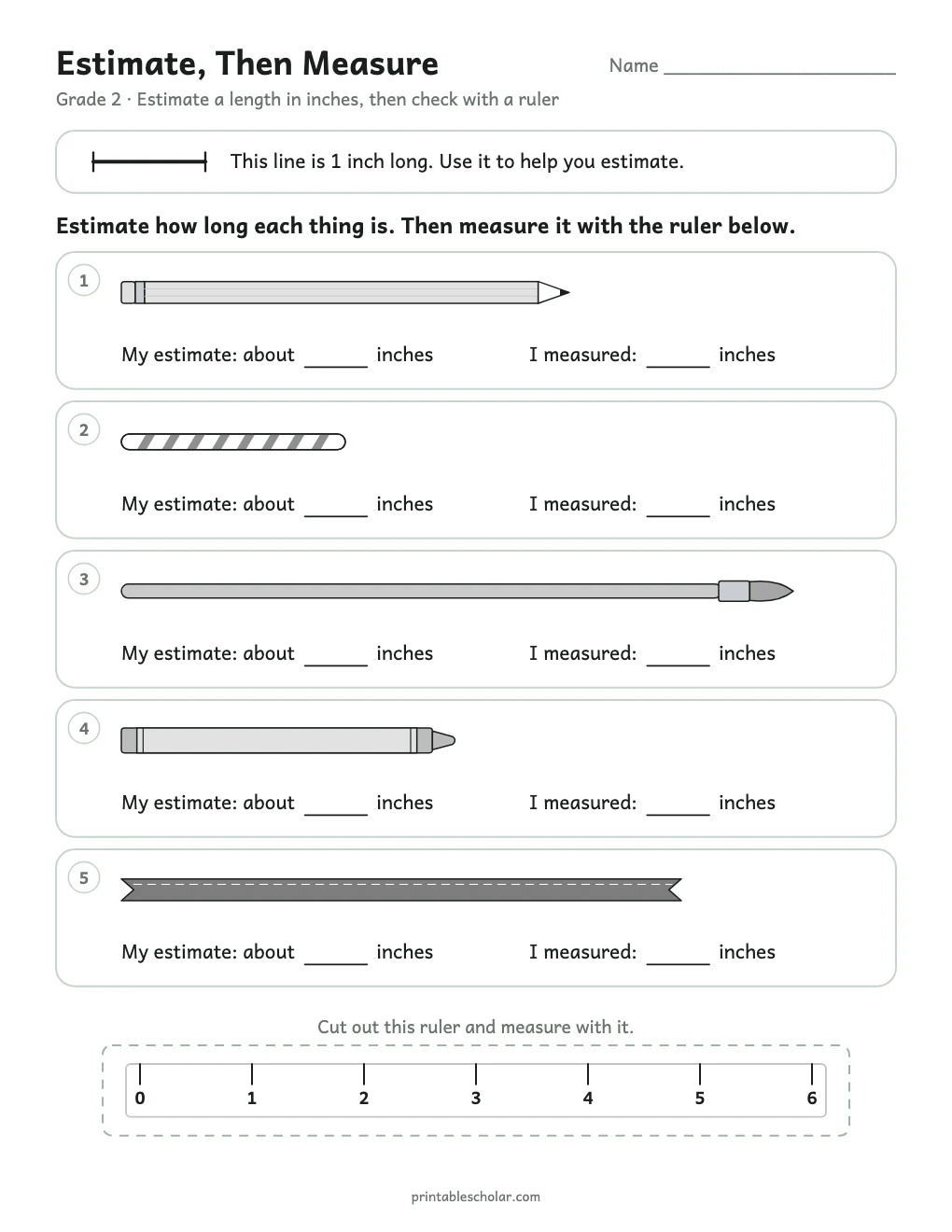
Five things drawn at real size. Estimate each length in inches, then measure with the cut-out ruler on the sheet, so it works at any print size. Includes answer key.
Download PDF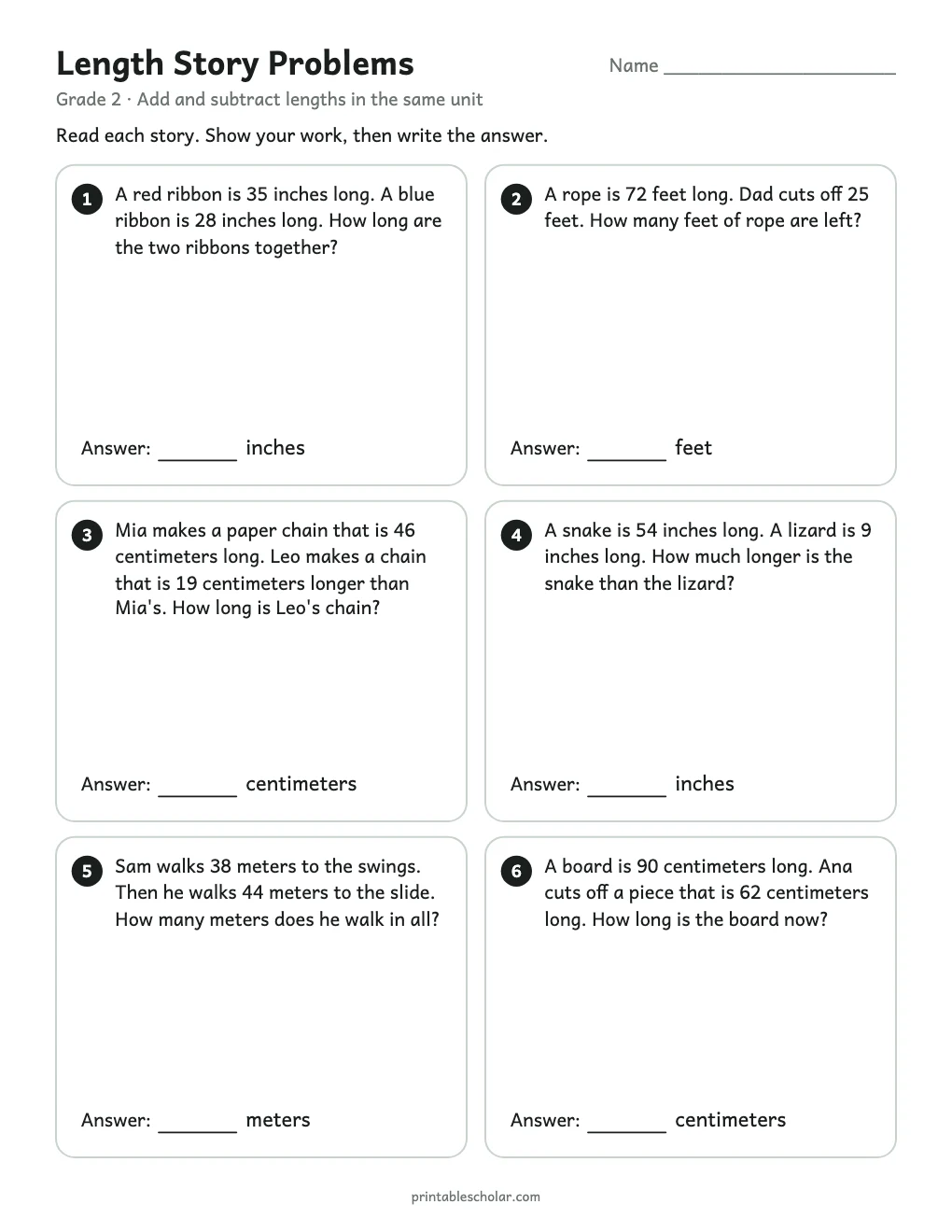
Six one-step stories that add or subtract lengths in inches, feet, centimeters and meters. The key shows each equation.
Download PDF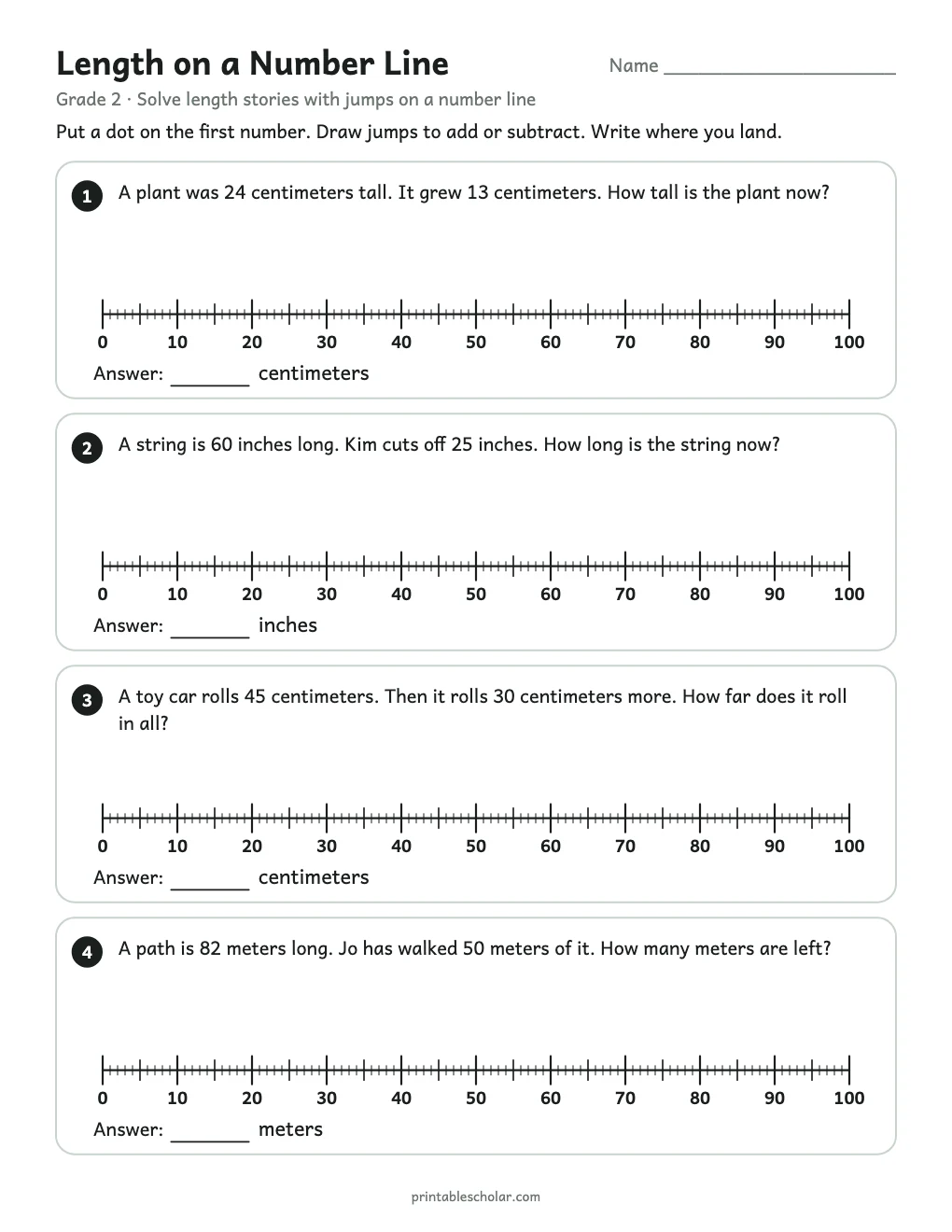
Four length stories, each with a number line from 0 to 100 to draw the jumps on. The key shows the jumps.
Download PDF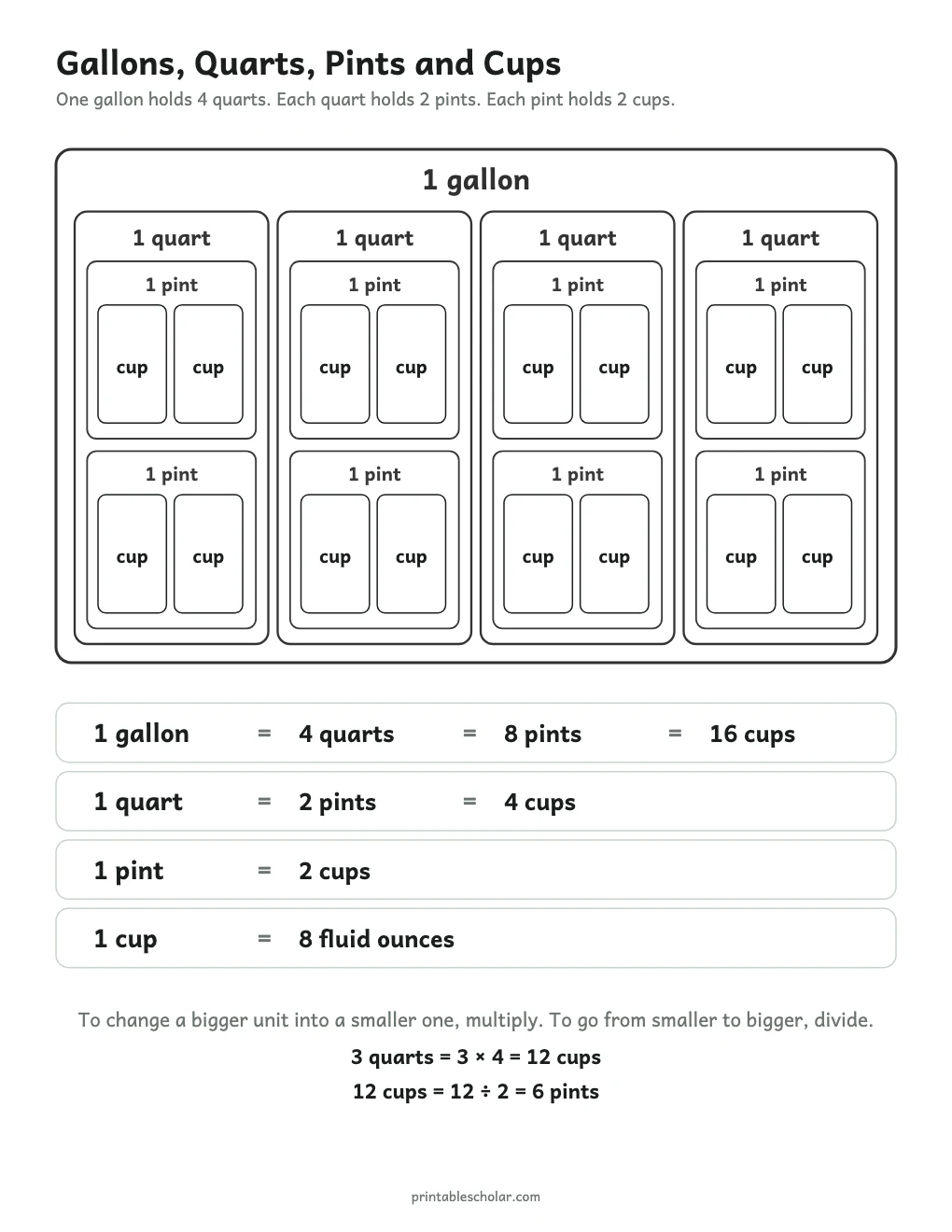
A picture of one gallon holding 4 quarts, 8 pints and 16 cups, with the conversion facts underneath.
Download PDF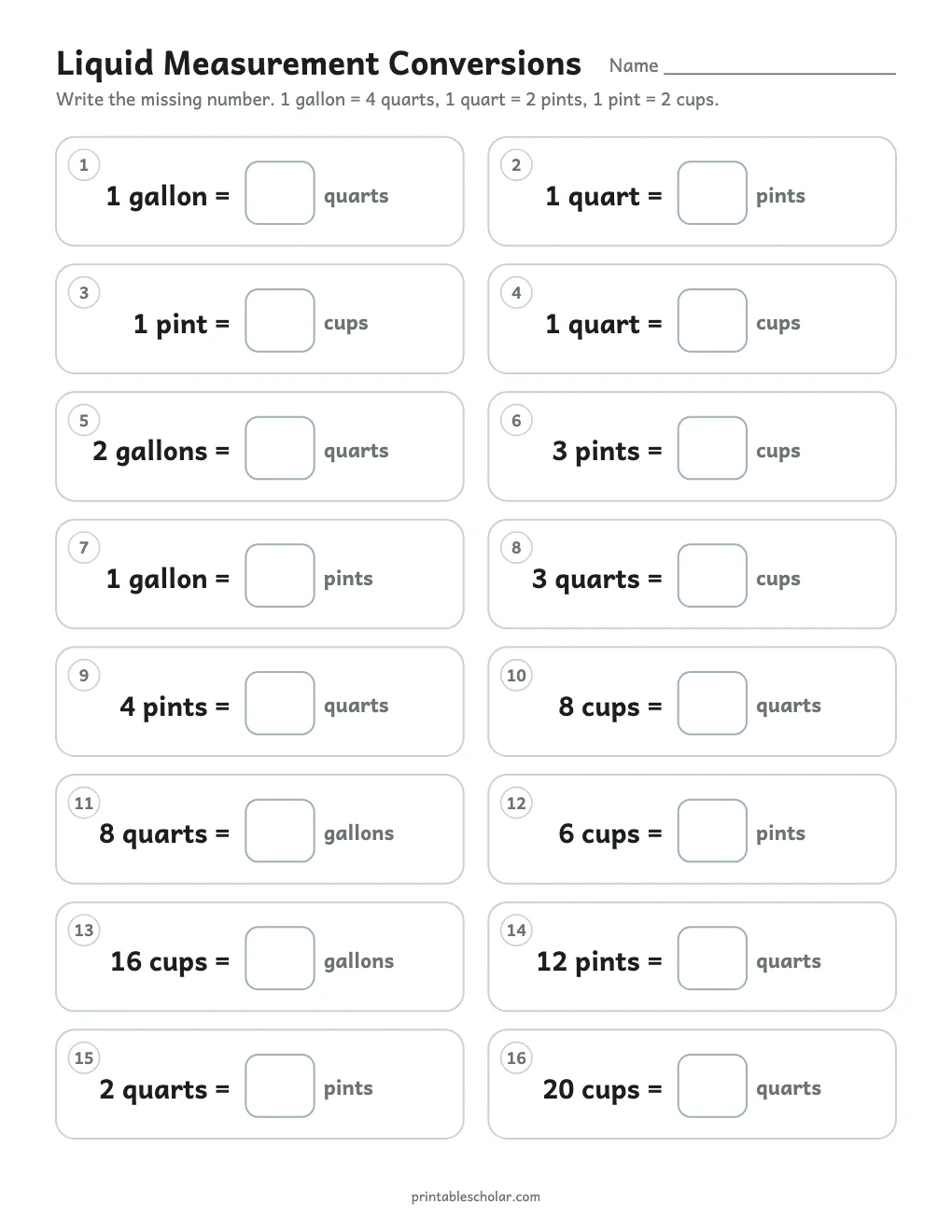
Sixteen conversions between gallons, quarts, pints and cups. Includes answer key.
Download PDF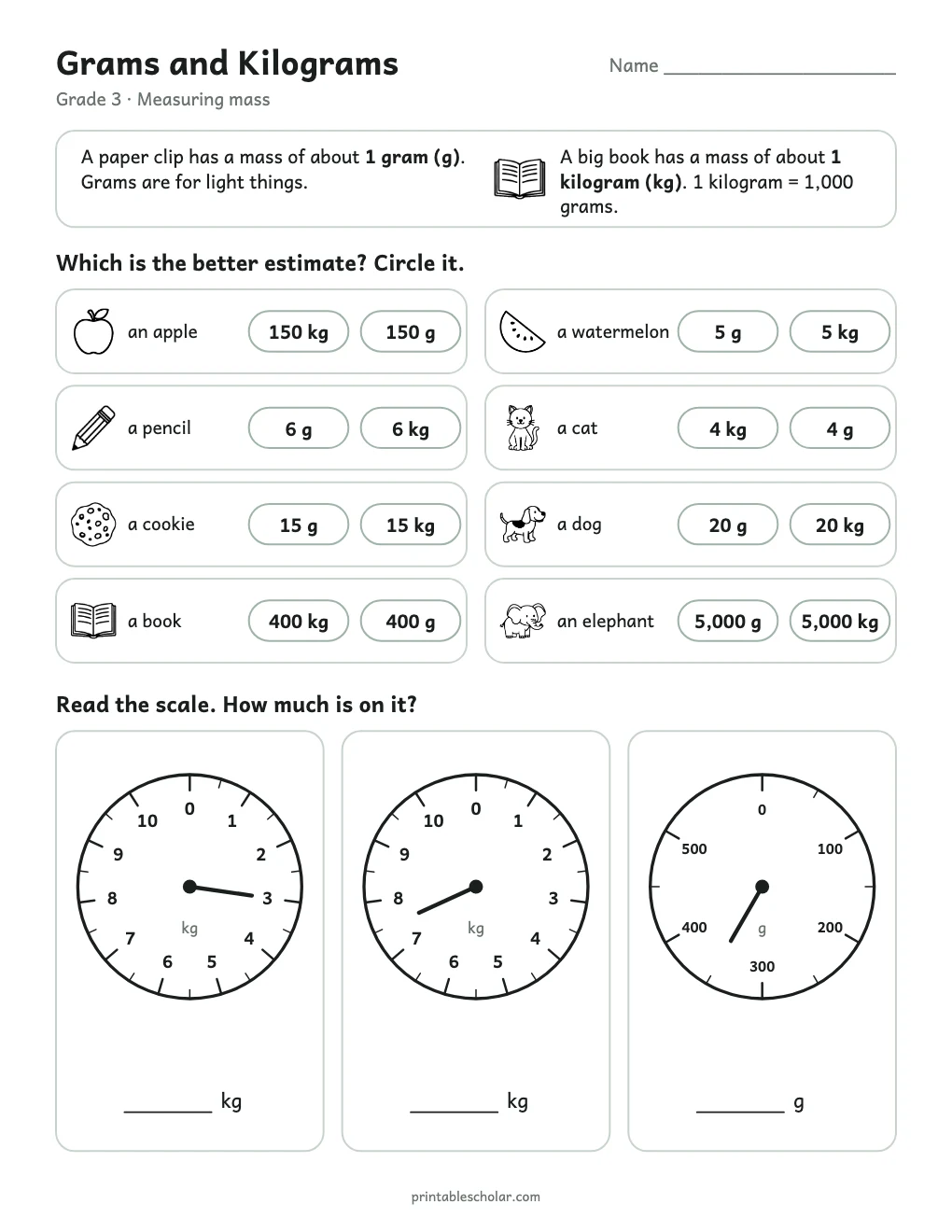
Choose the better estimate for eight everyday things, then read three kitchen scales. Includes answer key.
Download PDF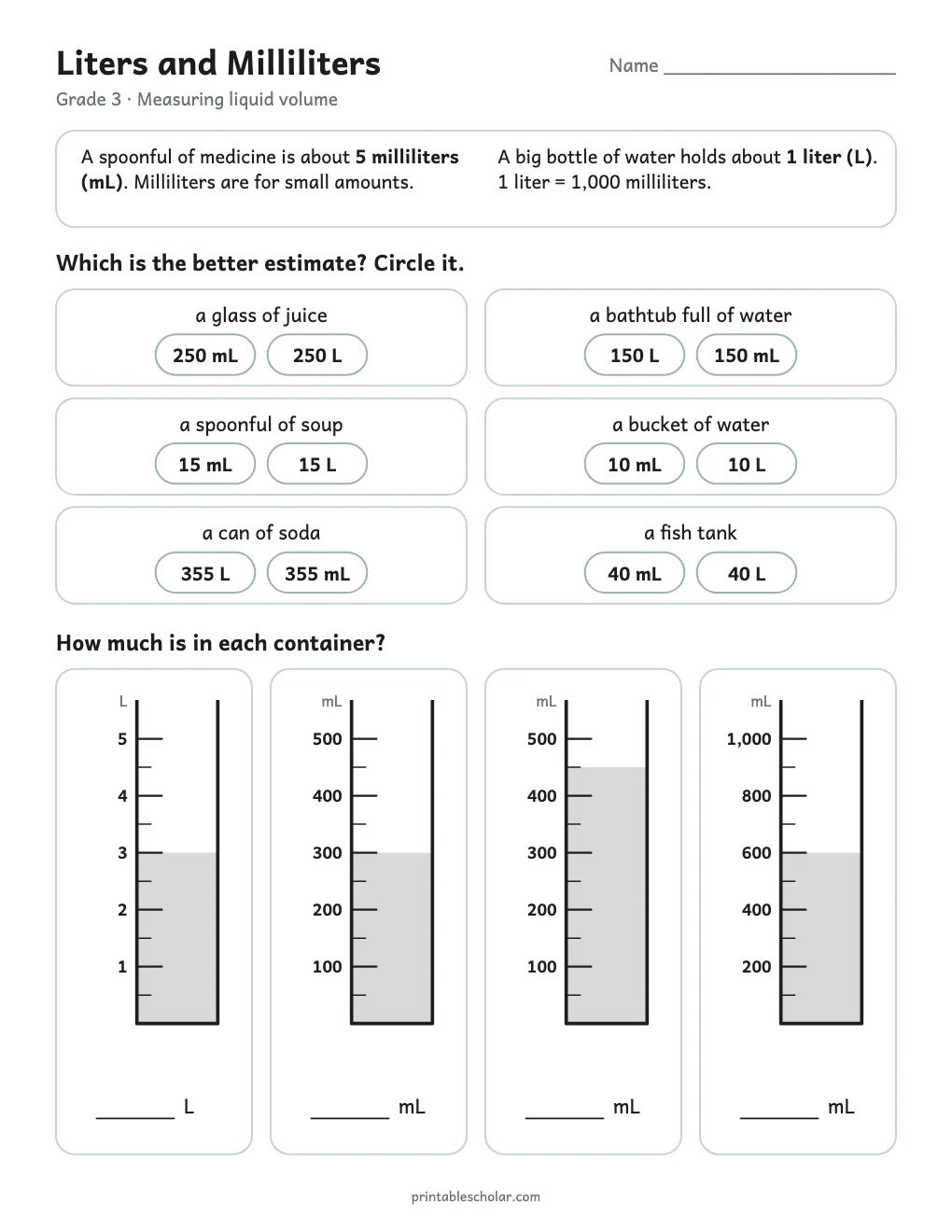
Choose the better estimate for six amounts, then read how much is in four containers. Includes answer key.
Download PDF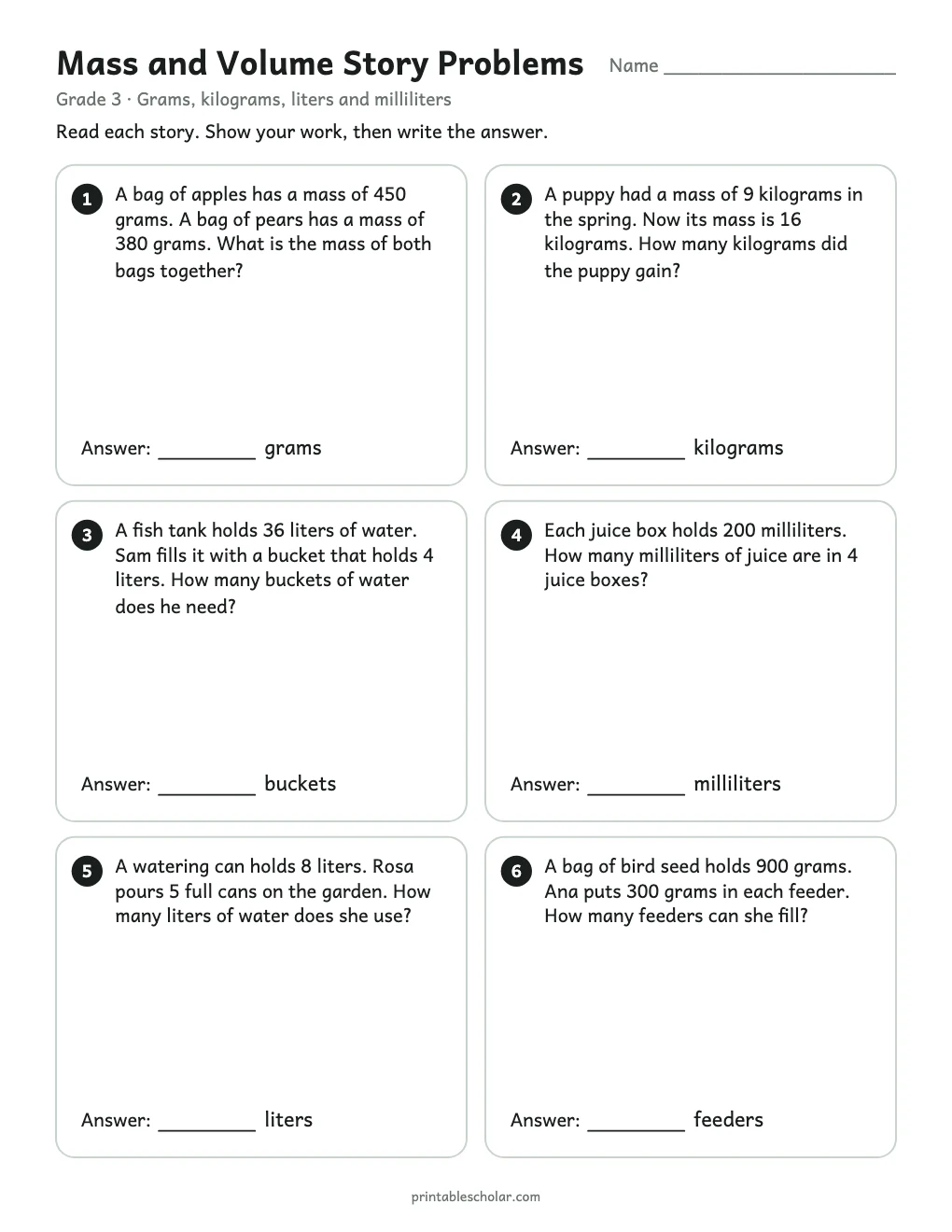
Six one-step stories in grams, kilograms, liters and milliliters, with room to show the work. Includes answer key.
Download PDFMeasuring length has two parts that children often learn separately: knowing what an inch or a centimeter is, and knowing how to read the marks on a ruler. These sheets start before the ruler, with blocks laid end to end, because counting units is the idea a ruler is built on.
The How to Read a Ruler sheet shows two inches enlarged, with the half and quarter marks labeled, and the rule that causes the most mistakes: start at the 0 mark, which on many rulers is not the very end. The four measuring sheets then go from whole inches to half inches, quarter inches and centimeters.
Every ruler on these pages is drawn at its real size, and each object is drawn to exactly the length in the answer key. A child reads the length straight off the printed ruler, so the answers are right even if your printer shrinks the page a little. Printed at 100%, the rulers match a real one.
Estimating Length gives each unit an everyday size to hold in mind: an inch is about as wide as a quarter, a foot about as long as a sheet of paper, a centimeter about as wide as a little finger, and a meter about as wide as a door. Estimate, Then Measure puts that to work on five things drawn at real size. Length Story Problems and Length on a Number Line are the 2nd grade word problems that add and subtract lengths within 100.
Longer and Shorter measures two things and asks for the difference. Two more sheets cover liquid measures: a chart of how gallons, quarts, pints and cups fit inside one another, and a page of conversions. For a paper ruler to cut out, see the printable rulers. For telling time and money, see the telling time and money worksheets.
 Printable Scholar