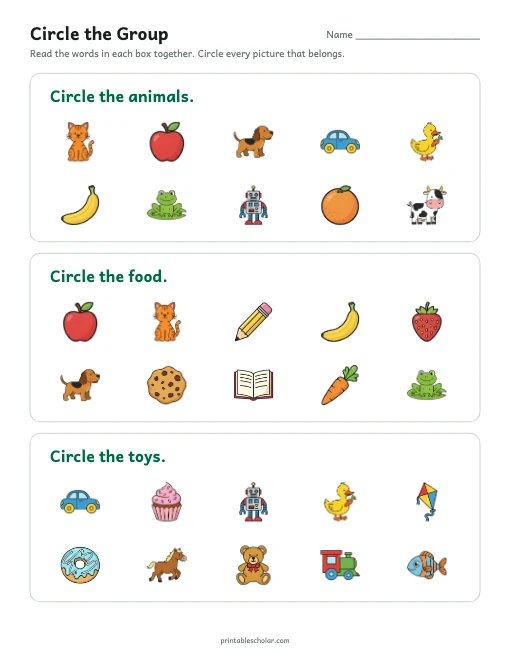
About the Sorting Worksheets
Sorting means putting things into groups by something they share. It looks simple, but it asks a child to ignore most of what they see and attend to one feature: this is an animal, that is something to eat. That same skill is behind reading graphs, comparing amounts and telling shapes apart later on.
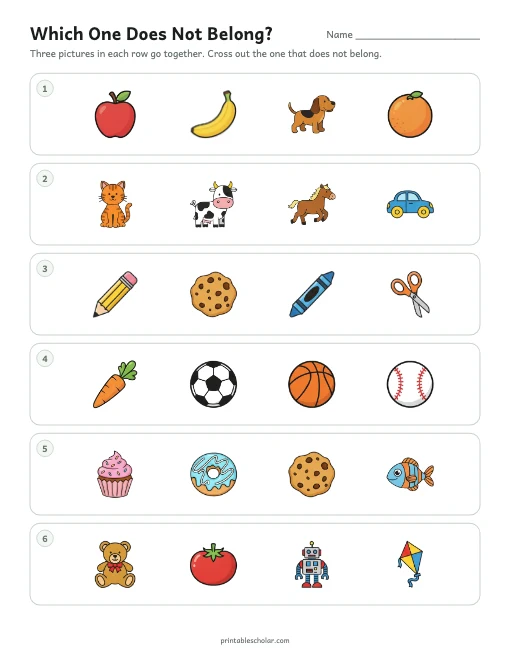
Circle the Group and Which One Does Not Belong? practice sorting by kind. The second is a good one to talk through, because children often give a reason nobody expected, and a sensible reason deserves credit even when it is not the one in the answer key.
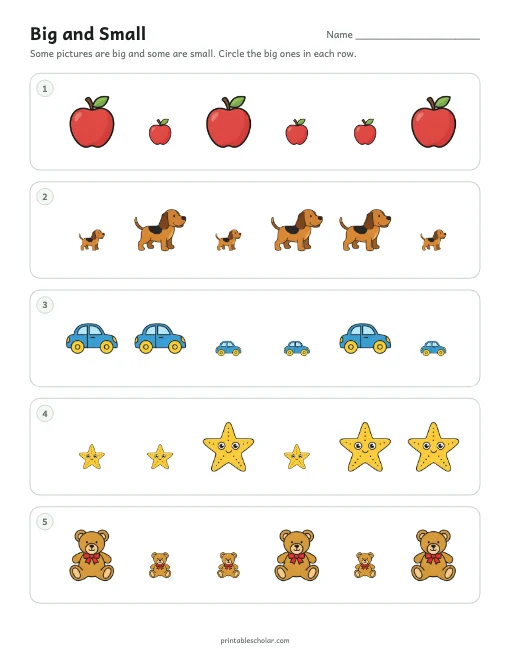
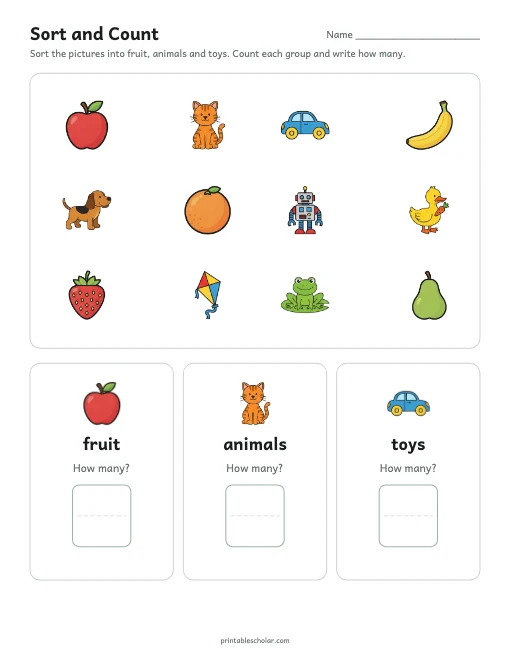
Big and Small sorts by size, where every picture in the row is the same thing. Sort and Count joins sorting to counting, which is the kindergarten standard: sort objects into groups and say how many are in each.
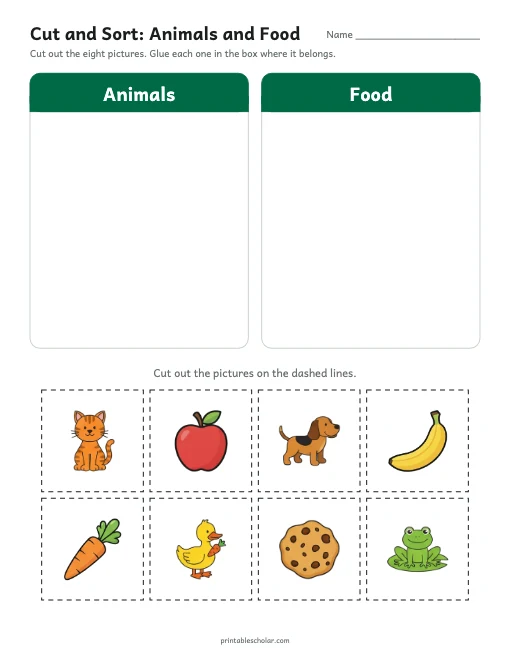
Cut and Sort is the hands-on one. Cutting and gluing takes longer than circling, and that is the point for small hands. Every worksheet has an answer key on its second page. More sets are on the kindergarten math page.
Frequently Asked Questions
What is sorting in kindergarten math?
Sorting is putting objects into groups by a shared feature such as kind, color, shape or size. In kindergarten, children sort objects into given groups, count how many are in each group, and say which group has more.
What age are sorting worksheets for?
Ages 3 to 6. Sorting by kind and by size suits preschool. Sorting and then counting the groups fits kindergarten.
What if my child gives a different answer for which one does not belong?
Ask why. If the reason makes sense, it is a good answer. A child might cross out the banana because it is the only yellow thing, not the dog. Explaining a sorting rule is worth more than matching the key.
How can we practice sorting without worksheets?
Sort the laundry by person, the cutlery by type, or toy blocks by color. Then change the rule and sort the same things another way. Sorting one set of objects in two different ways is a real step forward in thinking.
What comes after sorting?
Counting and comparing the groups, then simple picture graphs, where each group becomes a row of pictures you can compare at a glance.