8 illustrated spot the difference puzzles. Each sheet shows the same scene twice, and the bottom picture has a few things changed: circle them all. Easy scenes have 4 changes, harder ones 7. Every PDF has its answer key on page 2. Free to print, no signup.
Four changes, each one a whole thing that appears, disappears or turns into something else. A good first spot the difference for preschool and kindergarten.
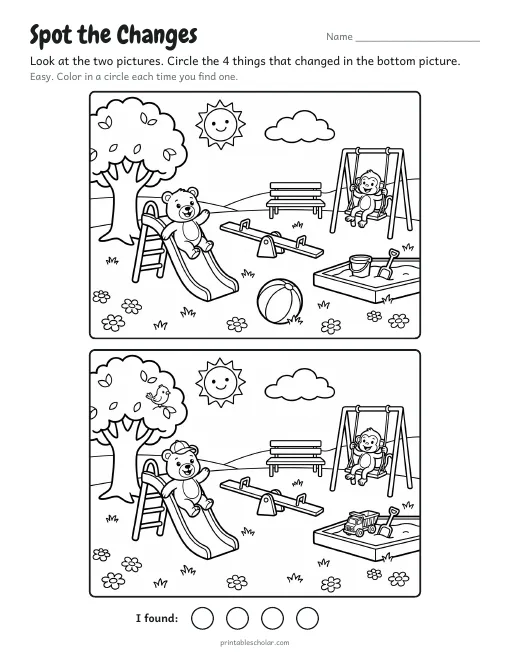
A bear on the slide and a monkey on the swing. Answer key on page 2.
Download PDF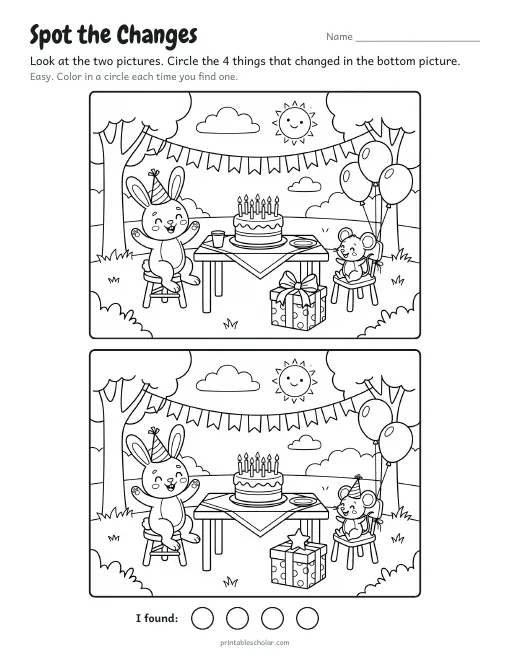
Cake, balloons and a bunny in a party hat. Answer key on page 2.
Download PDF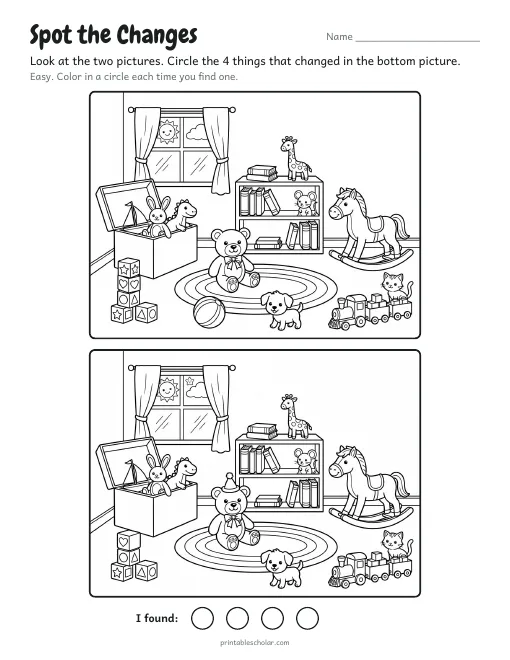
A teddy bear, a train and a tower of blocks. Answer key on page 2.
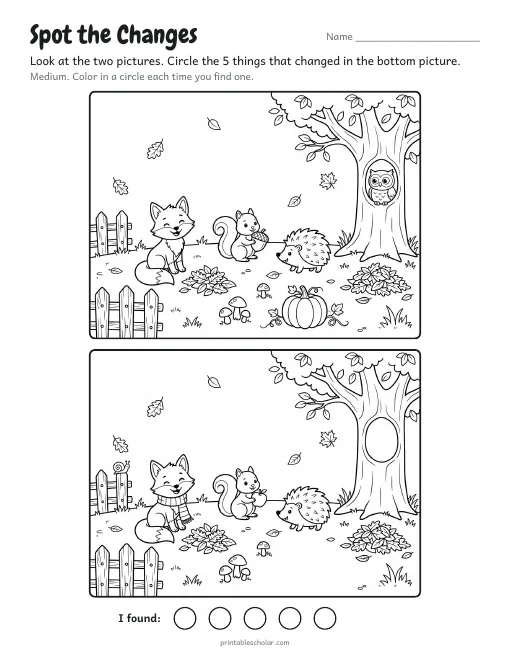
Download PDFFive changes in a busier scene, a few of them smaller: a scarf, a pattern, a missing cloud.
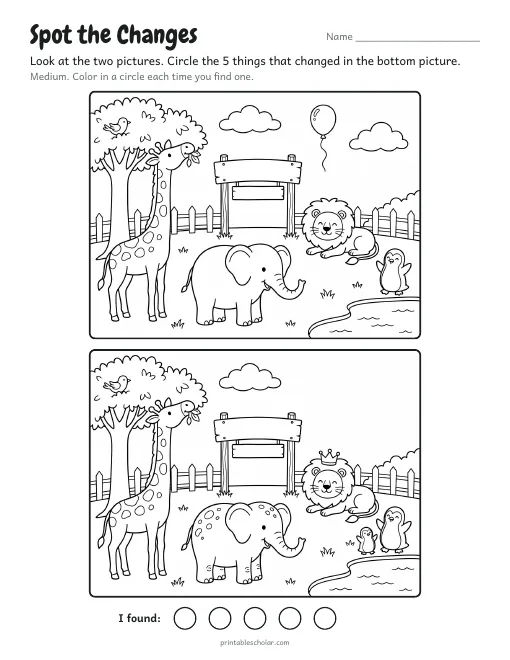
A giraffe, a lion, an elephant and a penguin. Answer key on page 2.
Download PDF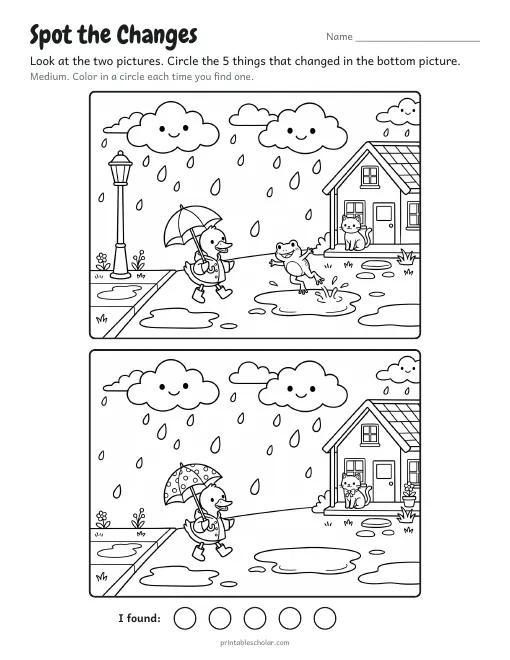
A duck with an umbrella and a frog in a puddle. Answer key on page 2.
Download PDFSeven changes, some of them small: one flag, one window, one bird. Take your time and look closely.
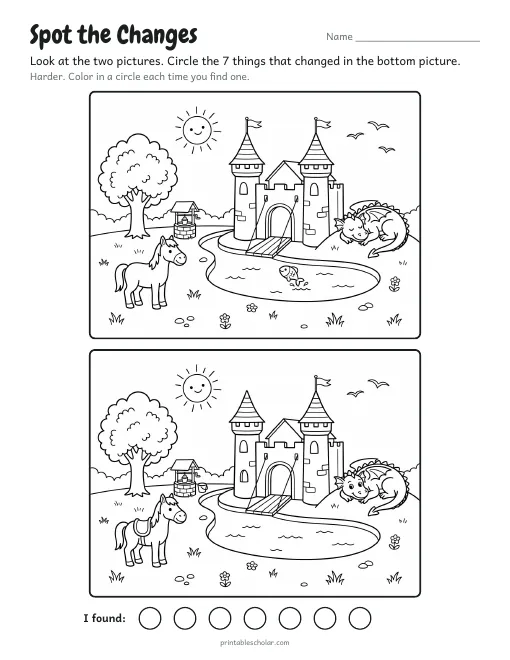
A sleeping dragon, a horse and a castle with a moat. Answer key on page 2.
Download PDF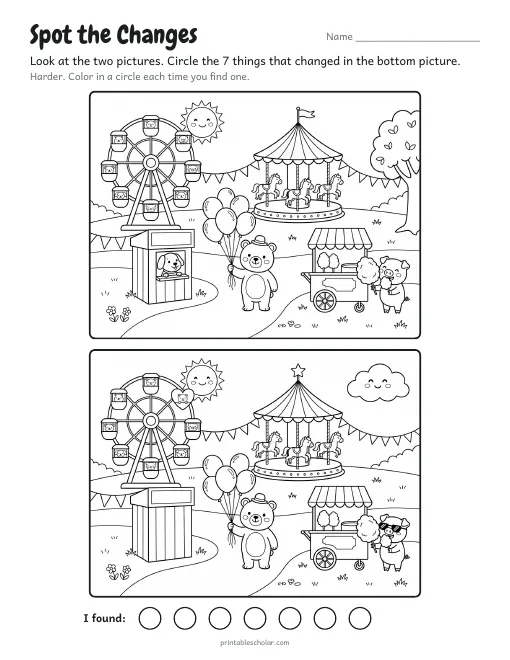
A Ferris wheel, a carousel and a balloon seller. Answer key on page 2.
Download PDF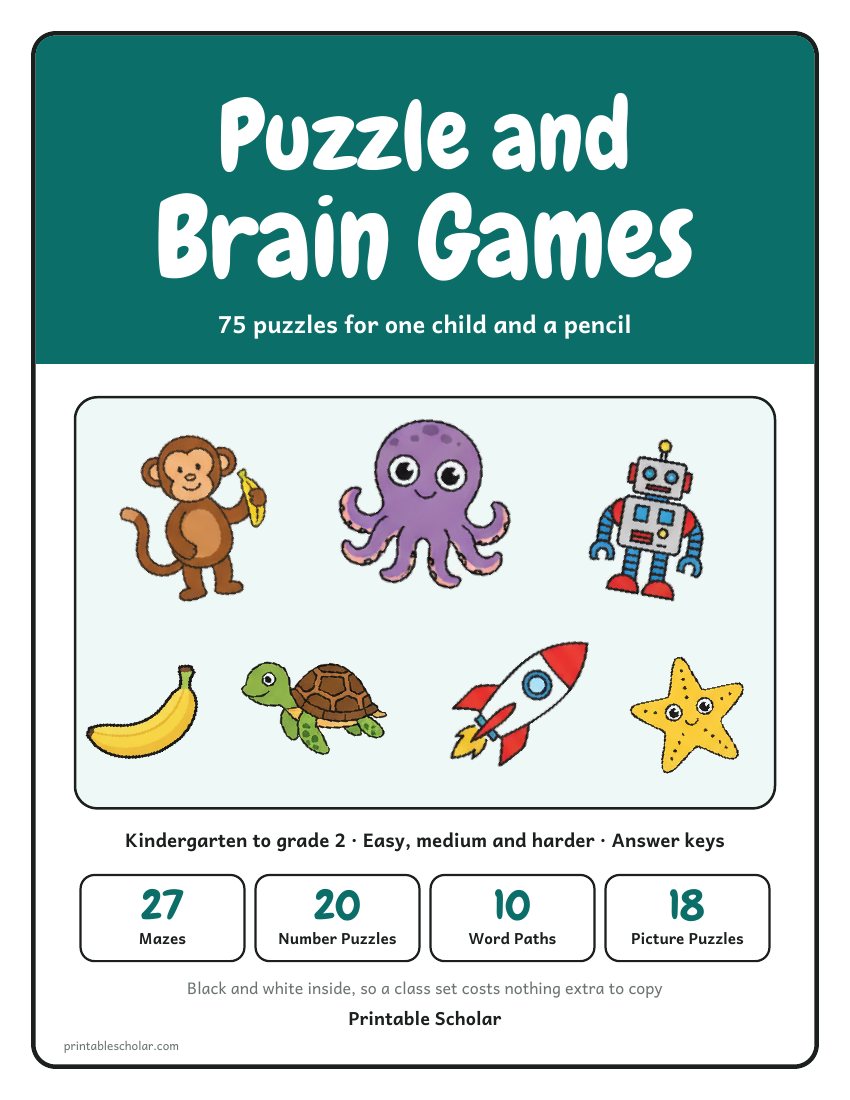 Ten more scenes in the Puzzle and Brain Games packA farm, a beach, a jungle, outer space and more, with 121 other puzzles for kindergarten to grade 2.
See the pack →
Look at the top picture, then the bottom one. Something has been added, taken away or changed in the bottom picture: a bird is gone, a ball has turned into a balloon, a cat has a new bow. Circle each change on the bottom picture and color in one of the circles at the foot of the page for each one you find.
A good way to start is to cover half of each picture with your hand and compare the halves one at a time. Children who get stuck can look at one thing at a time: the sky, the ground, each animal.
Spot the difference trains careful looking: noticing small details, holding one picture in mind while scanning another, and sticking with a search until it is finished. Those are the same skills a child uses to tell b from d, or to check their own work. The scenes are line art, so they can be colored in afterwards.
Looking for more puzzles to do alone? Try the I Spy sheets, the mazes for kids or the activity sheets, with one of every kind of puzzle.
The number is printed on every sheet: four on the easy pages, five on the medium ones and seven on the harder ones. The row of circles at the bottom lets a child color one in for each change they find.
Yes. Page 2 of every PDF is the same sheet with each change circled.
The easy scenes suit ages 4 to 6, when every change is a whole thing appearing or disappearing. The harder scenes, with small changes like one missing window, suit ages 6 to 8.
Yes. They are free to print for your own classroom or your own children.
 Printable Scholar