Probability experiments for 3rd to 6th grade. Each experiment is four sheets in order: predict and record every flip, roll or spin, tally the results, make a bar graph, then work out what should happen and decide whether a game is fair. Download a whole experiment, or just its Is It Fair? sheet. The answer key is the last page of each PDF.
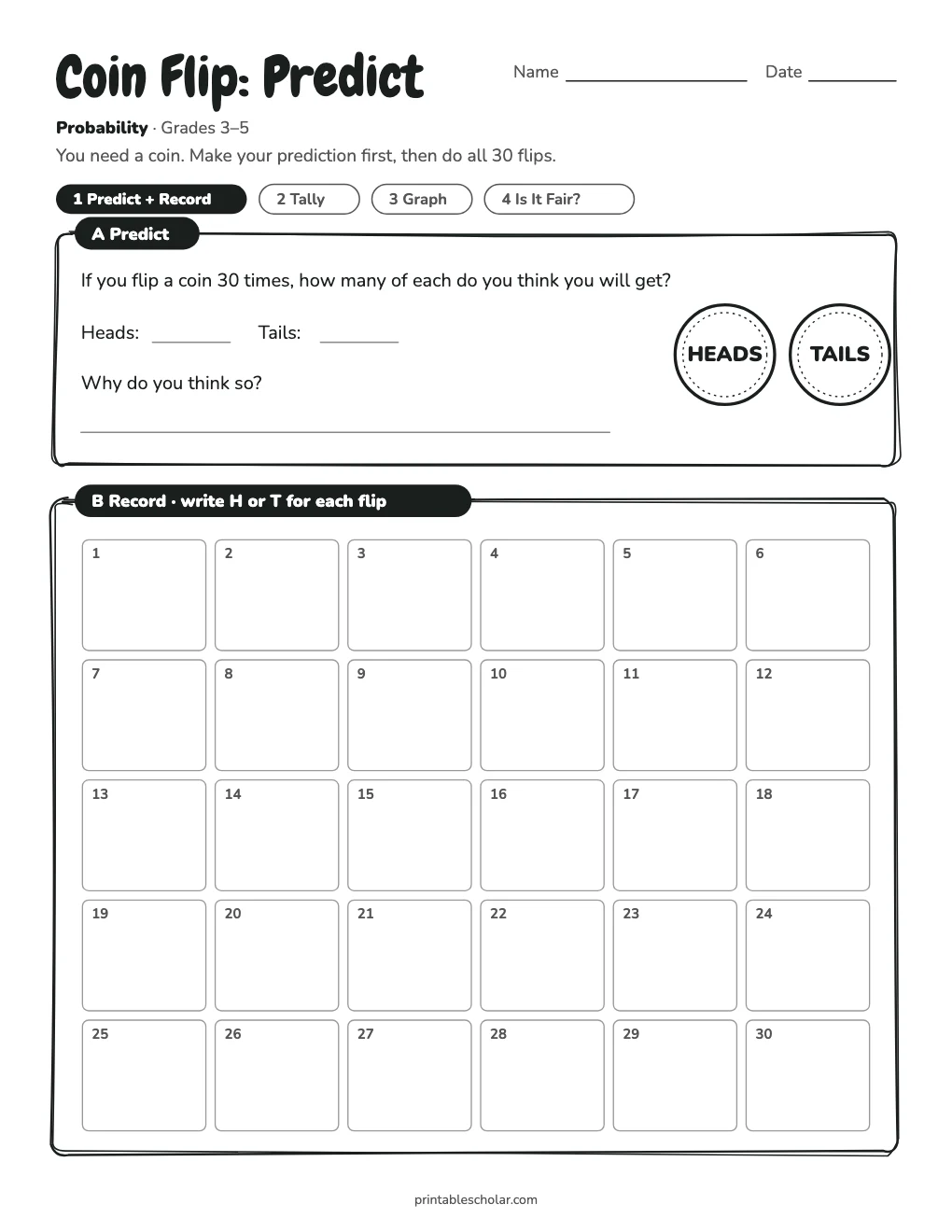
Flip a coin 30 times. Predict, record, tally and graph, then place heads on the chance line and test a two-coin game. Includes answer key.
Download PDF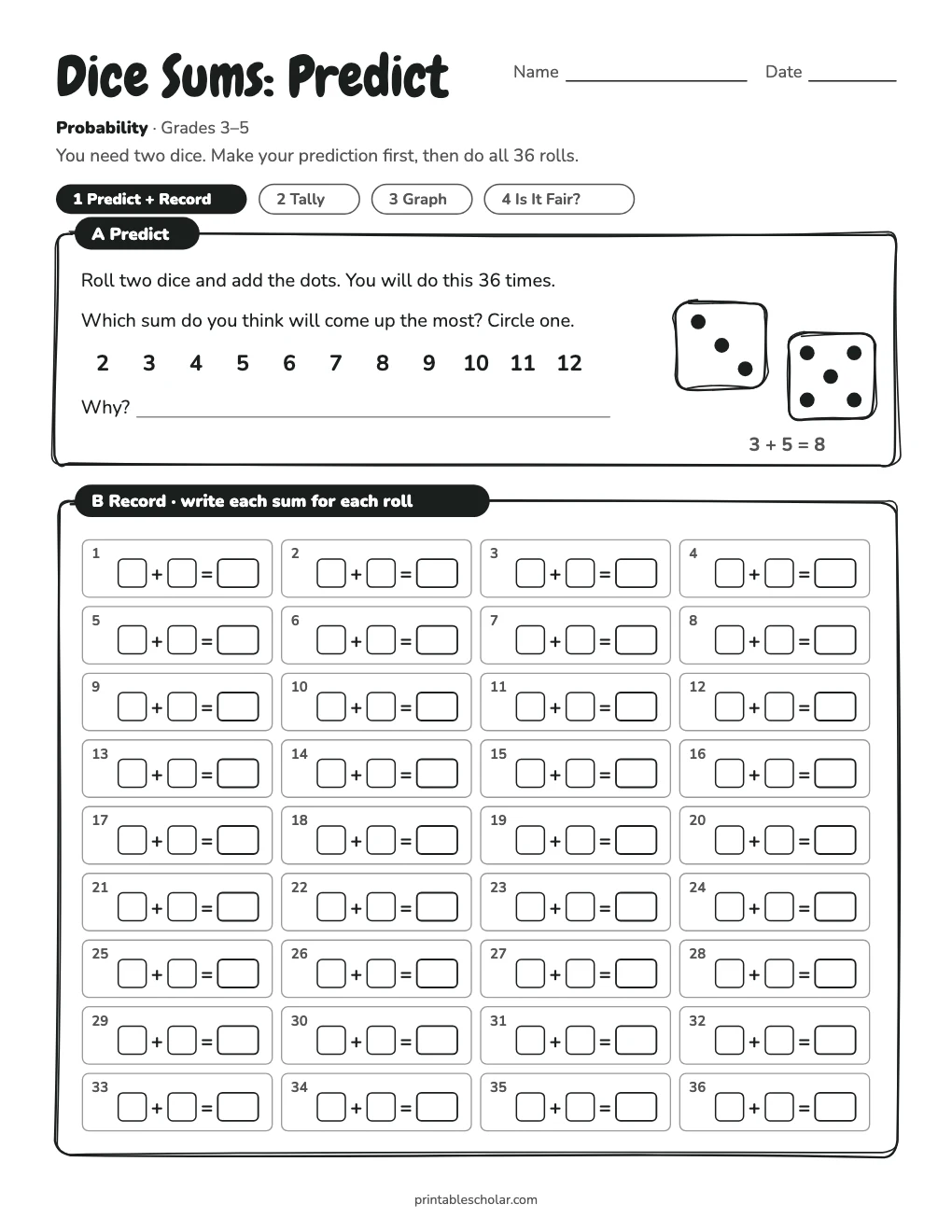
Roll two dice 36 times and graph the sums. Fill in the table of all 36 ways, count the ways for each sum, and find out why a game that looks fair is not. Includes answer key.
Download PDF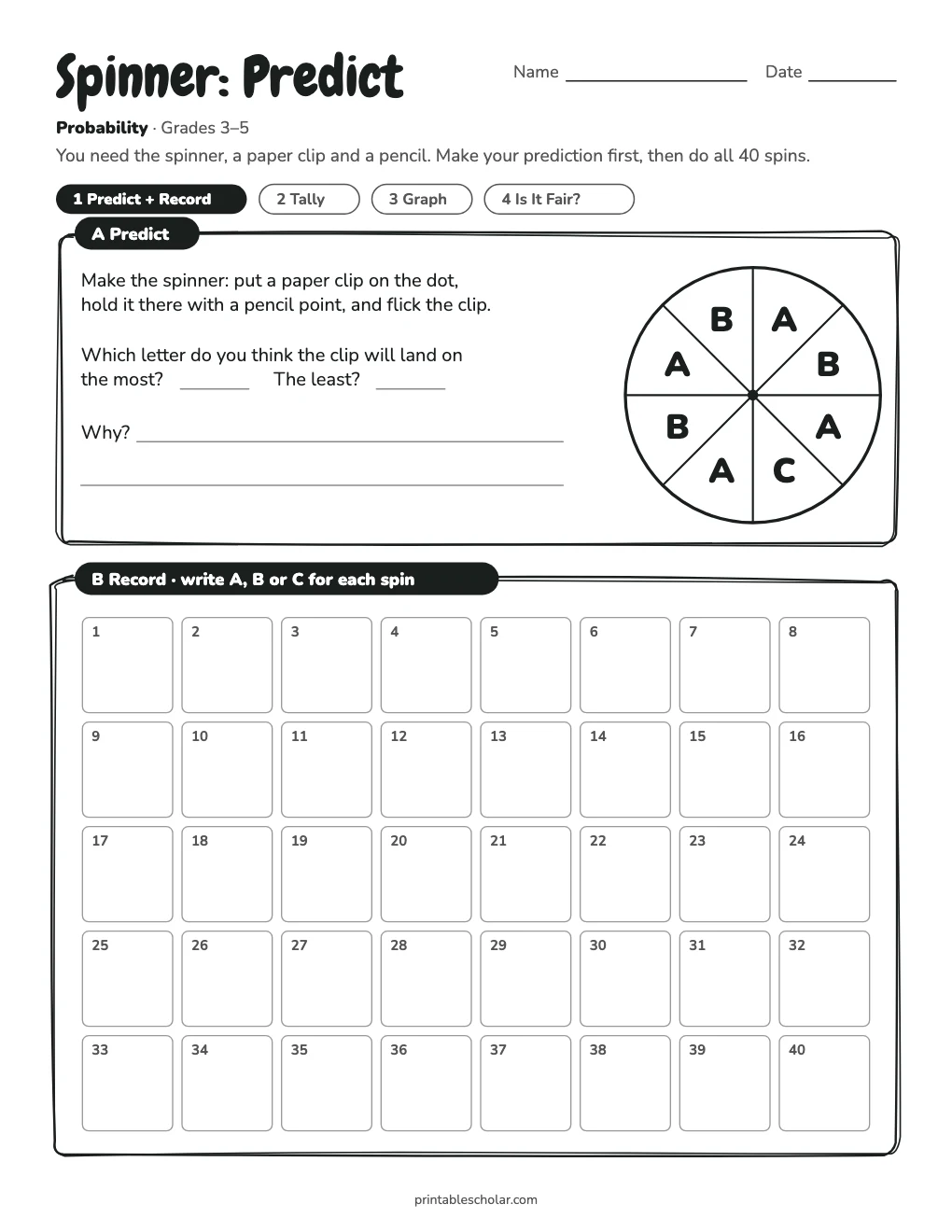
Make the spinner with a paper clip and spin it 40 times. Chance words, expected results, two fair or not fair games, and a fair spinner to design. Includes answer key.
Download PDF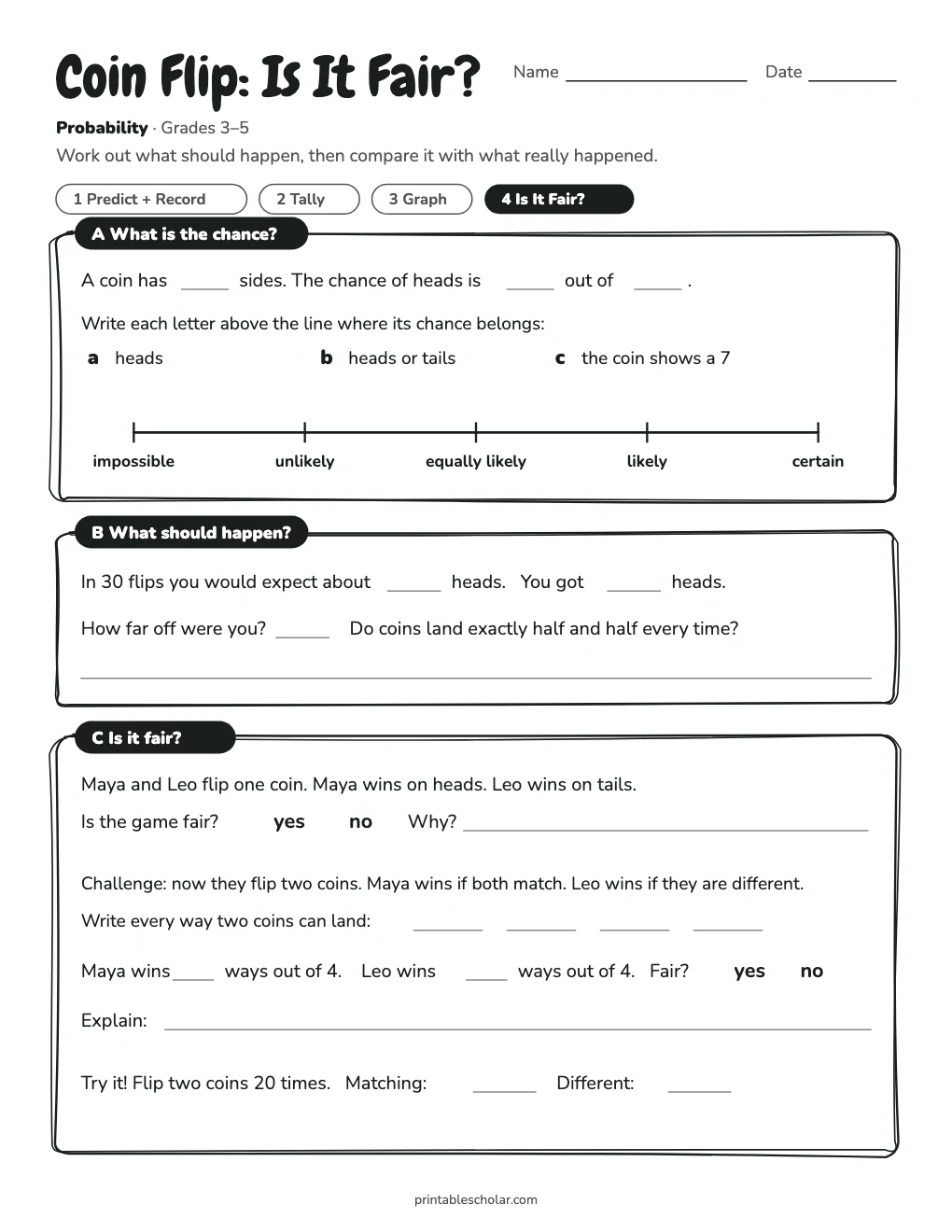
The chance of heads, impossible to certain, expected results, and a two-coin game to test. Includes answer key.
Download PDF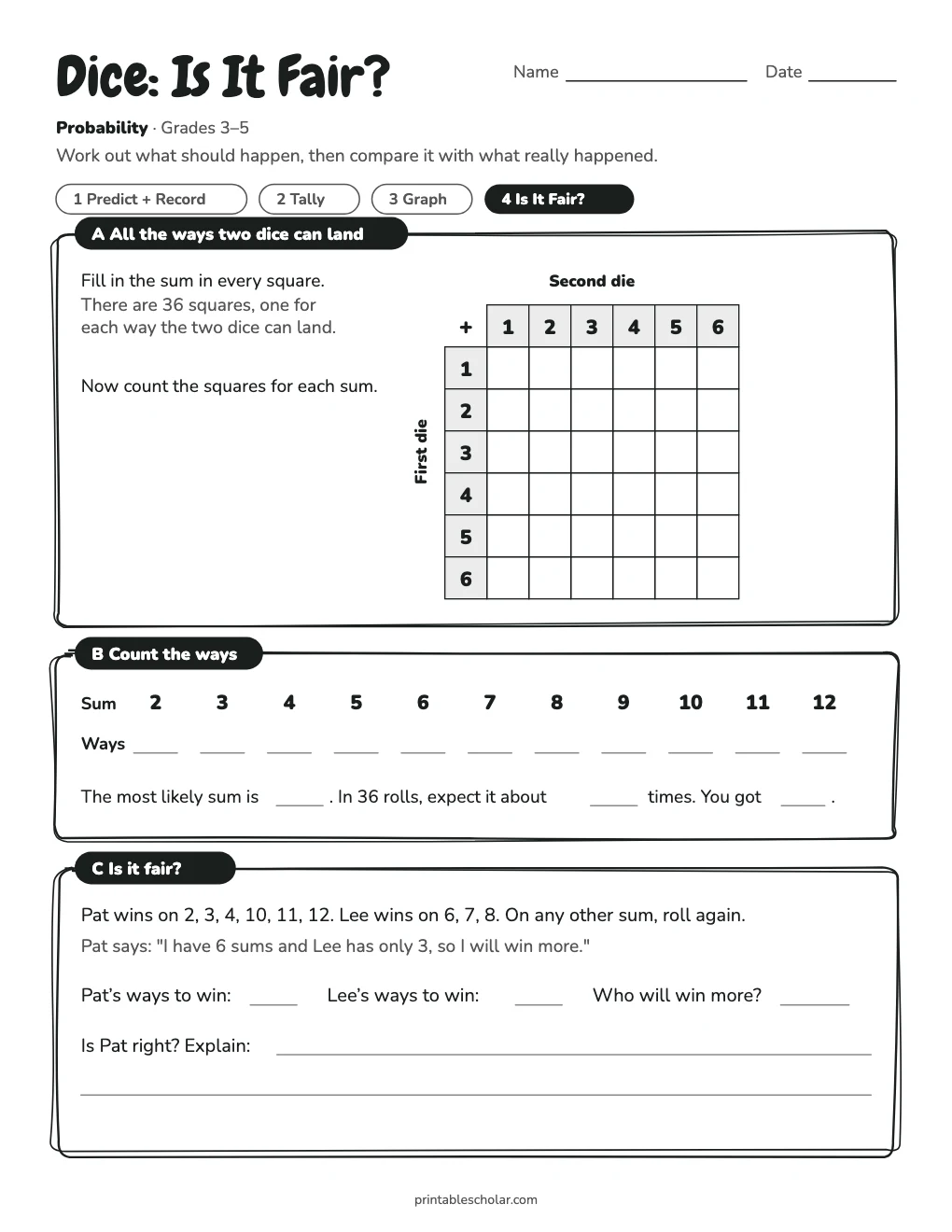
All 36 ways two dice can land, the ways to make each sum, and a game where more sums does not mean more wins. Includes answer key.
Download PDF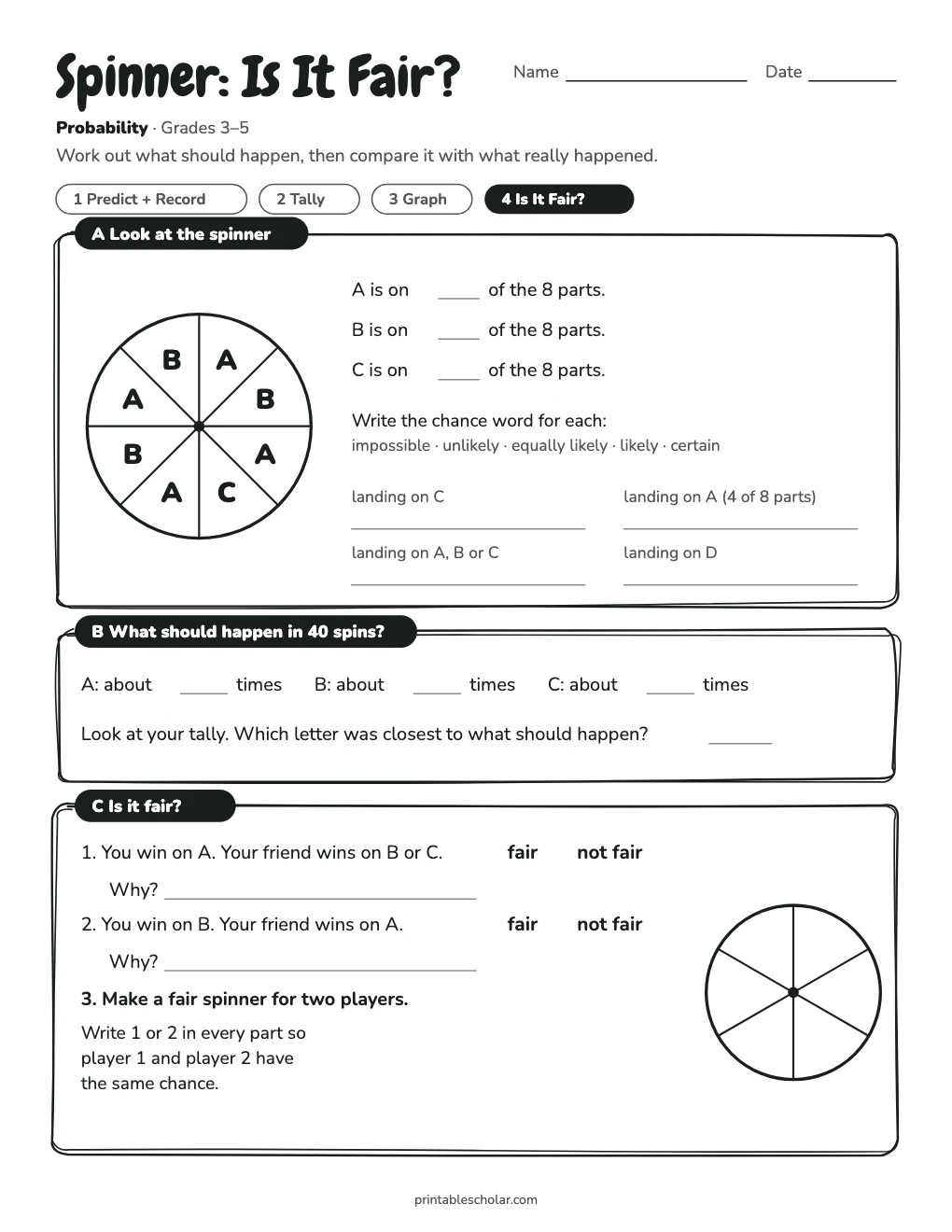
Parts of the spinner as chances, chance words, expected results in 40 spins, fair and unfair games, and a fair spinner to design. Includes answer key.
Download PDFProbability is how likely something is to happen. A chance can be described in words, from impossible through unlikely, equally likely and likely to certain, or as a number of ways out of all the ways: a coin lands heads 1 way out of 2.
Children learn probability best by doing it. Each experiment starts with a prediction, then the child flips, rolls or spins and records every result. The tally chart and bar graph come next, which is also good graphing practice. The last sheet compares what happened with what should happen.
The results will rarely match the chance exactly. Thirty coin flips might give 13 heads or 18 heads. That is the point to talk about: chance tells you what happens over many tries, and the more tries, the closer the results get. Putting the whole class's results together shows this well.
The Is It Fair? sheets each end with a game. A game is fair when every player has the same number of ways to win. The dice game is the one to try: one player has six winning sums and the other only three, but the player with three sums wins more often, because sums near 7 can be rolled in more ways.
 Printable Scholar