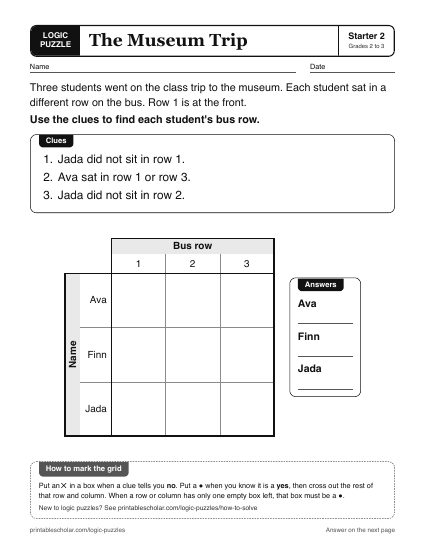
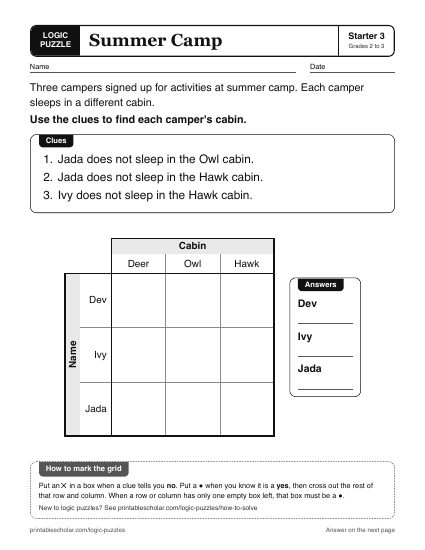
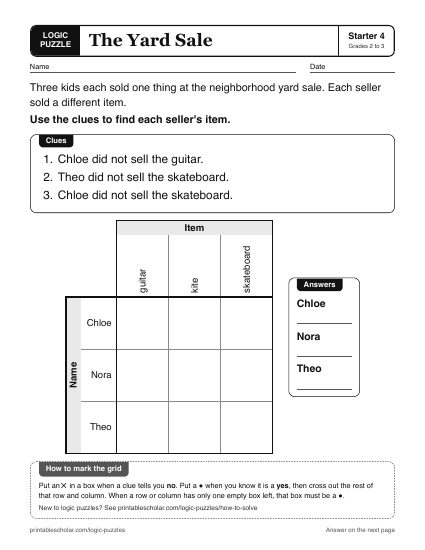
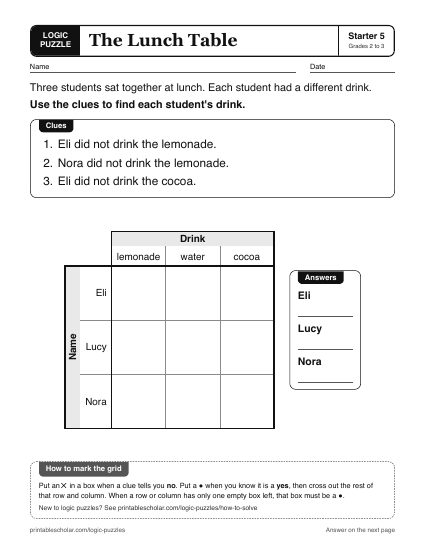
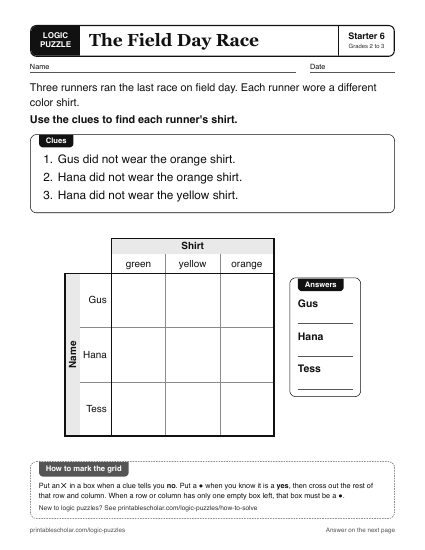
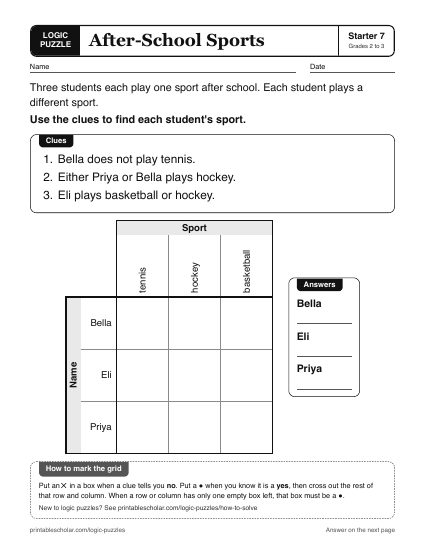
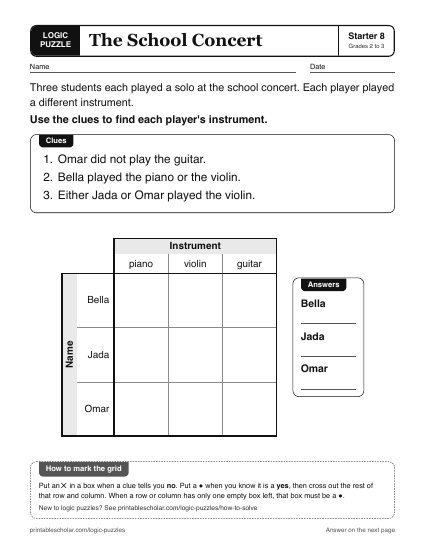
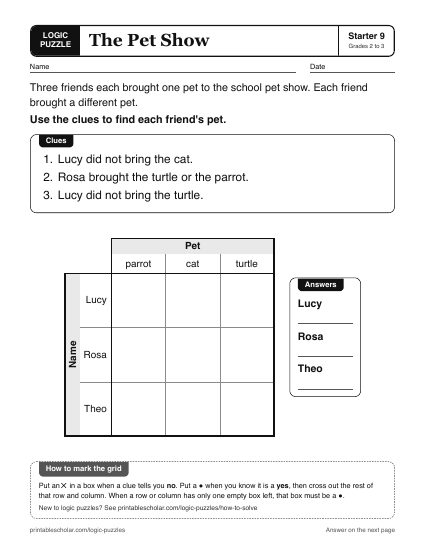
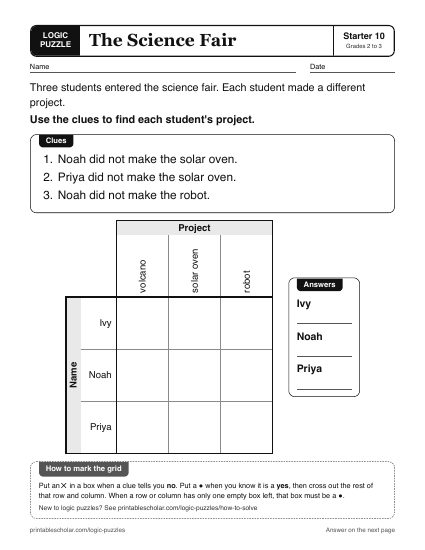
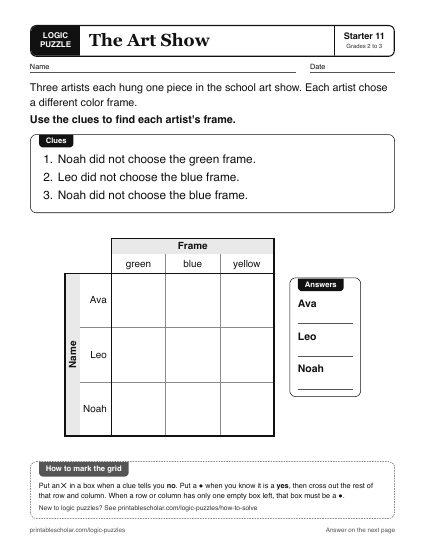
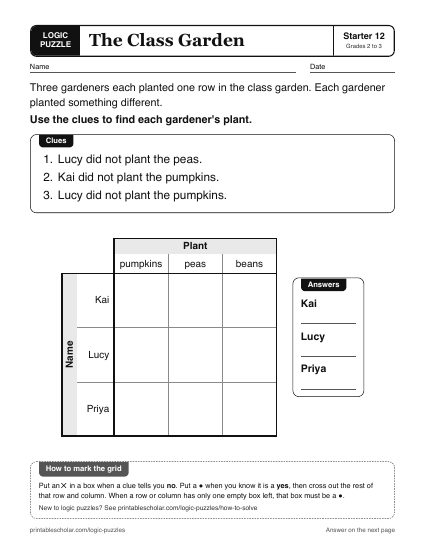
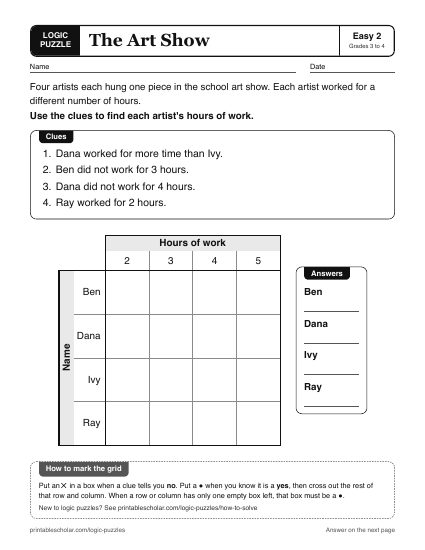
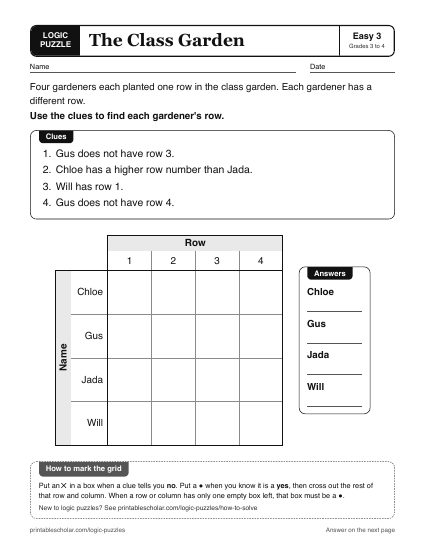
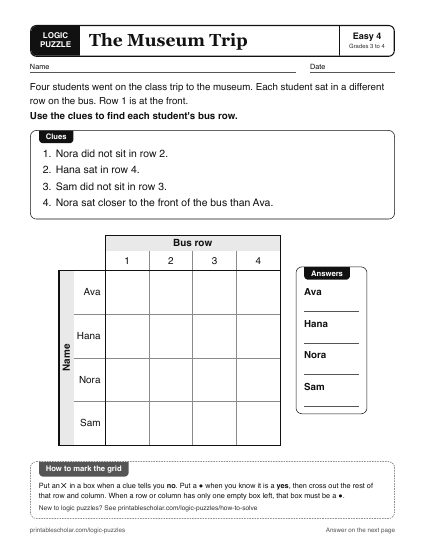
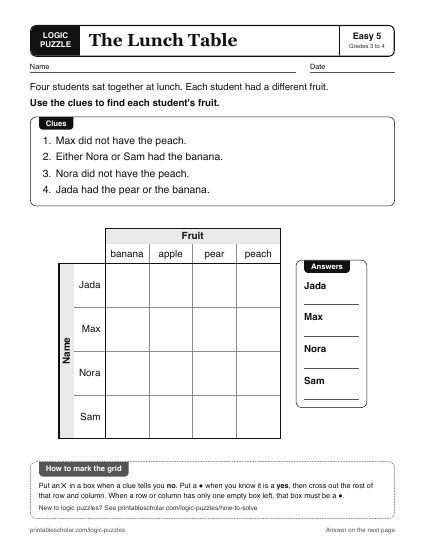
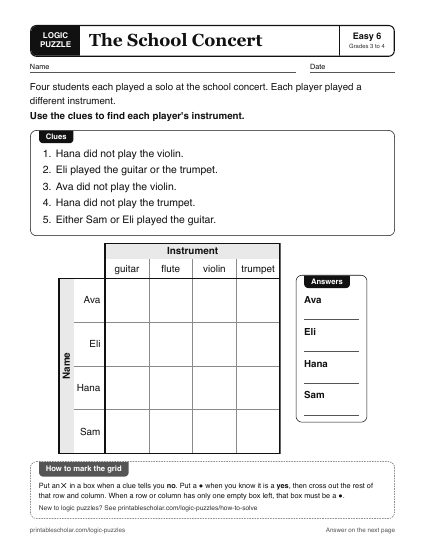
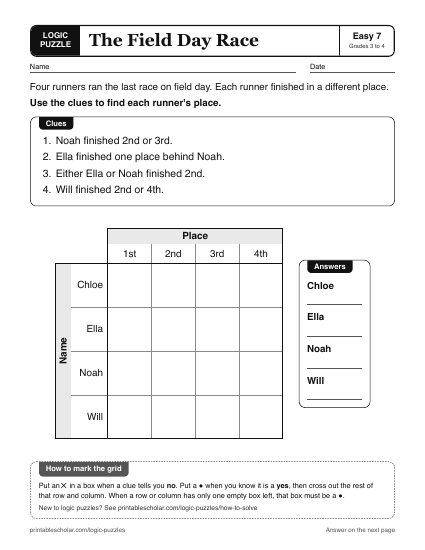
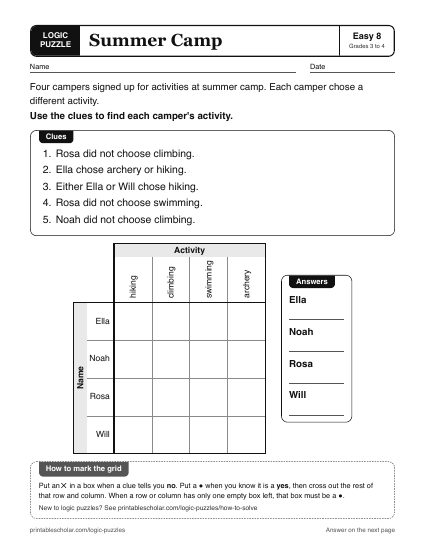
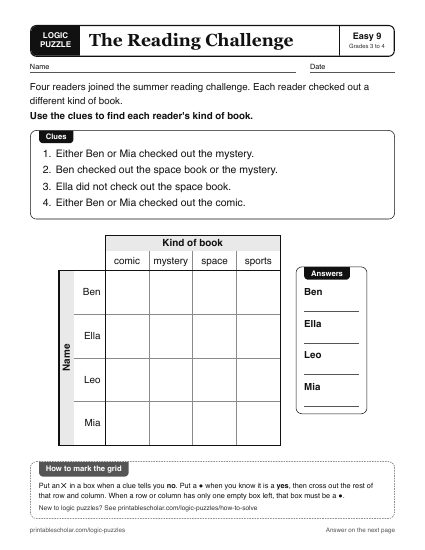
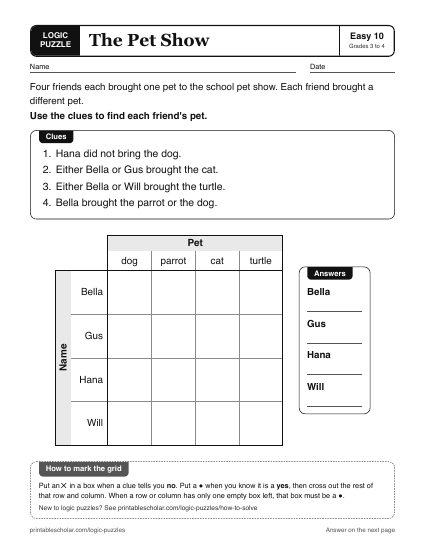
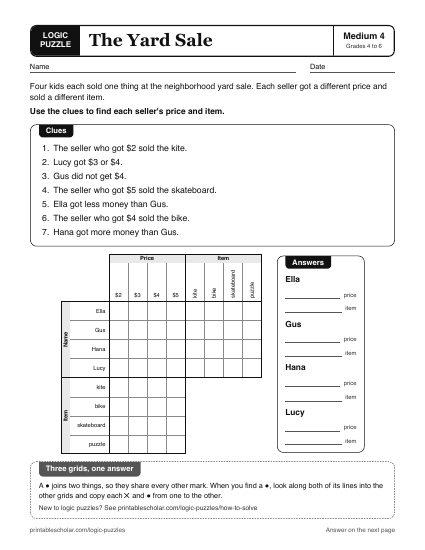
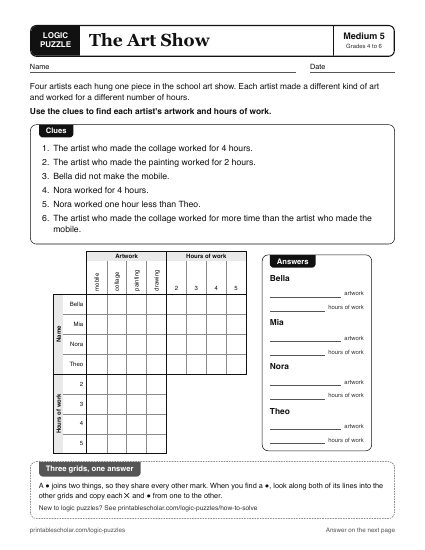
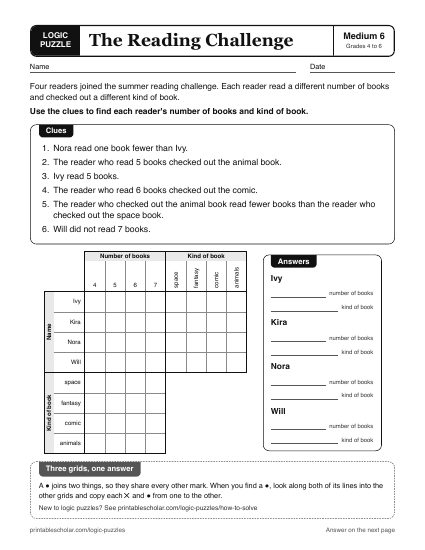
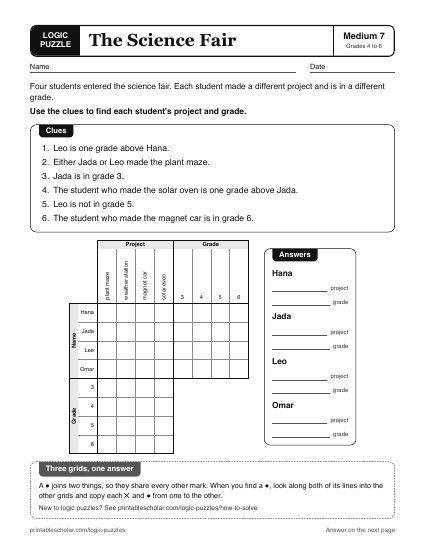
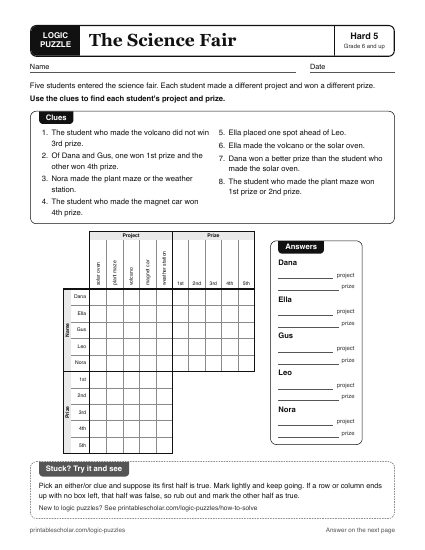
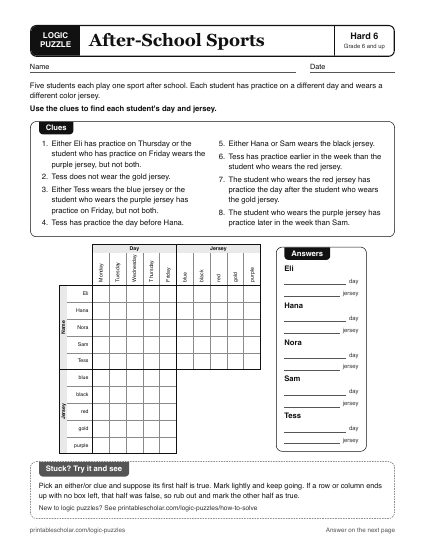
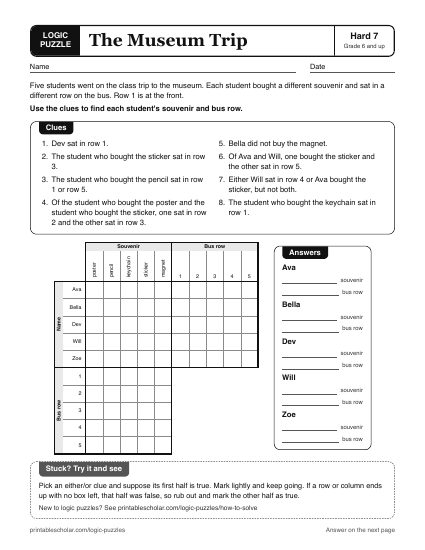
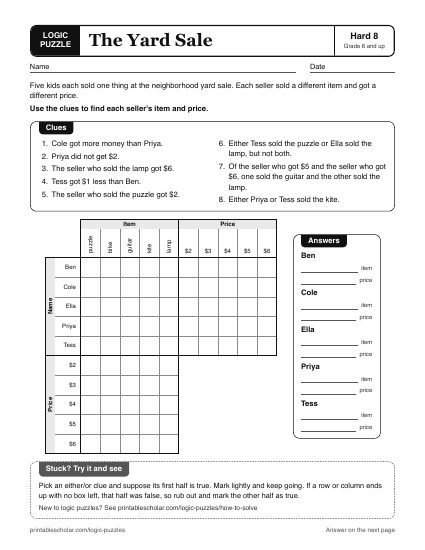
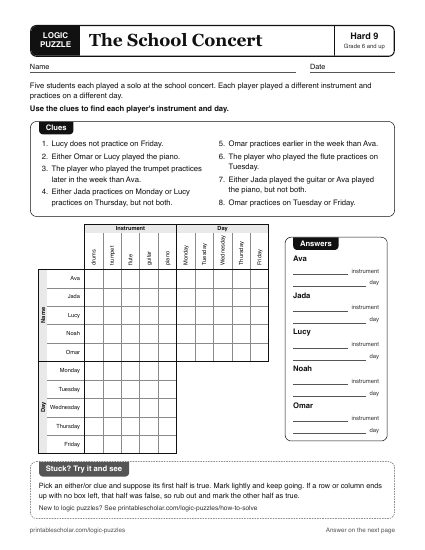
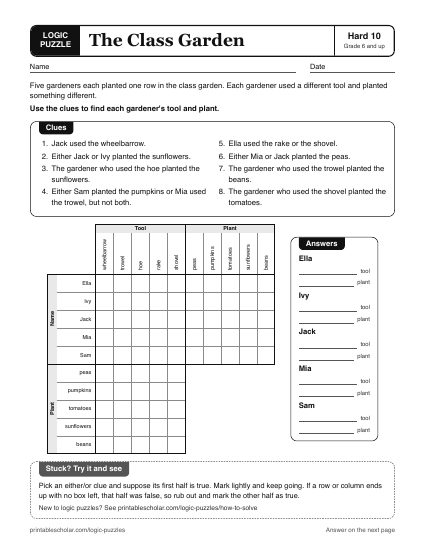
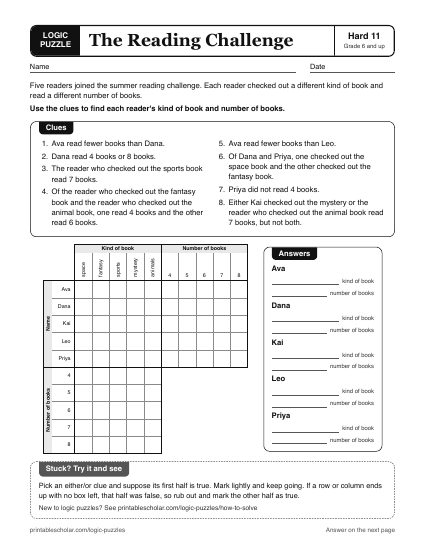
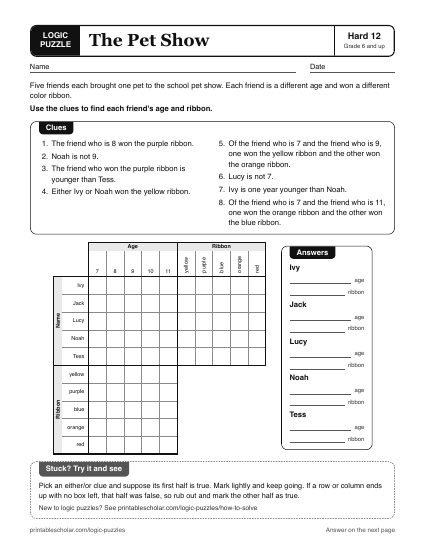
48 logic grid puzzles in four levels, from a first three-clue puzzle to hard ones that take a "try it and see" step. Each sheet has the story, the clues and the grid ready to mark, with the answer on page 2. Free to print, no signup.
Never solved one before? The lesson page works through a puzzle one step at a time, with a one-page handout and blank grids to print.
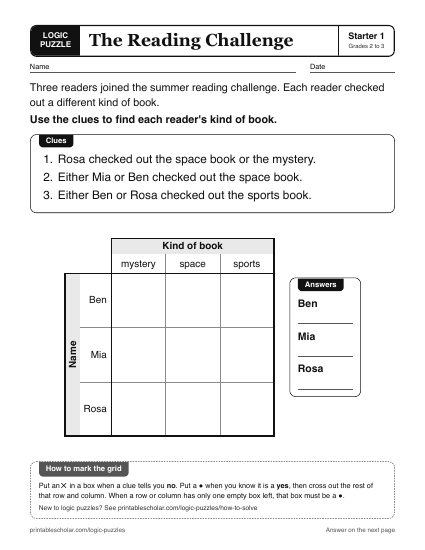
How to solve a logic puzzleA first logic puzzle. Three people, one small grid and three clues. Every clue can be marked straight onto the grid.
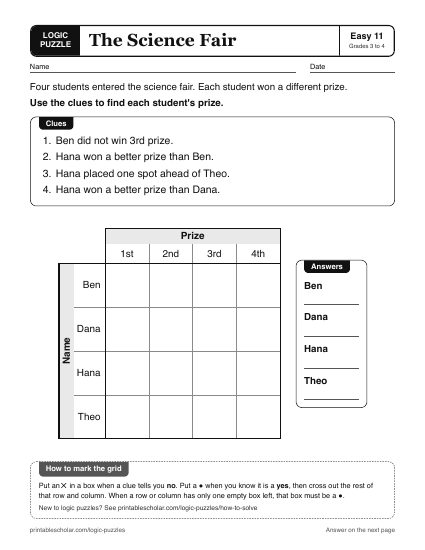
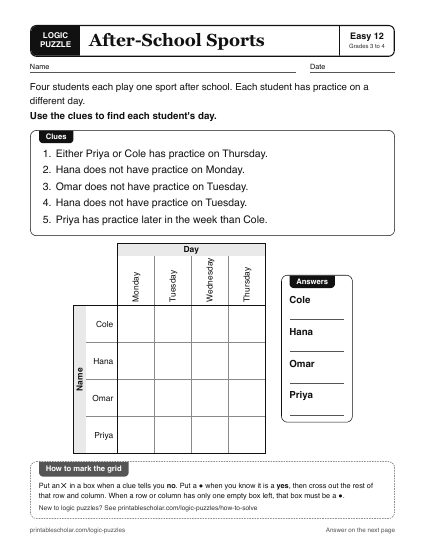
Download all 12 starter puzzles in one PDFFour people and one grid. Some clues give you two choices, and some compare two people, so you have to think about what each clue rules out.
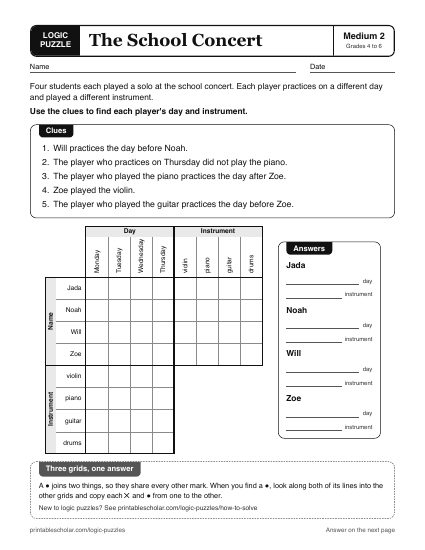
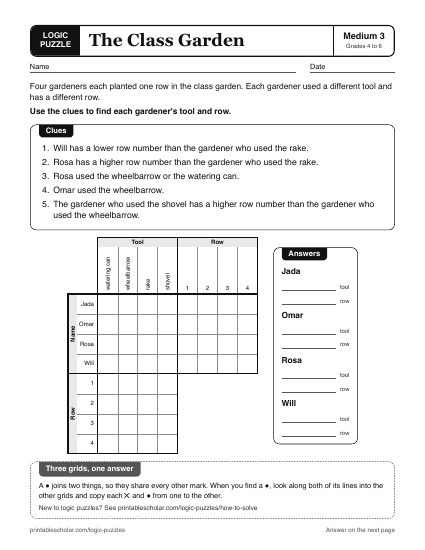
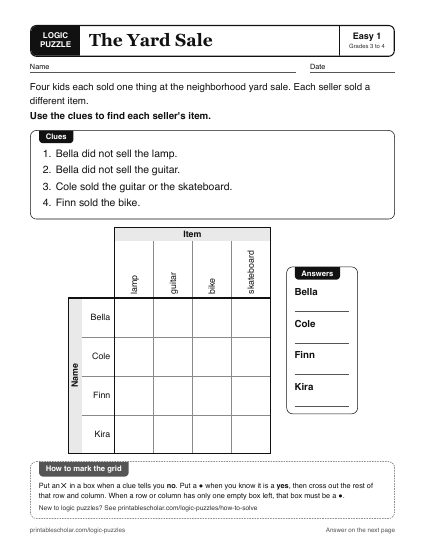
Download all 12 easy puzzles in one PDFFour people and two things to find out about each, on three joined grids. What you learn in one grid has to be carried over to the others.
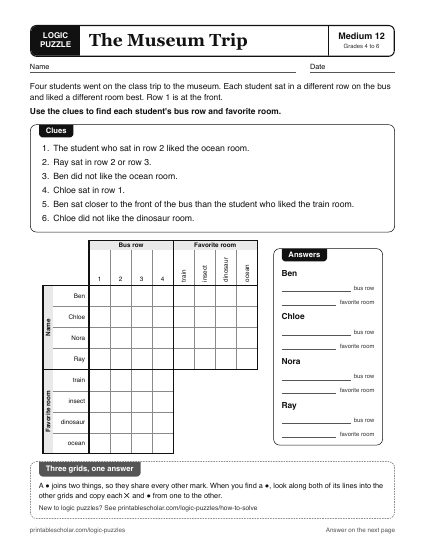
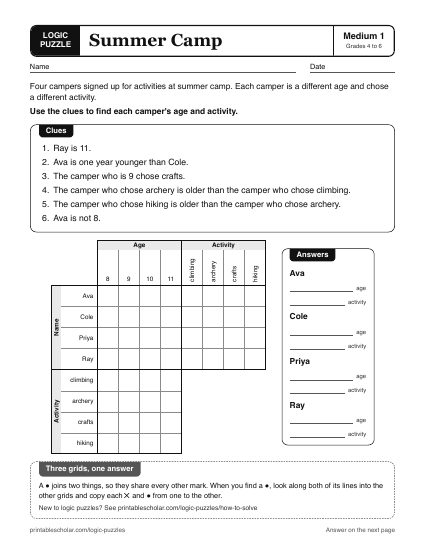
Download all 12 medium puzzles in one PDFFive people, three grids, and a point where the clues stop giving you marks. To go on you have to suppose something is true and see whether it leads to a dead end.
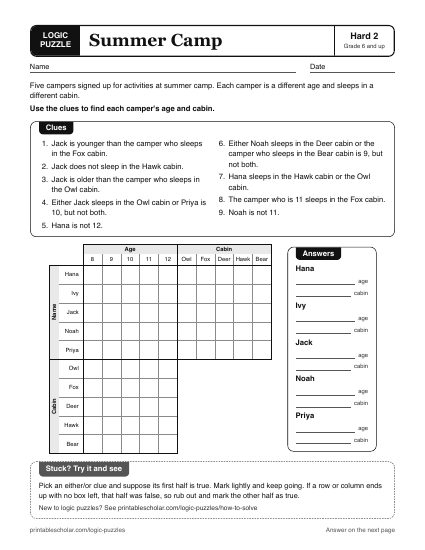
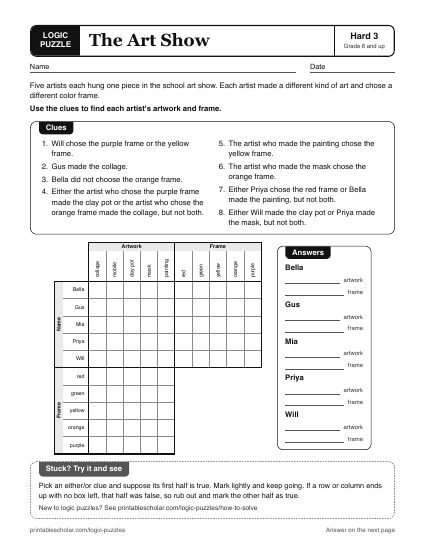
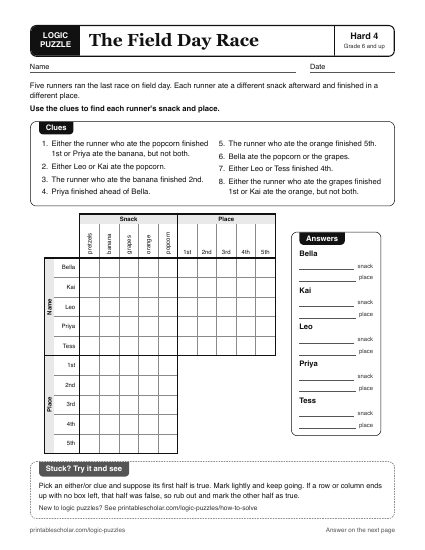
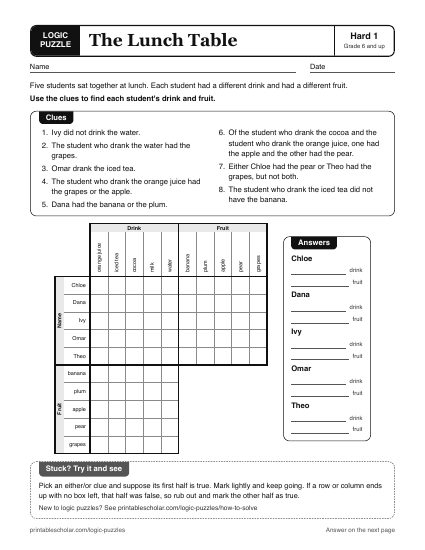
Download all 12 hard puzzles in one PDFThe levels are set by the hardest step a puzzle needs, not just by its size. Every puzzle is solved by a program first, and the program records which steps it had to use.
| Starter | 3 names, one grid. Mark what each clue tells you, then finish the rows and columns. |
|---|---|
| Easy | 4 names, one grid. The same steps, with "or" clues and "older than" clues to work out. |
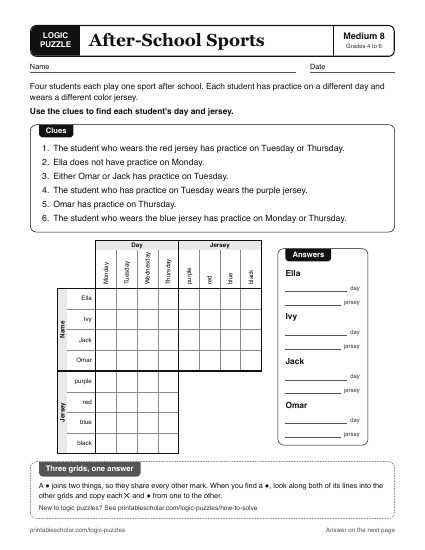
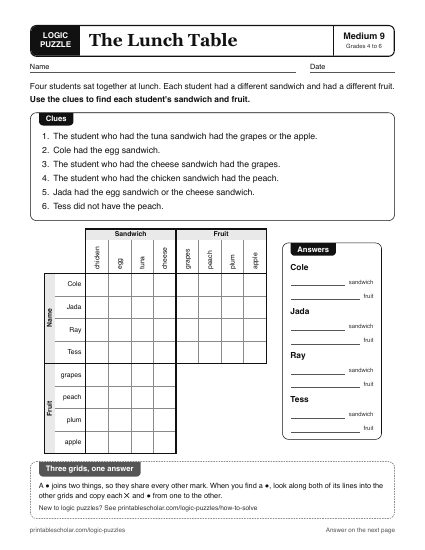
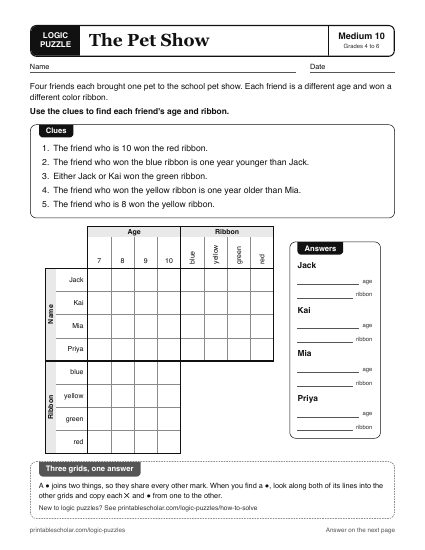
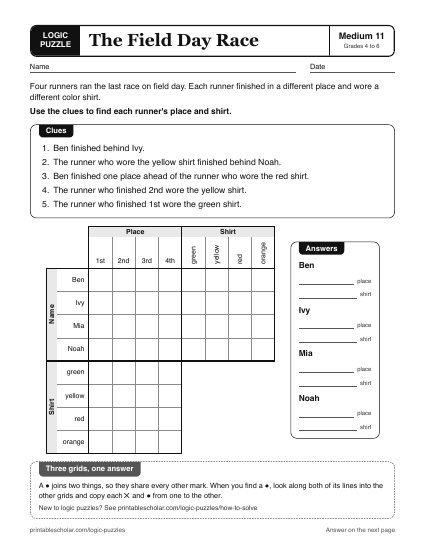
| Medium | 4 names, three grids. Carry facts from one grid to the next. No guessing is needed. |
| Hard | 5 names, three grids. At least one "try it and see" step: suppose half of an either/or clue is true and follow it until it breaks. |
A logic grid puzzle asks a student to read closely, hold several facts at once and write down only what has been proved. Those are the habits behind careful math, science and computer programming. They also work well for early finishers, because one sheet takes ten to thirty minutes and needs nothing but a pencil.
Yes. All 48 puzzles and their answer keys are free to print, with no signup and no watermark.
A short story, a list of clues and a grid. Each clue tells you something that is or is not true. You mark the grid with an ✕ for no and a ● for yes until only one answer is left.
Yes. Each puzzle is checked by a solver before it goes on the page. A puzzle with more than one answer, or with none, is thrown out.
Not in the starter, easy or medium puzzles: every mark follows from a clue. The hard puzzles each have a point where you must suppose something is true and follow it until it breaks. That is not a lucky guess. The dead end proves which half of the clue is false.
Starter puzzles suit grades 2 and 3. Easy puzzles suit grades 3 and 4, medium puzzles grades 4 to 6, and hard puzzles grade 6 and up, including adults.
On page 2 of every PDF, with the finished grid. Hard puzzles also show the try-it-and-see step.