Carbon Cycle Diagram
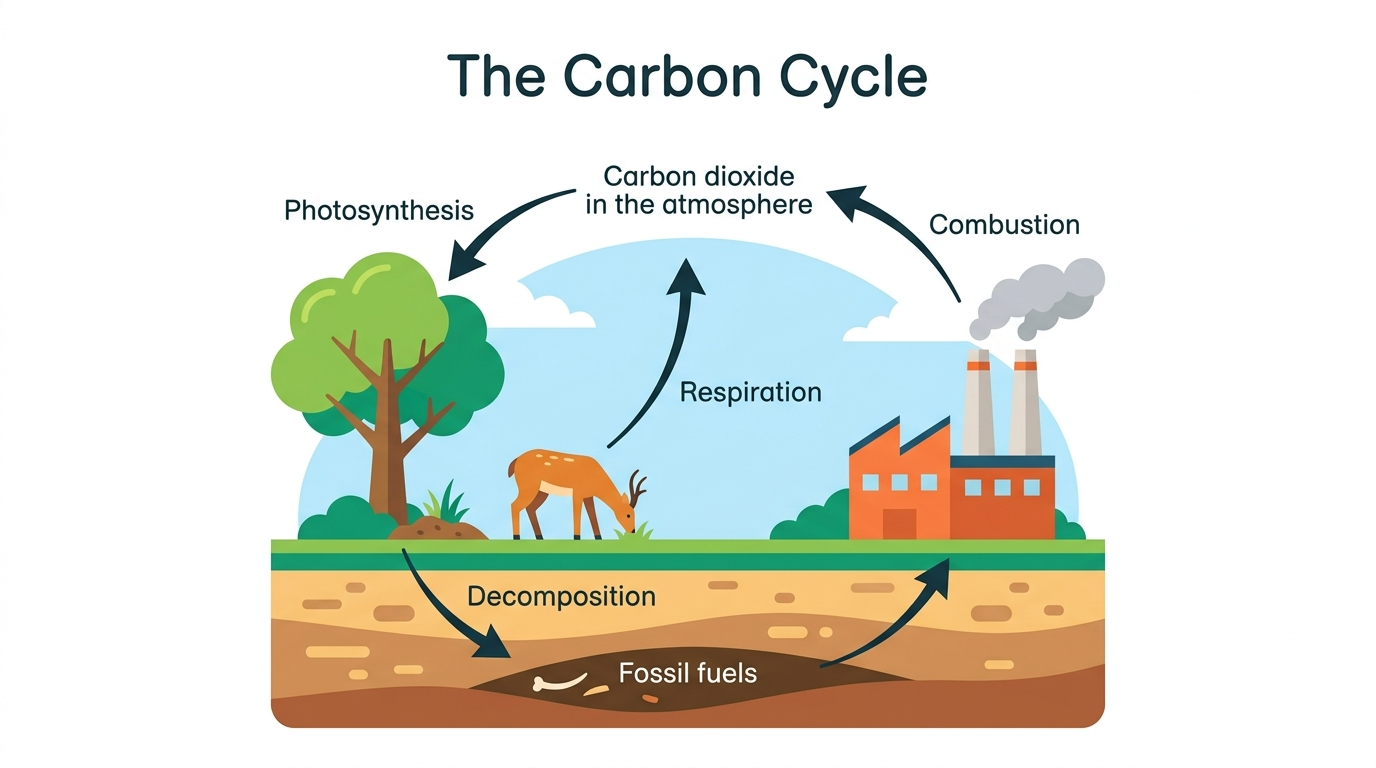
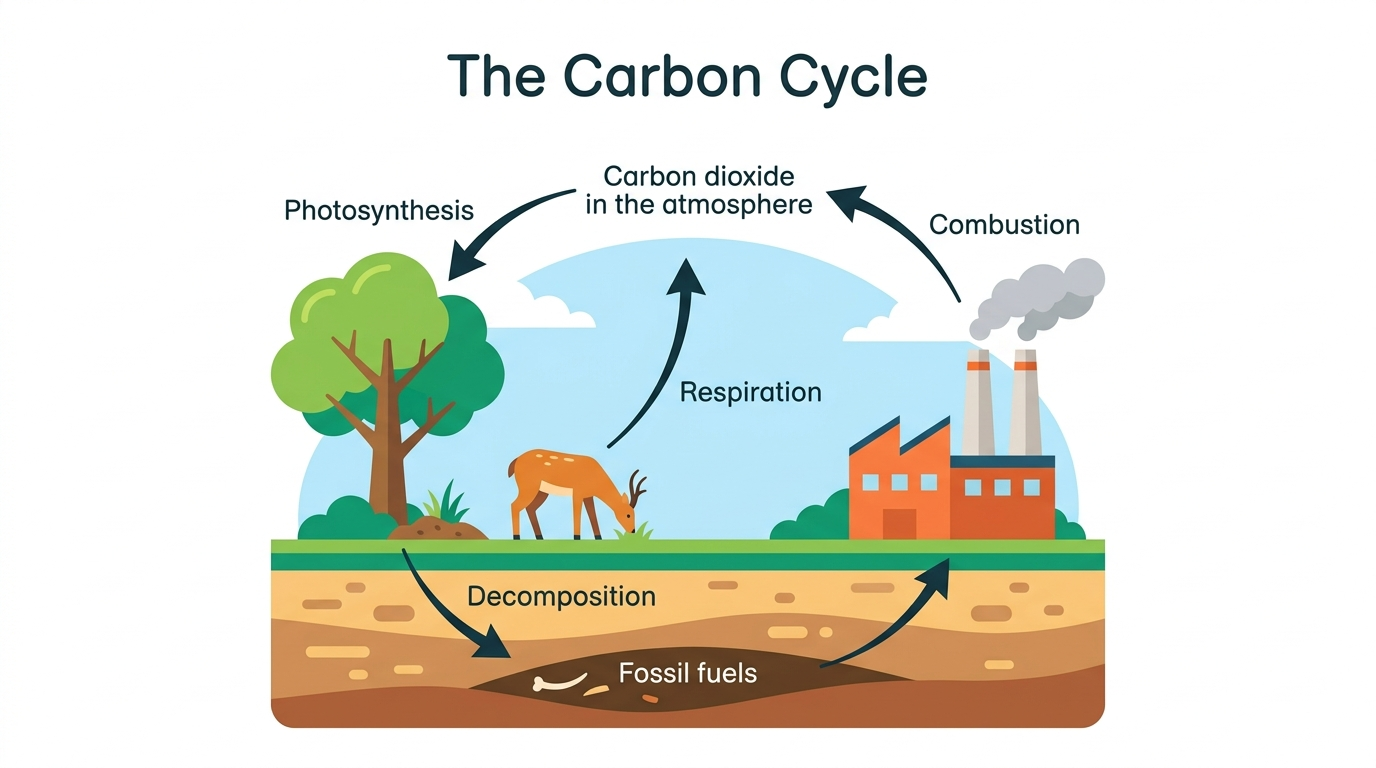
Free printable carbon cycle diagram — a labeled illustration showing photosynthesis, respiration, decomposition, combustion and fossil fuels. Download PDF or PNG for Letter paper.
How carbon moves through the cycle
The carbon cycle is how carbon moves between the air, living things and the ground. Here is what happens at each labeled part of the diagram:
| Process | What it does | Why it matters |
|---|---|---|
| Carbon dioxide in the atmosphere | The gas plants take in and that animals breathe out. | Carbon dioxide is the form of carbon that living things can actually exchange with the air, so the whole cycle depends on it being there. Without it in the atmosphere, plants would have nothing to build themselves from, and the cycle would grind to a halt. |
| Photosynthesis | Plants take carbon dioxide from the air to make their food. | Every piece of food you have ever eaten traces back to this step — plants capturing carbon from the air and locking it into leaves, fruits, and seeds that other creatures can eat. Without photosynthesis pulling carbon out of the air, there would be no food, no oxygen, and no life as we know it. |
| Respiration | Living things release carbon dioxide back into the air as they breathe. | Each breath you breathe out sends carbon dioxide back into the air, keeping the cycle moving. If living things stopped releasing carbon this way, the atmosphere would steadily lose the carbon dioxide that plants and the climate system depend on. |
| Decomposition | Dead plants and animals break down, returning carbon to the soil. | Fallen leaves and dead animals don't just vanish — fungi and bacteria quietly break them apart and return their carbon to the soil, where new plants can use it again. Without decomposers, dead material would pile up endlessly and the nutrients locked inside it would never be recycled. |
| Combustion | Burning fuels releases stored carbon back into the air. | Burning releases carbon that was locked away — sometimes for millions of years — back into the atmosphere in minutes. That speed is what makes large-scale burning so significant: it puts carbon into the air far faster than natural processes can reabsorb it. |
| Fossil fuels | Coal, oil and gas — carbon stored underground for millions of years. | Coal, oil, and gas are essentially ancient sunlight — the compressed remains of organisms that captured carbon hundreds of millions of years ago. Once that stored carbon is burned and released, it rejoins the active cycle almost instantly, even though it took an unimaginably long time to form. |
Companion worksheet
A free fill-in worksheet with an answer key, built from the labels above — students match each process to its description, then answer a couple of short questions. Great for a quick check after using the diagram.
How to print
Choose Download PDF for a ready-to-print file that fits US Letter paper (8.5 × 11") in landscape, or Download PNG for the high-resolution image.
Frequently asked questions
What is the carbon cycle?
The carbon cycle is the way carbon moves in a loop between the atmosphere, plants and animals, and the ground, through processes like photosynthesis, respiration and decomposition.
How does carbon get into the atmosphere?
Carbon returns to the air through respiration (breathing), decomposition of dead things, and combustion (burning fuels).
What paper size should I print this on?
The diagram is sized for standard US Letter paper (8.5 × 11") in landscape orientation. Use "Download PDF" for a print-ready file that fits the page automatically.