Area practice for 3rd to 5th grade, in the order it is taught: counting unit squares, area of rectangles, finding a missing side, three sets of composite figures, area and perimeter together, and story problems. Every practice sheet has its answer key on the second page.
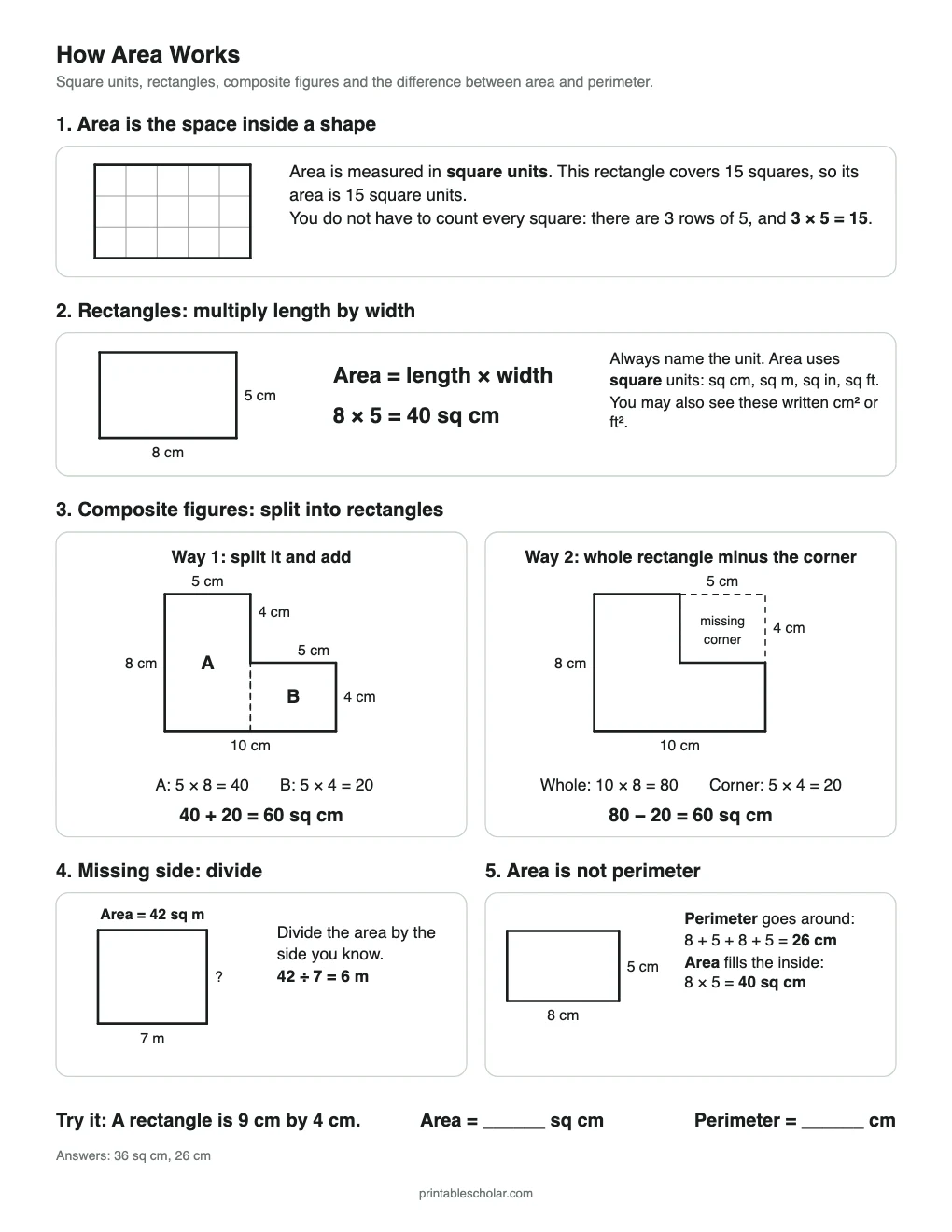
Square units, length times width, two ways to find the area of a composite figure, missing sides, and area against perimeter.
Download PDF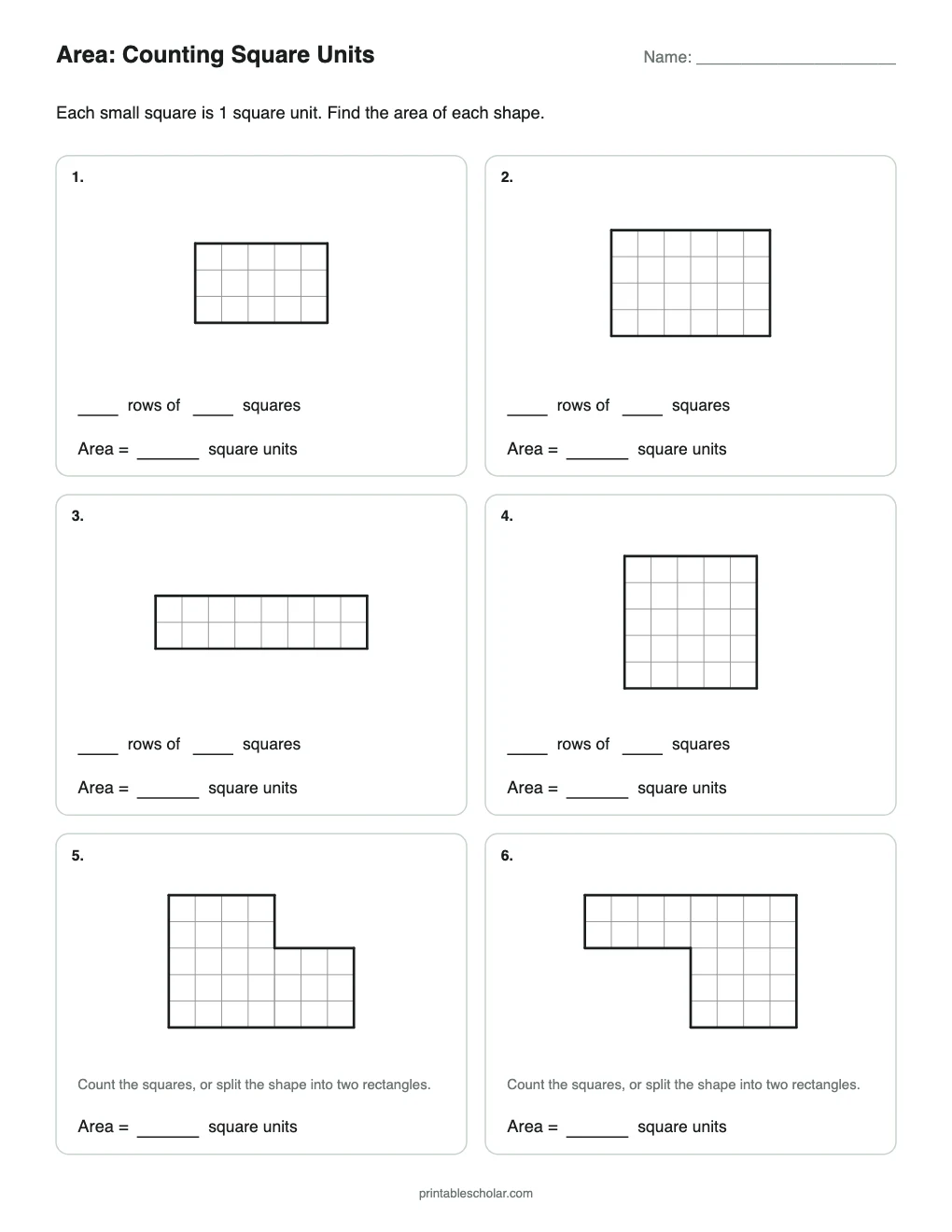
Six shapes on a grid: four rectangles and two L-shapes. Count the squares or multiply rows. Includes answer key.
Download PDF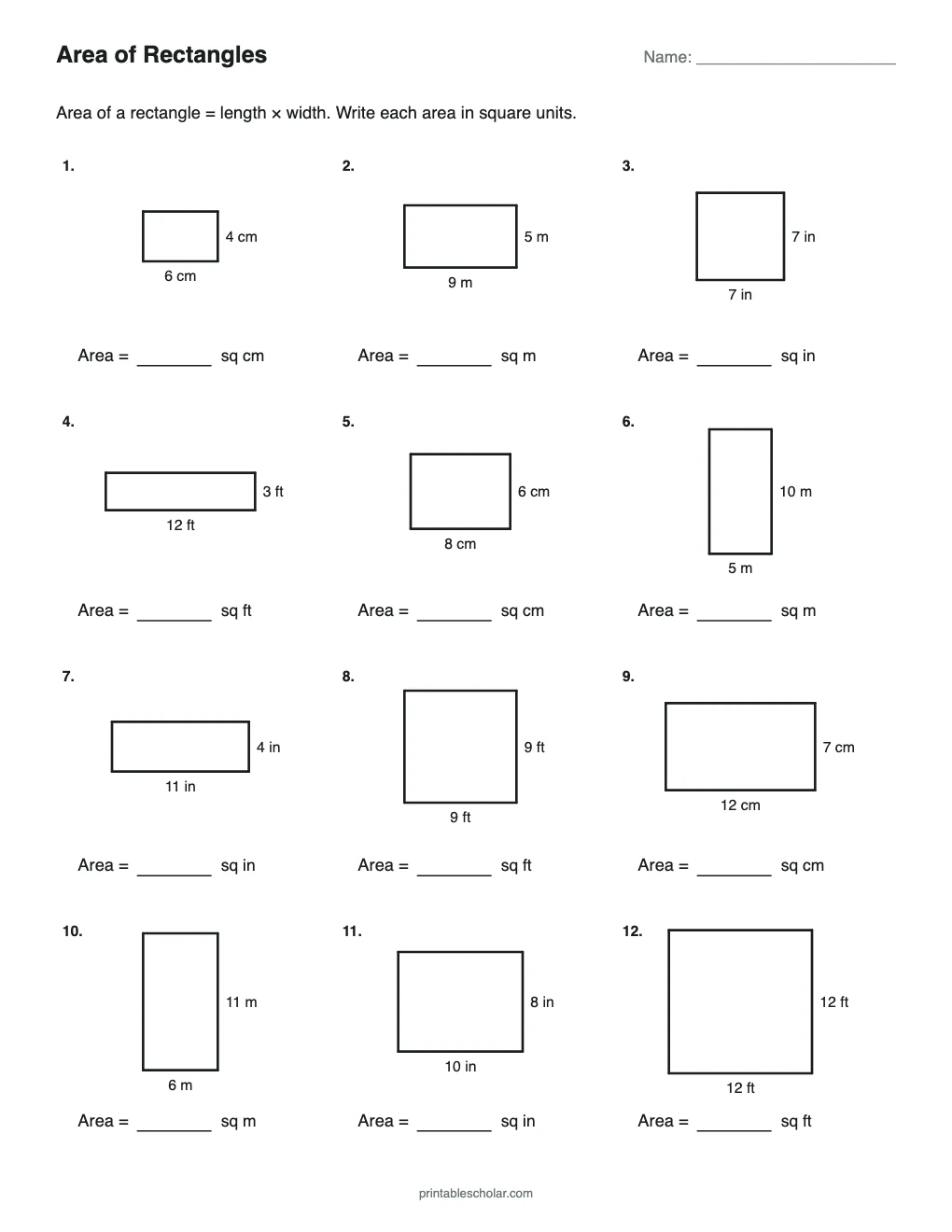
Twelve rectangles and squares drawn to scale, in centimeters, meters, inches and feet. Includes answer key.
Download PDF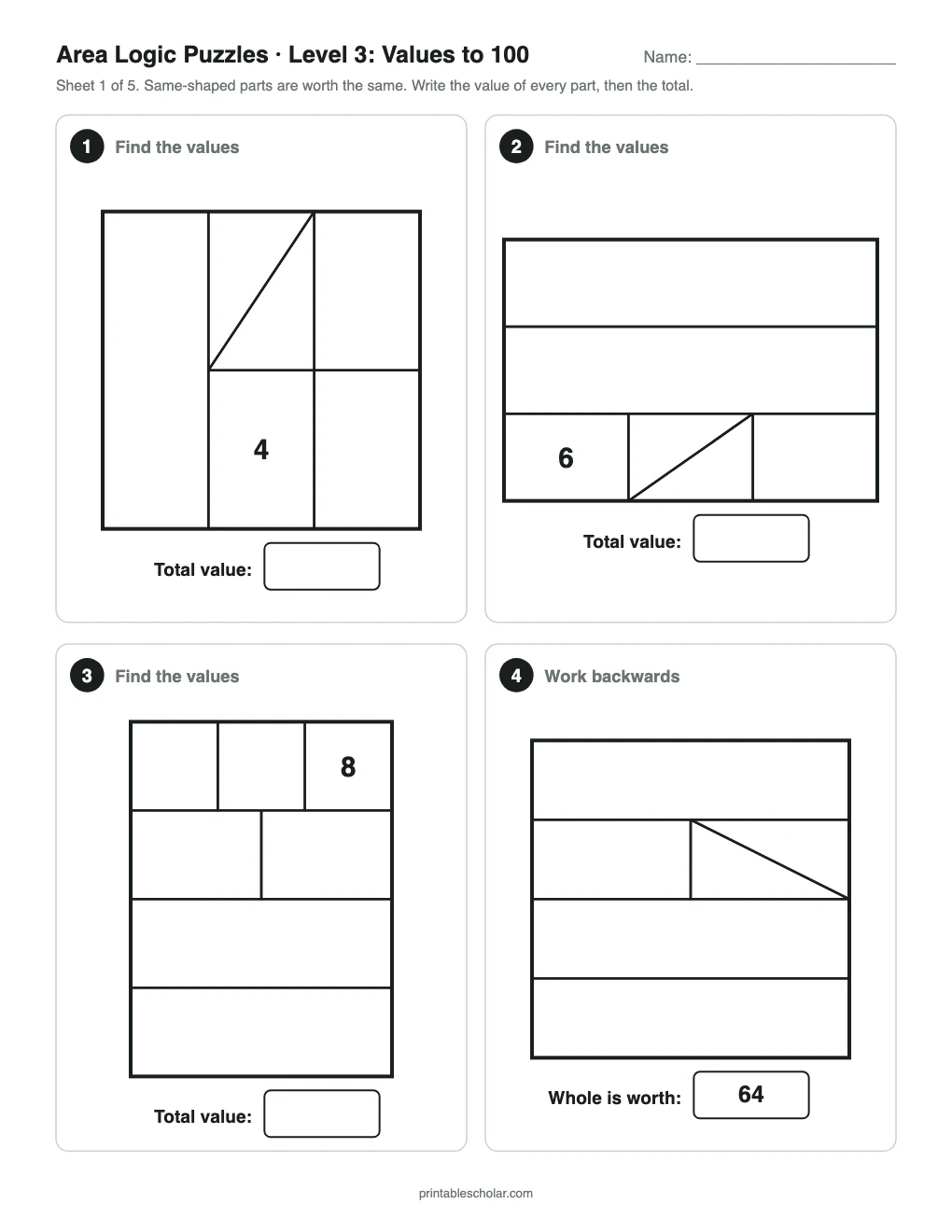
A shape cut into same-shaped parts, one value given: find every part and the whole. No measuring, one answer.
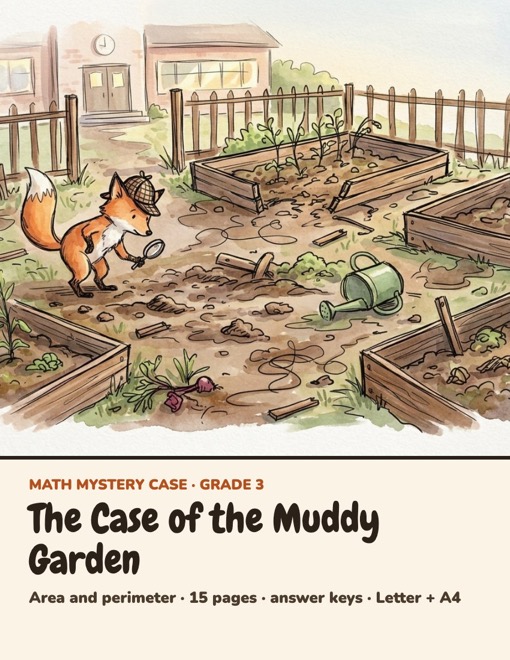
Solve area and perimeter problems to unlock secret-code clues, then cross out drawn suspects until one is left.
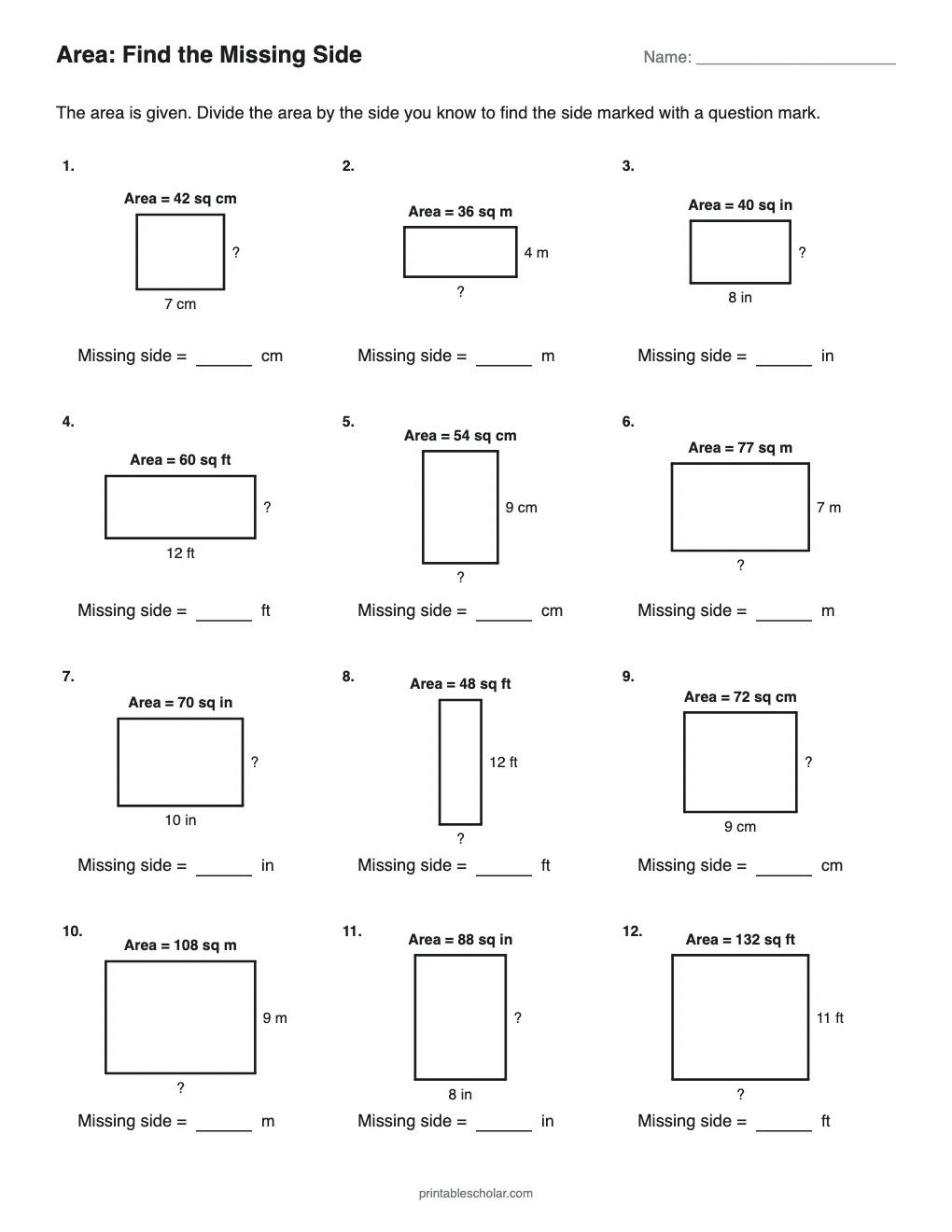
Twelve rectangles with the area and one side given. Divide to find the other side. Includes answer key.
Download PDF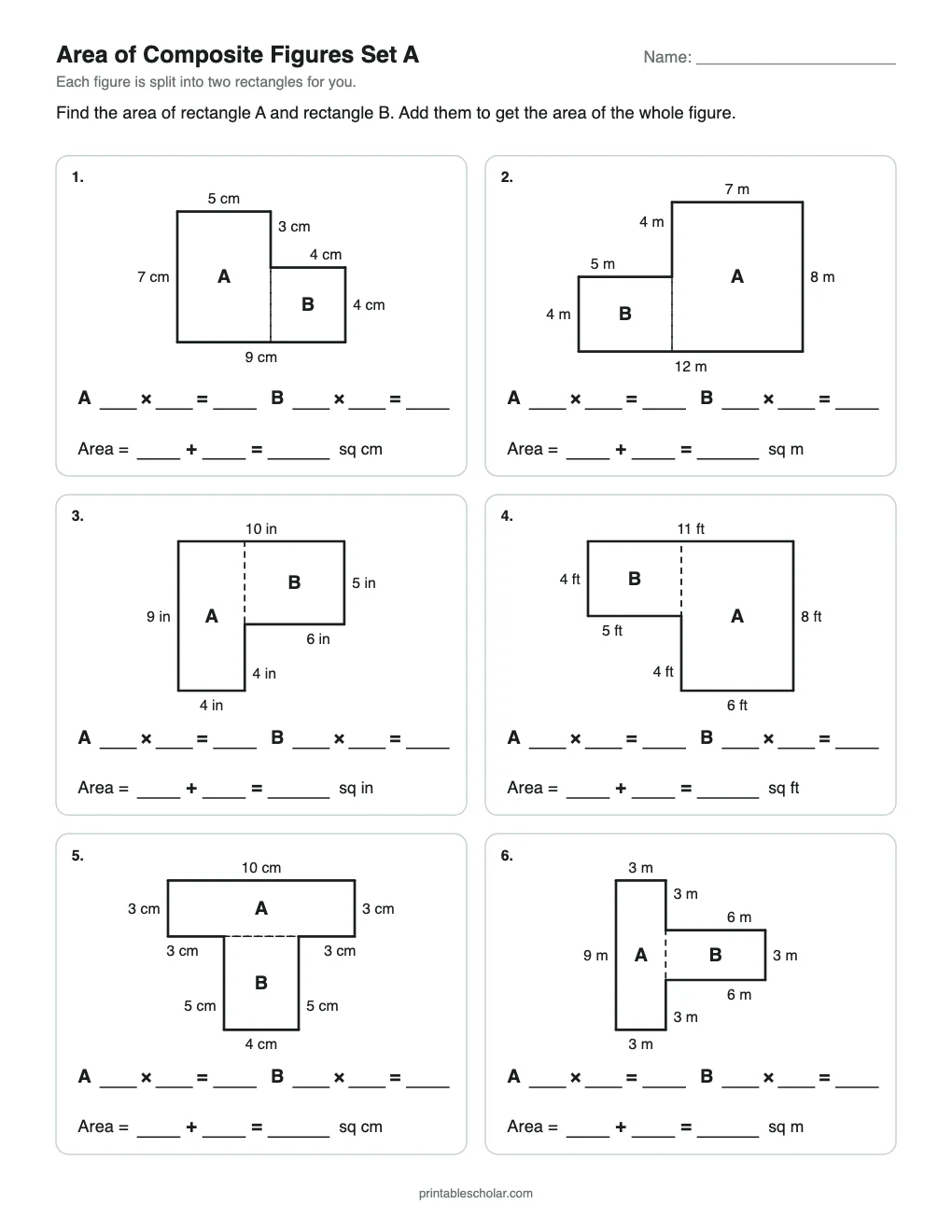
Six L-shapes and T-shapes already split into rectangles A and B, with a line for each step. Includes answer key.
Download PDF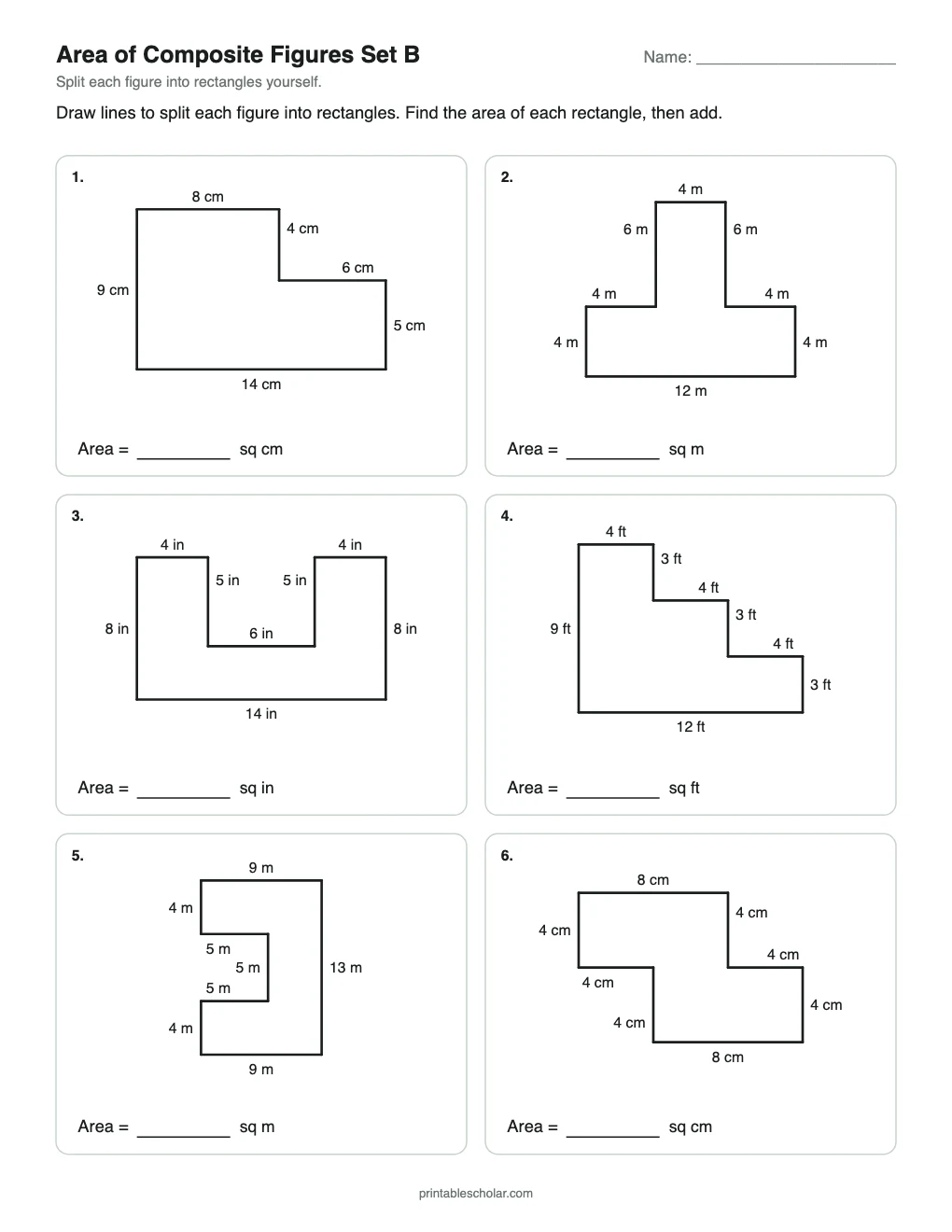
Six figures to split yourself: L, T, U, steps and more. Every side is labelled. The key shows the split.
Download PDF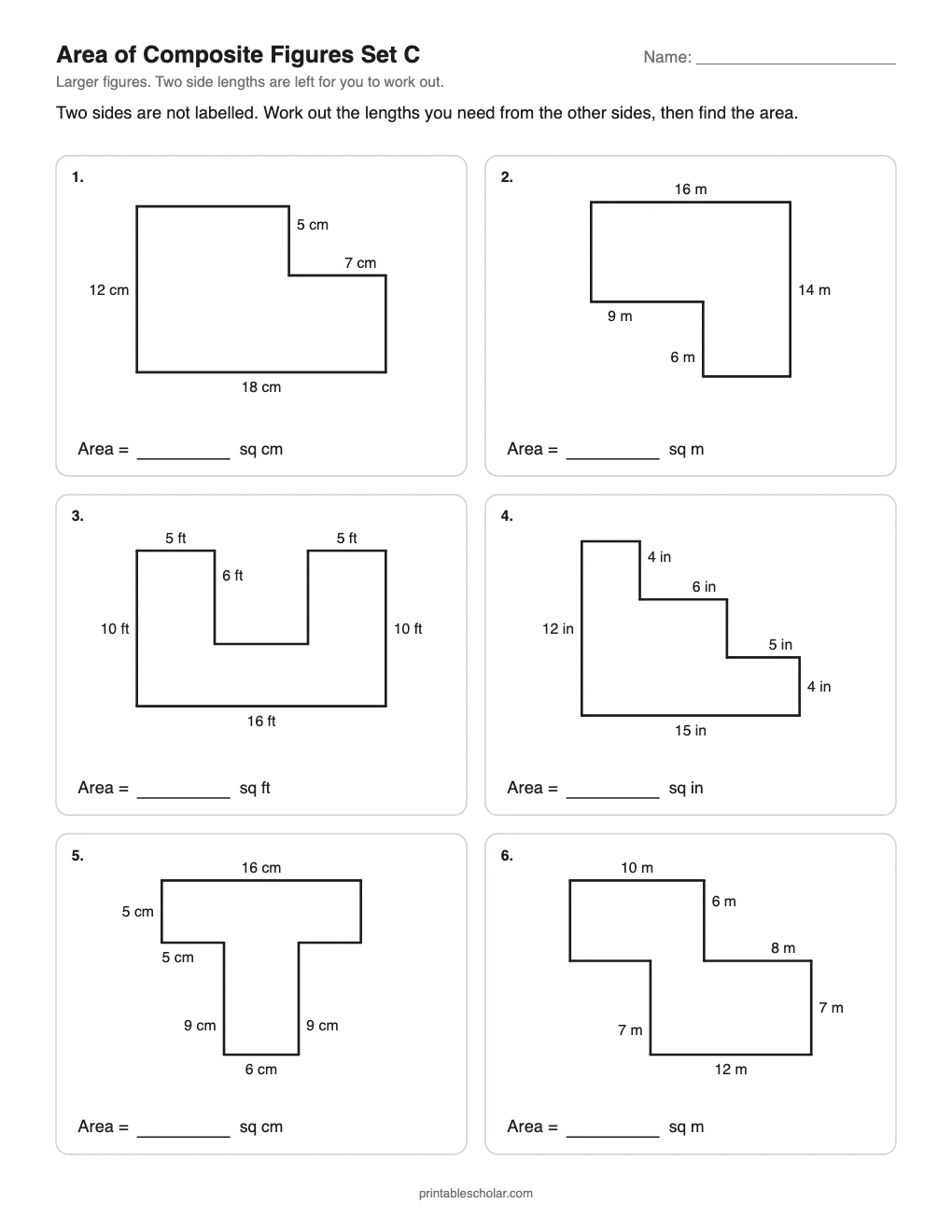
Six larger figures with two side lengths left out to work out first. The key shows the missing sides and the split.
Download PDF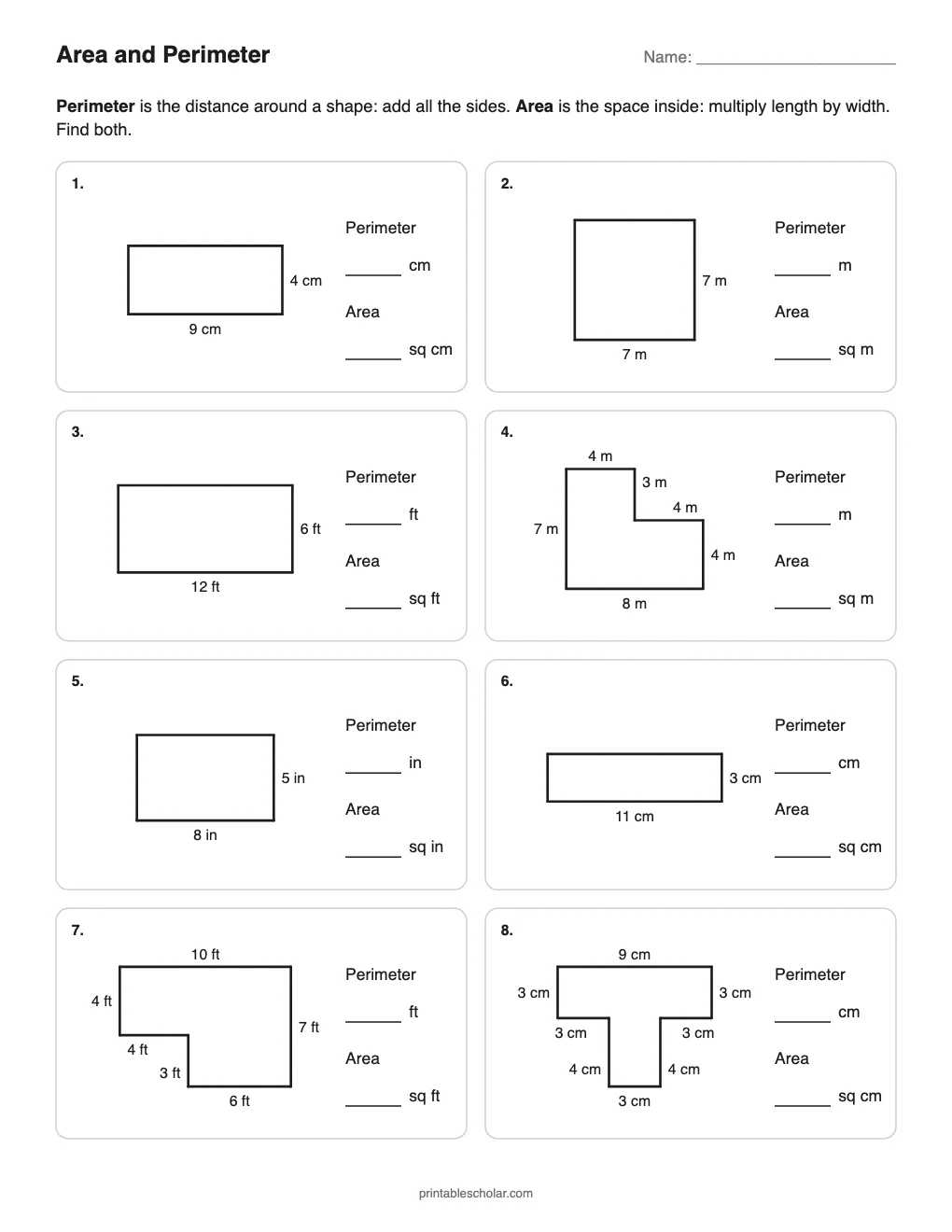
Five rectangles and three composite figures. Find the perimeter and the area of each. Includes answer key.
Download PDF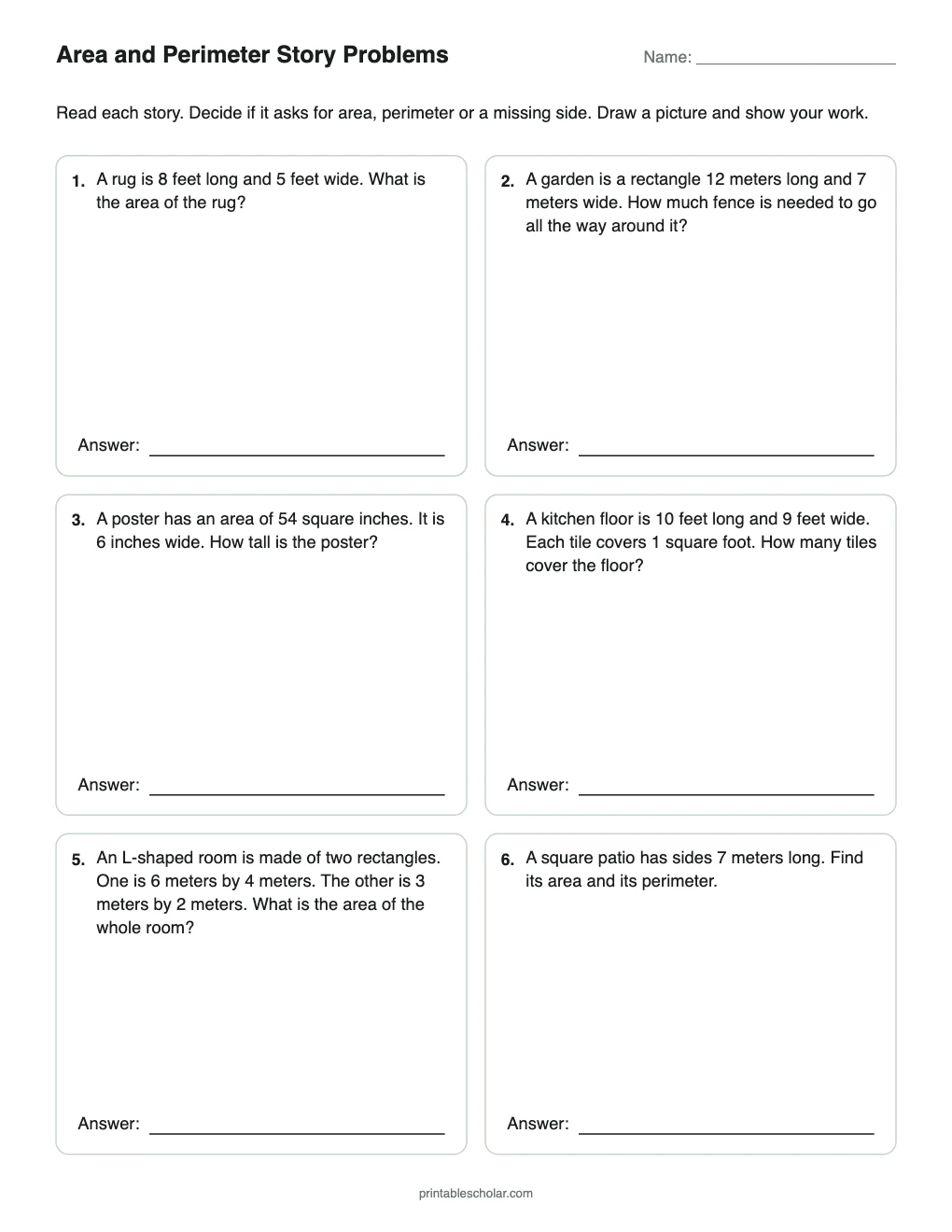
Six word problems: rugs, gardens, tiles and an L-shaped room. Decide whether each asks for area, perimeter or a side. The key shows each equation.
Download PDFArea is the number of square units that cover a shape. The counting sheet starts there, with shapes drawn on a grid, so that length × width arrives as a shortcut for counting rows of squares and not as a rule to memorize.
A composite figure is a shape made of rectangles, such as an L or a T. To find its area, split it into rectangles, find each area, and add. The three sets change one thing at a time: Set A draws the split for you, Set B leaves the split to the student, and Set C also leaves out two side lengths that have to be worked out from the sides across from them.
The figures come in different shapes and directions (L, T, U, steps), each drawn to scale with the unit written on every side. Each answer key shows the figure split into rectangles with the area of each part, so a wrong total can be traced to the part that went wrong.
Area and perimeter are easy to mix up, so one sheet asks for both on the same shape. For the multiplication behind it, see the multiplication worksheets. For boxes and prisms, go on to the volume worksheets, and for every formula on one page see the geometry formula sheet.
 Printable Scholar