Volume practice for 5th grade, in the order it is taught: counting unit cubes, volume of rectangular prisms, base area times height, finding a missing edge, two sets of composite solids, and story problems. Every practice sheet has its answer key on the second page.
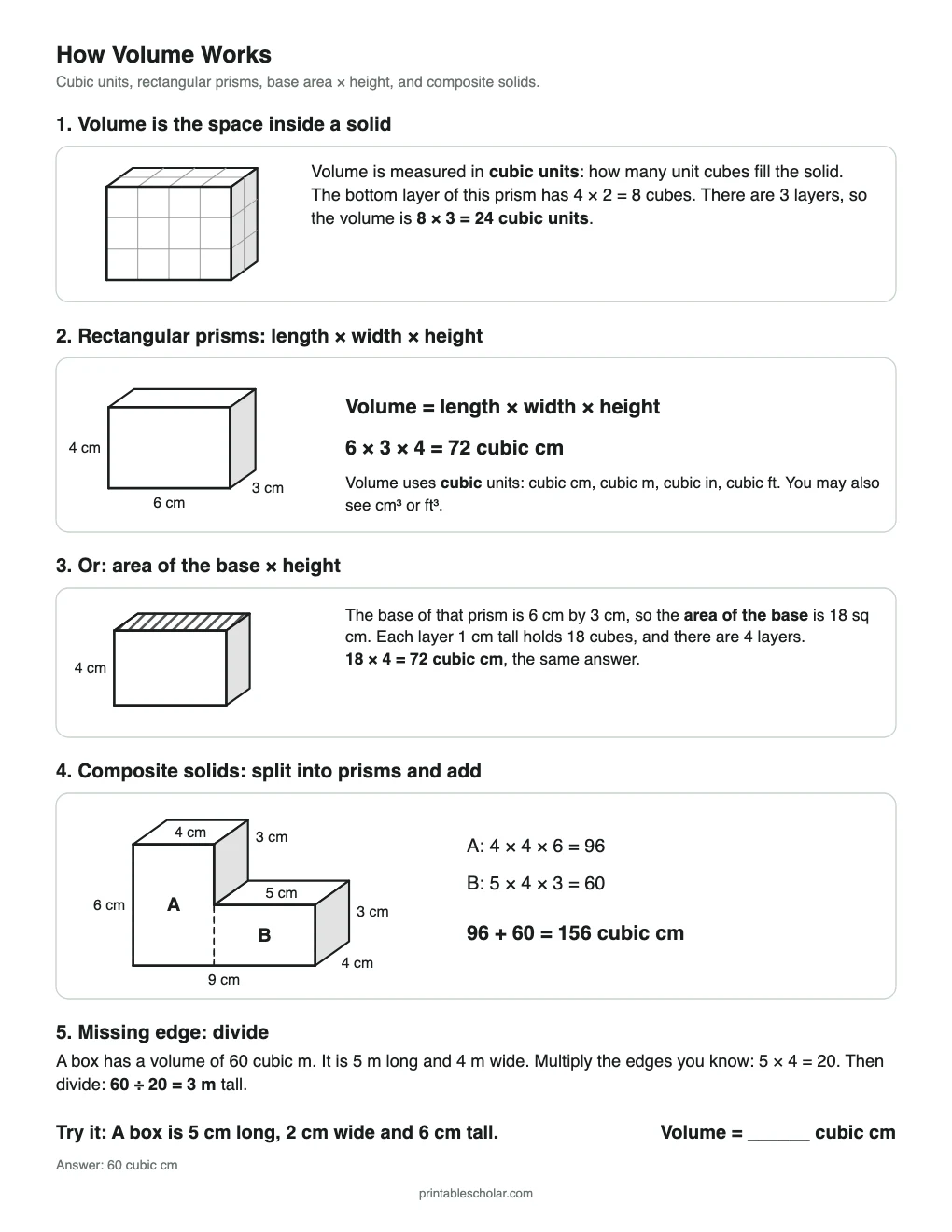
Cubic units, length times width times height, base area times height, composite solids and missing edges.
Download PDF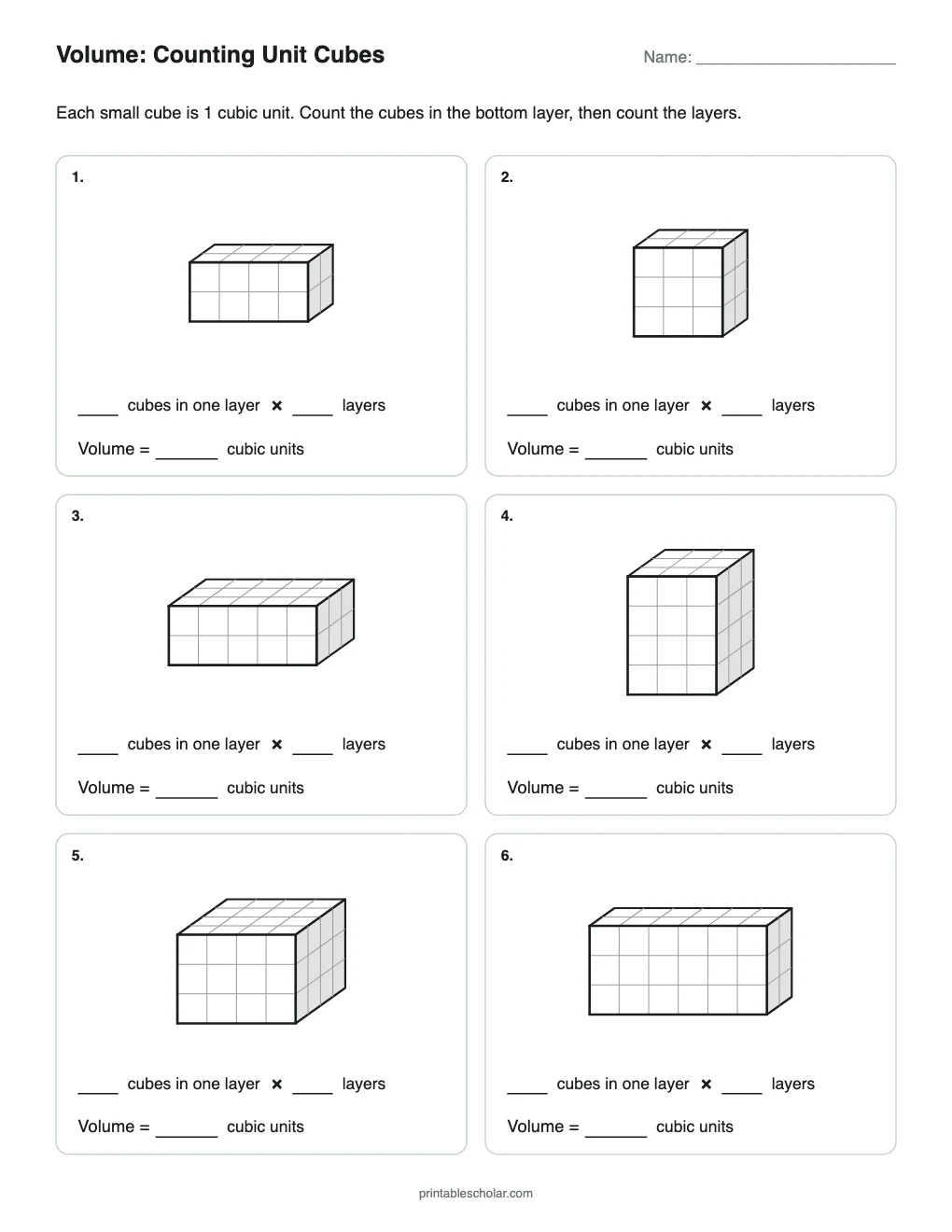
Six prisms built from unit cubes. Count one layer, then the layers. Includes answer key.
Download PDF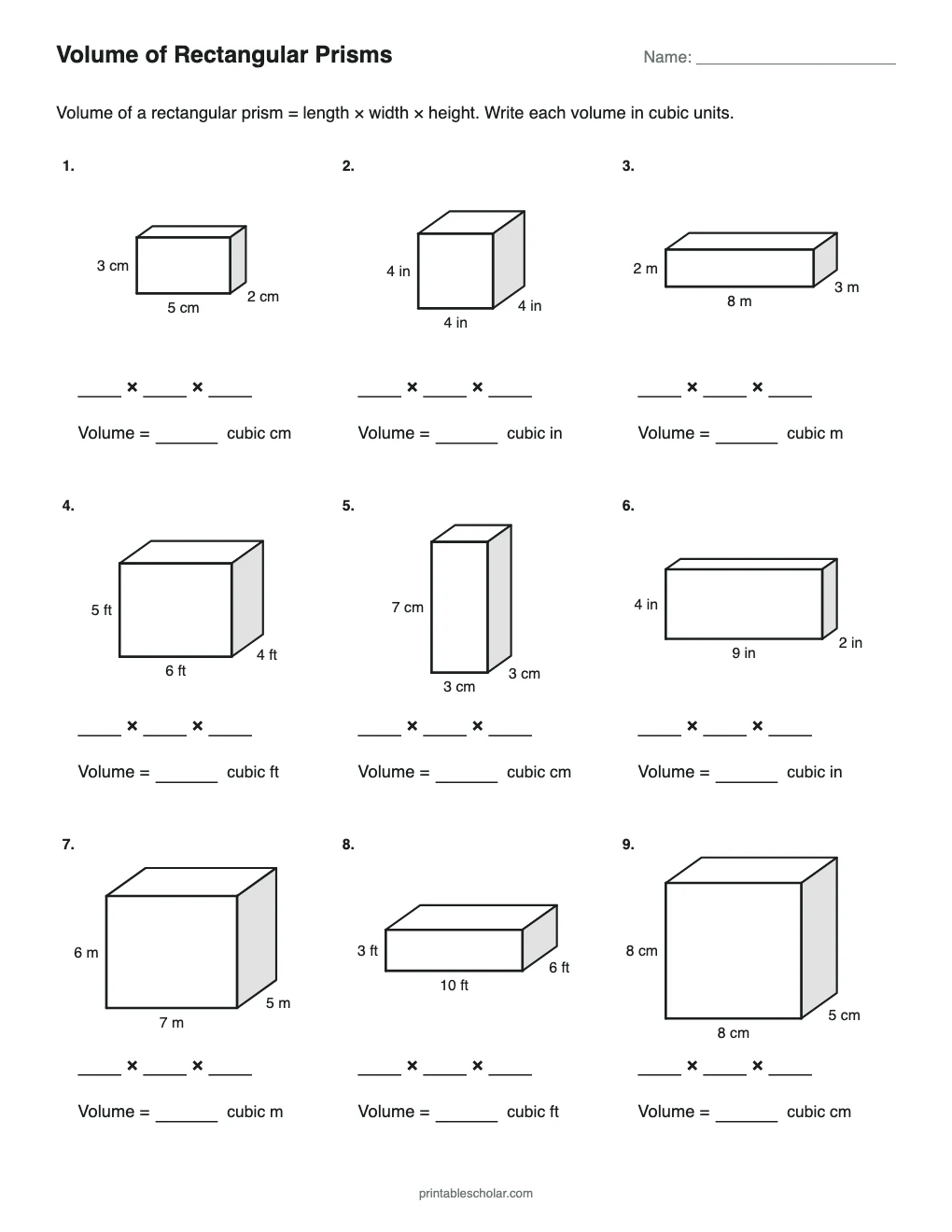
Nine prisms drawn to scale with all three edges labelled, in centimeters, meters, inches and feet. Includes answer key.
Download PDF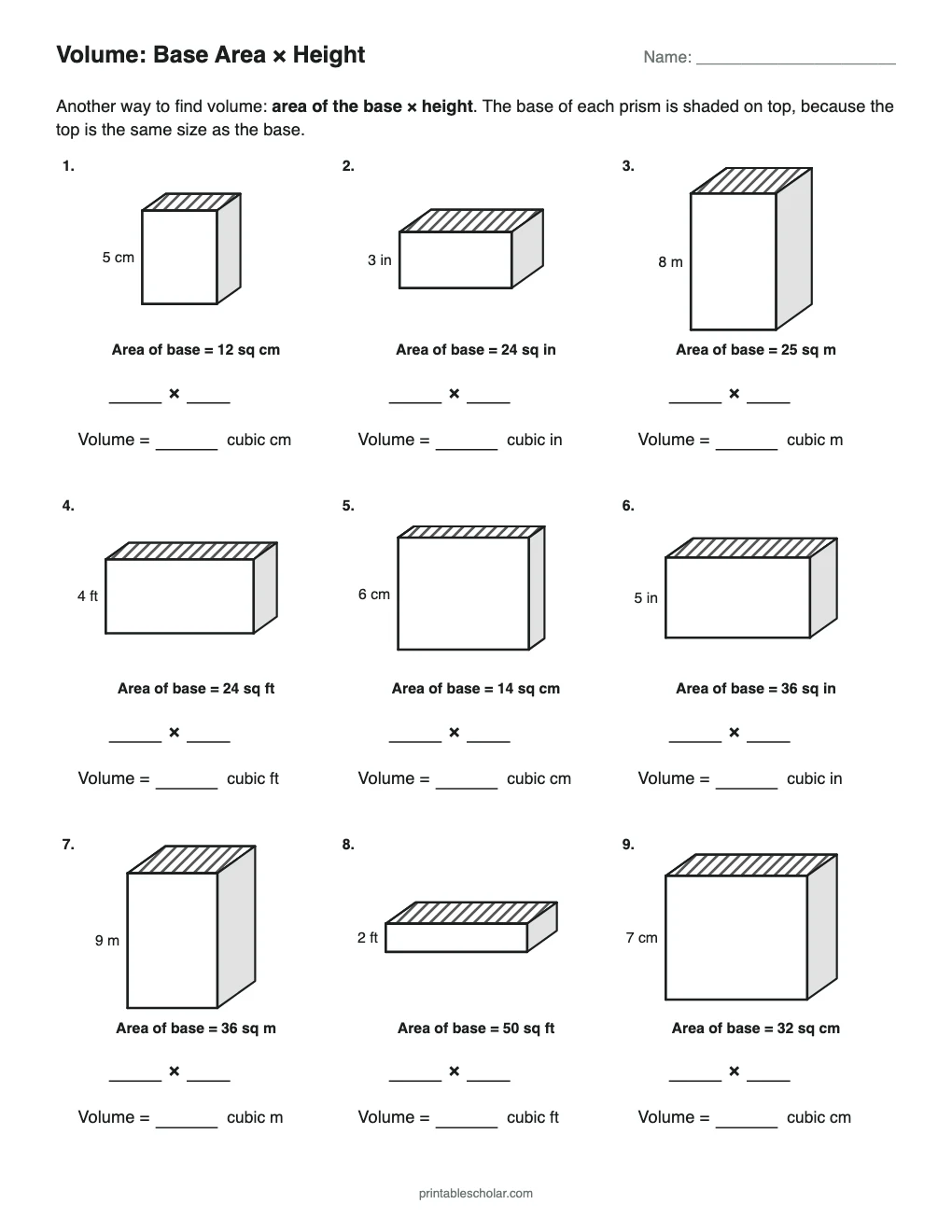
Nine prisms with the area of the base and the height given. Includes answer key.
Download PDF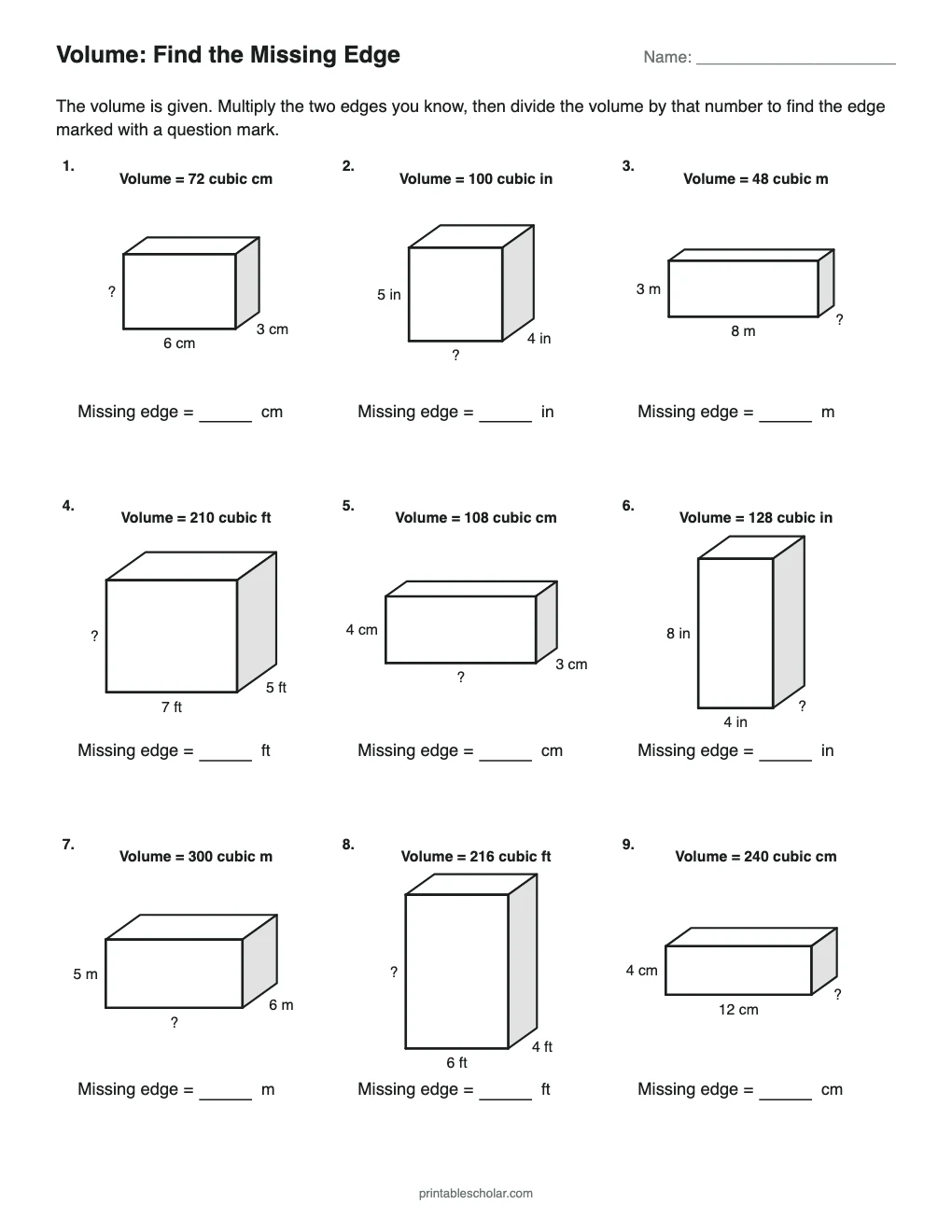
Nine prisms with the volume and two edges given. Divide to find the third edge. Includes answer key.
Download PDF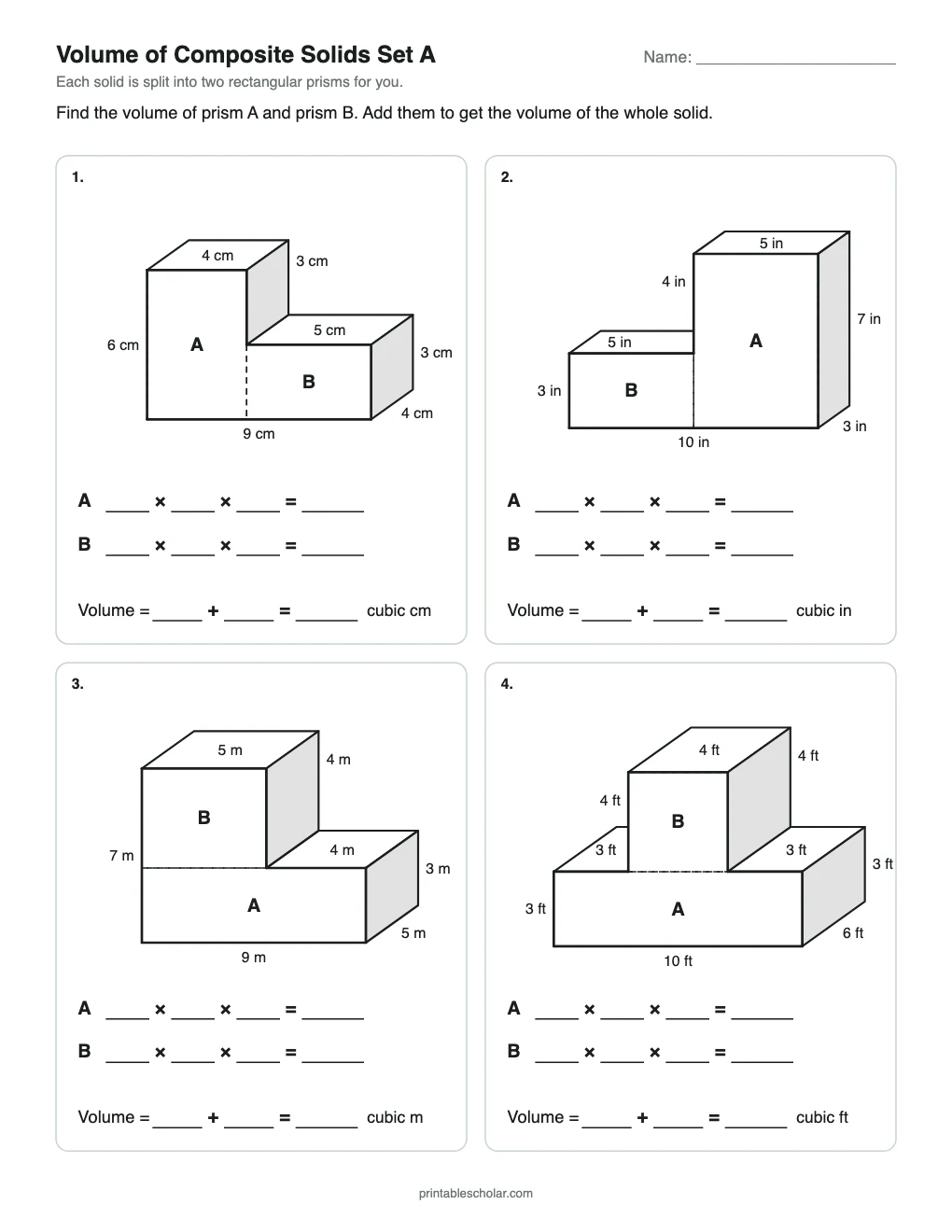
Four solids already split into prisms A and B, with a line for each step. Includes answer key.
Download PDF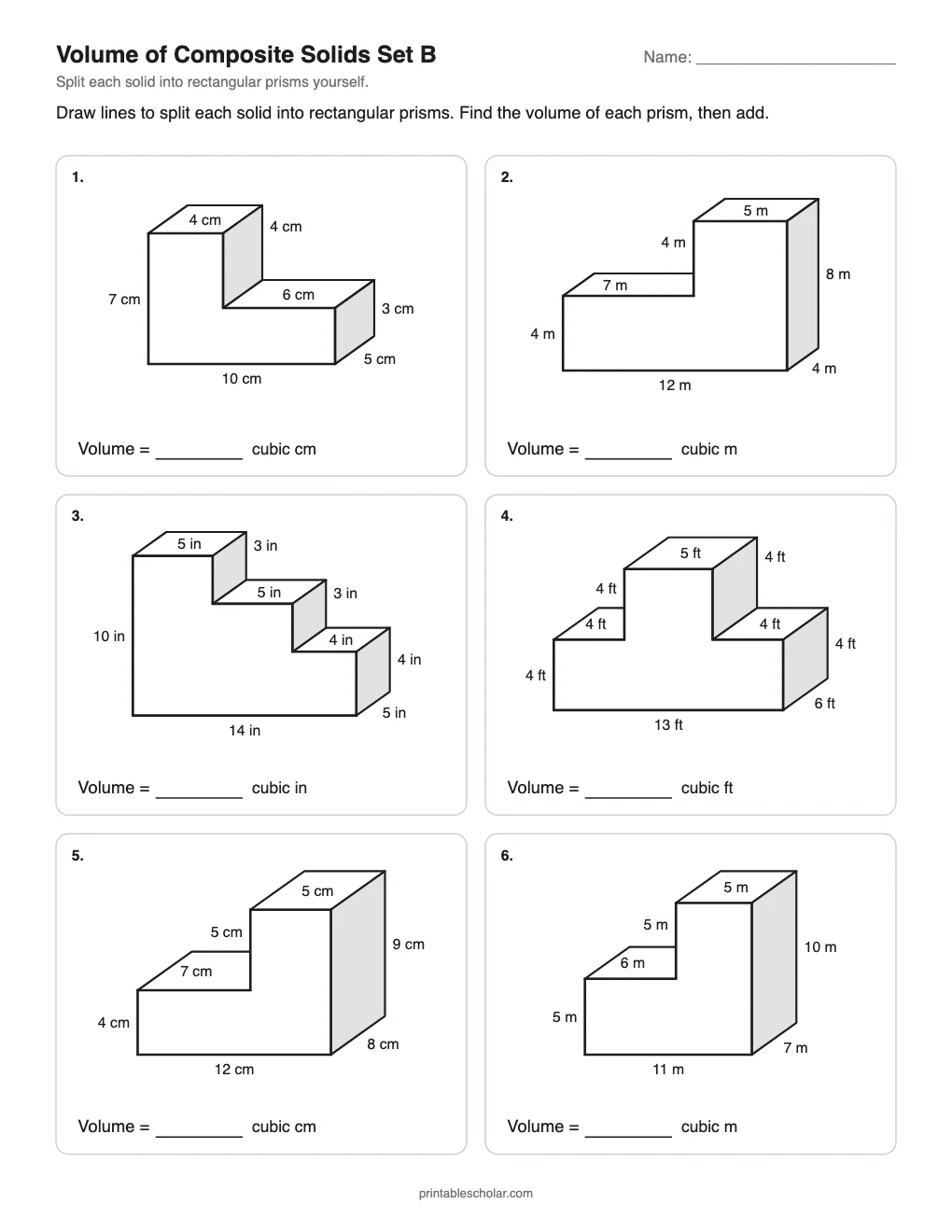
Six solids to split yourself: L-shapes, steps and a podium. The key shows the split and the volume of each part.
Download PDF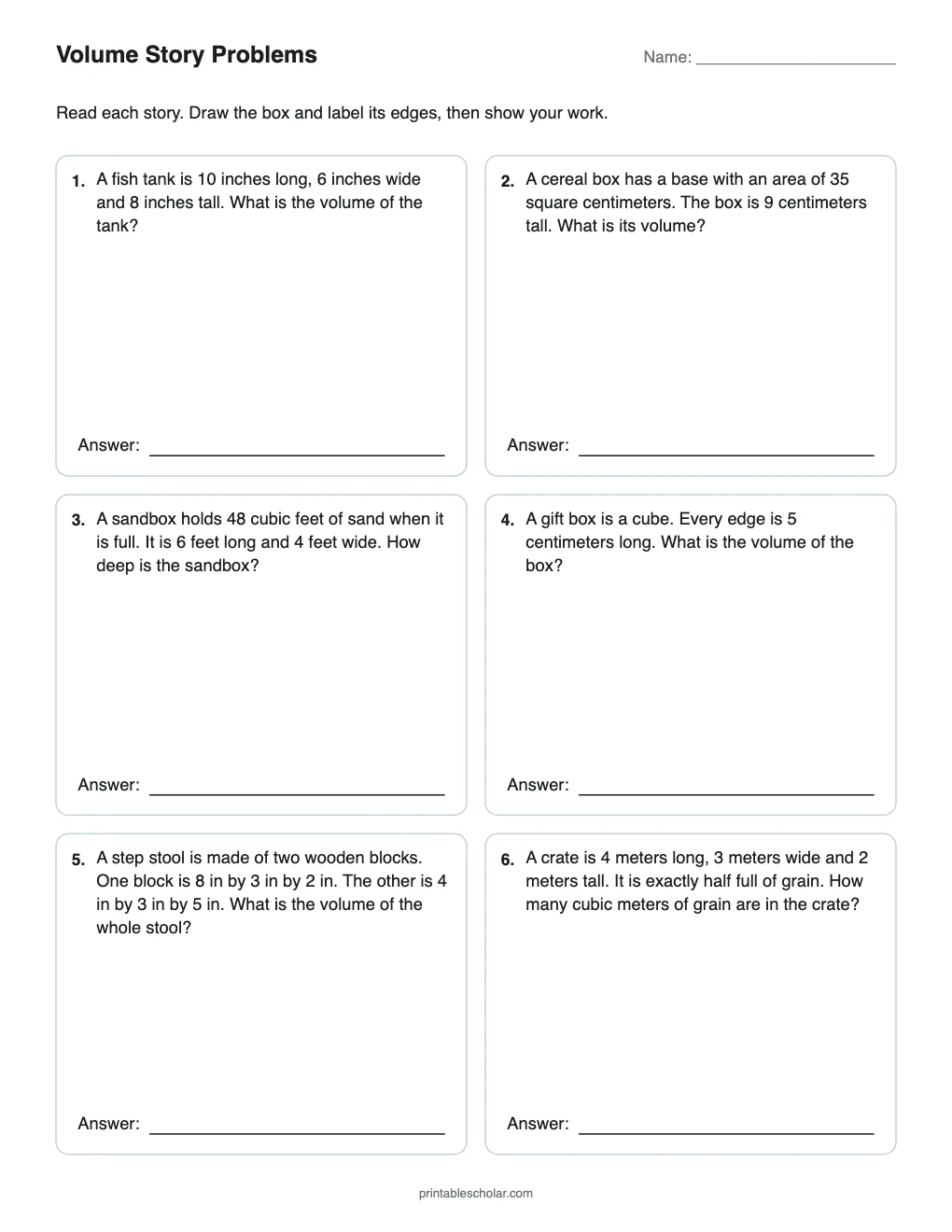
Six word problems: a fish tank, a sandbox, a cube, a stool made of two blocks. The key shows each equation.
Download PDFVolume is the number of unit cubes that fill a solid. The counting sheet starts there, with prisms built from cubes, so that length × width × height arrives as a shortcut for counting one layer and multiplying by the number of layers.
For a rectangular prism there are two ways to write the same rule: length × width × height, or the area of the base × the height. Each has its own sheet, because the second form is the one used later for other prisms and cylinders.
A composite solid is made of two or more rectangular prisms joined together, such as an L-shaped block or a set of steps. Split it into prisms, find each volume, and add. Set A draws the split and gives a line for each step. Set B leaves the split to the student, and its answer key shows one way to split each solid with the volume of every part.
Every solid is drawn to scale, with the unit written on each edge. If the area of a rectangle still needs work, start with the area worksheets. For every formula on one page see the geometry formula sheet.
 Printable Scholar