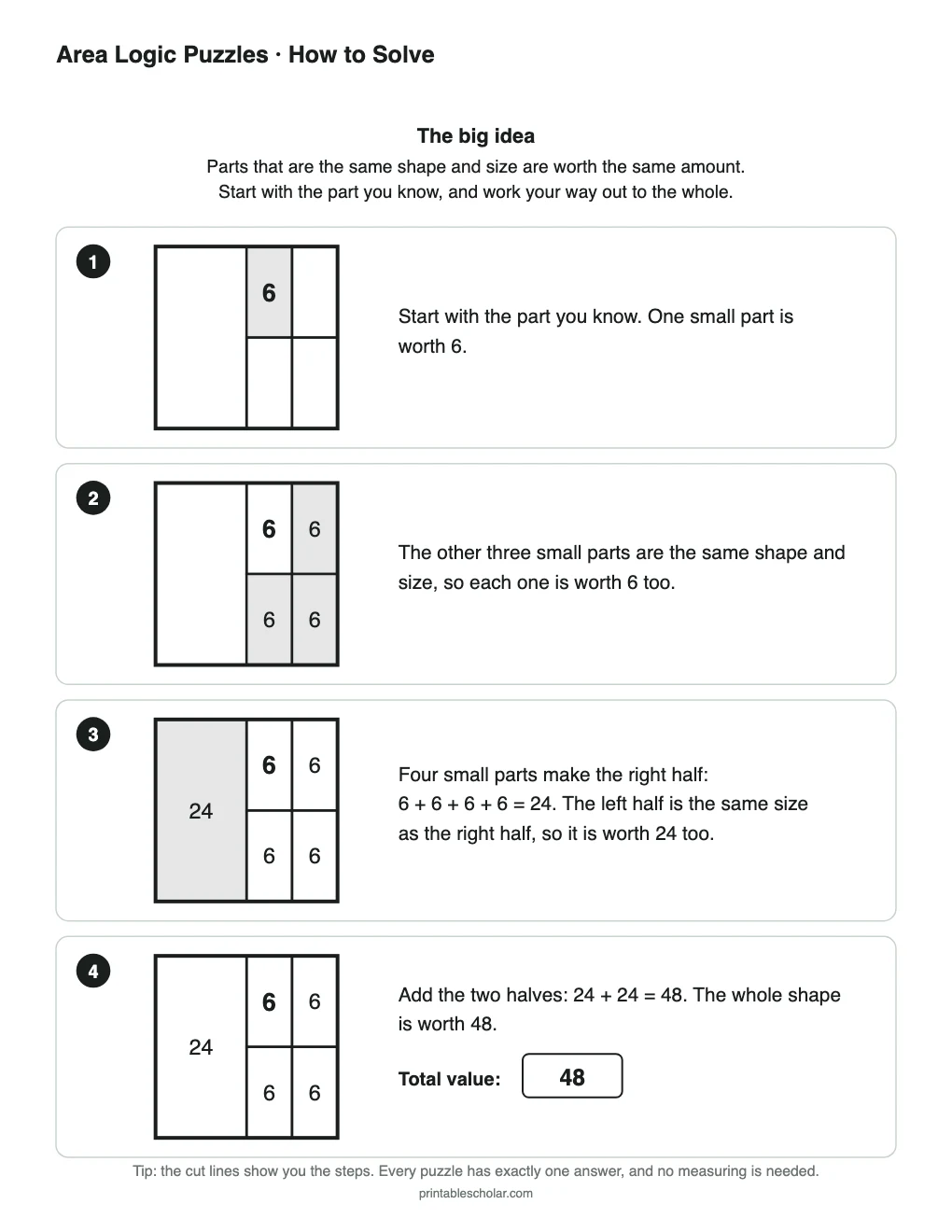
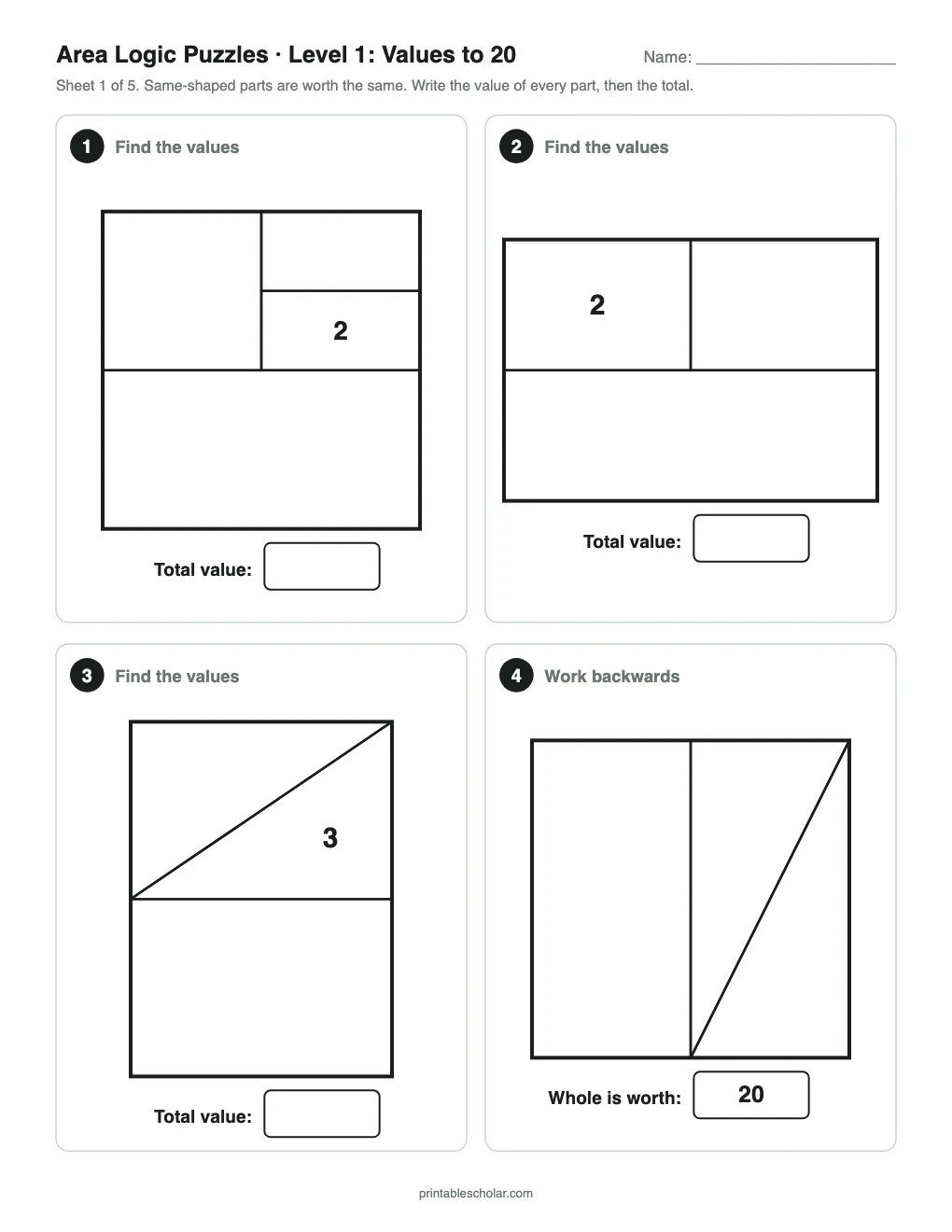
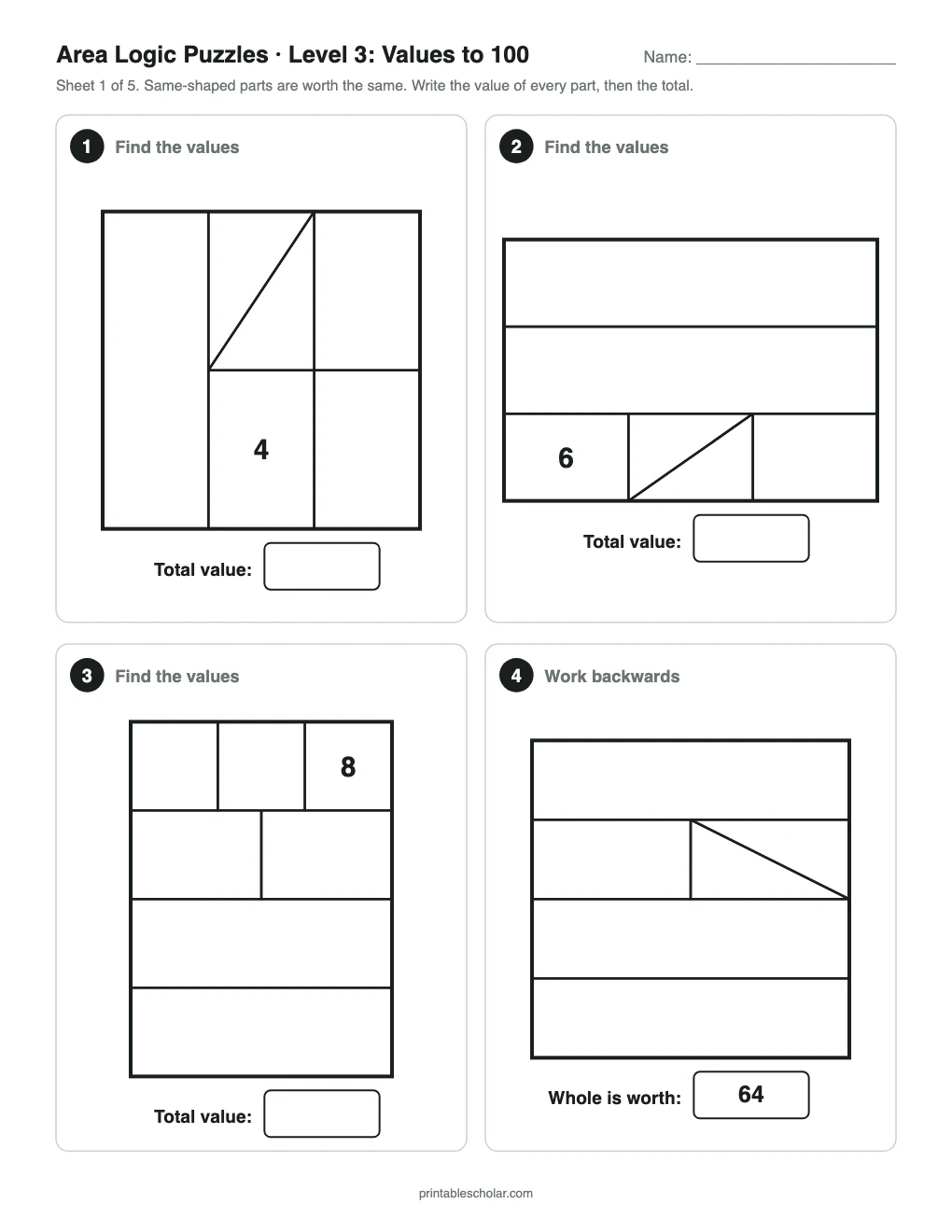
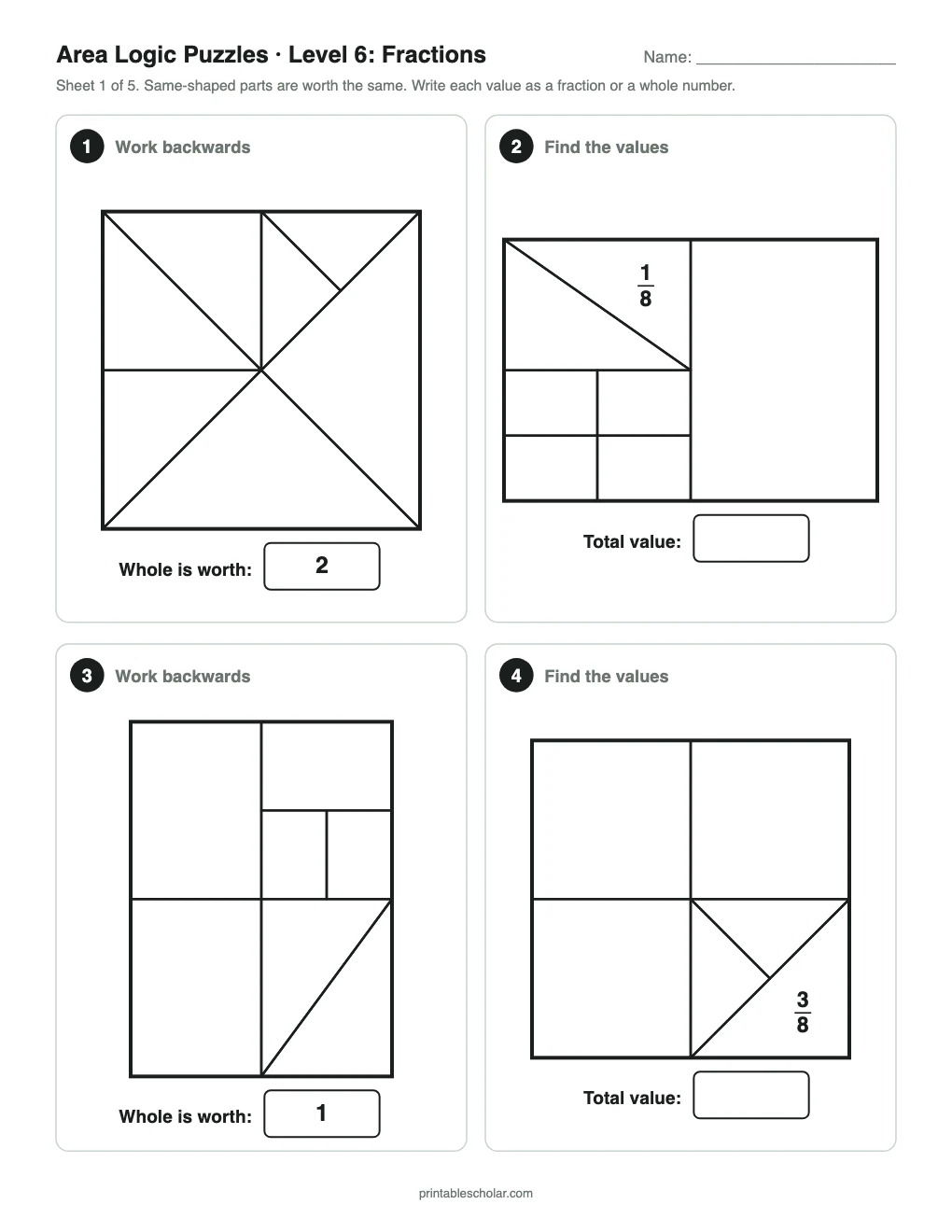
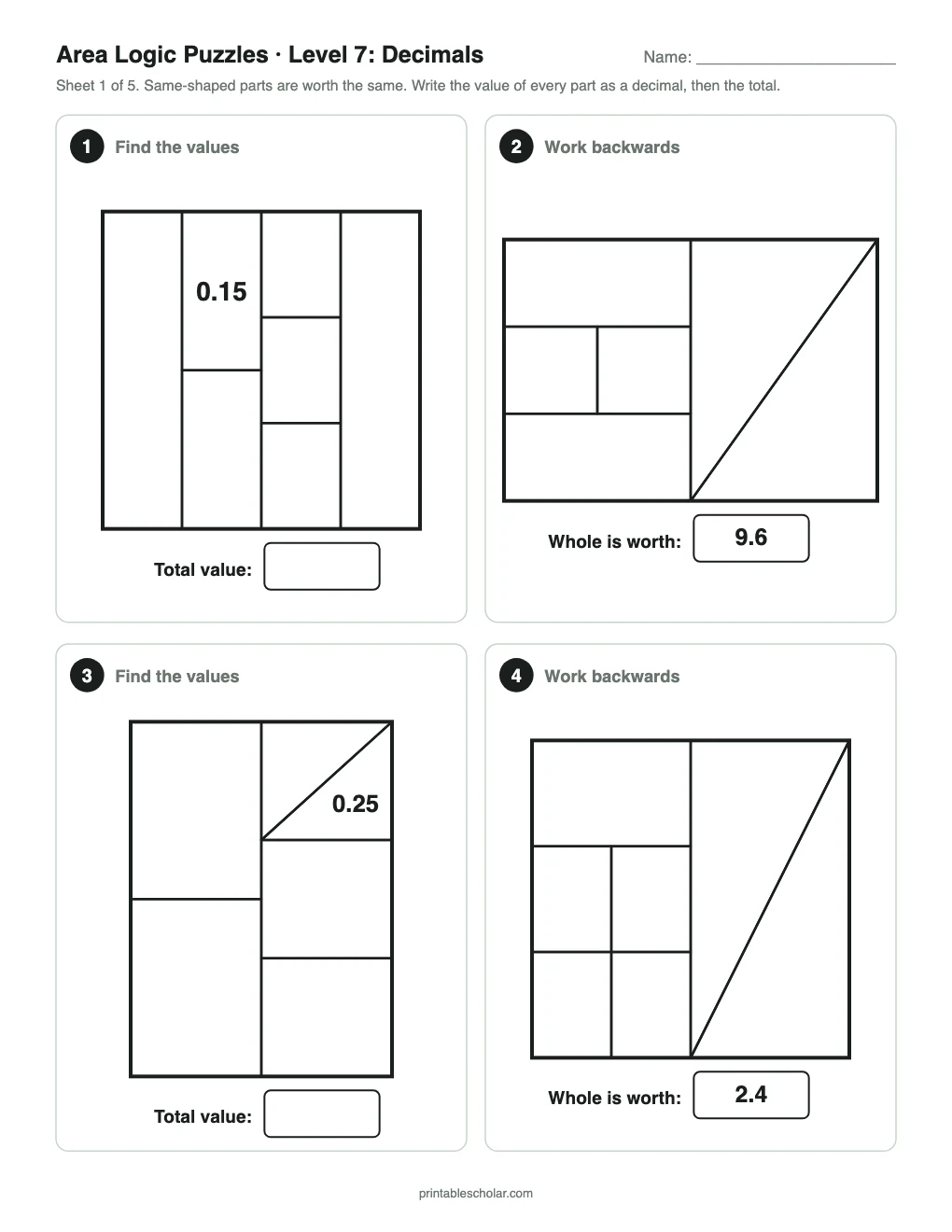
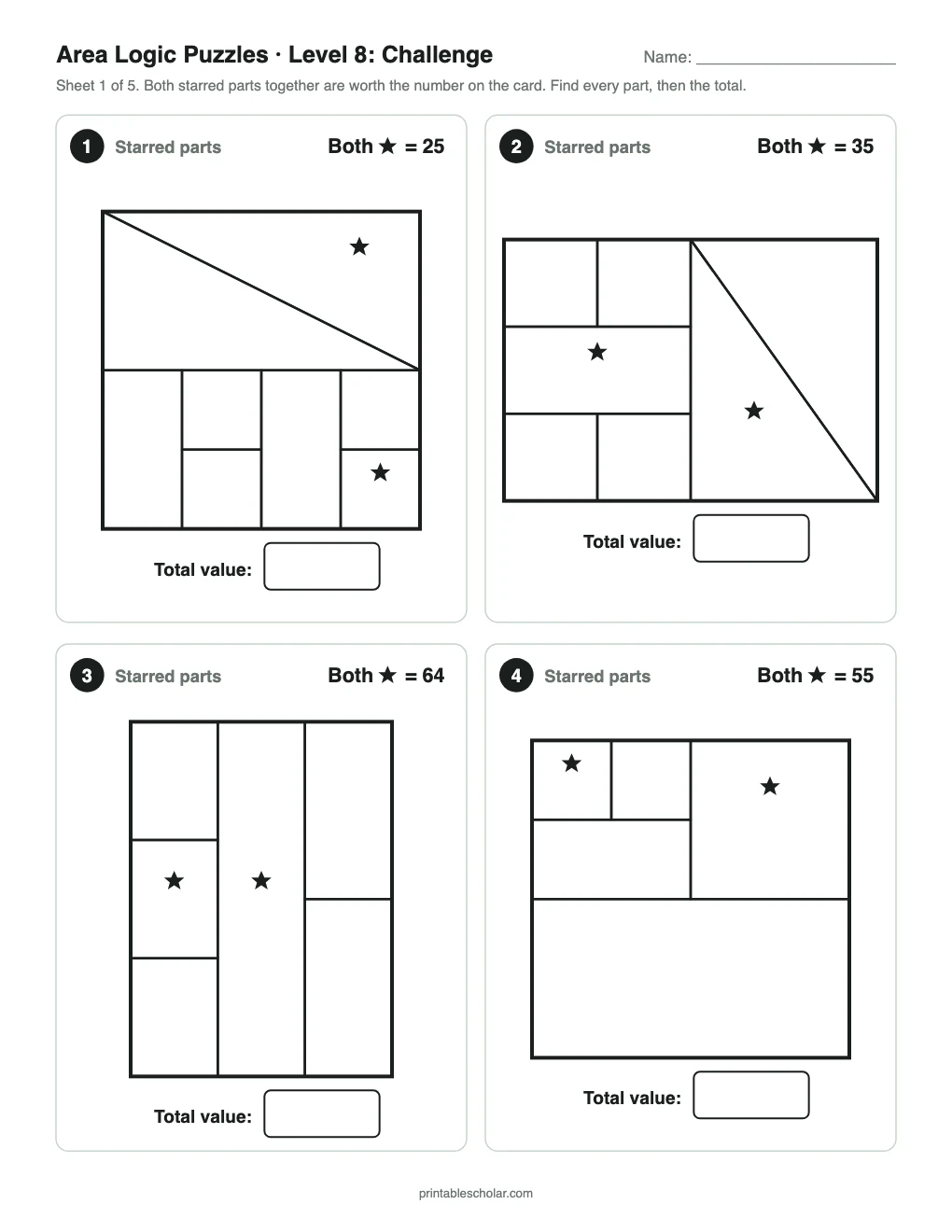
A shape is cut into parts and one part shows a number. Parts that are the same shape and size are worth the same, so kids work out every part, then the whole. No measuring, one answer, answer keys included. Grades 2 to 5.
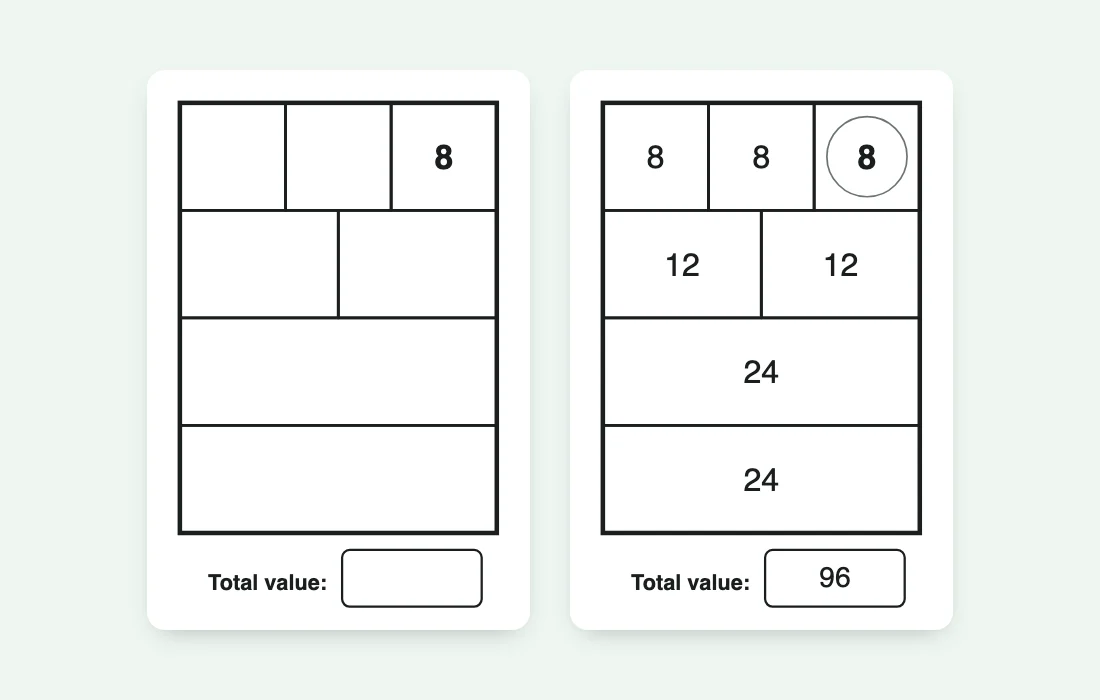
One idea does all the work: same shape, same size, same value.
One part shows a number. Every part cut the same way from the same piece is worth the same.
Four quarters make a half, two halves make the whole. Add as you go, writing each value in its part.
Some puzzles give the whole instead. Split it: half of the whole, then a quarter of that half, and so on.
The three how-to pages walk through a worked example of each kind of puzzle. Then try a sheet of four puzzles from five of the levels, each with its answer key.
20 puzzles each · how-to pages · answer keys · black and white · instant download
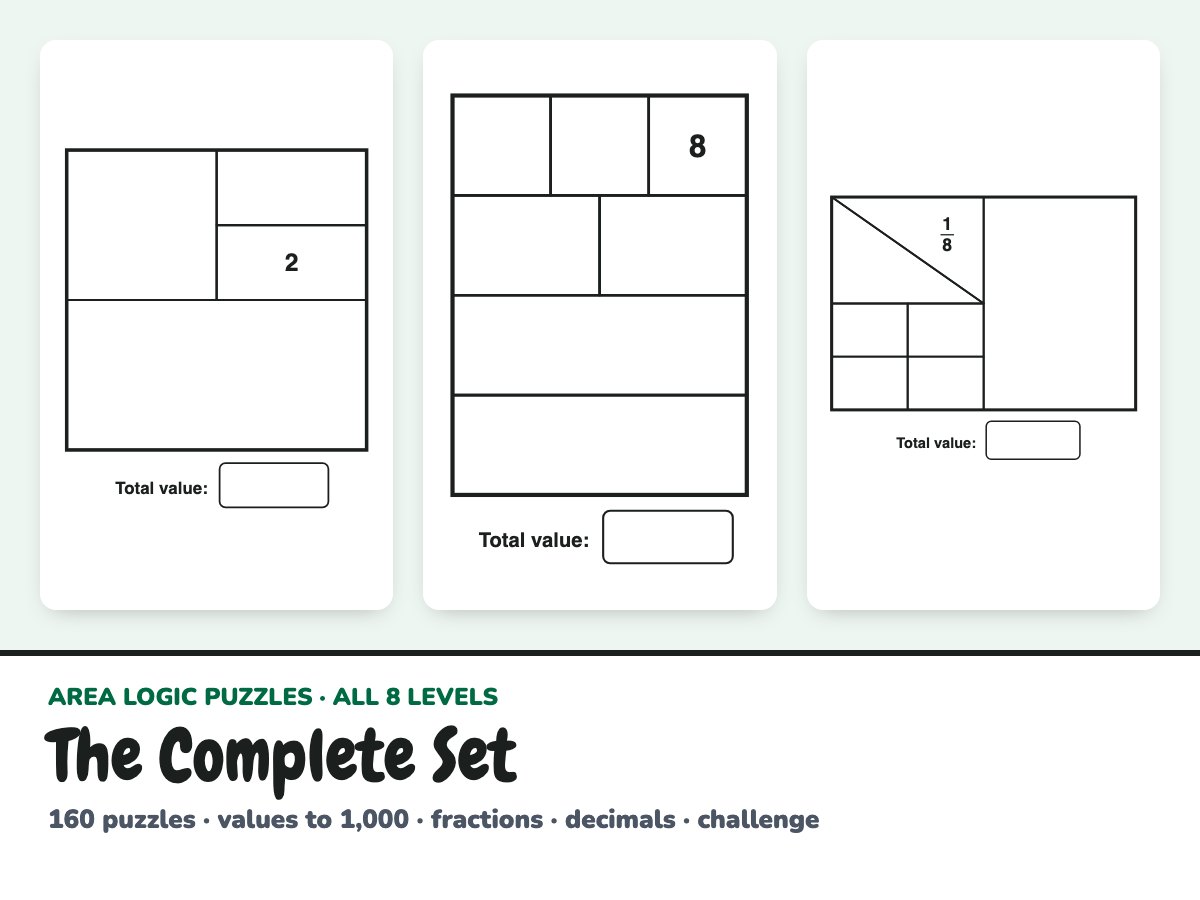
Every level from values to 20 up to values to 1,000, then fractions, decimals and the starred Challenge puzzles. One 83-page book plus a separate PDF for each level, so you can print just the level a child needs.
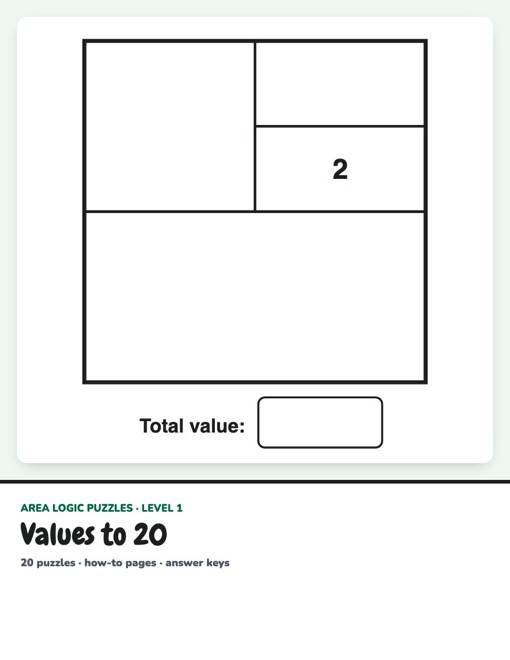
Halves, quarters and diagonals, with small numbers. The place to start. 20 puzzles, answer keys.
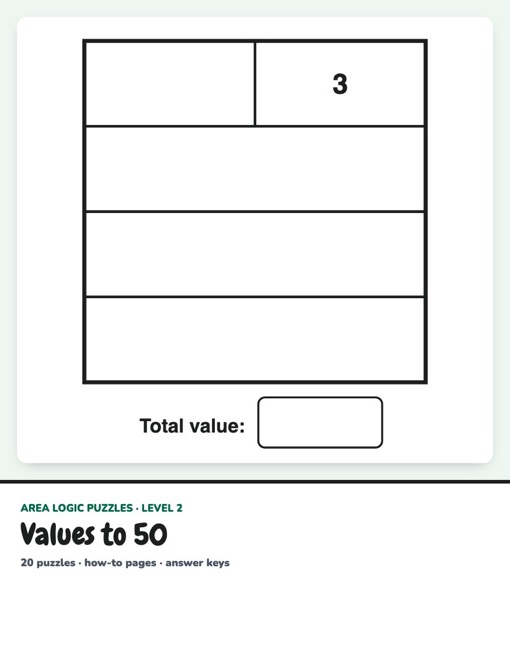
Thirds join the cuts, and values reach 50. 20 puzzles, answer keys.
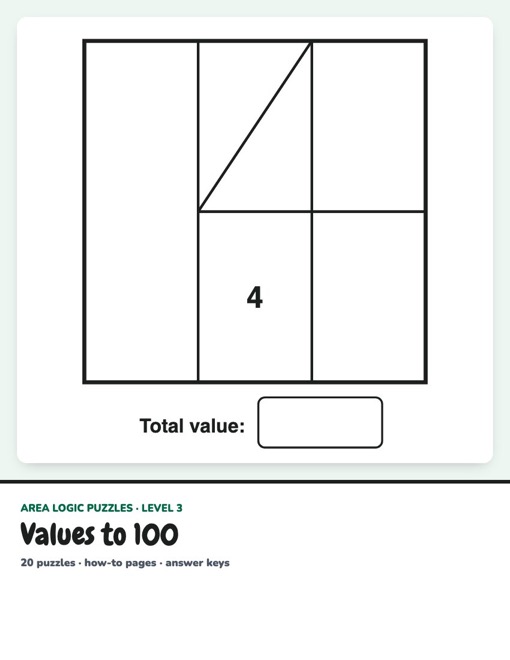
More parts and more steps between the given part and the whole. 20 puzzles, answer keys.
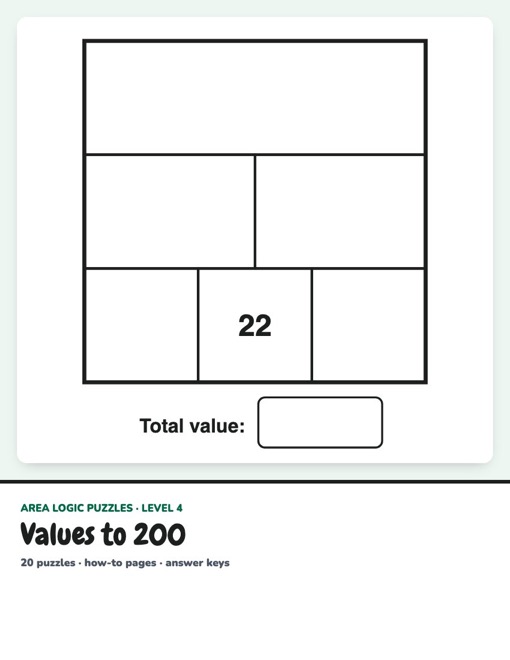
Totals from 100 to 200: bigger numbers, the same reasoning. 20 puzzles, answer keys.
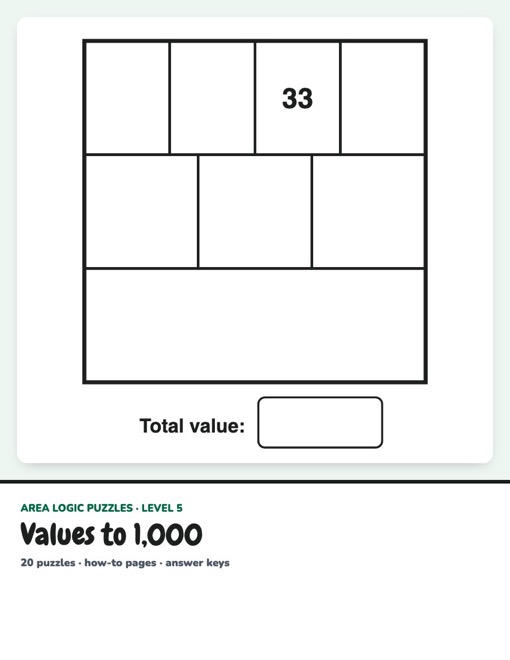
Totals up to 1,000, for confident multipliers and dividers. 20 puzzles, answer keys.
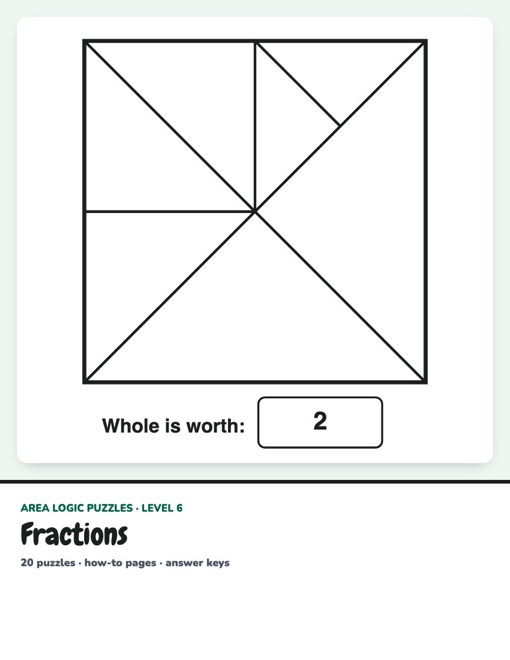
The whole is worth 1, 2 or 3, and every part is a fraction. 20 puzzles, answer keys.
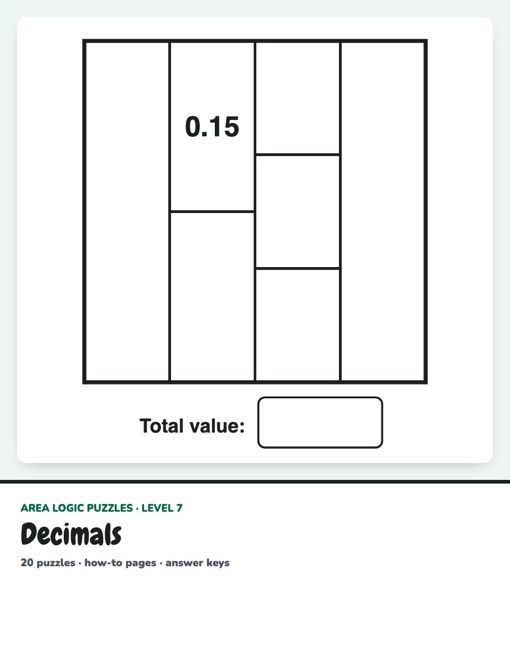
Every value is a decimal: tenths and hundredths. 20 puzzles, answer keys.
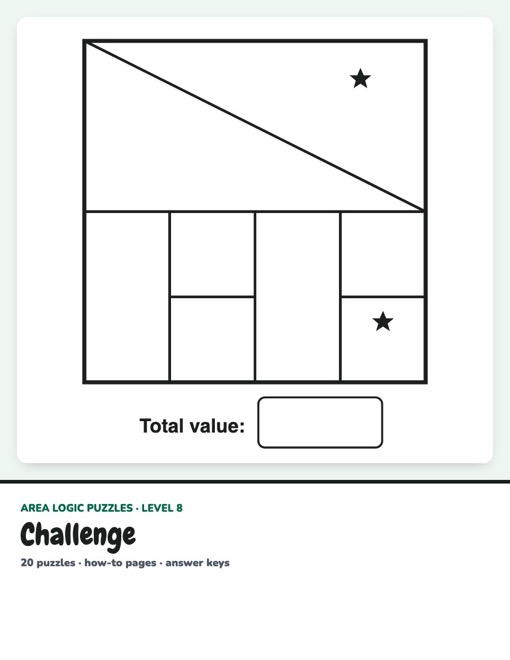
Two starred parts are worth a number together. Find the unit first. 20 puzzles, answer keys.
One-time purchase. Secure checkout by Stripe.
An area logic puzzle is a picture of fractions without the fraction notation. Halves, thirds and quarters are cut into the shape itself, so a child who sees that two pieces match knows they are worth the same, and a child who sees that four small pieces fill a half knows the half is worth four of them. The reasoning runs both ways: up from a small part to the whole, and down from the whole to its parts.
Every cut makes pieces that are exactly the same shape and size: strips, a 2 by 2 grid, a diagonal, or both diagonals of a square. A strip is never cut again the same way, so the order of the cuts stays easy to see. Every puzzle is checked by computer against the drawing itself, so every value is a whole number (or a clean fraction or decimal on those levels) and there is exactly one answer.
The levels climb in number size first (values to 20, 50, 100, 200 and 1,000), then switch to fractions and decimals with the same pictures, and finish with Challenge puzzles where two starred parts are worth a number together. Each level is 20 puzzles on 5 sheets, numbered 1 to 20, with answer keys.
For more reasoning without much computation, see the math puzzles and the logic grid puzzles. For fractions as parts of a shape, see the equal parts worksheets.
 Printable Scholar