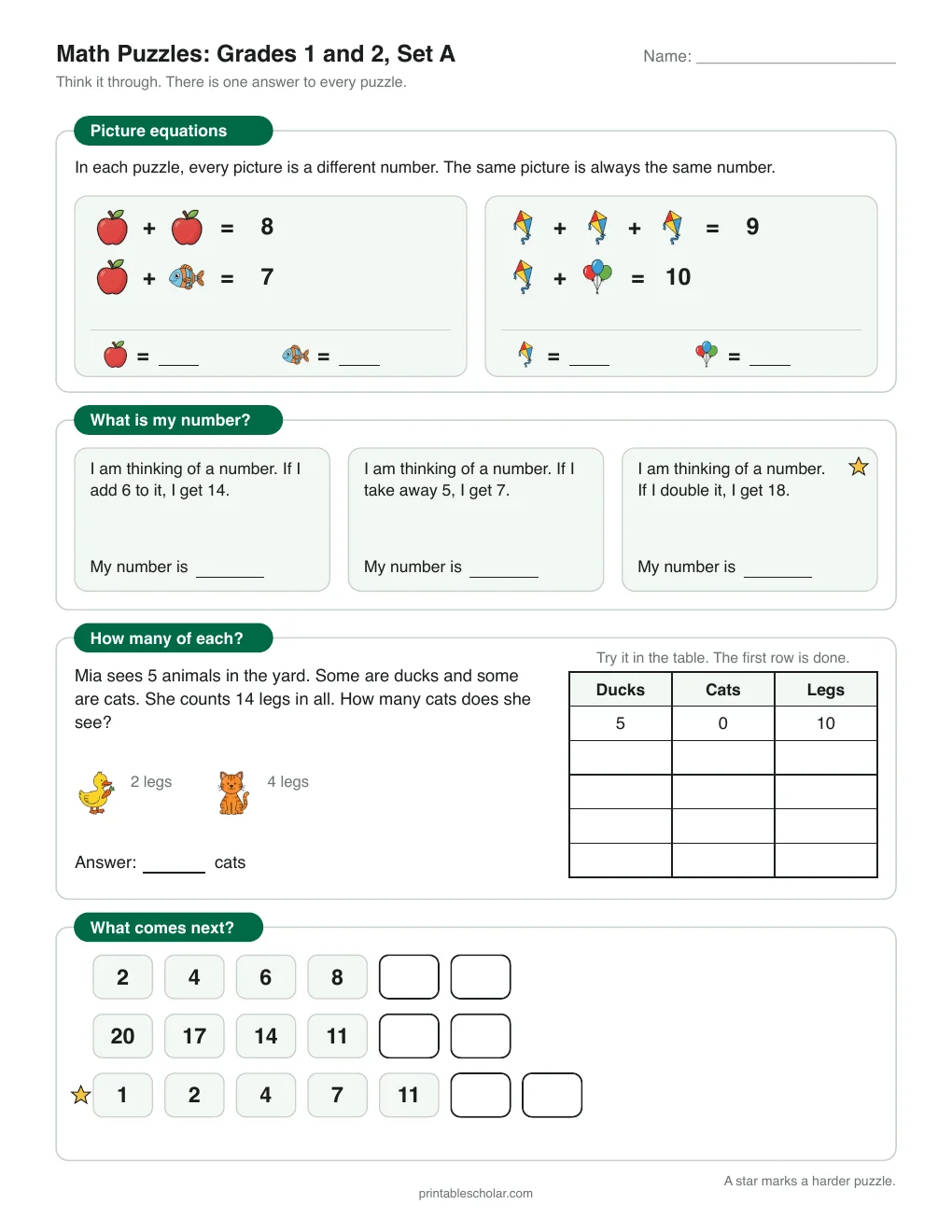
Math Puzzles: Grades 1–2, Set A
Grades 1–2Apples and fish, a missing number, ducks and cats, and three number patterns. Includes answer key.
Download PDF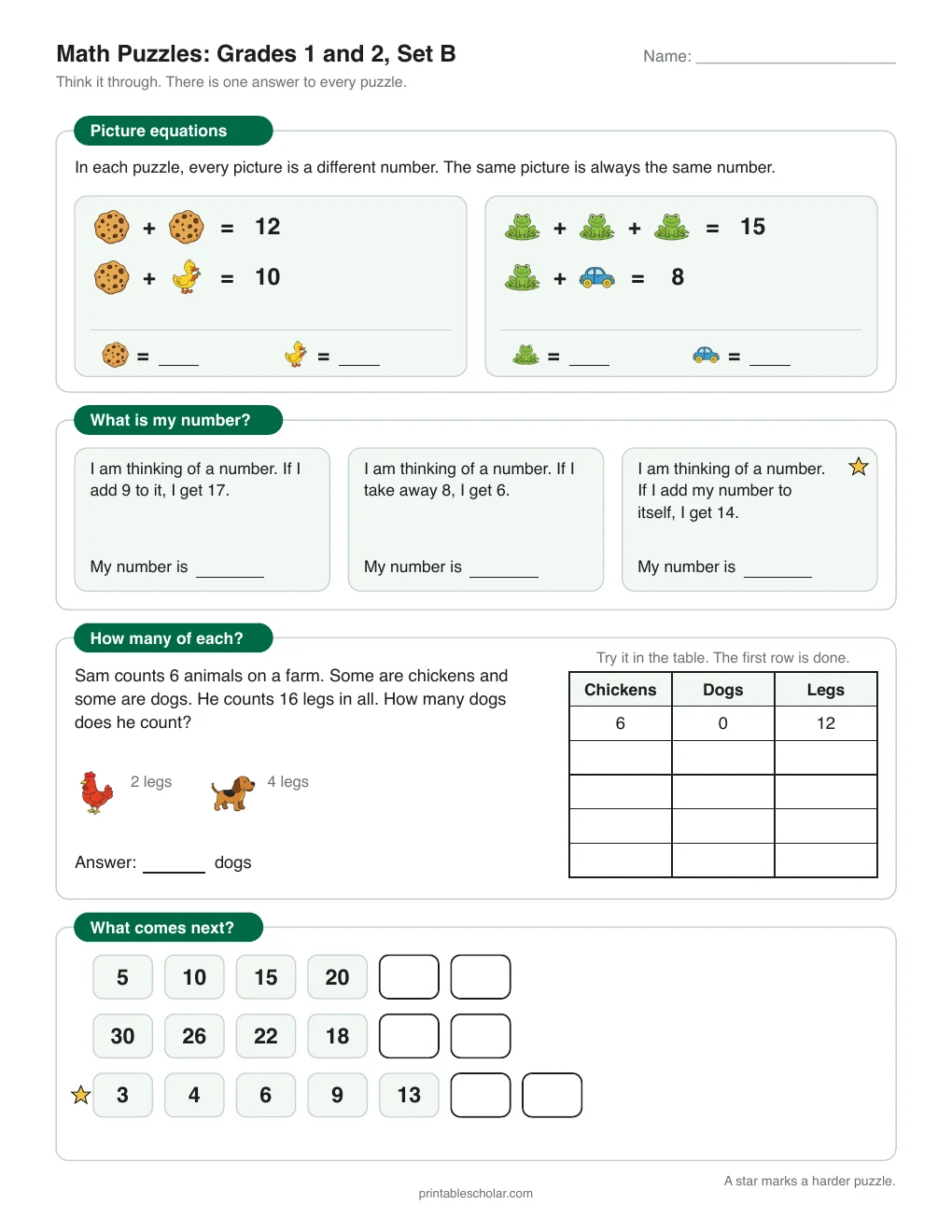
Math Puzzles: Grades 1–2, Set B
Grades 1–2Cookies and frogs, a missing number, chickens and dogs, and three number patterns. Includes answer key.
Download PDF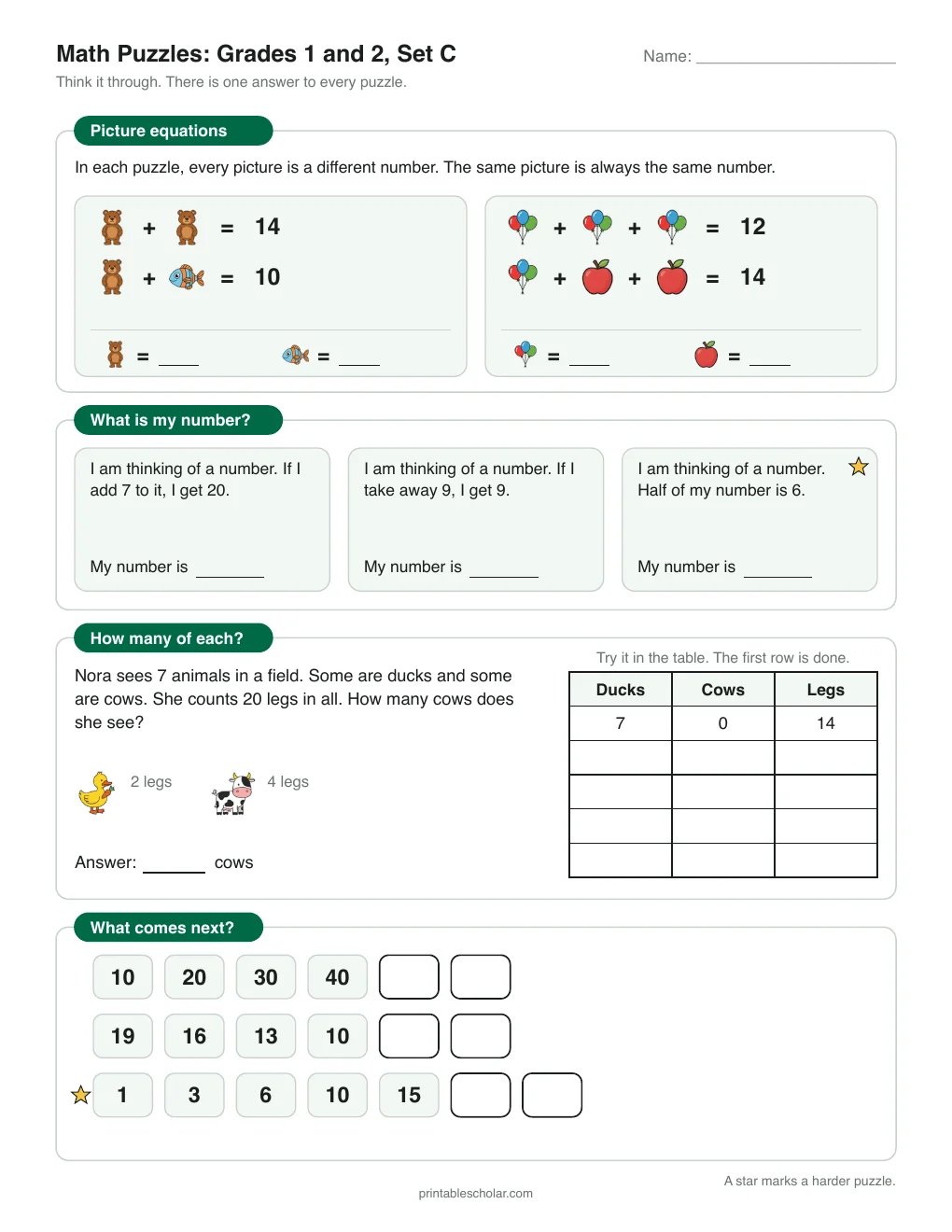
Math Puzzles: Grades 1–2, Set C
Grades 1–2Bears and balloons, a missing number, ducks and cows, and three number patterns. Includes answer key.
Download PDF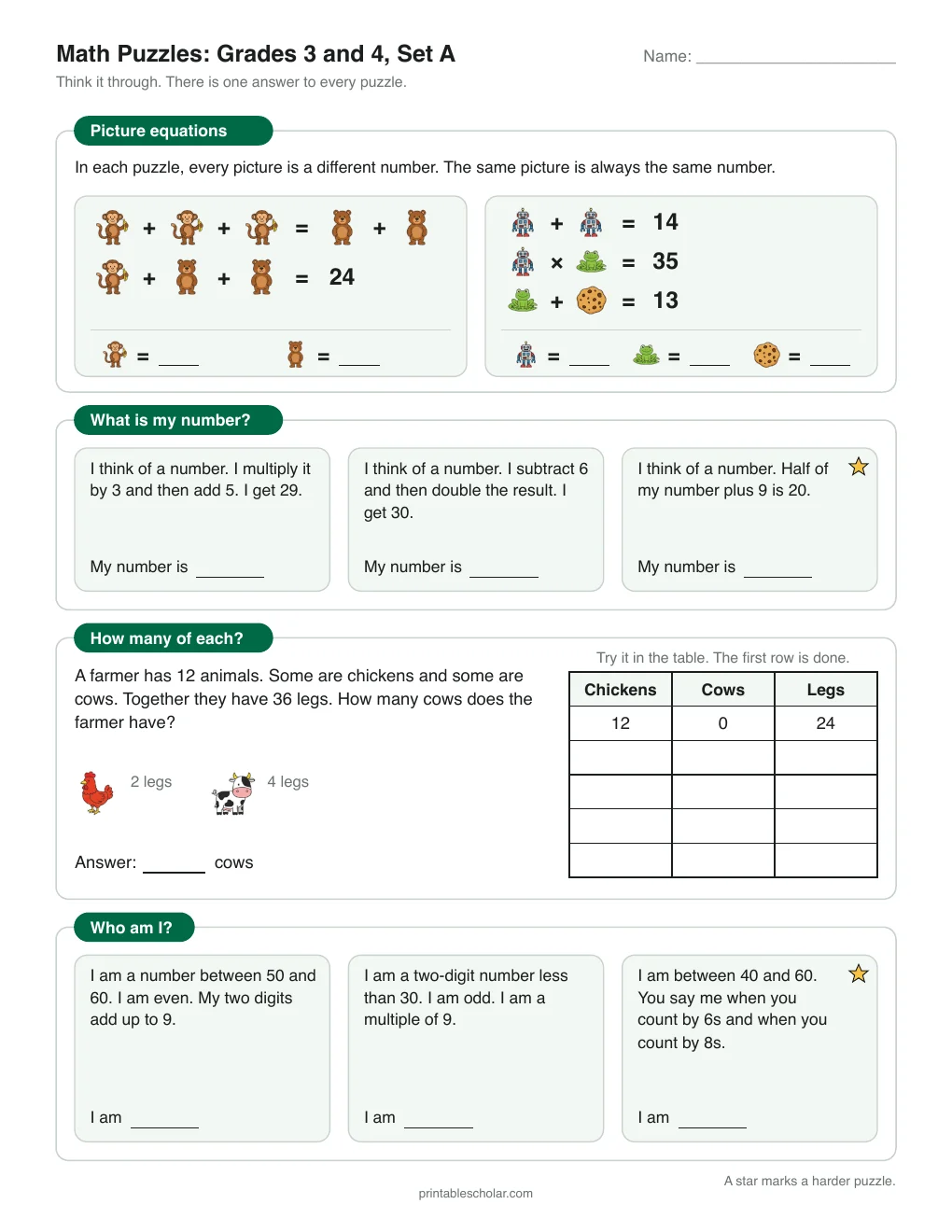
Math Puzzles: Grades 3–4, Set A
Grades 3–4Monkeys and bears, two-step missing numbers, chickens and cows, and three number riddles. Includes answer key.
Download PDF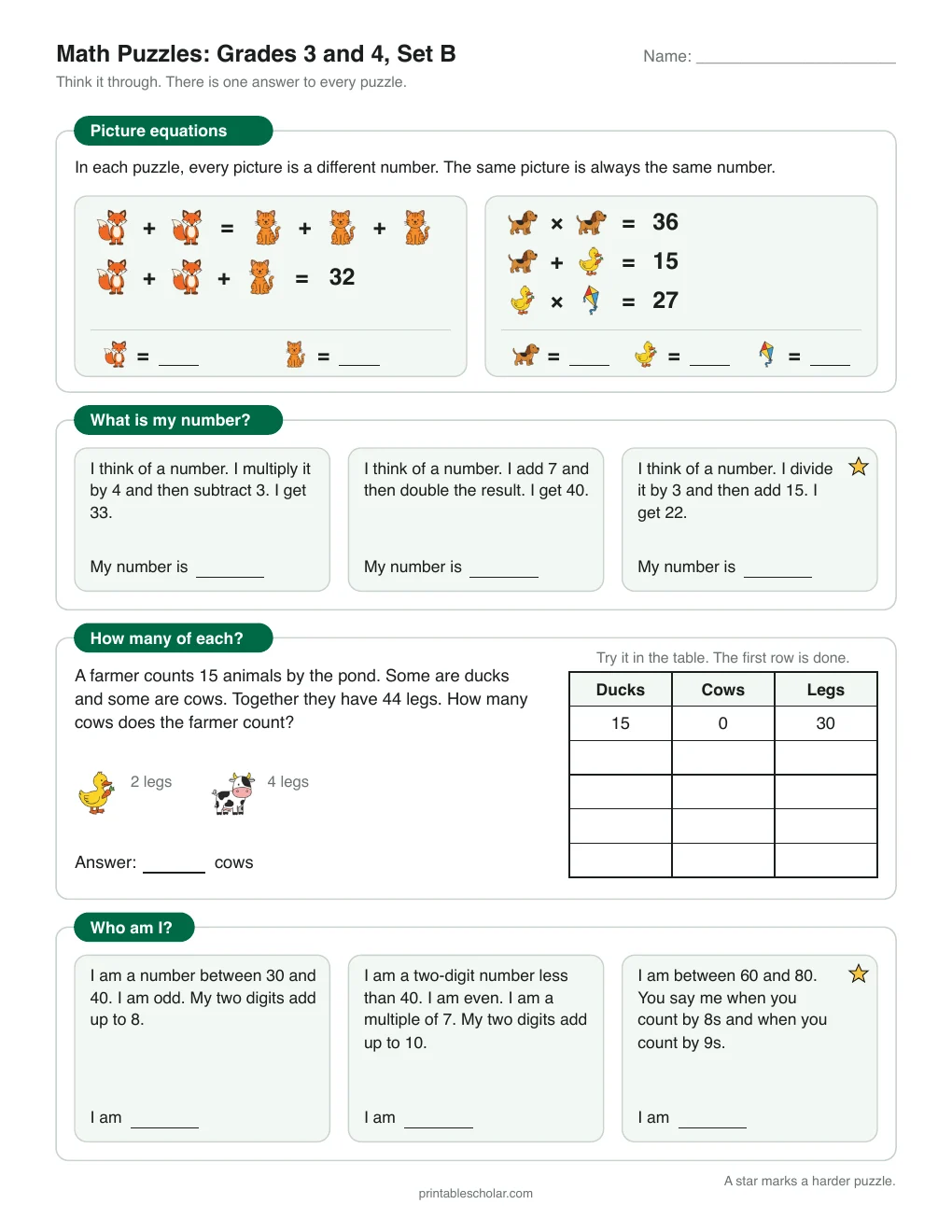
Math Puzzles: Grades 3–4, Set B
Grades 3–4Foxes and cats, two-step missing numbers, ducks and dogs, and three number riddles. Includes answer key.
Download PDF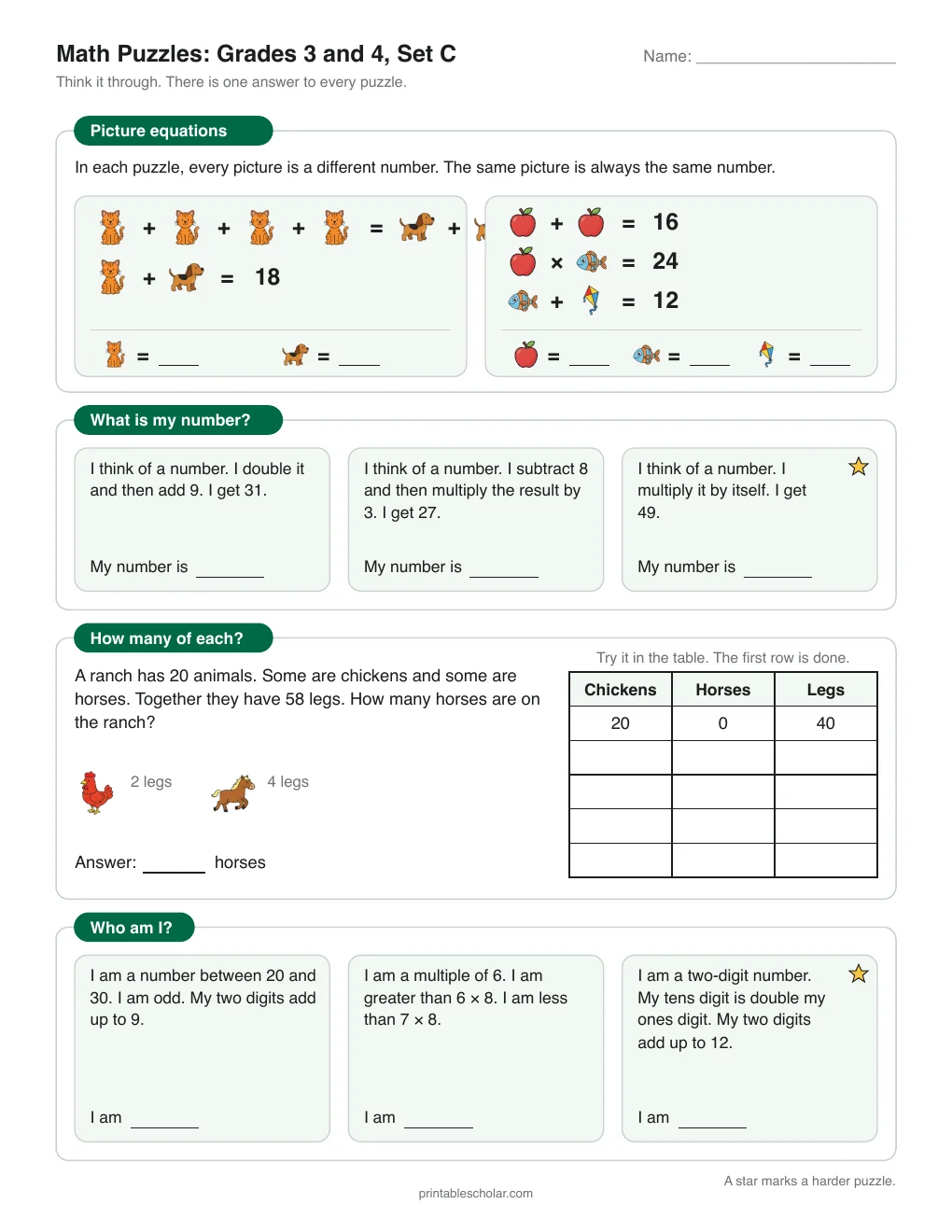
Math Puzzles: Grades 3–4, Set C
Grades 3–4Cats and dogs, two-step missing numbers, chickens and horses, and three number riddles. Includes answer key.
Download PDF