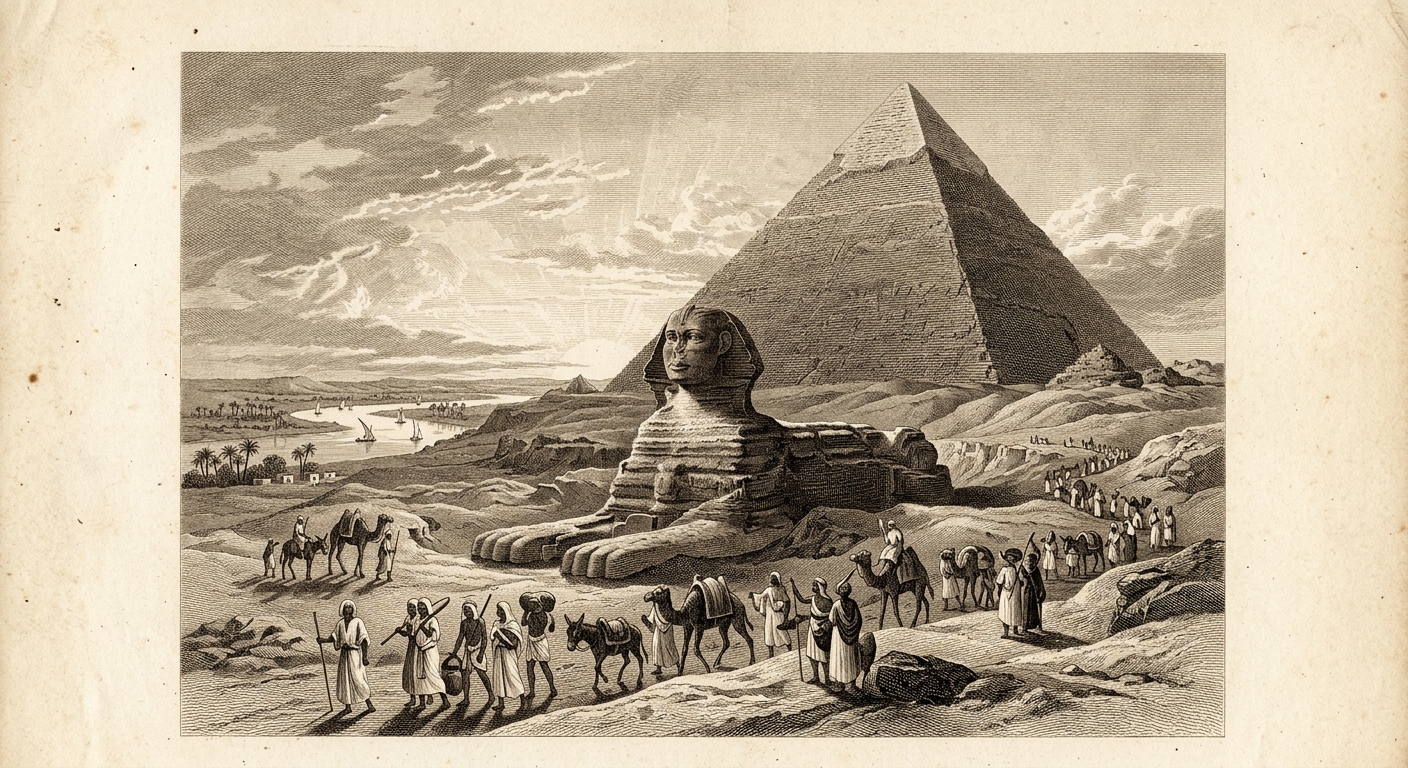
Ancient Egypt Timeline
Ancient Egypt was one of the world's first great civilizations, ruled by pharaohs along the Nile River for more than 3,000 years.
Ancient Egypt is one of the oldest civilizations in human history. For over three thousand years, pharaohs ruled the Nile Valley, building towering pyramids, carving temples out of rock, and creating one of the most distinctive and enduring cultures the world has ever seen. Egypt's story runs from the unification of the kingdom around 3100 BC all the way to the death of Cleopatra in 30 BC, when Egypt became part of the Roman Empire. In between, builders raised the Great Pyramid, scribes filled tomb walls with hieroglyphs, and soldiers and diplomats made Egypt a power that other nations had to reckon with.
- ~3100 BC
Egypt Unified
Pharaoh Narmer unites Upper and Lower Egypt into a single kingdom for the first time.
Why it mattered: Unification created one of the ancient world's first great civilizations, which would endure for more than three thousand years.
- ~2650 BC
Age of the Pyramids Begins
Pharaoh Djoser's architect Imhotep builds the first pyramid — the Step Pyramid at Saqqara.
Why it mattered: The Step Pyramid pioneered large-scale stone construction and launched the great age of pyramid building that followed.
- ~2560 BC
Great Pyramid of Giza
Pharaoh Khufu completes the Great Pyramid at Giza — the tallest structure humans had ever built.
Why it mattered: The Great Pyramid remained the tallest building on Earth for more than 3,800 years and still stands as one of the Seven Wonders of the Ancient World.
- ~1550 BC
The New Kingdom
Egyptian rulers expel foreign invaders and begin the New Kingdom, the most powerful era of Egyptian history.
Why it mattered: Pharaohs like Thutmose III, Hatshepsut, and Ramesses II built a wealthy empire and left behind Egypt's most spectacular temples and monuments.
- ~1353 BC
Akhenaten's Radical Reign
Pharaoh Akhenaten bans Egypt's traditional gods and orders everyone to worship only the sun god Aten.
Why it mattered: His radical religious change was reversed after his death and Egypt returned to its many gods — one of history's most striking experiments in religious change.
- ~1323 BC
Tutankhamun Rules and Dies Young
The young pharaoh Tutankhamun rules for about ten years before dying at roughly eighteen years of age.
Why it mattered: Though a minor king in his own time, his nearly untouched tomb was found in 1922 and gave the world its most dazzling look inside an ancient Egyptian royal burial.
- ~1274 BC
Battle of Kadesh
Pharaoh Ramesses II fights the Hittites to a standstill at Kadesh and later signs a peace treaty with them.
Why it mattered: The resulting peace treaty is one of the oldest known written treaties in history — a record of two rival empires agreeing to stop fighting.
- 332 BC
Alexander the Great Conquers Egypt
The Macedonian king Alexander the Great takes Egypt from Persian rule and founds the city of Alexandria.
Why it mattered: Greek language and culture blended with Egyptian tradition, and Alexandria became one of the ancient world's great centers of learning and trade.
- 305 BC
Ptolemaic Dynasty Begins
One of Alexander's generals, Ptolemy, becomes pharaoh, founding a Greek-Egyptian royal dynasty.
Why it mattered: The Ptolemies ruled for nearly 300 years, blending Greek and Egyptian culture and making Alexandria home to a famous library and lighthouse.
- 30 BC
Cleopatra and the End of Pharaonic Egypt
Cleopatra VII, the last pharaoh of Egypt, dies after being defeated by Rome, and Egypt becomes a Roman province.
Why it mattered: More than three thousand years of pharaonic Egypt came to an end — the age of the pharaohs was over.
Ancient Egypt Quiz
Check what you learned — read on screen, or use the Printable quiz button above for a worksheet version with an answer key.
What did Pharaoh Narmer do around 3100 BC?
- A) Built the Great Pyramid
- B) United Upper and Lower Egypt into one kingdom
- C) Started the New Kingdom
- D) Defeated Alexander the Great
What was the Great Pyramid of Giza?
- A) The first pyramid ever built
- B) The burial place of Tutankhamun
- C) The tallest structure on Earth for over 3,800 years
- D) A pyramid built by Alexander the Great
What was the New Kingdom?
- A) The first period of Egyptian history
- B) Egypt's most powerful era of empire-building and monument-construction
- C) The period after Alexander the Great
- D) The age when the earliest pyramids were built
What unusual thing did Pharaoh Akhenaten do?
- A) Built the largest pyramid in Egypt
- B) Banned Egypt's many gods and ordered worship of only the sun god Aten
- C) Defeated the Hittites in battle
- D) Founded the city of Alexandria
Why is Tutankhamun famous today?
- A) He was Egypt's greatest military pharaoh
- B) He was the longest-reigning pharaoh in history
- C) His nearly untouched tomb, found in 1922, revealed the treasures of ancient Egypt
- D) He built the Great Pyramid
What is significant about the Battle of Kadesh?
- A) It ended Egyptian civilization
- B) It produced one of the oldest known written peace treaties in history
- C) It was when Alexander the Great conquered Egypt
- D) It began the New Kingdom
Who conquered Egypt in 332 BC and founded the city of Alexandria?
- A) Julius Caesar
- B) Ramesses II
- C) Cleopatra
- D) Alexander the Great
Who was Cleopatra VII?
- A) The builder of the Great Pyramid
- B) The pharaoh who moved Egypt's capital to Alexandria
- C) The last pharaoh of Egypt, whose defeat ended the age of the pharaohs
- D) The pharaoh who fought at the Battle of Kadesh
Show answer key
1. B · 2. C · 3. B · 4. B · 5. C · 6. B · 7. D · 8. C
Related timelines
 Ancient Rome Timeline — Ancient Rome grew from a small city on the banks of the Tiber River into the greatest empire of the ancient world, lasting over a thousand years. Open →
 Ancient Greece Timeline — Ancient Greece gave the world democracy, philosophy, the Olympics, and some of history's greatest art and literature, flourishing in independent city-states along the Mediterranean. Open →
How to print
Choose Download PDF for a ready-to-print timeline that fits US Letter paper (8.5 × 11"). The blank fill-in version keeps the dates and gives students empty lines to write each event — great for review and quizzes.
Frequently asked questions
How long did ancient Egyptian civilization last?
Ancient Egypt endured for more than 3,000 years — from the unification of the kingdom around 3100 BC to the Roman conquest in 30 BC. In that time it was ruled by more than 30 dynasties of pharaohs.
What happened to ancient Egypt?
Egypt was conquered by Alexander the Great in 332 BC and then ruled by a Greek dynasty called the Ptolemies. When the last Ptolemaic ruler, Cleopatra VII, was defeated by Rome in 30 BC, Egypt became a Roman province — ending the age of the pharaohs.
What paper size should I print this on?
The timeline is sized for standard US Letter paper (8.5 × 11 in.). The Download PDF button gives you a print-ready file that fits the page automatically.