Before a fraction means anything, a child has to see that the parts are equal. The 1st grade sheets cut circles and rectangles into halves and fourths. The 2nd grade sheets name halves, thirds and fourths in words and cut rectangles into rows and columns of squares. The 3rd grade sheets go on from there: decide whether a shape is cut into equal parts, name the fraction for one part, draw the cuts yourself, and count squares to show that parts with different shapes can still be equal. Every sheet has its answer key on the second page.

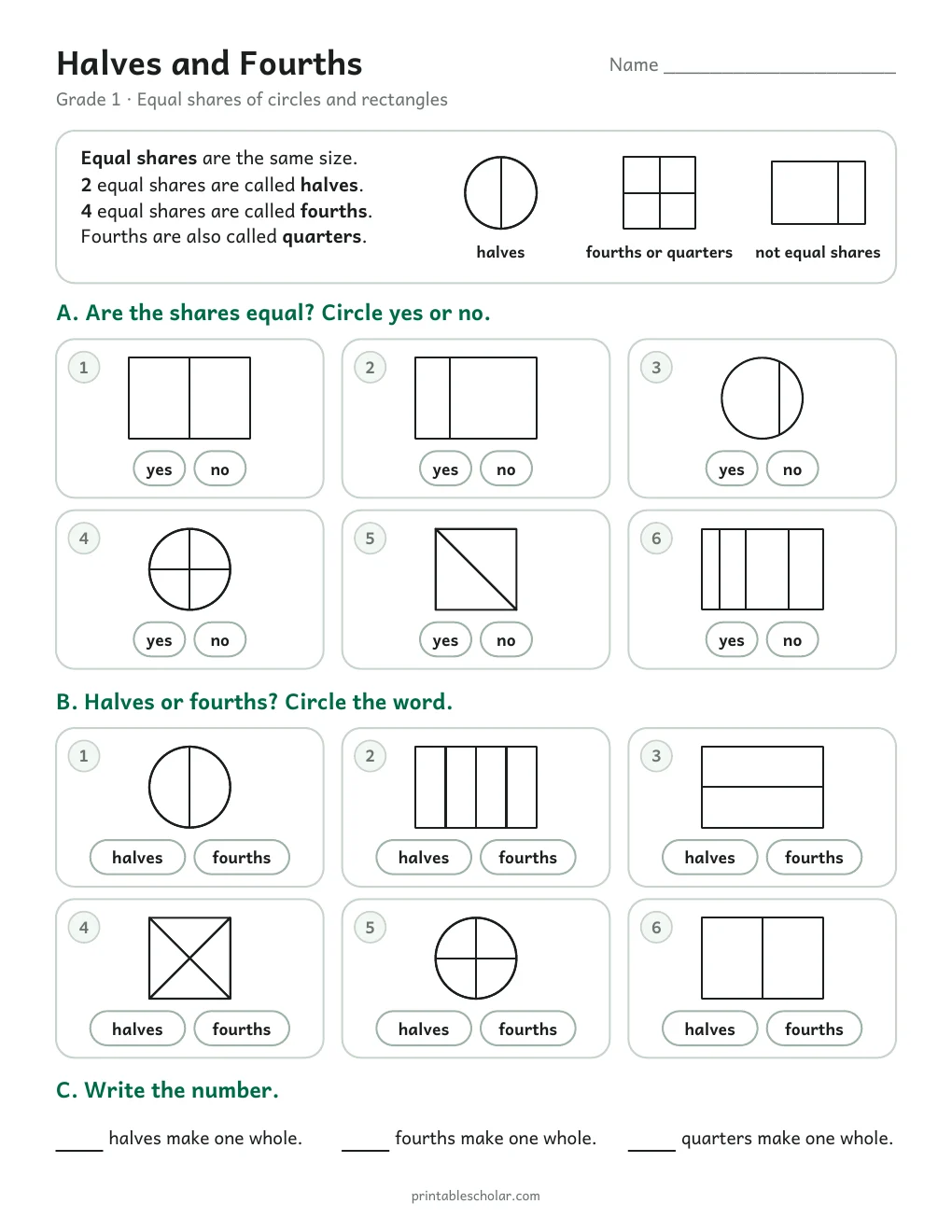
Six shapes to judge as equal shares or not, six to name as halves or fourths, and how many halves, fourths and quarters make one whole. Includes answer key.
Download PDF
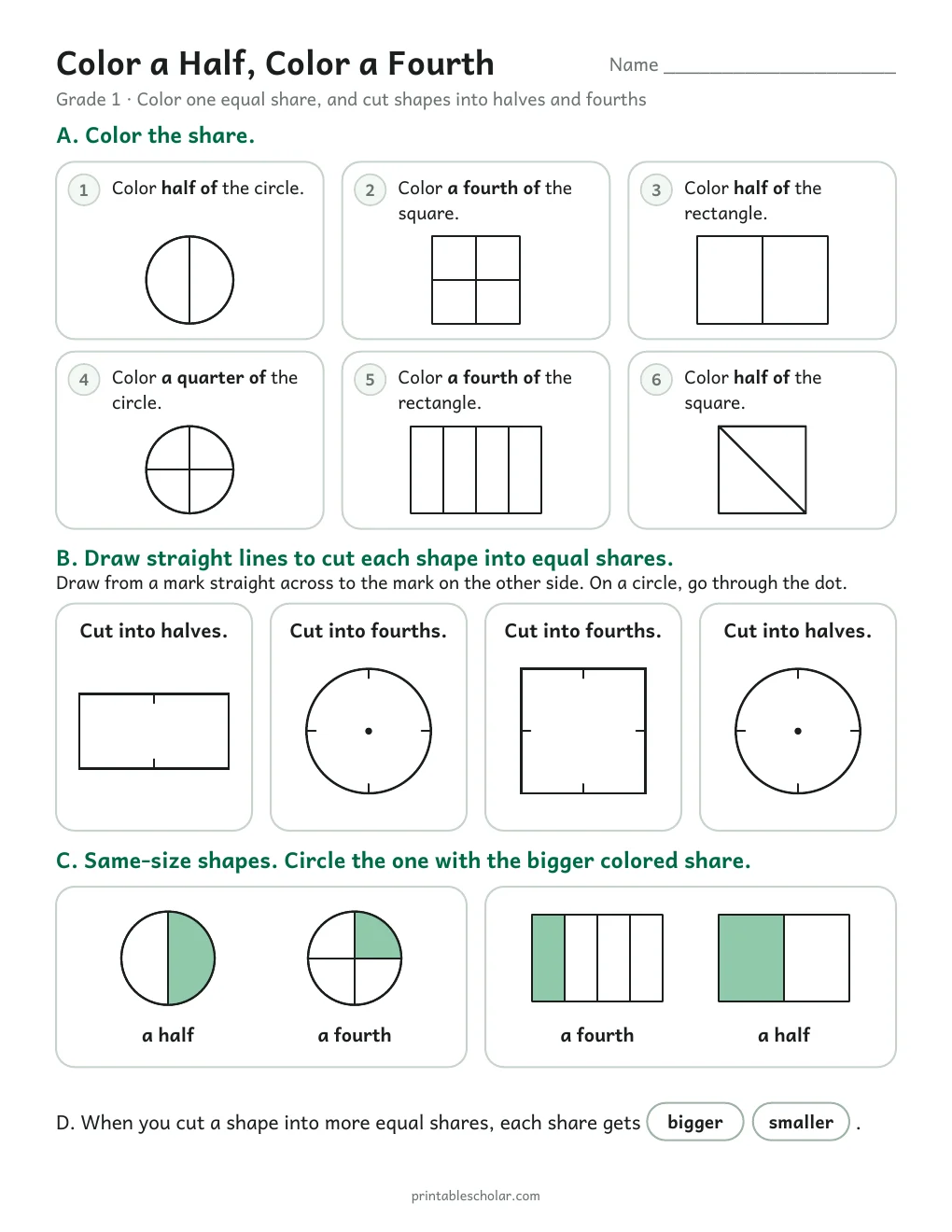
Color one half, one fourth or one quarter of six shapes, cut four shapes on their marks, and pick the bigger share. Includes answer key.
Download PDF
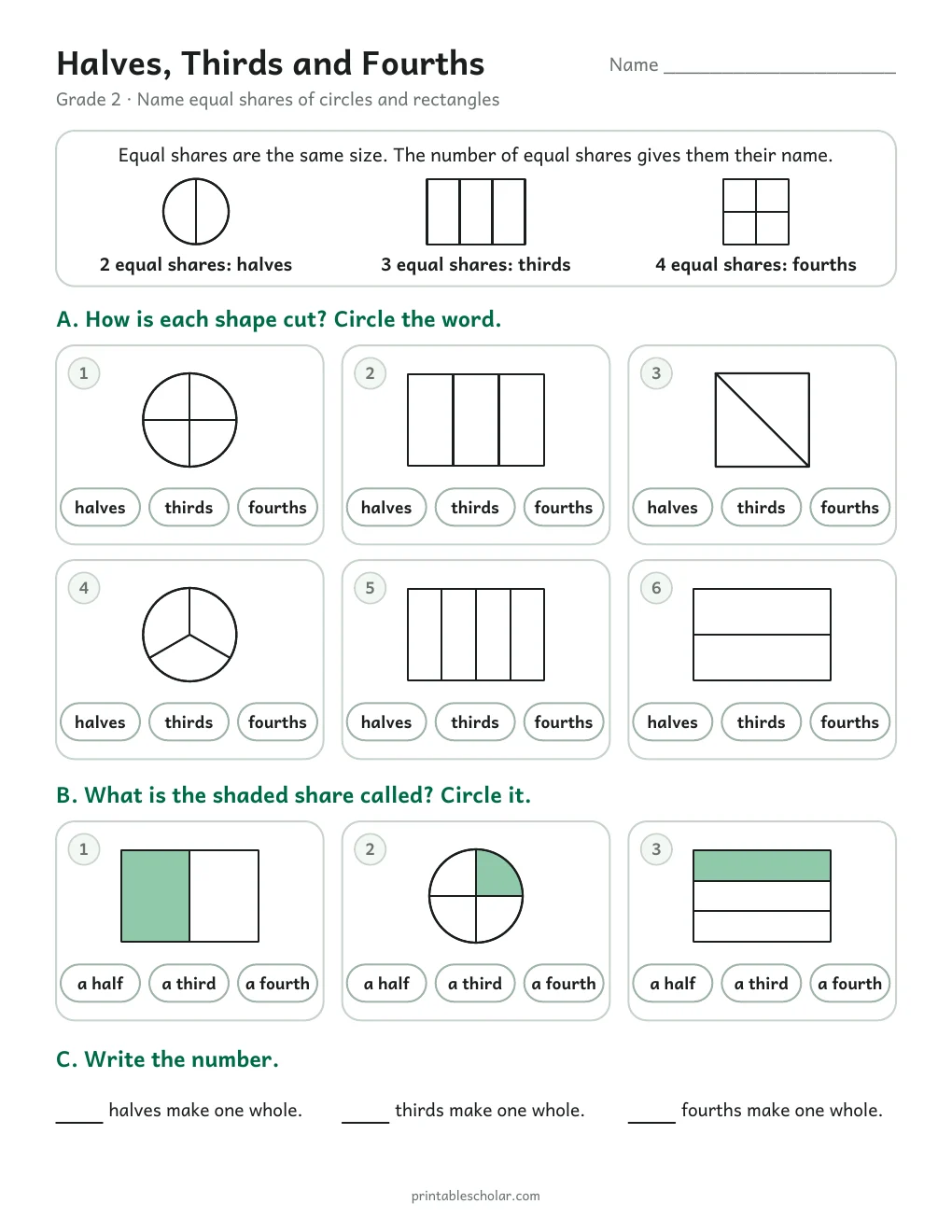
Circle how six shapes are cut, name the shaded share on three more, and write how many halves, thirds and fourths make one whole. Includes answer key.
Download PDF
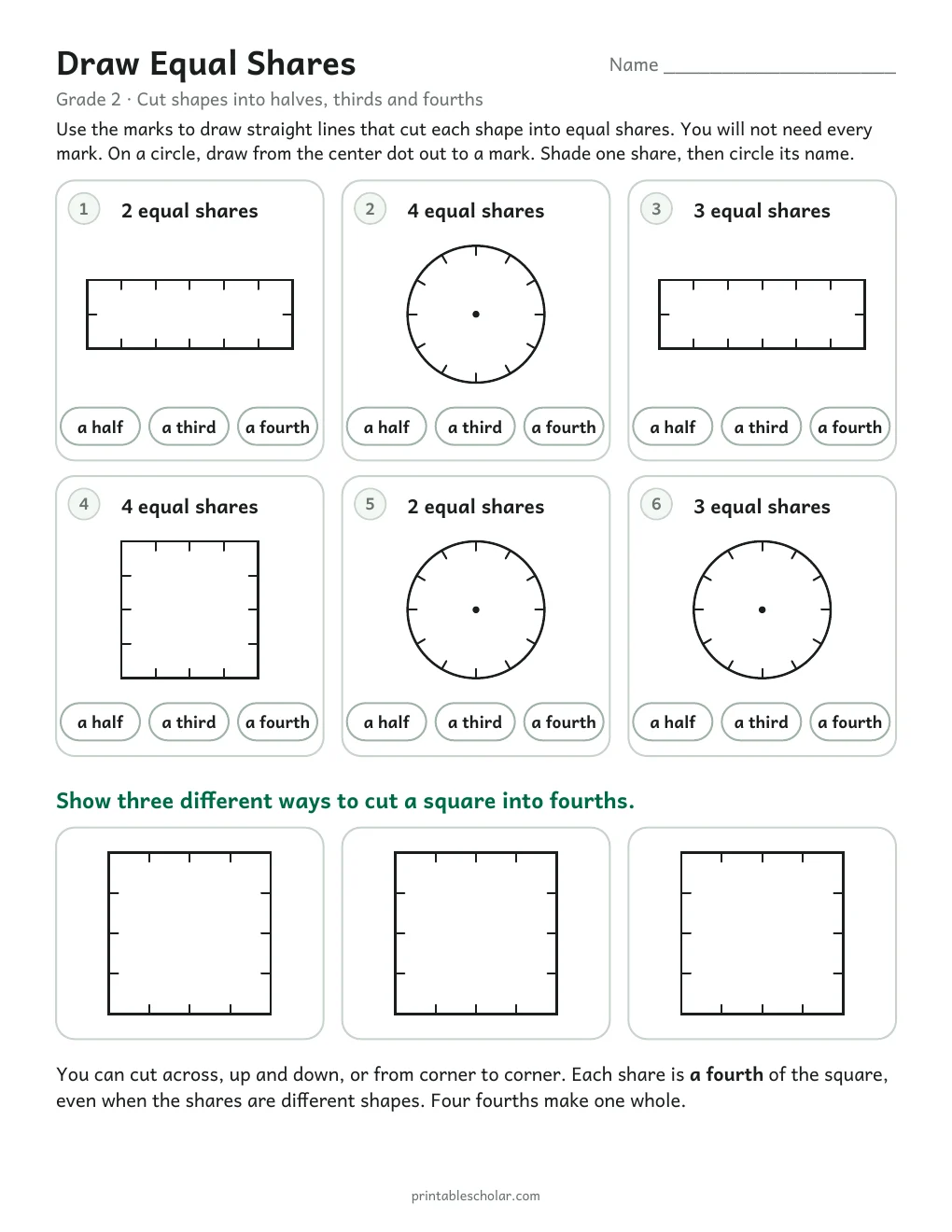
Six circles and rectangles with marks to cut into 2, 3 or 4 equal shares, then three squares to cut into fourths three different ways. The key shows one way.
Download PDF
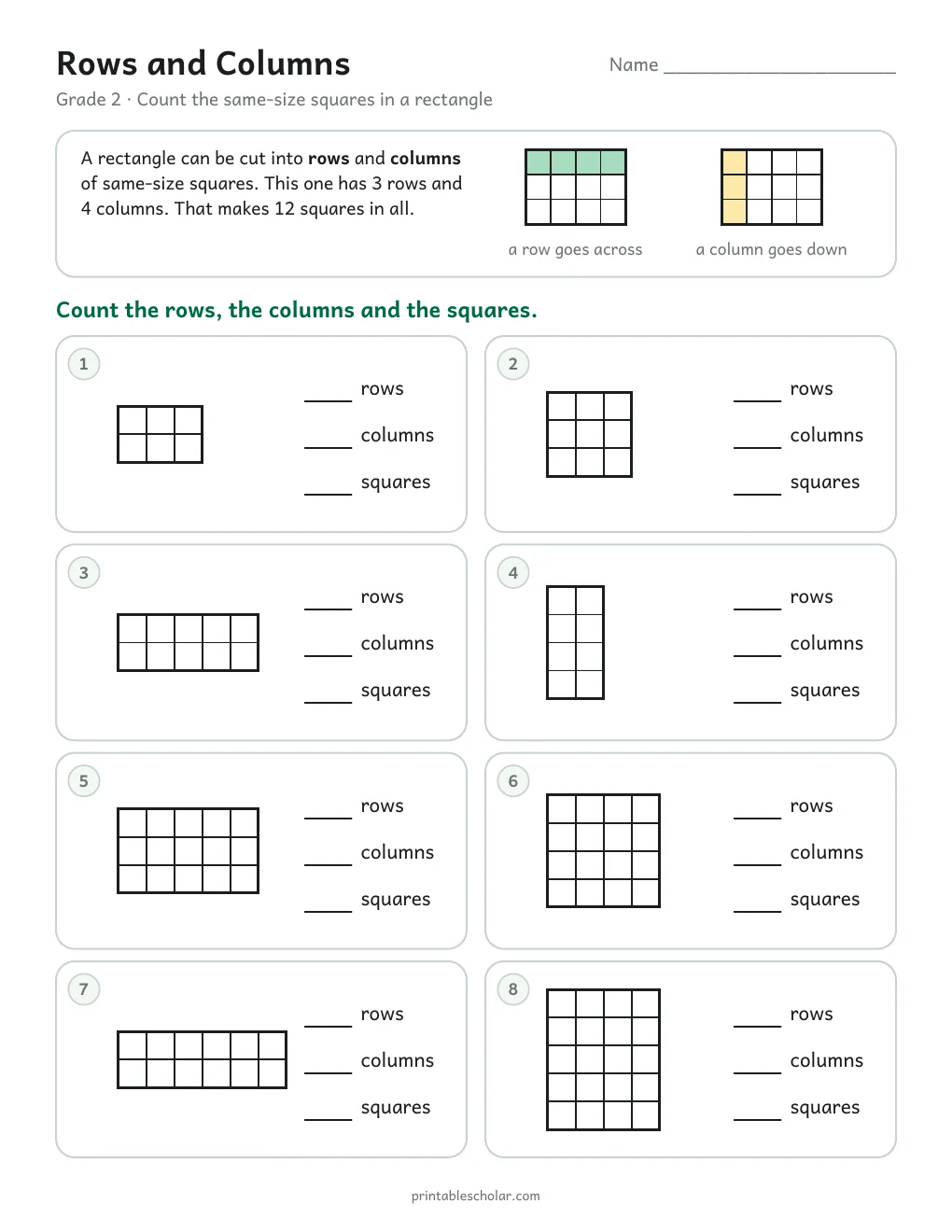
Eight rectangles cut into same-size squares. Count the rows, the columns and the squares in all. Includes answer key.
Download PDF
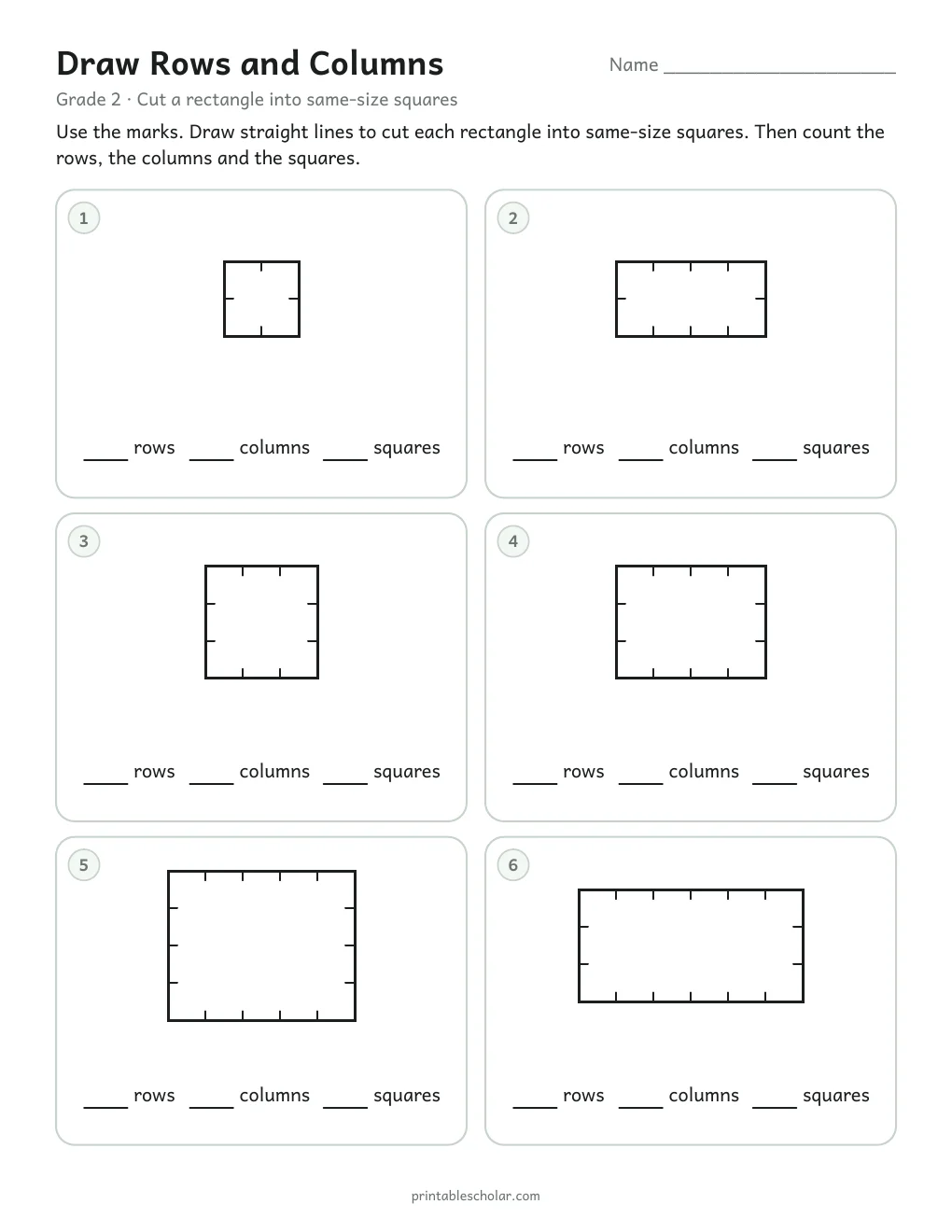
Six rectangles with marks on the edges. Draw the lines to make same-size squares, then count them. Includes answer key.
Download PDF
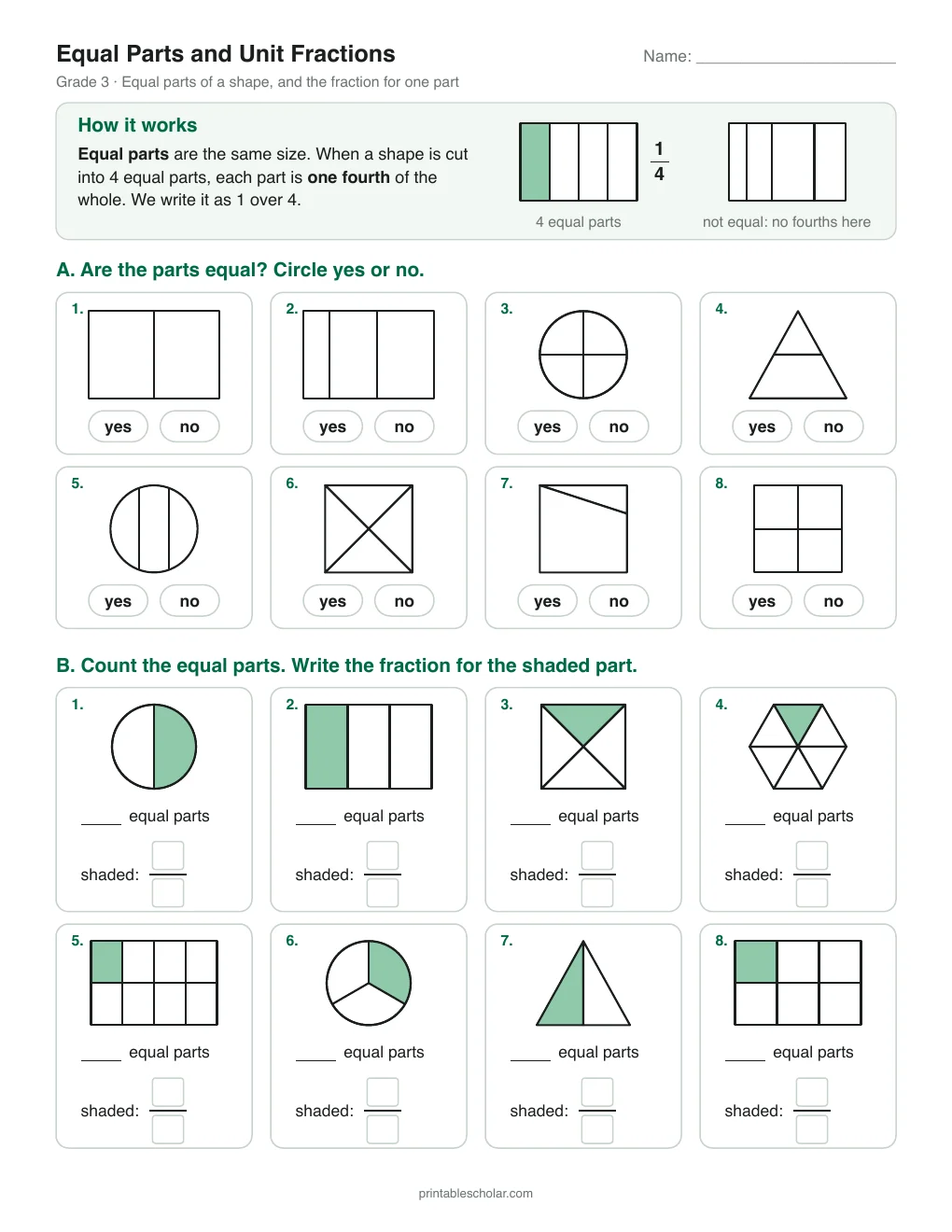
A how-it-works box, eight shapes to judge as equal or not equal, and eight shapes to count and name: one half, one third, one fourth, one sixth, one eighth. Includes answer key.
Download PDF
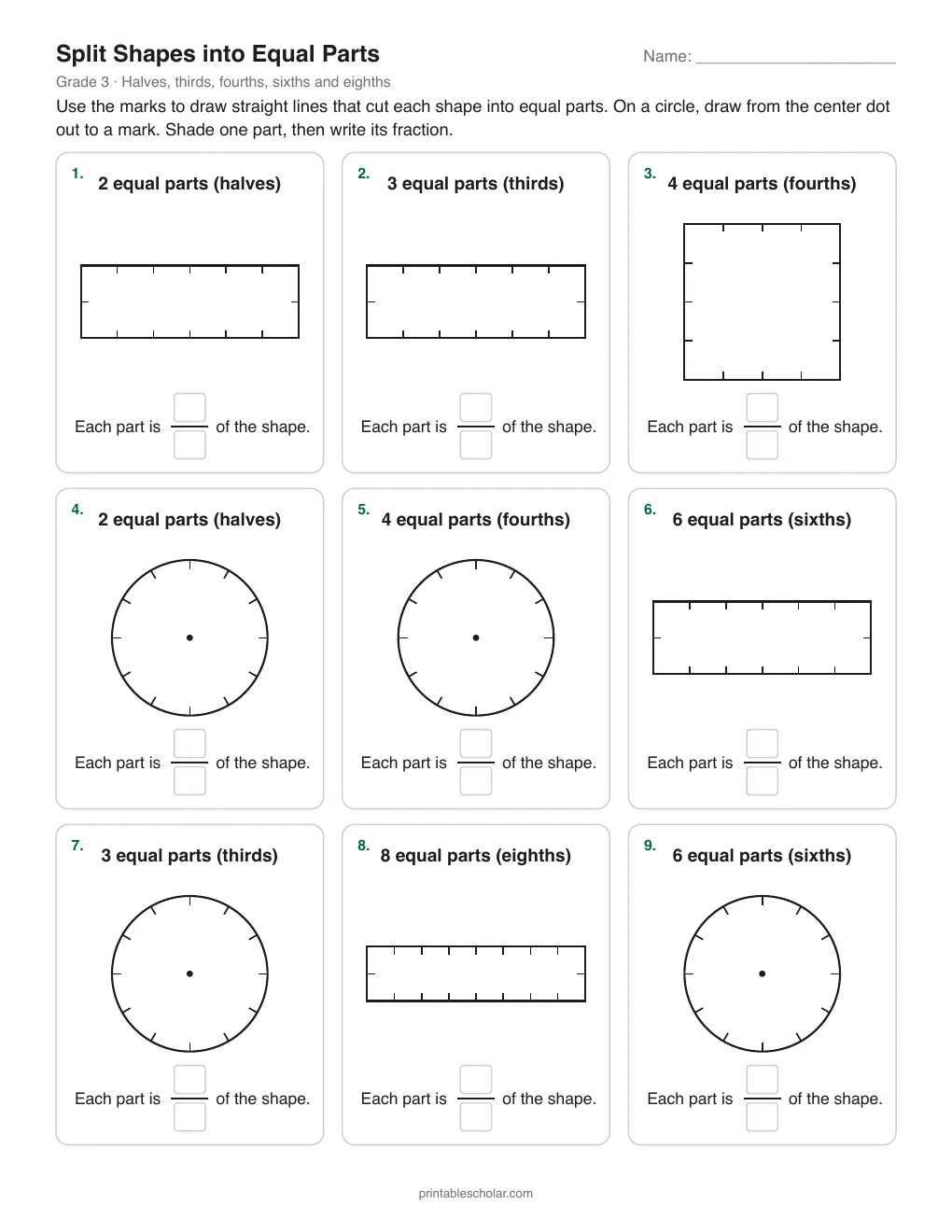
Nine rectangles, squares and circles with marks on the edges. Draw the lines to make halves, thirds, fourths, sixths and eighths, then write the fraction. The key shows one way.
Download PDF
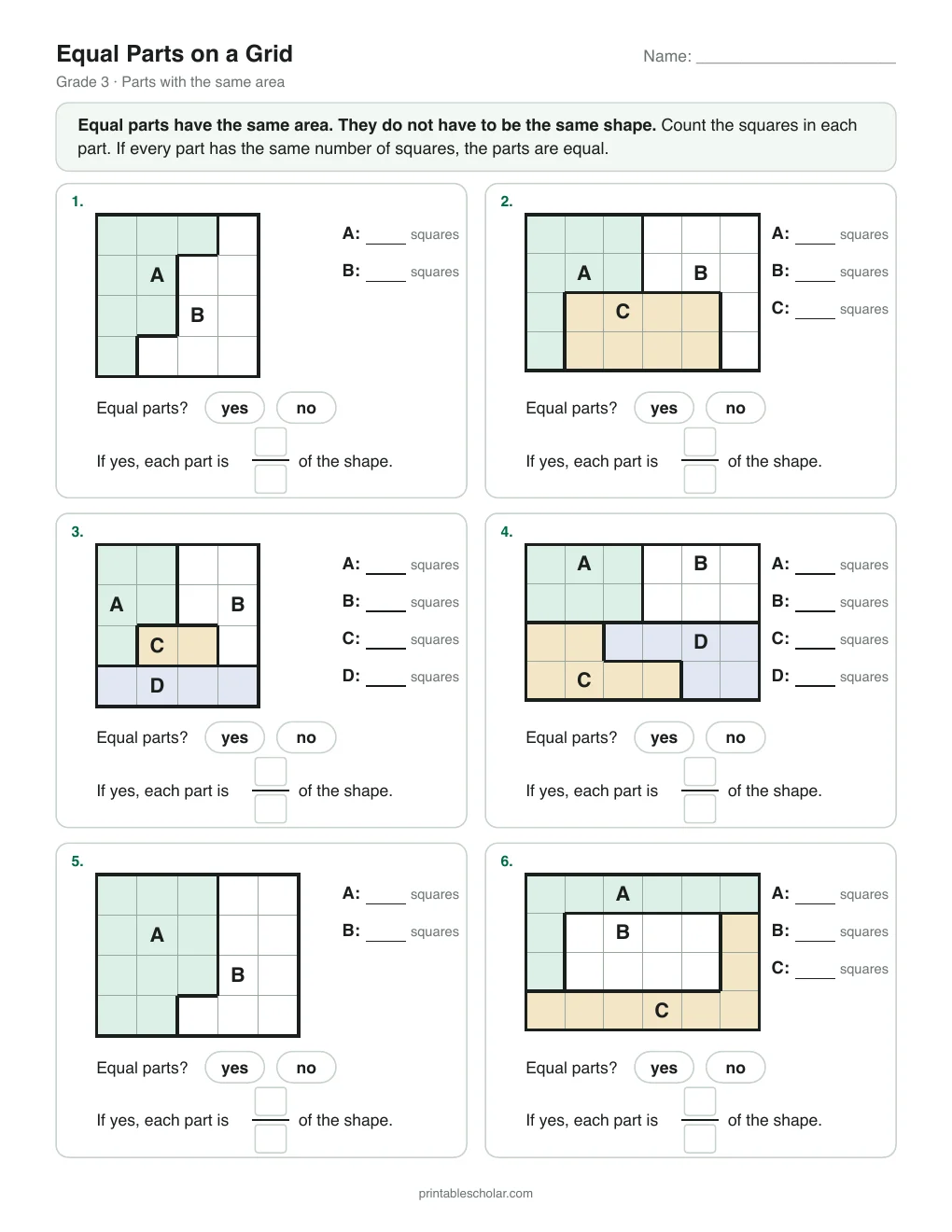
Six rectangles on a grid, cut into parts of different shapes. Count the squares in each part to find out whether the parts are equal. Includes answer key.
Download PDFA shape is cut into equal parts when every part covers the same amount of space. Only then can the parts be named with a fraction: two equal parts are halves, three are thirds, four are fourths, six are sixths and eight are eighths. One of those parts is a unit fraction, written with a 1 on top: 1/2, 1/3, 1/4, 1/6, 1/8.
The two 1st grade sheets come first. Halves and Fourths asks whether the shares are equal, then names them: two equal shares are halves, four are fourths or quarters. Color a Half, Color a Fourth has the child color half of a circle or a quarter of a rectangle, cut shapes on their marks, and see that a fourth is smaller than a half of the same shape.
The four 2nd grade sheets come next. Halves, Thirds and Fourths and Draw Equal Shares use words only, with no fraction written as numbers: a half, a third, a fourth, and two halves make one whole. Rows and Columns and Draw Rows and Columns cut a rectangle into same-size squares and count them, which is the groundwork for both arrays and area.
Equal Parts and Unit Fractions, the first 3rd grade sheet, mixes shapes that are cut fairly with shapes that are not. The ones that are not equal are the common mistakes: a circle cut by straight up-and-down lines, a triangle cut straight across, a rectangle cut into strips of different widths. Each has the right number of parts, which is why children call them thirds or halves.
Split Shapes into Equal Parts hands over the pencil. Each shape has small marks along its edges, so the lines can be drawn in the right place without a ruler. There is more than one right answer for most of them, and the key says so.
Equal Parts on a Grid is the 3rd grade idea that equal parts need the same area, not the same shape. An L-shaped part and a rectangle can both be one third of the whole if they cover the same number of squares. For the next step, see the fractions worksheets and the area worksheets.