Fraction practice for 3rd and 4th grade, starting from what a fraction is. Students name and color fractions of shapes, place them on a number line, find a fraction of a set, then add and subtract with the same denominator. Every practice sheet has its answer key on the second page.
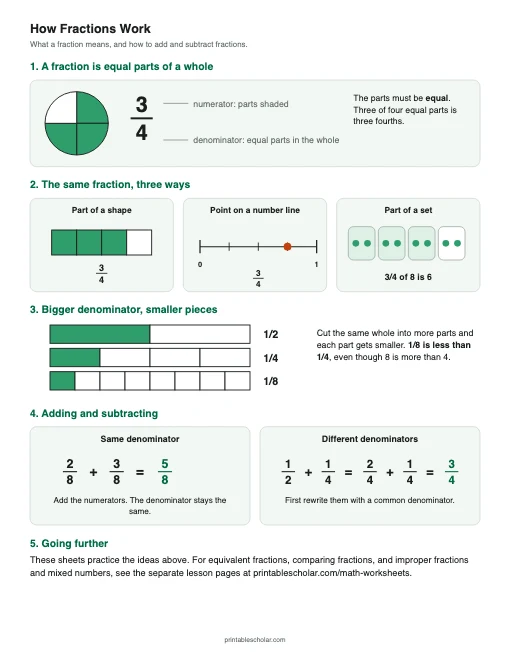
Numerator and denominator, one fraction shown three ways, why a bigger denominator means smaller pieces, and adding.
Download PDF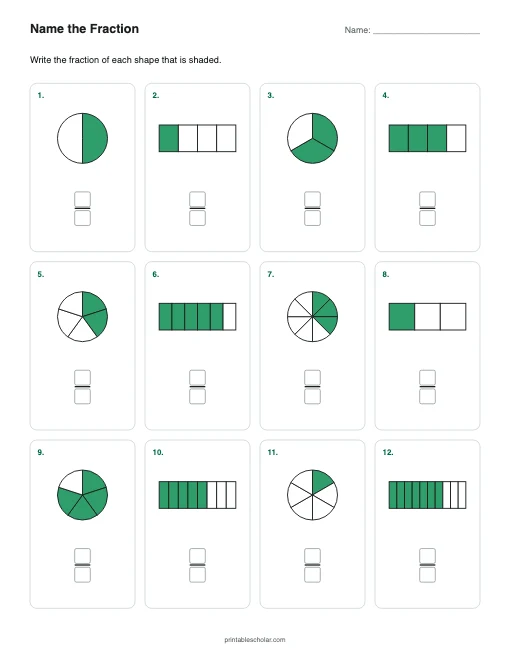
Twelve circles and bars, partly shaded. Write the fraction. Includes answer key.
Download PDF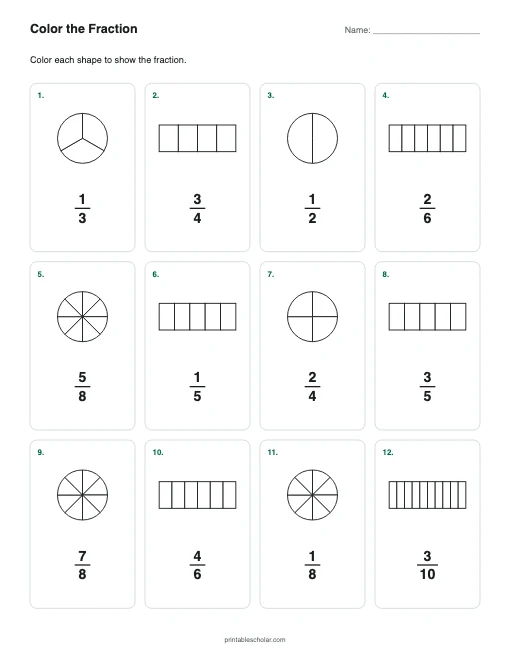
Twelve blank circles and bars. Color each to match its fraction. Includes answer key.
Download PDF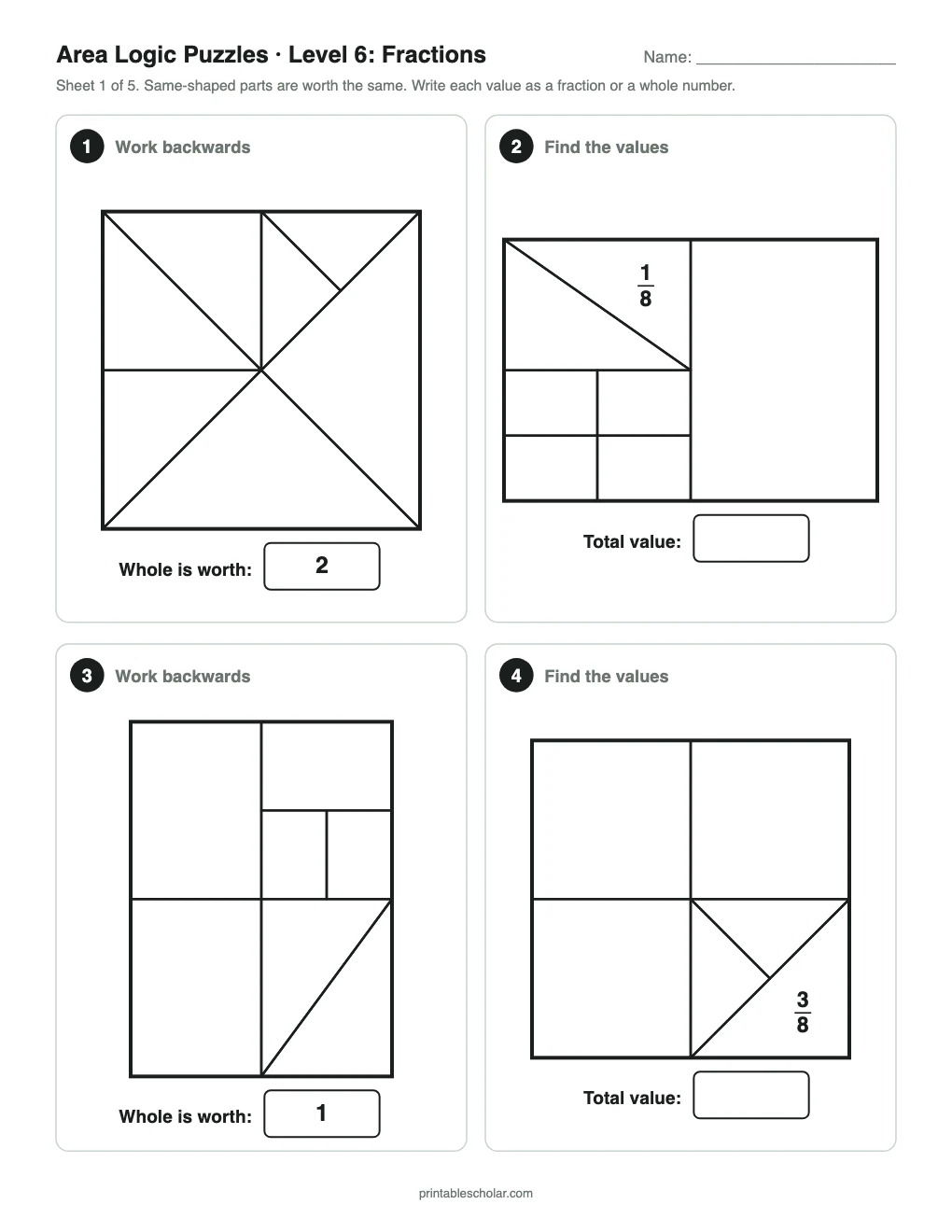
The whole is worth 1, 2 or 3 and every part is a fraction: see halves, quarters and eighths in the shape and find each one.
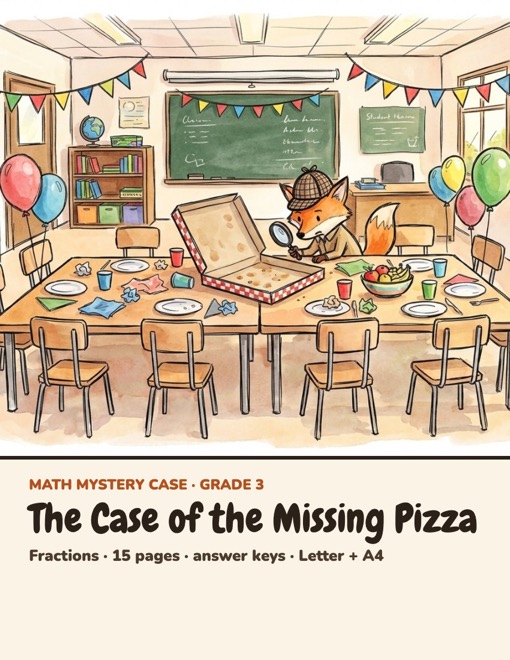
Solve fraction problems to unlock secret-code clues, then cross out drawn suspects until one is left.
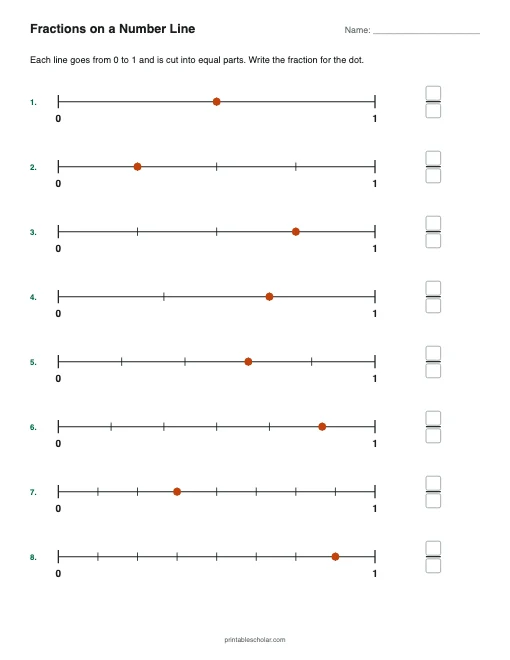
Eight number lines from 0 to 1, each with one point to name. Includes answer key.
Download PDF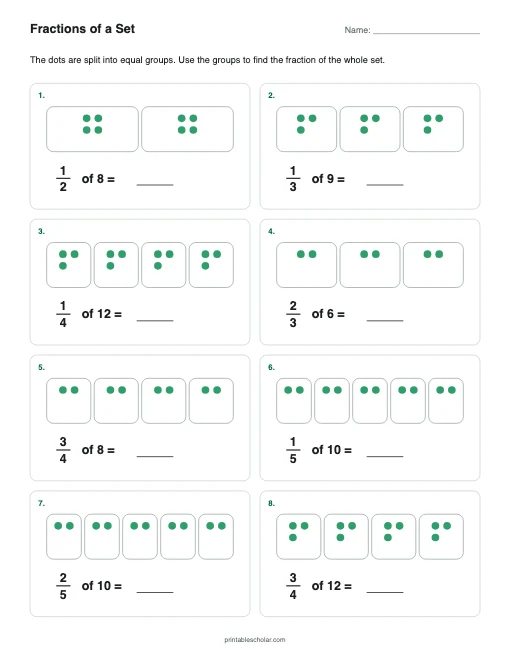
Eight sets of dots in equal groups. Find a fraction of the whole set. Includes answer key.
Download PDF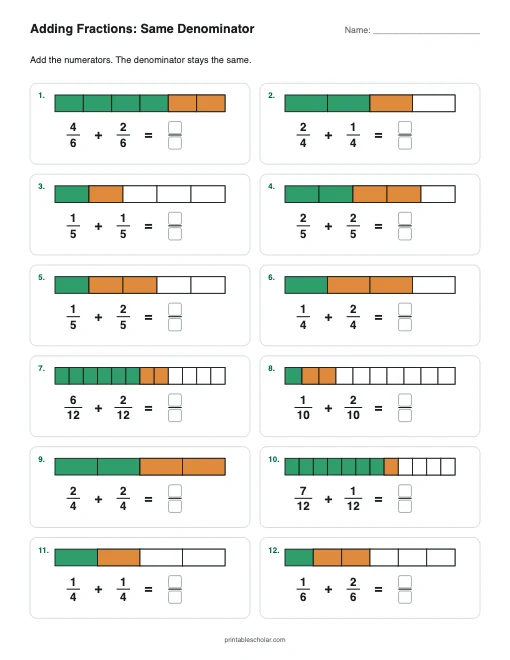
Twelve problems, each with a two-color bar model. The key simplifies where possible.
Download PDF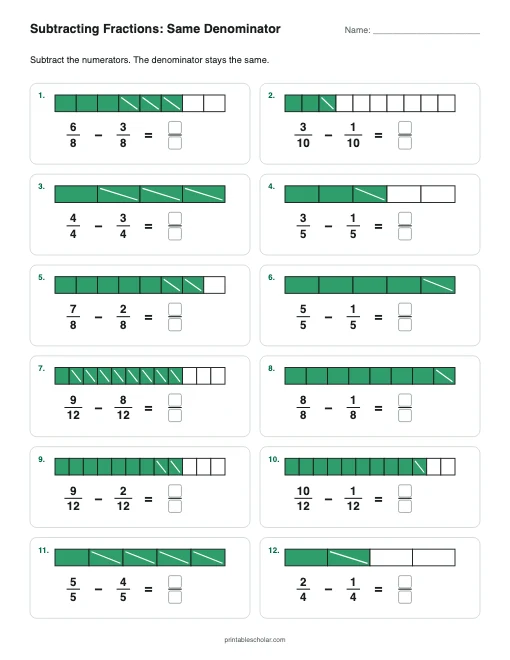
Twelve problems, each with a bar model. The key simplifies where possible.
Download PDFA fraction names equal parts of a whole. The denominator says how many equal parts the whole is cut into and the numerator says how many of them you have. The first four practice sheets show that one idea in the three forms students meet: part of a shape, a point on a number line, and part of a set.
The number line sheet matters more than it looks. It is where students start to see a fraction as a number with a place between 0 and 1, which is what comparing and adding fractions depend on later.
Adding and subtracting start with the same denominator, with a bar model beside every problem. Different denominators come next, in 5th grade, on the adding and subtracting fractions page.
Three topics have their own pages with an explanation sheet and guided practice: equivalent fractions, comparing fractions, and improper fractions and mixed numbers. After those, go on to adding and subtracting mixed numbers. For reference, print a fraction chart or fraction strips.
 Printable Scholar