Ratio practice for 6th and 7th grade. The first sheet explains what a ratio is, the three ways to write one, and how equivalent ratios and simplest form work. The practice sheets go from pictures to ratio tables to word problems. Every practice sheet has its answer key on the second page.
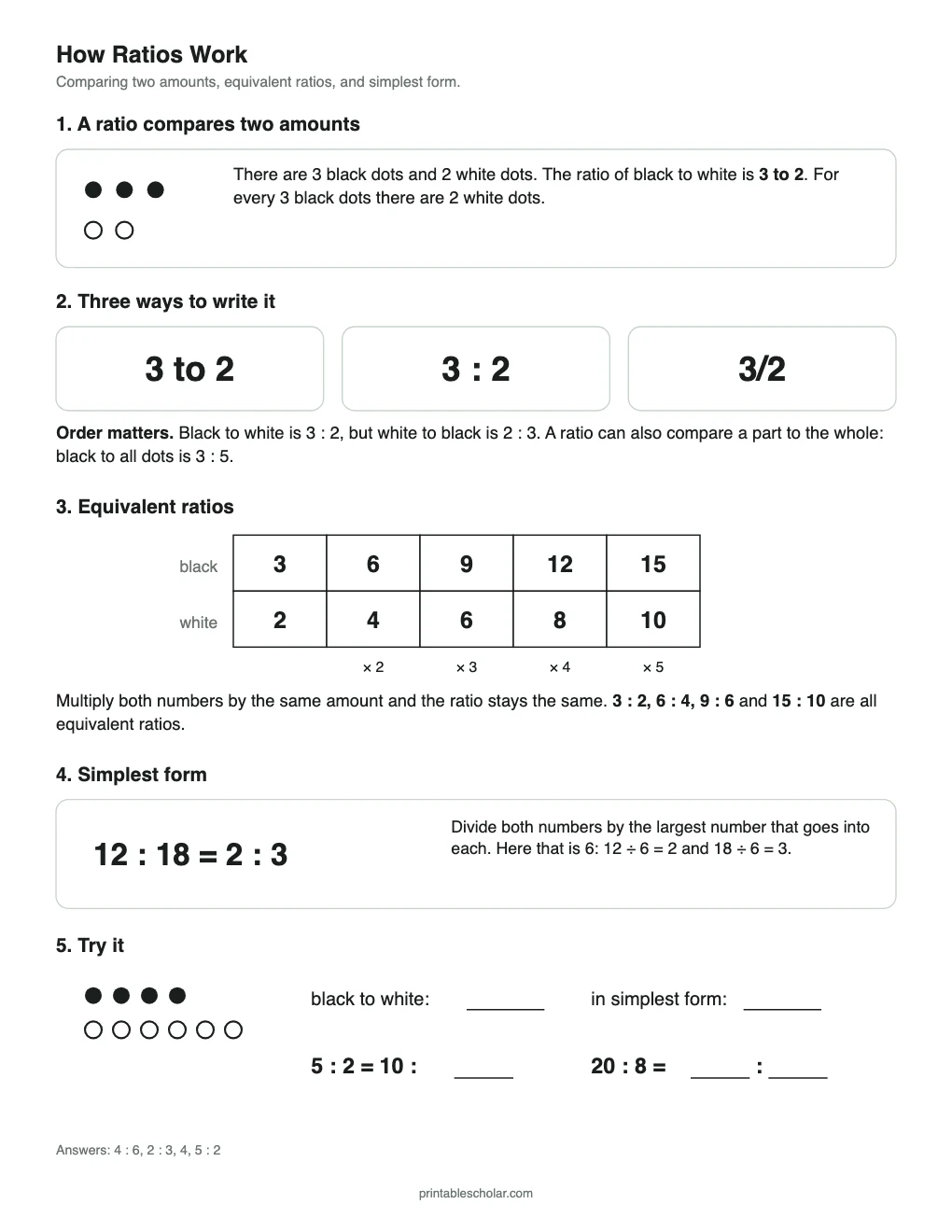
What a ratio compares, three ways to write it, equivalent ratios in a table, and simplest form.
Download PDF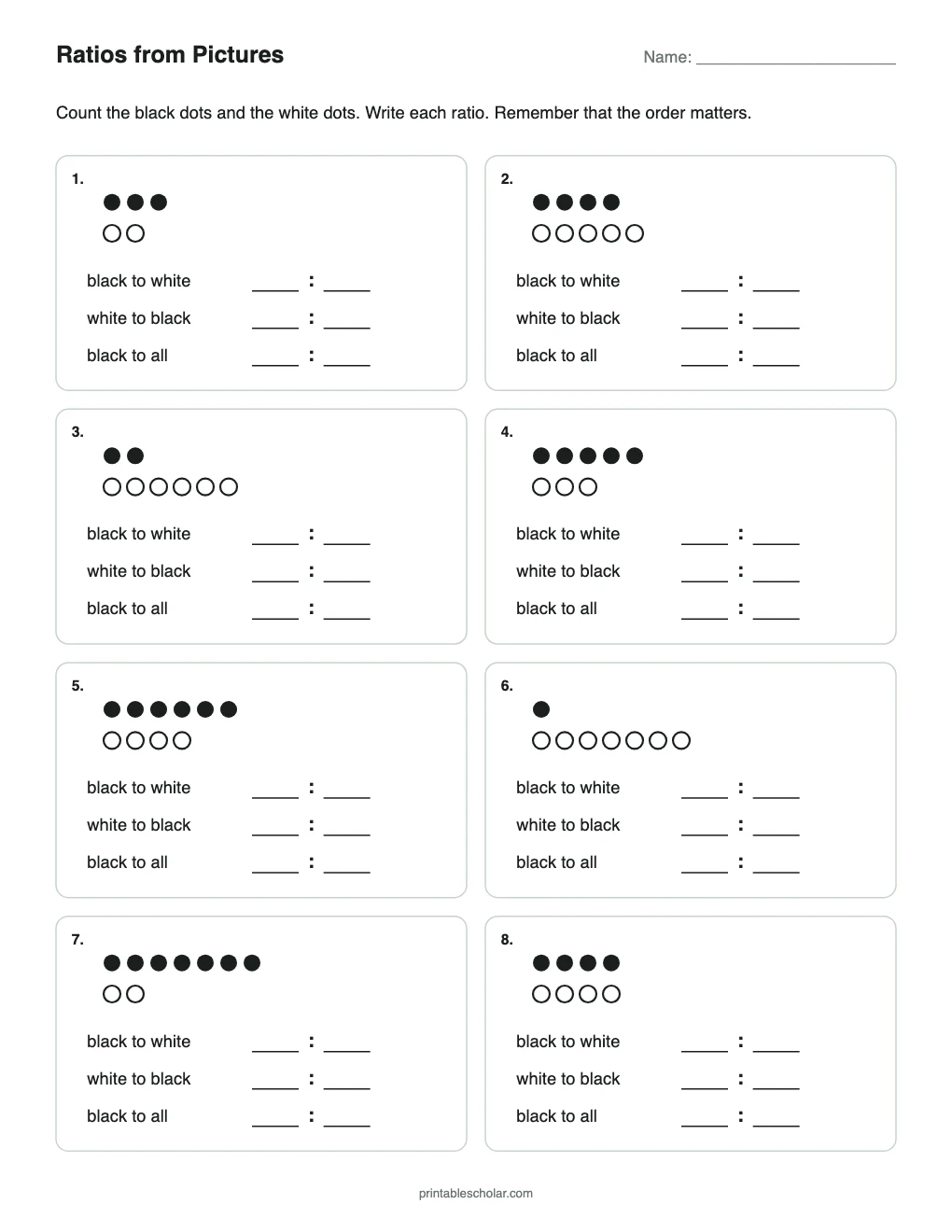
Eight sets of dots. Write three ratios for each, including part to whole. Includes answer key.
Download PDF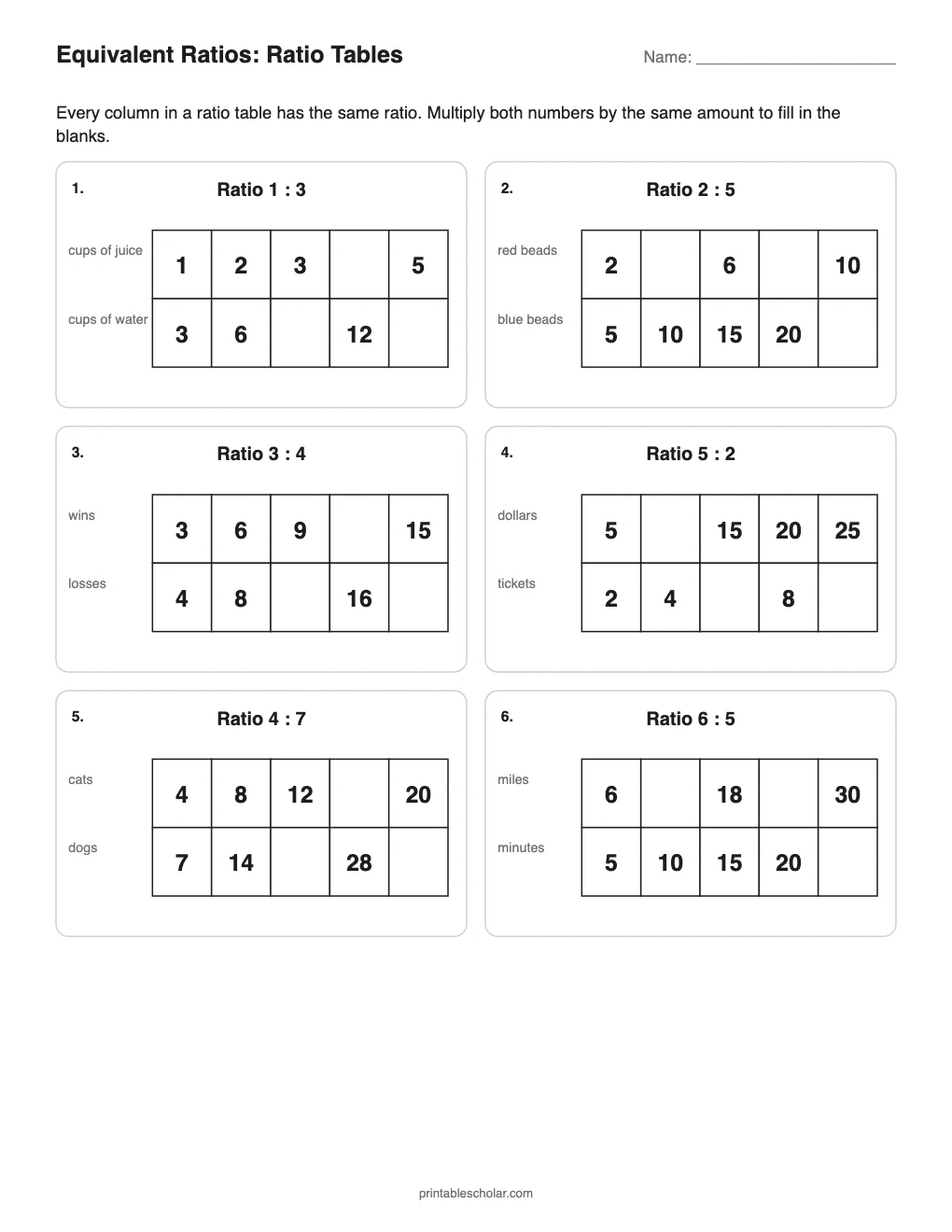
Six ratio tables with missing numbers to fill in. Includes answer key.
Download PDF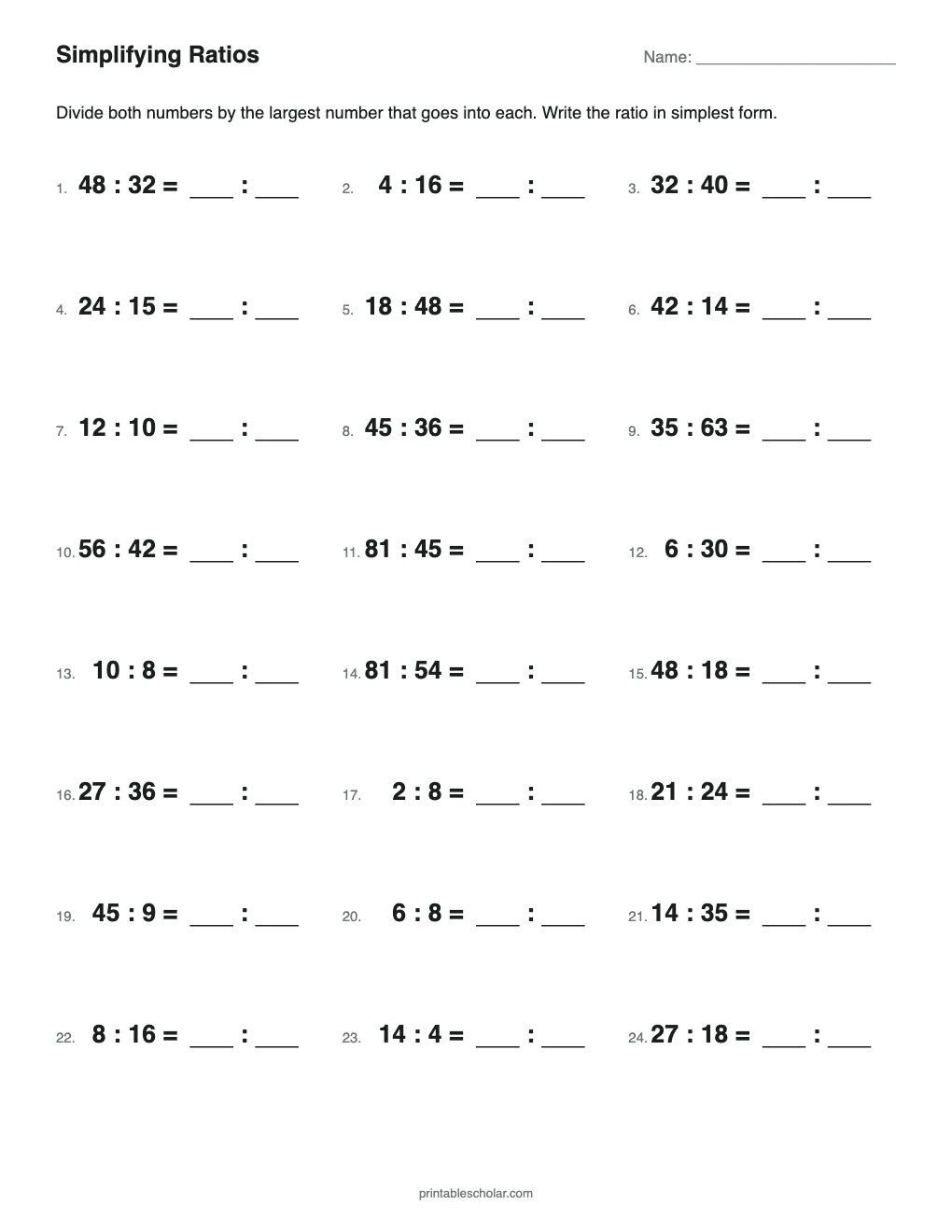
Twenty-four ratios to write in simplest form. Includes answer key.
Download PDF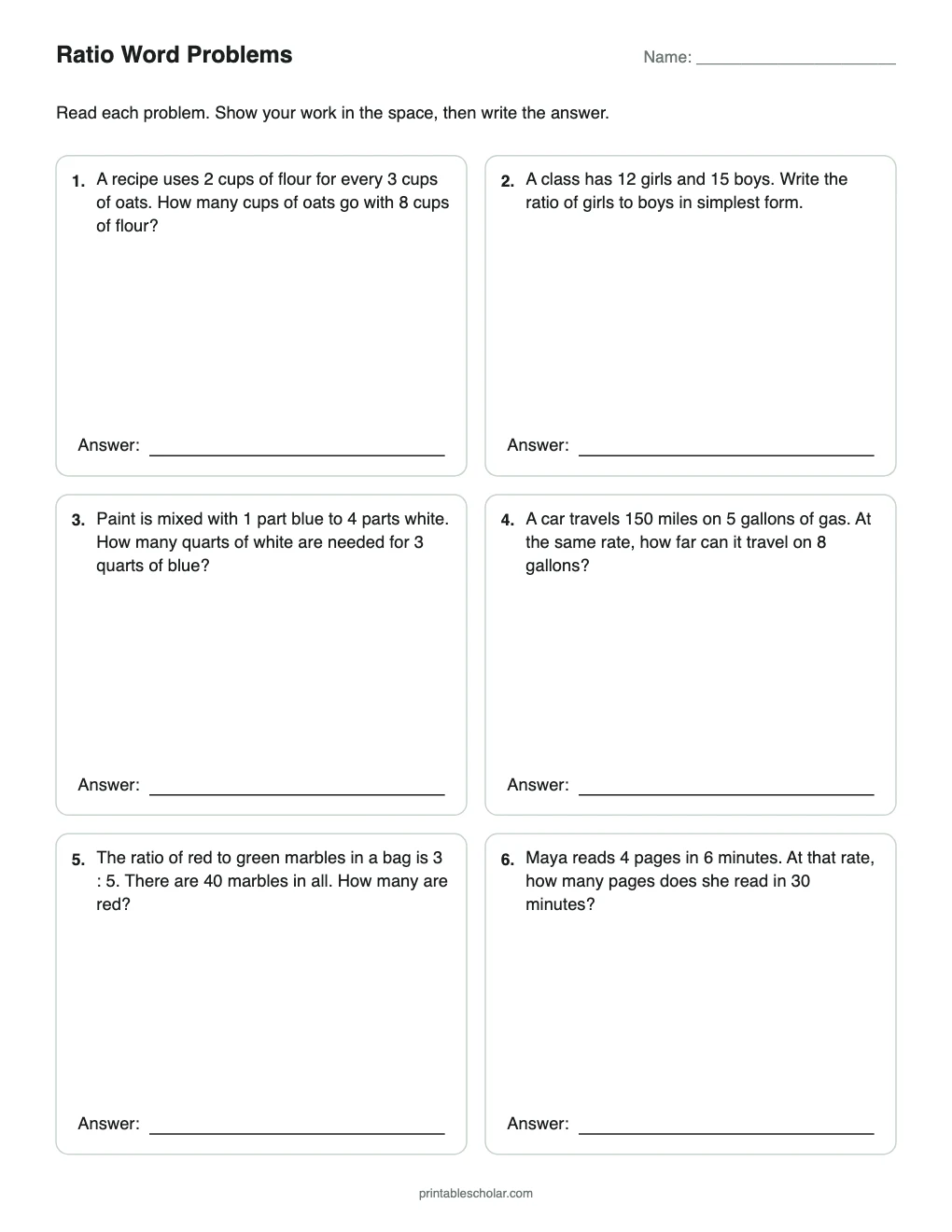
Six problems on recipes, mixtures, rates and parts of a whole. The key shows the working.
Download PDFA ratio compares two amounts: 3 green dots to 2 orange dots is the ratio 3 : 2. The same ratio can be written as "3 to 2" or as the fraction 3/2. Order matters, and the pictures sheet asks for each ratio both ways round, plus a part-to-whole ratio, so that habit forms early.
Equivalent ratios are made by multiplying both numbers by the same amount, just like equivalent fractions. A ratio table lines them up in columns, and it is the tool most 6th grade programs use to solve ratio problems before cross-multiplying is taught.
Simplifying runs the other way: divide both numbers by their greatest common factor. The word problems use both ideas, with recipes, paint mixtures, speed and sharing in a given ratio.
Ratios lead straight into percents, which are ratios out of 100. See the percents worksheets next.
 Printable Scholar