Long division is four steps done in the same order again and again: divide, multiply, subtract, bring down. Children remember the order with "Does McDonald's Sell Burgers?". The steps chart shows them with a worked example and three bookmarks to cut out. The guided grid puts a grey box where every digit goes, so no step gets skipped, and the answer loop checks itself. All three are free here; the pack has five levels, up to 2-digit divisors.
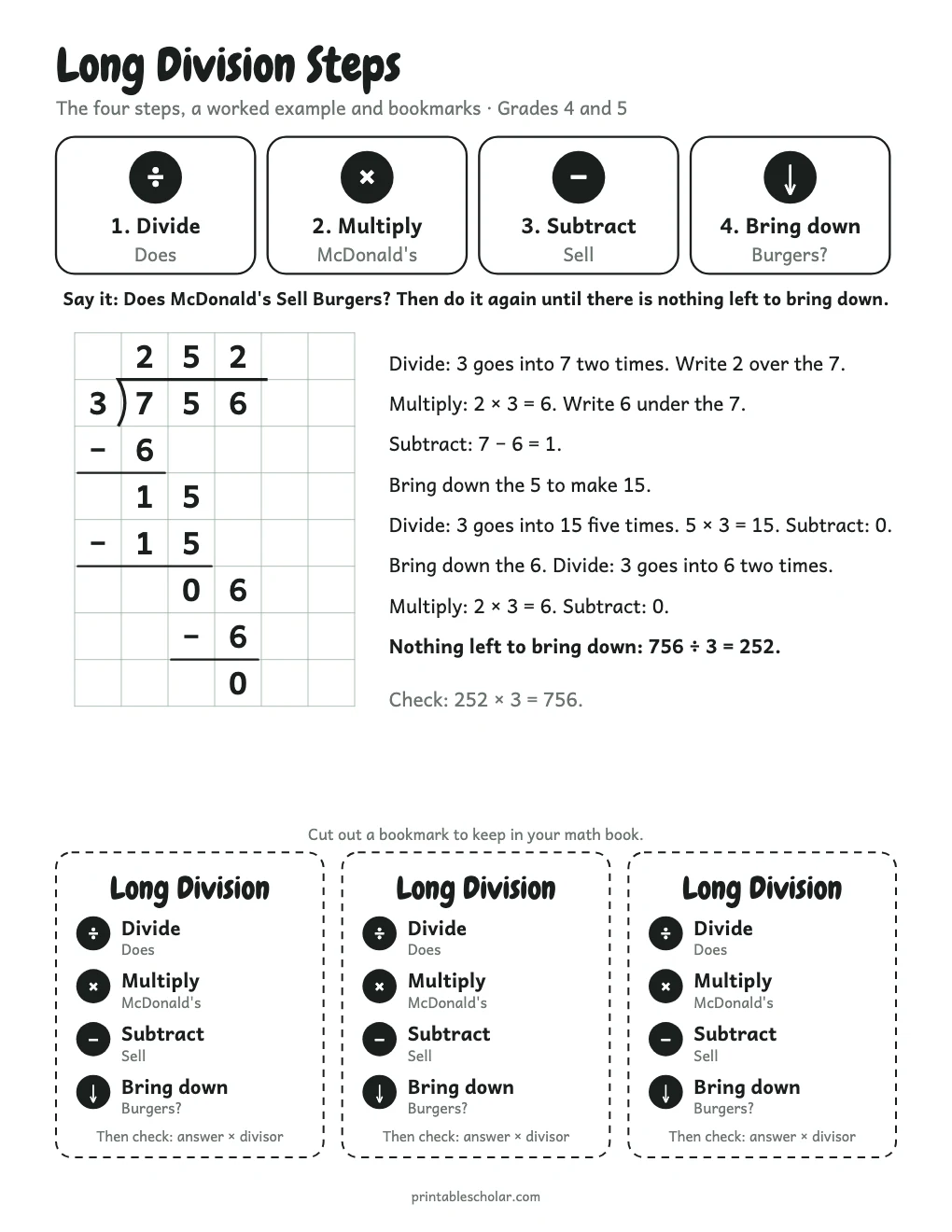
The four steps with the Does McDonald's Sell Burgers? memory trick, 756 ÷ 3 worked step by step, and three bookmarks to cut out.
Download PDF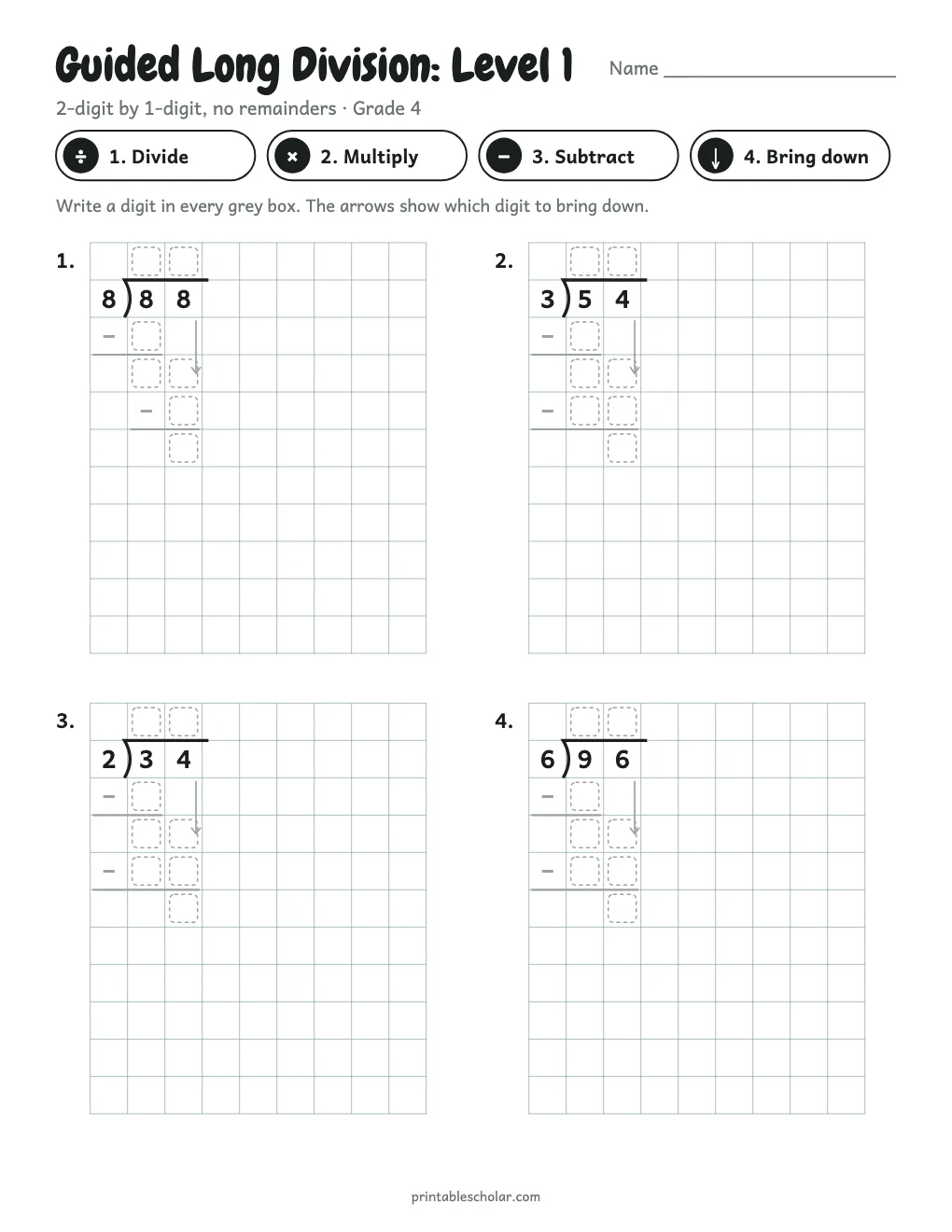
2-digit by 1-digit, no remainders. Grey boxes show where every digit goes, with arrows for each bring down. Every step in the key.
Download PDF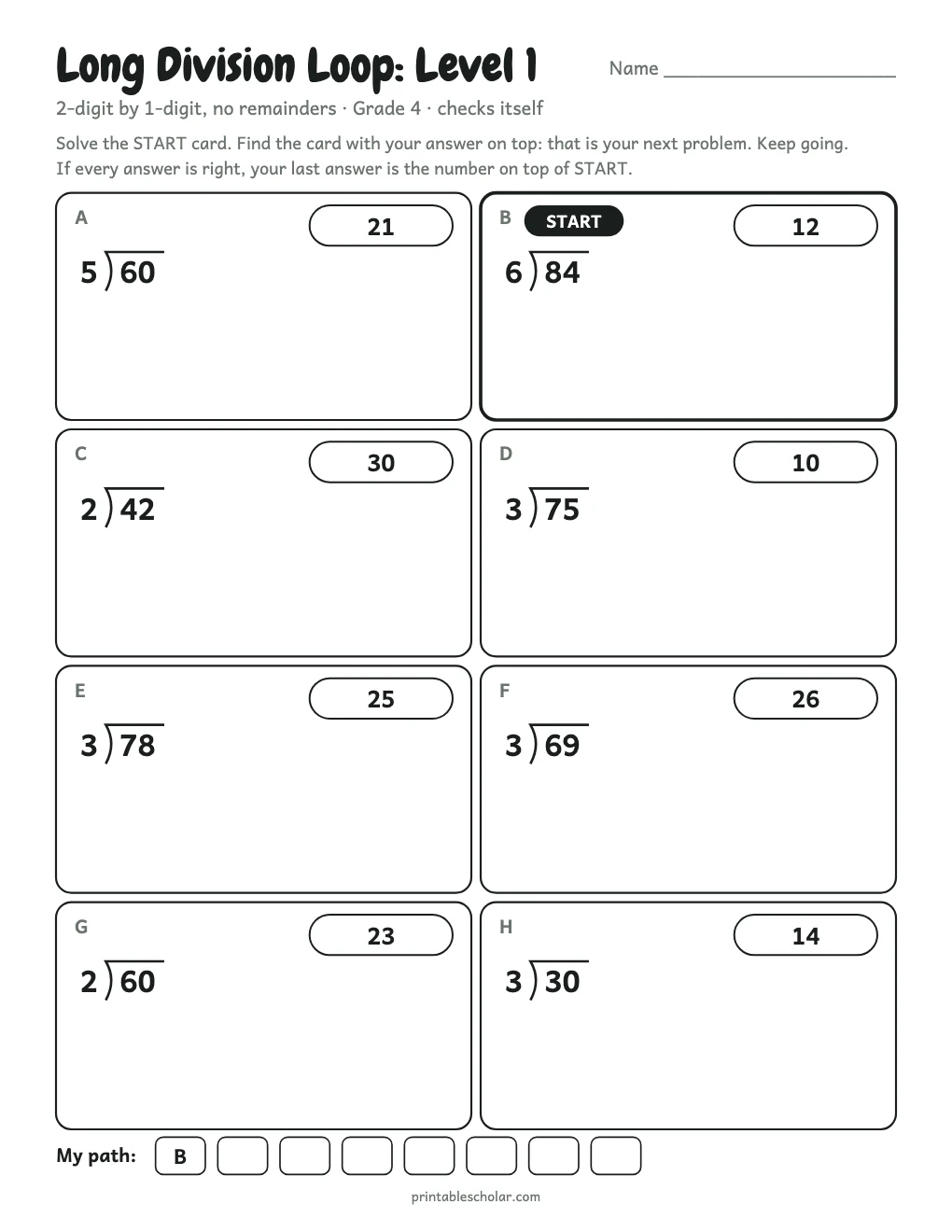
Eight cards, 2-digit by 1-digit, no remainders. Each answer leads to the next card, so the sheet checks itself.
Download PDF
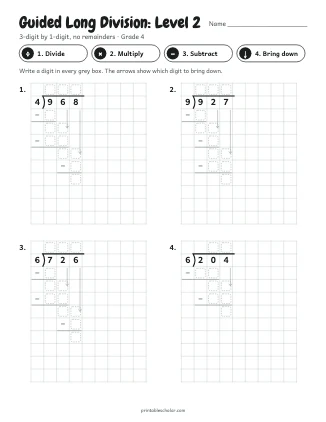
The 3 free sheets above, plus 17 more that are only in the pack, at five levels from 2-digit by 1-digit to 3-digit by 2-digit.
Tap any sheet to see it larger.
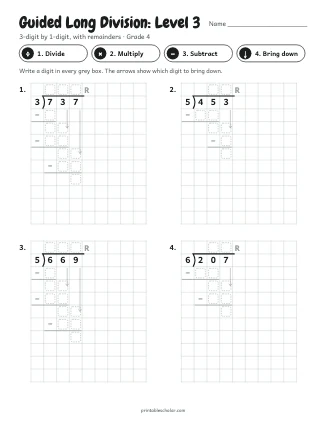
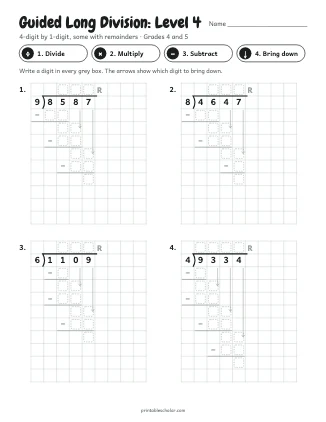
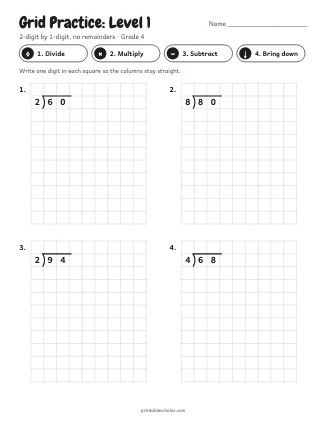
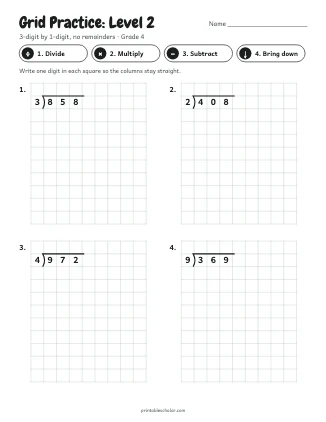
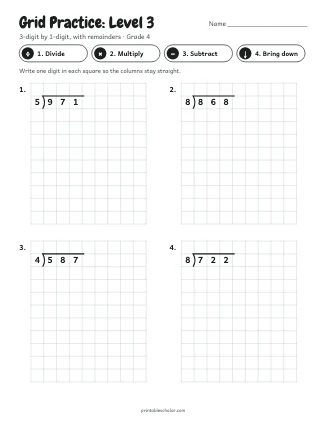
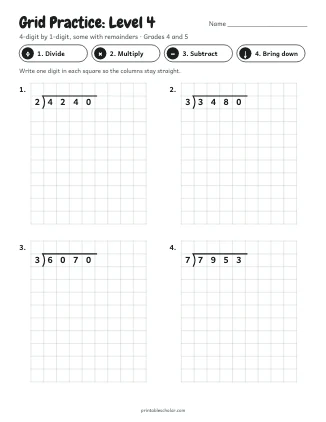
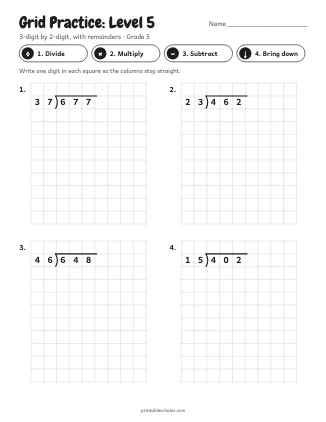
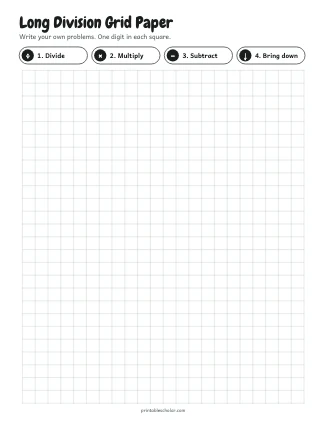
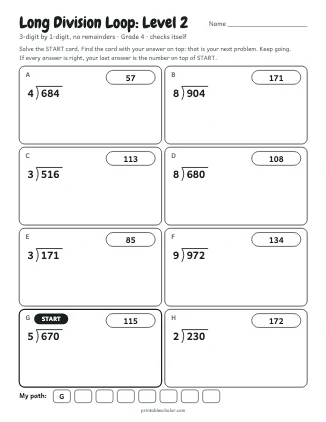
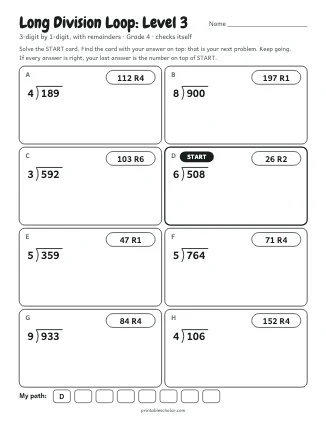
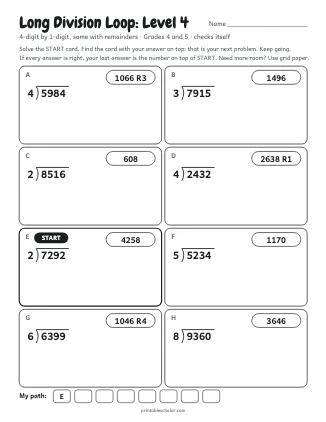
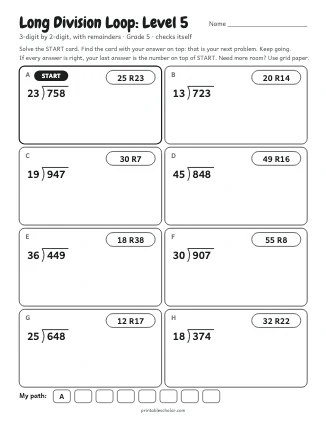
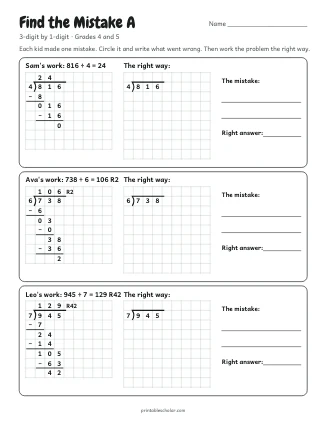
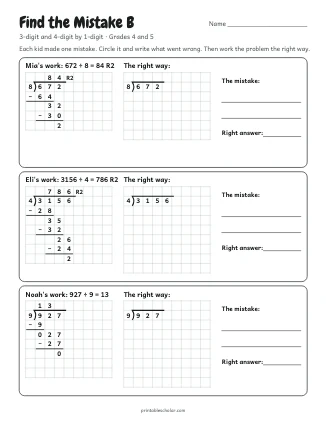
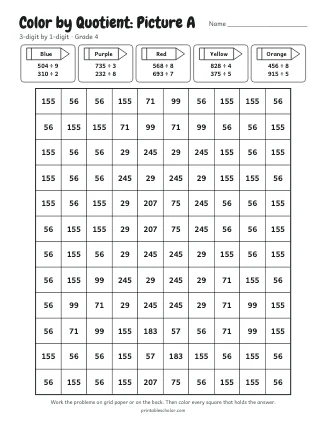
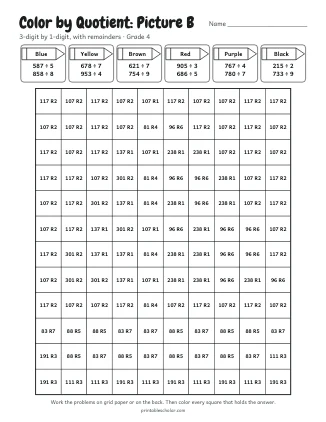
Every long division problem, however long, uses the same four steps in the same order. Divide: how many times does the divisor go into the digits you are working with? Write that digit in the answer. Multiply it by the divisor and write the product underneath. Subtract. Bring down the next digit, and start again. When there is nothing left to bring down, what is left over is the remainder.
Most mistakes come from losing track of a step or a column. Grid paper keeps every digit in its own square, so the columns stay straight, and the guided grids go one better: they show exactly where each digit goes and which digit comes down next. The two slips to watch for are forgetting a 0 in the answer (816 ÷ 4 is 204, not 24) and leaving a remainder bigger than the divisor.
An answer loop is a set of cards where each answer leads to the next card. A child who gets every answer right ends up back at the START card, so the sheet checks itself without an answer key.
For more practice, the long division worksheets have a full lesson and five sets of problems with answer keys. For the facts behind long division, see the division worksheets and the multiplication chart.
 Printable Scholar