Division practice for 3rd and 4th grade, in the order it is taught: what division means, equal groups, three sets of division facts, a mixed 60-fact sheet, remainders, what a remainder means in a story, and story problems. Every practice sheet has its answer key on the second page.
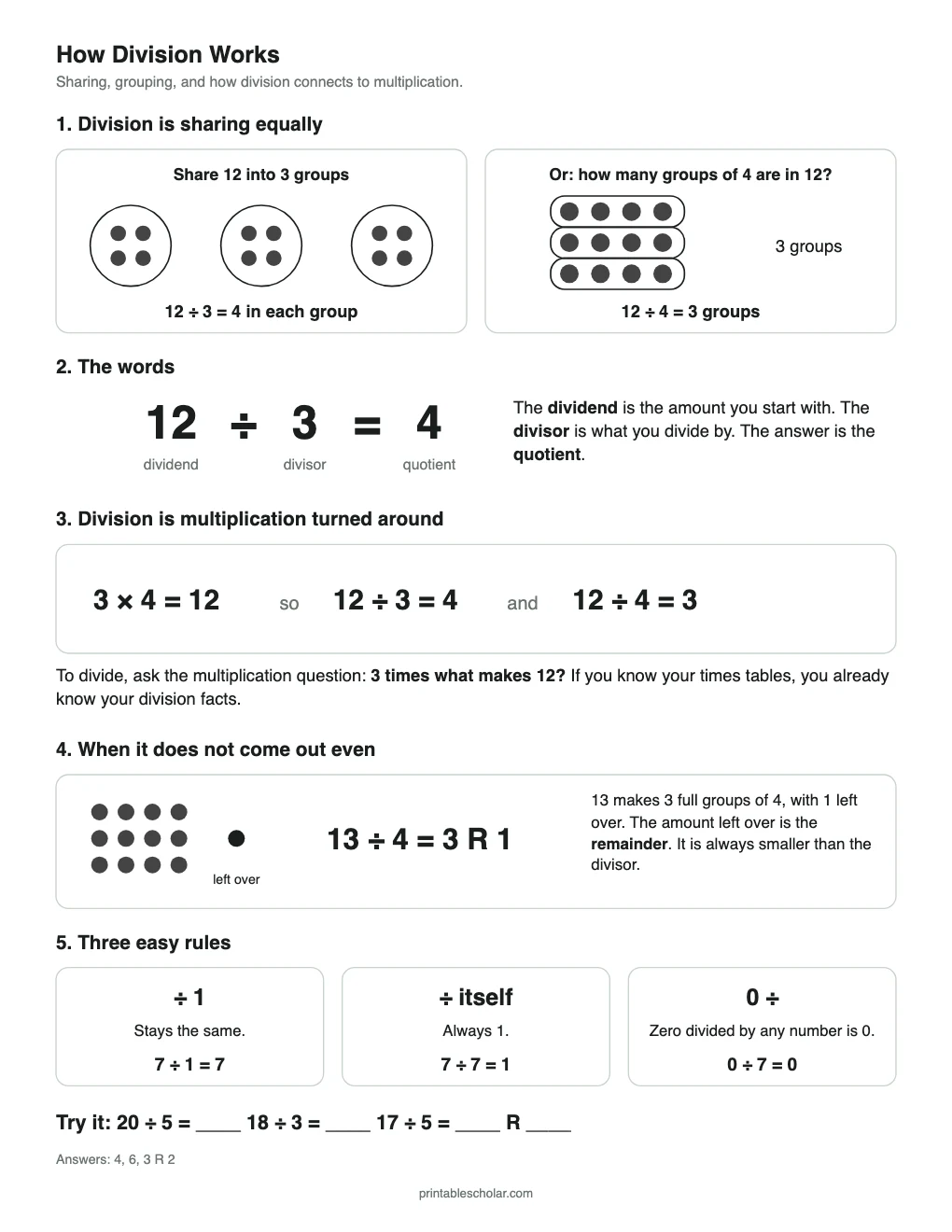
Sharing and grouping shown with dots, the link to multiplication, remainders and three easy rules.
Download PDF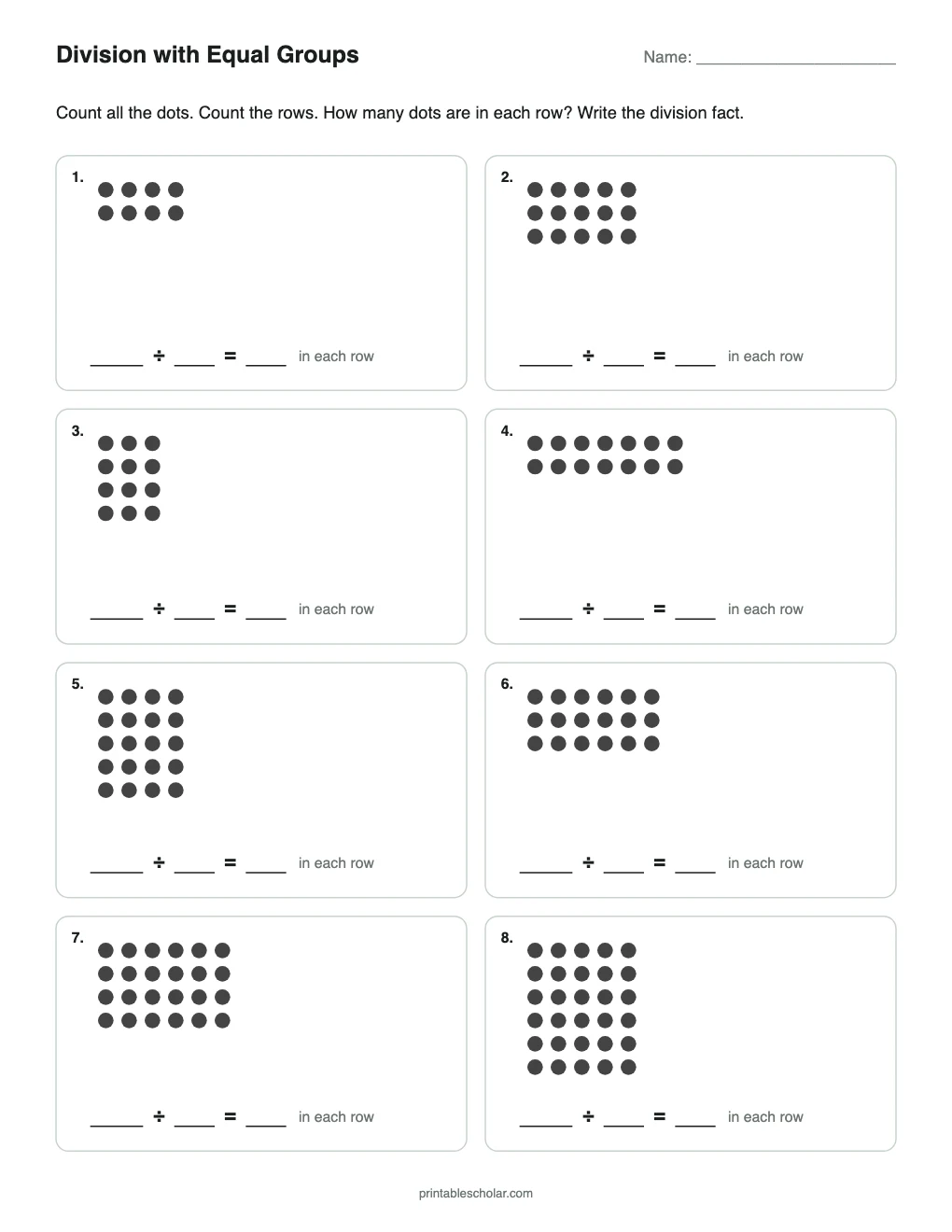
Eight dot arrays. Write the division fact for each. Includes answer key.
Download PDF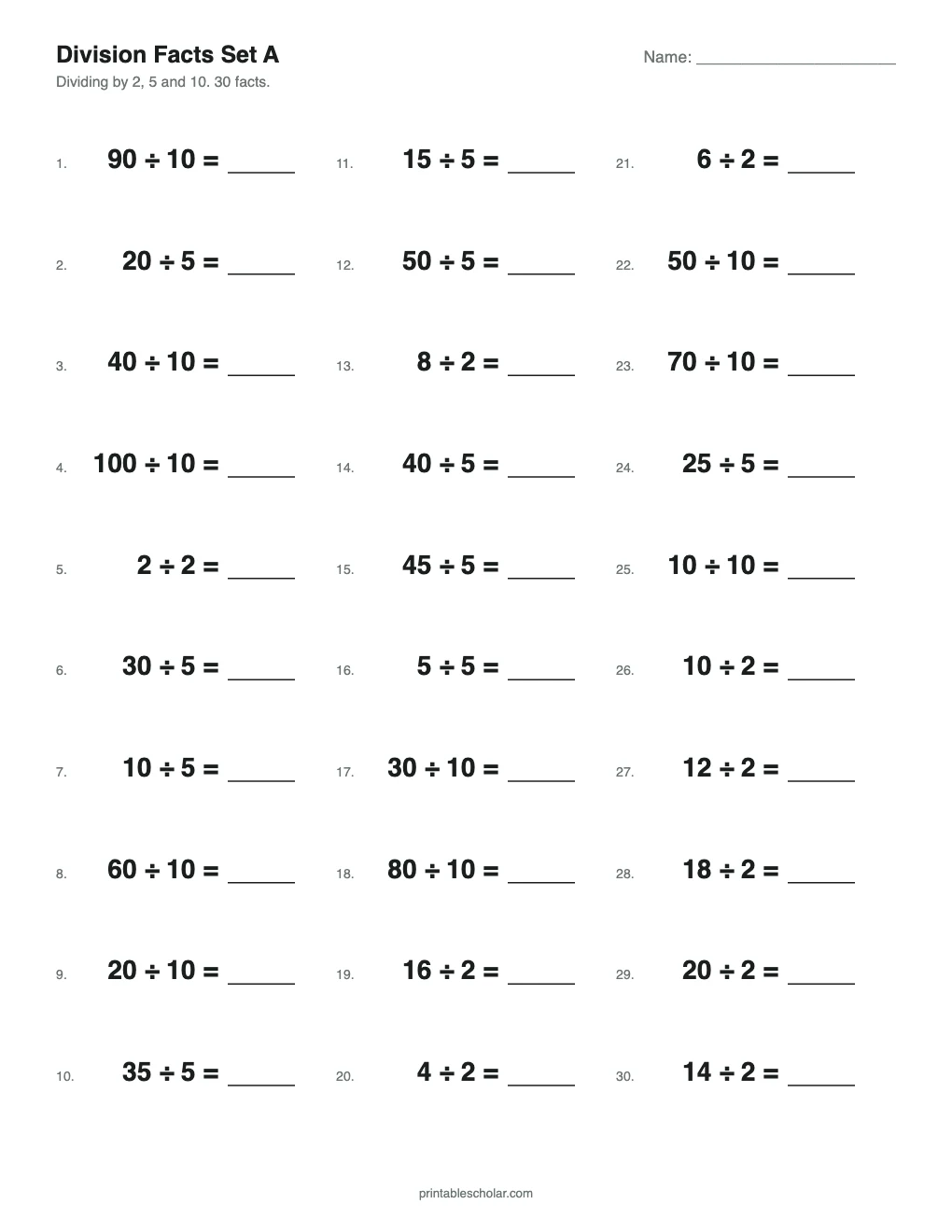
Thirty facts dividing by 2, 5 and 10. Includes answer key.
Download PDF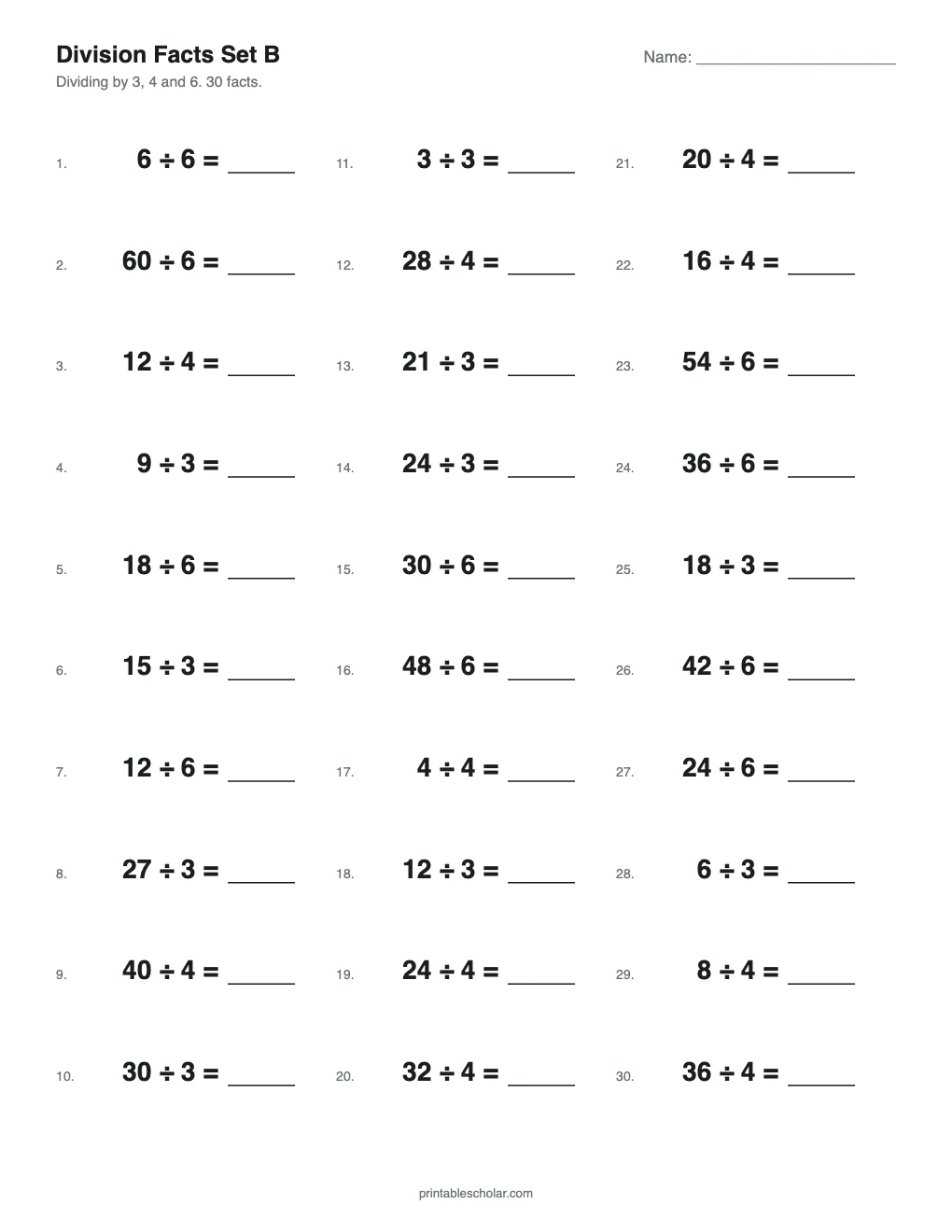
Thirty facts dividing by 3, 4 and 6. Includes answer key.
Download PDF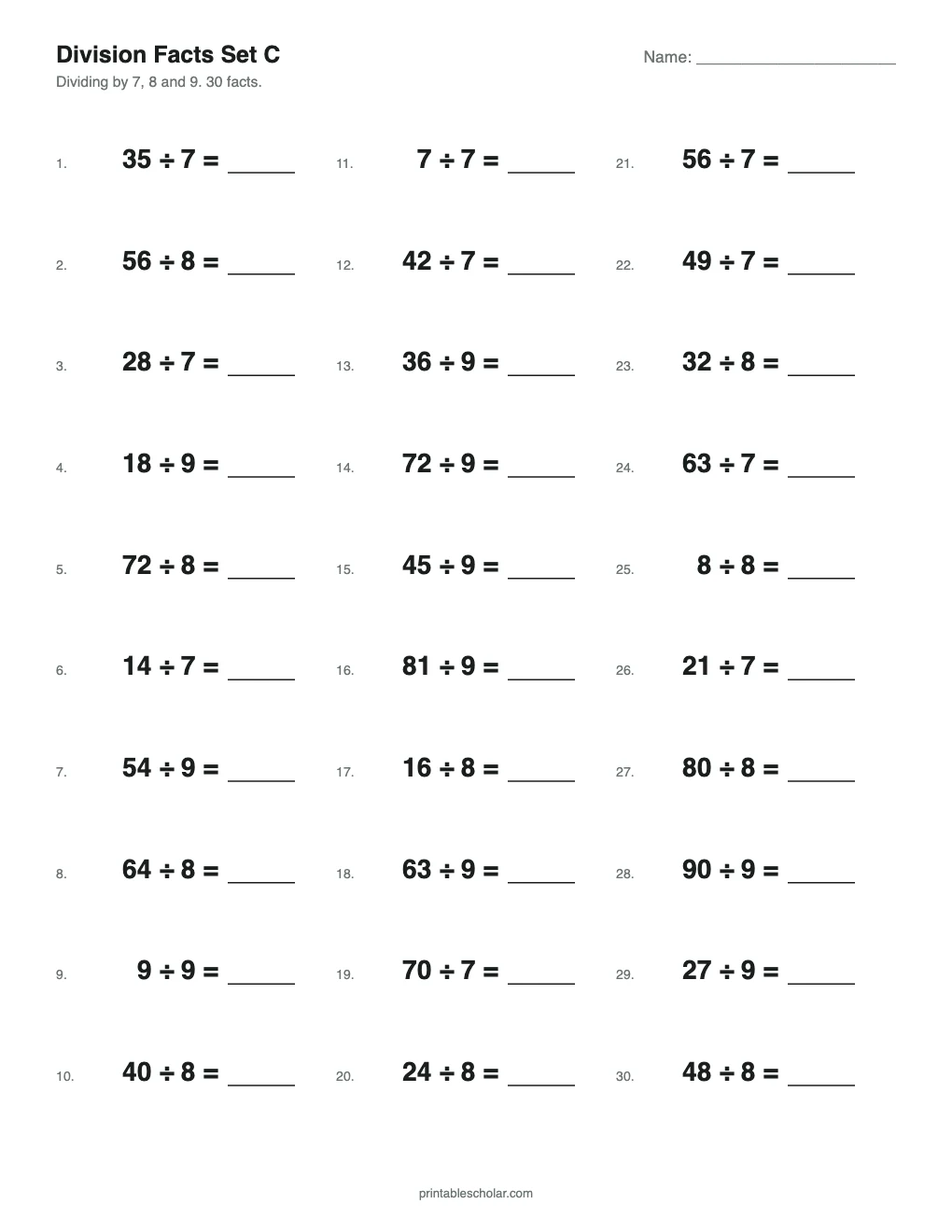
Thirty facts dividing by 7, 8 and 9. Includes answer key.
Download PDF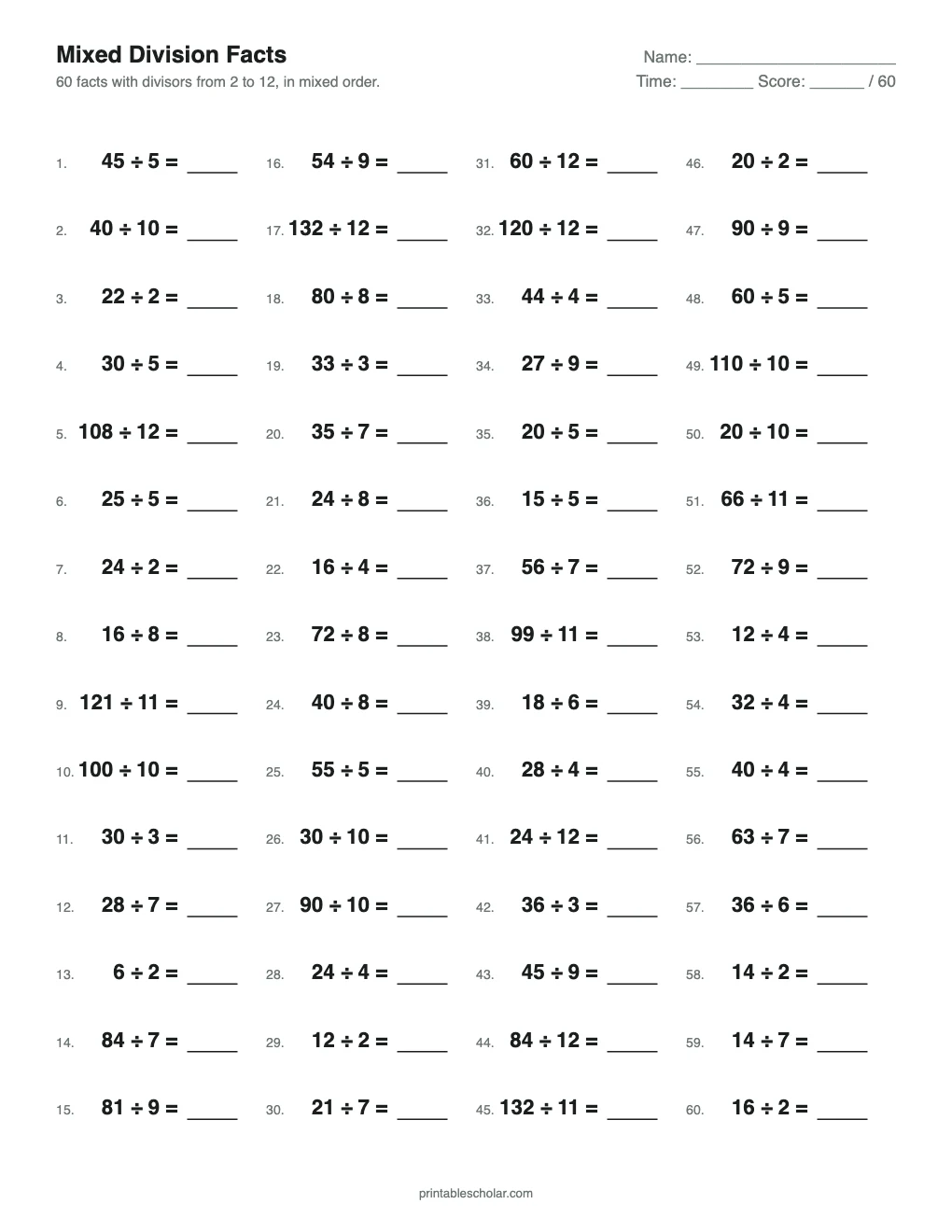
Sixty mixed facts with a place for the time and score. Includes answer key.
Download PDF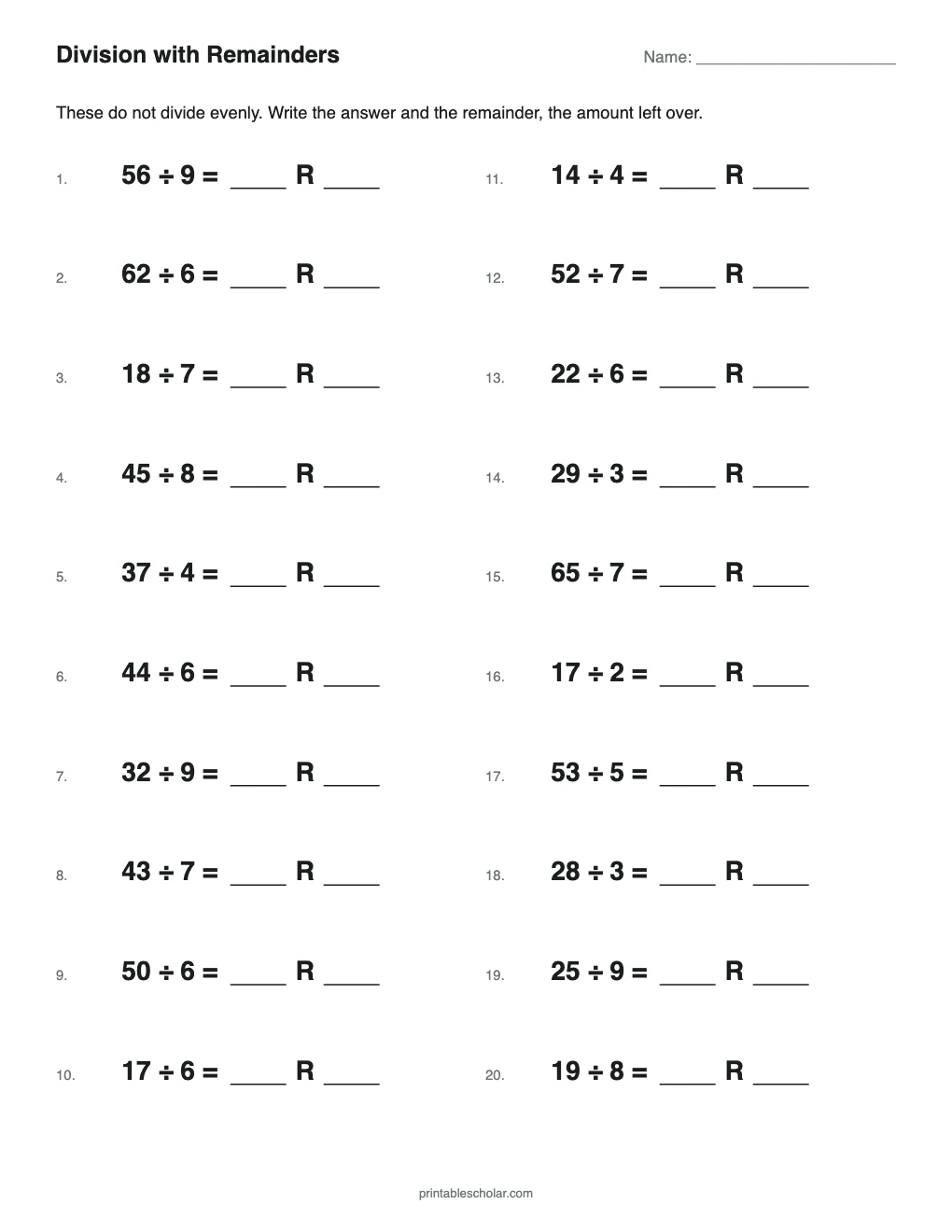
Twenty problems that do not divide evenly. Write the answer and the remainder. Includes answer key.
Download PDF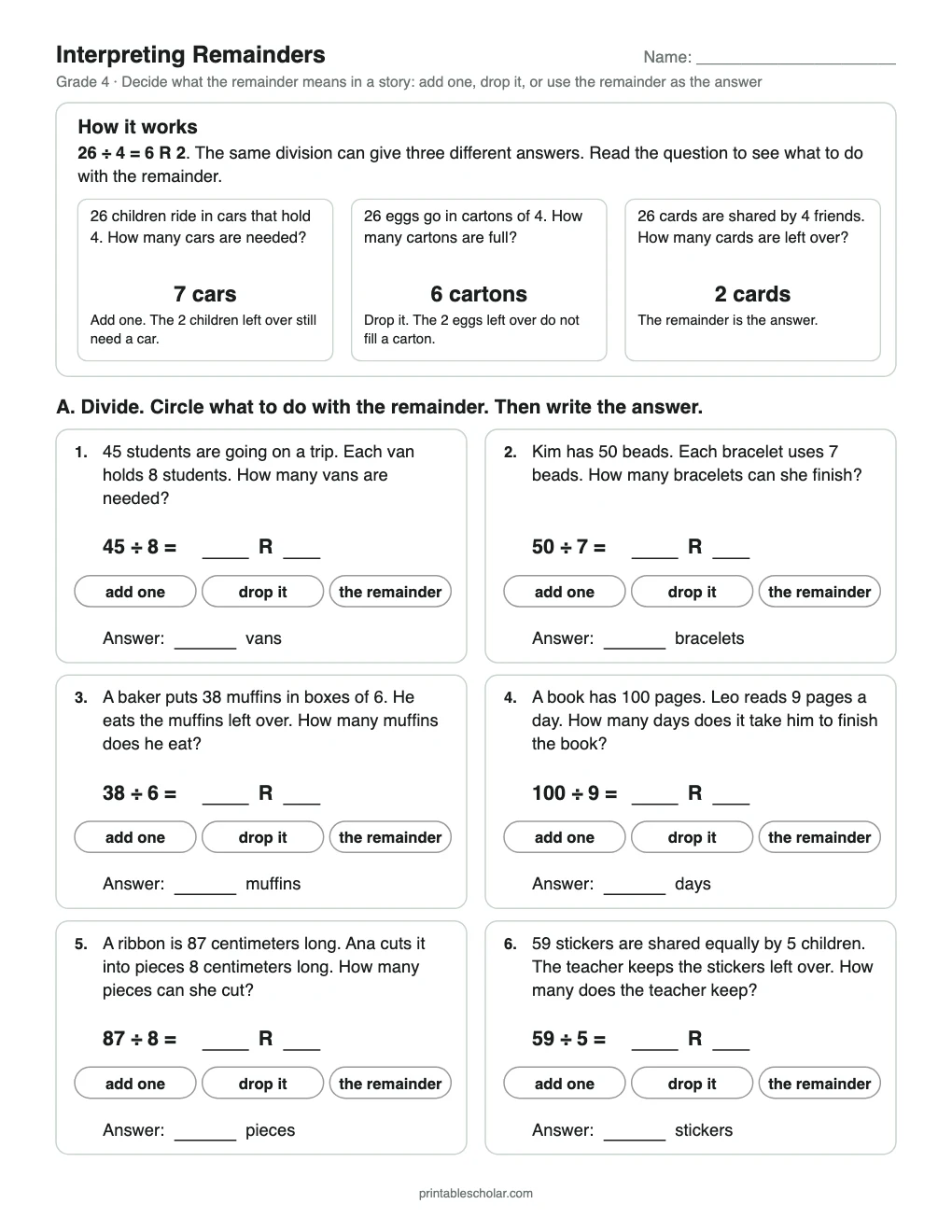
How 26 ÷ 4 = 6 R 2 can mean 7, 6 or 2, then six stories: divide, circle add one, drop it or the remainder, and answer. Includes answer key.
Download PDF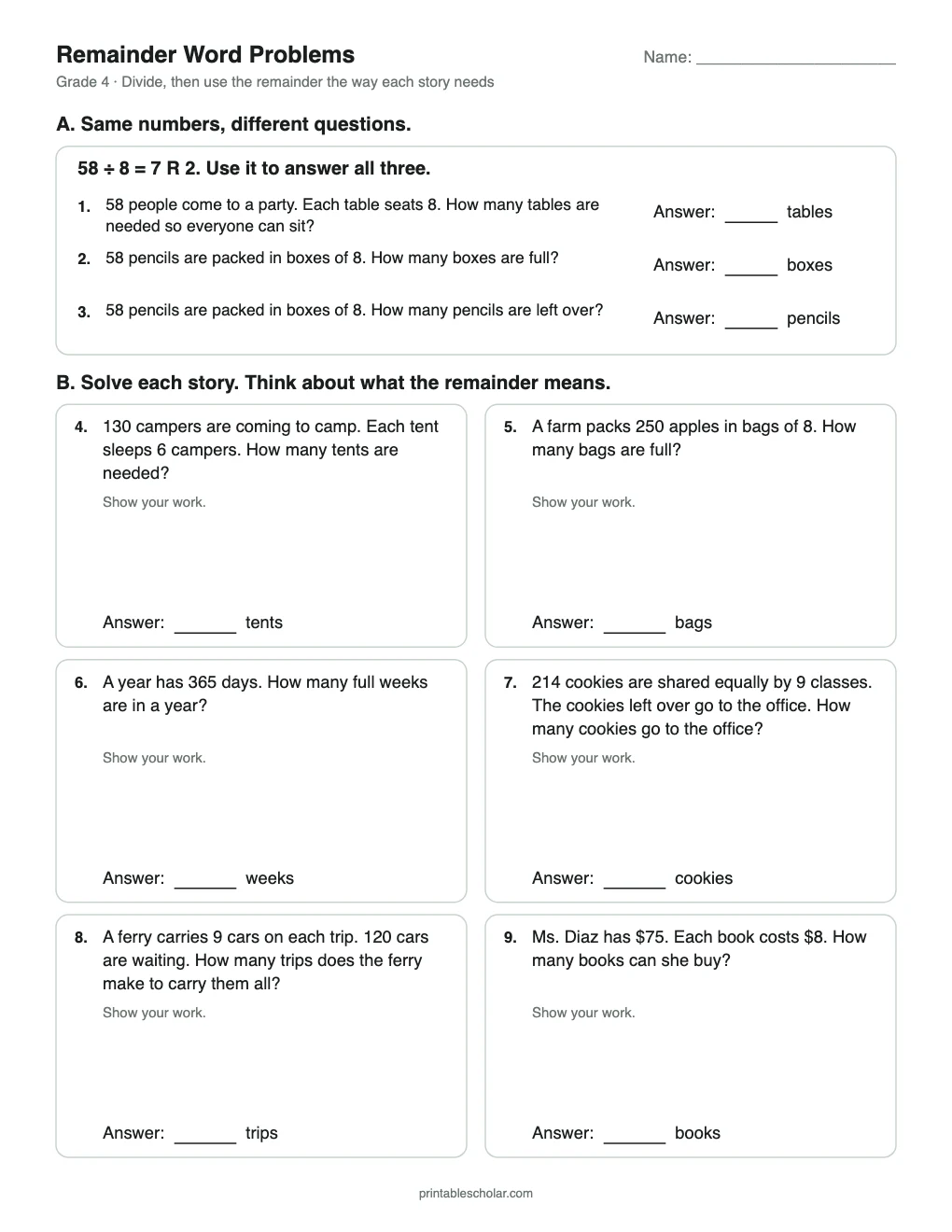
Three questions on the same division, then six stories with 2- and 3-digit numbers where the remainder decides the answer. The key shows each division.
Download PDF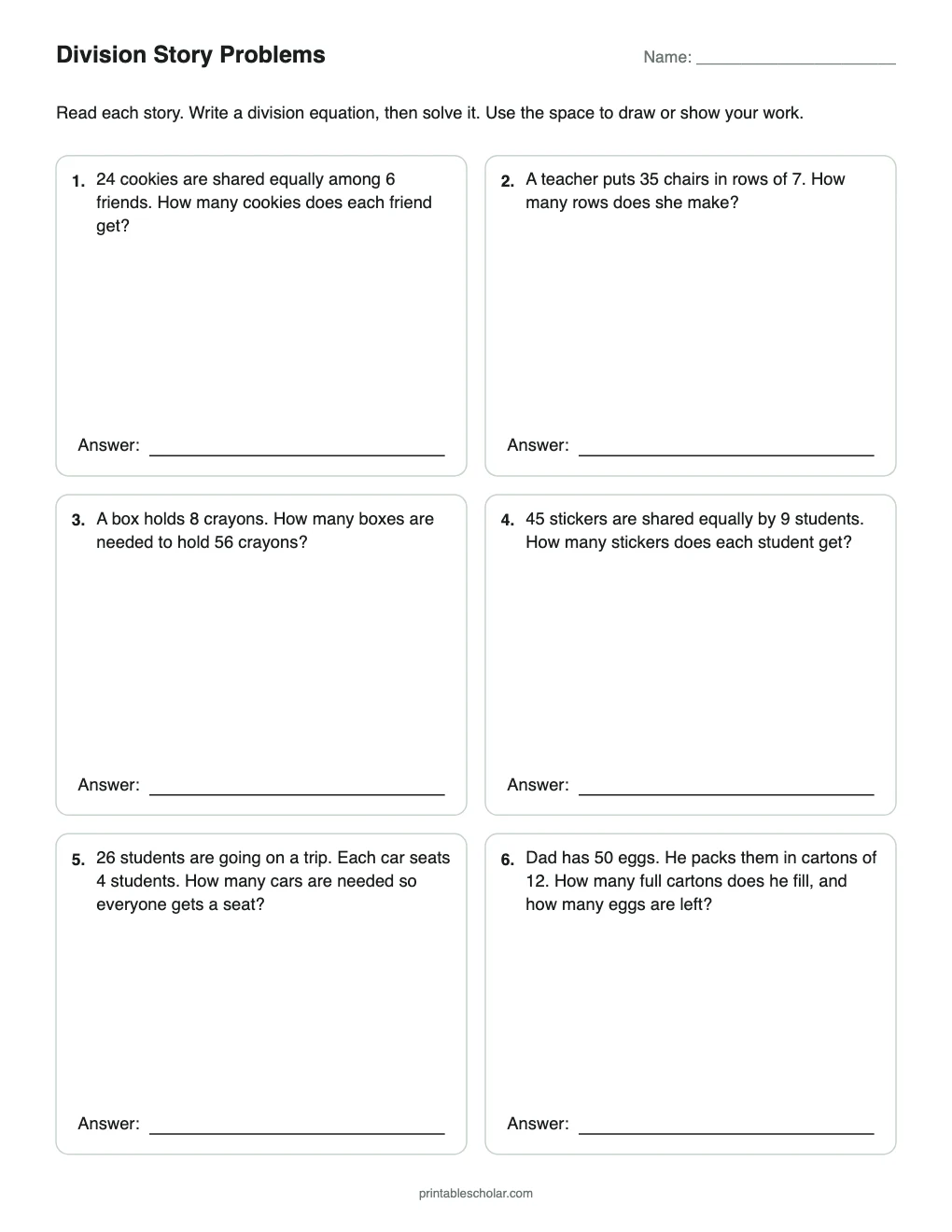
Six word problems on sharing and grouping, two with a remainder to interpret. The key shows each equation.
Download PDFDivision answers two kinds of question. Sharing: 12 cookies among 3 friends, how many each? Grouping: 12 cookies in bags of 4, how many bags? The lesson sheet shows both with the same 12 dots, and the equal groups sheet has students write the fact for a picture.
Division facts are multiplication facts turned around, so the three fact sets are grouped the same way as on the multiplication worksheets: 2s, 5s and 10s first, then 3s, 4s and 6s, then 7s, 8s and 9s. The sets are fixed, so a student can repeat a sheet and see the time come down.
The remainders sheet uses the form 17 ÷ 5 = 3 R 2. Two of the story problems then ask what the remainder means: 26 students in cars of 4 need 7 cars, not 6.
Deciding what a remainder means has two sheets of its own. Interpreting Remainders starts from one division, 26 ÷ 4 = 6 R 2, and three questions with three different answers: 7 cars are needed, 6 cartons are full, 2 cards are left over. In each story students divide, circle whether to add one, drop the remainder or use it as the answer, then write the answer with its unit. Remainder Word Problems asks three questions about the same numbers, then gives six stories with 2- and 3-digit numbers to work out on their own.
When students are ready for larger numbers, go on to the long division worksheets, which start with a lesson on the steps.
 Printable Scholar