Long division from the first lesson to 2-digit divisors. A one-page explanation shows the four steps one at a time, and two practice sheets ease students into doing them alone. Five practice sets follow, going up one step at a time. Each problem sits on a grid that keeps the digits in their columns, and each answer key shows every line of the work.
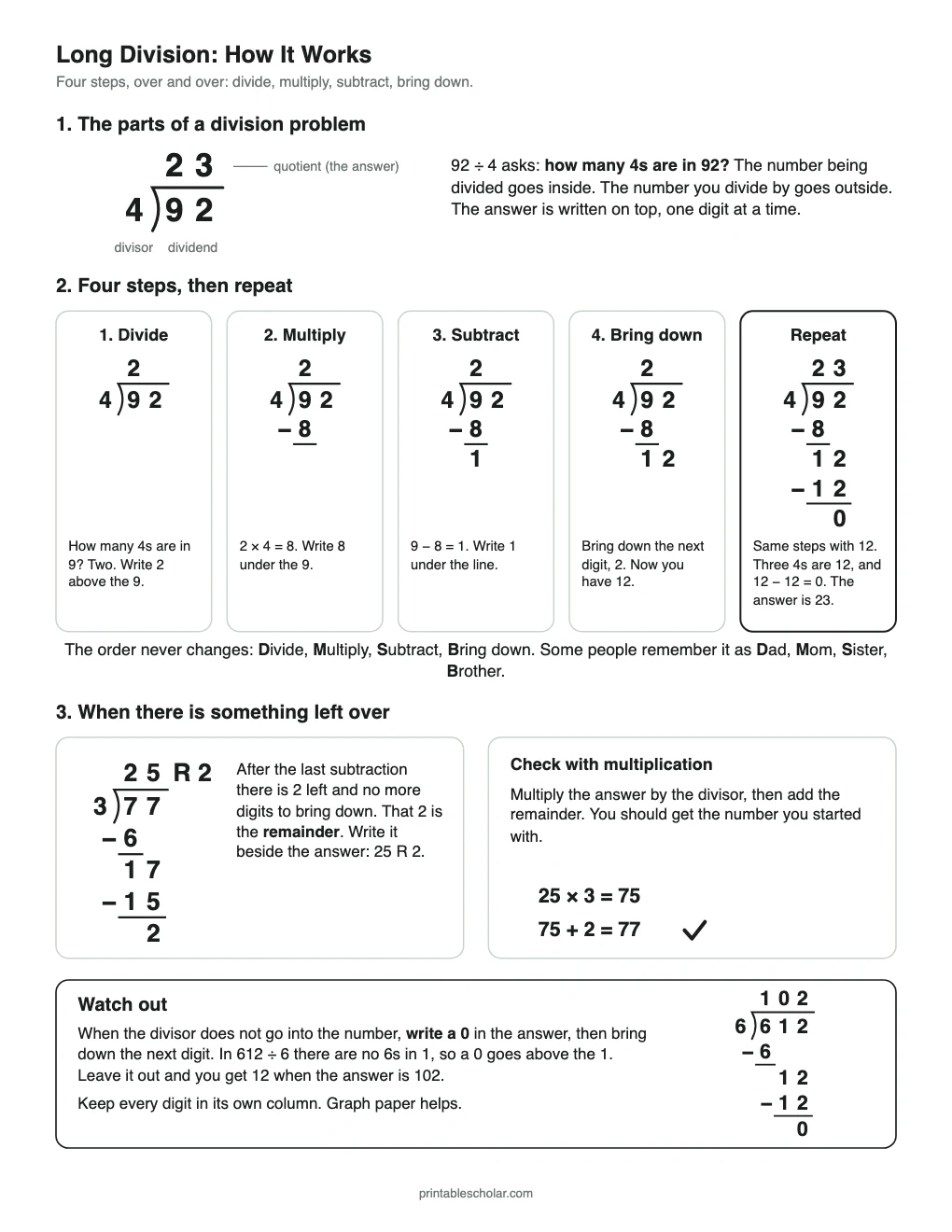
Divide, multiply, subtract, bring down: each step shown on the same problem. Plus remainders and how to check.
Download PDF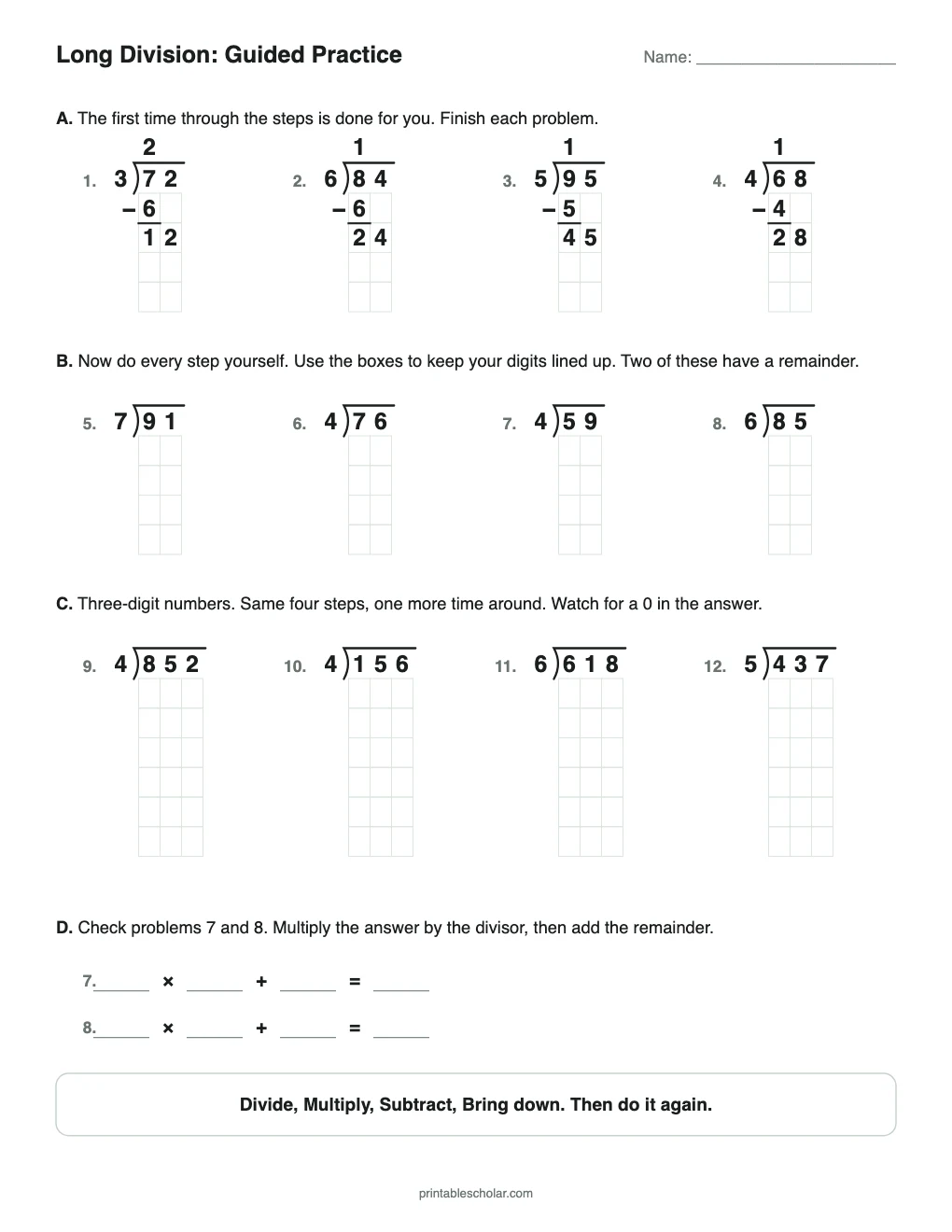
Twelve problems on a grid. The first four have the first round of steps done already. Includes answer key.
Download PDF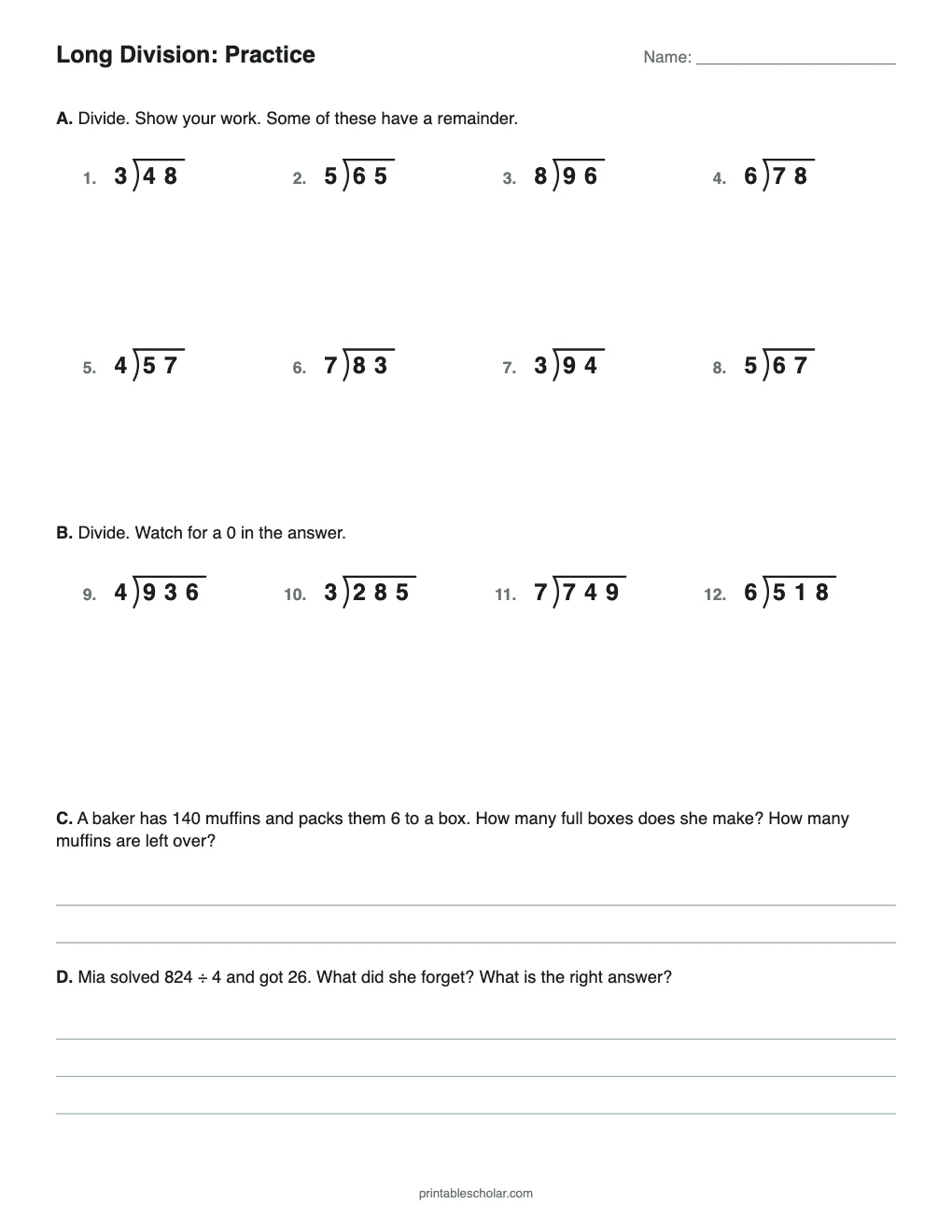
Twelve problems, a word problem with a remainder, and one mistake to explain. The key shows every line of work.
Download PDF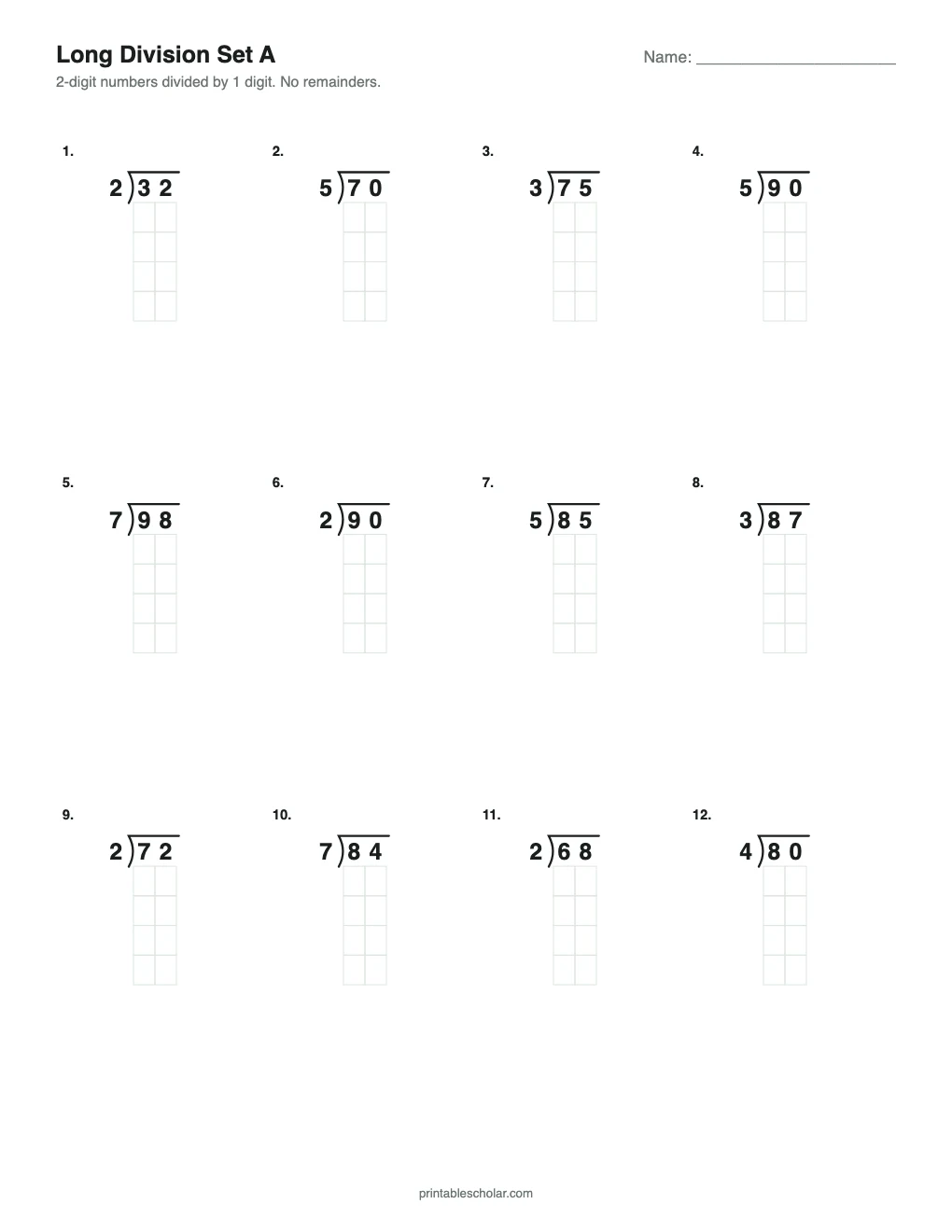
Twelve problems that come out even. The key shows every step.
Download PDF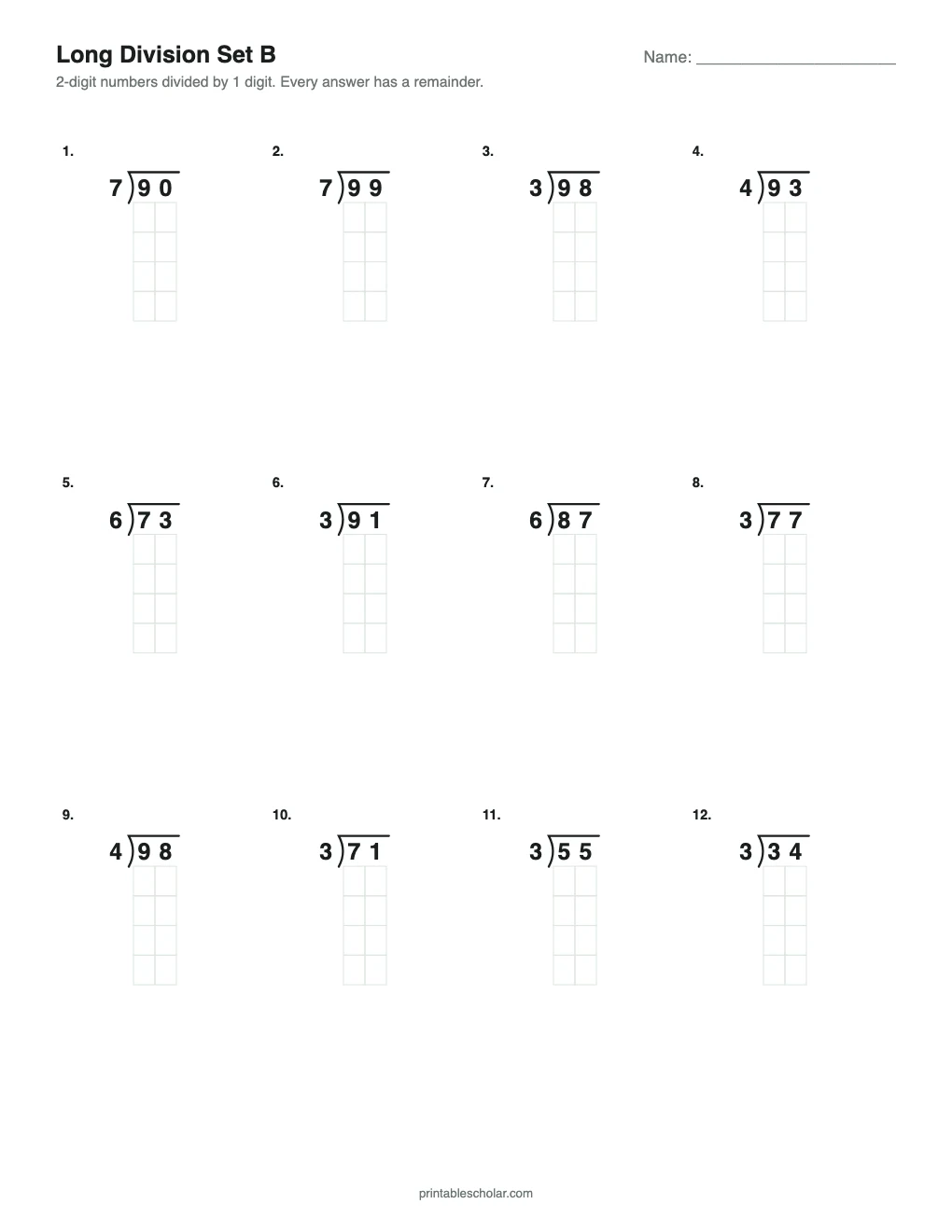
Twelve problems, each with a remainder. The key shows every step.
Download PDF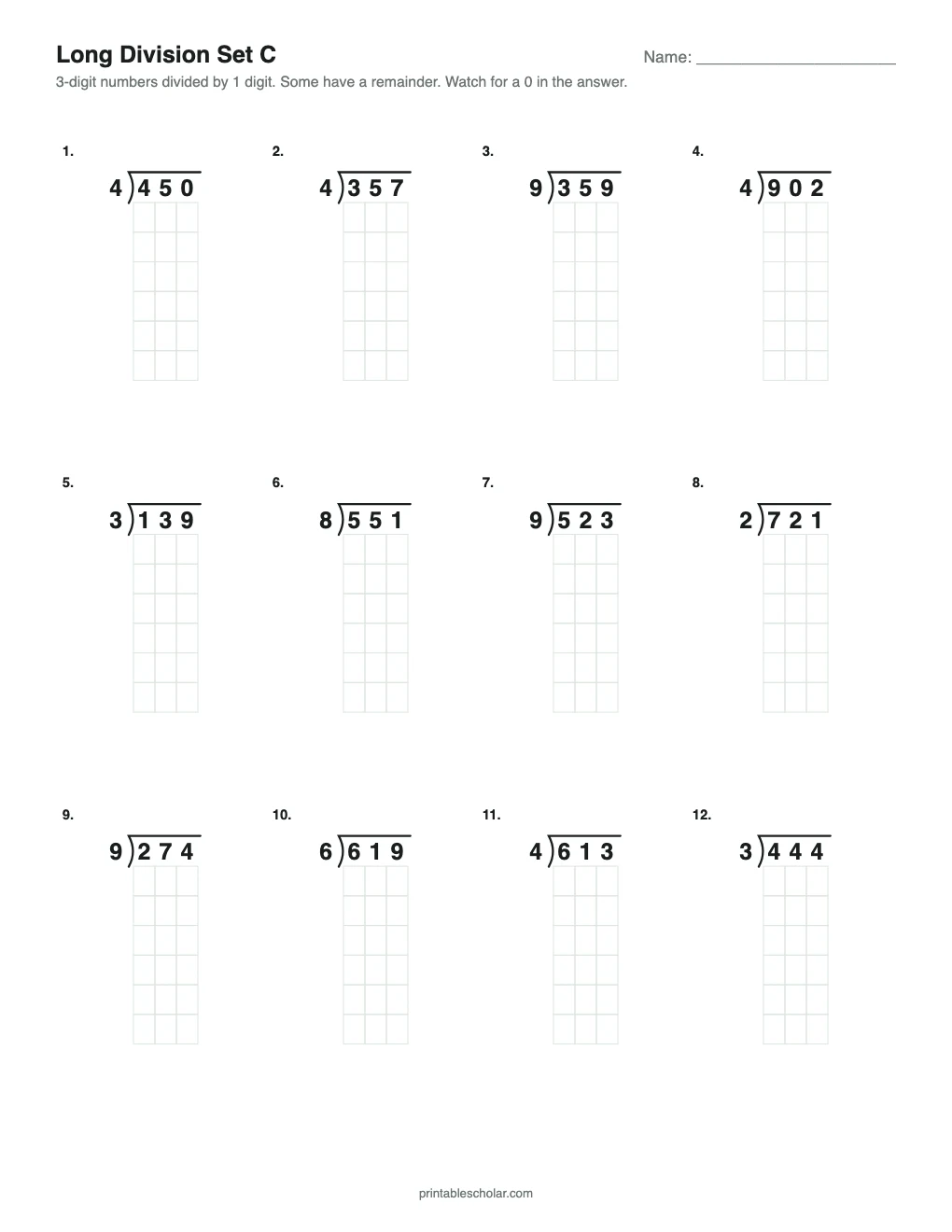
Twelve problems, some with a remainder or a zero in the answer. The key shows every step.
Download PDF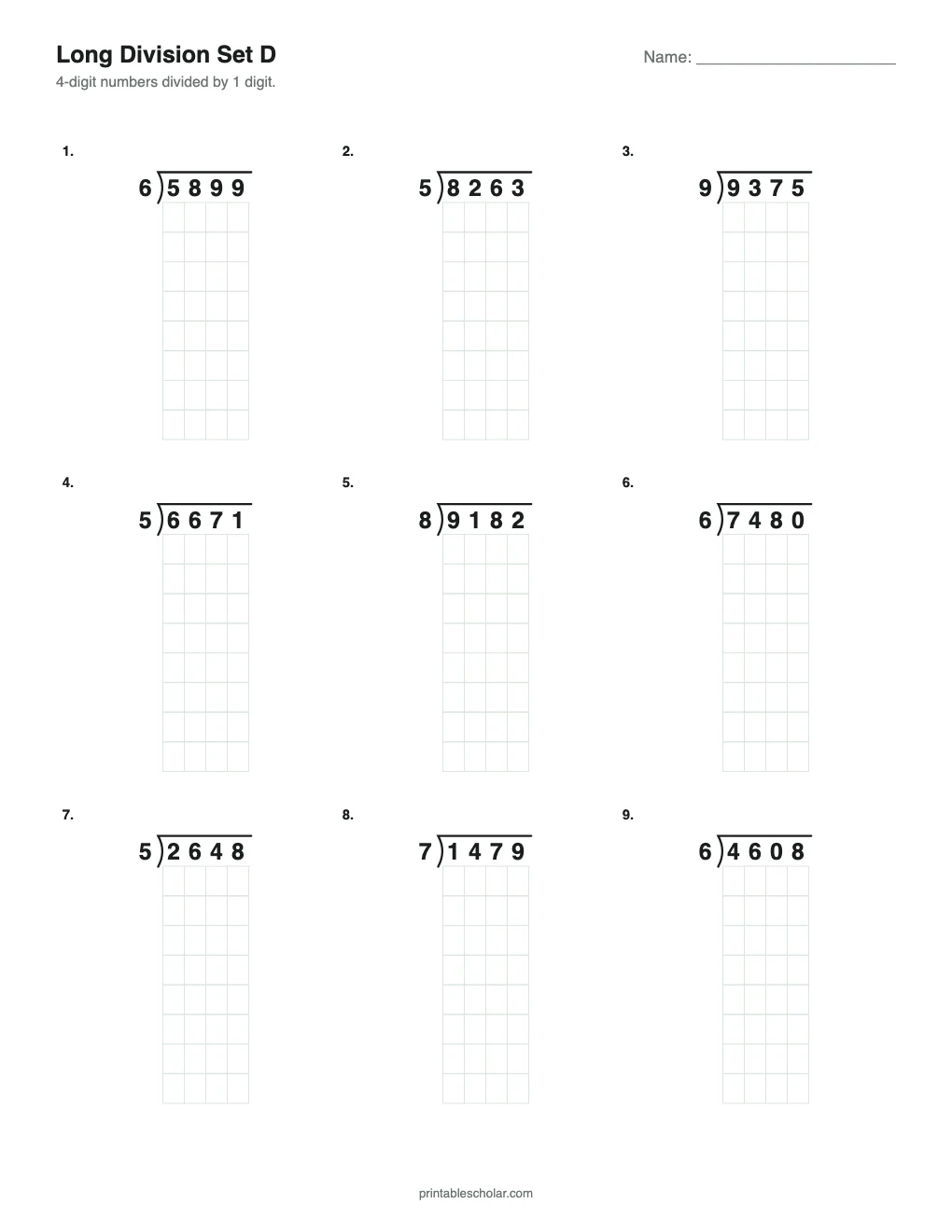
Nine longer problems with room to work. The key shows every step.
Download PDF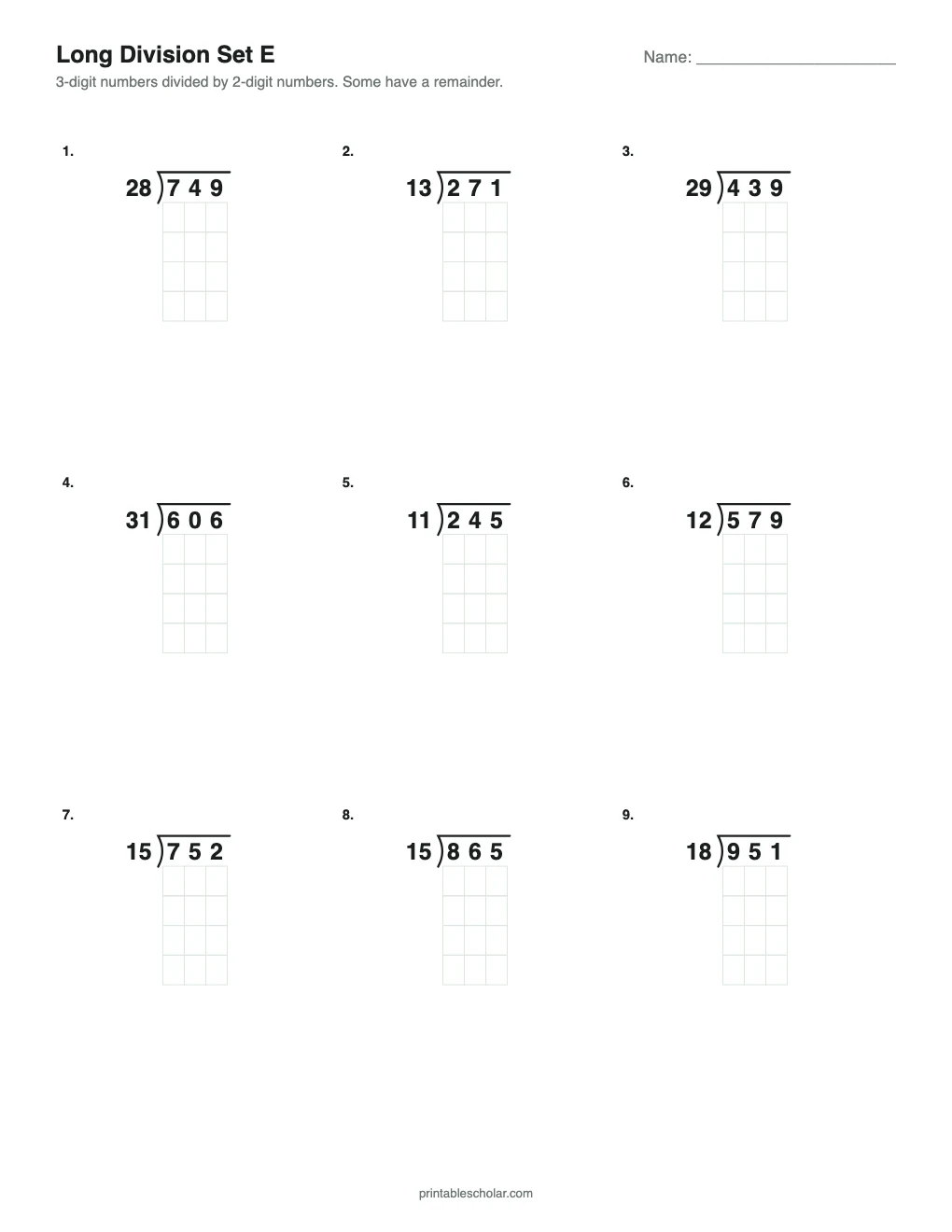
Nine problems dividing 3-digit numbers by 2-digit numbers. The key shows every step.
Download PDFLong division is four small steps done in the same order again and again: divide, multiply, subtract, bring down. The How It Works sheet shows one problem, 92 ÷ 4, five times. Each picture adds only the next thing to write, in a different color. The rest of the sheet covers remainders, checking an answer by multiplying back, and the zero that has to be written when the divisor does not go into the number.
The guided practice sheet starts the first four problems for the student and prints faint boxes under every problem. The independent practice sheet removes the boxes and adds a word problem and a mistake to explain. After those three sheets, the lettered sets give more practice at each level.
The sets change one thing at a time. Set A has no remainders. Set B has a remainder in every problem. Set C moves to 3-digit numbers, where the steps repeat a third time and a zero can appear in the answer. Set D is 4-digit numbers, and Set E introduces 2-digit divisors.
Each problem is printed on a light grid, one box per digit. Most long division mistakes are not arithmetic mistakes: they come from a digit written in the wrong column. The grid fixes that without doing any of the thinking for the student.
The answer keys print the whole problem worked out, with every product, subtraction and brought-down digit, so a student can compare line by line and find the step that went wrong. For the facts behind it, see the division worksheets.
 Printable Scholar