About the Dividing Fractions Worksheets
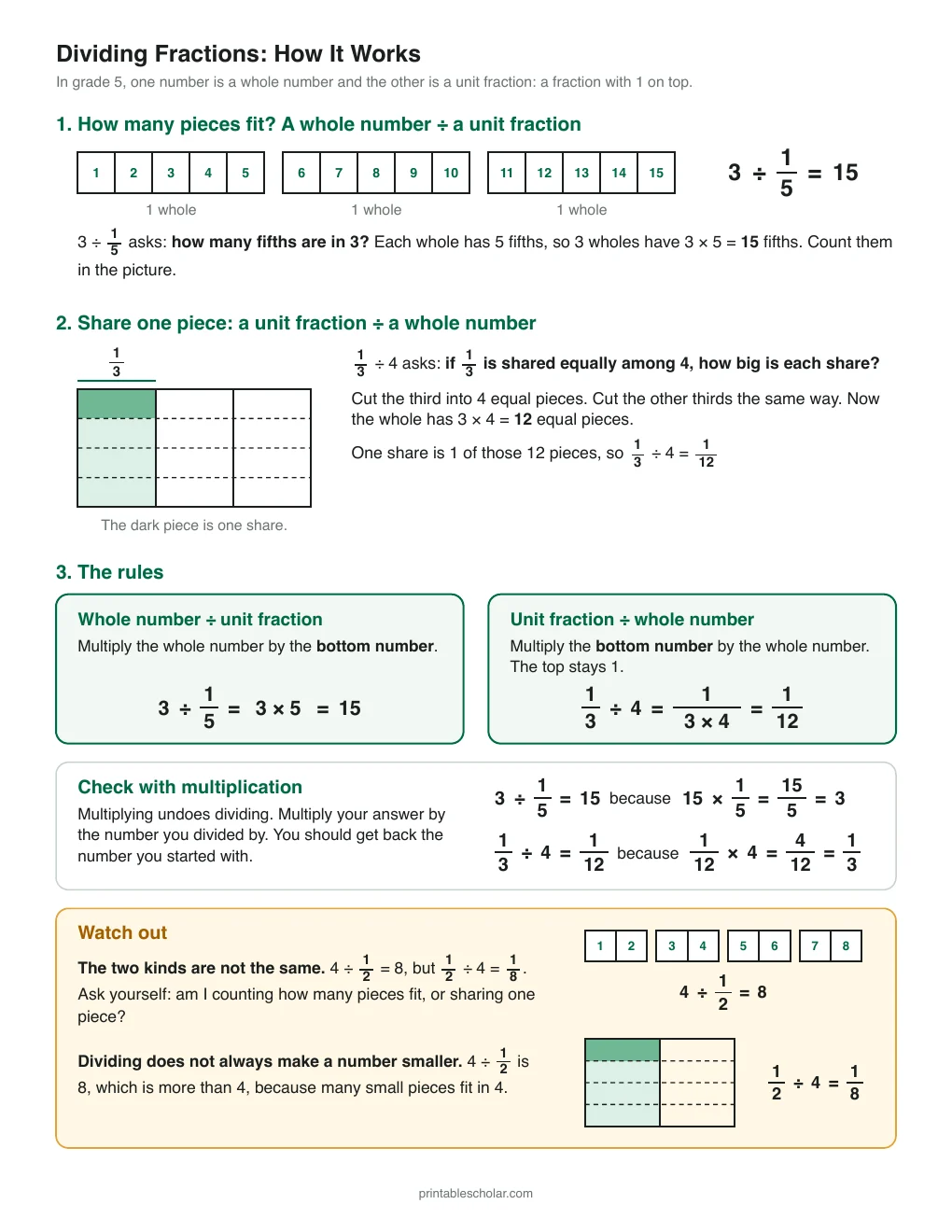
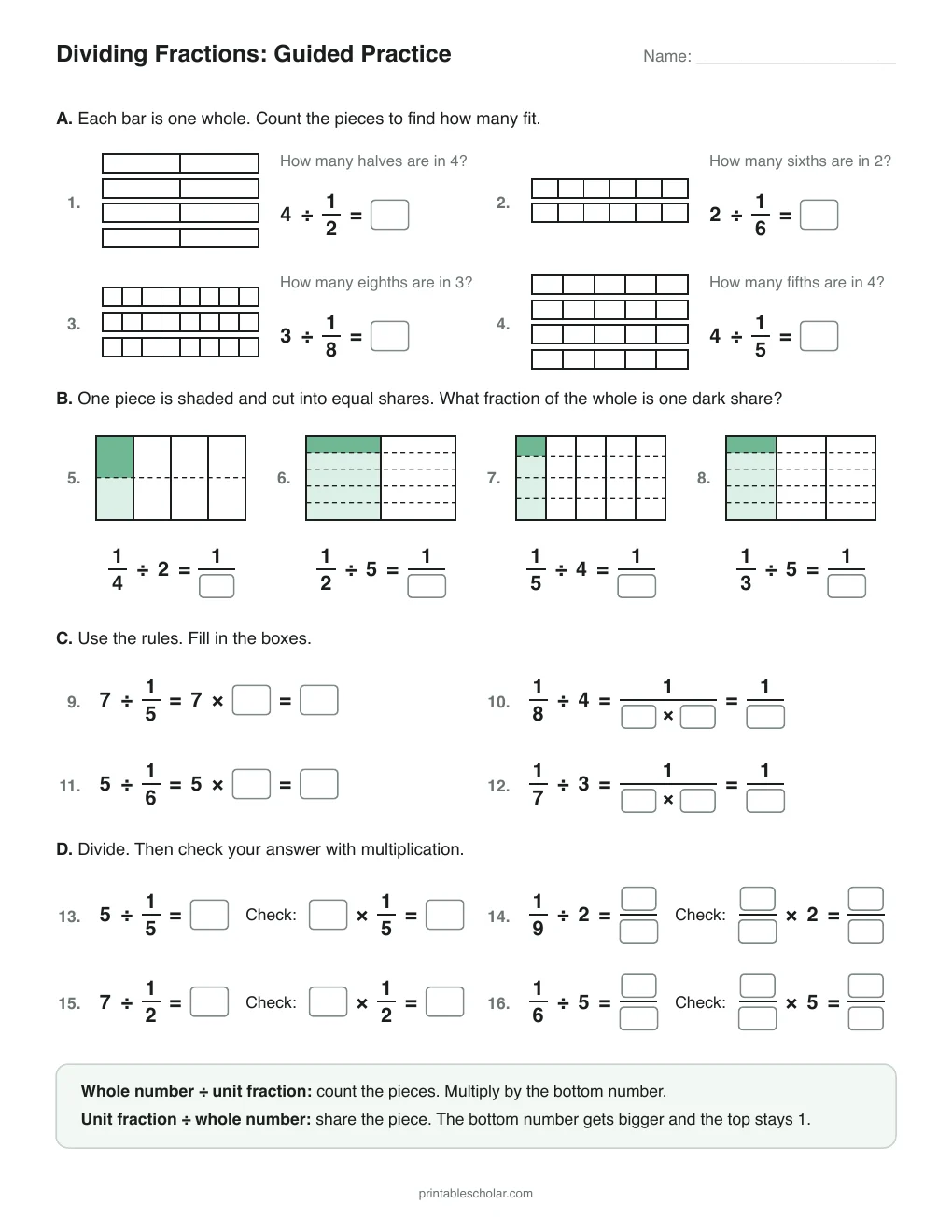
Start with How Dividing Fractions Works. It keeps the two kinds apart: 3 ÷ 1/5 asks how many fifths fit in 3, and the fifteen pieces are numbered on the bars, while 1/3 ÷ 4 is one third shared four ways, which makes each share 1/12 of the whole. Each kind gets its own rule, both are checked with multiplication, and a Watch out box covers the two mix-ups: swapping the kinds (4 ÷ 1/2 is 8, but 1/2 ÷ 4 is 1/8) and expecting division to always make a number smaller. Dividing Fractions: Guided Practice has sixteen problems that go from bars to count, to shaded pieces cut into shares, to the rules in boxes, to dividing and checking.
Fifth graders meet fraction division in two forms only: a whole number divided by a unit fraction, and a unit fraction divided by a whole number. A unit fraction has a 1 on top. Dividing one fraction by another, and the "flip and multiply" rule, wait until 6th grade.
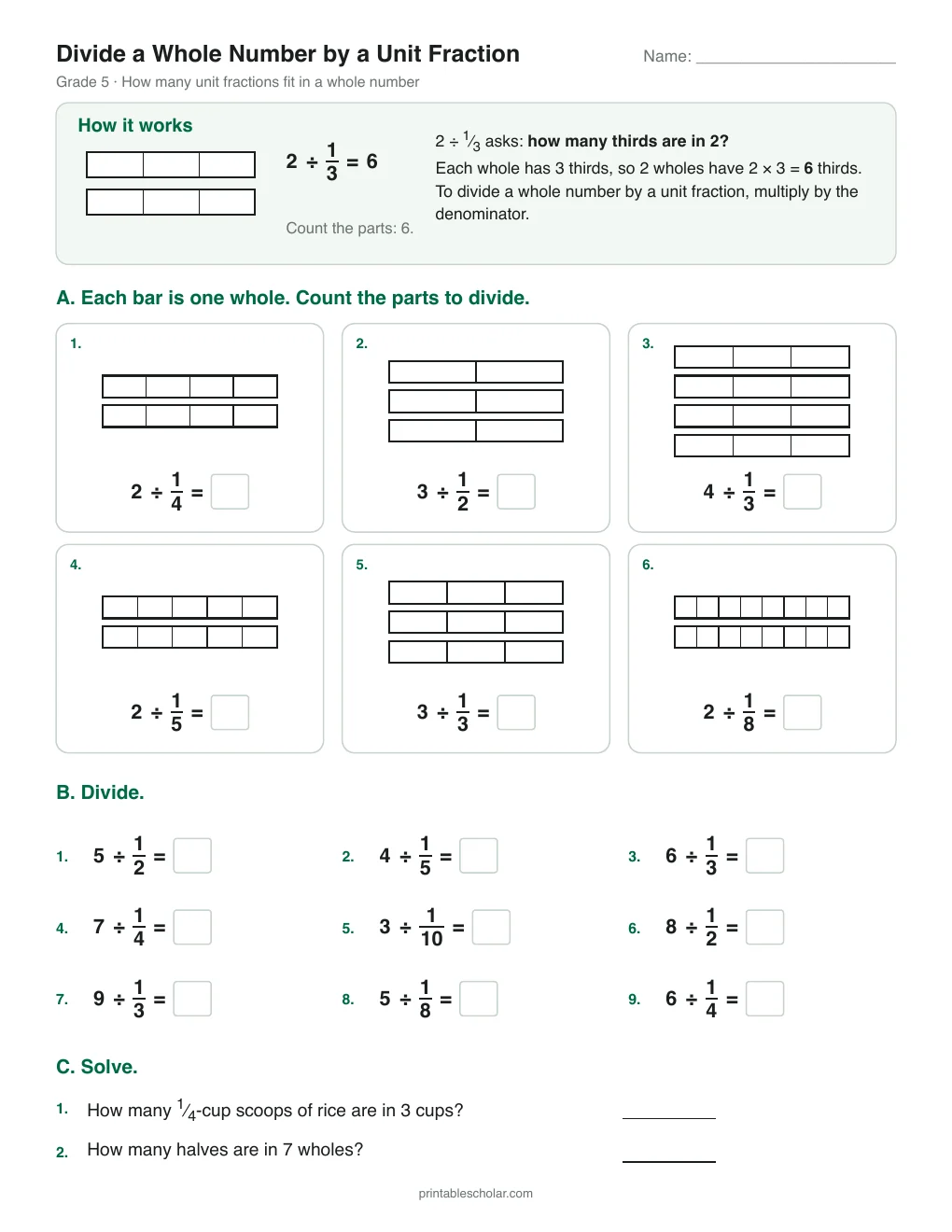
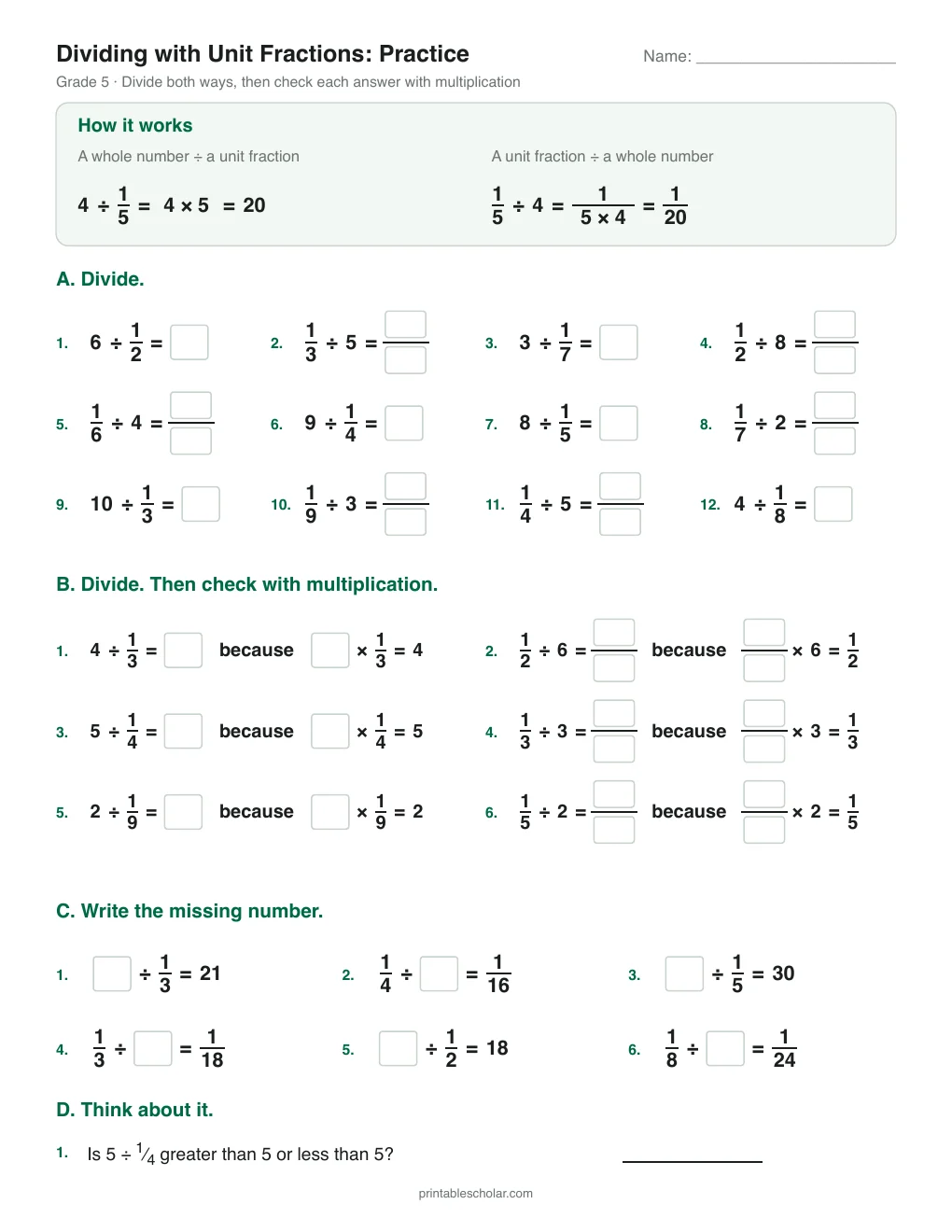
Divide a Whole Number by a Unit Fraction asks how many pieces fit. 2 ÷ 1/3 means "how many thirds are in 2?" Each bar on the sheet is one whole cut into equal parts, so the answer can be counted: 6. After six pictures the pattern is clear, and the rest of the sheet uses it: multiply by the denominator.
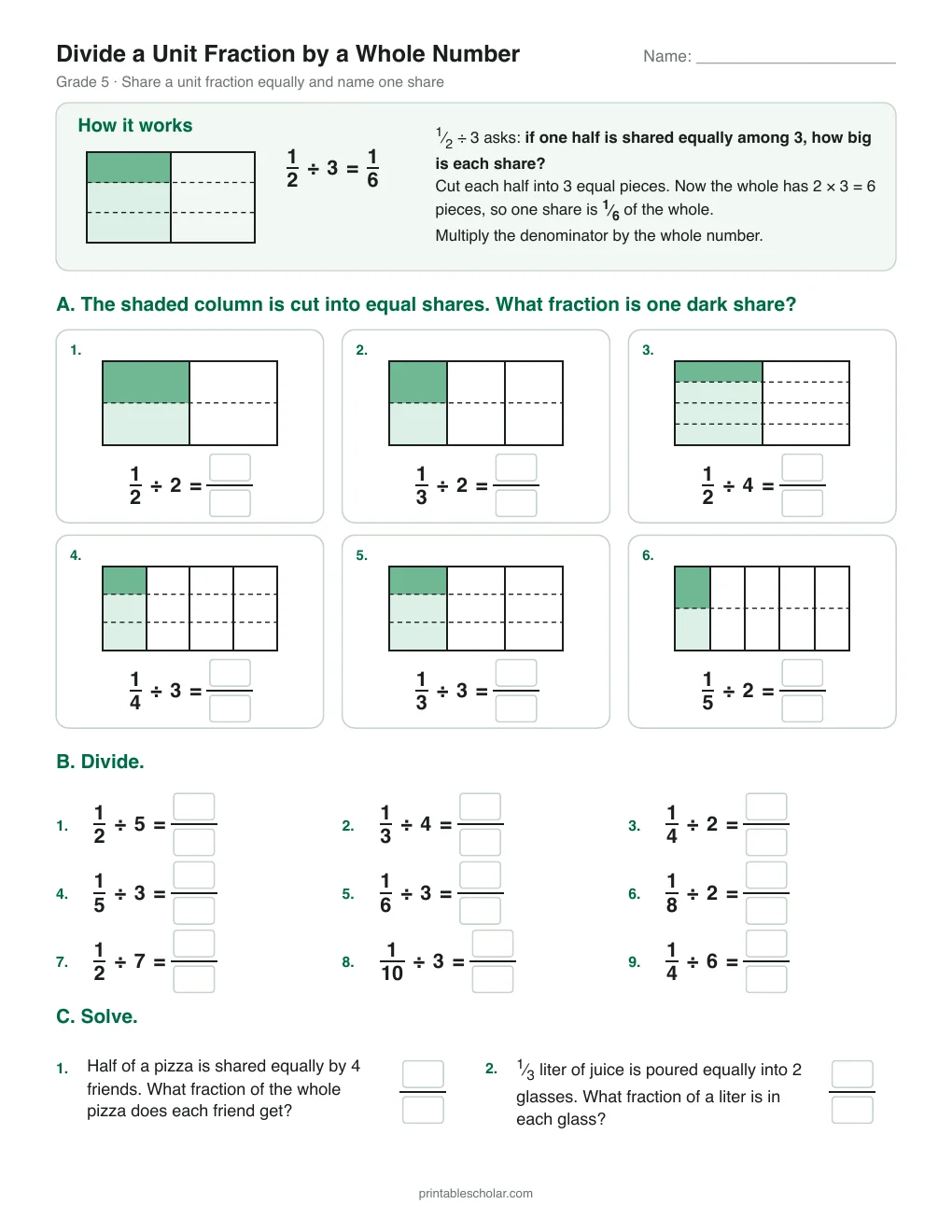
Divide a Unit Fraction by a Whole Number is sharing. 1/2 ÷ 3 means one half is split into 3 equal shares. The model cuts the whole the same way, so children can see that one share is 1 of 6 equal pieces. The rule is to multiply the denominator by the whole number.
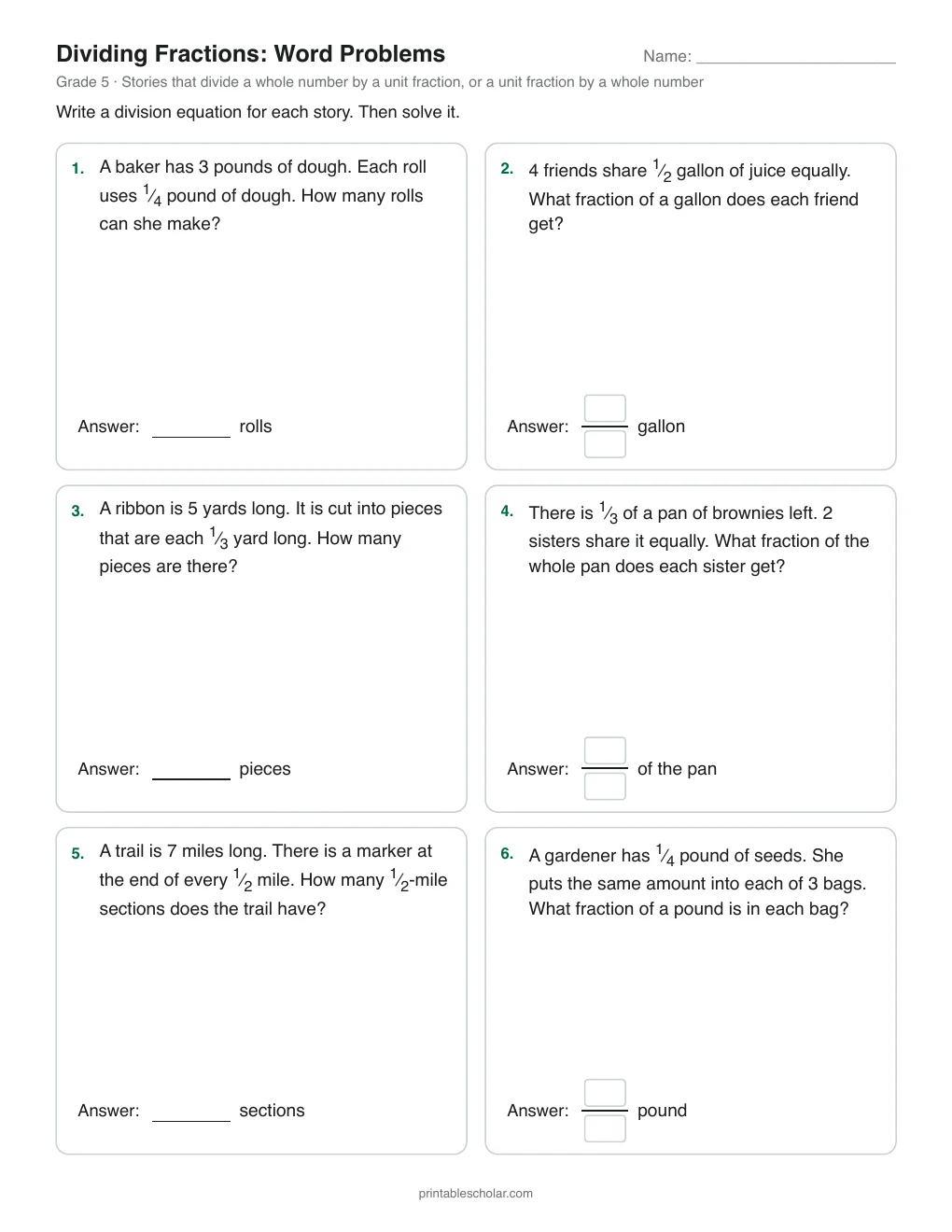
The practice sheet mixes both kinds, which is where the mistakes happen, and has students check answers with multiplication: 4 ÷ 1/3 = 12 because 12 × 1/3 = 4. The word problems alternate between "how many pieces" stories and sharing stories. For the multiplication that comes first, see multiplying fractions.
Frequently Asked Questions
How do you divide a whole number by a unit fraction?
Multiply the whole number by the denominator. 4 ÷ 1/5 asks how many fifths are in 4. Each whole has 5 fifths, so there are 4 × 5 = 20.
How do you divide a unit fraction by a whole number?
Multiply the denominator by the whole number. 1/3 ÷ 2 means one third is split into 2 equal shares. Each share is 1/6 of the whole.
Why is the answer bigger when you divide by a fraction?
Dividing asks how many of something fit. Small pieces fit many times: there are 8 fourths in 2, so 2 ÷ 1/4 is 8. The answer is a count of pieces, and it is larger than the number you started with.
What grade learns to divide fractions?
In 5th grade students divide whole numbers by unit fractions and unit fractions by whole numbers. Dividing any fraction by any fraction is a 6th grade standard.
Do the worksheets have answer keys?
Yes. Every worksheet is a two-page PDF with the answer key on the second page.