Clock practice that feels like play. Build a Clock gives every child a clock to turn, Four in a Row is a dice game where the squares are clock faces, and I Have, Who Has? is a card game for a group (or dominoes for one or two). All three are free here. The pack adds clock bingo, more levels up to 5 minutes, and elapsed time games.
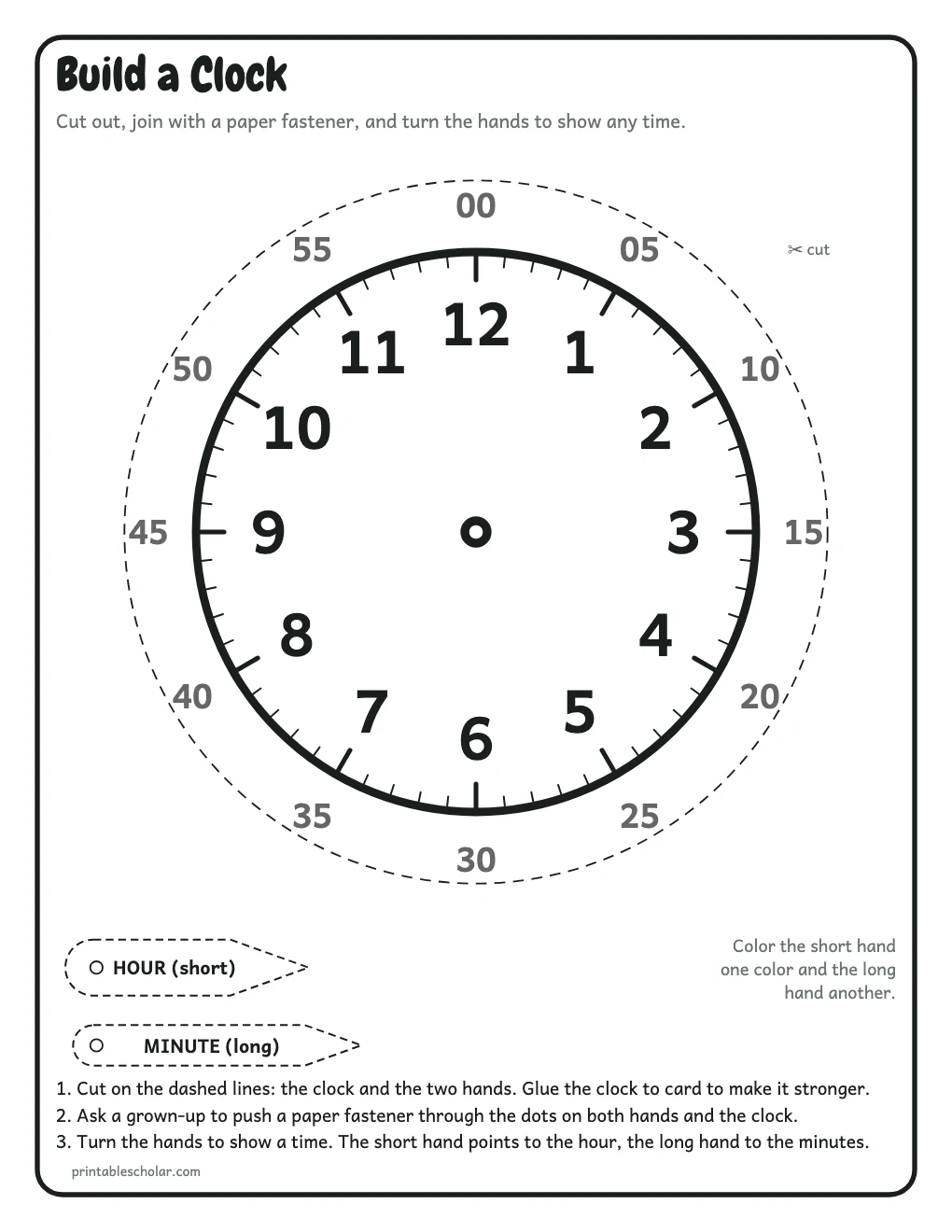
A big clock face with the minutes around the edge and two hands to cut out and join with a paper fastener.
Download PDF
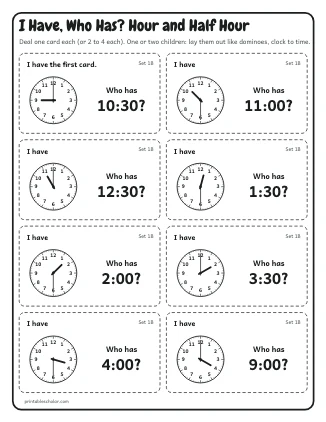
Eight cards in a loop: read your clock when its time is asked for, then ask for the next one. Or lay them out like dominoes.
Download PDF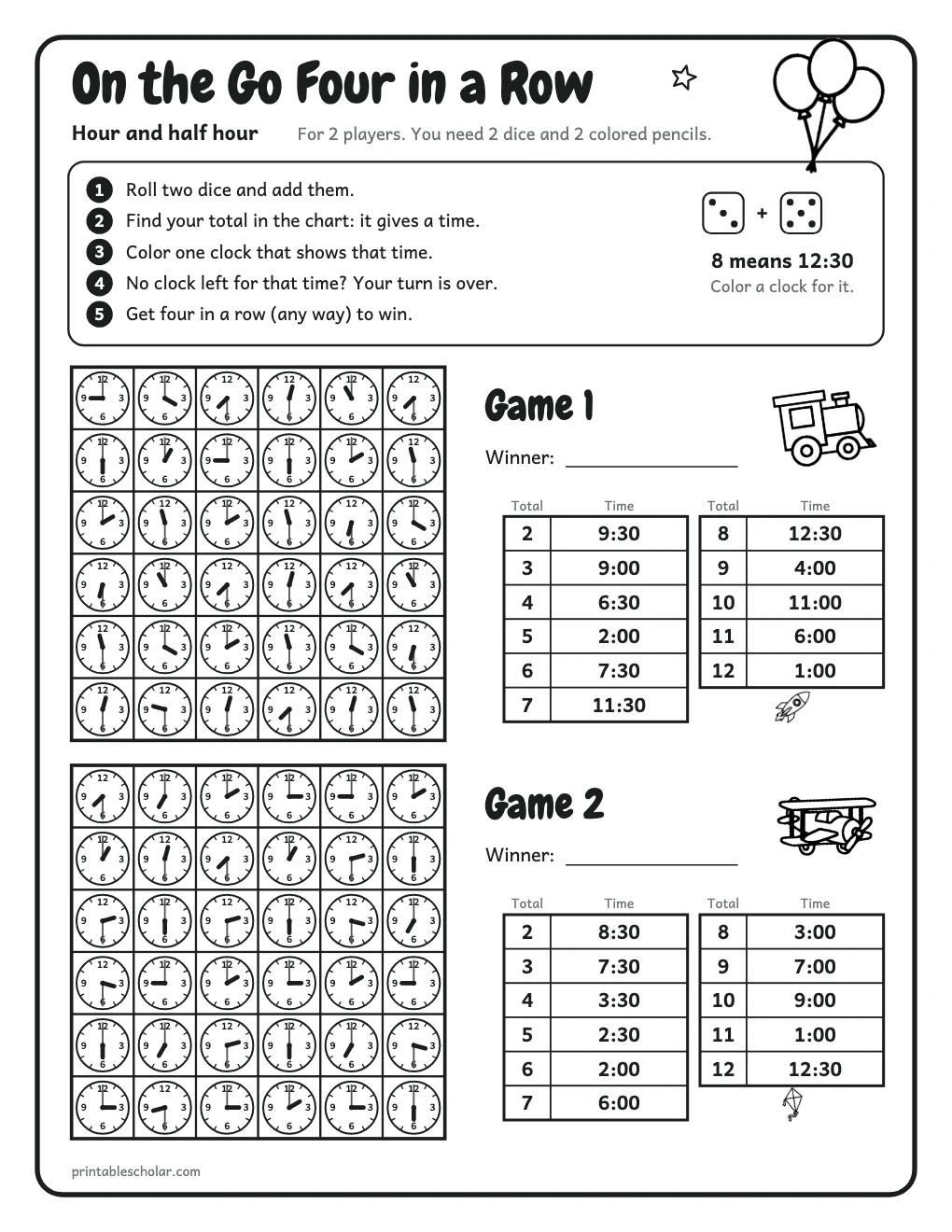
Roll two dice, find the time in the chart and color a clock that shows it. Needs 2 dice.
Download PDF
The 3 free sheets above, plus 26 more that are only in the pack, from the hour to elapsed time.
Tap any sheet to see it larger.
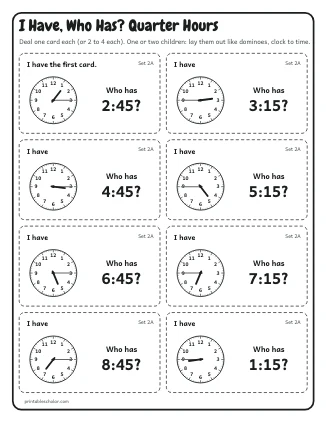
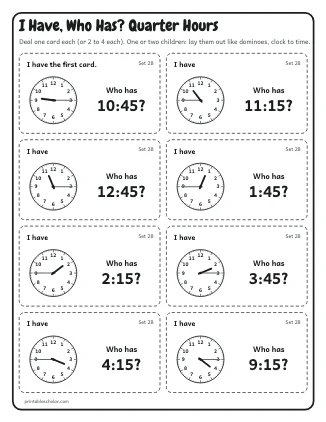
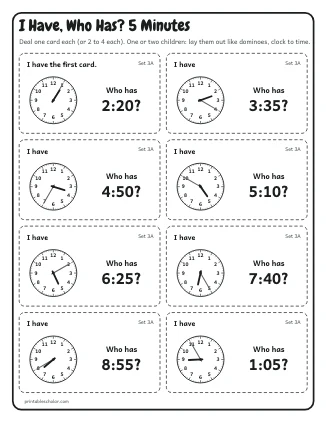
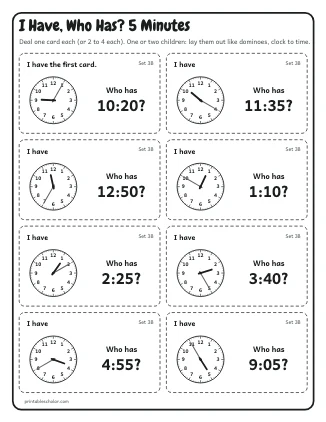
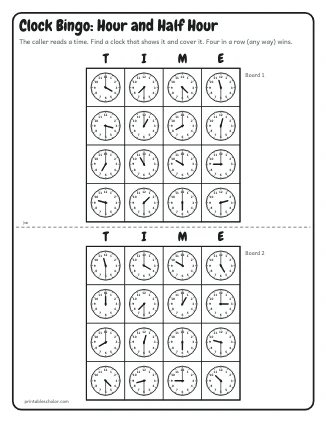
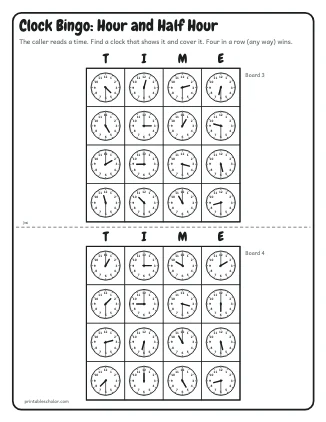
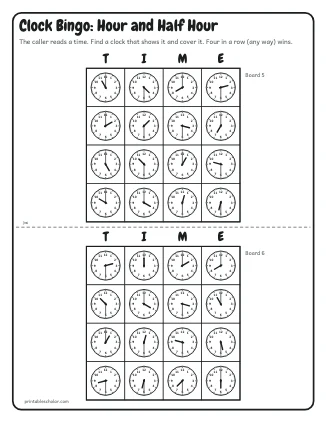
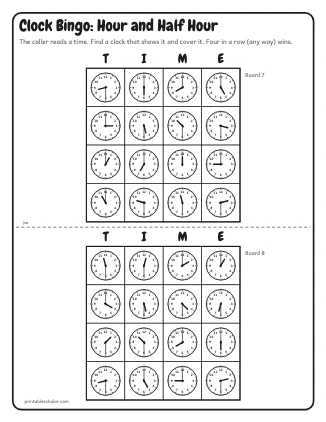
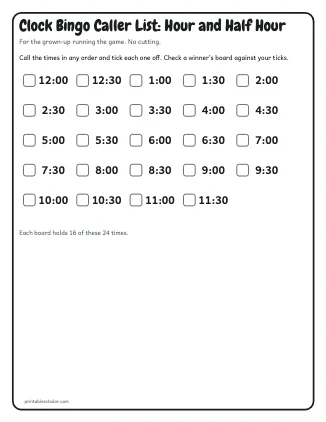
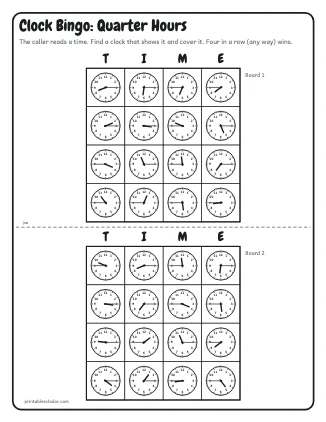
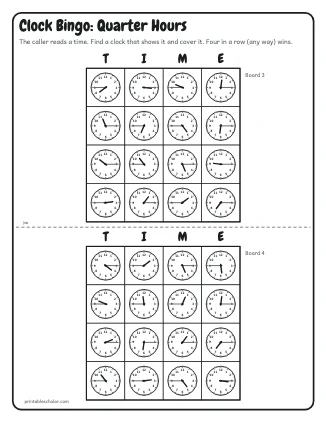
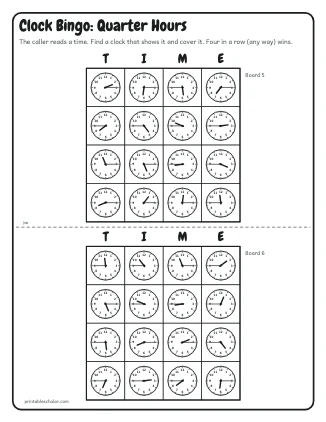
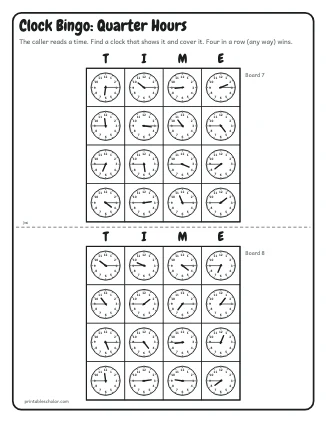
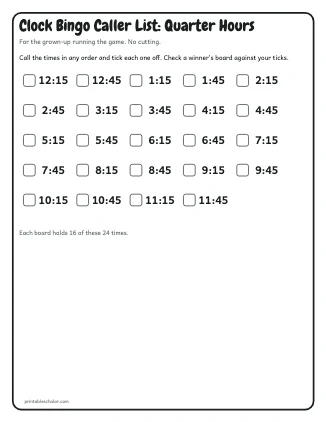
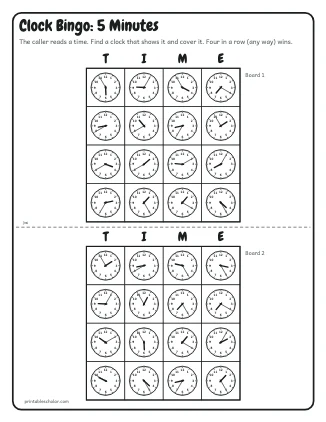
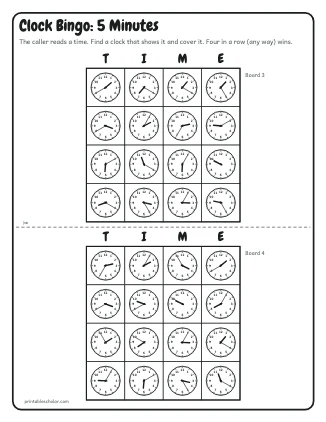
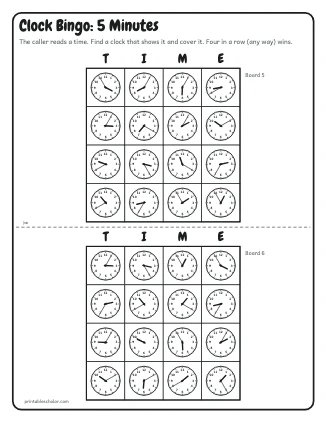
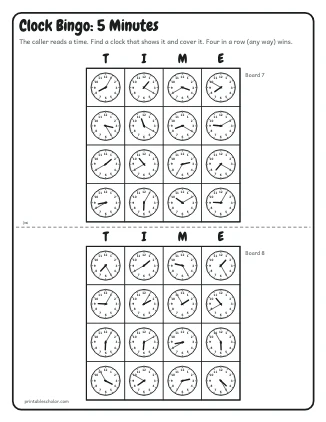
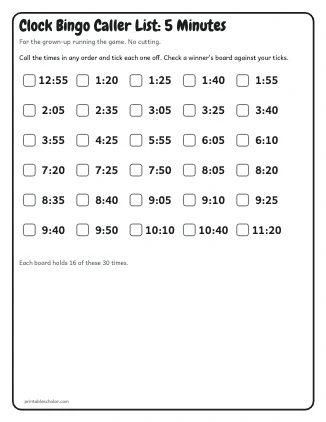
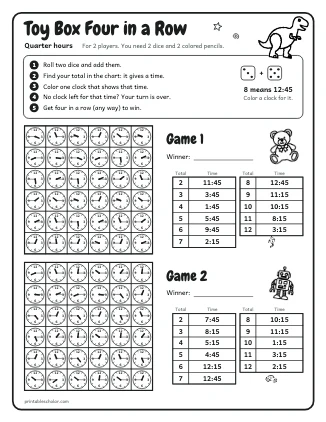
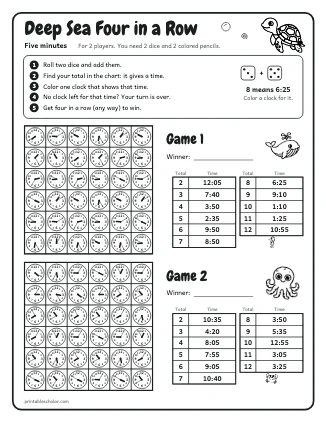
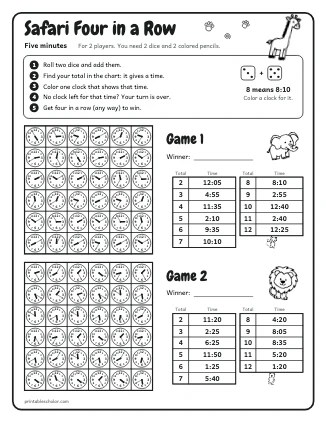
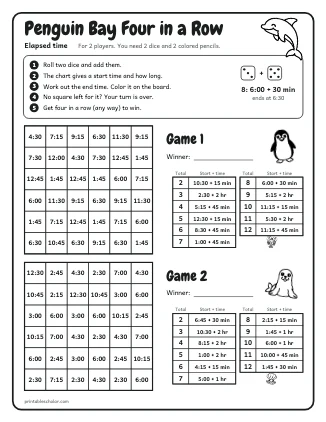
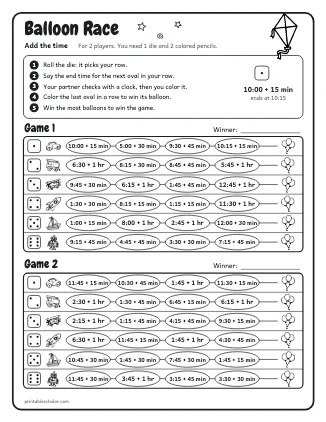
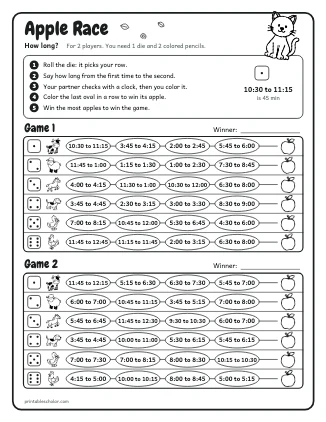
Children learn to tell time by doing it again and again, and games make the again and again easy to ask for. The games here go in the order time is taught: the hour and half hour in grade 1, quarter hours and 5 minutes in grades 1 and 2, and elapsed time (how long, and what time it will be) in grades 2 and 3.
Four in a Row is for two players with two dice and two colored pencils. The dice total points to a time in the chart, and the player colors a clock that shows it. The clocks have 12, 3, 6 and 9 on them, and the short hour hand is drawn thicker than the minute hand, so children can tell them apart.
I Have, Who Has? is a group game: each card shows a clock and asks for another time, and the cards go round in a loop. With one or two children, lay the cards out like dominoes instead, clock to matching time. Build a Clock needs a paper fastener; glue it to card and it lasts all year.
For plain practice, see the telling time worksheets and the elapsed time worksheets. For blank clocks to draw on, see the blank clock face page.
 Printable Scholar