About the Blank Clock Face
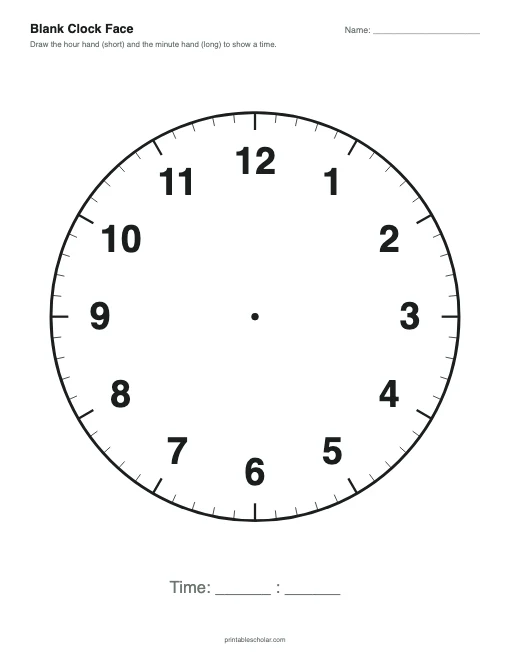
Start with the large clock. Say a time and have the child draw the short hour hand first, then the long minute hand. Hour and half hour come first (kindergarten and 1st grade), then five-minute steps (2nd grade), then single minutes (3rd grade).
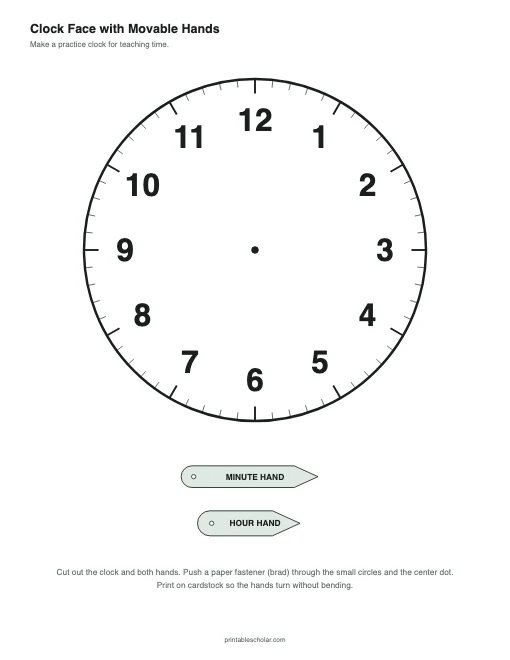
The clock with movable hands makes a practice clock: cut out the face and the two hands, and join them at the center with a paper fastener. Cardstock keeps the hands from bending.
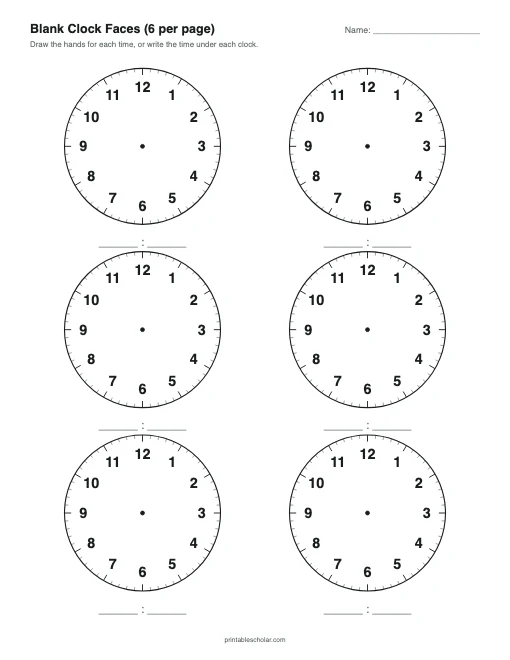
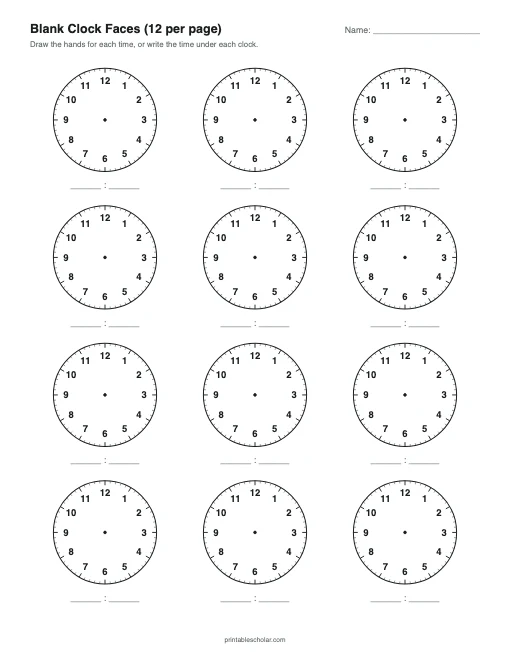
The 6 and 12 per page sheets work two ways. Write a time under each clock for students to draw, or draw the hands yourself and have them write the time. For ready-made practice with the hands already drawn, see the telling time worksheets.
Frequently Asked Questions
How do I make a clock with moving hands?
Print the movable hands sheet on cardstock. Cut out the clock face, the hour hand and the minute hand. Push a paper fastener (brad) through the small circle at the end of each hand and then through the center dot of the clock, and fold the legs flat behind it.
What order should I teach telling time in?
Time to the hour, then the half hour, then quarter hours, then five-minute intervals, then to the minute. Most US standards place the hour and half hour in 1st grade, five minutes in 2nd grade and the nearest minute in 3rd grade.
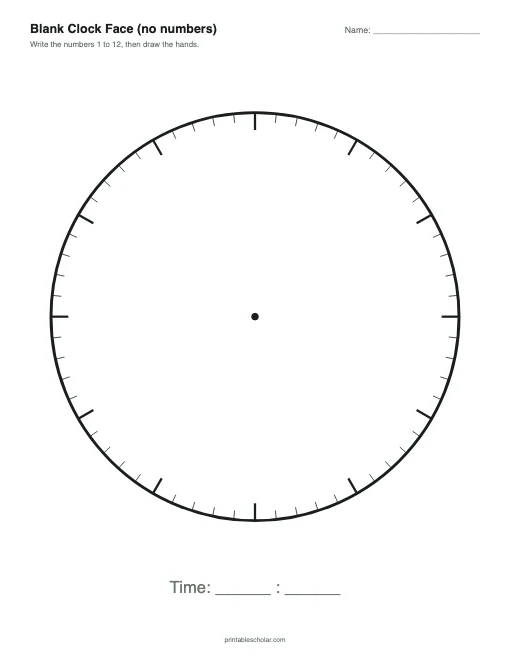
Why use a clock with no numbers?
Writing the numbers themselves helps children learn where each one sits. 12, 3, 6 and 9 go in first, at the top, right, bottom and left, and the rest fill in between.
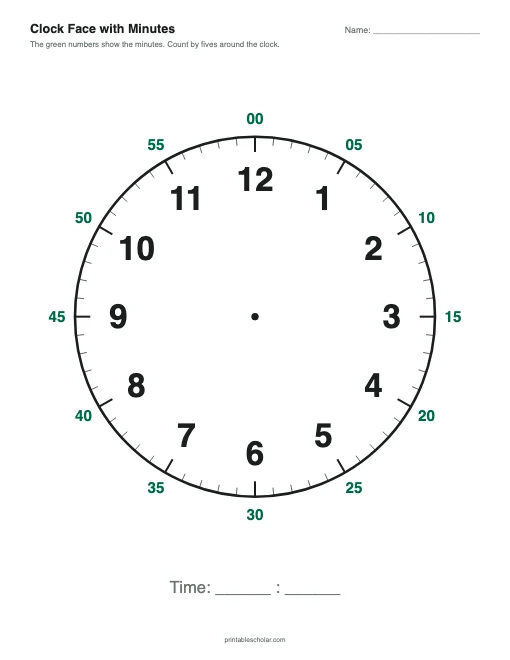
What do the green numbers on the minutes clock mean?
They are the minutes past the hour when the long hand points there: 05 at the 1, 10 at the 2, and so on up to 55 at the 11. They show that each number on the clock is worth five minutes.