Elapsed time worksheets for 2nd to 4th grade. The chart explains the number line method. The worksheets find how much time has passed, first in whole and half hours and then in minutes, across more than one hour, and backward to a start time, and end with word problems.
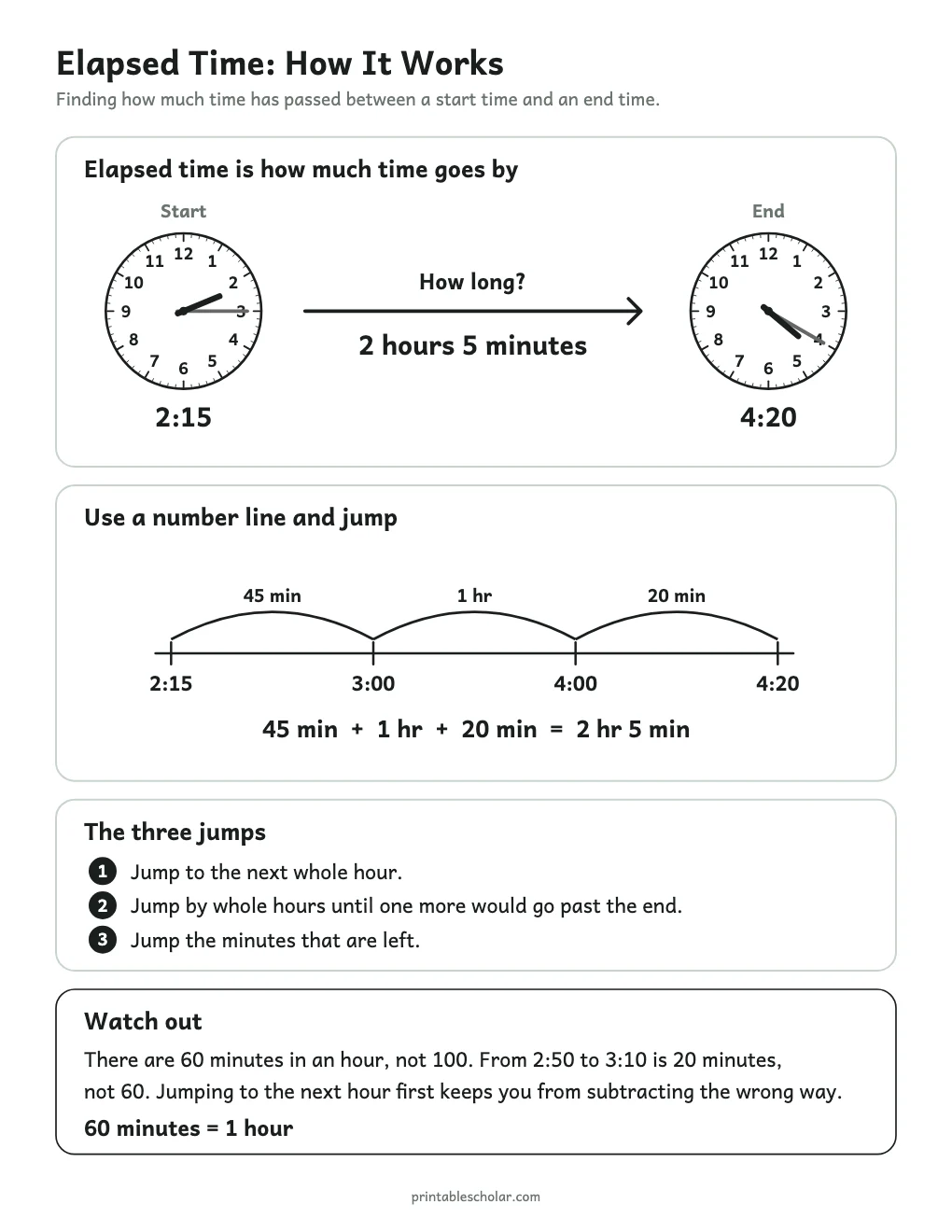
Two clocks, a number line with three jumps, and the reason subtracting times goes wrong.
Download PDF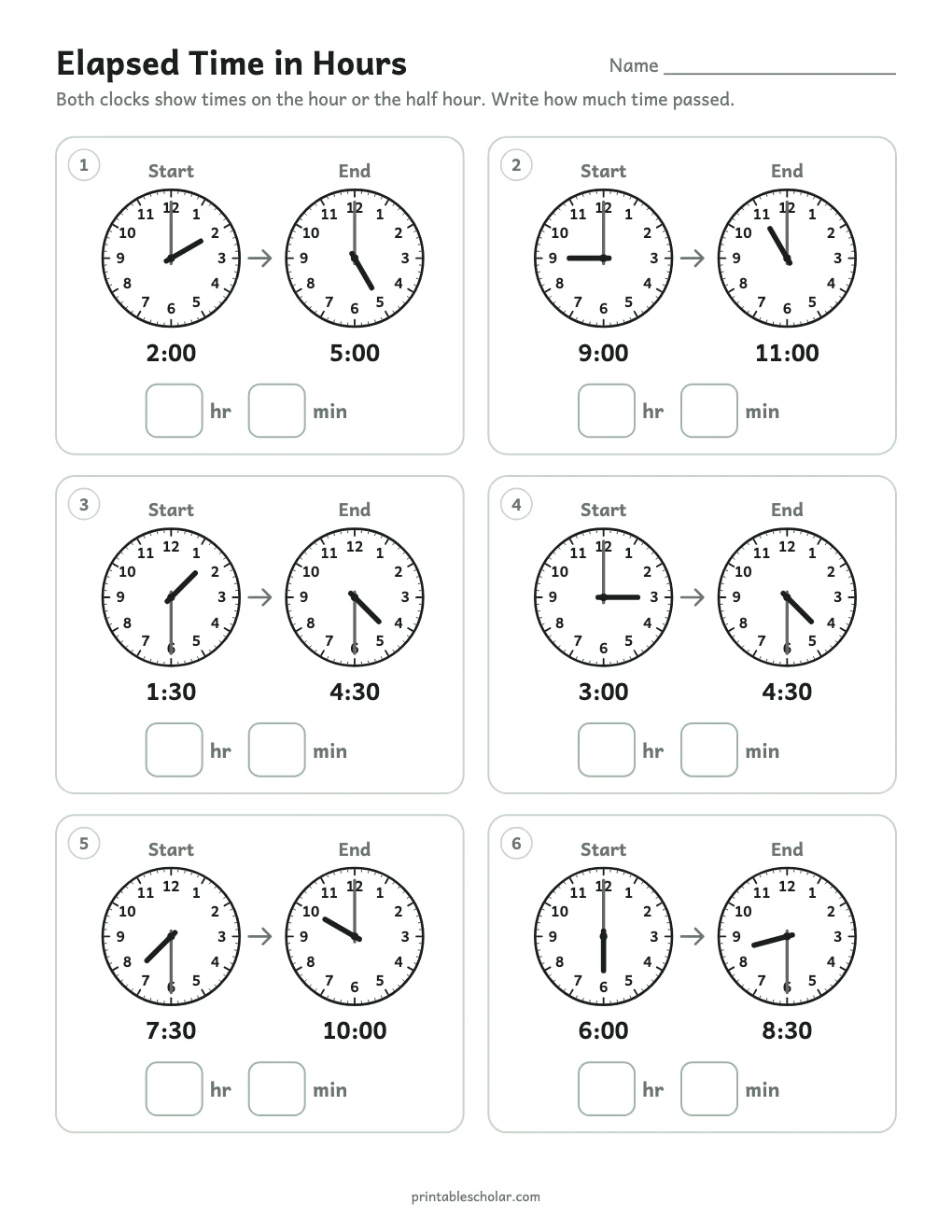
Six pairs of clocks on the hour or half hour. Write how many hours and minutes passed.
Download PDF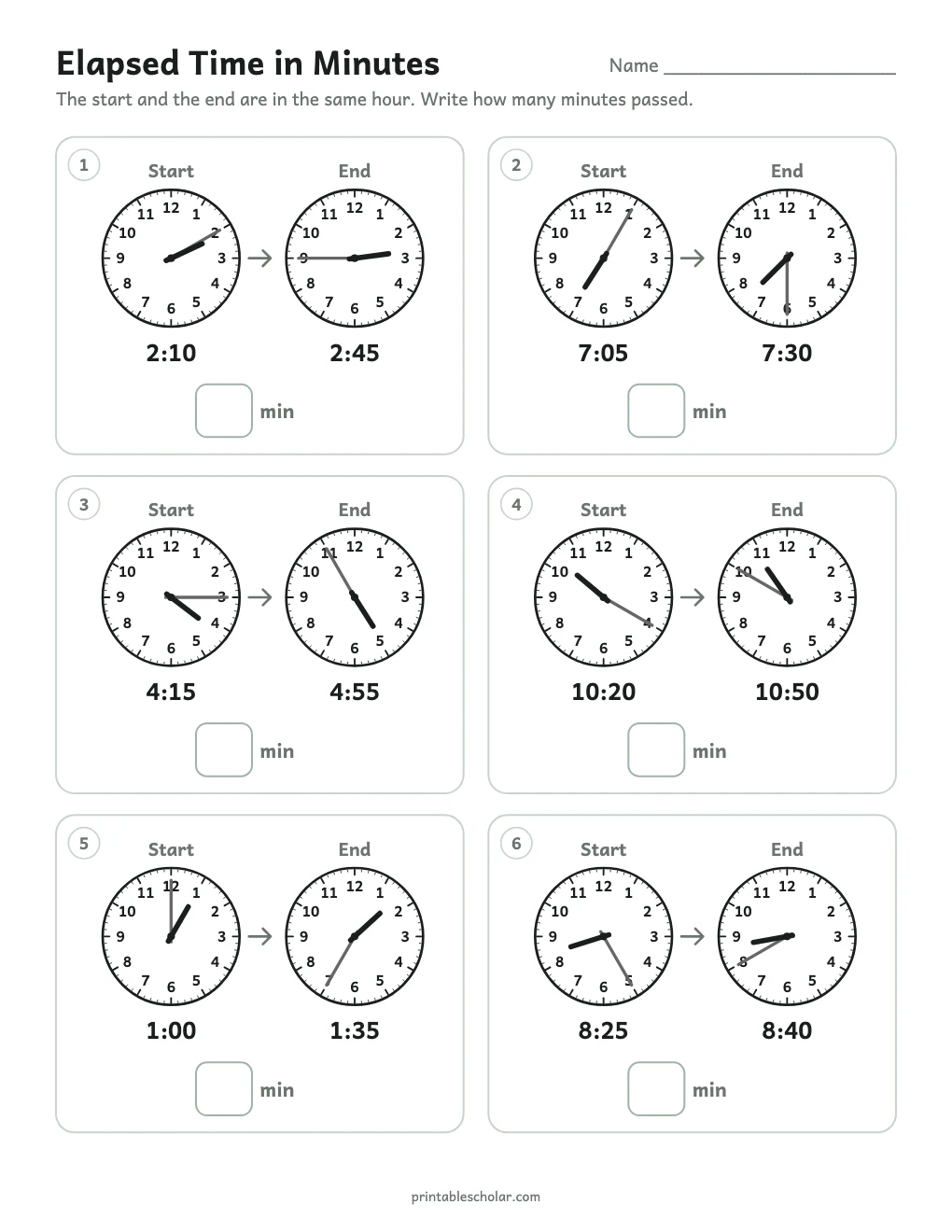
Six pairs of clocks within the same hour. Write how many minutes passed.
Download PDF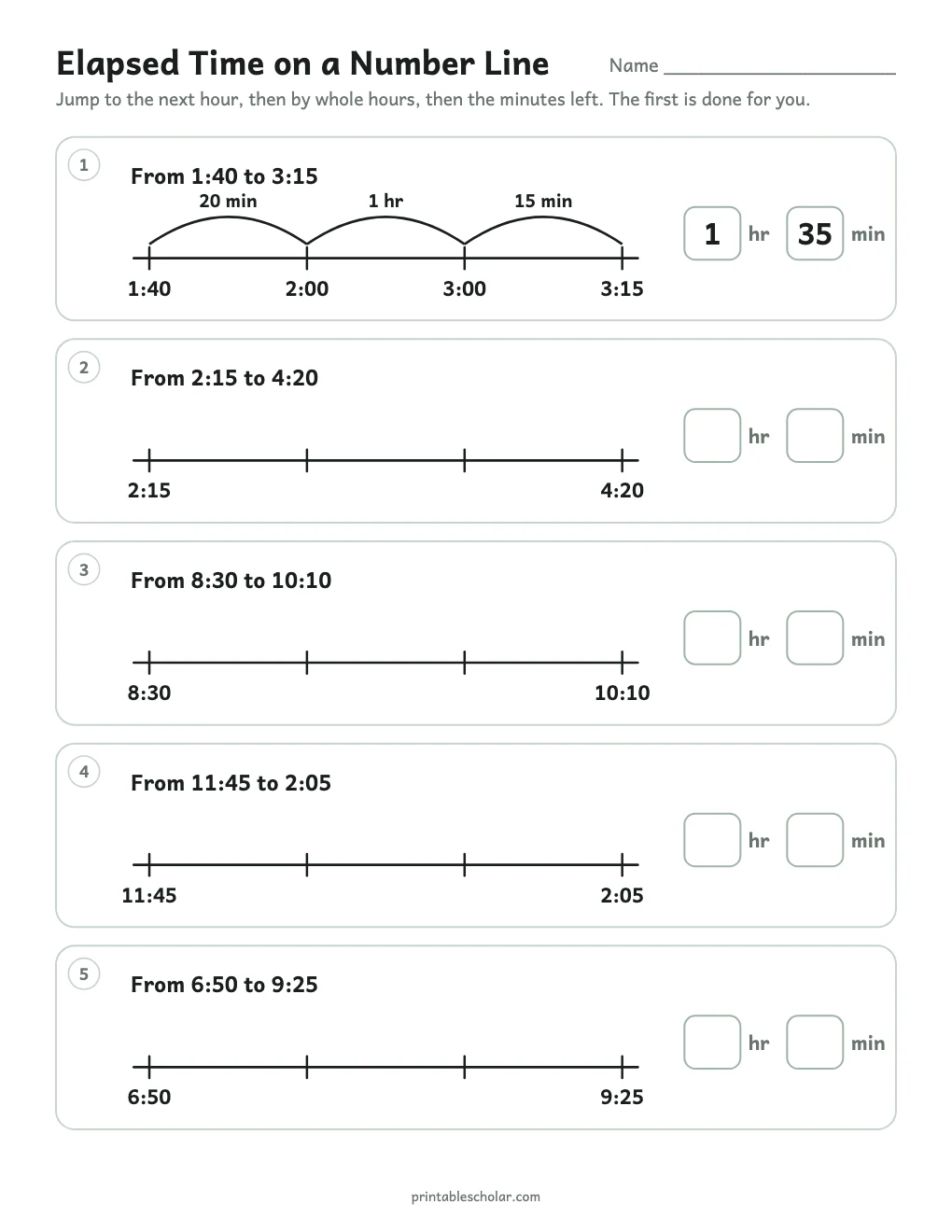
Five problems that cross more than one hour, each with a number line to jump along. The first is done.
Download PDF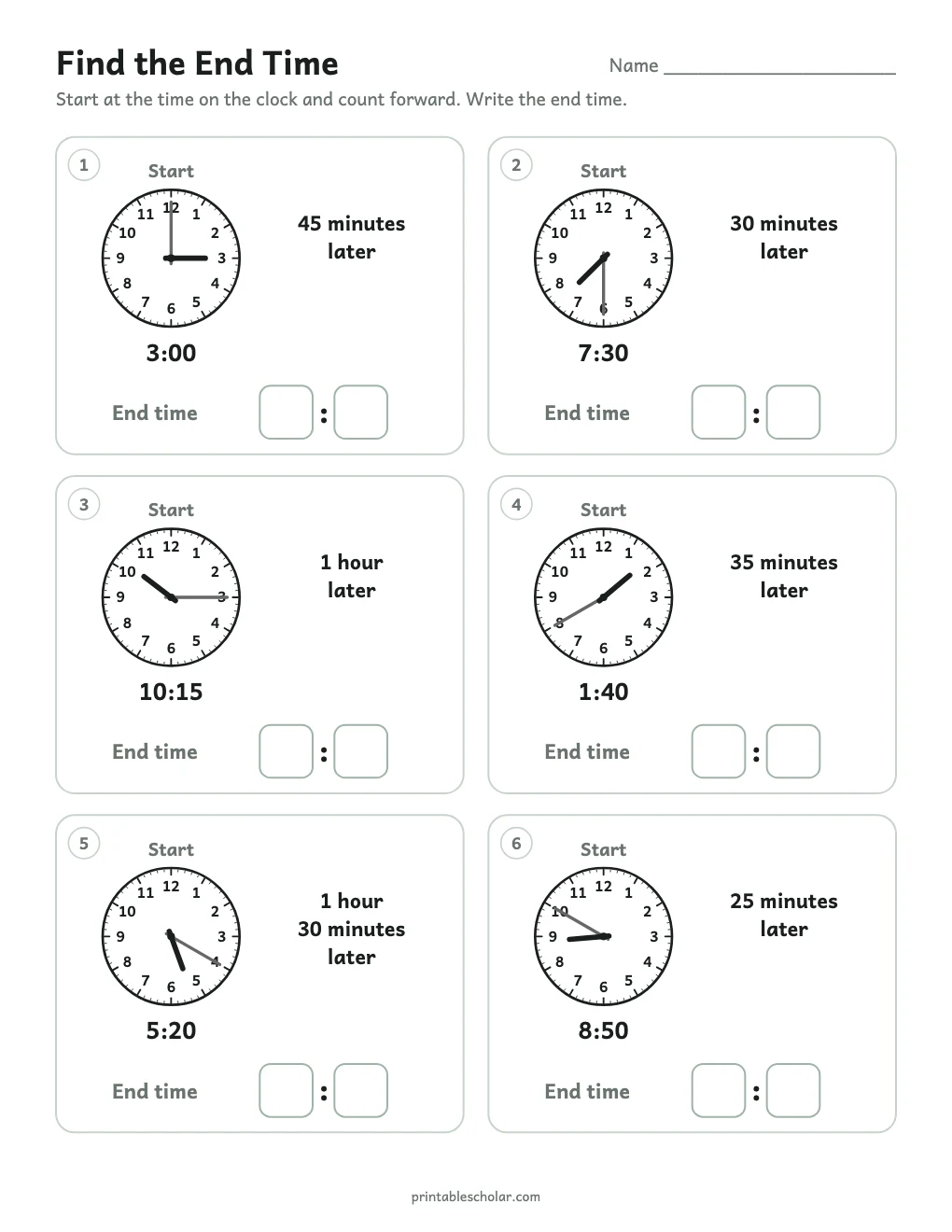
Six start times, each with an amount of time to add. Write the end time. Includes answer key.
Download PDF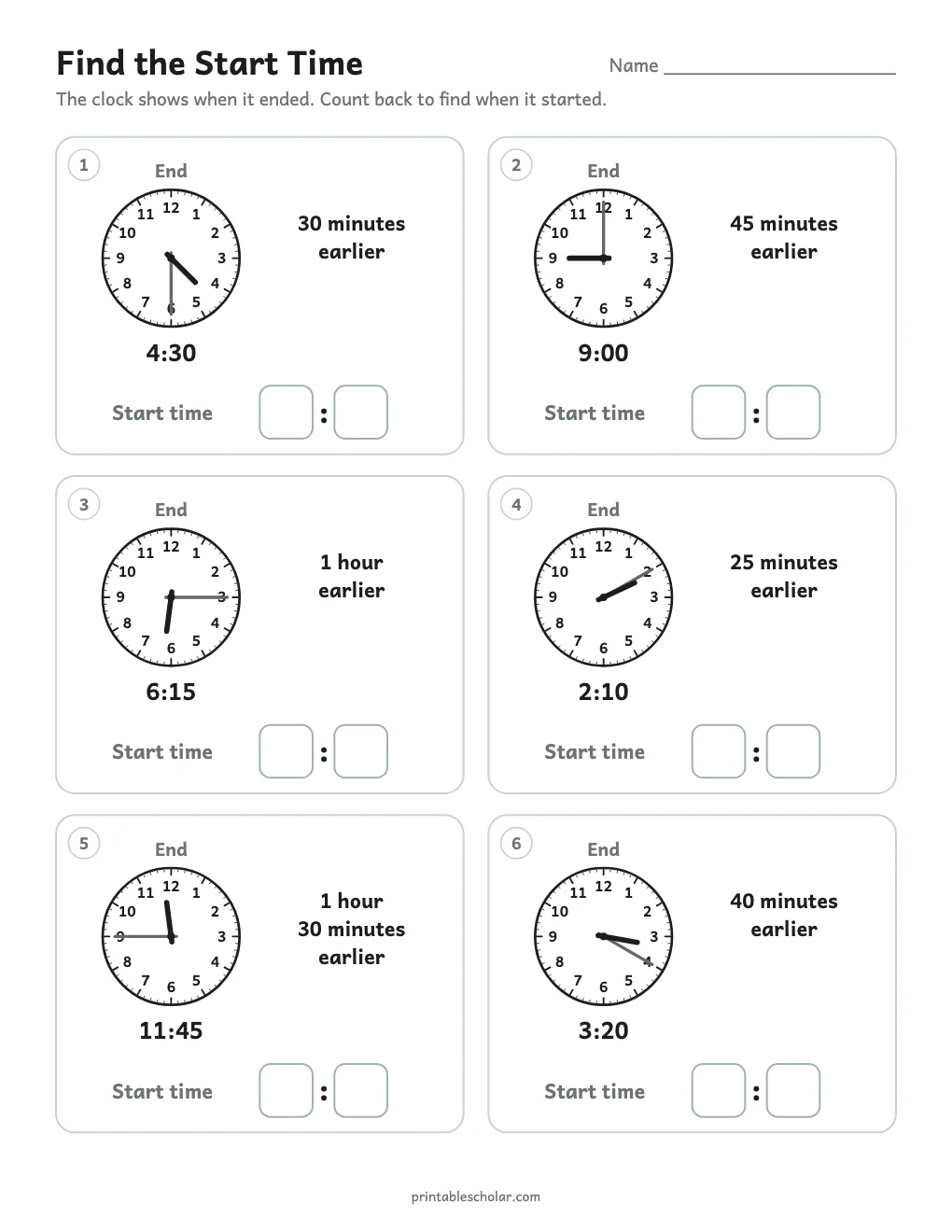
Six end times, each with an amount of time to count back. Write the start time.
Download PDF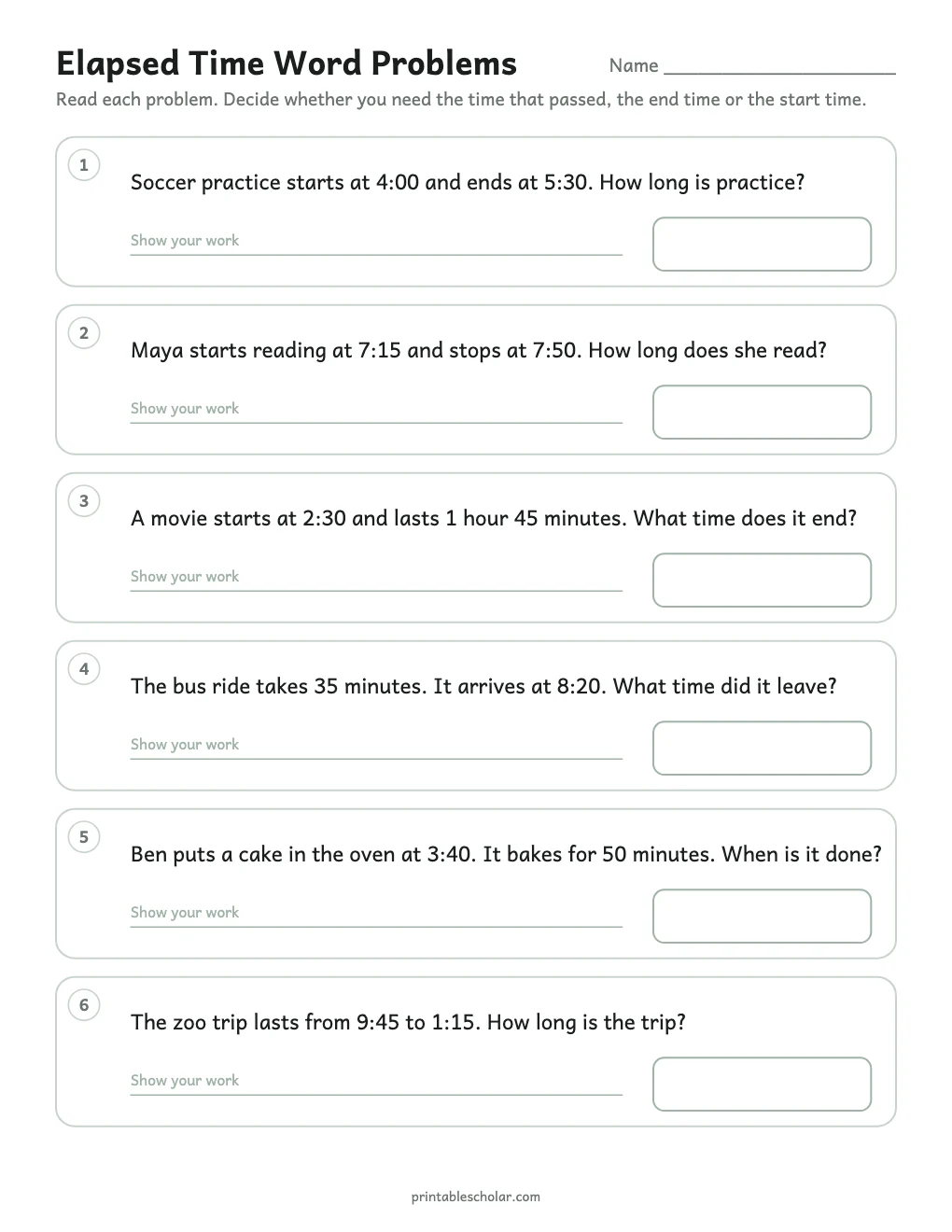
Six short problems: two ask how long, three ask for the end time or start time, one crosses noon.
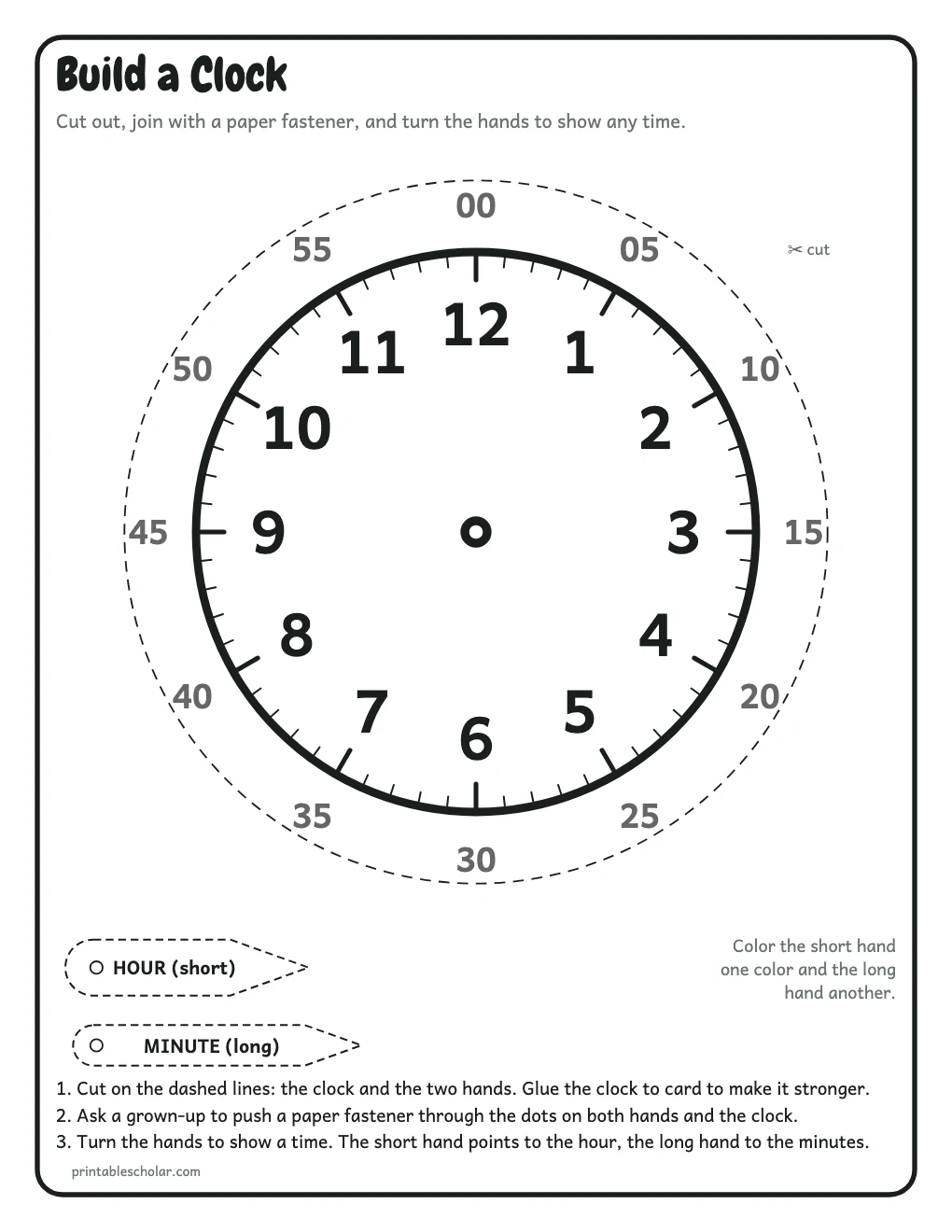
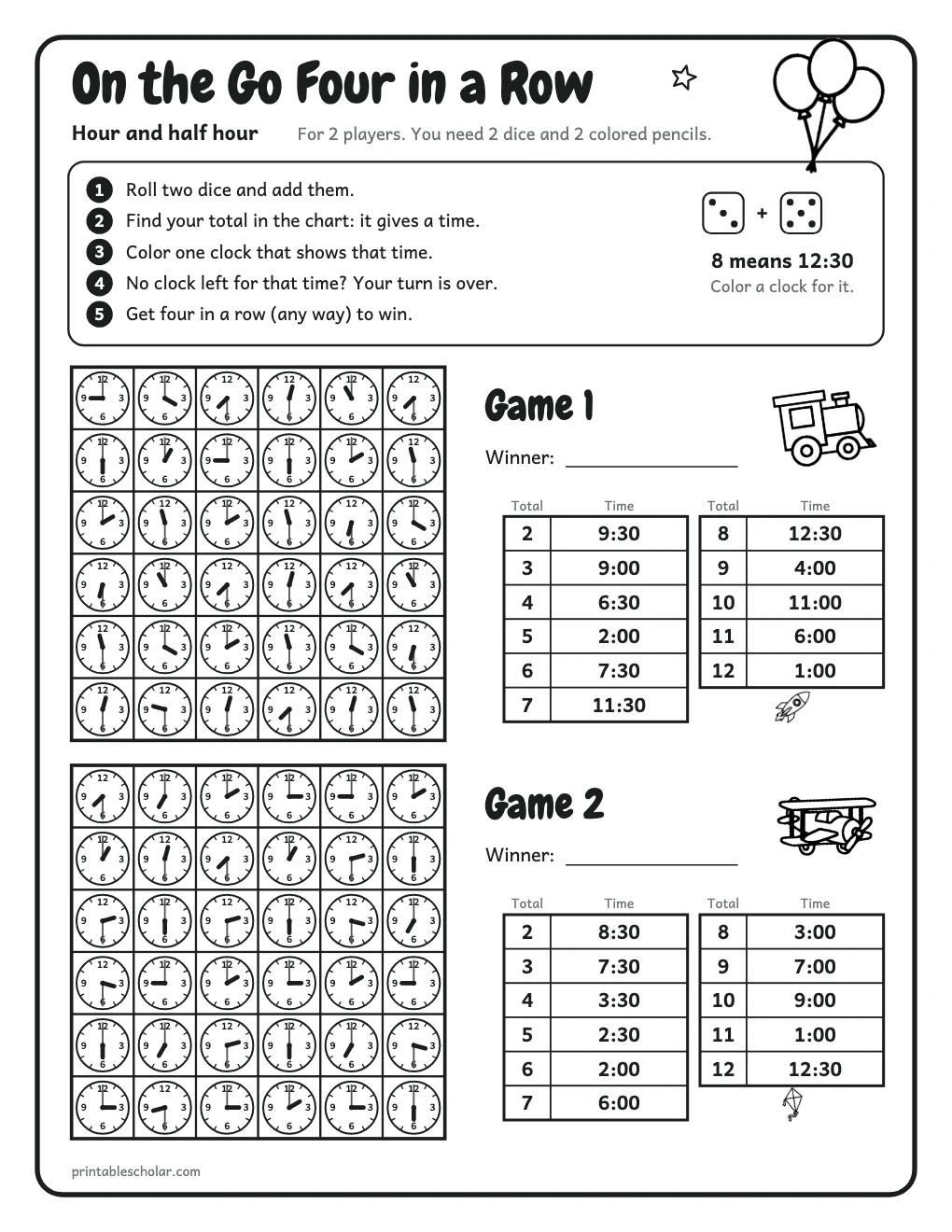
Download PDFA clock to build and turn, a dice game where the squares are clock faces, and I Have, Who Has? cards. Three are free here.
From the hour to elapsed time. The Telling Time Games Pack has all 29 sheets in one PDF: these three plus 26 more. See them all
Get the pack: $7In The Case of the Missing Clock, every clue is locked behind a page of telling time problems. Solve them, decode the clue and cross out drawn suspects until only the culprit is left. Grade 3, answer keys included.
Try the free mini mysterySee the full casesElapsed time is the amount of time that passes between a start and an end: how long practice lasts, or when the cake comes out of the oven. It is hard for one reason. Time is counted in sixties, so the subtraction children already know gives wrong answers. From 2:50 to 3:10 is 20 minutes, and subtracting gives 60.
The method on these sheets avoids subtracting. On a number line, jump from the start time to the next whole hour, then by whole hours, then the minutes left, and add the jumps. The How It Works chart shows it on one example from start to finish.
The first two worksheets keep it simple so the idea is clear: whole and half hours, then minutes within the same hour. Elapsed Time on a Number Line puts the two together for times that cross several hours. Every problem shows both clocks and both digital times, so reading the clock is not the hard part.
Real problems do not always ask how long. Find the End Time and Find the Start Time give the amount of time and ask for the other end, and the word problems mix all three kinds. Children need to read a clock to the minute first, which the telling time worksheets cover. Blank number lines are handy for extra problems.
 Printable Scholar