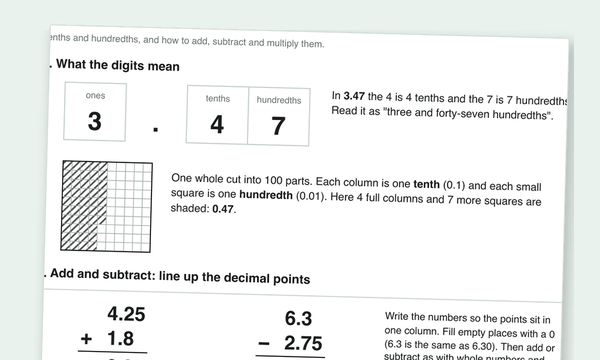
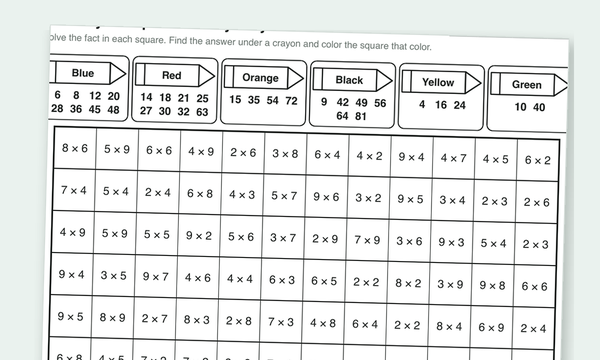
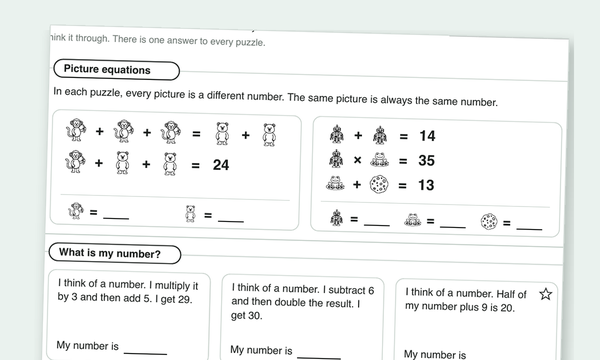
Fourth grade moves to multi-digit multiplication and long division, and goes deeper into fractions: equivalent fractions, comparing, mixed numbers, and adding with the same denominator. Decimals and angles are new. These are the pages to print for each topic.

36 weekly sheets in the order 4th grade is taught: one new topic and seven review boxes a week, with every answer key. The first 4 weeks are a free PDF. The full year is $15.
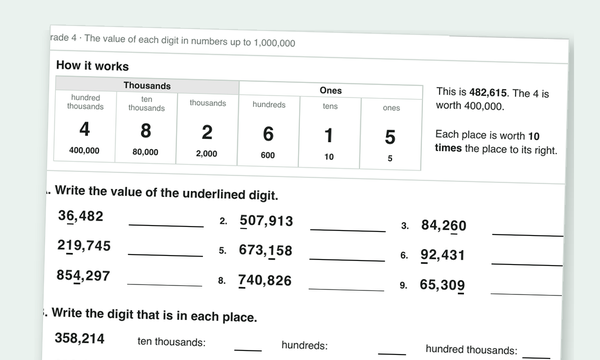
For 4th grade: Place Value to One Million, Large Numbers: Words and Expanded Form, and Compare and Order Large Numbers.
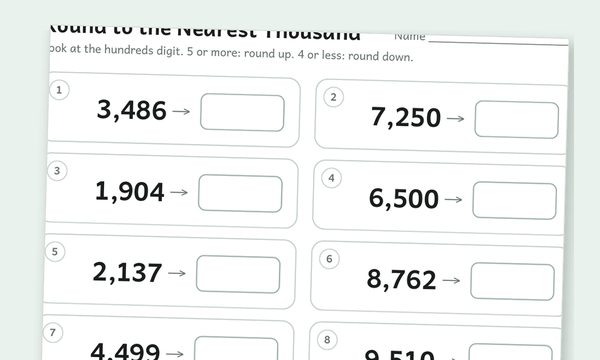
For 4th grade: Round to the Nearest Thousand and Round Large Numbers.
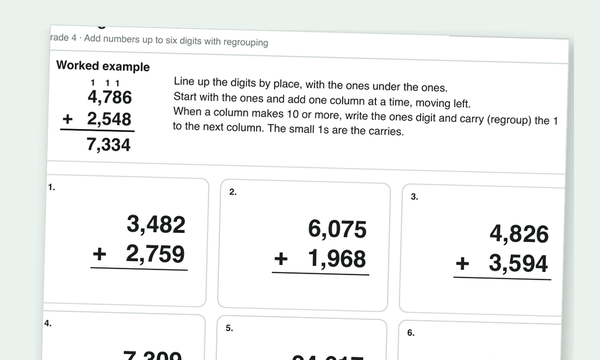
For 4th grade: Multi-Digit Addition. A worked example, then twelve sums of 4-digit, 5-digit and 6-digit numbers with room to work. Includes answer key.
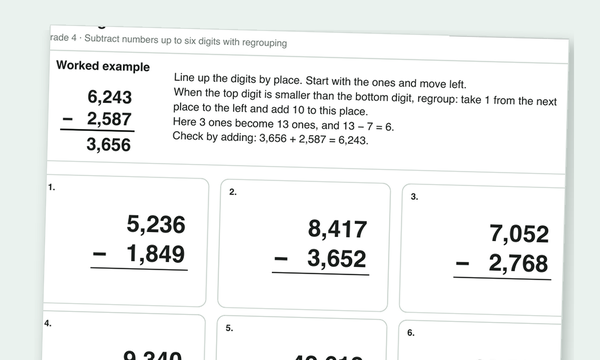
For 4th grade: Multi-Digit Subtraction and Subtract Across Zeros.
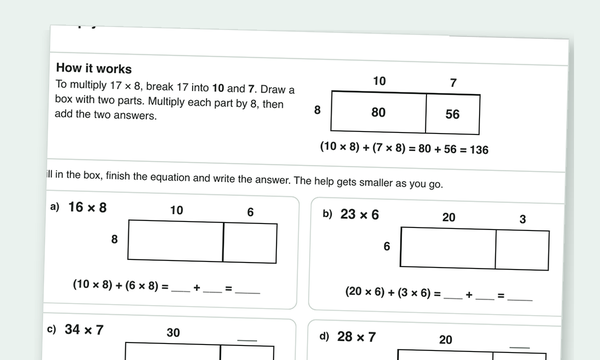
For 4th grade: Multiply with the Area Model first, then 2-Digit, 3-Digit and 4-Digit by 1-Digit, then 2-Digit by 2-Digit. For comparing: Multiplication as Comparison and Times as Many Word Problems.
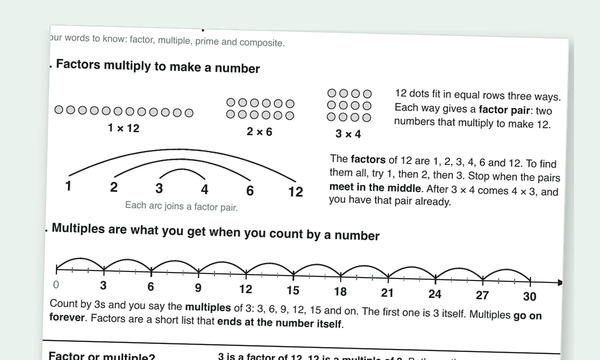
For 4th grade: How Factors and Multiples Work first, then factor pairs, multiples, and prime and composite numbers.
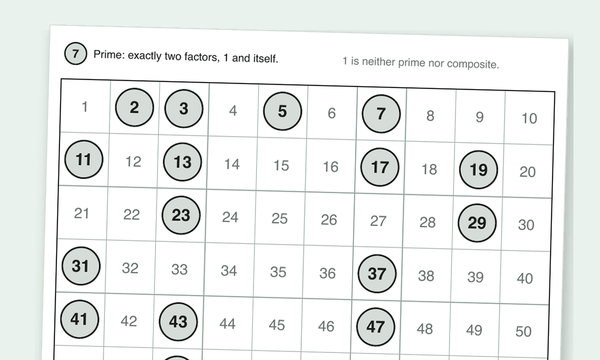
The primes from 1 to 100 circled on a hundred chart, a large-print list, all 168 primes below 1,000, and a blank chart. Grades 4–6.
For 4th grade: The 1-100 chart and the blank chart to find the primes.
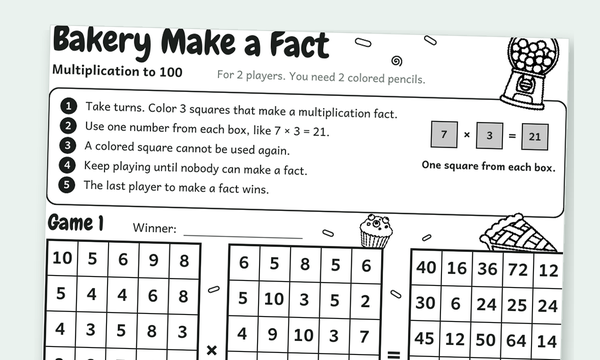
For 4th grade: The 7s to 12s, Make a Fact and Fact Hunt.
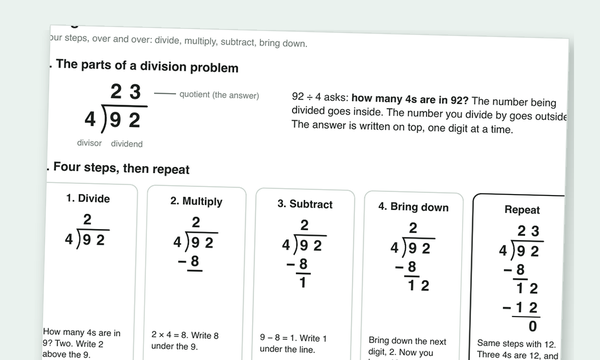
For 4th grade: Start with How It Works and the two practice sheets, then Sets A, B and C.
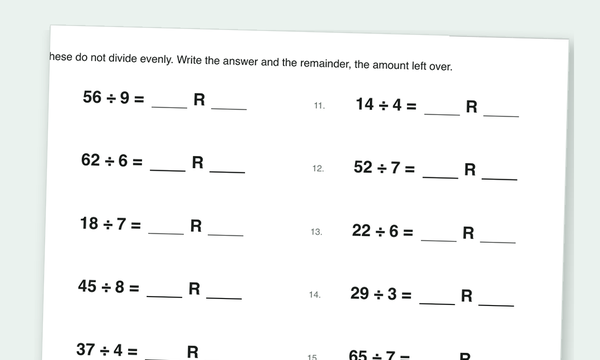
For 4th grade: Division with Remainders, then Interpreting Remainders and Remainder Word Problems.
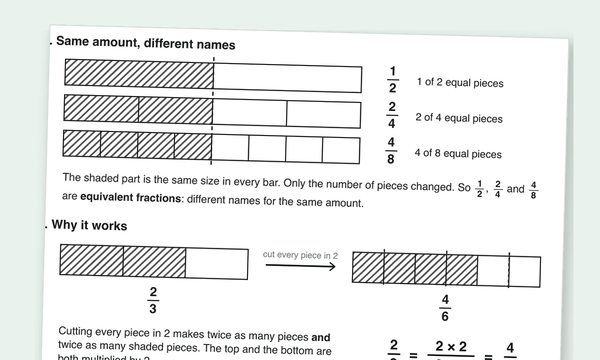
A one-page explanation of equivalent fractions with bar models, then guided and independent practice. Grades 3–5.
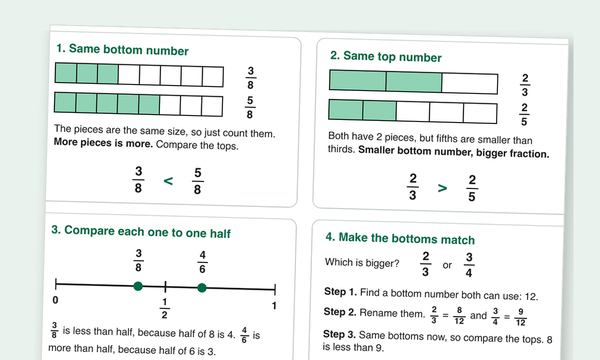
Four ways to tell which fraction is bigger, on one page, then guided and independent practice. Grades 3–5.
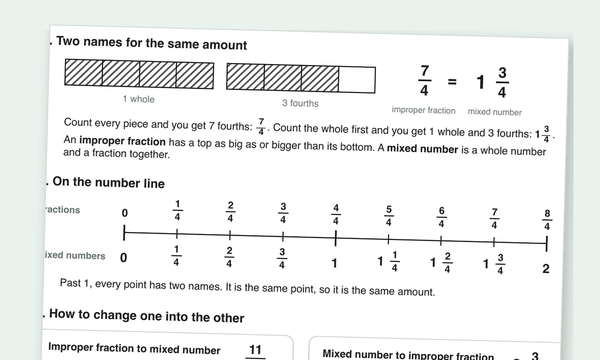
Two names for amounts bigger than one, and how to change between them. Explanation plus guided and independent practice. Grades 4–5.
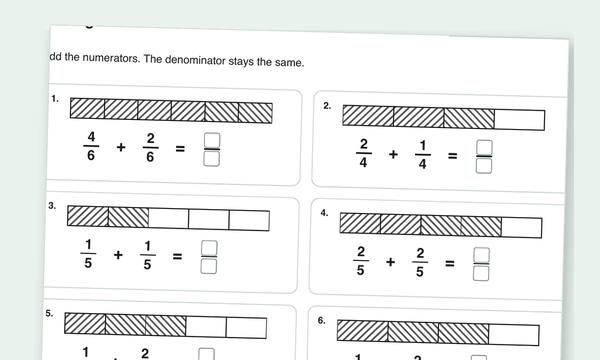
For 4th grade: Adding and subtracting with the same denominator.
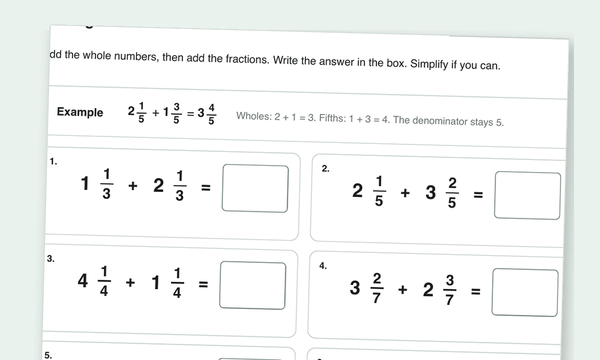
For 4th grade: Same denominator, regrouping and borrowing.
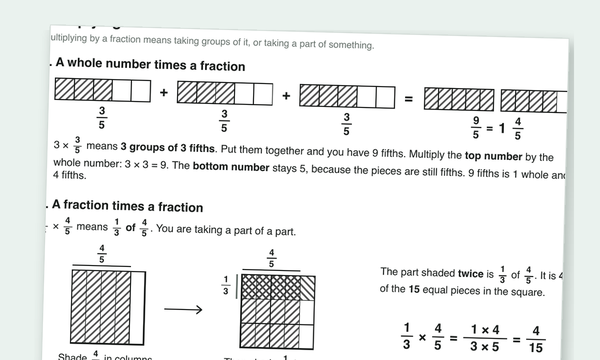
For 4th grade: How Multiplying Fractions Works, then a whole number times a fraction: models, practice and word problems.
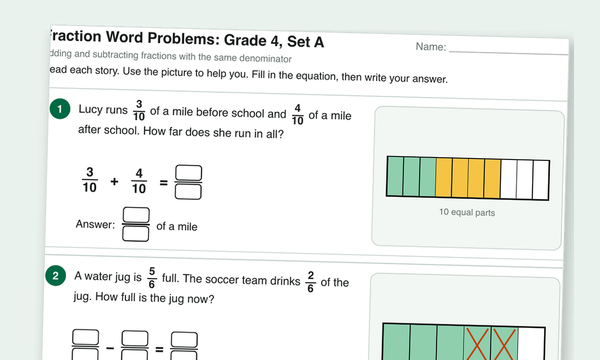
Picture-based fraction word problems for grades 3 to 5: parts of a whole, comparing, adding, subtracting and multiplying. Seven premade sheets with answer keys.
For 4th grade: Grade 4 sets.
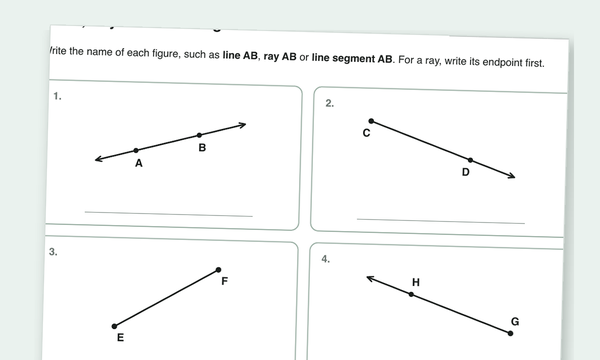
For 4th grade: Lines, rays and angles, How to Use a Protractor and the two protractor sheets, Adding Angles, Find the Missing Angle and Lines of Symmetry.
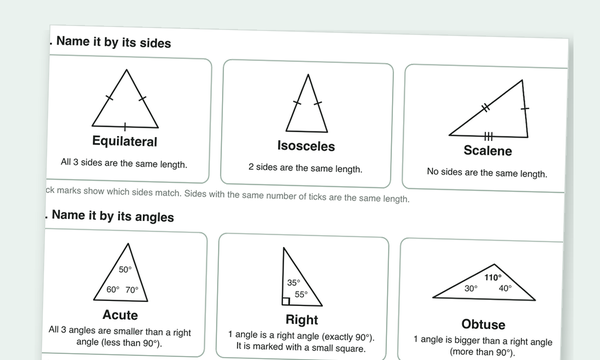
Equilateral, isosceles and scalene, then acute, right and obtuse. One page of explanation, then guided and independent practice. Grades 4–5.
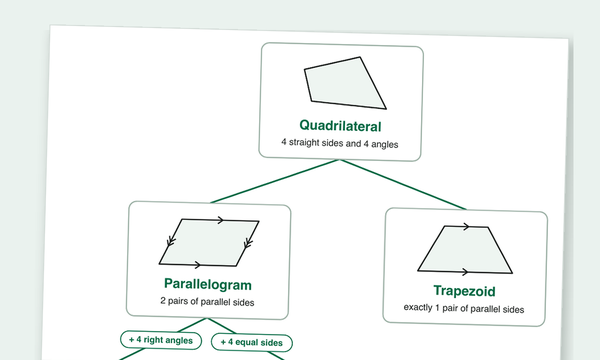
Is a square a rectangle? A family tree and properties chart, then two practice worksheets. Grades 3–5.
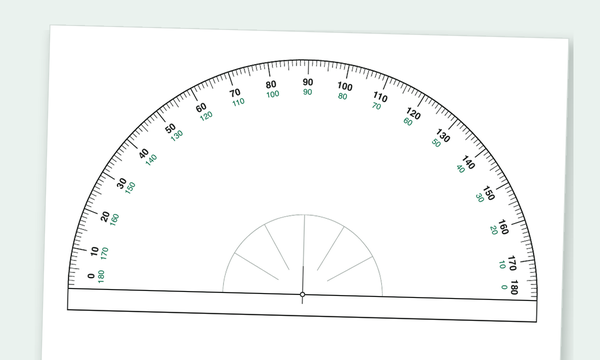
180° protractors with inner and outer scales, a six-per-page class set, and a 360° circle protractor. Grades 4–8.
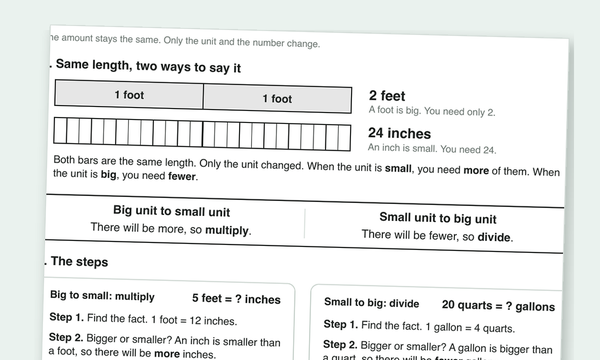
For 4th grade: How Unit Conversions Work, the conversion chart, length, weight and time, and word problems.
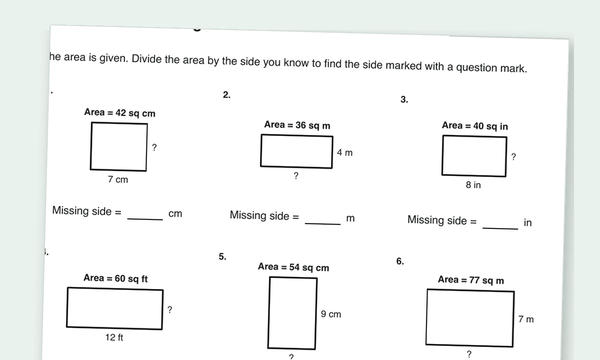
For 4th grade: Missing side, Sets B and C, area and perimeter.
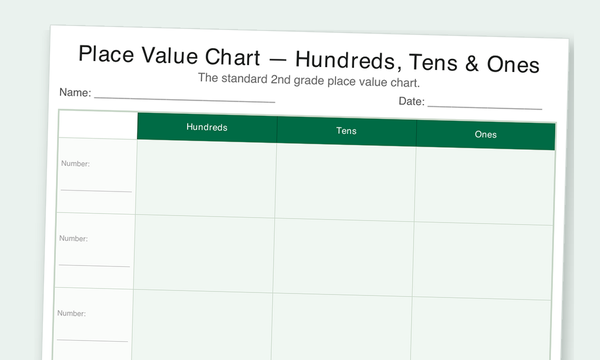
Five sizes from Tens & Ones through Millions, plus a decimal chart. Each row has a Number line. K–5.
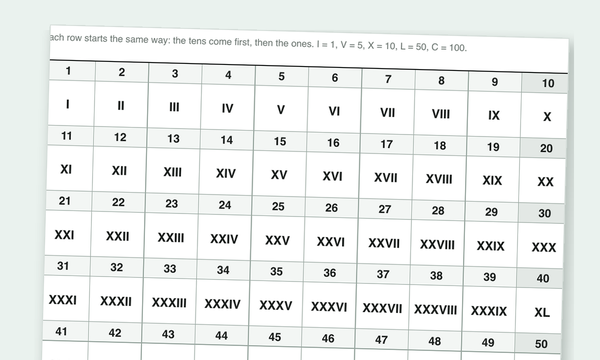
For 4th grade: The 1-100 chart, the symbols and rules chart, and the years sheet.
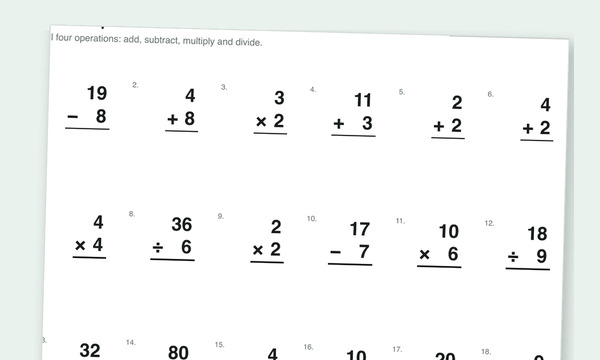
For 4th grade: Set D and the 60-fact sheet.
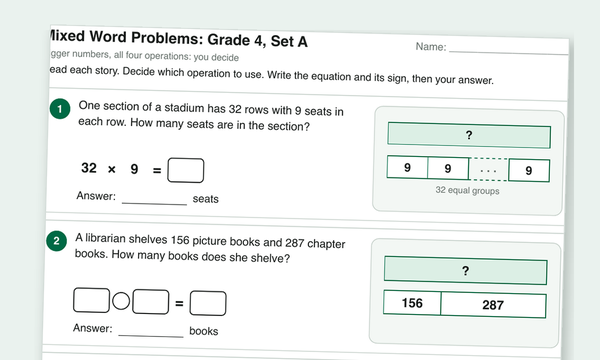
Mixed word problems for kindergarten to grade 5. The operation sign is left blank, so students decide whether to add, subtract, multiply or divide. Twelve premade sheets with answer keys.
Fourth graders are expected to multiply up to four digits by one digit and two digits by two digits, divide with remainders, find equivalent fractions and compare fractions, add and subtract fractions with like denominators, read decimals to hundredths, and measure angles.
Long division is usually the hardest new skill. Do the lesson page first, then the practice sets in order. Every long division answer key shows the full working.
Looking for a different topic? See all math worksheets.
 Printable Scholar