Subtraction practice from first facts to 3-digit problems. The sheets are mostly numbers and pictures, with one short direction to read aloud. Every sheet has its answer key on the second page.
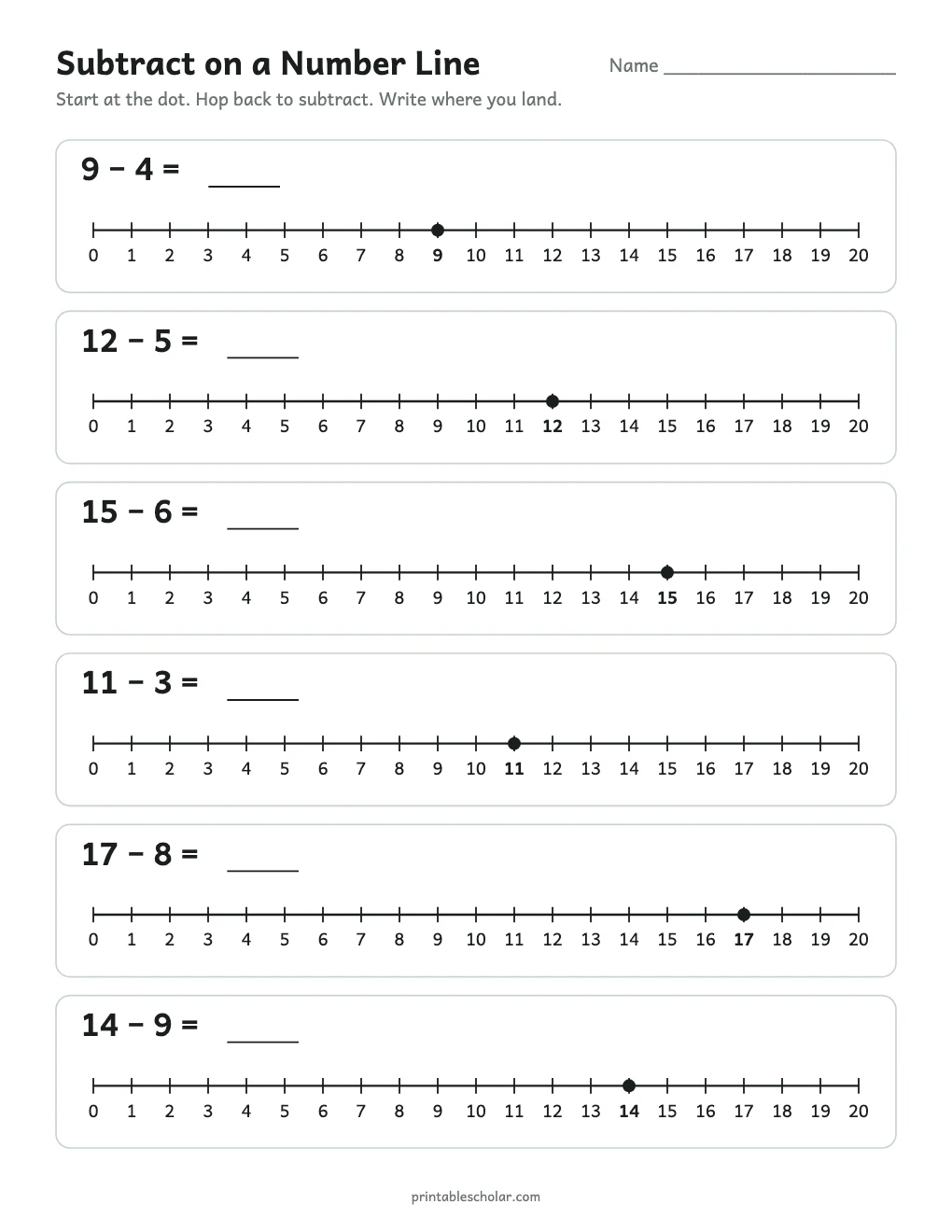
Six problems, each with a number line to 20. Hop back and write where you land. The key shows the hops.
Download PDF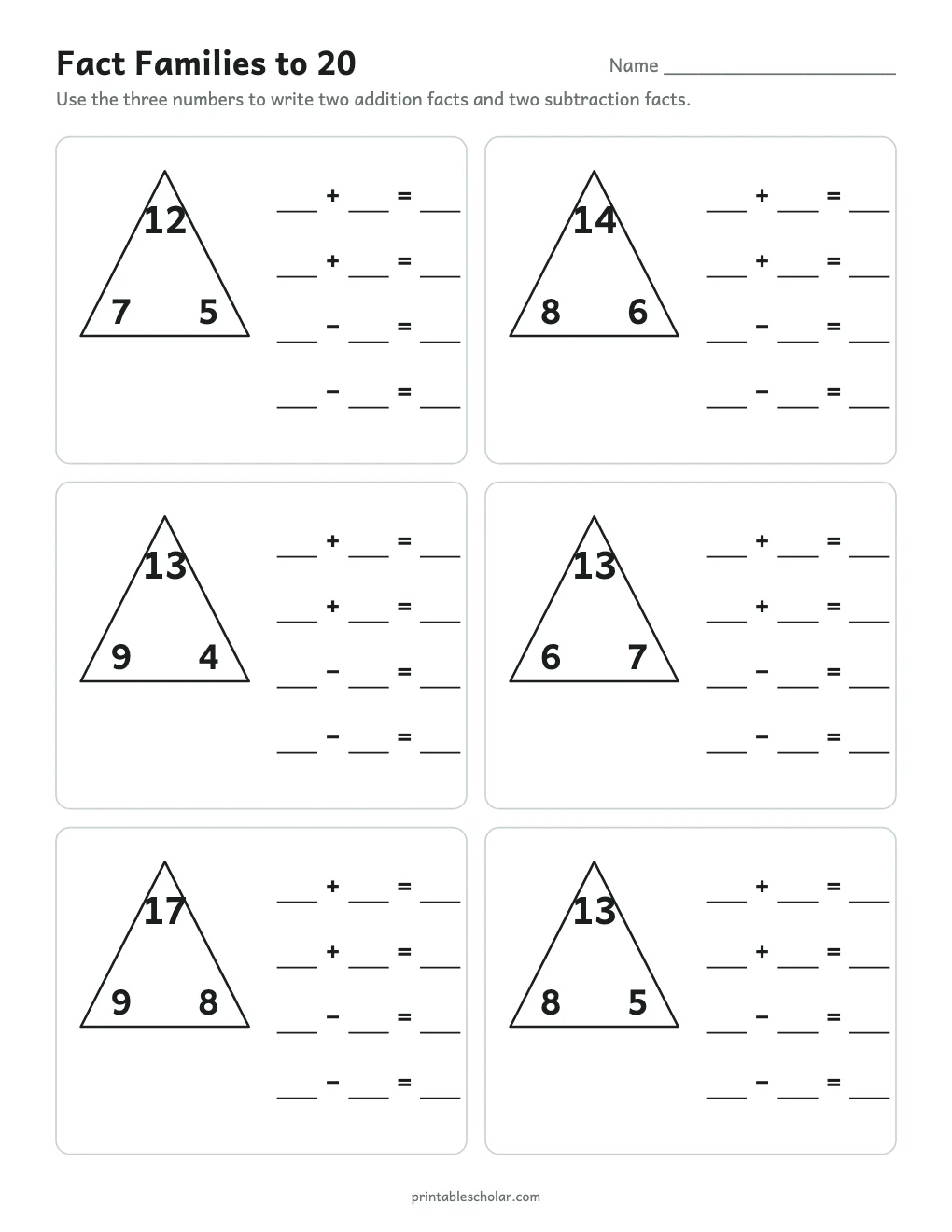
Six number triangles. Write the two addition and two subtraction facts for each. Includes answer key.
Download PDF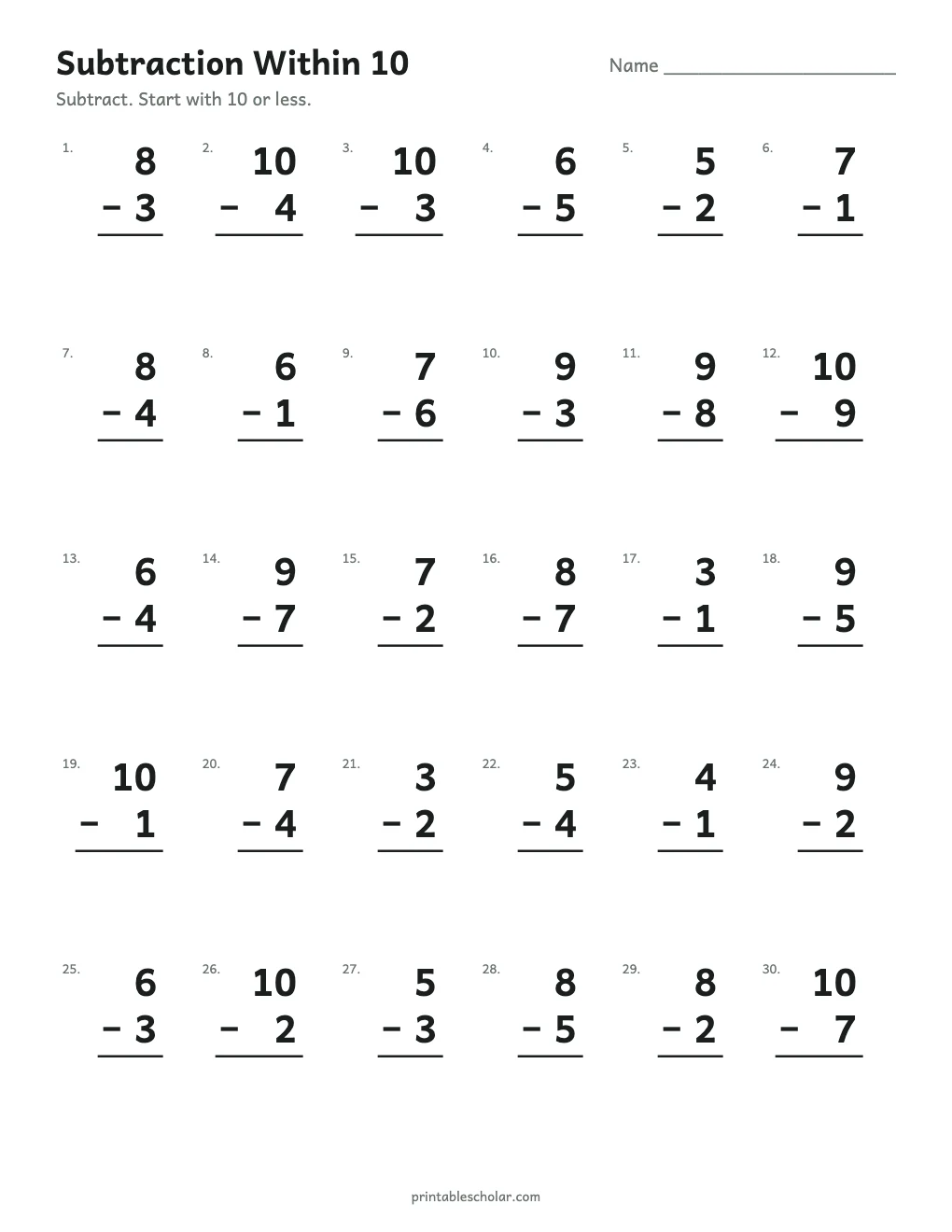
Thirty facts starting from 10 or less, in large print. Includes answer key.
Download PDF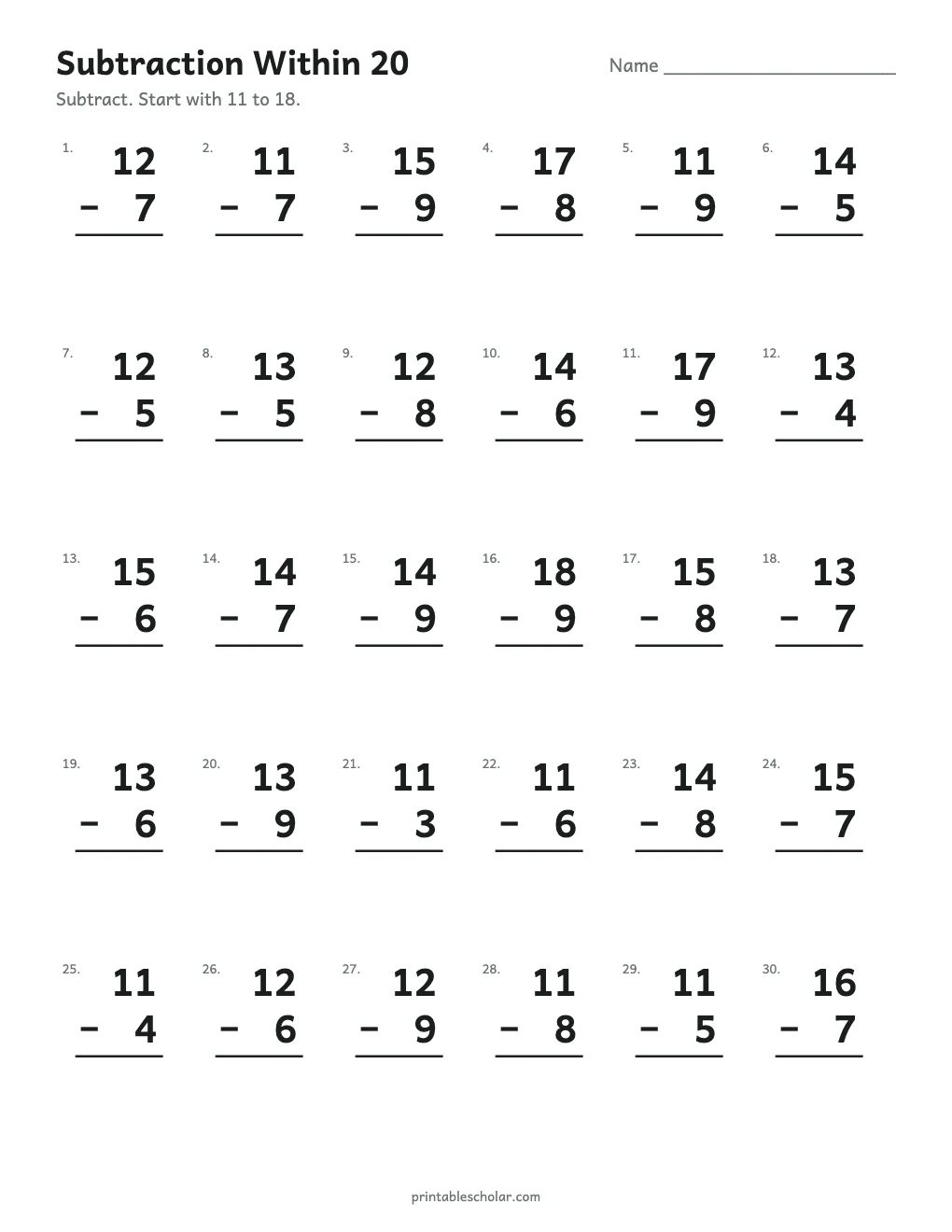
Thirty facts that cross ten, such as 14 − 6. Includes answer key.
Download PDF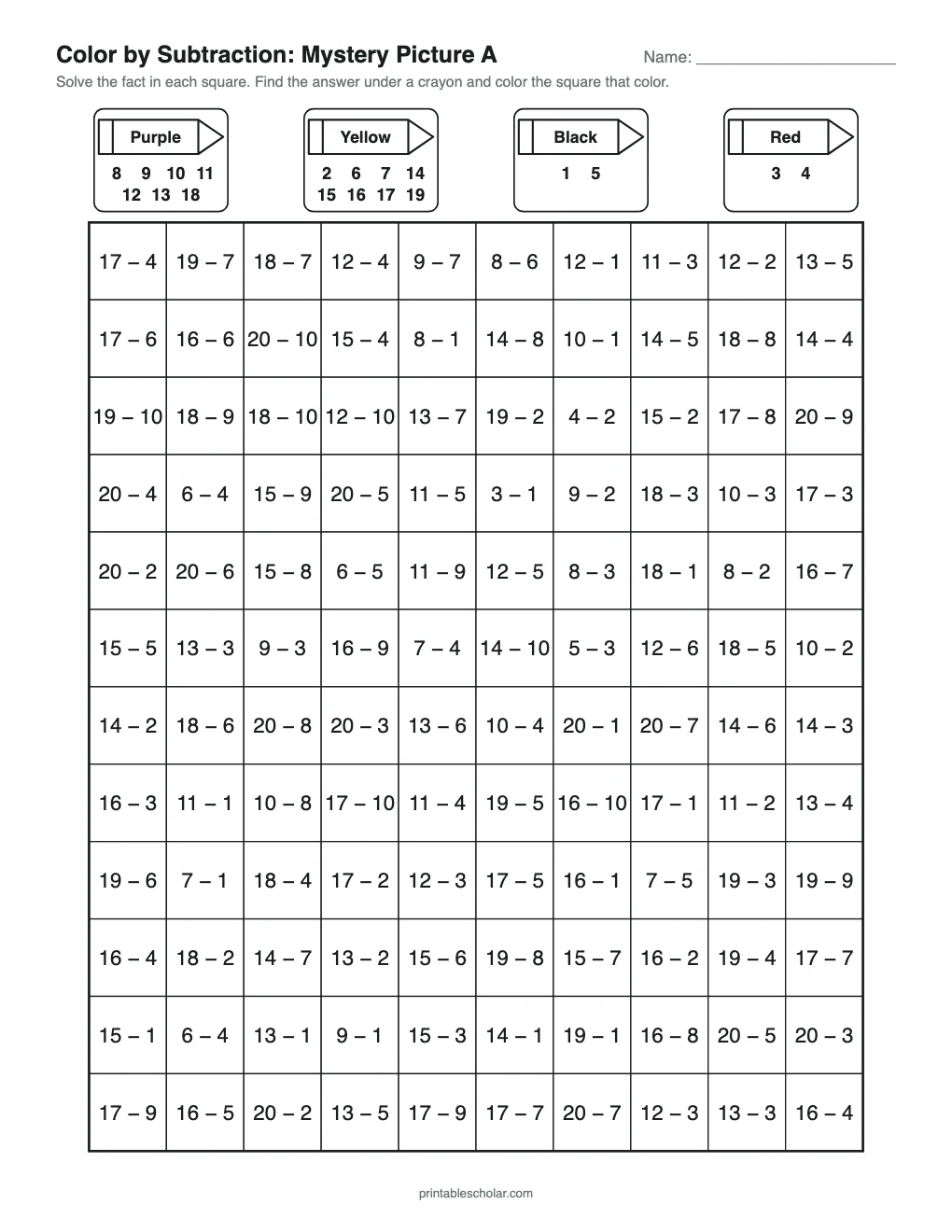
Solve 120 subtraction facts within 20 and color each square by the crayon key to uncover a hidden picture. Includes answer key.
Download PDF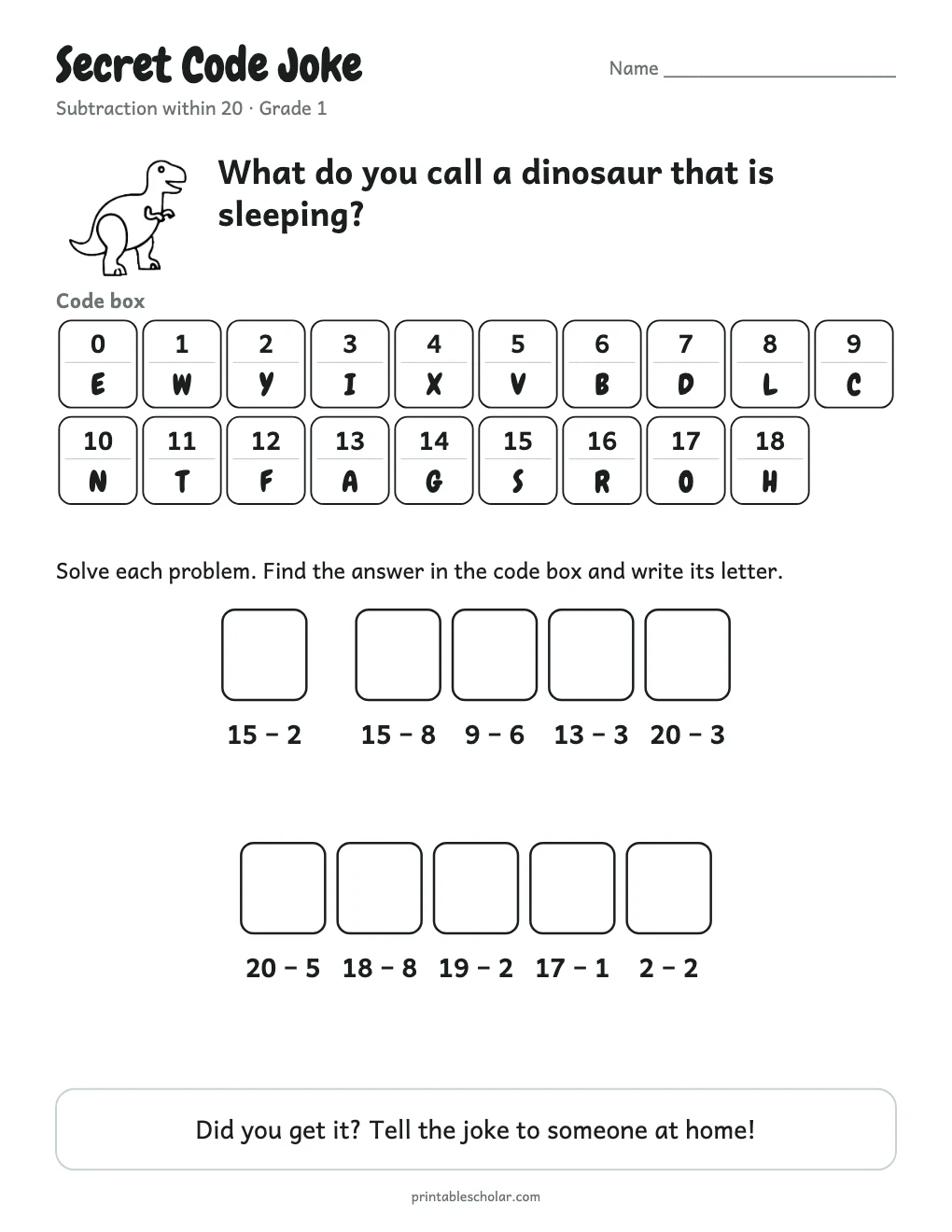
Ten facts within 20. Each answer is a letter in the code box, and the letters spell the punchline of a joke. Includes answer key.
Download PDF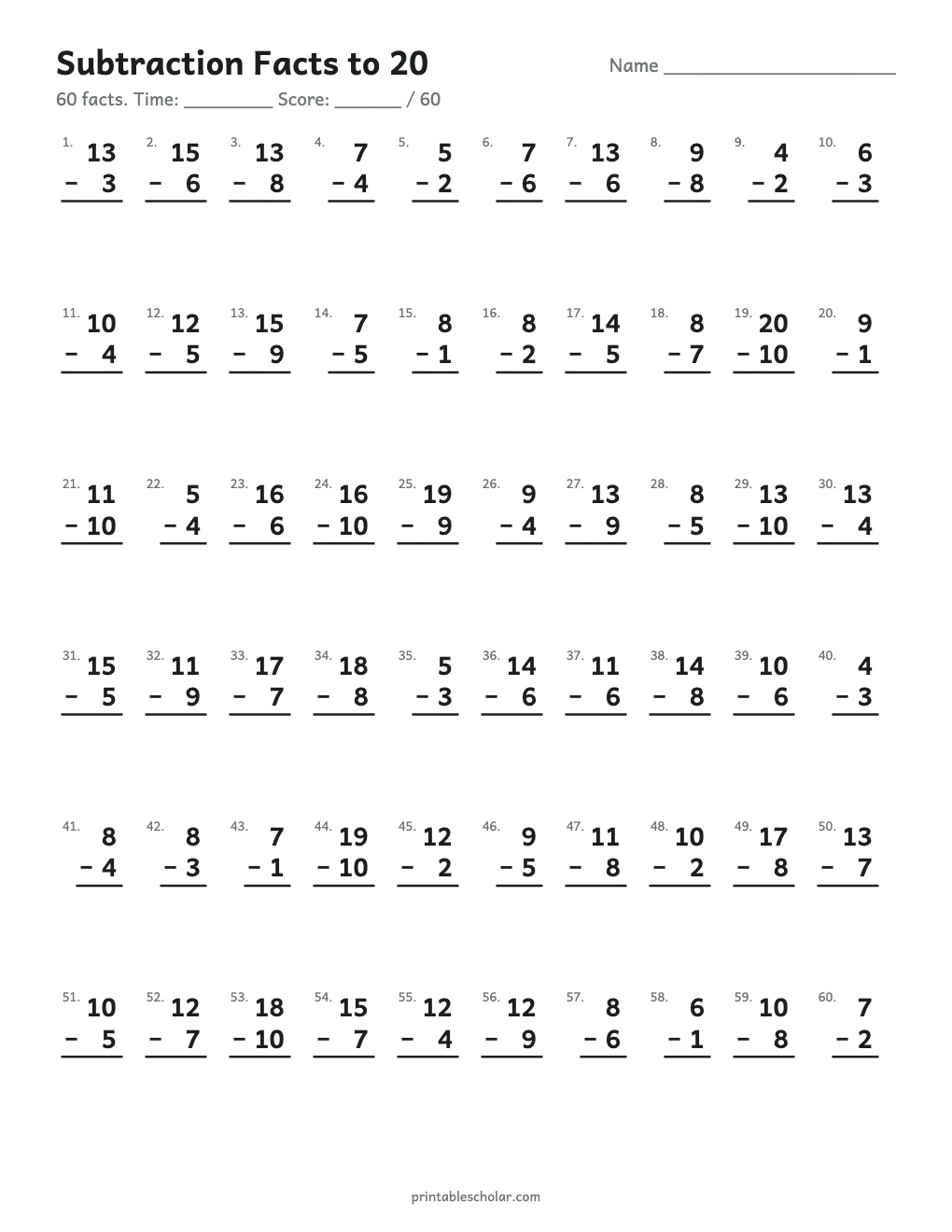
Sixty mixed facts with a place for the time and score. Includes answer key.
Download PDF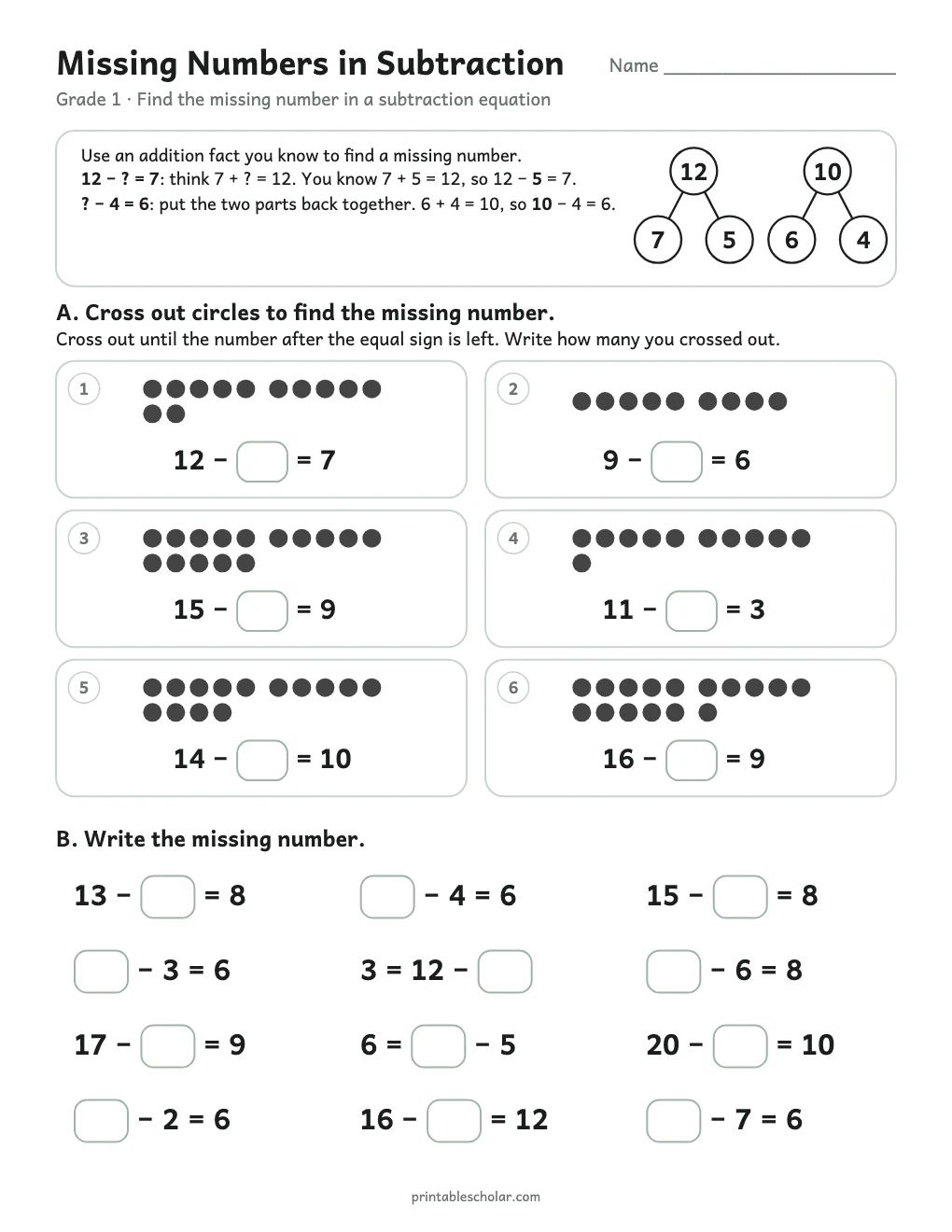
Six counter pictures to cross out, then twelve equations such as 12 − ? = 7 and ? − 4 = 6. Includes answer key.
Download PDF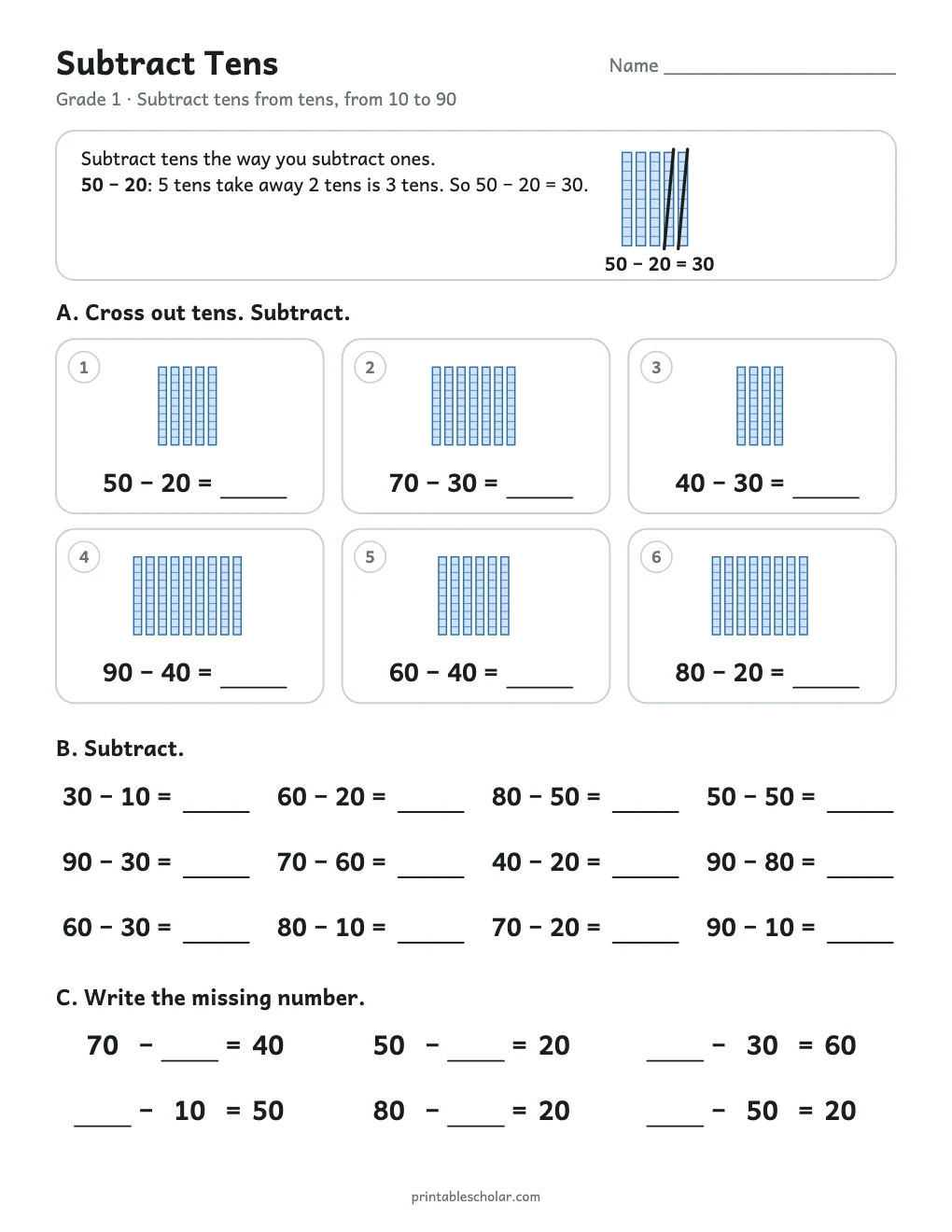
Six rod pictures to cross out, twelve facts such as 80 − 50, and six missing numbers. Includes answer key.
Download PDF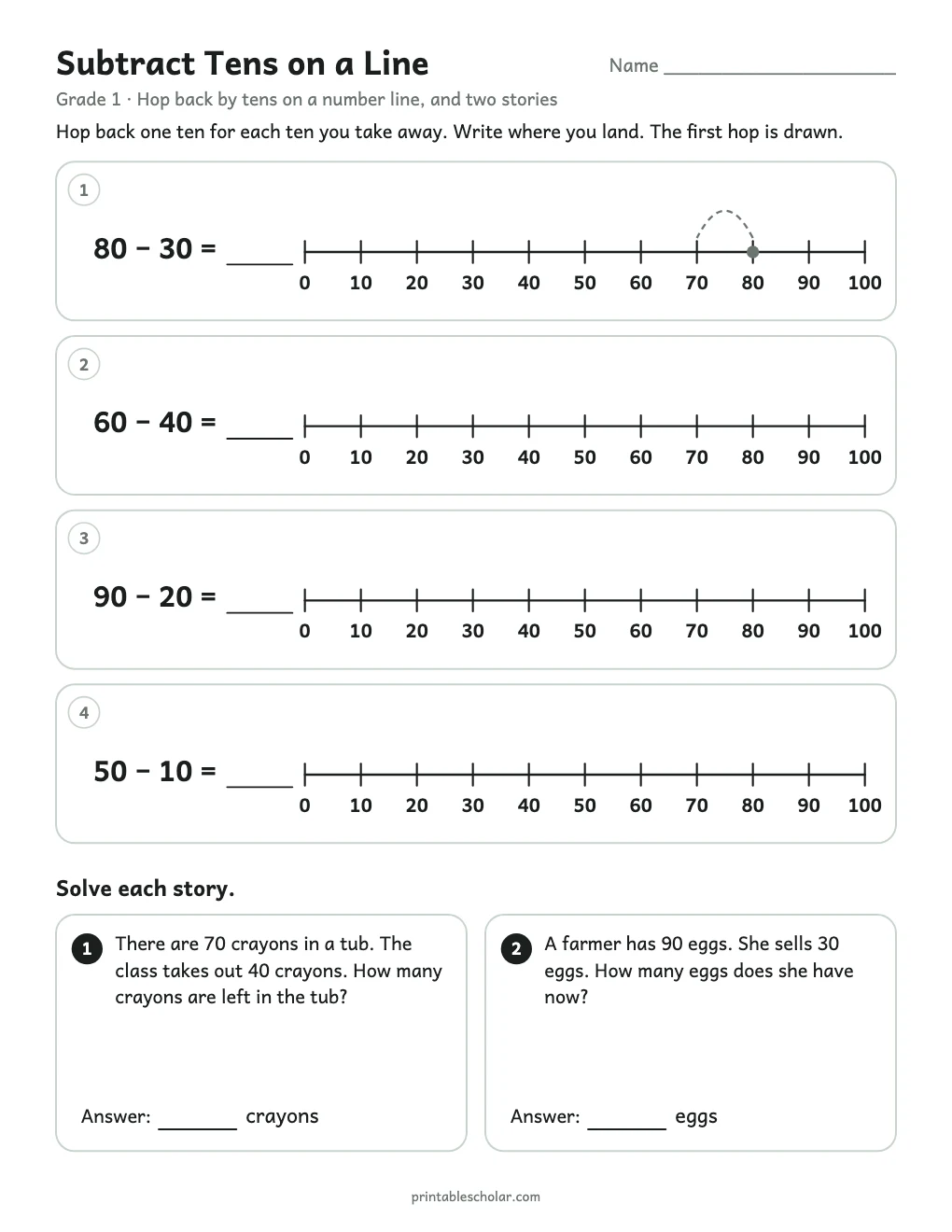
Four problems to solve with hops back by tens, and two short stories. The key shows the hops.
Download PDF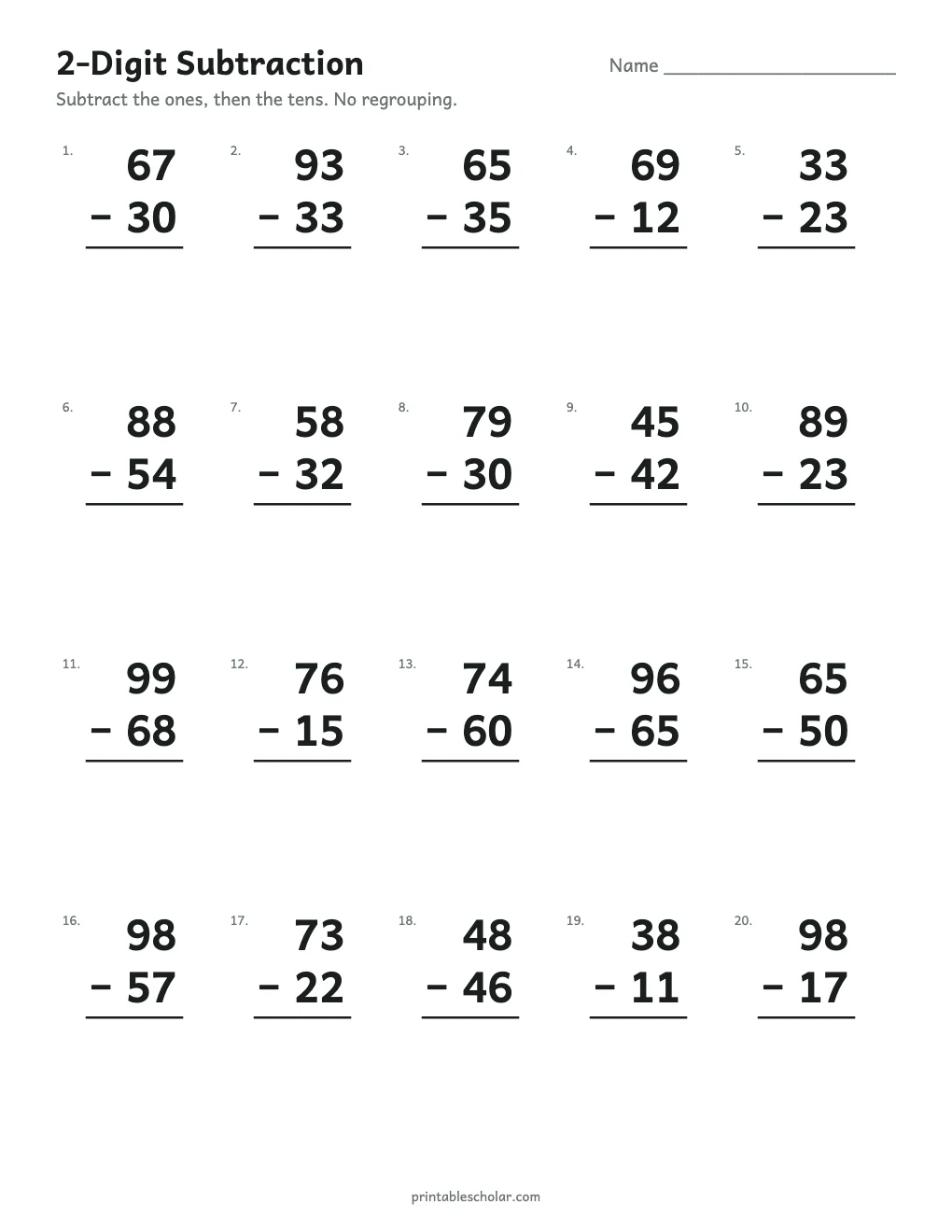
Twenty problems where every column can be subtracted as it stands. Includes answer key.
Download PDF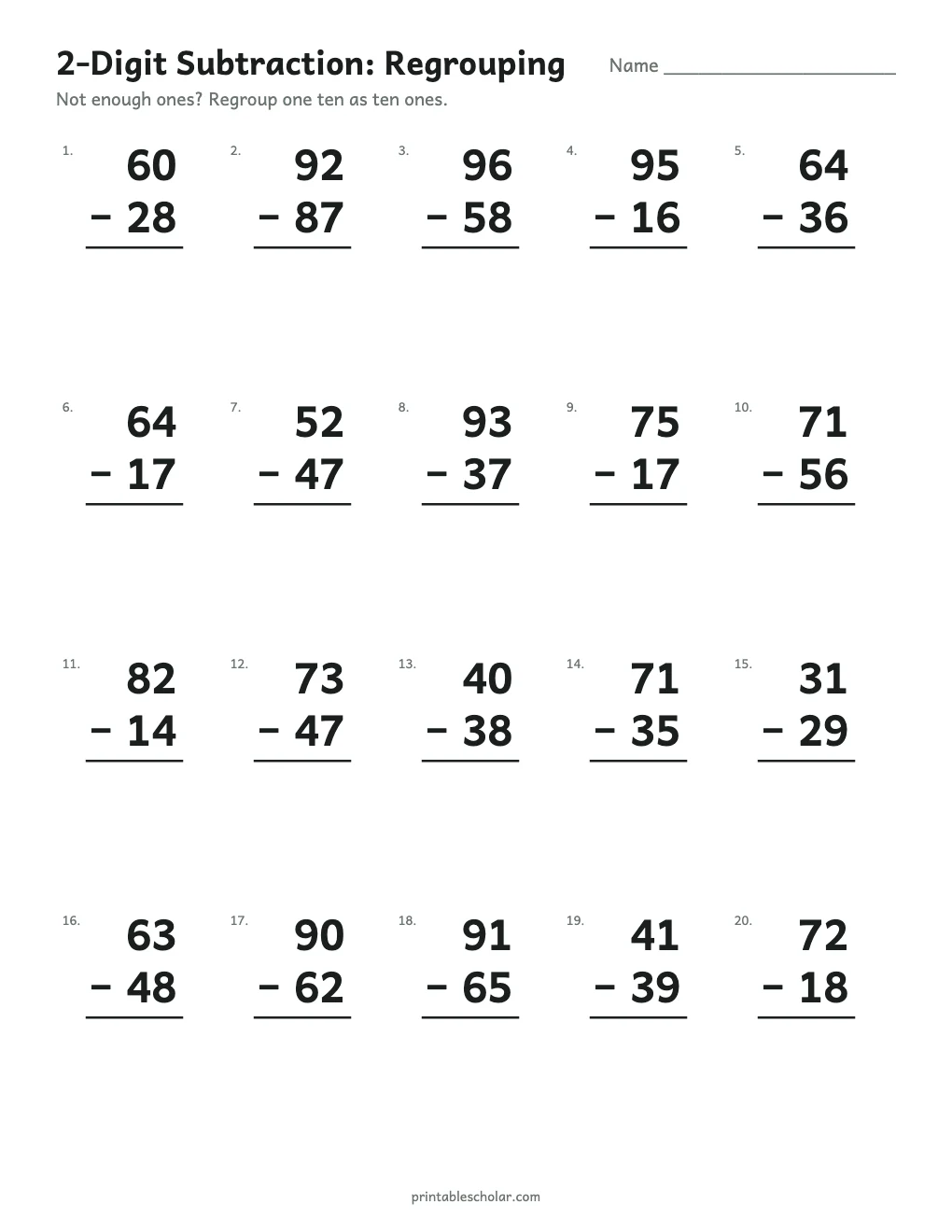
Twenty problems where there are not enough ones, so every one needs regrouping. Includes answer key.
Download PDF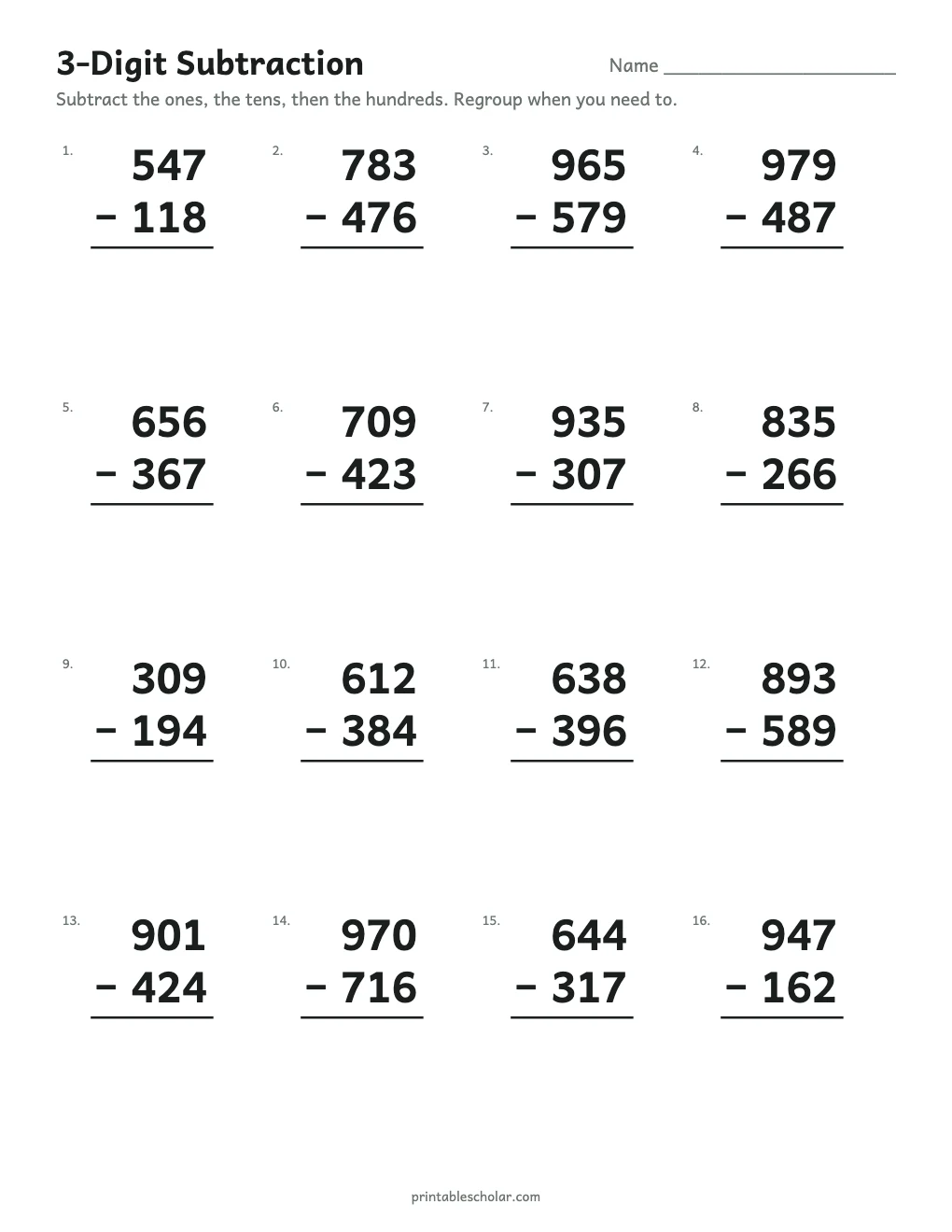
Sixteen problems with regrouping in the ones or tens. Includes answer key.
Download PDF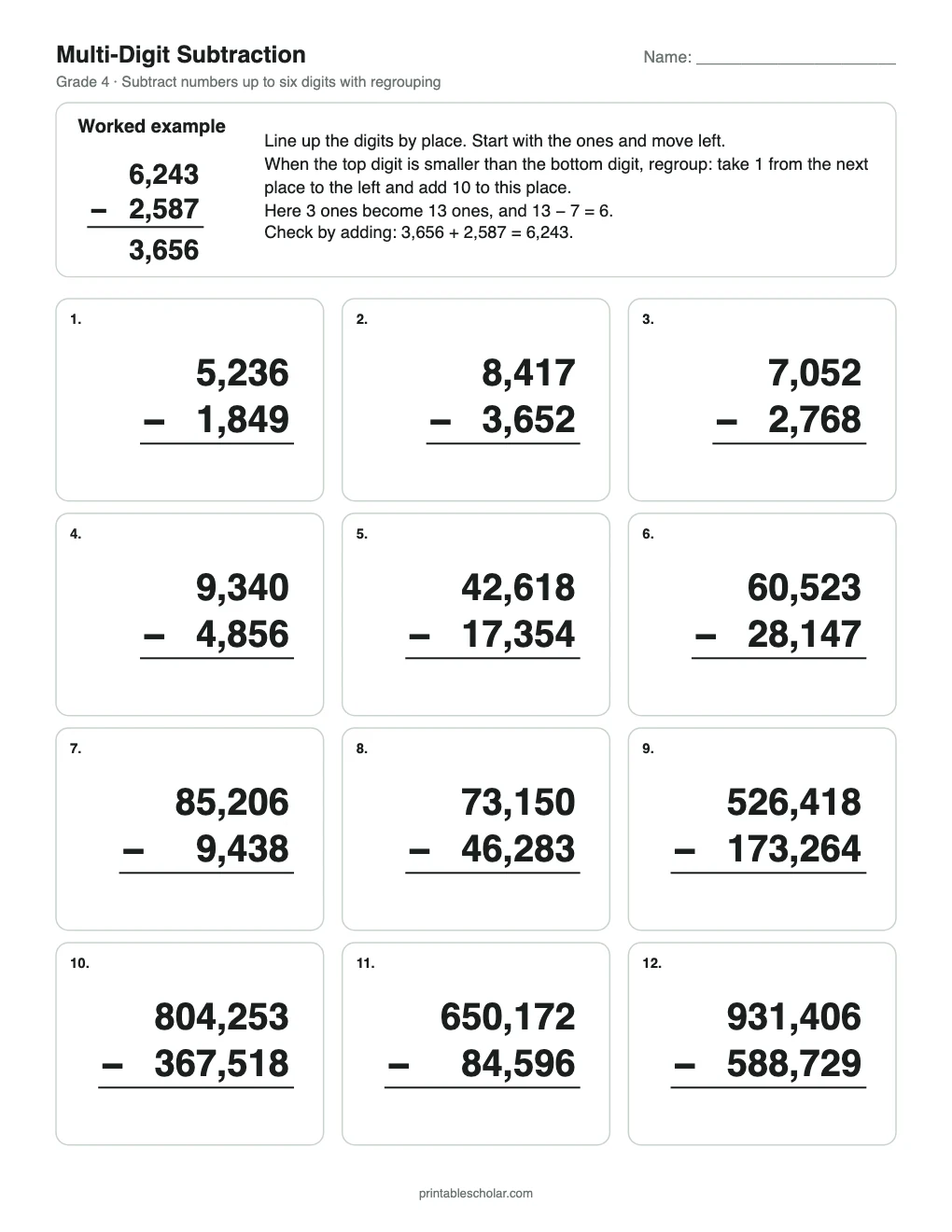
A worked example, then twelve problems with 4-digit, 5-digit and 6-digit numbers and room to work. Includes answer key.
Download PDF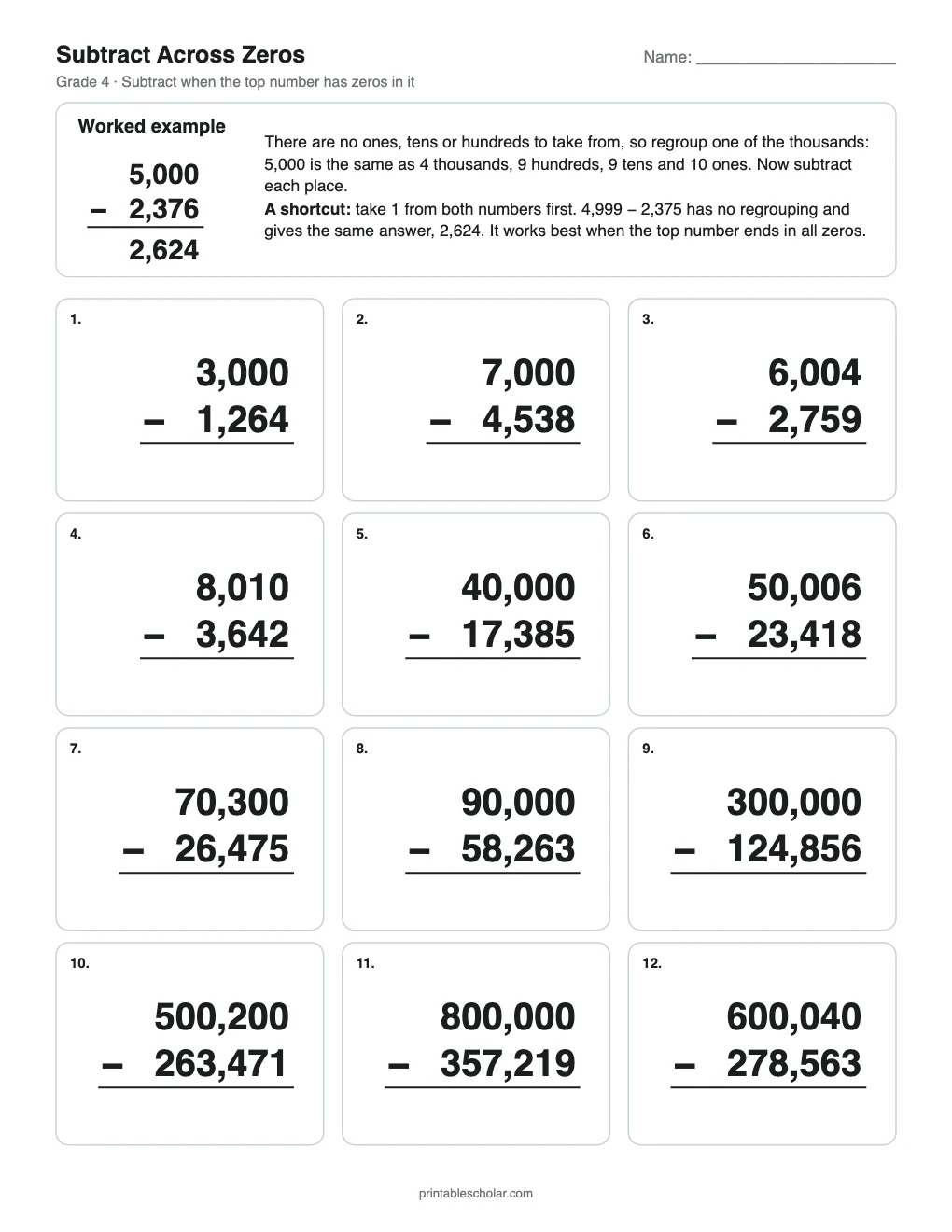
Twelve problems such as 5,000 − 2,376 and 70,300 − 26,475, with a worked example and a shortcut. Includes answer key.
Download PDFThese sheets are sorted by skill. For 2-digit subtraction, one sheet has no regrouping and the next has regrouping in every problem. Regrouping, or borrowing, is the step most children get stuck on, and a sheet that mixes both kinds hides whether they have it. If regrouping is new, start with the regrouping page, which shows the trade with base-ten blocks before the written steps.
The number line sheet shows subtraction as hopping back, which is how most children first work out facts like 15 − 6. Fact families show that every subtraction fact is an addition fact turned around: if 8 + 6 = 14, then 14 − 6 = 8. Missing Numbers in Subtraction uses that link: to solve 12 − ? = 7, think 7 + ? = 12.
The sets are fixed, so a child can repeat the same sheet and see it get easier. A sensible order is within 10, within 20, the 60-fact sheet, then 2-digit and 3-digit subtraction.
Two 4th grade sheets come last. Multi-Digit Subtraction has 4-digit, 5-digit and 6-digit problems set large, with room above the digits to regroup. Subtract Across Zeros is the case that causes the most errors, such as 5,000 − 2,376, where there is nothing in the next place to take from.
For children who are not ready for written facts, start with picture subtraction. For stories, see subtraction word problems. The matching addition worksheets follow the same order.
The mystery picture is fact practice with a reason to finish: each square has a fact, the answer says which crayon to use, and a picture shows up as the squares fill in. The secret code joke works the same way with letters: each answer points to a letter in the code box, and the letters spell the punchline. There are more subtraction pictures, and holiday ones, on the mystery pictures page.
 Printable Scholar