About the Picture Subtraction Worksheets
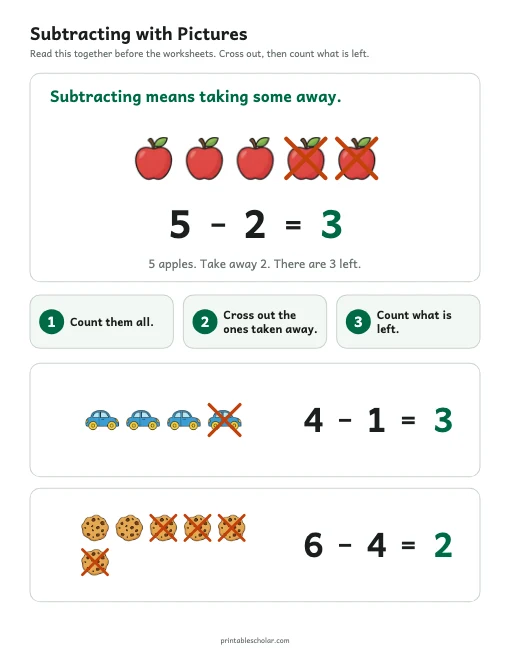
Subtraction is harder for young children than addition, and the reason is simple: the thing being taken away disappears. Crossing pictures out solves that. The child can still see all five apples, see which two are gone, and count the three that are left.
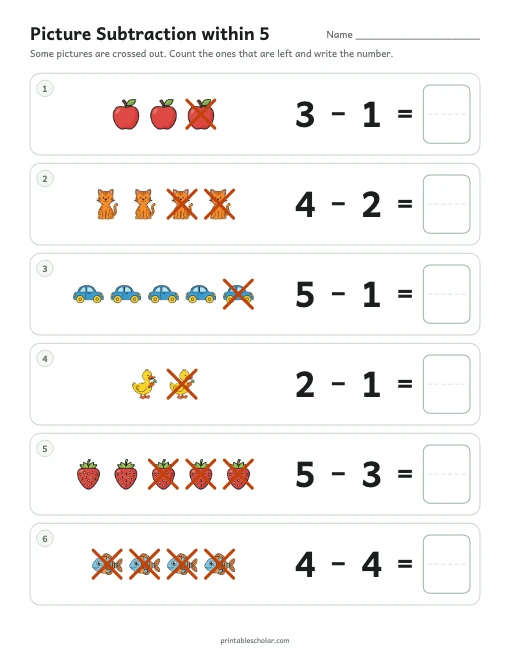
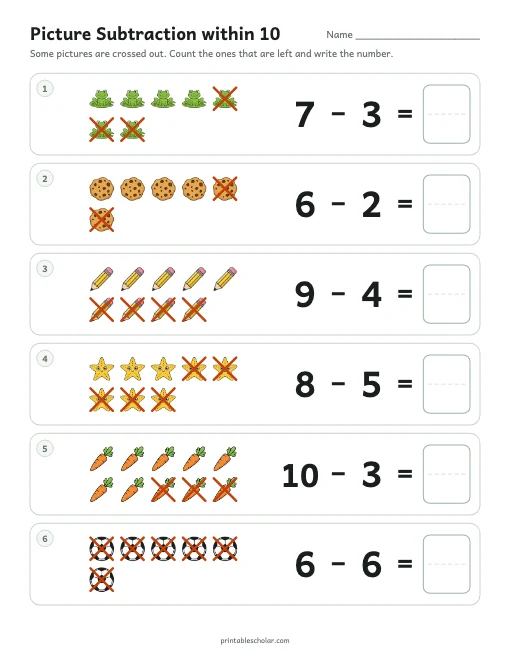
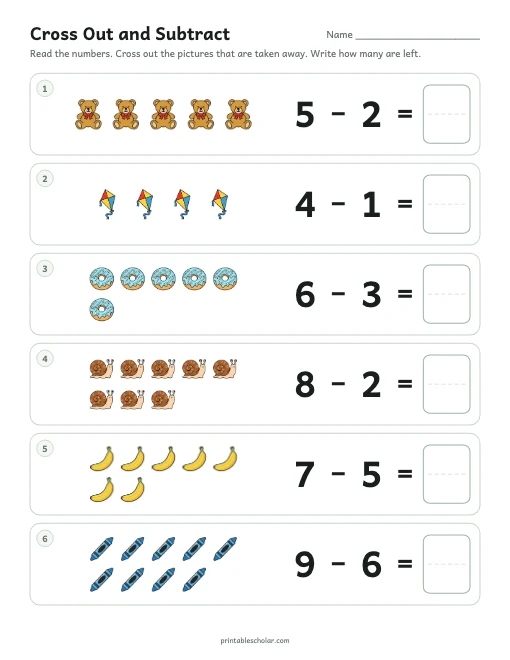
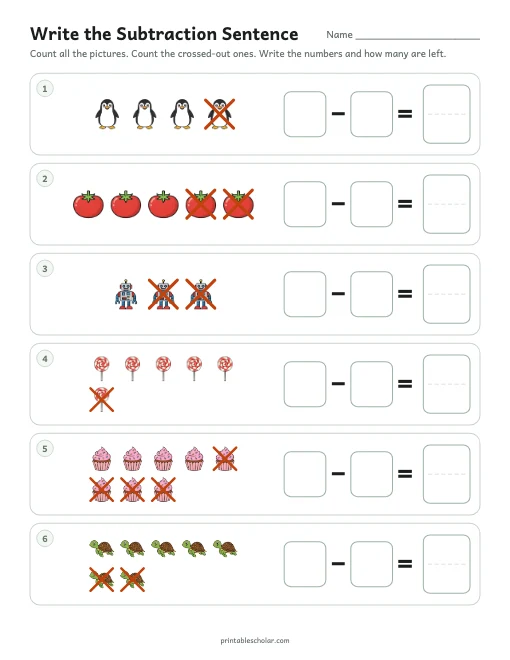
The first two worksheets have the crossing out already done, so the child only counts what is left and writes the number. That keeps attention on what the minus sign means. On Cross Out and Subtract the child does the crossing out, working from the numbers. On Write the Subtraction Sentence they go the other way and write the numbers from the picture.
One problem on each of the first two sheets takes everything away, so the answer is zero. Zero is worth meeting early. Children often try to write the starting number again, and seeing every picture crossed out makes it clear why nothing is left.
Every worksheet has an answer key on its second page. These sheets follow the picture addition worksheets. When pictures are no longer needed, the subtraction worksheets page has practice without them.
Frequently Asked Questions
What is picture subtraction?
Picture subtraction shows the starting number as a group of objects and crosses out the ones being taken away. The child counts the objects that are not crossed out to find the answer.
What age is picture subtraction for?
Ages 5 to 7, which is kindergarten and the start of 1st grade. Subtracting within 5 comes first, and within 10 follows once that feels easy.
Should children learn addition before subtraction?
Usually, yes. Most programs teach putting groups together before taking away. Once a child can add within 5 with pictures, subtraction within 5 is a natural next step, and the two are often practiced side by side after that.
How do I explain zero in subtraction?
Use a problem where everything is taken away, such as 4 minus 4. Cross out all four pictures and ask how many are left. None are left, and zero is the number that means none.
What comes after picture subtraction?
Addition and subtraction facts within 10 without pictures, then fact families, which show how addition and subtraction undo each other.