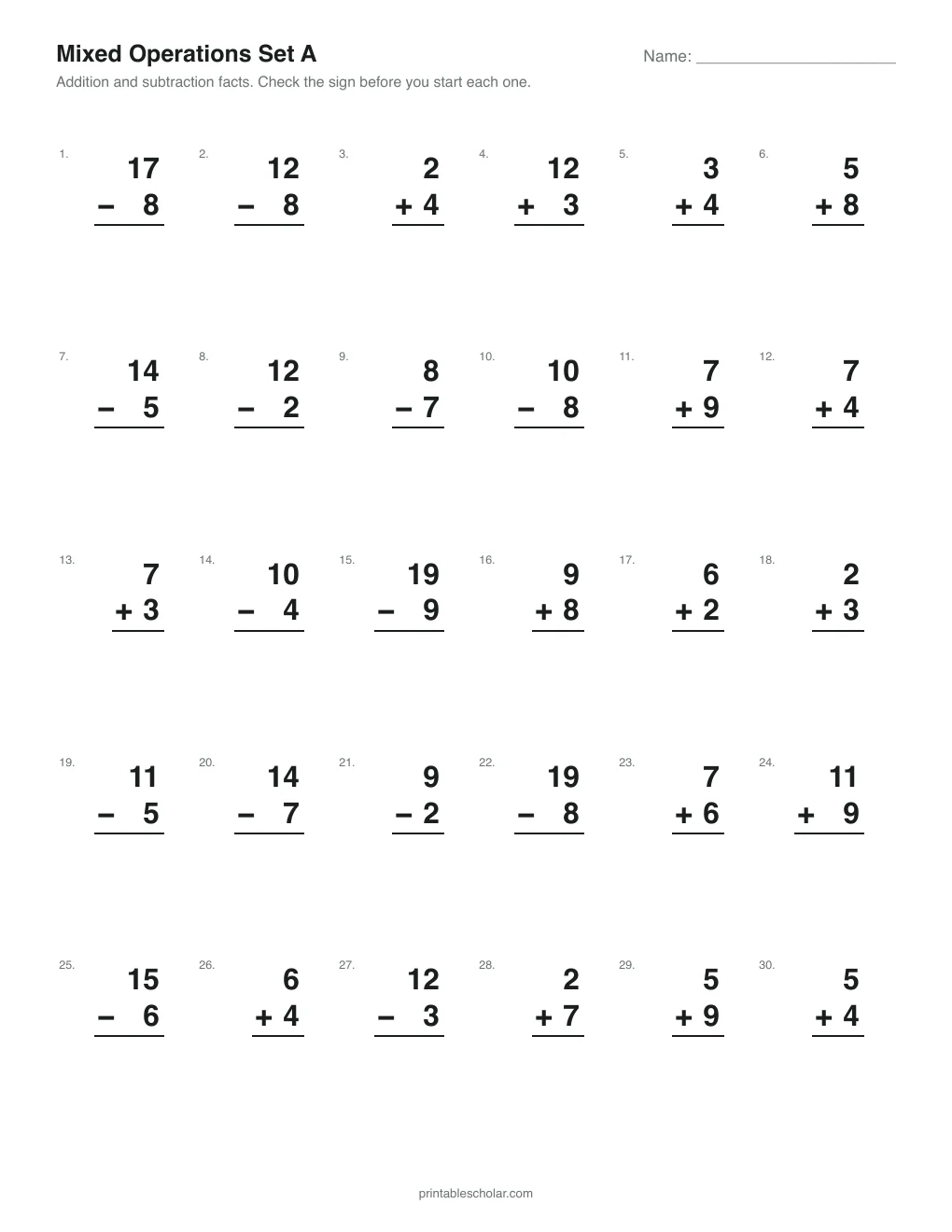
Set A: Addition and Subtraction Facts
Grades 1–2Thirty facts with the two signs mixed. Includes answer key.
Download PDF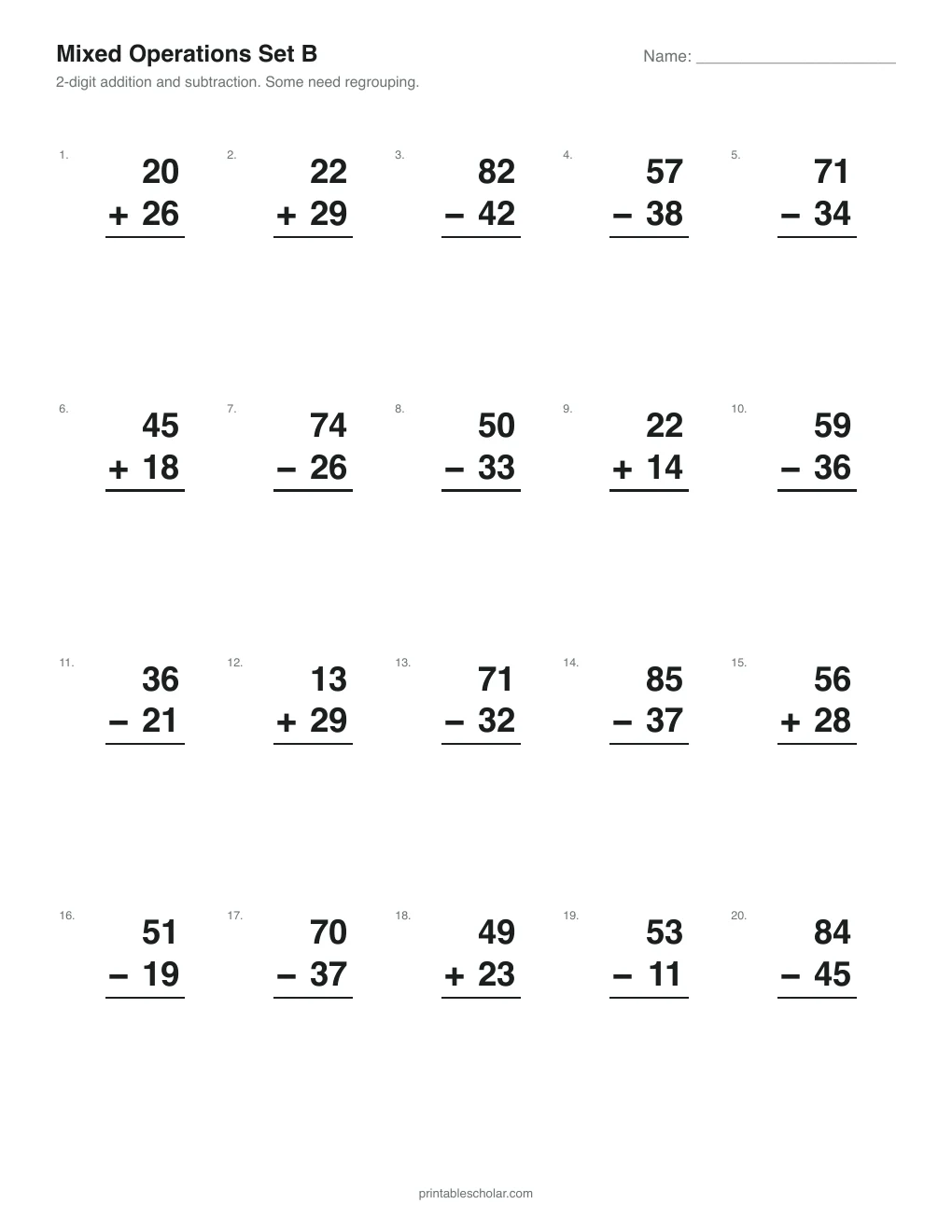
Set B: 2-Digit Addition and Subtraction
Grades 2–3Twenty 2-digit problems, some with regrouping. Includes answer key.
Download PDF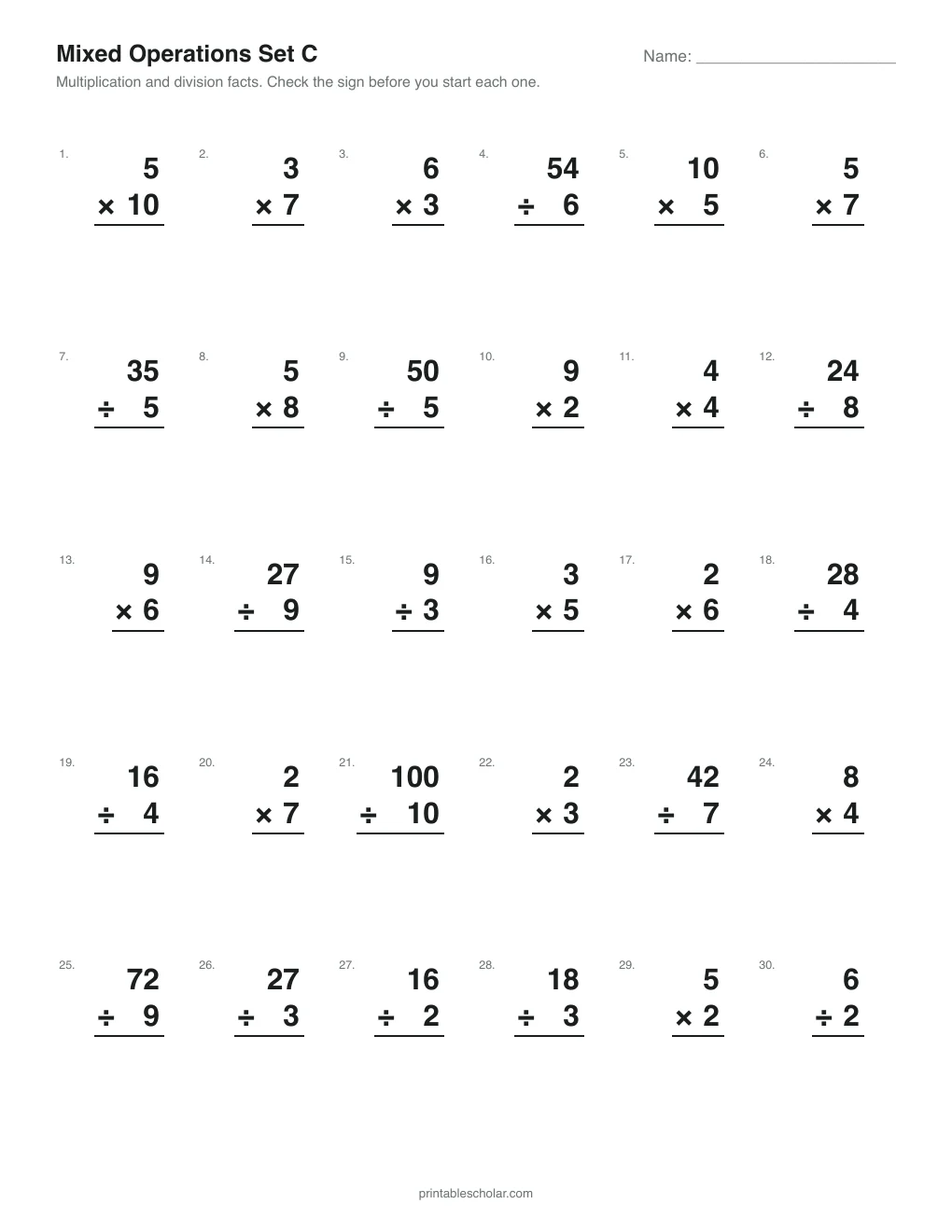
Set C: Multiplication and Division Facts
Grades 3–4Thirty facts with the two signs mixed. Includes answer key.
Download PDF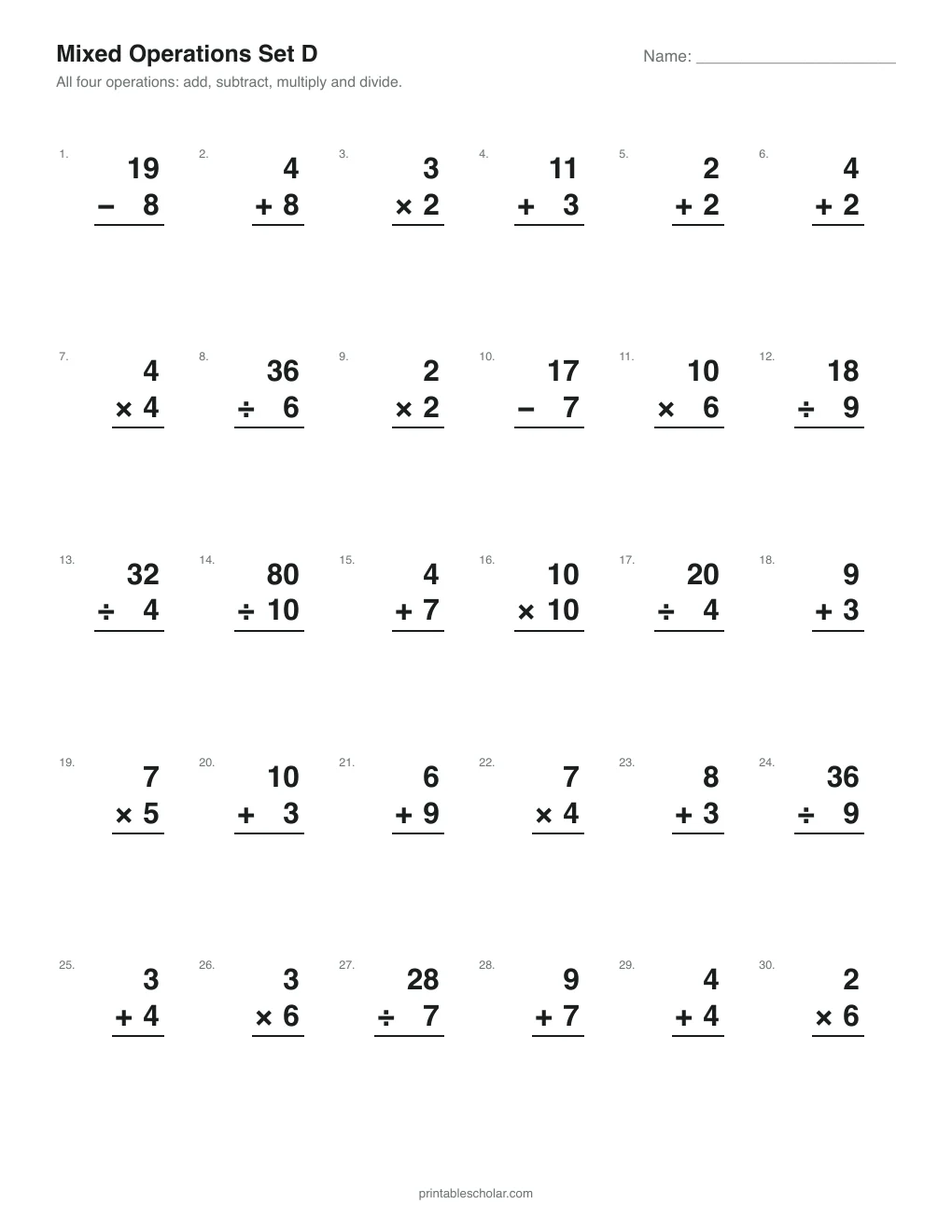
Set D: All Four Operations
Grades 3–5Thirty facts using +, −, × and ÷. Includes answer key.
Download PDF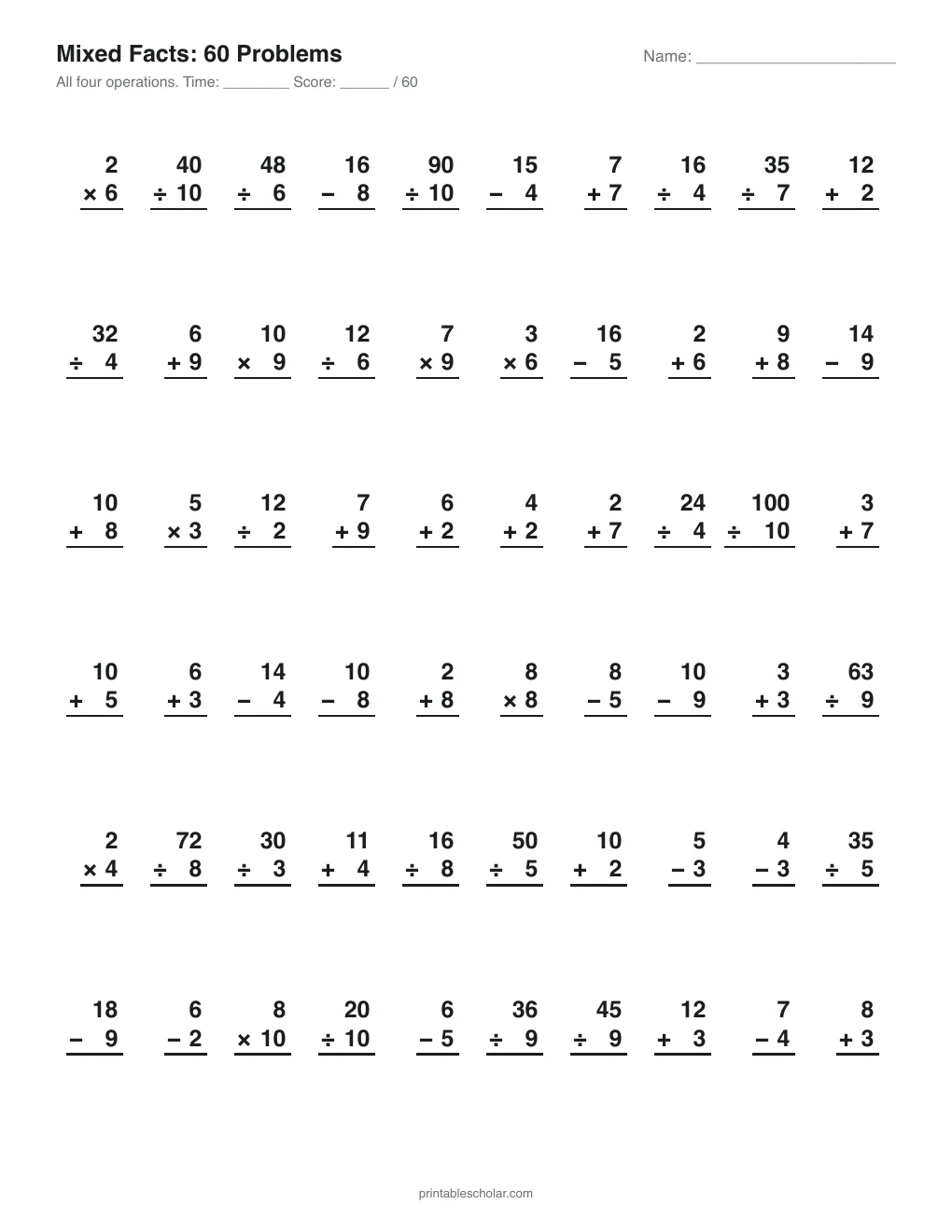
Mixed Facts: 60 Problems
Grades 3–5Sixty facts in all four operations, with a place for the time and score. Includes answer key.
Download PDF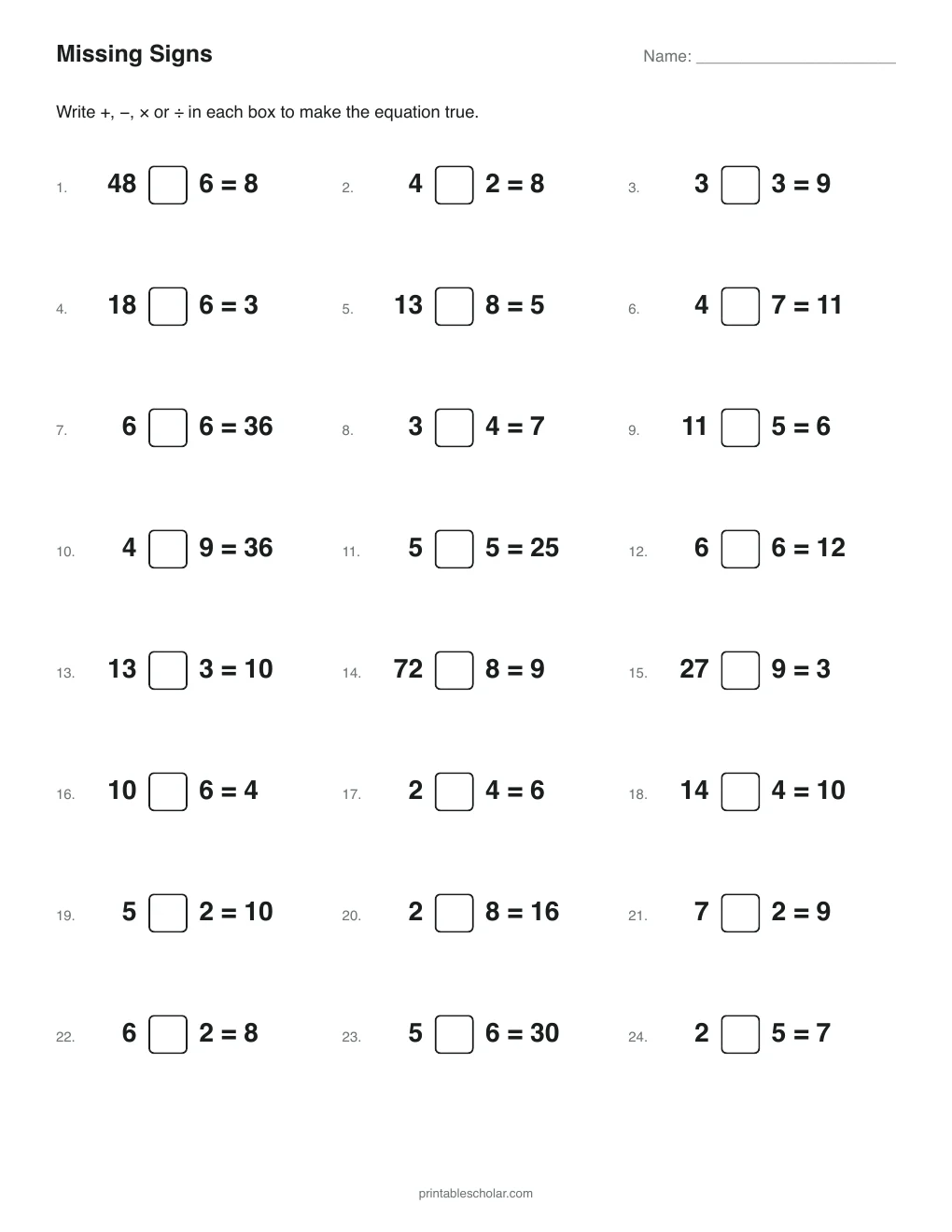
Missing Signs
Grades 3–4Twenty-four equations with the sign left out. Each has only one sign that works. Includes answer key.
Download PDF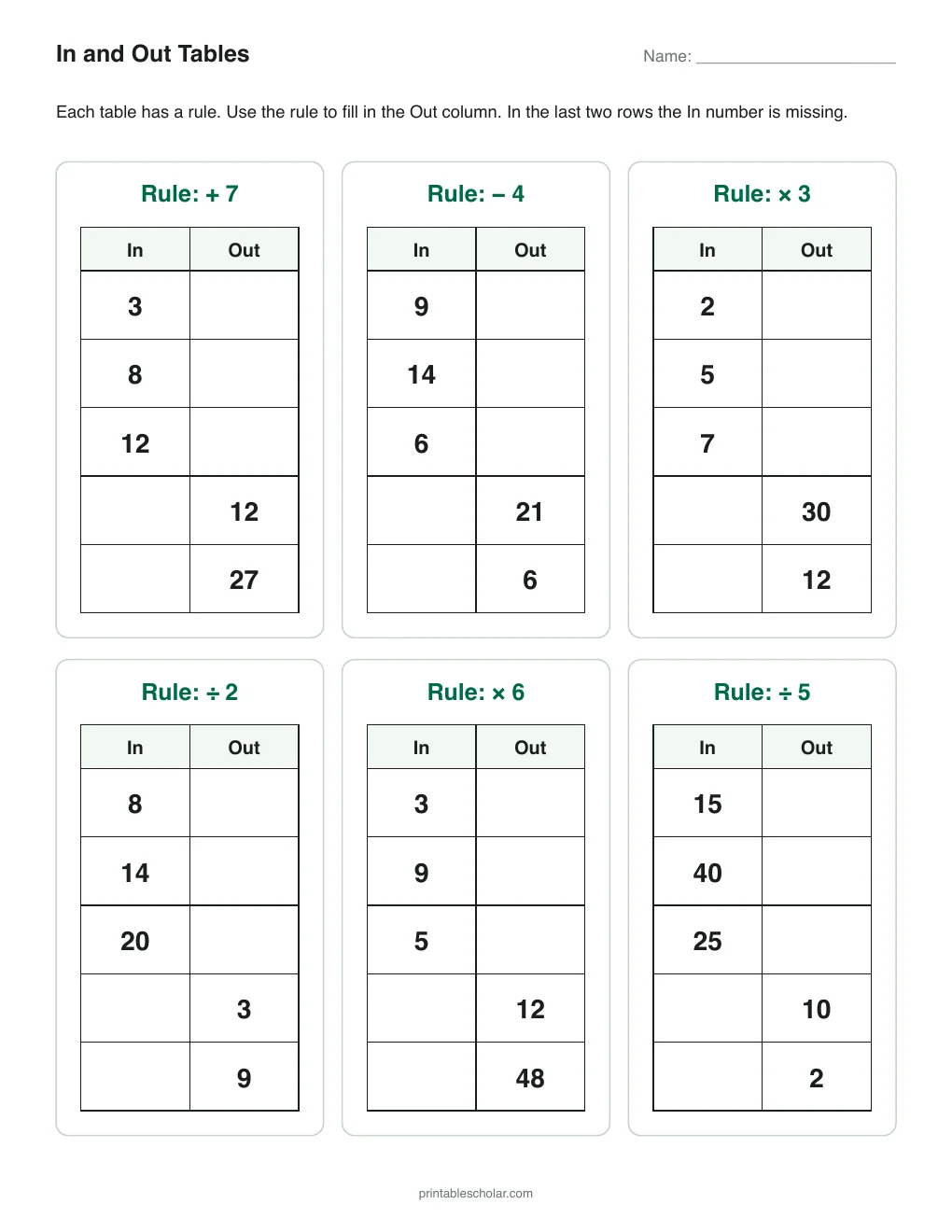
In and Out Tables
Grades 2–4Six tables, each with a rule. Fill in the outputs, then work backward for the last two rows. Includes answer key.
Download PDF