Space Race Timeline for Kids
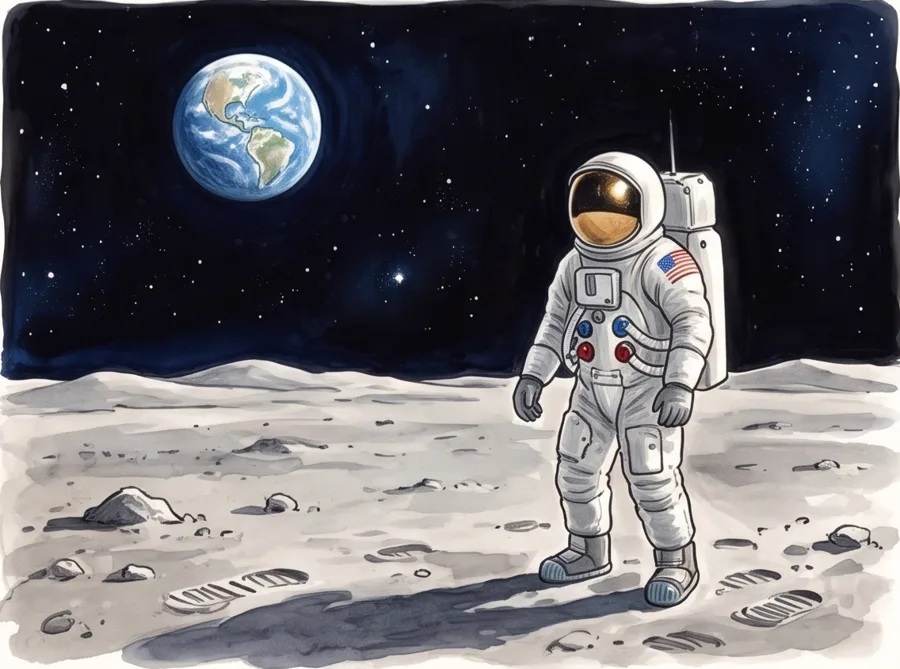
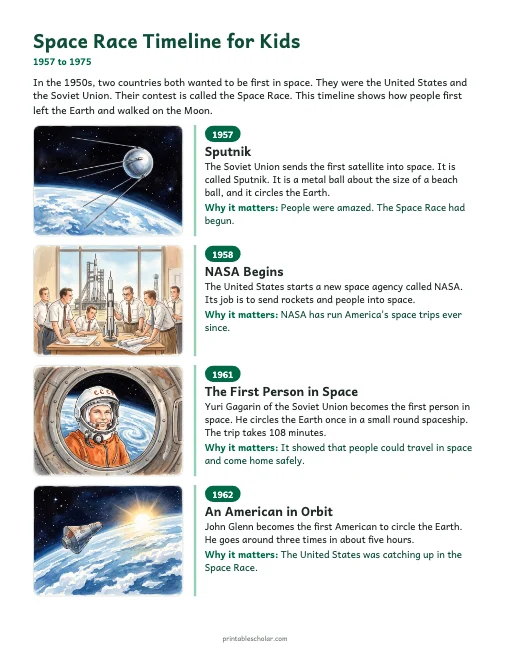
In the 1950s, two countries both wanted to be first in space. They were the United States and the Soviet Union. Their contest is called the Space Race. This timeline shows how people first left the Earth and walked on the Moon.

Cut and Order Activity
Cut out the seven picture cards and glue them in order on the timeline.
Download PDF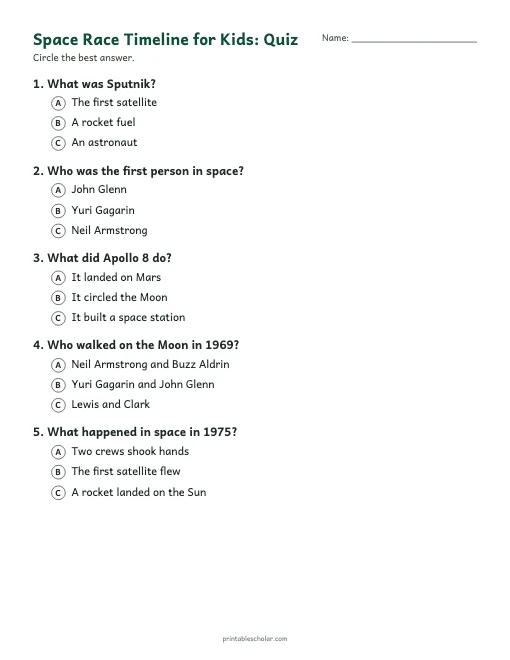
The timeline
 1957
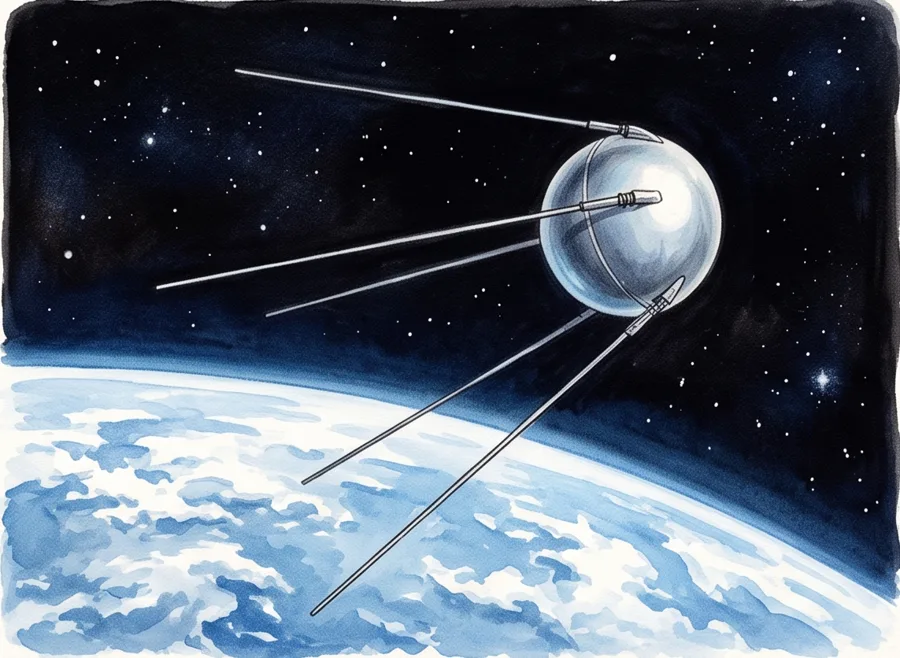
1957Sputnik
The Soviet Union sends the first satellite into space. It is called Sputnik. It is a metal ball about the size of a beach ball, and it circles the Earth.
Why it matters: People were amazed. The Space Race had begun.
 1958
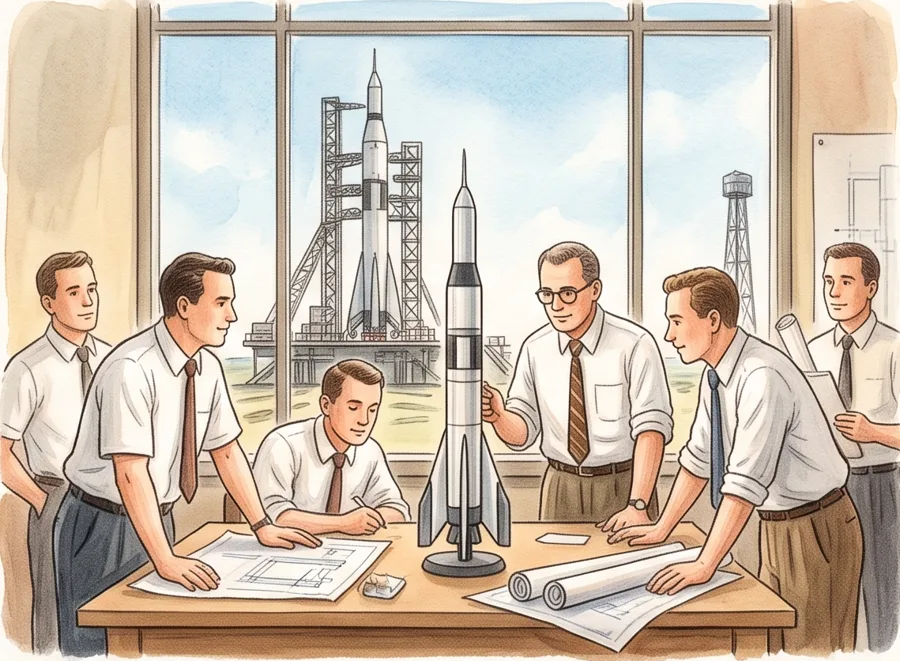
1958NASA Begins
The United States starts a new space agency called NASA. Its job is to send rockets and people into space.
Why it matters: NASA has run America's space trips ever since.
 1961
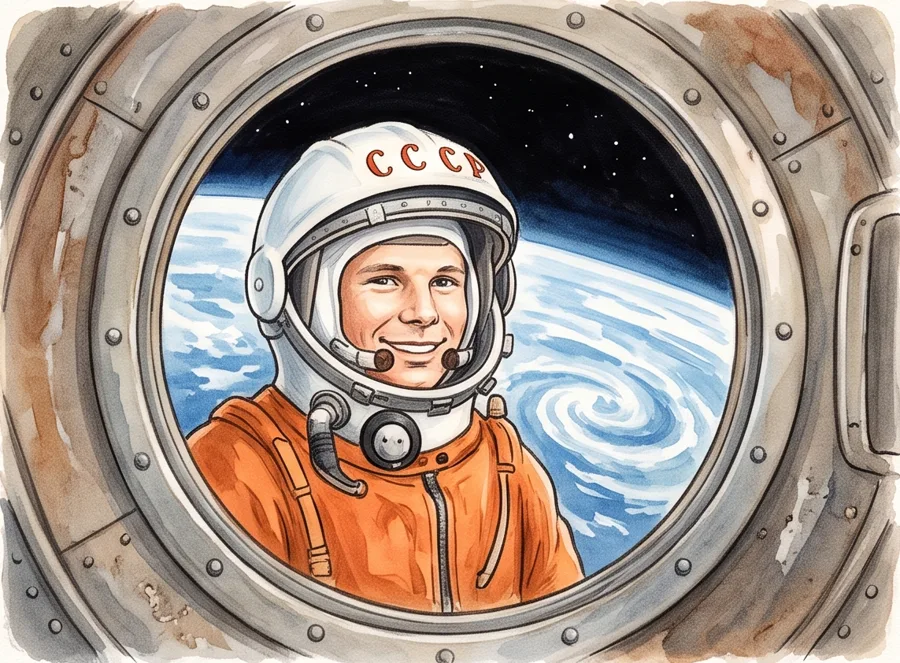
1961The First Person in Space
Yuri Gagarin of the Soviet Union becomes the first person in space. He circles the Earth once in a small round spaceship. The trip takes 108 minutes.
Why it matters: It showed that people could travel in space and come home safely.
 1962
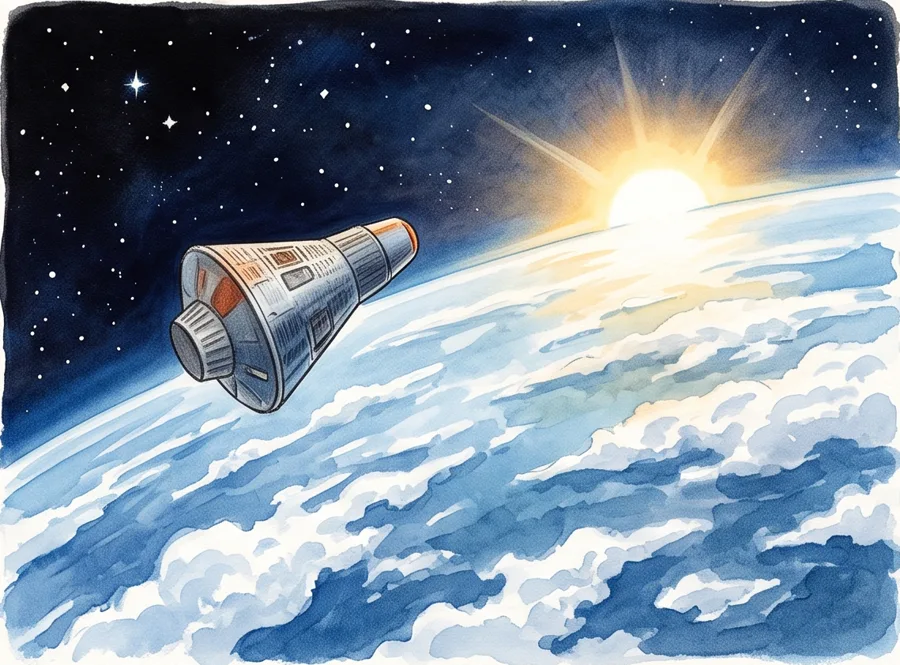
1962An American in Orbit
John Glenn becomes the first American to circle the Earth. He goes around three times in about five hours.
Why it matters: The United States was catching up in the Space Race.
 1968
1968Around the Moon
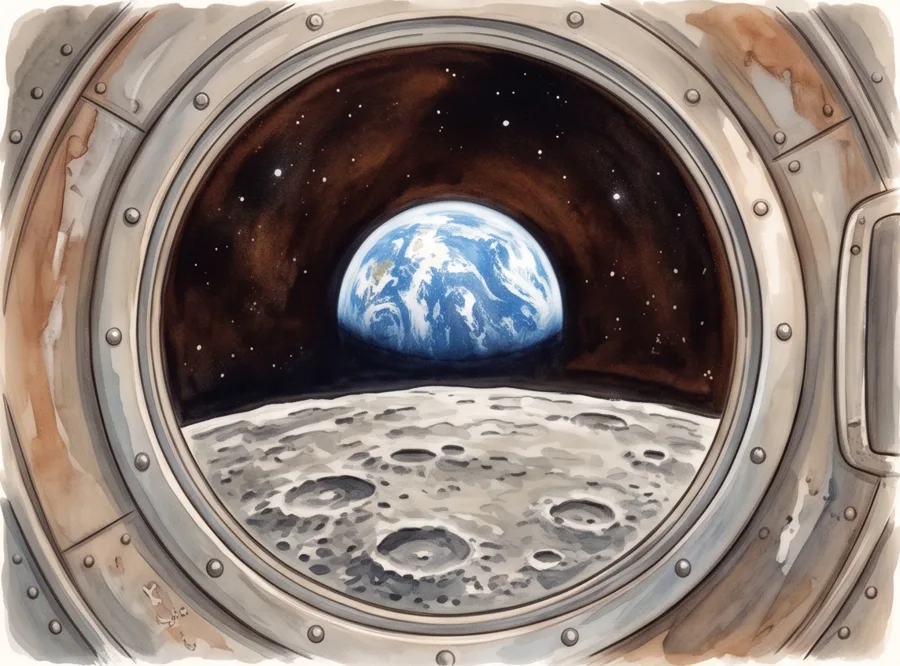
Three American astronauts fly all the way to the Moon in Apollo 8. They circle it ten times and come home.
Why it matters: They were the first people to see the far side of the Moon, and to see the whole Earth from far away.
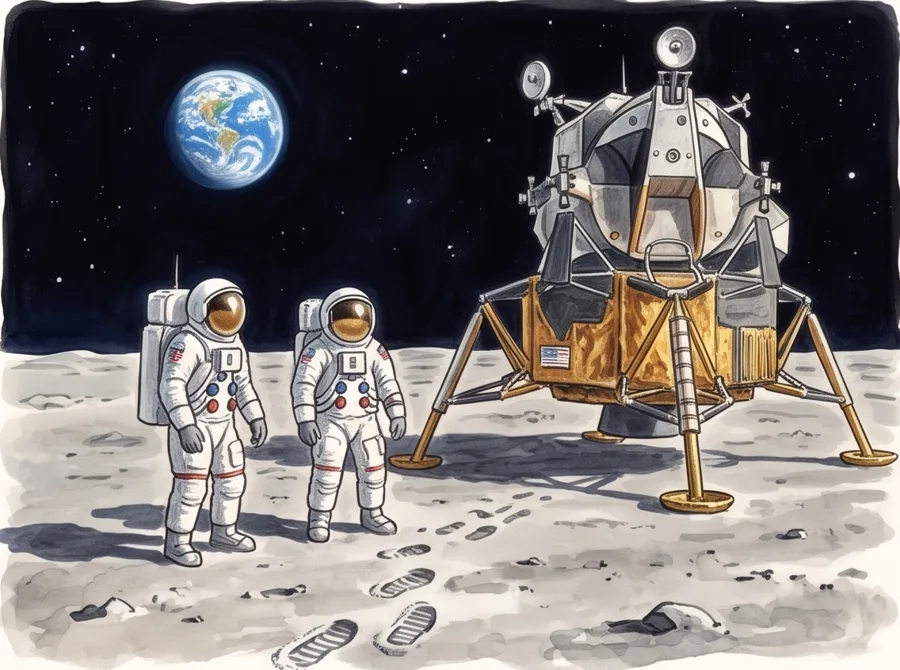 1969
1969Walking on the Moon
Apollo 11 lands on the Moon. Neil Armstrong and Buzz Aldrin walk on its dusty ground. People all over the world watch on TV.
Why it matters: People had walked on another world for the first time.
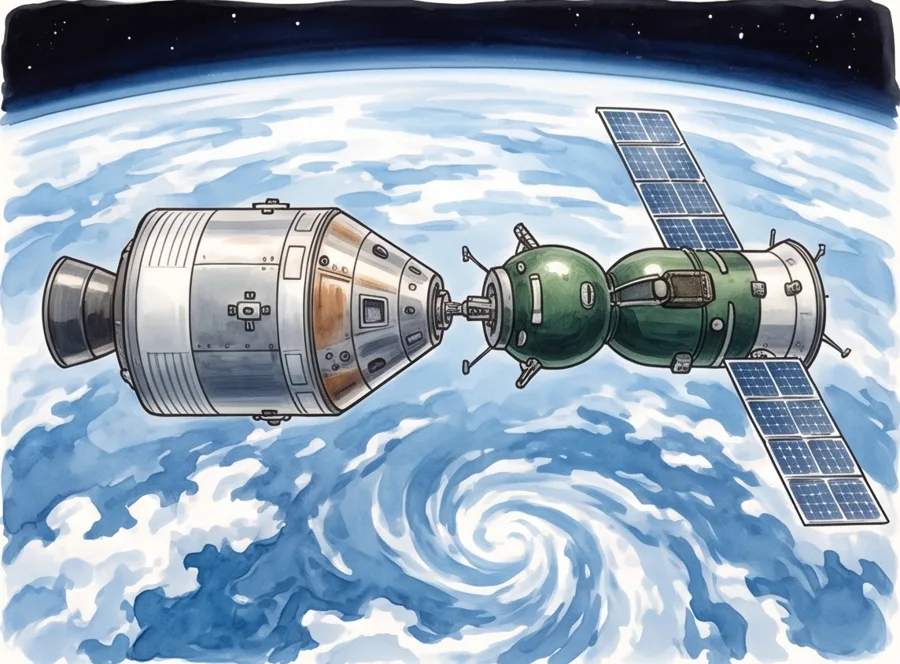 1975
1975A Handshake in Space
An American spaceship and a Soviet spaceship join together above the Earth. The two crews shake hands and share a meal.
Why it matters: The race was over. The two countries began to work together in space.
Words to know
- satellite: an object that circles the Earth in space
- astronaut: a person who travels in space
- orbit: to travel around a planet or moon
- rocket: a machine that blasts off into space
Quiz
- What was Sputnik?
A. The first satellite B. A rocket fuel C. An astronaut - Who was the first person in space?
A. John Glenn B. Yuri Gagarin C. Neil Armstrong - What did Apollo 8 do?
A. It landed on Mars B. It circled the Moon C. It built a space station - Who walked on the Moon in 1969?
A. Neil Armstrong and Buzz Aldrin B. Yuri Gagarin and John Glenn C. Lewis and Clark - What happened in space in 1975?
A. Two crews shook hands B. The first satellite flew C. A rocket landed on the Sun
Show answers
1. A (The first satellite) 2. B (Yuri Gagarin) 3. B (It circled the Moon) 4. A (Neil Armstrong and Buzz Aldrin) 5. A (Two crews shook hands)
The pictures are illustrations made for this timeline. They show what these people and places may have looked like.