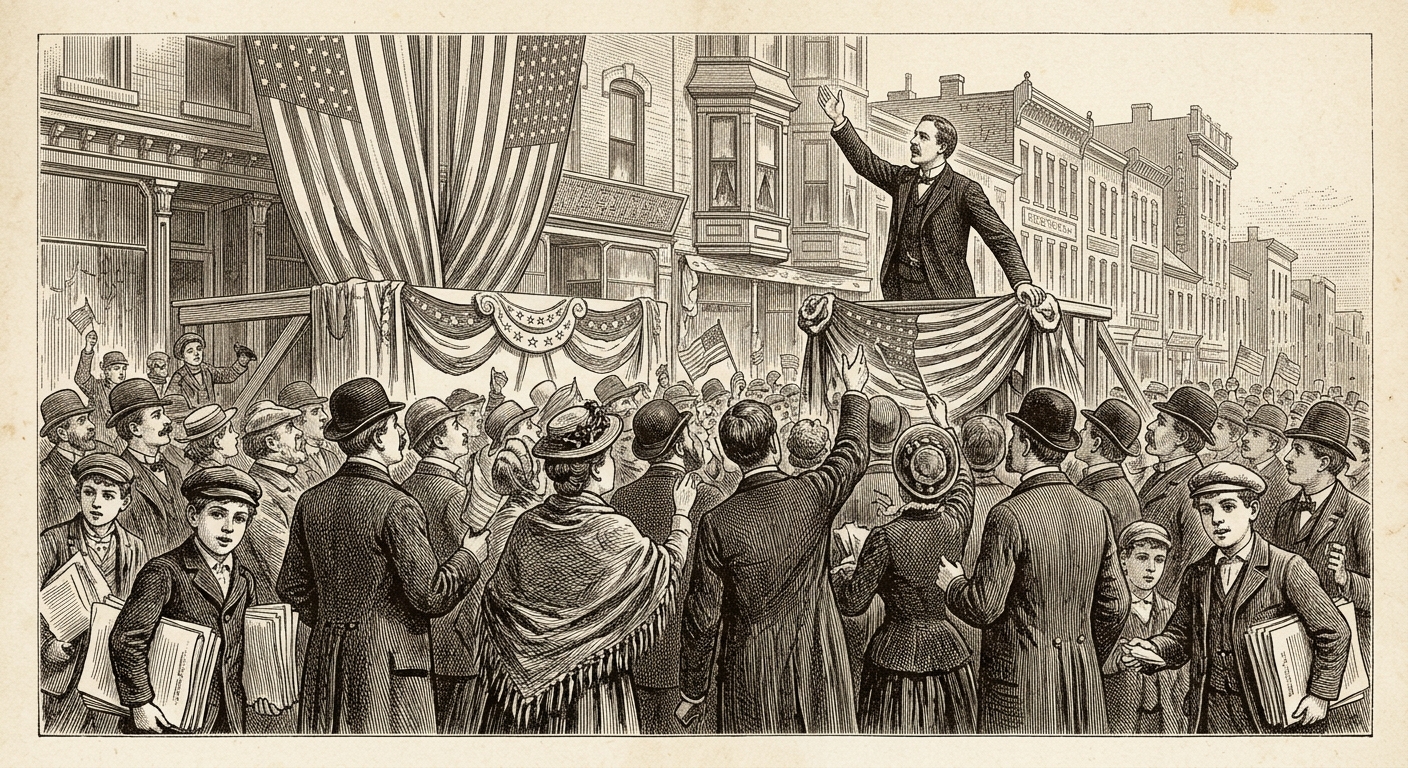
Progressive Era Timeline
The Progressive Era was a period of sweeping reform in the United States — when journalists, activists, and politicians fought to rein in the power of corporations, clean up government corruption, improve conditions for workers, and expand democracy.
The Progressive Era grew out of the Gilded Age's failures. By 1890, the United States was the world's leading industrial economy — but most of the wealth belonged to a handful of industrialists, government was corrupt from top to bottom, food and drugs were unsafe and unregulated, and children as young as six worked in factories and mines. A new generation of journalists — called muckrakers — began investigating and exposing these problems in popular magazines. Public outrage built. Politicians who promised reform started winning elections. And over the next thirty years, the country changed profoundly: trusts were broken up, food and drugs were regulated, workers won protections, cities cleaned up their governments, the income tax was established, and women finally won the right to vote. The Progressive Era didn't fix everything — racial inequality went almost untouched — but it demonstrated that organized public pressure could fundamentally change how the government related to the economy and to ordinary people.
- 1890
Muckrakers Begin
Investigative journalists called 'muckrakers' begin exposing corruption, dangerous working conditions, and exploitation hidden beneath Gilded Age prosperity — reaching mass audiences through popular magazines.
Why it mattered: The muckrakers gave Americans the evidence they needed to demand reform — by publishing in mass-circulation magazines, they built the public pressure that drove Progressive legislation, demonstrating that journalism could change the law.
- 1901
Theodore Roosevelt Takes Office
After President McKinley's assassination, Vice President Theodore Roosevelt takes the presidency at age 42 — the youngest president ever — and makes trust-busting, conservation, and consumer protection the agenda of the White House.
Why it mattered: Roosevelt transformed the presidency into an active force for reform — his willingness to challenge the great industrial corporations (he sued Standard Oil and broke up other trusts) proved that government could limit the power of big business.
- 1906
The Jungle and Food Safety Laws
Upton Sinclair publishes The Jungle, exposing horrifying sanitary conditions in Chicago's meatpacking industry; public outrage leads directly to the Pure Food and Drug Act and the Meat Inspection Act within the year.
Why it mattered: The Jungle was the era's most powerful example of muckraking — one book produced immediate, sweeping legislation and created the federal role in food safety regulation that protects Americans today.
- 1909
NAACP Founded
W.E.B. Du Bois and other activists found the National Association for the Advancement of Colored People to fight racial discrimination, lynching, and the denial of voting rights to Black Americans.
Why it mattered: The NAACP's founding highlighted the Progressive Era's central contradiction — reform movements that championed workers and consumers often left racial injustice untouched; the NAACP began the decades-long legal fight that led to the Civil Rights Movement.
- 1913
16th Amendment and Federal Reserve
The 16th Amendment establishes a federal income tax on the wealthy; the Federal Reserve Act creates a central banking system to stabilize the economy and prevent panics like 1893.
Why it mattered: These two acts gave the federal government the fiscal tools and financial stability to manage a modern industrial economy — the income tax made it possible to fund expanded government programs, while the Federal Reserve became the backbone of American monetary policy.
- 1913
17th Amendment — Direct Election of Senators
The 17th Amendment changes how US Senators are chosen — from appointment by state legislatures (easily corrupted) to direct election by voters, one of the Progressive Era's key democratic reforms.
Why it mattered: The direct election of Senators removed a major tool of corporate corruption — wealthy industrialists could no longer simply buy state legislators to appoint friendly senators; now senators had to answer directly to voters.
- 1919
18th Amendment — Prohibition
The 18th Amendment bans the manufacture and sale of alcohol — the culmination of decades of temperance campaigning that viewed alcohol as the root cause of poverty, family breakdown, and crime.
Why it mattered: Prohibition proved the limits of legislating morality — it reduced alcohol consumption but also created a massive criminal underground, widespread contempt for the law, and organized crime syndicates that outlasted Prohibition itself.
- 1920
19th Amendment — Women's Right to Vote
The 19th Amendment guarantees women the right to vote nationwide — the climax of over 70 years of suffrage campaigning that began at the Seneca Falls Convention in 1848.
Why it mattered: Women's suffrage doubled the electorate and proved that persistent political organizing could change the Constitution — it was the Progressive Era's most enduring democratic legacy and a direct result of women's decades of activism.
Progressive Era Quiz
Check what you learned — read on screen, or use the Printable quiz button above for a worksheet version with an answer key.
What were 'muckrakers'?
- A) Politicians who exposed corrupt judges and court officials
- B) Investigative journalists who exposed corporate corruption, unsafe conditions, and exploitation in popular magazines
- C) Workers who cleaned industrial machinery in dangerous factory conditions
- D) Government inspectors who checked food and drug safety in factories
Why is Theodore Roosevelt considered a Progressive president?
- A) He supported the gold standard and opposed all regulation of business
- B) He dramatically increased the size of the US military
- C) He used the presidency to bust trusts, protect consumers, and conserve natural resources — actively challenging the power of big business
- D) He was the first president elected directly by the popular vote of all American citizens
What law did Upton Sinclair's book The Jungle directly cause?
- A) The Sherman Antitrust Act, which broke up Standard Oil
- B) The 16th Amendment, which established the federal income tax
- C) The Pure Food and Drug Act and the Meat Inspection Act, regulating food safety
- D) The 19th Amendment, which gave women the right to vote
Why was the NAACP founded in 1909?
- A) To organize labor unions for Black industrial workers in northern cities
- B) To fight racial discrimination, lynching, and the denial of voting rights — addressing the racial injustice that most Progressive Era reforms ignored
- C) To promote Black culture and art during the Harlem Renaissance
- D) To organize the Great Migration of Black Americans from the South to northern cities
What did the 16th Amendment establish?
- A) The direct election of US Senators by voters instead of state legislatures
- B) Prohibition of the manufacture and sale of alcohol
- C) Women's right to vote nationwide
- D) A federal income tax on the wealthy
What was the main result of Prohibition?
- A) Alcohol consumption was eliminated and crime rates dropped significantly
- B) It successfully reduced alcohol-related family problems but did not affect crime rates
- C) It reduced alcohol consumption but created a massive criminal underground and organized crime syndicates
- D) It was immediately repealed because of widespread unpopularity
What did the 19th Amendment accomplish?
- A) It banned the manufacture and sale of alcohol across the United States
- B) It established the direct election of US Senators by voters
- C) It guaranteed women the right to vote nationwide, the culmination of over 70 years of suffrage campaigning
- D) It created a federal income tax on the wealthy to fund government programs
What was the central contradiction of the Progressive Era?
- A) Progressives wanted to reform government but opposed democracy
- B) Reform movements that championed workers and consumers often left racial injustice untouched — Black Americans were largely excluded from Progressive Era gains
- C) Progressives supported business regulation but opposed labor unions
- D) The era produced major legislation but no lasting changes to American society
Show answer key
1. B · 2. C · 3. C · 4. B · 5. D · 6. C · 7. C · 8. B
Related timelines
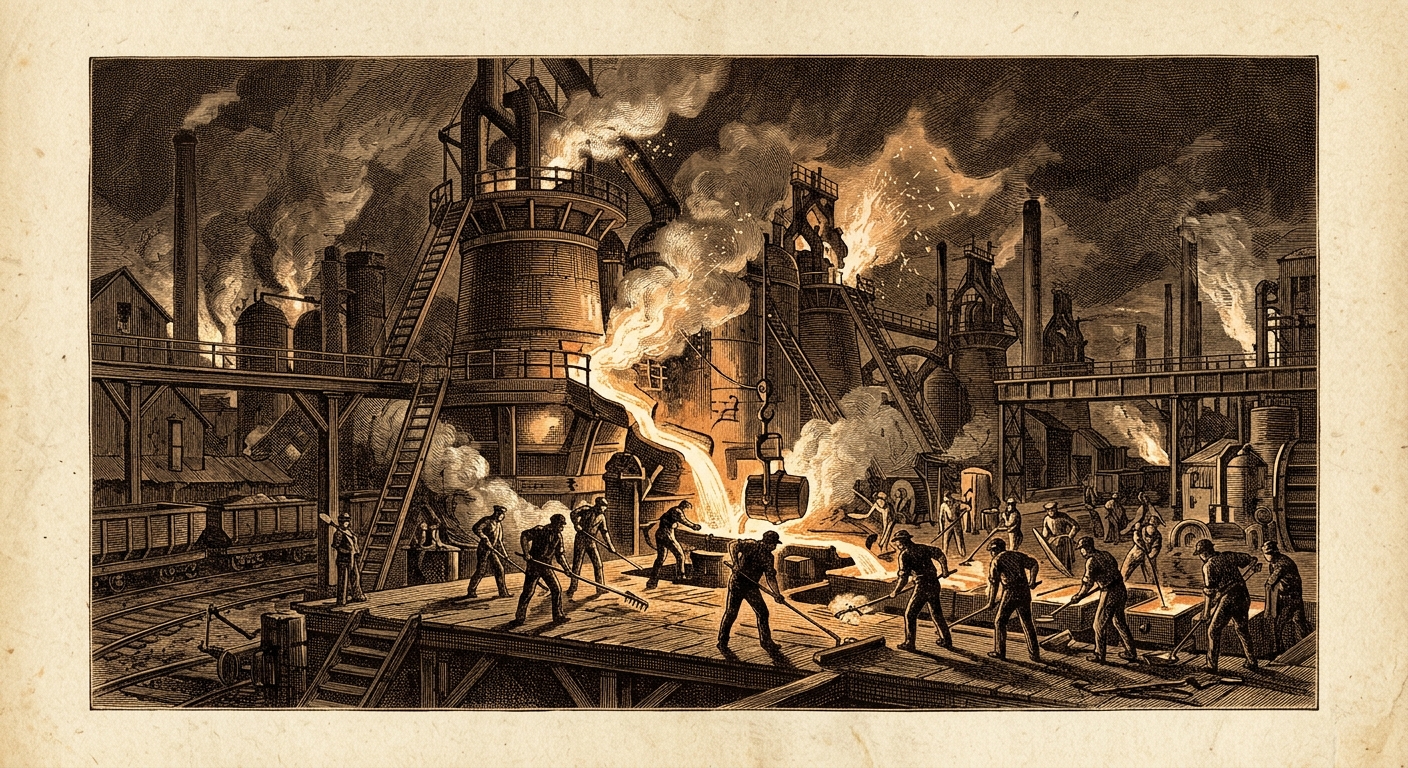 Gilded Age Timeline — The Gilded Age was an era of explosive industrial growth in the United States — a time when railroads, steel, and oil created enormous fortunes for a few, while millions of workers labored in dangerous conditions for low wages, and new immigrants flooded into American cities. Open →
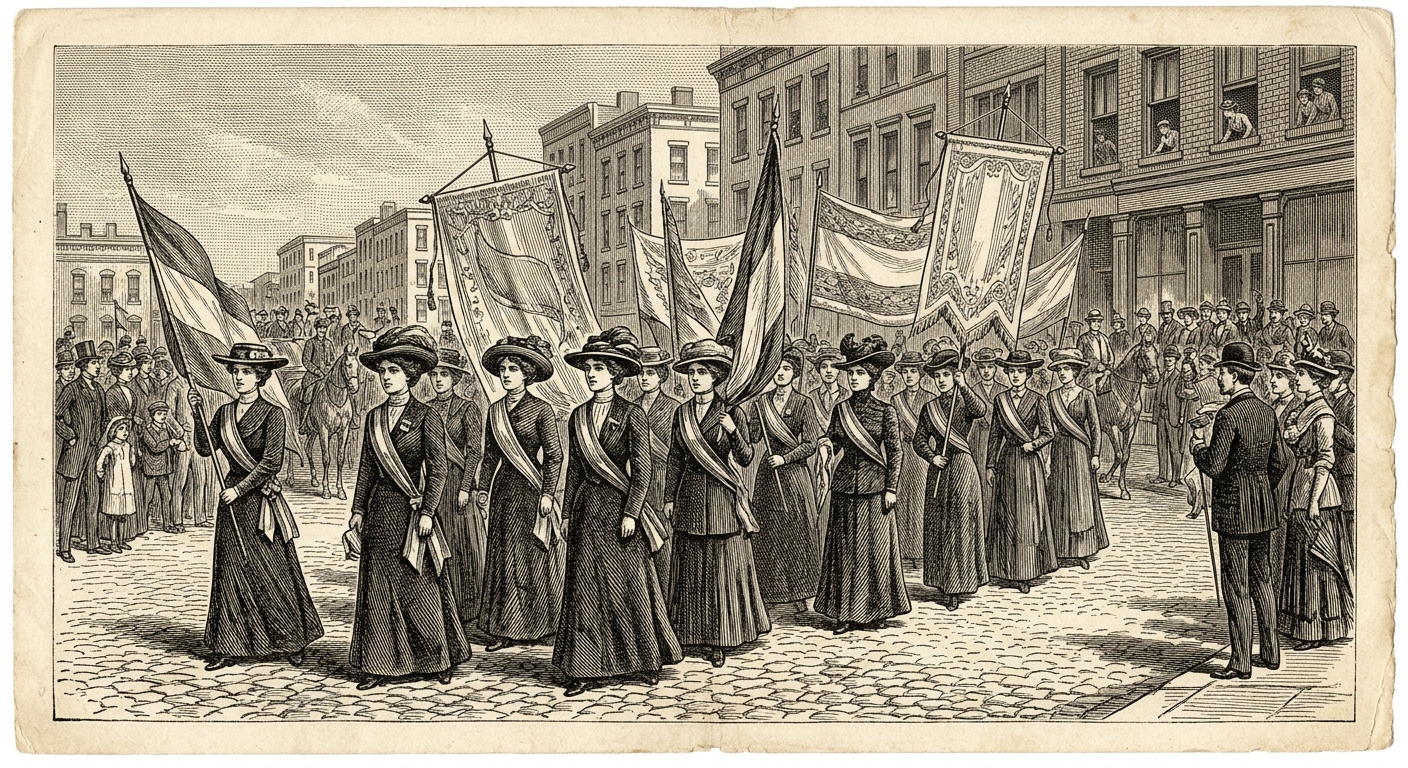 Women's Suffrage Timeline — The women's suffrage movement was a 72-year campaign that won American women the right to vote, culminating in the 19th Amendment in 1920. Open →
How to print
Choose Download PDF for a ready-to-print timeline that fits US Letter paper (8.5 × 11"). The blank fill-in version keeps the dates and gives students empty lines to write each event — great for review and quizzes.
Frequently asked questions
What was the Progressive Era?
The Progressive Era (roughly 1890–1920) was a period of widespread political and social reform in the United States, driven by the belief that government could and should actively address the social problems created by industrialization. Progressives fought to break up corporate monopolies, regulate food and drug safety, protect workers (especially children), clean up corrupt city governments, conserve natural resources, and expand democracy. Their major achievements included the Sherman Antitrust Act, the Pure Food and Drug Act, the 16th, 17th, 18th, and 19th Amendments, and the creation of the Federal Reserve.
Why didn't the Progressive Era address racial inequality?
The Progressive Era's failure on race was not accidental — it reflected the political reality that many white Progressive voters and politicians were committed segregationists, especially in the South. Theodore Roosevelt, one of the era's leading figures, initially showed some openness to Black civil rights (he invited Booker T. Washington to dinner at the White House) but quickly backed away from racial issues for political reasons. Woodrow Wilson, another Progressive president, actually re-segregated the federal government. The NAACP was founded in 1909 specifically because other Progressive organizations refused to address racial injustice, and its long legal campaign for equality extended far beyond the Progressive Era into the Civil Rights Movement.
What paper size should I print this on?
The timeline is sized for standard US Letter paper (8.5 × 11 in.). The Download PDF button gives you a print-ready file that fits the page automatically.