Trail of Tears Timeline
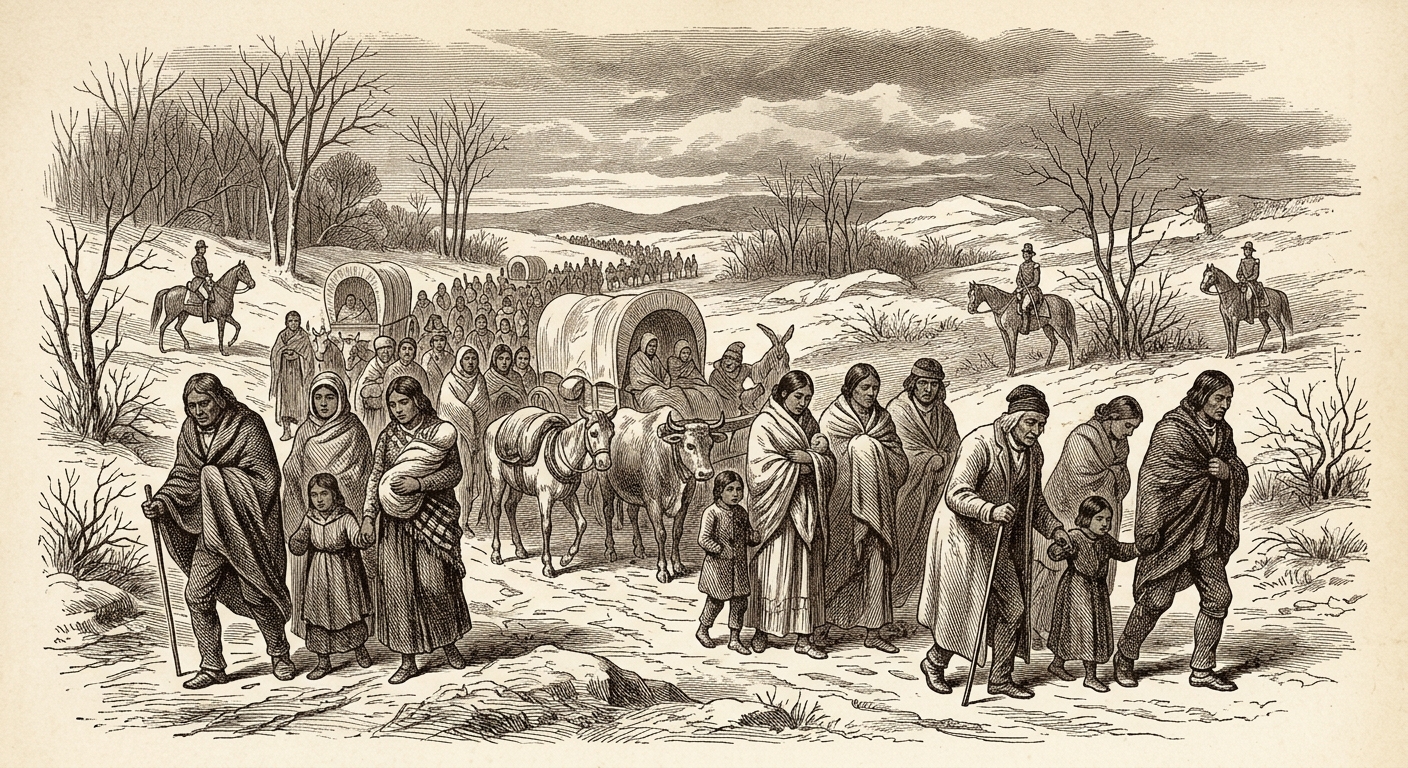
The Trail of Tears was the forced removal of Native American nations from their homelands in the southeastern United States to territory west of the Mississippi River, resulting in the deaths of thousands.
For thousands of years, Native American nations including the Cherokee, Choctaw, Creek, Chickasaw, and Seminole had lived in the southeastern United States. When gold was discovered on Cherokee land in Georgia in 1829, white settlers and state governments intensified demands that Native peoples be removed. President Andrew Jackson signed the Indian Removal Act in 1830, giving the federal government authority to force Native nations from their homelands. Despite a Supreme Court ruling in their favor, the Cherokee were rounded up by the US Army in 1838 and forced to march more than a thousand miles west in winter conditions. An estimated 4,000 to 8,000 Cherokee died on the journey they called Nunna daul Tsuny — the trail where they cried.
- ~1820s
Pressure to Remove Native Nations Grows
White settlers in Georgia, Alabama, and Mississippi demand the federal government remove Native American nations from valuable land; gold is discovered on Cherokee land in Georgia in 1829.
Why it mattered: The discovery of gold intensified demands for removal — state governments began passing laws stripping Native people of their rights and making life in the East impossible.
- 1830
Indian Removal Act
President Andrew Jackson signs the Indian Removal Act, authorizing the forced relocation of Native American nations from the Southeast to territory west of the Mississippi River.
Why it mattered: The Act gave legal cover to forced removal — Native nations could negotiate, but those who refused faced increasing state pressure and eventually military force.
- 1831
Choctaw Removal
The Choctaw Nation becomes the first to be removed under the Act; thousands march west in harsh winter conditions with little food or shelter.
Why it mattered: About 2,500 Choctaw people died during removal — an early and devastating warning of the suffering the policy would bring to other nations.
- 1832
Worcester v. Georgia
The Supreme Court rules that Georgia cannot enforce its laws on Cherokee land — the Cherokee Nation is a distinct community with the right to remain.
Why it mattered: President Jackson reportedly dismissed the ruling and did not enforce it. The decision showed that even a Supreme Court victory could not protect Native nations if the president refused to act.
- 1835
Treaty of New Echota
A small, unauthorized group of Cherokee leaders signs a treaty giving up Cherokee lands in exchange for territory in the West and $5 million.
Why it mattered: The treaty was rejected by the vast majority of the Cherokee Nation and its elected leadership — but the US government used it as legal justification for forced removal.
- 1836
Creek Removal
The Creek Nation is forcibly removed from Alabama under military supervision after resisting departure.
Why it mattered: Thousands of Creek people died during removal or in the years immediately after from disease, exposure, and starvation on the journey west.
- 1838
Cherokee Roundup
US Army soldiers round up approximately 16,000 Cherokee people and hold them in crowded stockade camps while awaiting removal.
Why it mattered: The roundup was brutal — families were separated, homes were burned and looted, and disease spread rapidly through the overcrowded camps.
- 1838–39
The Trail of Tears
The Cherokee are forced to march more than 1,000 miles to Indian Territory during the winter; an estimated 4,000 to 8,000 people die from cold, disease, and starvation.
Why it mattered: The Cherokee called it Nunna daul Tsuny — the trail where they cried. It became the defining symbol of the human cost of Indian Removal.
- 1839
Arrival in Indian Territory
Survivors reach present-day Oklahoma; the Cherokee Nation begins rebuilding schools, government, and communities in its new homeland.
Why it mattered: Despite devastating losses, the Cherokee rebuilt remarkable institutions — a newspaper, a constitution, and public schools — showing extraordinary resilience in the face of catastrophic loss.
- 1842
Seminole Resistance Ends
After seven years of the Second Seminole War — the most costly Indian war in US history — most remaining Seminole in Florida are either removed or driven deep into the Everglades.
Why it mattered: A small group of Seminole never surrendered and never signed a peace treaty — their descendants still live in Florida today, technically still at war with the United States.
Trail of Tears Quiz
Check what you learned — read on screen, or use the Printable quiz button above for a worksheet version with an answer key.
What was the Indian Removal Act of 1830?
- A) A law protecting Native American land rights from state interference
- B) A law authorizing the forced relocation of Native Americans from the Southeast to territory west of the Mississippi
- C) A treaty giving Native Americans new territory in Georgia
- D) A Supreme Court ruling protecting the Cherokee Nation
What did the Supreme Court rule in Worcester v. Georgia in 1832?
- A) That the Cherokee must leave Georgia immediately
- B) That the Indian Removal Act was unconstitutional
- C) That Georgia could not enforce state laws on Cherokee land
- D) That President Jackson had the right to remove Native nations
Why was the Treaty of New Echota controversial?
- A) It was signed without President Jackson's approval
- B) It was signed by a small unauthorized group, not the elected leadership of the Cherokee Nation
- C) It gave the Cherokee Nation too little money for their land
- D) It violated the terms of the Indian Removal Act
What happened during the Cherokee roundup of 1838?
- A) The Cherokee voluntarily gathered to negotiate removal terms
- B) US Army soldiers forced approximately 16,000 Cherokee into crowded stockade camps
- C) The Cherokee were given compensation and supplies before leaving
- D) The Supreme Court stopped the removal at the last moment
Approximately how many Cherokee died on the Trail of Tears?
- A) Fewer than 500
- B) Around 1,000
- C) An estimated 4,000 to 8,000
- D) More than 12,000
What do the Cherokee call the Trail of Tears in their own language?
- A) The Long Walk
- B) Nunna daul Tsuny — the trail where they cried
- C) The Road of Sorrow
- D) The Path into Exile
Which president signed the Indian Removal Act?
- A) John Quincy Adams
- B) James Monroe
- C) Andrew Jackson
- D) Martin Van Buren
Which Native American nation was the first to be removed under the Indian Removal Act?
- A) The Cherokee
- B) The Choctaw
- C) The Creek
- D) The Seminole
Show answer key
1. B · 2. C · 3. B · 4. B · 5. C · 6. B · 7. C · 8. B
Related timelines
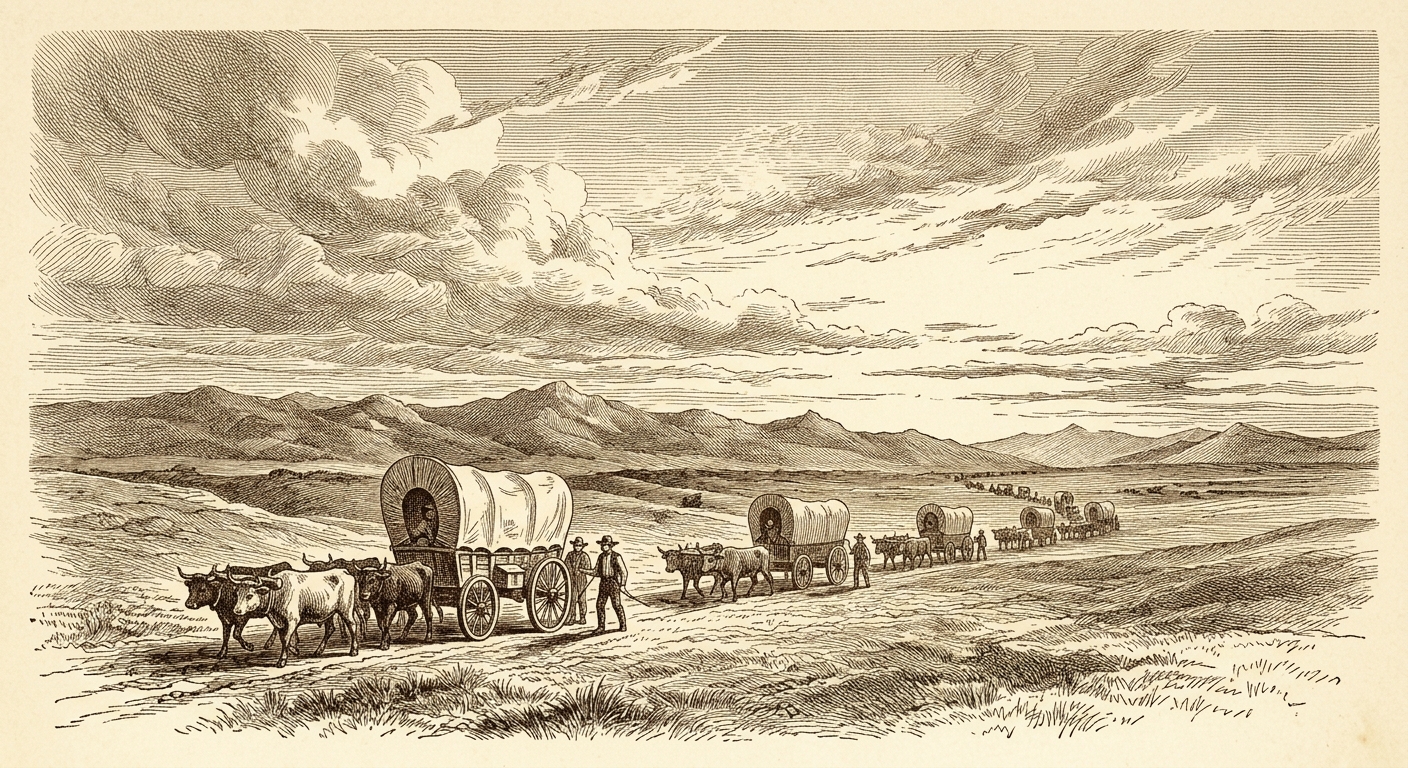 Westward Expansion Timeline — Westward expansion is the period when the United States grew across the continent, as settlers, trails, and railroads pushed toward the Pacific. Open →
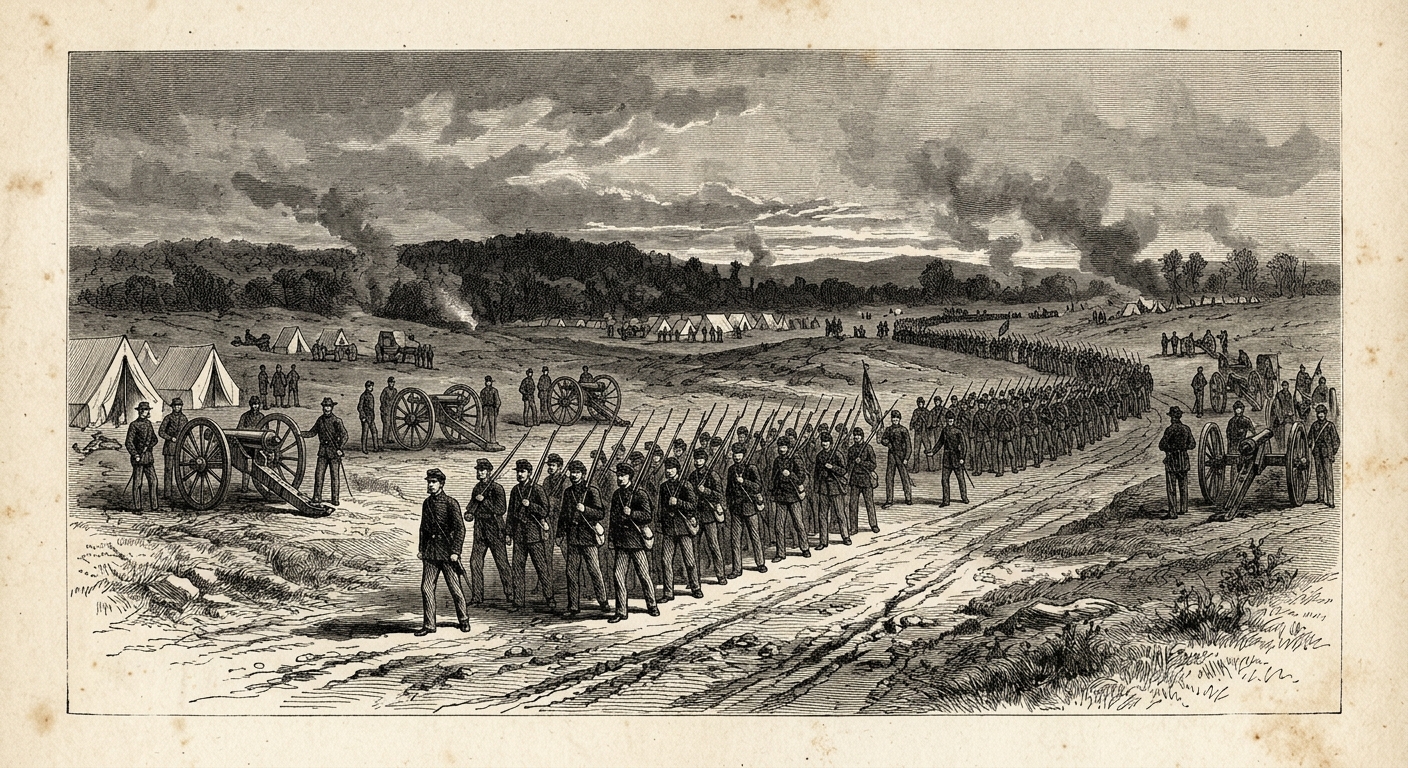 Civil War Timeline — The Civil War was the war between the Northern states (the Union) and the Southern states (the Confederacy) over slavery, states’ rights, and whether states could leave the Union. Open →
How to print
Choose Download PDF for a ready-to-print timeline that fits US Letter paper (8.5 × 11"). The blank fill-in version keeps the dates and gives students empty lines to write each event — great for review and quizzes.
Frequently asked questions
What was the Trail of Tears?
The Trail of Tears refers to the forced removal of five Native American nations — the Cherokee, Choctaw, Creek, Chickasaw, and Seminole — from their southeastern homelands to designated territory west of the Mississippi in the 1830s. The Cherokee removal of 1838-1839 is the most well known; an estimated 4,000 to 8,000 Cherokee died on the journey, which the Cherokee called Nunna daul Tsuny — the trail where they cried.
Why did Indian Removal happen?
The Indian Removal Act was driven largely by white settlers' desire for Native American land — especially after gold was discovered on Cherokee land in Georgia in 1829. President Andrew Jackson and Southern politicians argued that Native nations could not coexist with white settlers and must be moved west. Despite a Supreme Court ruling in favor of the Cherokee, the federal government proceeded with forced removal.
What paper size should I print this on?
The timeline is sized for standard US Letter paper (8.5 × 11 in.). The Download PDF button gives you a print-ready file that fits the page automatically.