Gilded Age Timeline
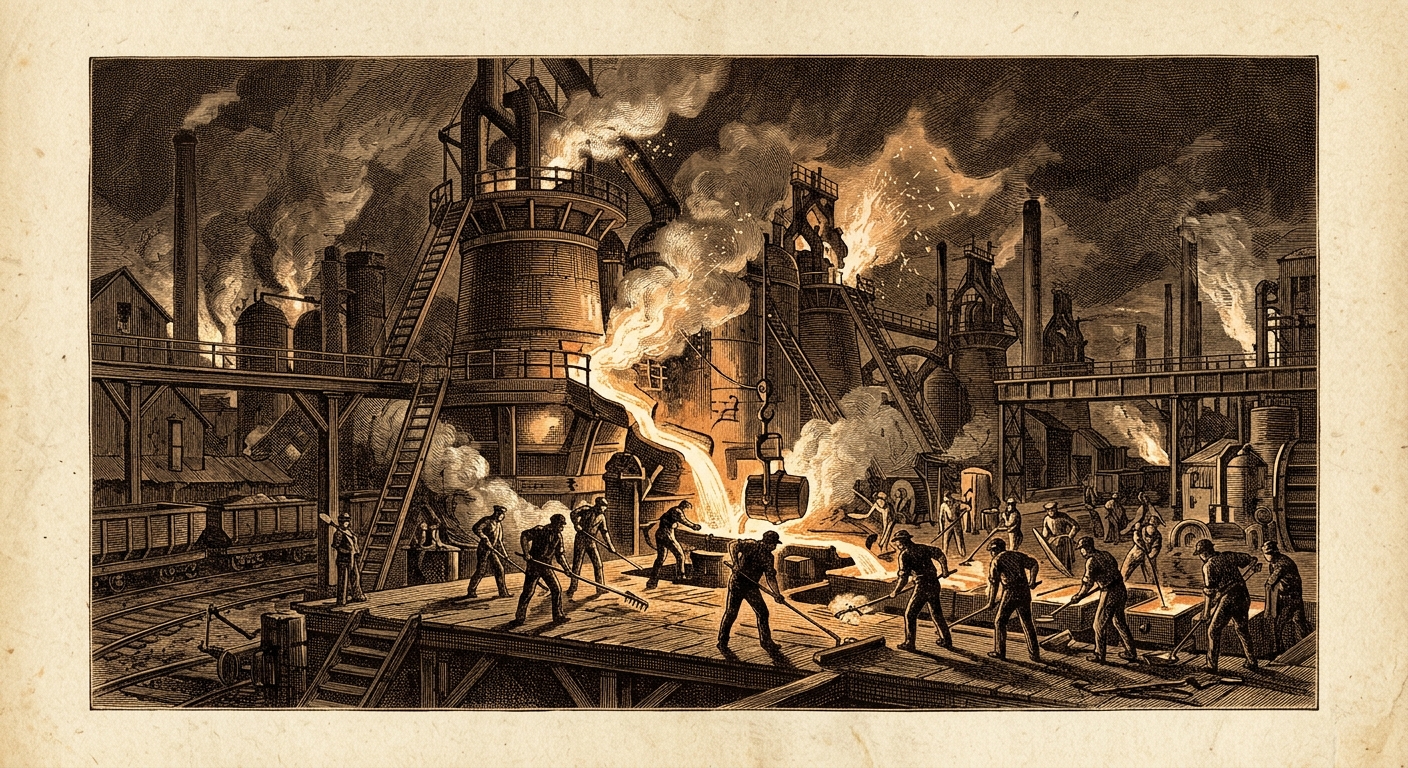
The Gilded Age was an era of explosive industrial growth in the United States — a time when railroads, steel, and oil created enormous fortunes for a few, while millions of workers labored in dangerous conditions for low wages, and new immigrants flooded into American cities.
Mark Twain called it the Gilded Age — a glittering surface hiding serious problems underneath. In the decades after the Civil War, the United States transformed itself into an industrial powerhouse. Steel mills, oil refineries, and miles of railroad track made America the world's leading economy — and made a handful of men like Andrew Carnegie, John D. Rockefeller, and Cornelius Vanderbilt the richest people in the country, perhaps in history. But their wealth rested on the labor of millions of workers who earned barely enough to survive, worked twelve-hour days in dangerous conditions, and had no legal protection against exploitation. When workers organized, employers hired armed guards or asked the government to send in troops. The Gilded Age's gleaming surface concealed a society under enormous strain — and it was only a matter of time before that strain produced a demand for change.
- 1869
Transcontinental Railroad Completed
The Central Pacific and Union Pacific railroads meet at Promontory Summit, Utah, creating the first railroad to span the continental United States — built in large part by Chinese and Irish immigrant labor.
Why it mattered: The transcontinental railroad knit the country together economically, opened the West to commercial farming and ranching, and made possible the industrial supply chains that powered the Gilded Age — while also displacing Native American communities across the Great Plains.
- 1870–80
Rise of the Industrialists
Andrew Carnegie builds a steel empire, John D. Rockefeller dominates oil, and Cornelius Vanderbilt controls railroads — amassing personal fortunes larger than anything previously seen in American history.
Why it mattered: The rise of the great industrialists created a new kind of wealth and a new kind of inequality — factory workers labored long hours for low wages while their employers became the richest people in the country, raising questions about fairness that would define the next era of American politics.
- 1876
Centennial Exhibition
Philadelphia's World's Fair celebrates the nation's 100th birthday with displays of American industrial power, including Alexander Graham Bell's new telephone and giant steam engines.
Why it mattered: The Centennial showcased American industrial optimism — the belief that technology and growth would solve any problem — defining the Gilded Age spirit at its most confident.
- 1882
Standard Oil Trust
John D. Rockefeller's Standard Oil Trust controls roughly 90% of US oil refining — pioneering the corporate trust as a tool for eliminating competition and dominating an entire industry.
Why it mattered: Standard Oil was the model for Gilded Age monopolies — showing how a single company could dominate an industry, price out competitors, and accumulate enormous political power, eventually provoking the government to respond with antitrust law.
- 1886
Haymarket Affair
A labor demonstration for the eight-hour workday in Chicago's Haymarket Square turns violent when a bomb explodes; police arrest labor leaders and eight are convicted in a deeply controversial trial.
Why it mattered: Haymarket became the defining symbol of the battle between industrial capital and organized labor — it led to a crackdown on unions and made 'anarchist' a term of fear, but also galvanized the labor movement across the country.
- 1890
Sherman Antitrust Act
Congress passes the first federal law banning business practices that restrain trade — the government's first attempt to limit the power of corporate monopolies.
Why it mattered: The Sherman Antitrust Act established the principle that the government could regulate business to protect competition — though it was weakly enforced for decades, it became the legal foundation for the Progressive Era's trust-busting campaigns.
- 1892
Homestead Strike
Carnegie Steel workers strike against wage cuts at Homestead, Pennsylvania; Carnegie dispatches Pinkerton armed guards, violence breaks out, the strike is crushed, and the workers' union is destroyed.
Why it mattered: Homestead showed how far industrial employers would go to suppress organized labor — and how little the government would do to protect workers — fueling demands for reform that defined the Progressive Era to come.
- 1893
Panic of 1893
A stock market crash and bank failures plunge the country into a severe economic depression, with unemployment reaching 20 percent in industrial cities.
Why it mattered: The Panic of 1893 revealed the instability beneath the Gilded Age's gleaming surface — boom-and-bust capitalism hurt ordinary workers far more than the wealthy, and the depression's severity convinced many Americans that government needed to rein in the power of big business.
Gilded Age Quiz
Check what you learned — read on screen, or use the Printable quiz button above for a worksheet version with an answer key.
Why is this period called the 'Gilded Age'?
- A) Because so much gold was discovered in the American West during this period
- B) Mark Twain used the term to describe a glittering surface that hid serious social problems underneath
- C) The era was named after the gold standard, which backed American currency
- D) President Ulysses Grant gave the period its name in a famous speech
What did the completion of the transcontinental railroad in 1869 accomplish?
- A) It ended the Great Plains wars by connecting military forts across the West
- B) It created the first railroad to span the entire continental United States, transforming commerce and opening the West to large-scale settlement
- C) It proved that Chinese immigrant workers were superior to Irish workers in building railroads
- D) It replaced steamboats entirely as the main form of transportation in the United States
What was Standard Oil, and why was it significant?
- A) The US government's oil reserve, used to supply the military
- B) John D. Rockefeller's company that controlled about 90% of US oil refining, pioneering the use of trusts to dominate an entire industry
- C) The first American company to export oil to European markets
- D) Andrew Carnegie's oil and steel company, which competed with Vanderbilt's railroads
What happened at the Haymarket Affair in 1886?
- A) Workers at Carnegie Steel struck against wage cuts and were attacked by Pinkerton guards
- B) A labor demonstration in Chicago for the eight-hour workday turned violent when a bomb exploded, leading to the arrest of labor leaders
- C) John D. Rockefeller was convicted of violating the Sherman Antitrust Act
- D) Congress passed the first law protecting workers' right to organize labor unions
What did the Sherman Antitrust Act of 1890 do?
- A) It broke up Standard Oil into smaller competing companies
- B) It gave workers the legal right to organize unions and strike for better wages
- C) It established the first federal law banning business practices that restrain trade, attempting to limit monopoly power
- D) It created the Interstate Commerce Commission to regulate railroad prices
What was the Homestead Strike of 1892?
- A) A general strike across all US industries demanding the eight-hour workday
- B) A violent confrontation at Carnegie Steel in Pennsylvania where workers struck against wage cuts and were defeated by armed Pinkerton guards
- C) A successful railroad workers' strike that led to the first labor law protecting workers
- D) A protest by immigrant workers in Chicago against unsafe factory conditions
What characterized the Gilded Age economy?
- A) Slow but steady growth that raised living standards for all Americans equally
- B) Rapid industrial growth that created enormous wealth for a few industrialists while most workers earned low wages in dangerous conditions
- C) An agricultural boom that made American farmers the wealthiest in the world
- D) A strong labor movement that successfully won shorter hours and higher wages for all workers
What did the Panic of 1893 reveal about the Gilded Age economy?
- A) That the economy was fundamentally stable and recovered quickly from disruptions
- B) That government regulation of business was preventing economic growth
- C) That boom-and-bust cycles hurt ordinary workers far more than the wealthy, fueling demands for government to rein in the power of big business
- D) That the transcontinental railroad had been an economic failure
Show answer key
1. B · 2. B · 3. B · 4. B · 5. C · 6. B · 7. B · 8. C
Related timelines
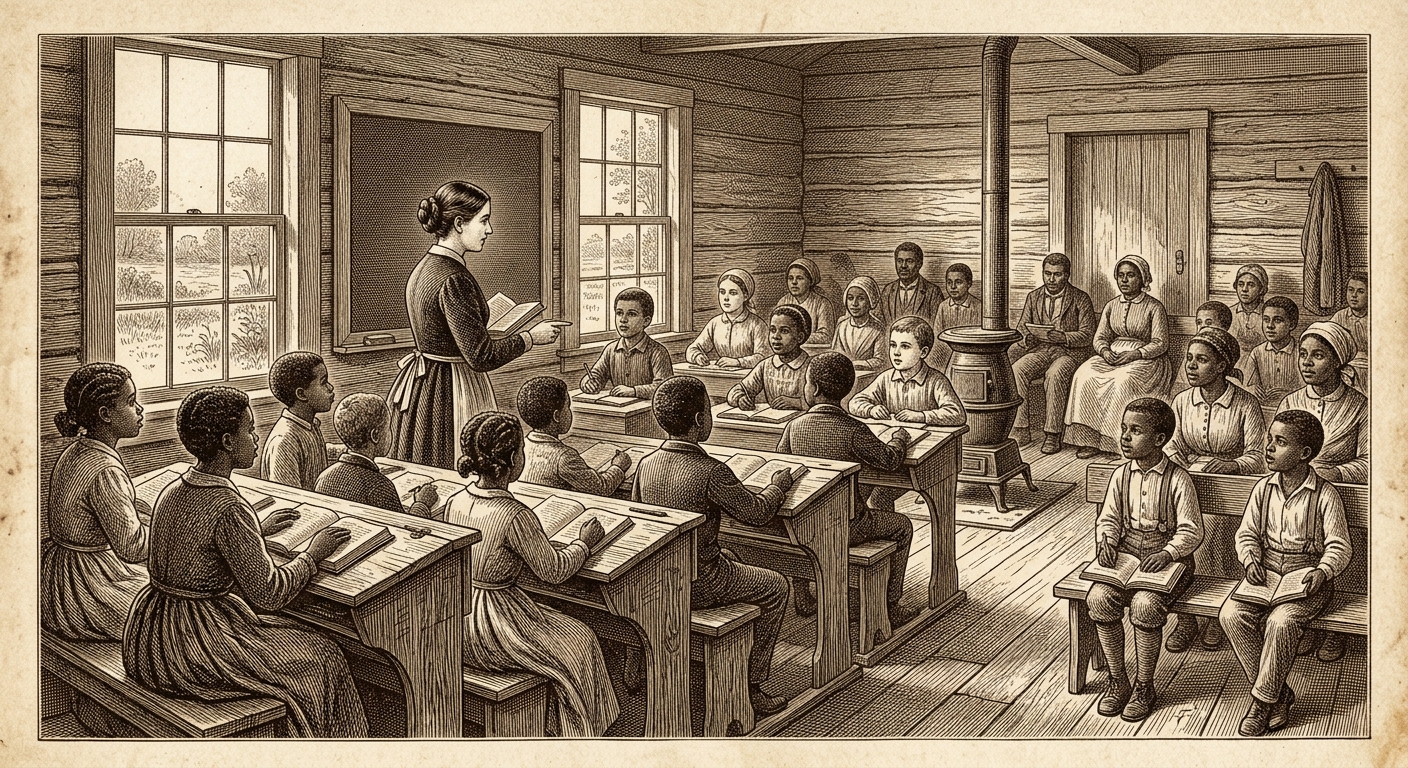 Reconstruction Era Timeline — Reconstruction was the period after the Civil War when the federal government worked to reunite the nation and define the rights of formerly enslaved Black Americans. Open →
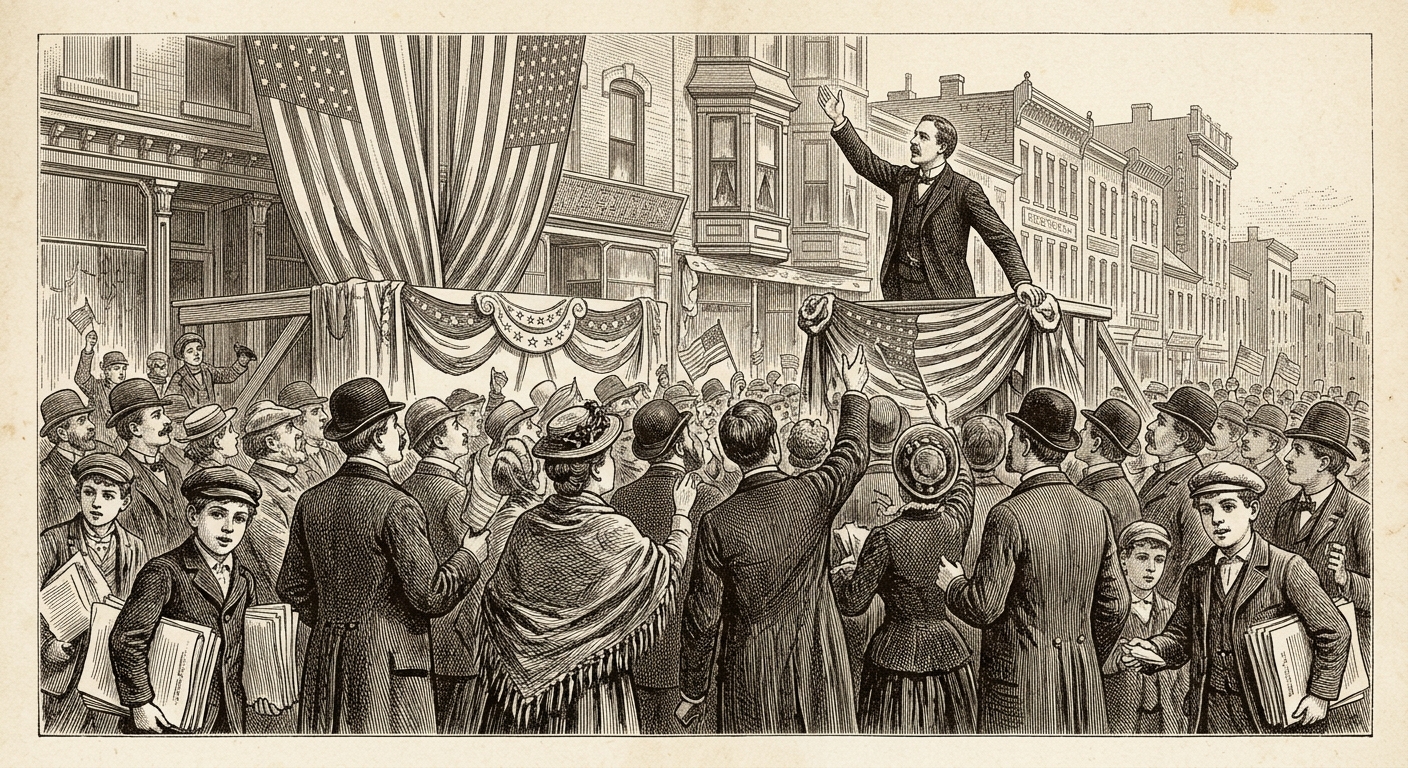 Progressive Era Timeline — The Progressive Era was a period of sweeping reform in the United States — when journalists, activists, and politicians fought to rein in the power of corporations, clean up government corruption, improve conditions for workers, and expand democracy. Open →
How to print
Choose Download PDF for a ready-to-print timeline that fits US Letter paper (8.5 × 11"). The blank fill-in version keeps the dates and gives students empty lines to write each event — great for review and quizzes.
Frequently asked questions
Why is the era called the Gilded Age?
The term comes from an 1873 satirical novel by Mark Twain and Charles Dudley Warner called The Gilded Age: A Tale of Today. 'Gilded' means covered with a thin layer of gold — beautiful on the outside but something cheaper underneath. Twain used it to describe an era of apparent prosperity and progress that concealed political corruption, labor exploitation, and deep inequality. The name stuck as a description of the 1870s through 1890s, when American industrial wealth soared while many workers and farmers struggled.
Who were the 'robber barons'?
Critics called the great industrialists of the Gilded Age 'robber barons' — a term that accused them of using ruthless, sometimes illegal methods to build their fortunes: crushing competitors, manipulating politicians, exploiting workers, and using their monopoly power to overcharge consumers. The most famous were John D. Rockefeller (Standard Oil), Andrew Carnegie (steel), J.P. Morgan (banking and finance), and Cornelius Vanderbilt and Jay Gould (railroads). They were also major philanthropists — Carnegie gave away most of his fortune to build public libraries — which is why they are sometimes called 'captains of industry' instead.
What paper size should I print this on?
The timeline is sized for standard US Letter paper (8.5 × 11 in.). The Download PDF button gives you a print-ready file that fits the page automatically.