The Electromagnetic Spectrum
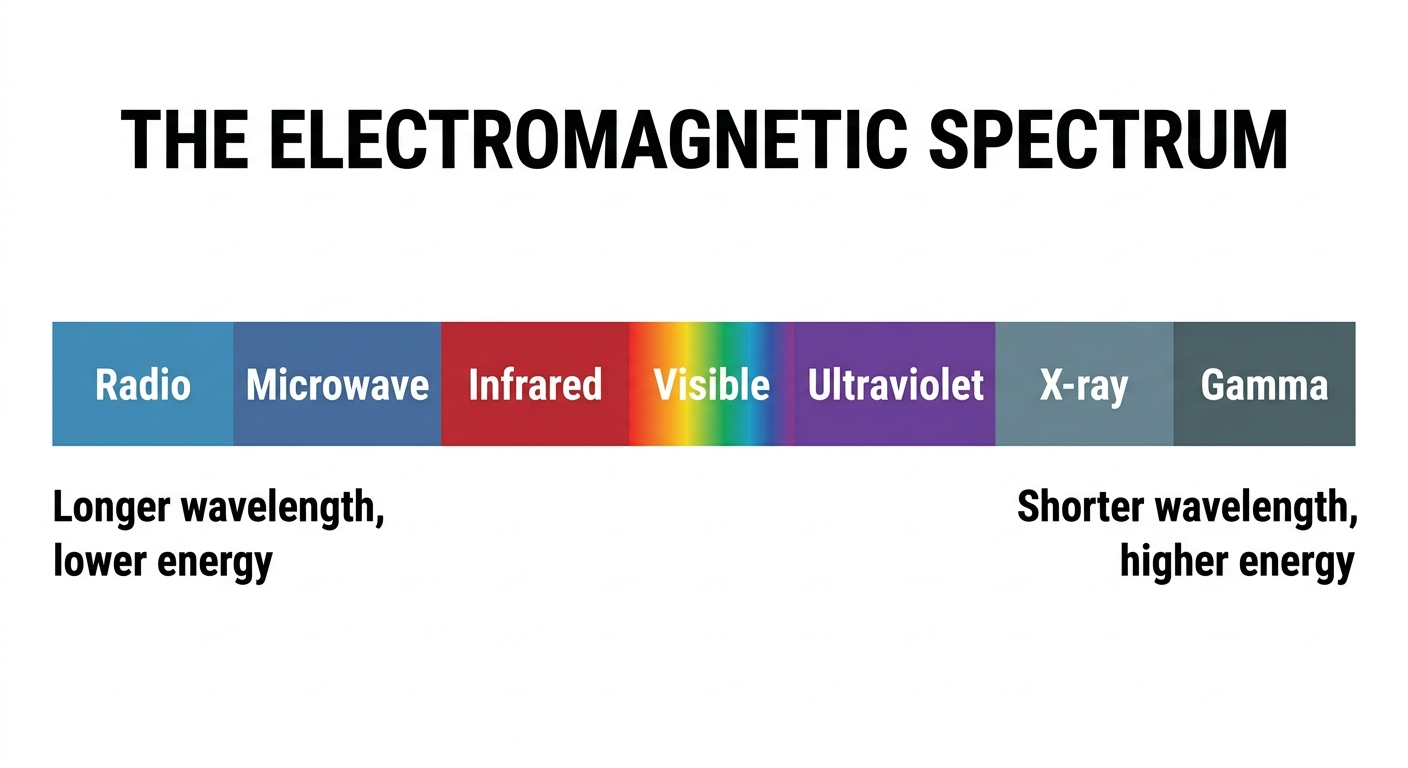
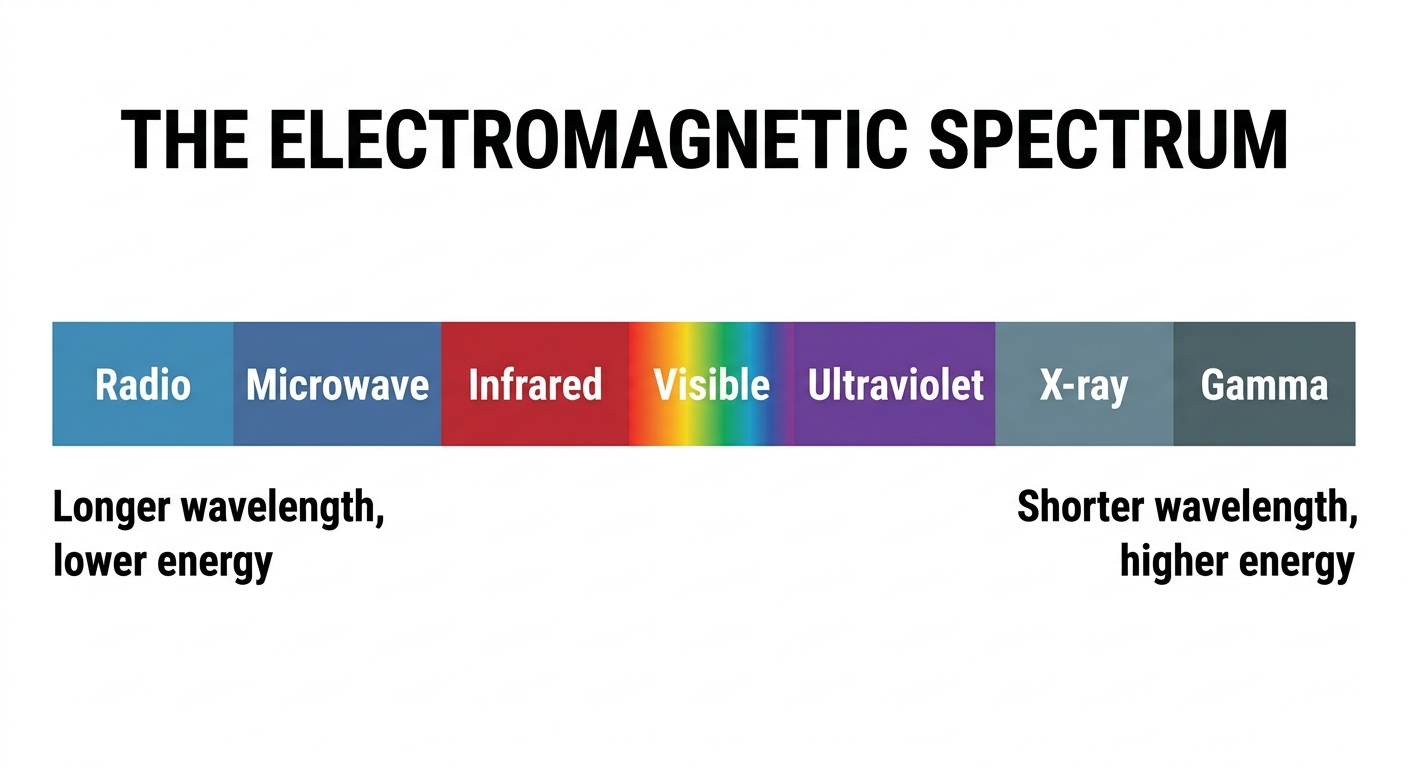
Free printable electromagnetic spectrum diagram — the seven bands from radio waves to gamma rays in order, with the visible-light rainbow and labels. Download a high-resolution PDF or PNG for Letter paper.
The bands of the electromagnetic spectrum
The electromagnetic spectrum is the whole range of light and energy waves, from long, low-energy radio waves to short, high-energy gamma rays. Only a tiny middle slice — visible light — can be seen with our eyes. Here is what happens at each labeled part of the diagram:
| Band | What it does | Why it matters |
|---|---|---|
| Radio waves | The longest waves, with the lowest energy. Used for radio, television and Wi-Fi. | Without radio waves, there would be no Wi-Fi, no broadcast television, and no FM stations — every wireless signal your household depends on would vanish instantly. |
| Microwaves | Shorter than radio waves. Used for microwave ovens, radar and phone signals. | Microwave ovens work by firing these waves at water molecules in your food, making them vibrate so fast they heat up from the inside out — a completely different trick from a conventional oven, which heats from the outside in. |
| Infrared | Felt as heat. Used by TV remote controls and night-vision cameras. | Point a TV remote at a wall and it still won't work, but aim it at the sensor and the infrared pulse carries your command perfectly — proof that invisible light can transmit real information. |
| Visible light | The only part we can see — the rainbow of colors from red to violet. | This narrow band is the only reason sight exists at all: every color you have ever seen, from the blue of the sky to the red of a stop sign, is just a slightly different wavelength within this tiny slice of the spectrum. |
| Ultraviolet (UV) | Higher energy than visible light. Comes from the sun and can cause sunburn. | UV rays carry enough energy to damage the DNA inside skin cells, which is exactly how overexposure leads to sunburn and, over time, skin cancer — making sunscreen one of the most evidence-backed health habits there is. |
| X-rays | High-energy waves that pass through soft tissue. Used to photograph bones. | Soft tissue like muscle and fat absorbs X-rays, but dense bone lets fewer through, so the waves that make it to the film create a shadow picture of your skeleton — a discovery that transformed medicine the moment Wilhelm Röntgen stumbled on it in 1895. |
| Gamma rays | The shortest waves, with the highest energy. Given off by radioactive material. | Gamma rays carry so much energy they can knock electrons out of atoms inside living cells, which is why exposure from radioactive material is dangerous — but doctors also aim precisely targeted gamma beams at tumors to destroy cancer cells without surgery. |
Companion worksheet
A free fill-in worksheet with an answer key, built from the labels above — students match each band to its description, then answer a couple of short questions. Great for a quick check after using the diagram.
How to print
Choose Download PDF for a ready-to-print file that fits US Letter paper (8.5 × 11") in landscape, or Download PNG for the high-resolution image.
Frequently asked questions
What is the order of the electromagnetic spectrum?
From longest wavelength to shortest: radio waves, microwaves, infrared, visible light, ultraviolet, X-rays and gamma rays.
What part of the spectrum can we see?
Only visible light — the rainbow of colors from red to violet. It is a very small band in the middle of the spectrum.
What paper size should I print this on?
The diagram is sized for standard US Letter paper (8.5 × 11") in landscape orientation. Use "Download PDF" for a print-ready file that fits the page automatically.