The Crusades Timeline
The Crusades were a series of religious wars launched by European Christians to reclaim the Holy Land from Muslim rule — nearly two centuries of warfare that shaped the medieval world and left a lasting mark on relations between Christianity and Islam.
The Crusades began with a speech. In 1095, Pope Urban II stood before a crowd in Clermont, France, and called on Christian knights to march to Jerusalem and take it back from Muslim rulers. What followed was nearly two centuries of warfare, ambition, faith, and violence that drew in kings and peasants from across Europe. The Crusaders captured Jerusalem in 1099 — but they couldn't hold it forever. The great Muslim leader Saladin retook it in 1187, and while king after king led armies east, none could win it back permanently. By 1291, when the last Crusader city fell, the age of Crusading was over. But the contact between European, Islamic, and Byzantine civilizations had already changed the medieval world in ways that outlasted the fighting.
- 1095
Pope Urban II's Call
At the Council of Clermont, Pope Urban II calls on European Christians to take up arms and reclaim Jerusalem from Muslim rule, promising spiritual rewards to those who join.
Why it mattered: The call launched the Crusading movement — uniting European nobles under the Church for the first time and setting off nearly two centuries of warfare between Christian Europe and the Islamic world.
- 1099
Crusaders Capture Jerusalem
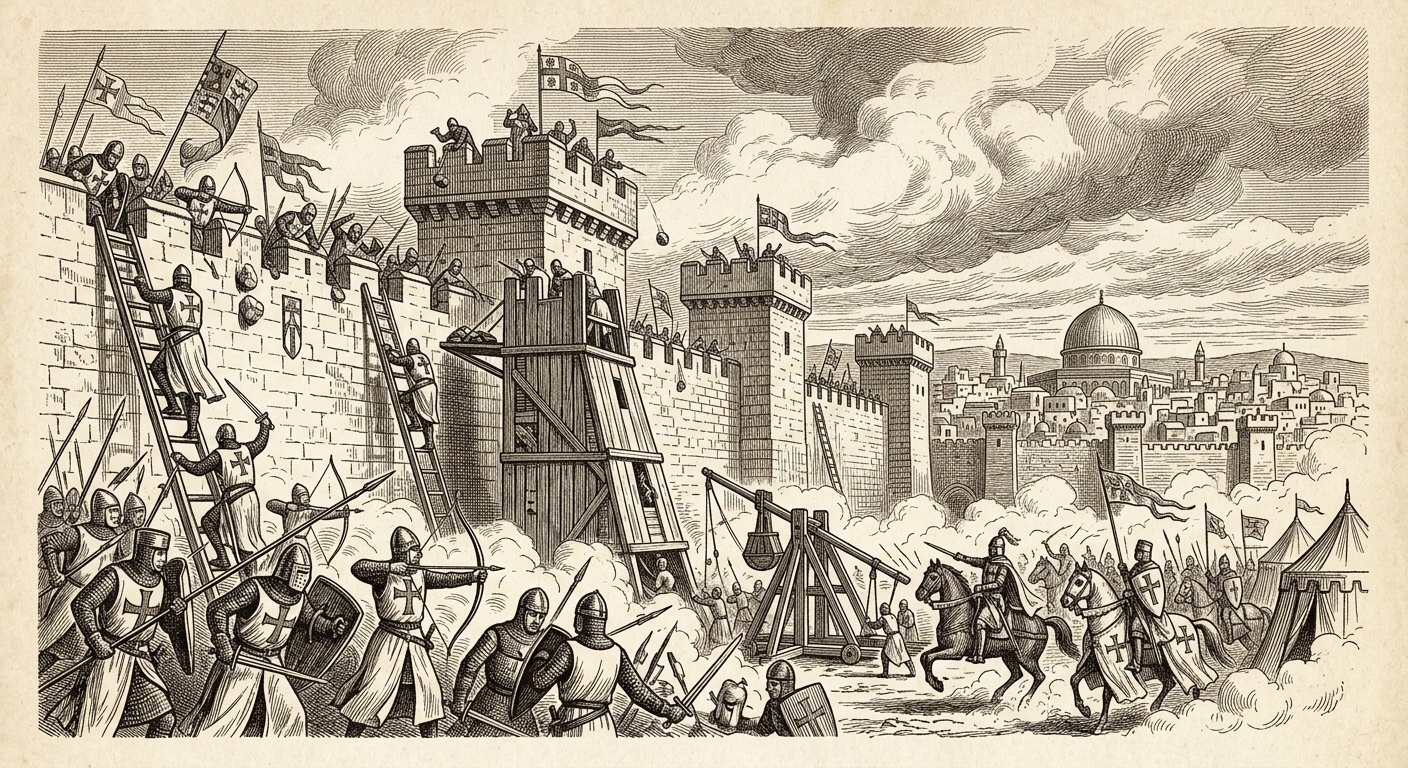
The First Crusade reaches Jerusalem after a three-year march; Crusaders storm the city and establish four small Crusader states in the Holy Land.
Why it mattered: The capture of Jerusalem was the Crusaders' defining goal — it shocked the Islamic world, established a Christian presence in the Holy Land, and made the conflict between Christianity and Islam more intense than ever.
- 1144
Fall of Edessa
Muslim forces recapture Edessa, the northernmost Crusader state, sending shockwaves through Europe and triggering the failed Second Crusade.
Why it mattered: Edessa's fall proved that the Crusader states were vulnerable without constant European support — and the Second Crusade's failure showed that later Crusades would face far more organized opposition.
- 1187
Saladin Retakes Jerusalem
The Kurdish Muslim sultan Saladin defeats the Crusader army at the Battle of Hattin, then recaptures Jerusalem just 88 years after it was seized.
Why it mattered: Saladin's victory shocked Christian Europe and caused the Third Crusade — it also showed that Muslim rulers could unite against the Crusaders when they had strong leadership.
- 1190–92
Third Crusade
Europe's most powerful kings — including Richard I of England and Philip II of France — lead the Third Crusade; they retake coastal cities but cannot recapture Jerusalem.
Why it mattered: The Third Crusade ended in a negotiated settlement: Saladin kept Jerusalem but allowed Christian pilgrims to visit. It showed that military force alone could not resolve the conflict.
- 1202–04
Fourth Crusade Sacks Constantinople
Rather than fighting Muslims, the Fourth Crusade attacks and sacks Constantinople — the largest Christian city in the world — driven partly by Venetian financial interests.
Why it mattered: The sack of Constantinople permanently deepened the split between Roman Catholic and Eastern Orthodox Christianity, and fatally weakened the Byzantine Empire — contributing to its eventual fall to the Ottoman Turks in 1453.
- 1291
Fall of Acre
Muslim forces capture Acre, the last major Crusader stronghold in the Holy Land, ending nearly two centuries of European military presence in the region.
Why it mattered: The fall of Acre ended the Crusader era — the dream of a permanent Christian kingdom in the Holy Land was over, though the Crusades' legacy of cultural exchange and religious conflict shaped Europe and the Middle East for centuries.
The Crusades Quiz
Check what you learned — read on screen, or use the Printable quiz button above for a worksheet version with an answer key.
What did Pope Urban II call for at the Council of Clermont in 1095?
- A) A new code of laws for European kingdoms
- B) A holy war to reclaim Jerusalem from Muslim rule
- C) A peace treaty between France and the Holy Roman Empire
- D) A trade agreement with Byzantine Constantinople
What happened when Crusaders reached Jerusalem in 1099?
- A) They negotiated a peaceful handover of the city
- B) They were defeated and forced to retreat
- C) They captured the city and established Crusader states in the Holy Land
- D) They were welcomed as pilgrims but not allowed to settle
Who was Saladin?
- A) A French king who led the Third Crusade
- B) The Pope who first called for the Crusades
- C) A Kurdish Muslim leader who united Muslim forces and recaptured Jerusalem in 1187
- D) The Venetian merchant who financed the Fourth Crusade
What made the Fourth Crusade unusual?
- A) It was the only Crusade to successfully hold Jerusalem for more than 50 years
- B) Instead of fighting Muslims, it attacked and sacked Constantinople, a Christian city
- C) It was the first Crusade launched by a French king
- D) It ended with a peace treaty that gave Crusaders permanent control of Acre
Why was the fall of Edessa in 1144 significant?
- A) It ended the Crusades entirely and forced all Crusaders to return home
- B) It proved that Muslim forces could retake Crusader territory and triggered the Second Crusade
- C) It led directly to Saladin capturing Jerusalem in 1099
- D) It was the event that caused Pope Urban II to call the First Crusade
When did the Crusading era end?
- A) 1187, when Saladin retook Jerusalem
- B) 1204, after the Fourth Crusade sacked Constantinople
- C) 1291, when the last Crusader stronghold at Acre fell to Muslim forces
- D) 1095, when the First Crusade failed
Which Crusade involved the most powerful European kings?
- A) The First Crusade, which captured Jerusalem
- B) The Second Crusade, which tried to retake Edessa
- C) The Fourth Crusade, which attacked Constantinople
- D) The Third Crusade, led by Richard I of England and Philip II of France
What was one lasting effect of the Crusades on Europe?
- A) European kingdoms agreed to stop fighting each other permanently
- B) Contact between European, Islamic, and Byzantine civilizations brought new goods, ideas, and knowledge back to Europe
- C) The Pope became the ruler of all European kingdoms
- D) Jerusalem became a permanently Christian city for the next 500 years
Show answer key
1. B · 2. C · 3. C · 4. B · 5. B · 6. C · 7. D · 8. B
See it on the map
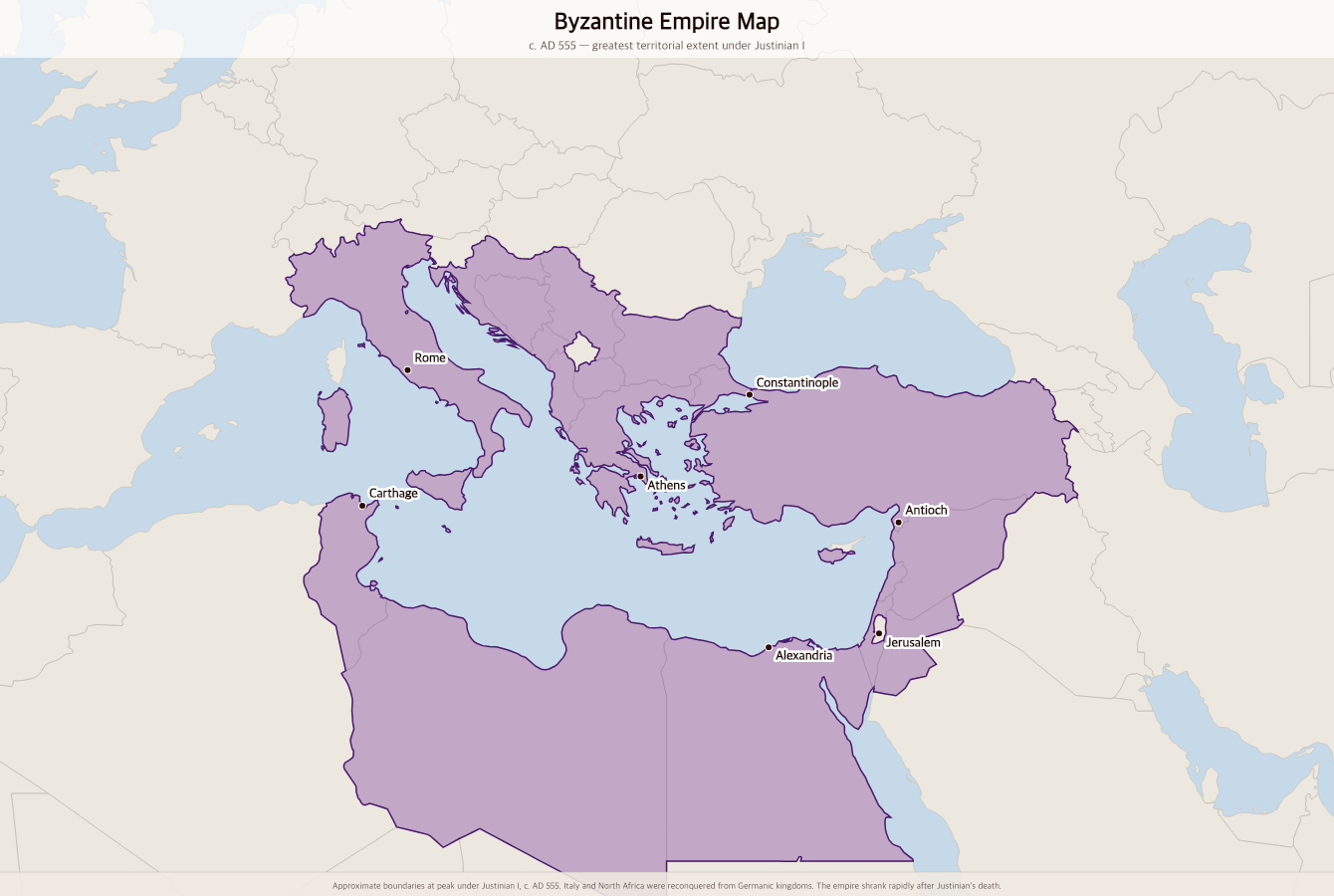 Pair this timeline with our printable The Byzantine Empire map — see the empire whose appeal for help triggered the First Crusade. Open the map →
Related timelines
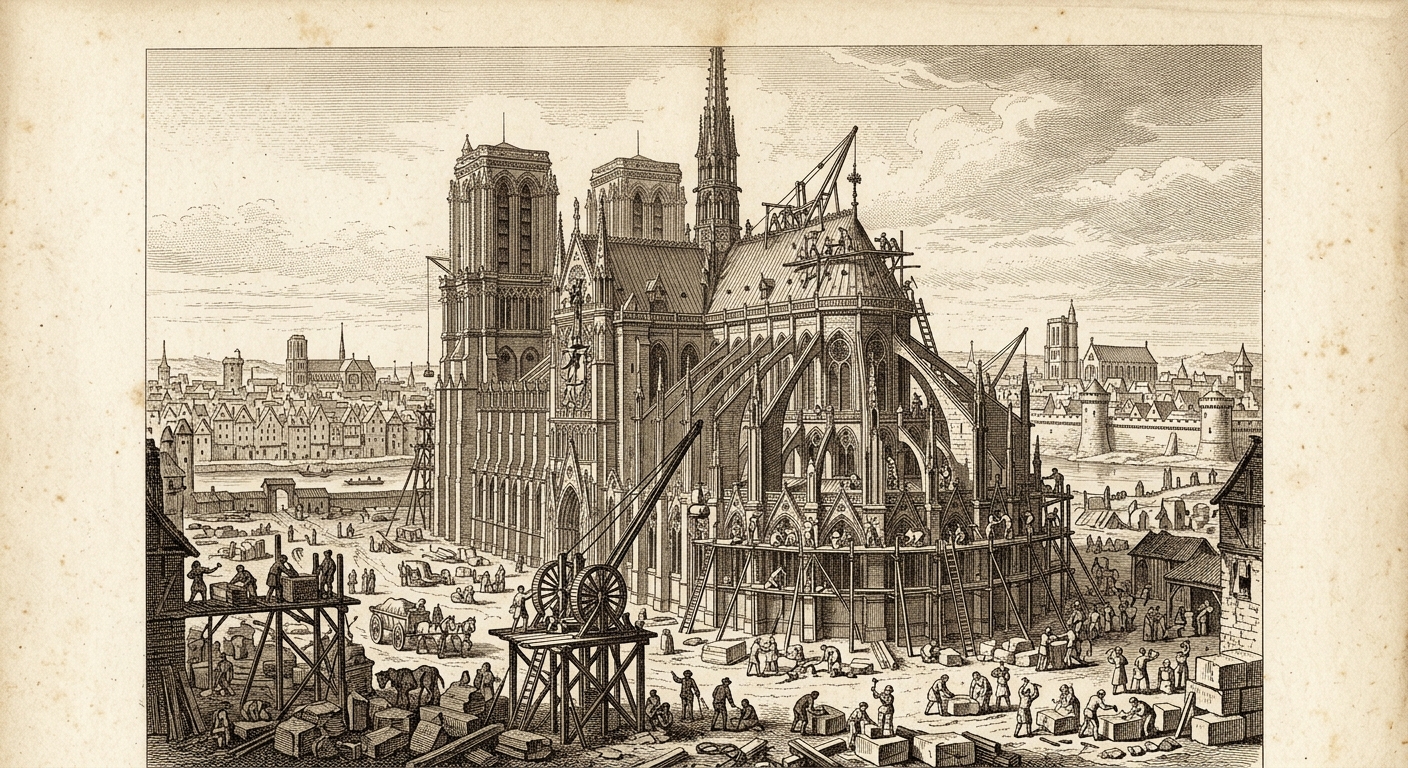 Middle Ages Timeline — The Middle Ages lasted roughly a thousand years after the fall of Rome, shaped by feudalism, the Catholic Church, crusades, and plagues — ending on the eve of the Renaissance. Open →
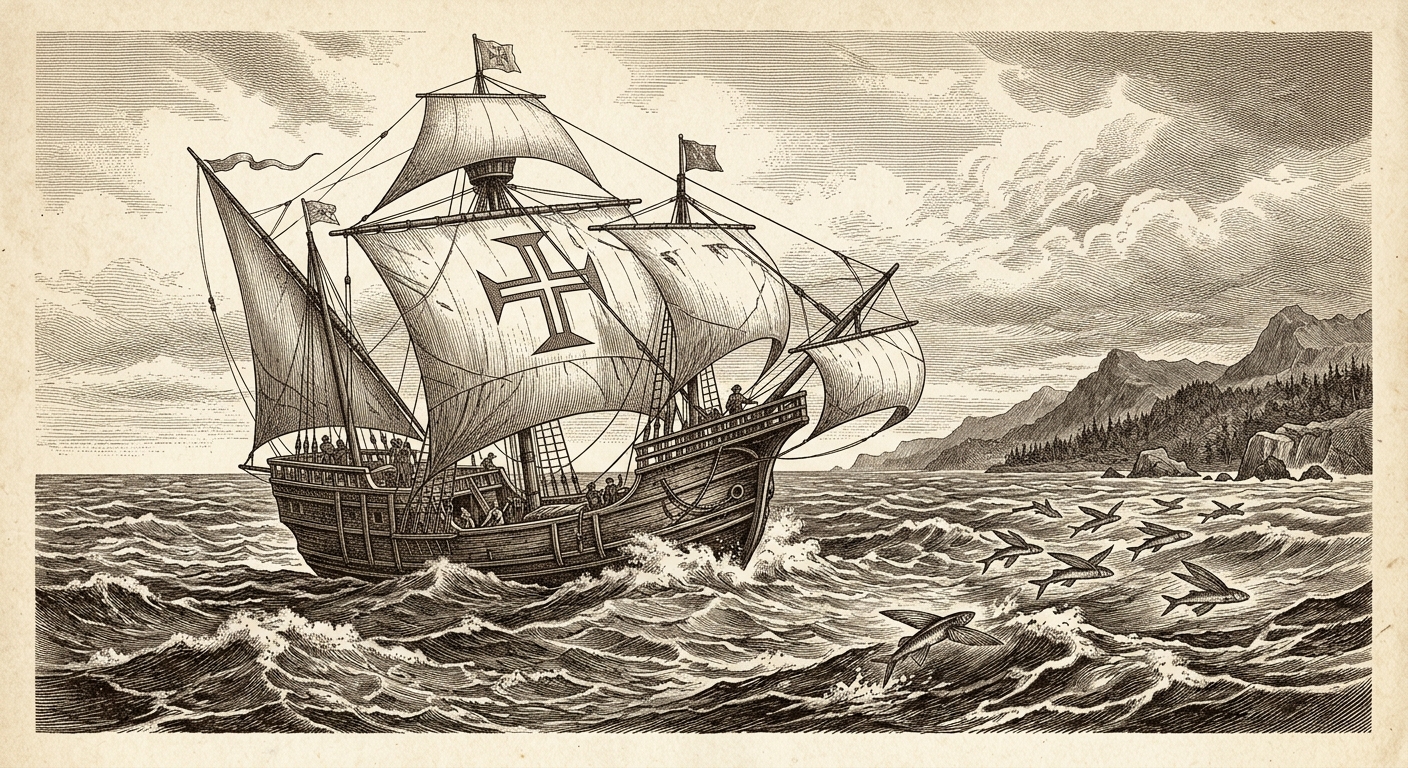 Age of Exploration Timeline — The Age of Exploration was the period when European sailors mapped the world, opening sea routes to Asia, reaching the Americas, and beginning a new era of global trade — and colonization. Open →
How to print
Choose Download PDF for a ready-to-print timeline that fits US Letter paper (8.5 × 11"). The blank fill-in version keeps the dates and gives students empty lines to write each event — great for review and quizzes.
Frequently asked questions
How many Crusades were there?
Historians number the major Crusades differently, but most count eight or nine major expeditions between 1095 and 1291, along with several smaller Crusades. The First Crusade (1095–1099) was the only one to achieve its main goal of capturing Jerusalem. The Third Crusade (1189–1192), led by Richard I of England, is the most famous — it failed to retake Jerusalem but negotiated access for Christian pilgrims. The Crusades were not a single continuous war but a series of campaigns launched over nearly two centuries.
What were the long-term effects of the Crusades?
The Crusades had far-reaching consequences. They deepened the divide between Christianity and Islam, and between Roman Catholic and Eastern Orthodox Christianity (especially after the Fourth Crusade's sack of Constantinople). They also brought Europeans into closer contact with the more advanced Islamic and Byzantine civilizations, introducing new goods, mathematics, philosophy, and medical knowledge to Europe — helping fuel the later Renaissance. The Crusades accelerated the growth of trade in Italian city-states like Venice and Genoa, which grew rich supplying and financing the expeditions.
What paper size should I print this on?
The timeline is sized for standard US Letter paper (8.5 × 11 in.). The Download PDF button gives you a print-ready file that fits the page automatically.