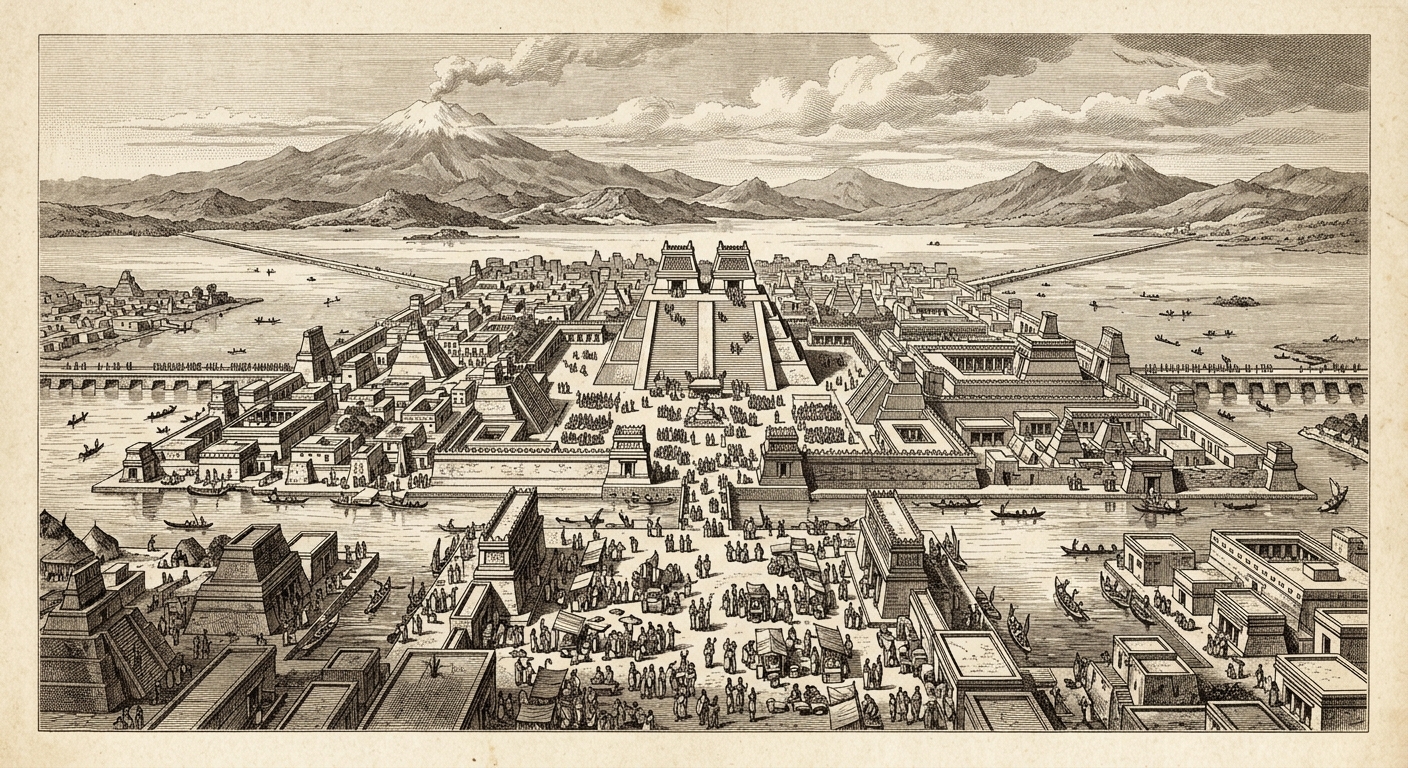
Aztec Empire Timeline
The Aztec Empire was one of the most powerful civilizations in the pre-Columbian Americas, ruling central Mexico from their island capital Tenochtitlan until the Spanish conquest in 1521.
The Mexica — the people we call Aztecs — were once a wandering, poor tribe. According to their traditions, their god Huitzilopochtli guided them south to Lake Texcoco, where they saw the sign he had promised: an eagle perched on a cactus, devouring a snake. There they founded the city of Tenochtitlan in 1325 on a marshy island. Through military alliance and conquest, the Mexica built an empire that controlled most of central Mexico and extracted tribute from millions of people. By the early 1500s, Tenochtitlan had grown into one of the largest cities in the world. Then in 1519, a Spanish conquistador named Hernan Cortes arrived with 500 soldiers, horses, cannons, and a devastating invisible weapon: European diseases to which the Aztecs had no immunity.
- 1325
Tenochtitlan Founded
Following an omen their god had promised — an eagle on a cactus devouring a snake — the Mexica people found their capital city on an island in Lake Texcoco.
Why it mattered: Tenochtitlan grew into one of the largest cities in the world, home to 200,000-300,000 people — larger than any city in Europe at the time.
- 1428
Triple Alliance Formed
The Mexica join with the nearby cities of Texcoco and Tlacopan to form the Triple Alliance, launching rapid conquests across central Mexico.
Why it mattered: The Triple Alliance became the Aztec Empire — within decades it controlled most of central Mexico, with millions paying tribute to Tenochtitlan.
- ~1450
The Empire Expands
Aztec warriors push the empire's borders to the Gulf Coast, the Pacific, and deep into Oaxaca and Guatemala, demanding tribute from hundreds of conquered communities.
Why it mattered: The empire's power rested on tribute — conquered peoples paid in goods, labor, and sacrificial victims, funding Tenochtitlan's magnificent temples and markets.
- ~1487
Dedication of the Great Temple
The Templo Mayor — the great pyramid at the heart of Tenochtitlan — is expanded and rededicated with elaborate ceremonies.
Why it mattered: The Templo Mayor was the religious center of the Aztec world, honoring Huitzilopochtli (god of war and the sun) and Tlaloc (god of rain) — the two forces the Aztecs believed sustained the universe.
- 1502
Moctezuma II Becomes Emperor
Moctezuma II becomes the ninth tlatoani (ruler) of Tenochtitlan, presiding over the empire at its height.
Why it mattered: Moctezuma expanded the empire's reach and centralized power in Tenochtitlan — but his reign would end with the Spanish arrival.
- 1519
Cortes Arrives
Spanish conquistador Hernan Cortes lands on the Gulf Coast with about 500 soldiers, horses, and cannons, none of which the Aztecs had ever seen.
Why it mattered: Cortes also carried European diseases — including smallpox — and found many peoples conquered by the Aztecs who were eager to join him against their rulers.
- 1519–20
Cortes Enters Tenochtitlan
Moctezuma II allows Cortes and his soldiers to enter the capital; Cortes eventually takes Moctezuma prisoner inside his own palace.
Why it mattered: The Spanish were able to enter because of indigenous allies, strategic boldness, and because many Aztec-subject peoples saw the Spanish as a chance for liberation from Aztec tribute demands.
- 1520
La Noche Triste
Aztec warriors drive the Spanish out of Tenochtitlan in a night of fierce fighting; Moctezuma is killed and Cortes suffers heavy losses.
Why it mattered: The defeat showed the power of Aztec warriors — but smallpox was already devastating the city's population, killing far more people than any battle.
- 1521
Siege of Tenochtitlan
Cortes returns with thousands of indigenous allies and lays siege to Tenochtitlan for 75 days; the city falls on August 13 and the last emperor Cuauhtemoc is captured.
Why it mattered: The fall of one of the world's greatest cities marked the end of the Aztec Empire — and the deaths of millions from European diseases transformed the Americas forever.
- 1521 onward
Colonial New Spain
The Spanish build Mexico City on the ruins of Tenochtitlan and establish New Spain; Aztec culture, religion, and people are suppressed but never fully erased.
Why it mattered: Aztec language, art, food, and traditions survived the conquest — millions of people of Aztec descent still live in Mexico today, and Nahuatl words like tomato, chocolate, and avocado are used worldwide.
Aztec Empire Quiz
Check what you learned — read on screen, or use the Printable quiz button above for a worksheet version with an answer key.
Where did the Aztecs found their capital city Tenochtitlan?
- A) On a hilltop in the mountains of central Mexico
- B) On an island in Lake Texcoco, after seeing an eagle on a cactus devouring a snake
- C) On the coast of the Gulf of Mexico near Veracruz
- D) In the valley of Oaxaca in southern Mexico
How large was Tenochtitlan at its height?
- A) About 20,000 people — a medium-sized trading post
- B) About 50,000 — similar to a large European capital
- C) 200,000-300,000 people — larger than any European city at the time
- D) Over one million — the largest city in the world
What was the Triple Alliance?
- A) A military pact between the Aztecs, Maya, and Inca against European invaders
- B) An alliance of three cities — led by the Mexica — that formed the foundation of the Aztec Empire
- C) A trade agreement between the Aztec Empire and Spain
- D) The three great gods of the Aztec religious calendar
What was the Templo Mayor?
- A) The palace where Moctezuma II lived and received ambassadors
- B) The great pyramid at the heart of Tenochtitlan, honoring the gods of war and rain
- C) A pyramid tomb for Aztec emperors built over generations
- D) The main marketplace at the center of the Aztec Empire
How did Cortes manage to enter Tenochtitlan in 1519?
- A) He defeated the Aztec army in open battle outside the city
- B) He bribed Aztec priests to open the city gates at night
- C) Moctezuma allowed him in — and many peoples conquered by the Aztecs sided with the Spanish
- D) He sailed into the city through its canals under cover of darkness
What was La Noche Triste?
- A) The night Cortes first arrived on the Gulf Coast
- B) The night Aztec warriors drove the Spanish out of Tenochtitlan with heavy losses
- C) The night Tenochtitlan finally fell after the 75-day siege
- D) The night Moctezuma was captured inside his own palace
What combination of factors ended the Aztec Empire?
- A) Spanish military superiority alone
- B) An Aztec civil war that divided the empire before the Spanish arrived
- C) Spanish conquest aided by indigenous allies and devastating smallpox epidemics that killed millions
- D) A prolonged drought that destroyed the Aztec food supply
What Aztec legacy survives in modern language?
- A) Aztec mathematical symbols used in modern algebra
- B) Words like tomato, chocolate, and avocado — all from the Aztec language Nahuatl
- C) Aztec calendar symbols used in modern timekeeping
- D) The Aztec writing system still used in parts of Mexico today
Show answer key
1. B · 2. C · 3. B · 4. B · 5. C · 6. B · 7. C · 8. B
Related timelines
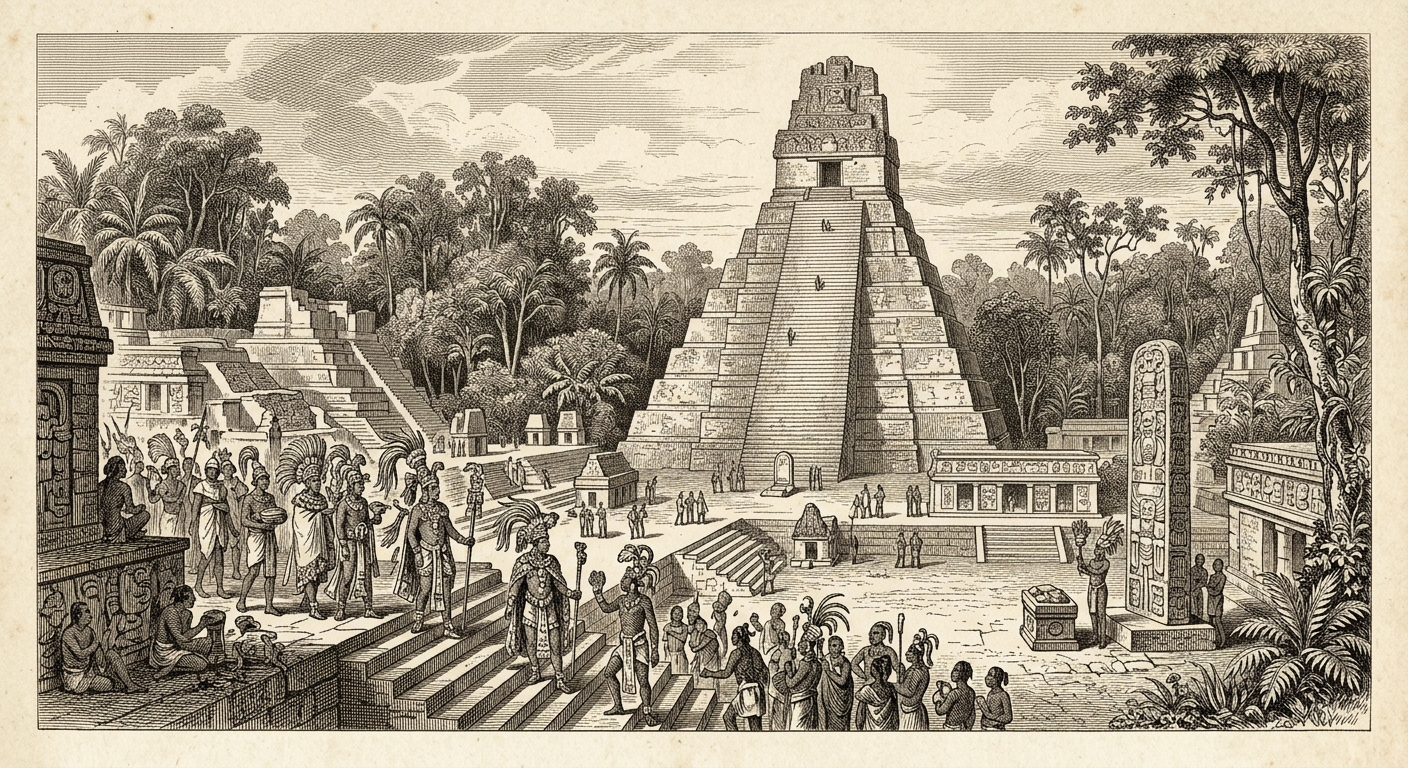 Maya Civilization Timeline — The Maya civilization was one of the most sophisticated in the ancient Americas, known for pyramid cities, a complex writing system, advanced mathematics, and an extraordinarily accurate calendar. Open →
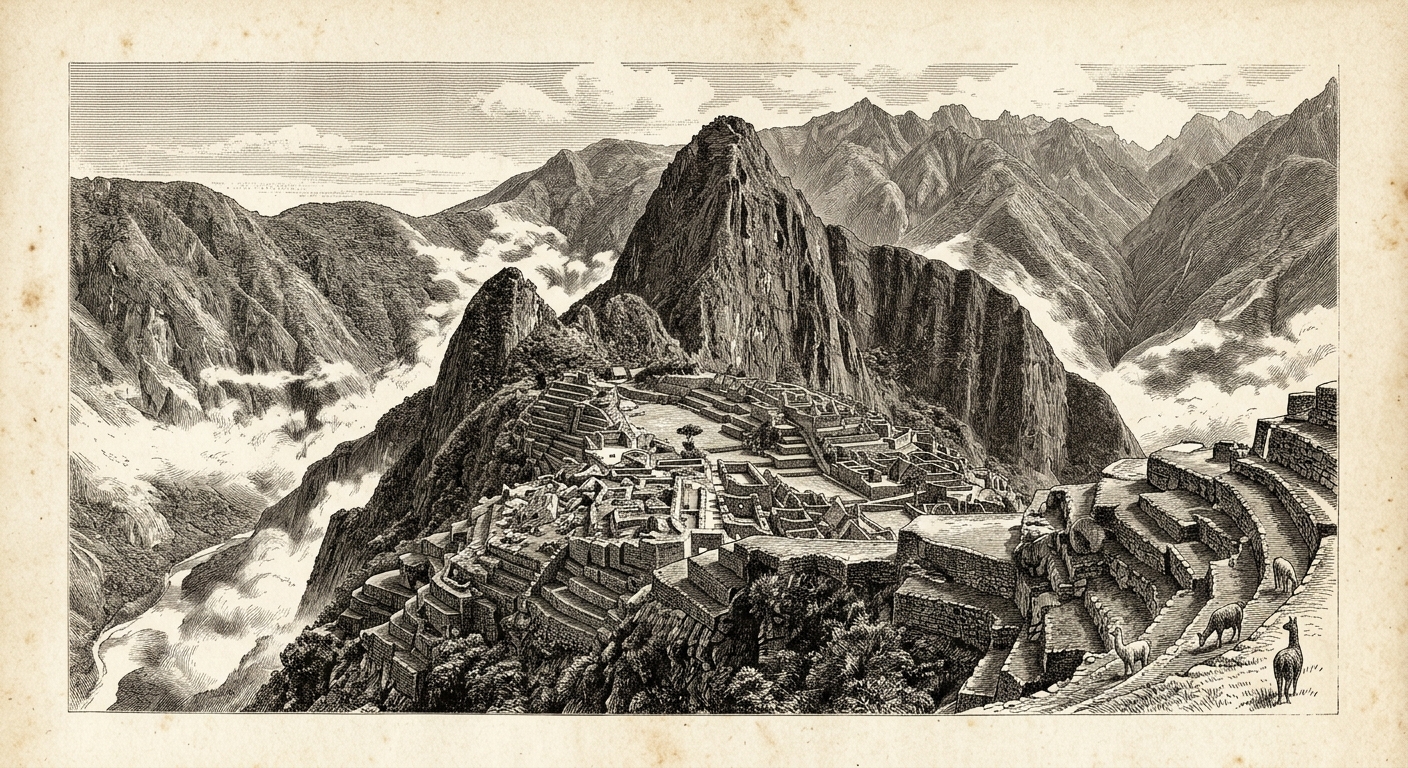 Inca Empire Timeline — The Inca Empire was the largest empire in the pre-Columbian Americas, stretching along the western coast of South America from Colombia to Chile, governed from the mountain capital of Cusco. Open →
How to print
Choose Download PDF for a ready-to-print timeline that fits US Letter paper (8.5 × 11"). The blank fill-in version keeps the dates and gives students empty lines to write each event — great for review and quizzes.
Frequently asked questions
Who were the Aztecs?
The Aztecs (also called the Mexica) were a people who founded the city of Tenochtitlan on an island in Lake Texcoco around 1325. Through military conquest and alliances, they built an empire that controlled much of central Mexico by the 1400s. Their capital was one of the largest and most sophisticated cities in the world, with aqueducts, markets, temples, and a population of perhaps 300,000. The Aztec Empire fell to Spanish conquistador Hernan Cortes in 1521.
What happened to the Aztecs after the conquest?
The Aztec Empire was conquered by Spanish forces in 1521, aided by tens of thousands of indigenous warriors from peoples who resented Aztec rule. But the conquest was completed as much by disease as by military force — smallpox and other European illnesses killed an estimated 50-90% of the indigenous population of central Mexico within a century of contact. Aztec culture was suppressed but never destroyed — millions of Mexicans today are descendants of the Aztec people, and the Nahuatl language is still spoken by over a million people.
What paper size should I print this on?
The timeline is sized for standard US Letter paper (8.5 × 11 in.). The Download PDF button gives you a print-ready file that fits the page automatically.