Maya Civilization Timeline
The Maya civilization was one of the most sophisticated in the ancient Americas, known for pyramid cities, a complex writing system, advanced mathematics, and an extraordinarily accurate calendar.
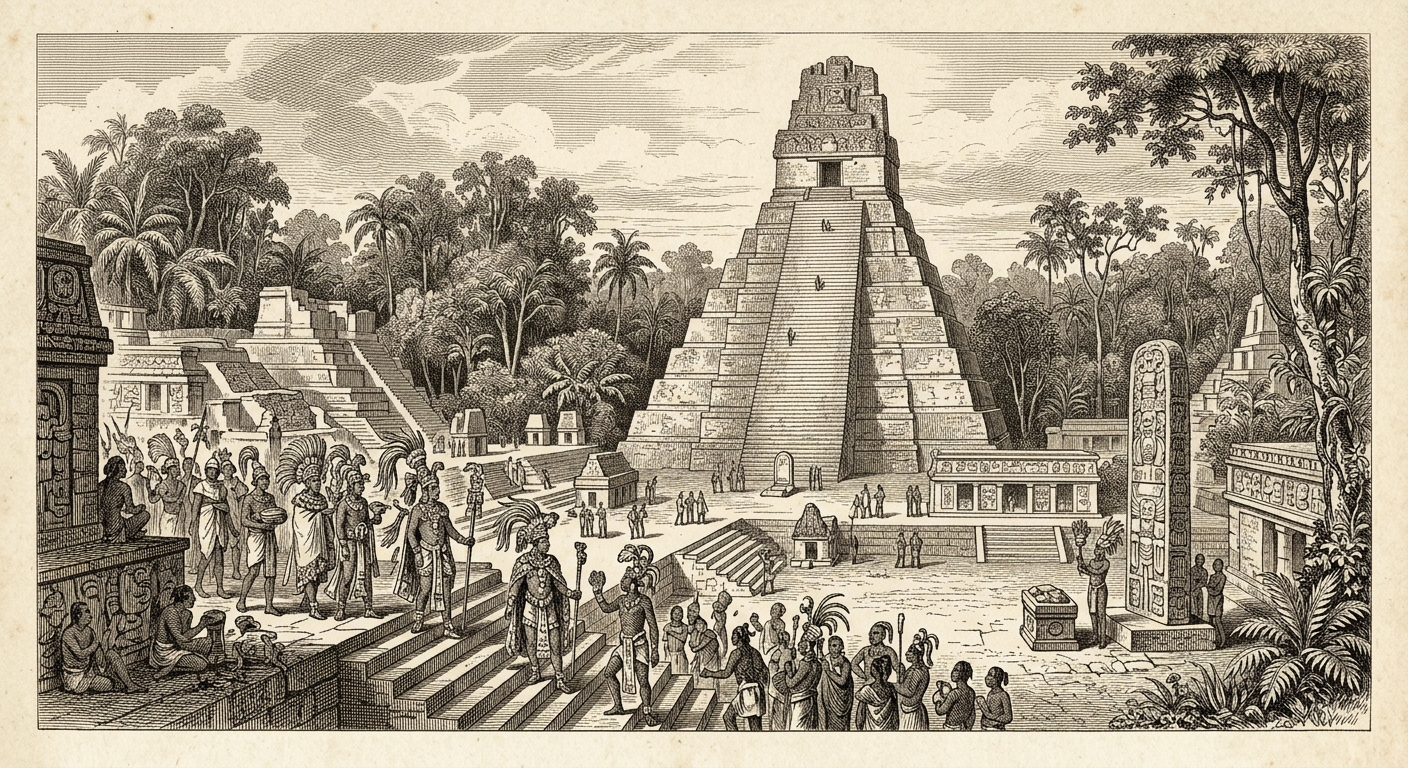
The Maya civilization developed over more than 3,000 years across the jungles, mountains, and coasts of present-day Mexico, Guatemala, Belize, and Honduras. Unlike the Aztec or Inca, the Maya never formed a single unified empire — instead they lived in dozens of competing city-states, each ruled by a divine king. They built towering pyramids, carved intricate stone monuments, wrote in one of the few fully developed writing systems in the pre-Columbian Americas, and developed a calendar more accurate than the one then used in Europe. The greatest Maya cities flourished during the Classic period from about AD 250 to 900, then were mysteriously abandoned. But the Maya never disappeared — millions of Maya people live today, and many still speak Maya languages.
- ~2000 BC
Early Maya Villages
Maya-speaking people establish farming villages in the highlands and lowlands of present-day Mexico and Guatemala.
Why it mattered: Settled farming provided the food surplus needed to support specialists, artisans, and eventually cities — laying the foundation for one of the most sophisticated civilizations in the Americas.
- ~300 BC
First Cities Emerge
Large Maya cities begin to form, including El Mirador in Guatemala — one of the largest cities in the ancient Americas, with massive pyramid complexes.
Why it mattered: El Mirador showed that Mesoamerican peoples could build on a monumental scale centuries before what most people think of as the Maya's golden age.
- ~AD 250
Classic Maya Period Begins
The Classic Maya period marks the height of Maya civilization, with dozens of competing city-states flourishing across the Maya world.
Why it mattered: The Classic period produced the Maya's greatest achievements in architecture, mathematics, astronomy, and art — a world of competing kingdoms not unlike ancient Greece.
- ~AD 600
Tikal vs. Calakmul
The two great Maya powers — Tikal in present-day Guatemala and Calakmul in Mexico — build rival networks of alliances and fight proxy wars across the Maya world.
Why it mattered: The rivalry between Tikal and Calakmul shaped Maya politics for generations — two superpowers competing through allies, diplomacy, and occasional direct warfare.
- AD 683
Death of Pakal of Palenque
King Pakal of Palenque dies after ruling for 68 years, leaving behind magnificent temples and thousands of hieroglyphic inscriptions documenting his dynasty.
Why it mattered: Pakal's tomb, discovered in 1952, was the most elaborate burial found in the pre-Columbian Americas — and its inscriptions helped scholars crack the Maya writing code.
- ~AD 800–900
Classic Maya Collapse
The major cities of the southern Maya lowlands are abandoned one by one over about a century; the population of the region collapses.
Why it mattered: Historians point to drought, warfare, soil exhaustion, and political breakdown as likely causes — the collapse ended the Classic Maya world but not the Maya people.
- ~AD 1000
Chichen Itza Flourishes
In the northern Yucatan, cities like Chichen Itza rise to power after the southern collapse, blending Maya traditions with influences from other Mesoamerican peoples.
Why it mattered: Chichen Itza became one of the most powerful and influential cities in all of Mesoamerica — its pyramid, El Castillo, is still one of the most visited sites in the Americas.
- ~AD 900
Maya Mathematics and Calendar
Maya scholars develop one of the world's most accurate calendars, a complex mathematical system, and the concept of zero — centuries before most of the world.
Why it mattered: The Maya Long Count calendar could track dates millions of years in the past or future — a testament to the sophistication of Maya intellectual achievement.
- 1200–1500
Late Maya City-States
New Maya kingdoms rise in the Yucatan and highlands; the Maya world remains politically divided but culturally vibrant on the eve of Spanish contact.
Why it mattered: The Maya who met the Spanish were heirs to one of history's great civilizations — not a vanished people but a living, diverse culture stretching across Mesoamerica.
- 1524–1697
Spanish Conquest of the Maya
Spain gradually conquers Maya territories over 170 years of resistance; the last independent Maya kingdom, the Itza of Lake Peten, falls in 1697.
Why it mattered: Unlike the Aztec Empire — which fell in a single siege — the decentralized Maya required 170 years to subdue. Some Maya communities resisted Spanish influence for centuries longer.
Maya Civilization Quiz
Check what you learned — read on screen, or use the Printable quiz button above for a worksheet version with an answer key.
Where did Maya civilization develop?
- A) In the deserts of northern Mexico near the Rio Grande
- B) In the lowlands, highlands, and coasts of present-day Mexico, Guatemala, Belize, and Honduras
- C) On the Pacific coast of South America
- D) In the high Andes mountains of Peru
What was the Classic Maya period known for?
- A) The earliest Maya farming villages
- B) The Spanish conquest of the Maya cities
- C) The height of Maya civilization in architecture, mathematics, astronomy, and art
- D) The collapse and abandonment of the southern Maya cities
What were the two great Maya powers of the Classic period?
- A) Tenochtitlan and Calakmul
- B) Tikal and Chichen Itza
- C) Tikal and Calakmul
- D) Palenque and El Mirador
What was remarkable about Maya mathematics and astronomy?
- A) The Maya invented the wheel independently
- B) The Maya developed one of the world's most accurate calendars, used zero, and tracked celestial cycles with great precision
- C) The Maya were the first people to use written numbers of any kind
- D) The Maya calculated the circumference of the Earth
What happened during the Classic Maya Collapse around AD 800-900?
- A) The Spanish conquered and burned the Maya cities
- B) The major cities of the southern Maya lowlands were abandoned as the population collapsed
- C) The Maya were defeated militarily by the Aztec Empire
- D) A volcanic eruption destroyed the Maya heartland
What is Chichen Itza?
- A) The capital of the Aztec Empire borrowed from the Maya
- B) A Maya city in the northern Yucatan that flourished after the Classic collapse
- C) The oldest known Maya city, predating the Classic period
- D) The city where King Pakal ruled for 68 years
Why did the Spanish conquest of the Maya take nearly 170 years?
- A) The Maya had steel weapons equal to those of the Spanish
- B) The Spanish were not officially authorized to conquer Maya territory
- C) The decentralized city-state structure meant each community had to be subdued separately
- D) A series of peace treaties protected Maya territories for most of that period
Do the Maya still exist today?
- A) No — they disappeared when the Classic cities collapsed around AD 900
- B) A small group survived but only a few thousand people remain
- C) Yes — approximately 7 million Maya people live today, many still speaking Maya languages
- D) Yes — but they live only in the region around Chichen Itza
Show answer key
1. B · 2. C · 3. C · 4. B · 5. B · 6. B · 7. C · 8. C
Related timelines
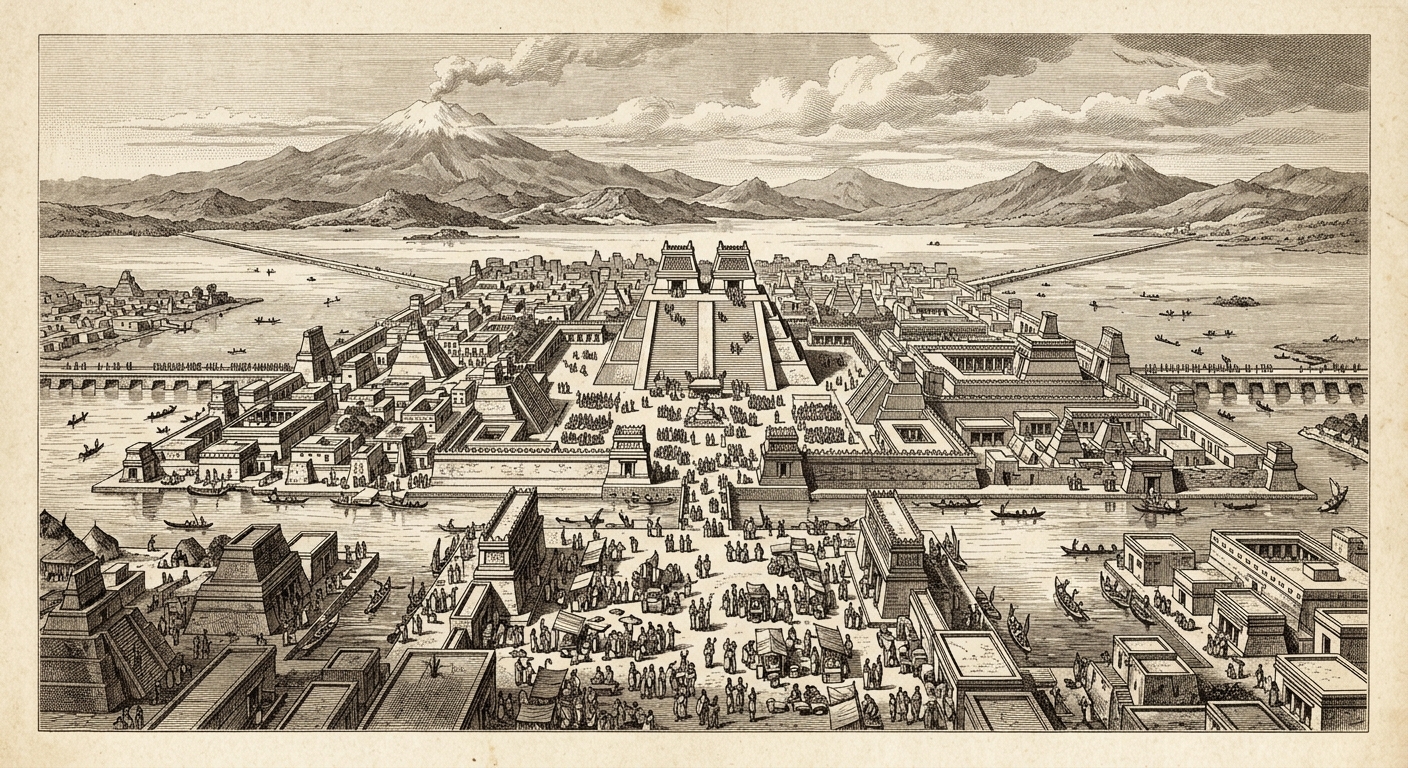 Aztec Empire Timeline — The Aztec Empire was one of the most powerful civilizations in the pre-Columbian Americas, ruling central Mexico from their island capital Tenochtitlan until the Spanish conquest in 1521. Open →
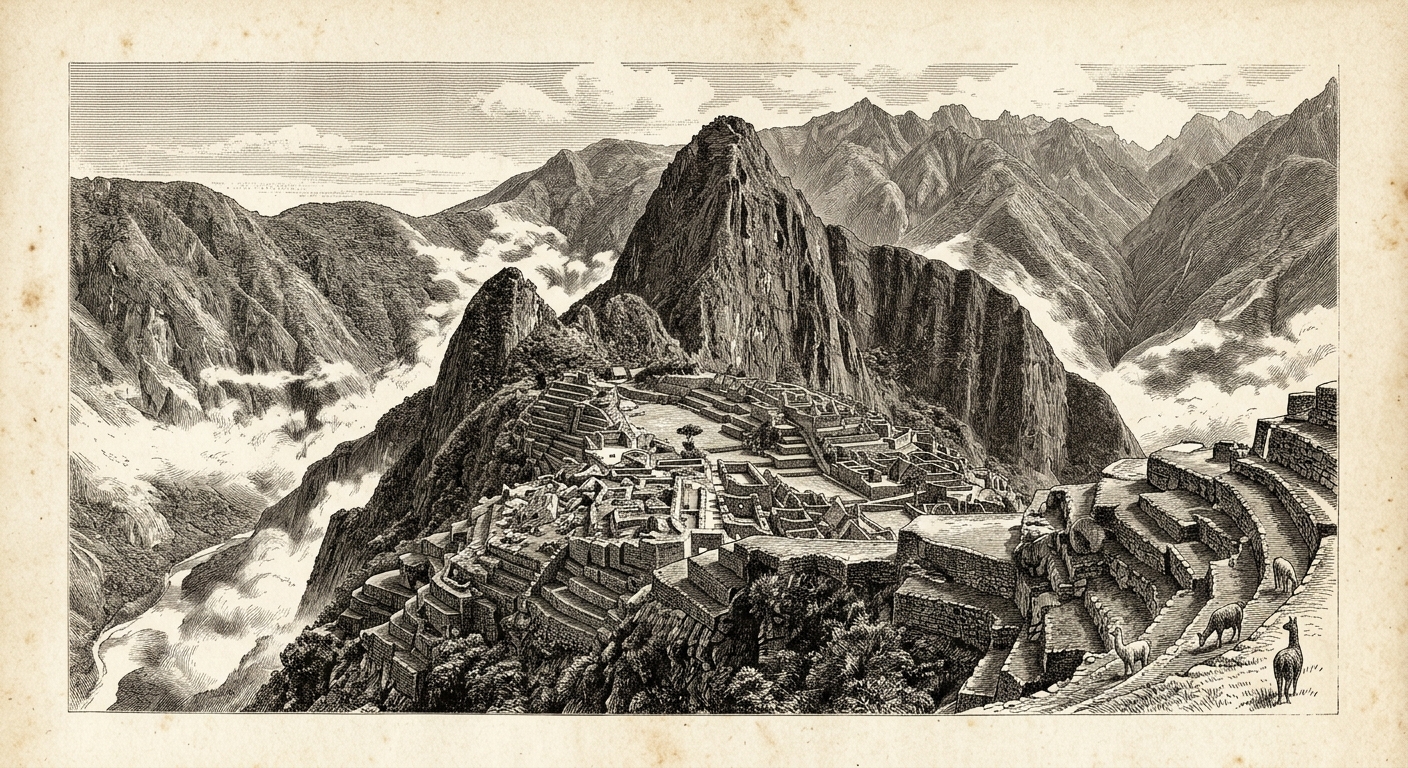 Inca Empire Timeline — The Inca Empire was the largest empire in the pre-Columbian Americas, stretching along the western coast of South America from Colombia to Chile, governed from the mountain capital of Cusco. Open →
How to print
Choose Download PDF for a ready-to-print timeline that fits US Letter paper (8.5 × 11"). The blank fill-in version keeps the dates and gives students empty lines to write each event — great for review and quizzes.
Frequently asked questions
Did the Maya disappear?
No — the ancient Maya did not disappear. While the great cities of the Classic period were abandoned around AD 800-900, millions of Maya people continued to live across southern Mexico, Guatemala, Belize, and Honduras. Today there are approximately 7 million Maya people, and many Maya languages are still spoken. The idea that the Maya mysteriously vanished is a myth — they adapted, relocated, and survived centuries of upheaval including the Spanish conquest.
What were the Maya known for?
The Maya are known for their monumental pyramid temples, one of the few fully developed writing systems in the pre-Columbian Americas, advanced mathematics including the concept of zero, an extremely accurate astronomical calendar, and vibrant art, architecture, and religious traditions. Maya cities like Tikal, Palenque, and Chichen Itza drew visitors from across Mesoamerica and still draw millions of modern tourists.
What paper size should I print this on?
The timeline is sized for standard US Letter paper (8.5 × 11 in.). The Download PDF button gives you a print-ready file that fits the page automatically.