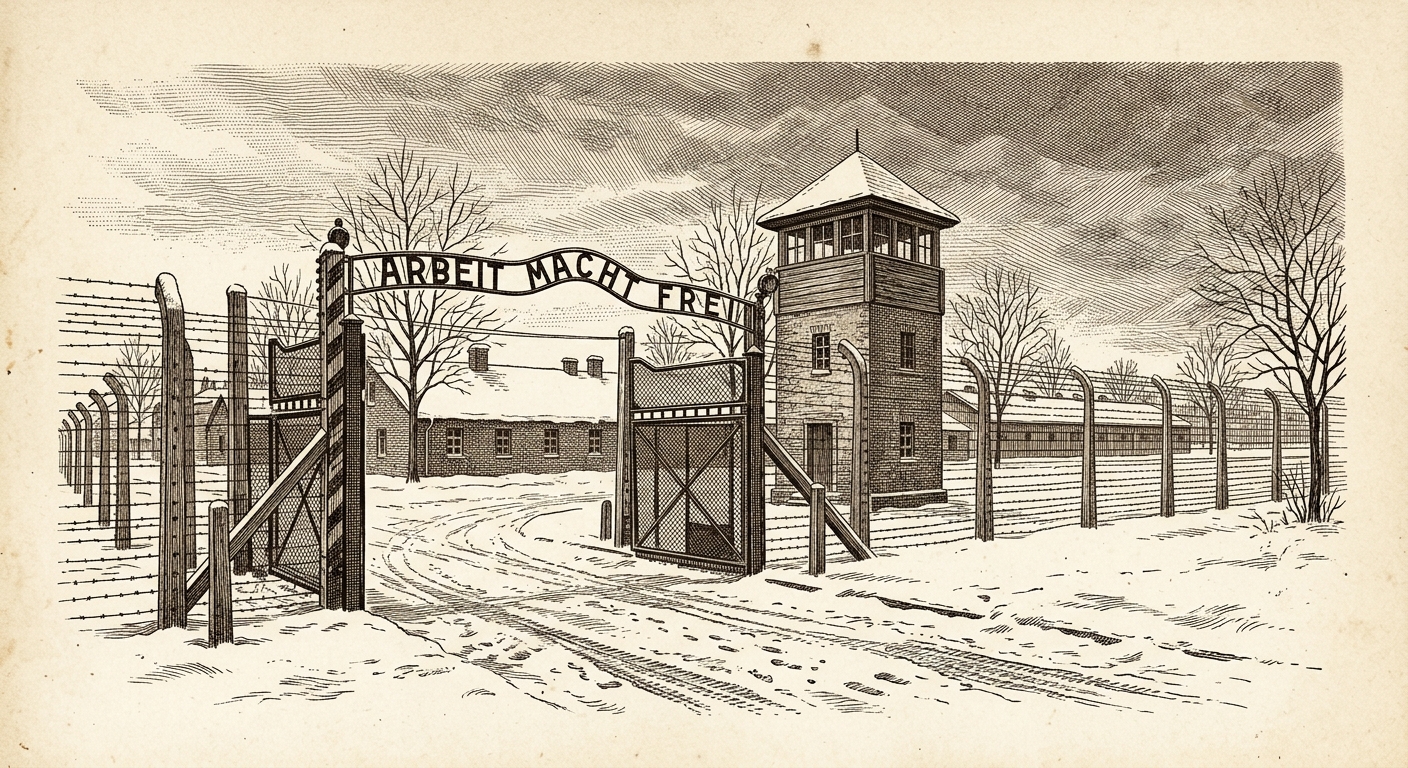
Holocaust Timeline
The Holocaust was the systematic, state-sponsored murder of approximately six million Jewish people by Nazi Germany — the largest genocide of the 20th century, carried out across occupied Europe during World War II.
The Holocaust did not begin with death camps. It began with words — propaganda that portrayed Jewish people as enemies of Germany — and then laws that stripped them of citizenship and rights. Then came organized violence in the streets. Then forced emigration, then ghettos, then deportations. Each step made the next one easier, as the Nazi government systematically dehumanized Jewish people in German society and eventually across all of occupied Europe. By the time the war ended in 1945, approximately six million Jewish people had been murdered — two-thirds of the Jewish population of Europe. The Holocaust stands as one of history's most urgent reminders of where hatred, dehumanization, and unchecked government power can lead.
- 1933
Hitler Takes Power
Adolf Hitler is appointed Chancellor of Germany on January 30; the Nazi Party rapidly dismantles democratic institutions and takes total control.
Why it mattered: The Nazis used democratic processes to gain power, then destroyed democracy itself — showing how quickly a government can turn against its own people.
- 1933
First Concentration Camps
The Nazis open Dachau, the first concentration camp, initially to imprison political opponents, trade union leaders, and others who resisted Nazi rule.
Why it mattered: The camp system began as political repression — but it grew into a vast network used to imprison and murder millions of people classified as enemies of the Nazi state.
- 1935
Nuremberg Laws
The Nazi government passes laws stripping Jewish Germans of citizenship and banning marriage or relationships between Jewish and non-Jewish people.
Why it mattered: The Nuremberg Laws transformed antisemitism into official state policy with the force of law — marking Jewish people as permanently outside the German national community.
- 1938
Kristallnacht — Night of Broken Glass
On November 9-10, Nazi-organized mobs attack Jewish homes, businesses, synagogues, and hospitals across Germany and Austria, killing dozens and destroying thousands of properties.
Why it mattered: Kristallnacht marked a sharp, open escalation of violence against Jewish people with full government involvement — many historians consider it a turning point into the Holocaust.
- 1939
World War II and Mass Killings Begin
Germany invades Poland; the Nazis immediately begin mass shootings of Jewish people, intellectuals, and others in occupied territories.
Why it mattered: The war gave the Nazis both cover and territory — now the persecution could expand across all of occupied Europe, affecting millions of Jewish people outside Germany.
- 1941–42
The Final Solution
Nazi leaders coordinate a plan for the systematic murder of all Jewish people in Europe — what they called the Final Solution to the Jewish question.
Why it mattered: The Final Solution represented an industrial approach to genocide — the Nazis aimed not just at persecution or exile, but at the total elimination of Jewish people from Europe.
- 1942–44
The Death Camps
Six purpose-built death camps in occupied Poland — including Auschwitz-Birkenau — receive trainloads of Jewish people from across Europe and kill most of them upon arrival.
Why it mattered: The death camps were designed for mass murder on an industrial scale — at its peak, Auschwitz processed and killed thousands of people every day.
- 1944
Liberation Begins
Allied forces advance on German-held territory; Soviet troops liberate the first death camp, Majdanek, in July 1944, revealing its full horror to the world.
Why it mattered: The liberation of the camps exposed the reality of the Holocaust to the world — shocking even battle-hardened soldiers with what they found inside.
- 1945
Camps Liberated; War Ends
Allied forces liberate the remaining camps including Auschwitz (January), Bergen-Belsen (April), and Dachau (April); Germany surrenders in May.
Why it mattered: The liberation confronted the world with evidence of systematic genocide on a scale never seen before — and began the reckoning with what governments can do to their own people.
- 1945–46
Nuremberg Trials
Nazi leaders are tried at Nuremberg for war crimes and crimes against humanity; the trials establish that following orders is not a defense for participating in genocide.
Why it mattered: The Nuremberg Trials created the legal framework for international human rights law — establishing that some crimes are so grave that individuals are personally responsible, regardless of what their government ordered.
Holocaust Quiz
Check what you learned — read on screen, or use the Printable quiz button above for a worksheet version with an answer key.
When did Adolf Hitler come to power in Germany?
- A) 1929, when the Great Depression began
- B) 1933, when he was appointed Chancellor and the Nazis took control
- C) 1939, when Germany invaded Poland
- D) 1938, after the Munich Agreement
What did the Nuremberg Laws of 1935 do?
- A) These were the laws used to prosecute Nazi leaders after the war
- B) They stripped Jewish Germans of citizenship and banned marriage between Jewish and non-Jewish people
- C) They established the first concentration camps in Germany
- D) They gave the Nazi government emergency powers after the Reichstag fire
What happened on Kristallnacht in November 1938?
- A) Jewish people were stripped of German citizenship by new laws
- B) The Nuremberg Trials of Nazi leaders began
- C) Nazi-organized mobs attacked Jewish homes, businesses, and synagogues across Germany and Austria
- D) Germany invaded Poland, beginning World War II
What was the Final Solution?
- A) A Nazi plan to expel all Jewish people from Germany to other countries
- B) Hitler's strategy for achieving military victory in World War II
- C) The Nazi plan for the systematic murder of all Jewish people in Europe
- D) A peace proposal that the Allies rejected in 1942
Where were the Nazi death camps located?
- A) In Germany, near Berlin and other major cities
- B) In France and Belgium, in occupied Western Europe
- C) In occupied Poland, including the camp at Auschwitz-Birkenau
- D) In Austria, near Vienna and Salzburg
Approximately how many Jewish people were killed in the Holocaust?
- A) About 600,000
- B) About 2 million
- C) Approximately 6 million — about two-thirds of Europe's Jewish population
- D) About 10 million
What did the Nuremberg Trials establish?
- A) That Germany would be divided into East and West after the war
- B) That Jewish refugees had the right to a homeland in Palestine
- C) That following orders was not a legal defense for participating in genocide, and that individuals are personally responsible for crimes against humanity
- D) That Germany must pay reparations to the Allied nations
Why is the Holocaust considered especially significant in history?
- A) Because it was the first war in history to kill civilians
- B) Because it was carried out by a modern industrialized state using systematic, bureaucratic methods to murder millions of people based on who they were
- C) Because it started World War II
- D) Because it was the first time a European nation lost a major war
Show answer key
1. B · 2. B · 3. C · 4. C · 5. C · 6. C · 7. C · 8. B
Related timelines
 World War II Timeline — World War II was the largest war in history, fought across Europe, Asia, and the Pacific. The United States entered the war in December 1941 after Japan attacked the US naval base at Pearl Harbor. Open →
 World War I Timeline — World War I was a global war fought mainly in Europe from 1914 to 1918. The United States stayed neutral for three years before entering on the Allied side in 1917. Open →
How to print
Choose Download PDF for a ready-to-print timeline that fits US Letter paper (8.5 × 11"). The blank fill-in version keeps the dates and gives students empty lines to write each event — great for review and quizzes.
Frequently asked questions
What was the Holocaust?
The Holocaust was the systematic, state-sponsored murder of approximately six million Jewish people by the Nazi German government between 1933 and 1945. The Nazis also killed millions of others they classified as enemies or inferior, including Roma, people with disabilities, gay people, Soviet prisoners of war, and political opponents. The Holocaust was carried out through a network of ghettos, concentration camps, and six purpose-built death camps in occupied Poland.
How do we know so much about the Holocaust?
The Holocaust is one of the most thoroughly documented genocides in history. The Nazi government kept meticulous records of their operations, which Allied forces captured at the war's end. These records, combined with testimony from survivors, eyewitness accounts from liberating soldiers, and physical evidence at camp sites, provide an extraordinarily detailed picture of what happened. Memorial institutions like Yad Vashem in Israel continue to document individual victims' stories. The Nuremberg Trials brought much of the documentary evidence into the public record.
What paper size should I print this on?
The timeline is sized for standard US Letter paper (8.5 × 11 in.). The Download PDF button gives you a print-ready file that fits the page automatically.