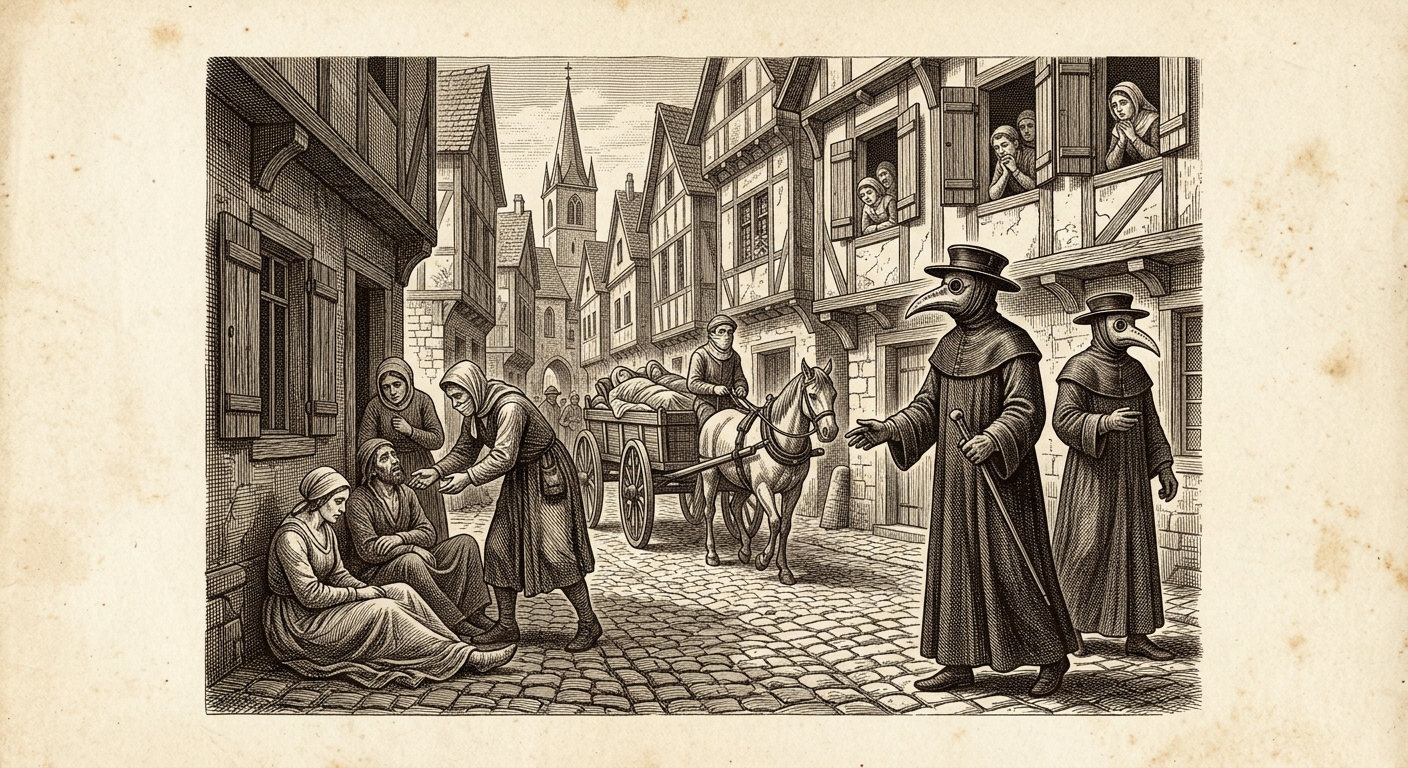
Black Death / Bubonic Plague Timeline
The Black Death was the deadliest pandemic in human history — a wave of bubonic plague that swept across Europe from 1347 to 1353, killing an estimated 30 to 60 percent of Europe's entire population and transforming medieval society.
In October 1347, twelve ships from the Black Sea docked at the port of Messina, Sicily. The sailors aboard were dying — their skin covered in black, pus-filled swellings — and many were already dead. The people of Messina drove the ships away, but it was too late. Within weeks, the plague was spreading through Sicily. Within months, it had crossed into mainland Europe. The Black Death moved along trade routes — from port to port, city to city — and there was nothing medieval medicine could do to stop it. Communities tried everything: prayer, fleeing, burning the sick, blaming their neighbors. None of it worked. By 1353, the worst was over, but Europe had lost perhaps half its people. The survivors lived in a changed world — one where labor was scarce, the Church's authority was shaken, and nothing could ever feel entirely safe again.
- 1347
Plague Ships Arrive in Sicily
Ships from the Black Sea dock at Messina, Sicily, carrying dying sailors covered in black swellings — within days, townspeople fall sick and the plague begins spreading through Sicily.
Why it mattered: The Sicily landing was the entry point that set off the worst pandemic in European history — within a year, the plague had spread to nearly every corner of the continent via the same trade routes that had built medieval prosperity.
- 1348
Spreads Through Italy and France
The plague races through the Italian city-states and into France via trade routes, reaching Paris and spreading rapidly among the dense urban populations that had no immunity and no effective treatment.
Why it mattered: The plague spread as fast as trade itself — following the roads and sea routes that connected medieval Europe's cities, striking densely populated areas hardest and collapsing the social fabric of entire communities.
- 1348
Blame and Violence Against Jewish Communities
As the death toll mounts and people search for a cause, mobs across Europe attack Jewish communities, falsely accusing them of poisoning wells; Pope Clement VI issues a decree ordering the violence to stop, but it continues in many cities.
Why it mattered: The scapegoating of Jewish communities during the Black Death resulted in dozens of massacres across Europe, forcing Jewish populations to flee eastward — a pattern of persecution that would recur for centuries and whose consequences lasted into the modern era.
- 1348–49
Spreads to England and Northern Europe
The plague crosses the English Channel, reaches London in 1348, then spreads north and east across England, Scandinavia, and into the Holy Roman Empire, killing deeply in both cities and the countryside.
Why it mattered: No part of Europe was spared — the plague killed peasants and nobles, clergy and kings alike, destroying the social hierarchies that organized medieval life and leaving survivors to rebuild in a world with far fewer people.
- 1349
Peak Death Toll
The plague reaches its deadliest peak across central and northern Europe; in some cities, half the population dies within months; graves fill faster than they can be dug, and mass burials become common.
Why it mattered: The sheer scale of death in 1349 — one in three or one in two people dying in a matter of months — was beyond anything European civilization had experienced, breaking down social structures and leaving communities too small to function as before.
- 1349–51
Flagellant Movement
Groups of men called flagellants travel from town to town across Europe, publicly whipping themselves as penance, believing the plague is God's punishment for human sin.
Why it mattered: The flagellant movement showed how desperate people were for an explanation — and their mass marches through towns likely helped spread the plague further even as they sought to appease the divine wrath they believed had caused it.
- 1353
First Wave Ends
The worst of the first wave of the Black Death recedes; it has killed an estimated 25–50 million people in Europe — roughly 30 to 60 percent of the continent's population; the plague returns in periodic outbreaks for the next three centuries.
Why it mattered: The demographic collapse transformed every aspect of medieval European society: labor was scarce, so surviving peasants could demand higher wages; the Church's authority weakened because it had failed to explain or halt the devastation; and a new awareness of death and its randomness permeated European culture and art.
Black Death Quiz
Check what you learned — read on screen, or use the Printable quiz button above for a worksheet version with an answer key.
Where did the Black Death first arrive in Europe in 1347?
- A) The port of Marseille in France
- B) The port of Messina in Sicily, carried by ships from the Black Sea
- C) The city of Venice, brought by merchants from Asia
- D) The port of London, carried by ships from France
Approximately what fraction of Europe's population died in the Black Death?
- A) About 5 to 10 percent
- B) About 15 to 20 percent
- C) An estimated 30 to 60 percent
- D) Almost 80 percent
How did the plague spread so quickly across Europe?
- A) It spread primarily through the air across long distances
- B) It traveled along the same trade routes — roads and sea lanes — that connected medieval cities and ports
- C) It was carried by travelers walking from town to town on pilgrimage routes only
- D) It spread mainly through contaminated water supplies in large cities
Who did many Europeans wrongly blame for causing the Black Death?
- A) Merchants who traveled from Asia
- B) Jewish communities, whom mobs accused of poisoning wells
- C) Sailors who had returned from the Black Sea
- D) Flagellants, whose marches were said to spread disease
What were flagellants, and what did they believe about the plague?
- A) They were doctors who believed the plague was caused by bad air
- B) They were groups of men who publicly whipped themselves, believing the plague was God's punishment for sin
- C) They were Jewish community leaders who organized charitable care for the sick
- D) They were royal officials who managed mass burials during the worst outbreaks
What changed in European society after the Black Death ended?
- A) Nothing changed — Europe recovered quickly and life returned to normal
- B) Peasants had more power because labor was scarce, and the Church's authority weakened
- C) Nobles gained more control over peasants because so many workers had died
- D) Trade collapsed permanently and the Italian city-states never recovered
What eventually ended the first wave of the Black Death?
- A) A cure was discovered by doctors at the University of Paris
- B) European rulers quarantined all ports and stopped trade
- C) The first wave gradually receded on its own in 1353; no effective treatment was ever found
- D) The flagellant movement's prayers were credited with ending the outbreak
What caused the Black Death?
- A) A virus similar to influenza that spread through sneezing and coughing
- B) The bacterium Yersinia pestis, carried by fleas on black rats that traveled on trade ships
- C) Contaminated water supplies in medieval cities that had poor sanitation
- D) A combination of famine and cold weather that weakened the immune system
Show answer key
1. B · 2. C · 3. B · 4. B · 5. B · 6. B · 7. C · 8. B
Related timelines
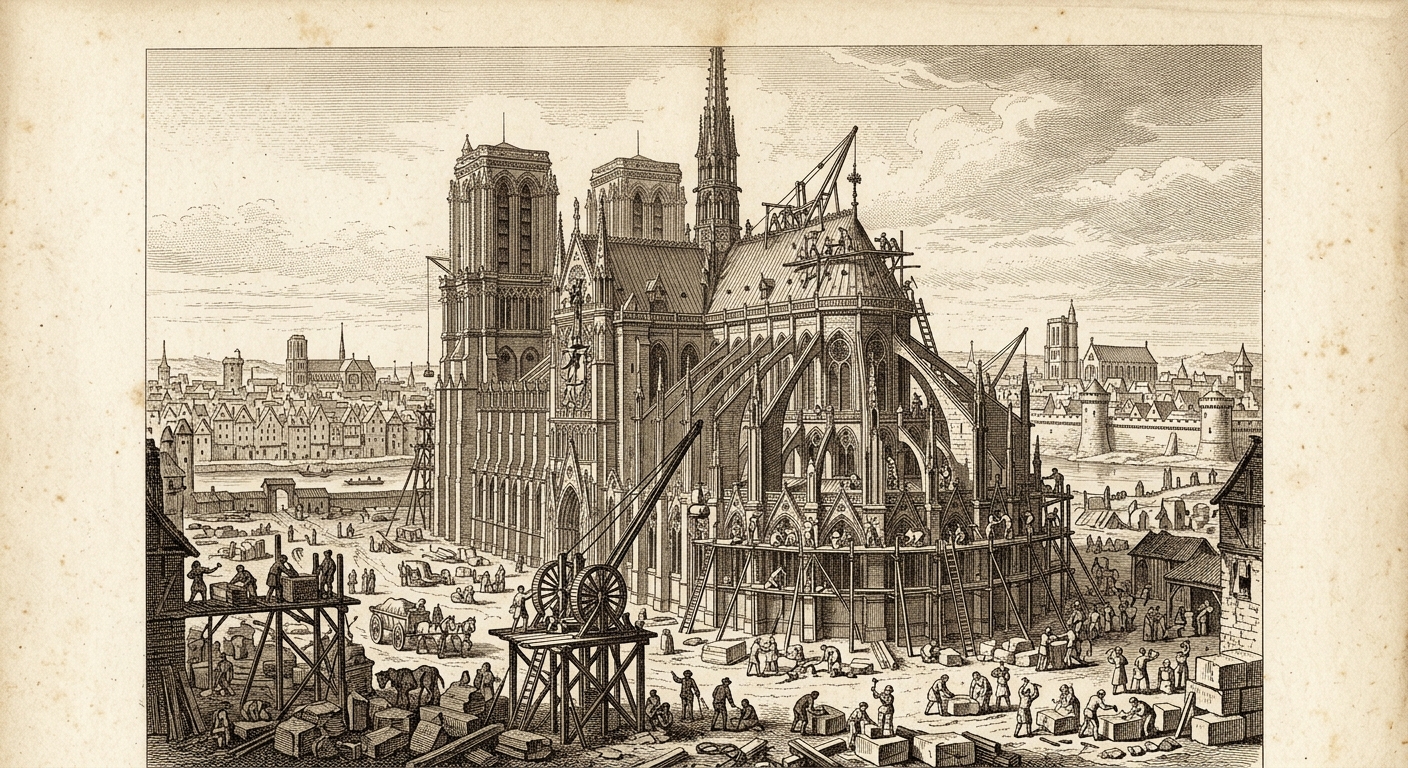 Middle Ages Timeline — The Middle Ages lasted roughly a thousand years after the fall of Rome, shaped by feudalism, the Catholic Church, crusades, and plagues — ending on the eve of the Renaissance. Open →
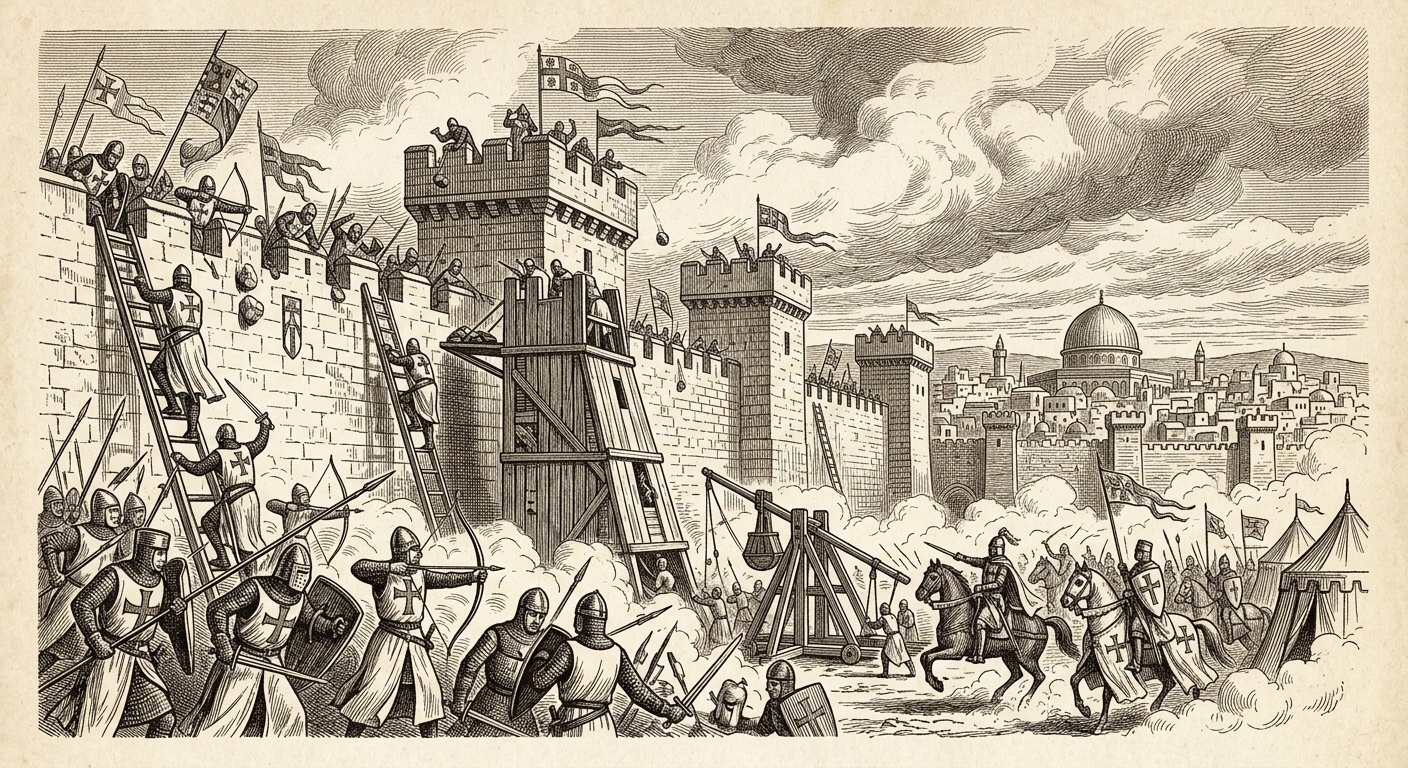 The Crusades Timeline — The Crusades were a series of religious wars launched by European Christians to reclaim the Holy Land from Muslim rule — nearly two centuries of warfare that shaped the medieval world and left a lasting mark on relations between Christianity and Islam. Open →
How to print
Choose Download PDF for a ready-to-print timeline that fits US Letter paper (8.5 × 11"). The blank fill-in version keeps the dates and gives students empty lines to write each event — great for review and quizzes.
Frequently asked questions
What caused the Black Death?
The Black Death was caused by the bacterium Yersinia pestis, spread primarily by fleas that lived on black rats. The rats traveled on trading ships and along trade routes, carrying the infected fleas with them. When fleas bit humans, they transmitted the bacteria. The disease caused three forms: bubonic plague (swollen lymph nodes, or buboes), septicemic plague (blood infection), and pneumonic plague (lung infection). Medieval people had no idea what caused the disease or how it spread — they blamed everything from bad air to divine punishment.
How many people died in the Black Death?
Estimates vary, but historians believe the Black Death killed between 25 and 50 million people in Europe alone — roughly 30 to 60 percent of Europe's total population at the time. Globally, including deaths in Asia (where the plague originated) and the Middle East, the total may have been 75 to 200 million. In the hardest-hit regions, more than half the population died within two years. The sheer demographic scale of the disaster had no precedent in recorded history.
What paper size should I print this on?
The timeline is sized for standard US Letter paper (8.5 × 11 in.). The Download PDF button gives you a print-ready file that fits the page automatically.