Holy Roman Empire Timeline
The Holy Roman Empire was a sprawling multi-ethnic realm in central Europe that lasted nearly 850 years — from the coronation of Otto I in 962 to its dissolution by Napoleon in 1806 — never quite a unified nation, yet central to medieval and early modern European history.
Voltaire once quipped that the Holy Roman Empire was 'neither holy, nor Roman, nor an empire' — and he had a point. It began in 962 when Pope John XII crowned the German king Otto I as emperor, reviving the title of Rome's ancient rulers for a patchwork of German princes, bishops, and city-states. For centuries, emperors clashed with popes over who truly held power in Christian Europe. Great rulers like Frederick Barbarossa tried to dominate the Italian city-states; Charles V briefly united Spain, the Netherlands, and the empire under one crown. But the empire was always more of a loose confederation than a true state. Religious wars tore it apart in the seventeenth century, and by the time Napoleon arrived, it was little more than a title. When Napoleon forced its dissolution in 1806, few Europeans mourned. Yet the empire's 850-year span shaped the map, languages, and institutions of modern Germany, Austria, and much of central Europe.
- 962
Otto I Crowned Holy Roman Emperor
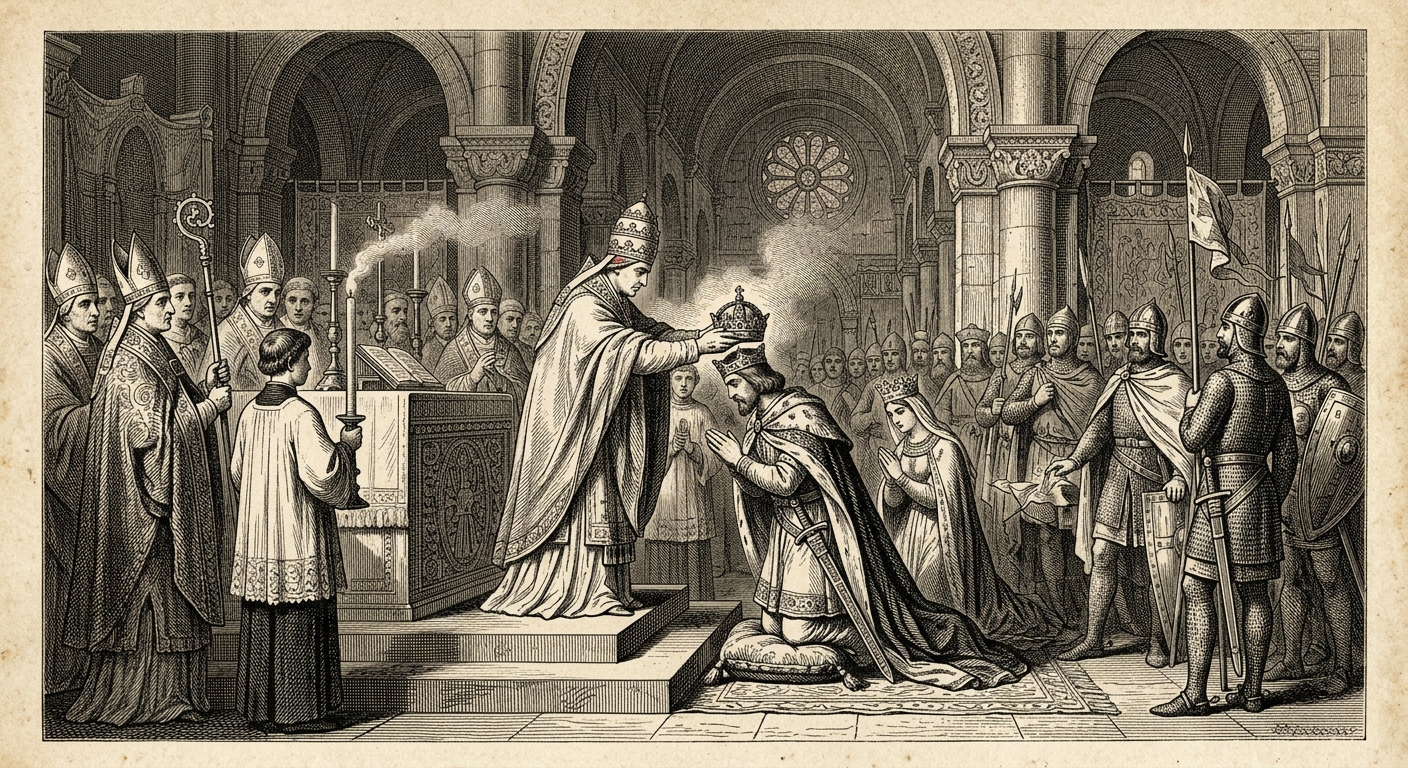
Pope John XII crowns the German king Otto I as Holy Roman Emperor in Rome, reviving the imperial title in the West for the first time since Charlemagne's descendants.
Why it mattered: Otto's coronation began a 250-year struggle between German emperors and popes over supremacy in Christian Europe — a rivalry that shaped the medieval political order for centuries.
- 1076–1122
The Investiture Controversy
Emperor Henry IV and Pope Gregory VII clash over who has the right to appoint (invest) church bishops and abbots; Henry famously stands barefoot in the snow at Canossa in 1077 begging the pope's forgiveness; the conflict is finally settled by the Concordat of Worms in 1122.
Why it mattered: The controversy permanently weakened imperial authority over the church and strengthened the papacy — establishing that spiritual power could override secular power, a principle that shaped European politics for centuries.
- 1152–1190
Frederick Barbarossa's Reign
Frederick I ('Barbarossa' — Red Beard) attempts to reassert imperial control over the wealthy Italian city-states through six military campaigns; he drowns crossing a river in Anatolia while leading the Third Crusade.
Why it mattered: Barbarossa came closer than any emperor to truly uniting the empire, but Italian resistance proved too strong; his death en route to the Holy Land deprived the Third Crusade of its most experienced leader.
- 1356
The Golden Bull
Emperor Charles IV issues the Golden Bull, establishing that seven specific prince-electors — three archbishops and four secular princes — have the exclusive right to elect the Holy Roman Emperor.
Why it mattered: The Golden Bull ended decades of disputed successions and gave the empire's princes enormous power relative to the emperor, cementing the empire's character as a confederation of largely independent territories rather than a centralized monarchy.
- 1519
Charles V Unites the Habsburg Lands
Charles V is elected Holy Roman Emperor, uniting the empire with Spain, the Netherlands, the Kingdom of Naples, and the early Spanish colonies in the Americas under one ruler — the largest European domain since Charlemagne.
Why it mattered: Charles V's reign coincided with the Protestant Reformation, the Ottoman threat to Vienna, and the conquest of the Americas — making him the most powerful European ruler of the 16th century, though his empire proved ungovernable as a unit.
- 1555
Peace of Augsburg
Charles V negotiates the Peace of Augsburg with the Protestant German princes, establishing the principle of cuius regio, eius religio — 'whose realm, his religion' — allowing each prince to choose between Catholicism and Lutheranism for his territory.
Why it mattered: Augsburg ended the first phase of the religious wars within the empire but planted the seeds of future conflict by excluding Calvinism and other Protestant groups, creating unresolved tensions that would explode in the Thirty Years' War.
- 1618–1648
The Thirty Years' War
A devastating religious and political war engulfs the empire and draws in France, Sweden, Spain, and Denmark; fighting is accompanied by plague and famine; an estimated one-third of the German population dies.
Why it mattered: The Thirty Years' War was the most destructive European conflict before the World Wars; it permanently broke imperial authority over Germany's princes and established the modern system of sovereign nation-states through the Peace of Westphalia.
- 1648
Peace of Westphalia
The treaties ending the Thirty Years' War grant the empire's princes full sovereignty within their territories — effectively making the emperor a ceremonial figurehead — and recognize the Swiss Confederation and Dutch Republic as independent states.
Why it mattered: Westphalia is considered the foundation of modern international relations: it established the principle of national sovereignty and non-interference in other states' internal affairs, a framework still used in international law today.
- 1806
Napoleon Dissolves the Empire
Napoleon defeats Austria at Austerlitz and pressures sixteen German princes to leave the empire and join his Confederation of the Rhine; faced with this collapse, Emperor Francis II abdicates the imperial title, ending the Holy Roman Empire after 844 years.
Why it mattered: The empire's end cleared the way for German nationalism — a movement that would ultimately unify Germany under Prussia in 1871 — and reshaped the map of central Europe into the rough outlines we recognize today.
Holy Roman Empire Quiz
Check what you learned — read on screen, or use the Printable quiz button above for a worksheet version with an answer key.
Who crowned Otto I as Holy Roman Emperor in 962?
- A) The Archbishop of Cologne
- B) Pope John XII, in Rome
- C) Charlemagne's successor in France
- D) The Byzantine Emperor in Constantinople
What was the main conflict in the Investiture Controversy?
- A) Whether the emperor should lead the Crusades
- B) Who had the right to appoint church bishops — the pope or the emperor
- C) Which language should be used in church services
- D) Whether Germany or Italy should control Rome
What did the Golden Bull of 1356 establish?
- A) A peace treaty between the empire and the Ottoman Turks
- B) That seven specific prince-electors would choose the Holy Roman Emperor
- C) That Latin would be the official language of the empire
- D) That the emperor could inherit his title without an election
Which emperor briefly united Spain, the Netherlands, and the Holy Roman Empire under one ruler?
- A) Frederick Barbarossa
- B) Otto III
- C) Charles V of the Habsburg dynasty
- D) Henry IV, who stood in the snow at Canossa
What did the Peace of Augsburg (1555) allow German princes to choose?
- A) Between war and diplomacy with the Ottoman Empire
- B) Between Catholicism and Lutheranism as the religion of their territory
- C) Between joining France or remaining in the empire
- D) Between electing or inheriting their ruling titles
Approximately how much of Germany's population died during the Thirty Years' War?
- A) About one in twenty people
- B) About one in ten people
- C) About one-third of the population
- D) About half the population
What principle did the Peace of Westphalia (1648) establish?
- A) That the pope was supreme over all European rulers
- B) That Germany should be unified under a single king
- C) That each nation-state is sovereign and other states should not interfere in its internal affairs
- D) That religion must be separated from government in all European states
Who ended the Holy Roman Empire in 1806?
- A) The Russian Tsar Alexander I after defeating Austria
- B) Napoleon Bonaparte, after his victories forced Emperor Francis II to abdicate the title
- C) The German princes, who voted to dissolve it
- D) The British Parliament, after the Napoleonic Wars
Show answer key
1. B · 2. B · 3. B · 4. C · 5. B · 6. C · 7. C · 8. B
Related timelines
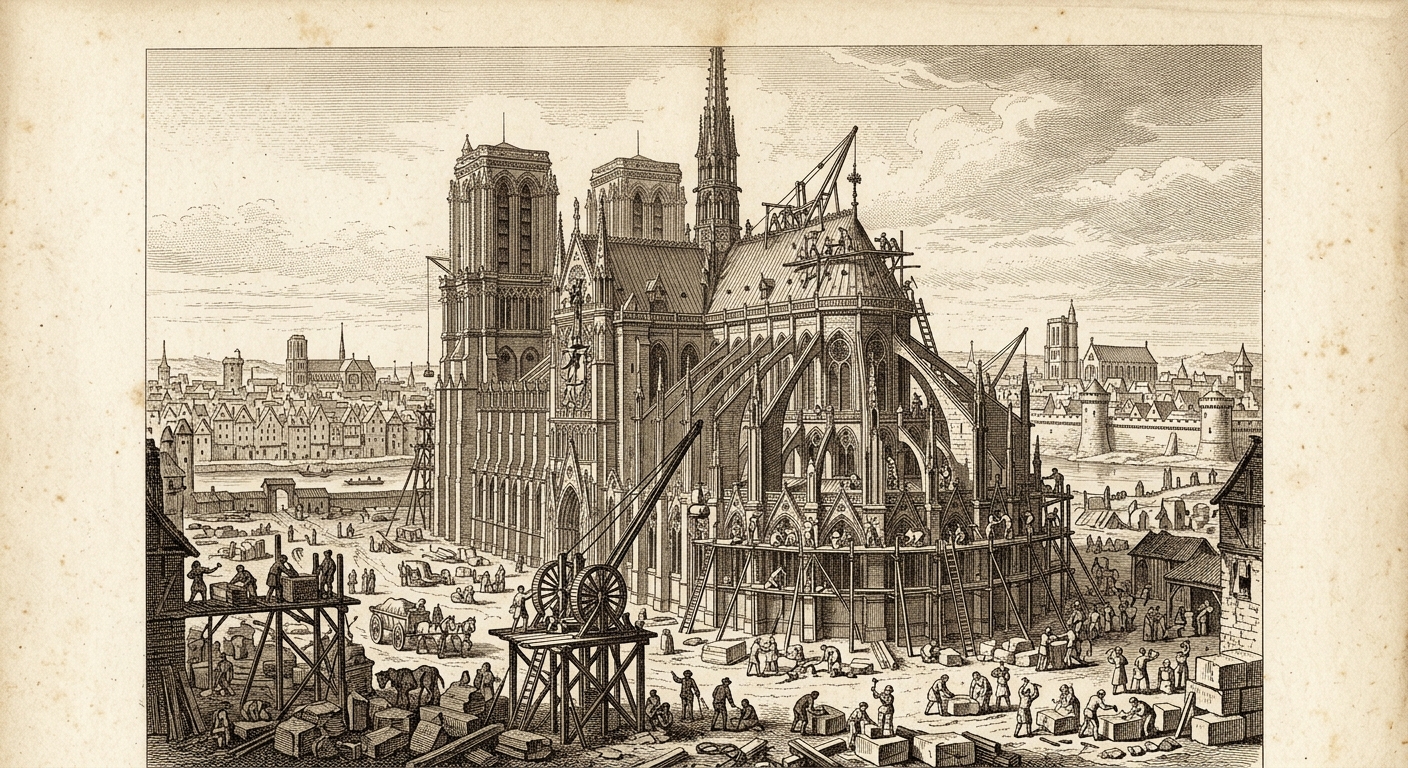 Middle Ages Timeline — The Middle Ages lasted roughly a thousand years after the fall of Rome, shaped by feudalism, the Catholic Church, crusades, and plagues — ending on the eve of the Renaissance. Open →
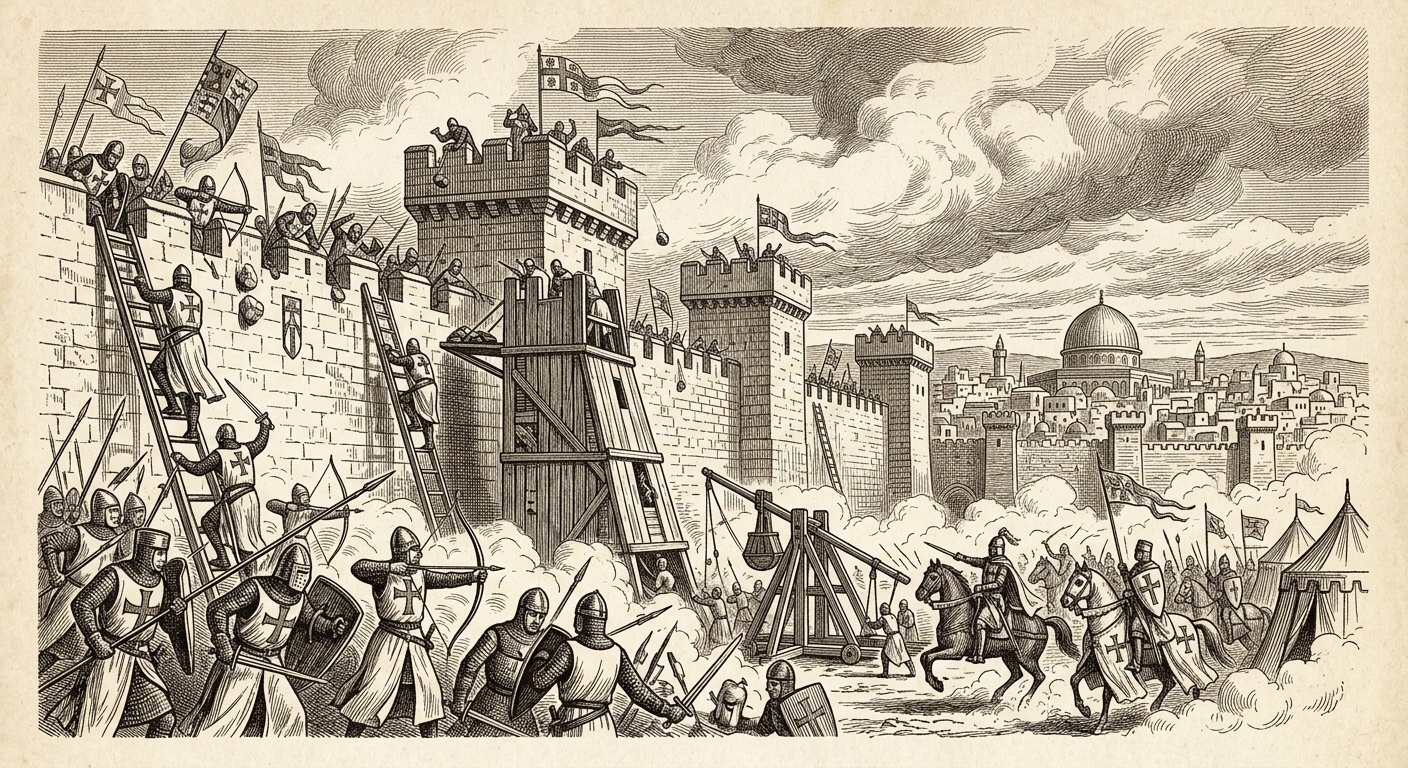 The Crusades Timeline — The Crusades were a series of religious wars launched by European Christians to reclaim the Holy Land from Muslim rule — nearly two centuries of warfare that shaped the medieval world and left a lasting mark on relations between Christianity and Islam. Open →
How to print
Choose Download PDF for a ready-to-print timeline that fits US Letter paper (8.5 × 11"). The blank fill-in version keeps the dates and gives students empty lines to write each event — great for review and quizzes.
Frequently asked questions
Why is it called 'Holy Roman' if it wasn't really Rome?
The name was aspirational rather than literal. Medieval rulers saw themselves as heirs to the Roman Empire and protectors of the Christian church — 'Holy' referred to the blessing of the pope, 'Roman' claimed the legacy of the ancient empire, and 'Empire' implied universal authority. The empire was actually centered in Germany and never fully controlled Rome itself. Voltaire captured the absurdity perfectly: he called it 'neither holy, nor Roman, nor an empire.'
How is the Holy Roman Empire different from the modern countries of Germany and Austria?
The Holy Roman Empire was not a unified state — it was a loose confederation of hundreds of kingdoms, duchies, free cities, and church territories, each with its own ruler and laws. The emperor was elected and had limited power over the princes. Modern Germany and Austria emerged from this patchwork after the empire dissolved in 1806 — Germany unified under Prussia in 1871, Austria became a separate empire and later republic. The empire's legacy is visible in Germany's federal structure and Austria's name (Österreich means 'Eastern Realm').
What paper size should I print this on?
The timeline is sized for standard US Letter paper (8.5 × 11 in.). The Download PDF button gives you a print-ready file that fits the page automatically.