 Printable Scholar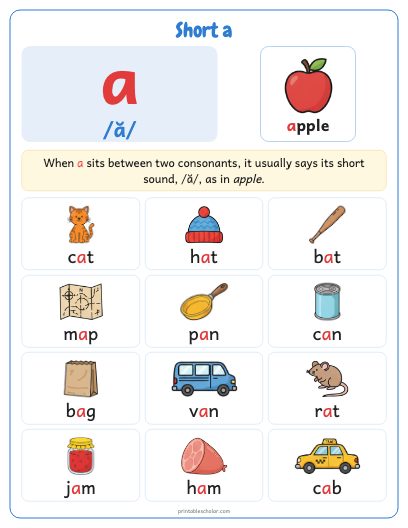
Short a
When a sits between two consonants, it usually says its short sound, /ă/, as in apple.
Download poster (PDF) Worksheets and readers for this skill →63 printable posters for the phonics and spelling rules taught in kindergarten to 2nd grade. Each one gives the rule in a sentence, a key picture and a column of example words with the pattern in red. Free color PDFs on letter paper. No sign-up.
Short vowelsDigraphsBlendsSpelling rulesSilent eVowel teamsDiphthongsR-controlled vowelsMore patternsSyllables and word parts
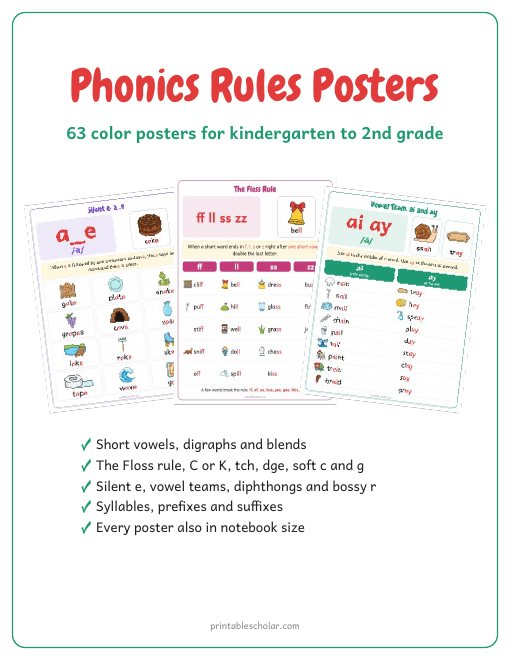
Every poster is free on its own. The pack saves 63 downloads and adds a notebook-size copy.
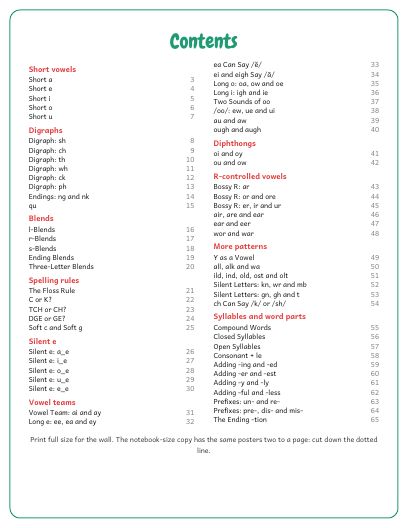
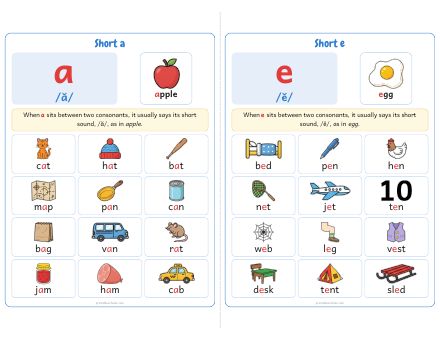
When a sits between two consonants, it usually says its short sound, /ă/, as in apple.
Download poster (PDF) Worksheets and readers for this skill →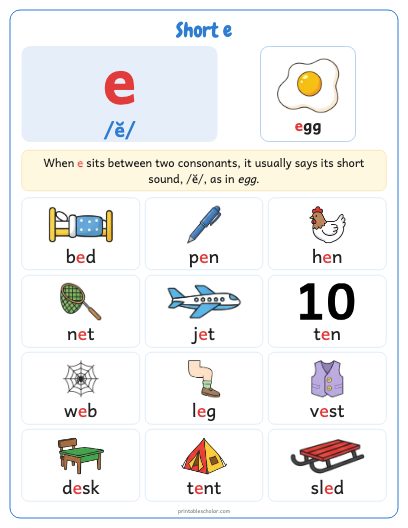
When e sits between two consonants, it usually says its short sound, /ĕ/, as in egg.
Download poster (PDF) Worksheets and readers for this skill →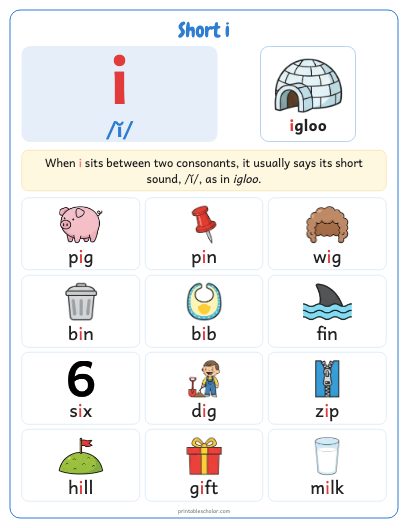
When i sits between two consonants, it usually says its short sound, /ĭ/, as in igloo.
Download poster (PDF) Worksheets and readers for this skill →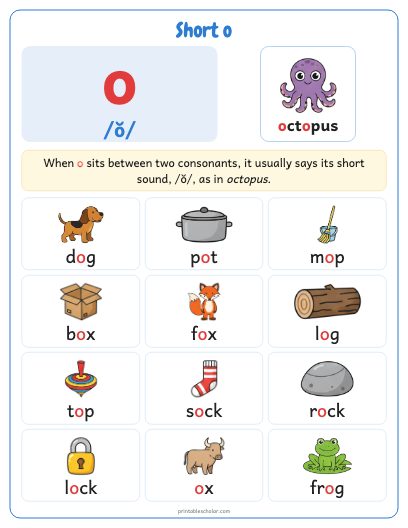
When o sits between two consonants, it usually says its short sound, /ŏ/, as in octopus.
Download poster (PDF) Worksheets and readers for this skill →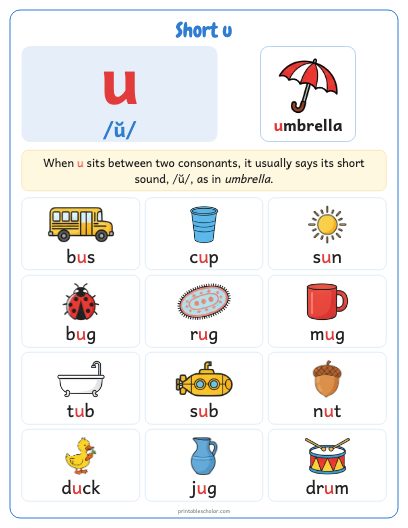
When u sits between two consonants, it usually says its short sound, /ŭ/, as in umbrella.
Download poster (PDF) Worksheets and readers for this skill →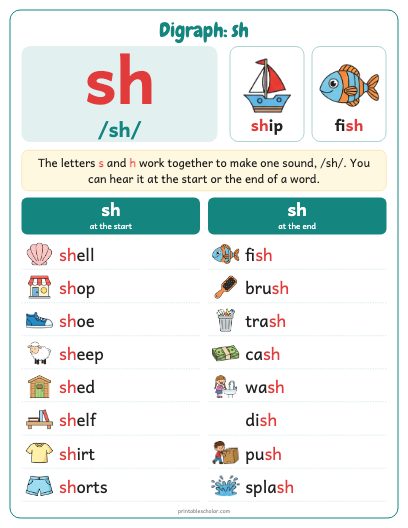
The letters s and h work together to make one sound, /sh/. You can hear it at the start or the end of a word.
Download poster (PDF) Worksheets and readers for this skill →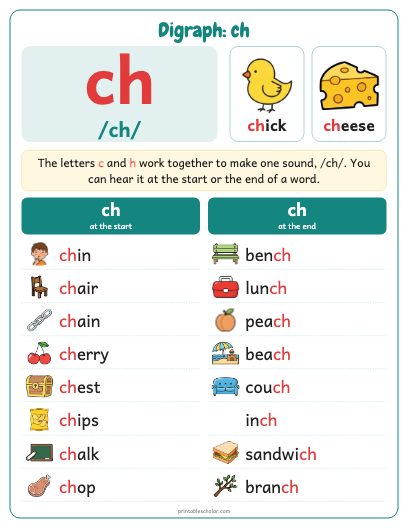
The letters c and h work together to make one sound, /ch/. You can hear it at the start or the end of a word.
Download poster (PDF) Worksheets and readers for this skill →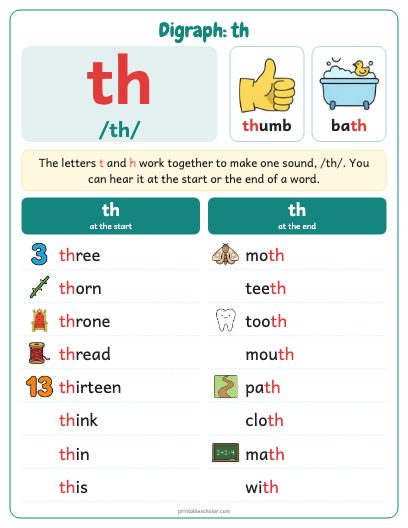
The letters t and h work together to make one sound, /th/. You can hear it at the start or the end of a word.
Download poster (PDF) Worksheets and readers for this skill →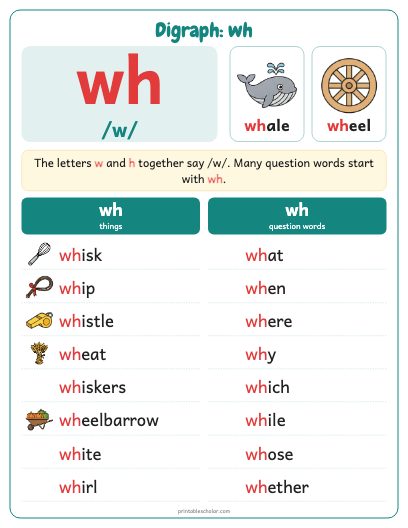
The letters w and h together say /w/. Many question words start with wh.
Download poster (PDF) Worksheets and readers for this skill →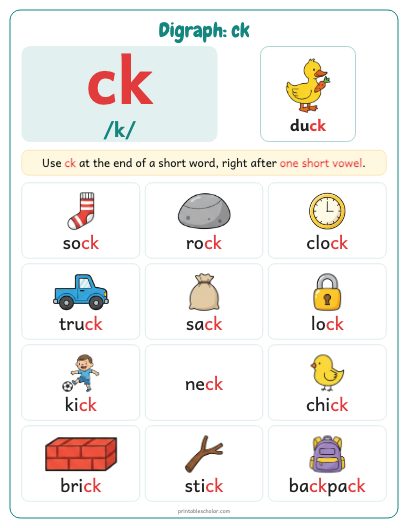
Use ck at the end of a short word, right after one short vowel.
Download poster (PDF) Worksheets and readers for this skill →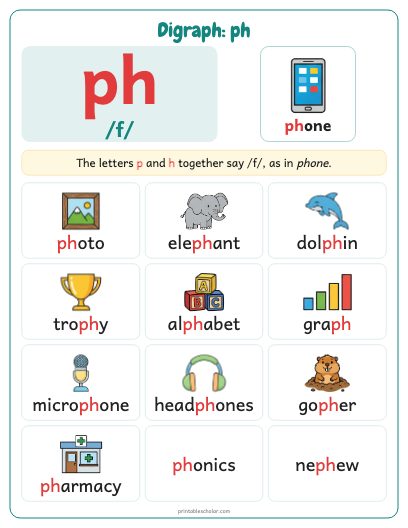
The letters p and h together say /f/, as in phone.
Download poster (PDF) Worksheets and readers for this skill →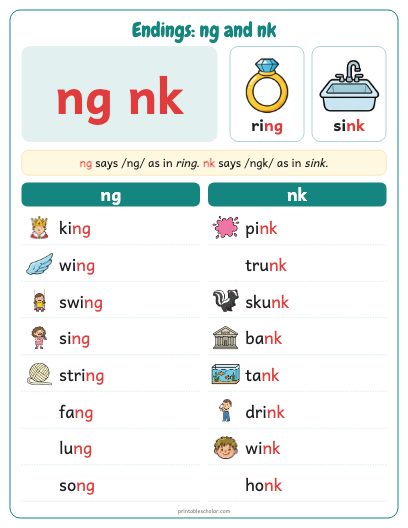
ng says /ng/ as in ring. nk says /ngk/ as in sink.
Download poster (PDF) Worksheets and readers for this skill →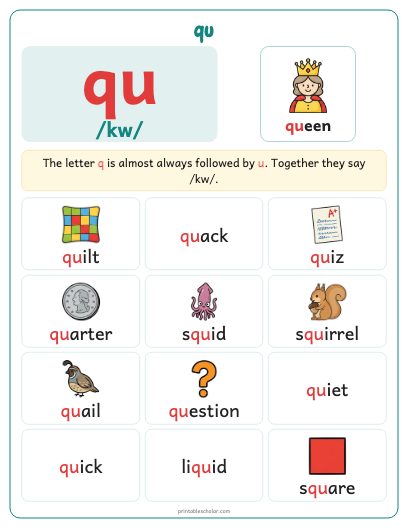
The letter q is almost always followed by u. Together they say /kw/.
Download poster (PDF) Worksheets and readers for this skill →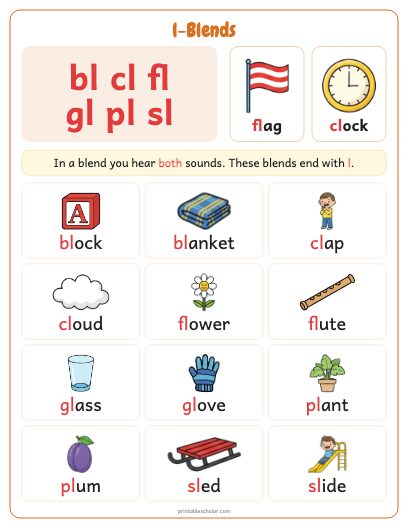
In a blend you hear both sounds. These blends end with l.
Download poster (PDF) Worksheets and readers for this skill →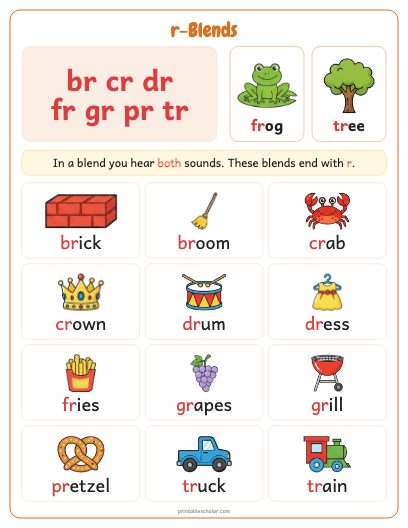
In a blend you hear both sounds. These blends end with r.
Download poster (PDF) Worksheets and readers for this skill →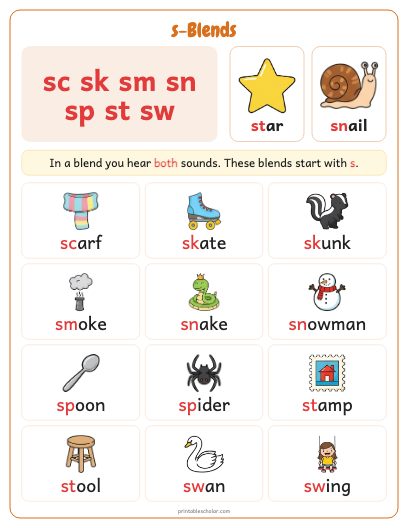
In a blend you hear both sounds. These blends start with s.
Download poster (PDF) Worksheets and readers for this skill →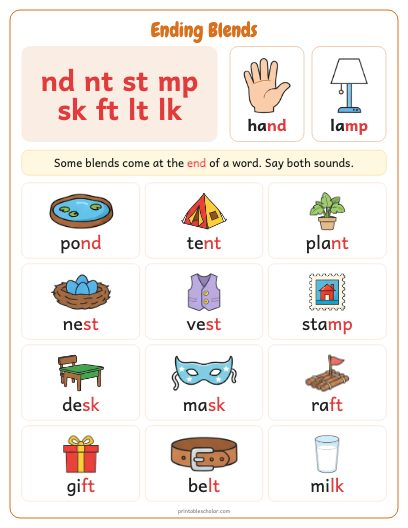
Some blends come at the end of a word. Say both sounds.
Download poster (PDF) Worksheets and readers for this skill →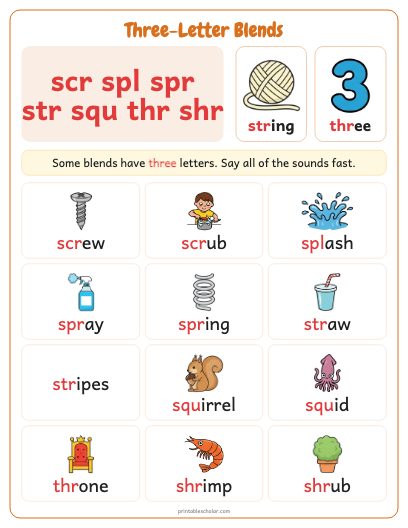
Some blends have three letters. Say all of the sounds fast.
Download poster (PDF) Worksheets and readers for this skill →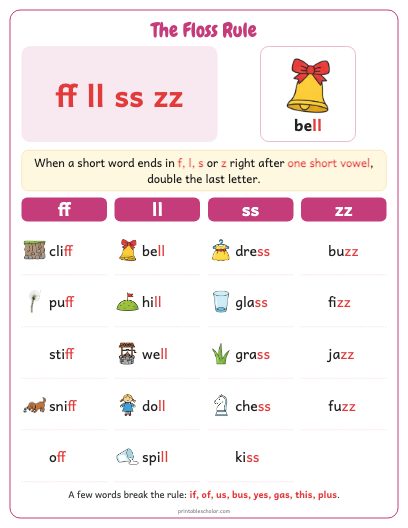
When a short word ends in f, l, s or z right after one short vowel, double the last letter.
Download poster (PDF) Worksheets and readers for this skill →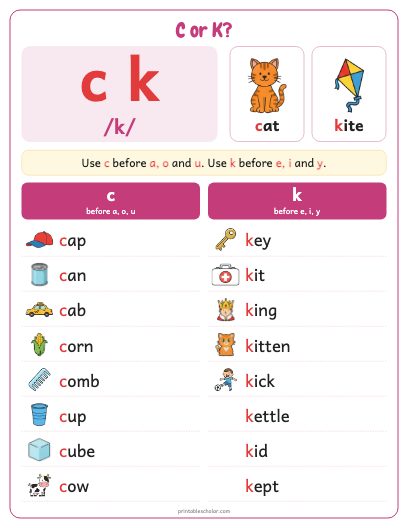
Use c before a, o and u. Use k before e, i and y.
Download poster (PDF) Worksheets and readers for this skill →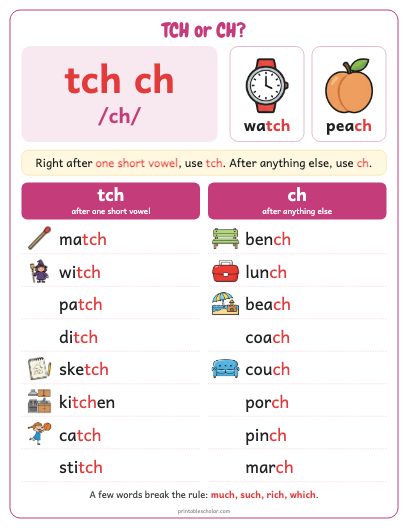
Right after one short vowel, use tch. After anything else, use ch.
Download poster (PDF) Worksheets and readers for this skill →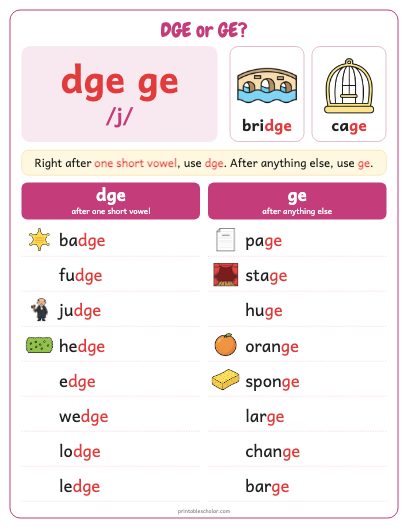
Right after one short vowel, use dge. After anything else, use ge.
Download poster (PDF) Worksheets and readers for this skill →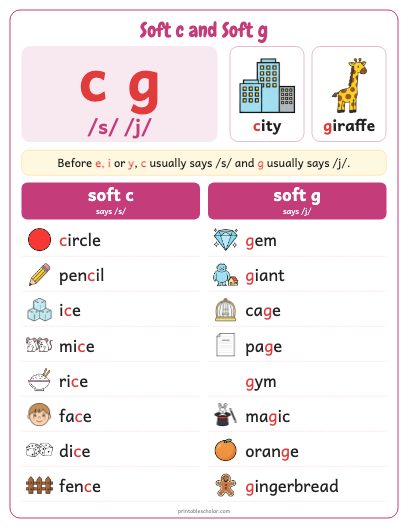
Before e, i or y, c usually says /s/ and g usually says /j/.
Download poster (PDF) Worksheets and readers for this skill →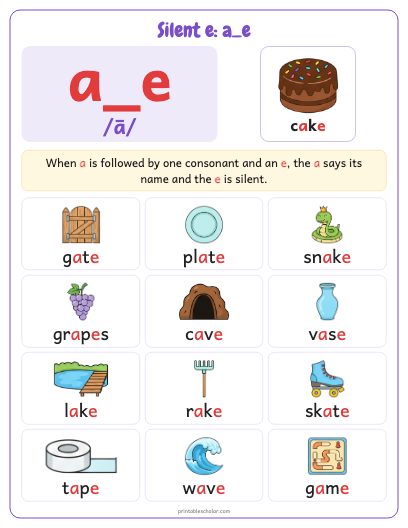
When a is followed by one consonant and an e, the a says its name and the e is silent.
Download poster (PDF) Worksheets and readers for this skill →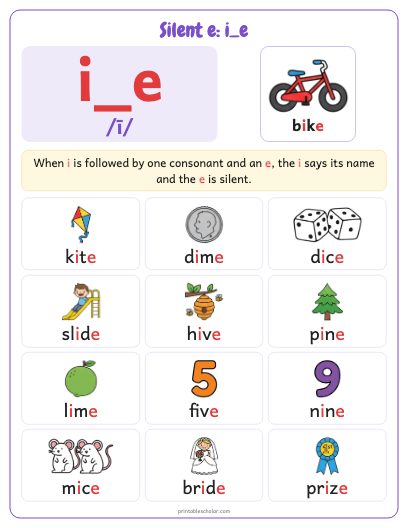
When i is followed by one consonant and an e, the i says its name and the e is silent.
Download poster (PDF) Worksheets and readers for this skill →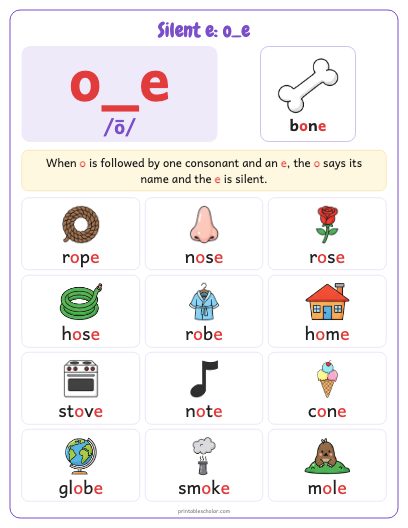
When o is followed by one consonant and an e, the o says its name and the e is silent.
Download poster (PDF) Worksheets and readers for this skill →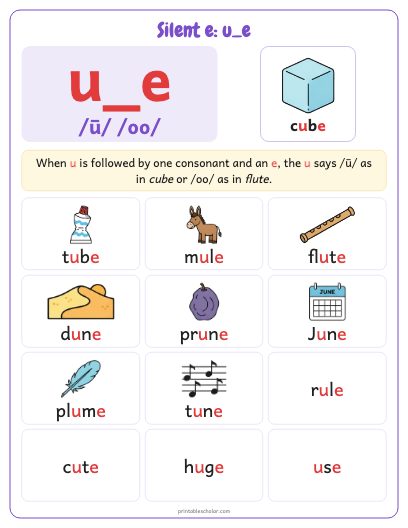
When u is followed by one consonant and an e, the u says /ū/ as in cube or /oo/ as in flute.
Download poster (PDF) Worksheets and readers for this skill →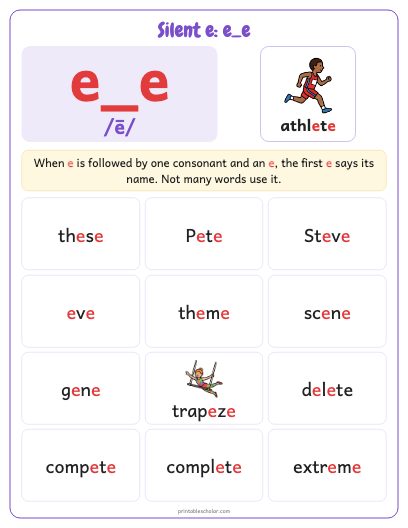
When e is followed by one consonant and an e, the first e says its name. Not many words use it.
Download poster (PDF) Worksheets and readers for this skill →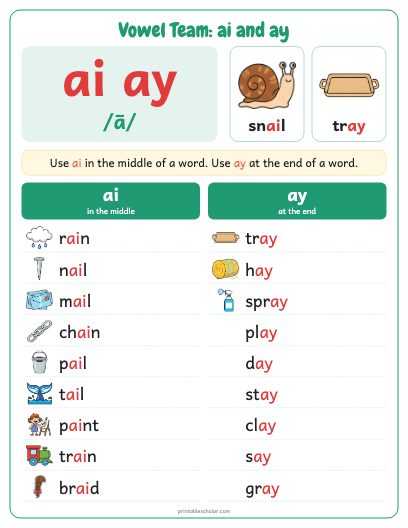
Use ai in the middle of a word. Use ay at the end of a word.
Download poster (PDF) Worksheets and readers for this skill →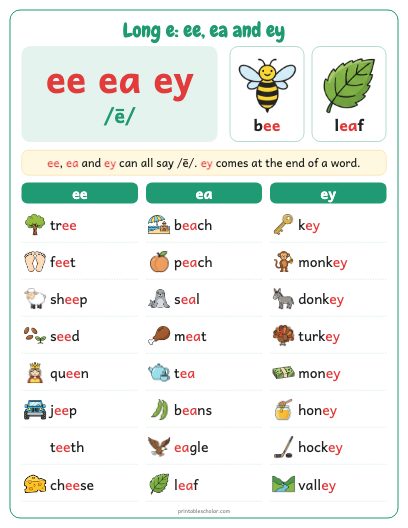
ee, ea and ey can all say /ē/. ey comes at the end of a word.
Download poster (PDF) Worksheets and readers for this skill →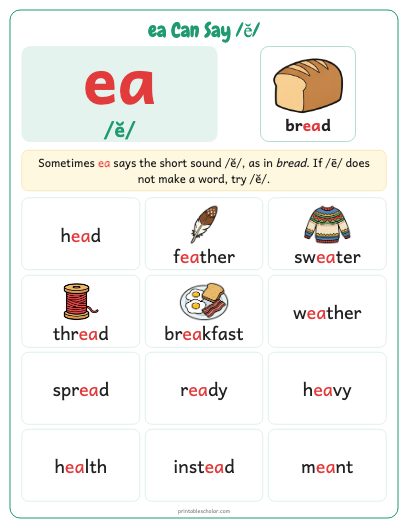
Sometimes ea says the short sound /ĕ/, as in bread. If /ē/ does not make a word, try /ĕ/.
Download poster (PDF) Worksheets and readers for this skill →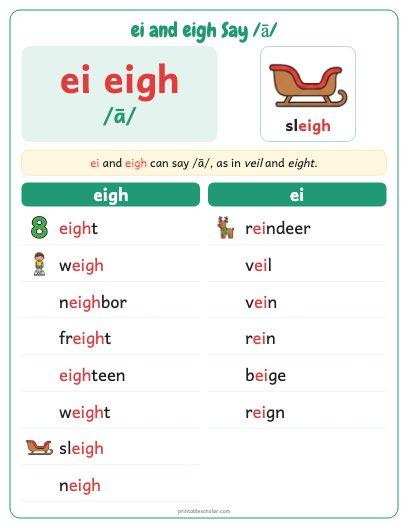
ei and eigh can say /ā/, as in veil and eight.
Download poster (PDF) Worksheets and readers for this skill →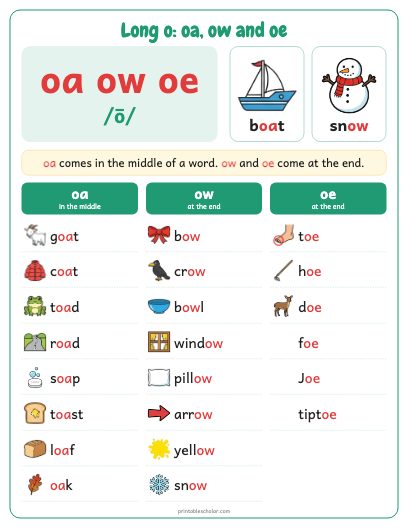
oa comes in the middle of a word. ow and oe come at the end.
Download poster (PDF) Worksheets and readers for this skill →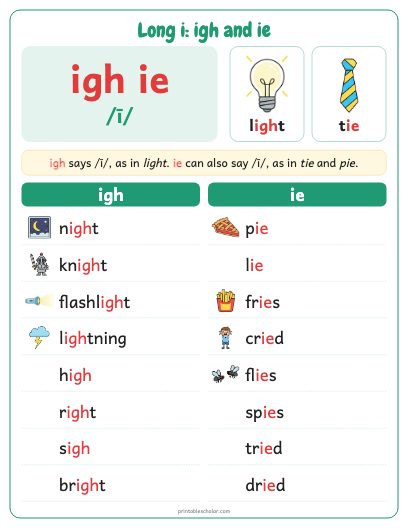
igh says /ī/, as in light. ie can also say /ī/, as in tie and pie.
Download poster (PDF) Worksheets and readers for this skill →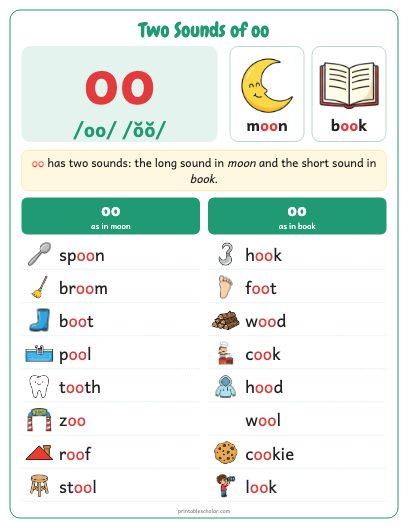
oo has two sounds: the long sound in moon and the short sound in book.
Download poster (PDF) Worksheets and readers for this skill →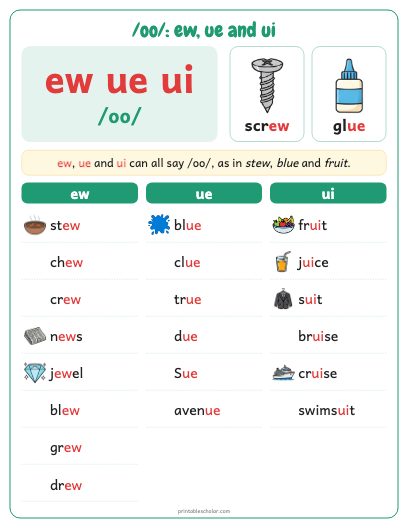
ew, ue and ui can all say /oo/, as in stew, blue and fruit.
Download poster (PDF) Worksheets and readers for this skill →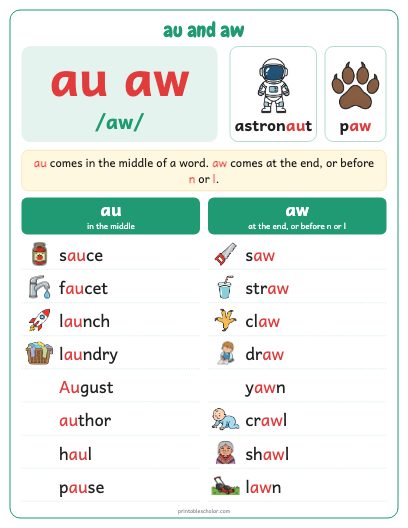
au comes in the middle of a word. aw comes at the end, or before n or l.
Download poster (PDF) Worksheets and readers for this skill →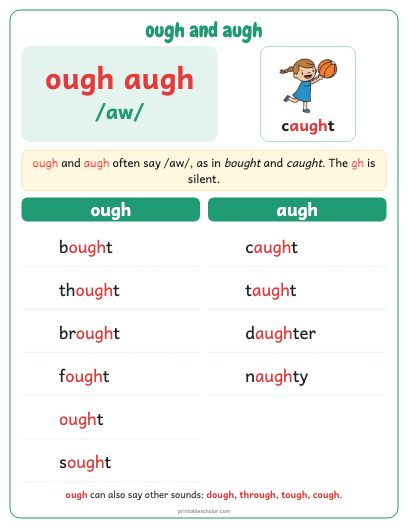
ough and augh often say /aw/, as in bought and caught. The gh is silent.
Download poster (PDF) Worksheets and readers for this skill →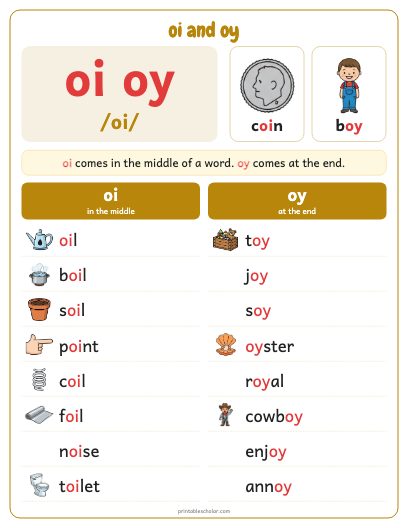
oi comes in the middle of a word. oy comes at the end.
Download poster (PDF) Worksheets and readers for this skill →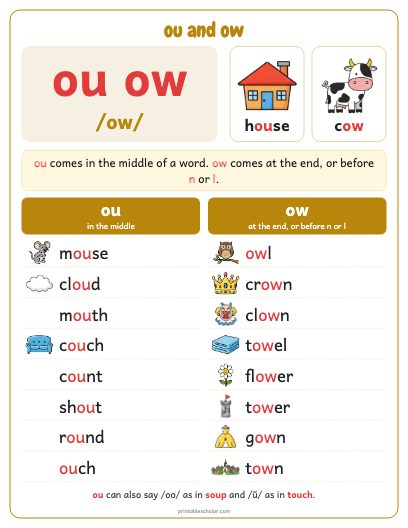
ou comes in the middle of a word. ow comes at the end, or before n or l.
Download poster (PDF) Worksheets and readers for this skill →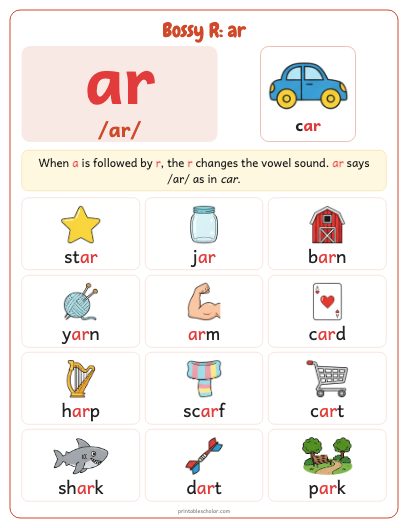
When a is followed by r, the r changes the vowel sound. ar says /ar/ as in car.
Download poster (PDF) Worksheets and readers for this skill →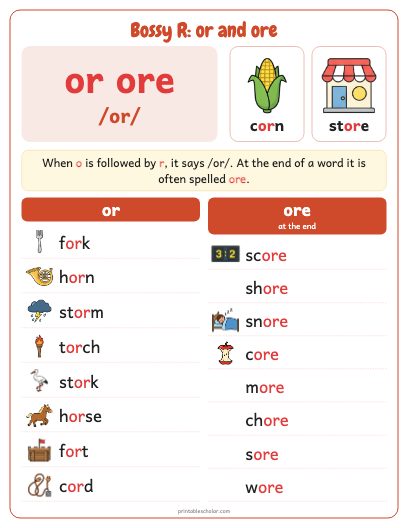
When o is followed by r, it says /or/. At the end of a word it is often spelled ore.
Download poster (PDF) Worksheets and readers for this skill →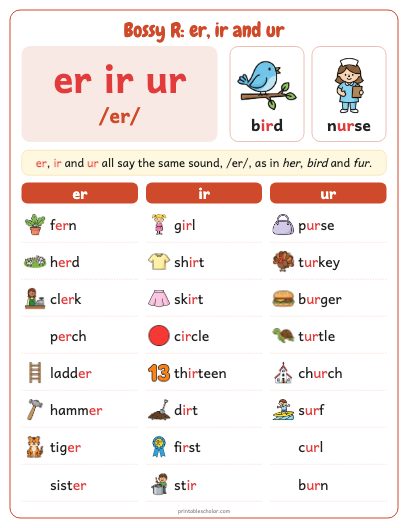
er, ir and ur all say the same sound, /er/, as in her, bird and fur.
Download poster (PDF) Worksheets and readers for this skill →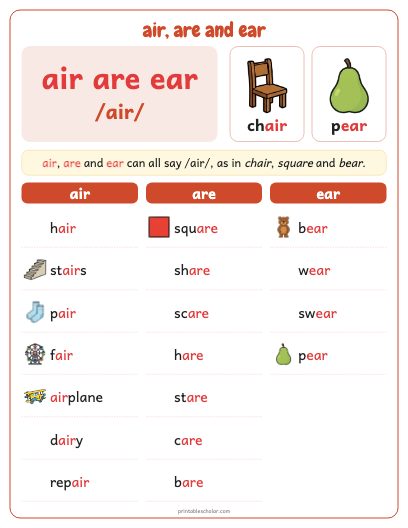
air, are and ear can all say /air/, as in chair, square and bear.
Download poster (PDF) Worksheets and readers for this skill →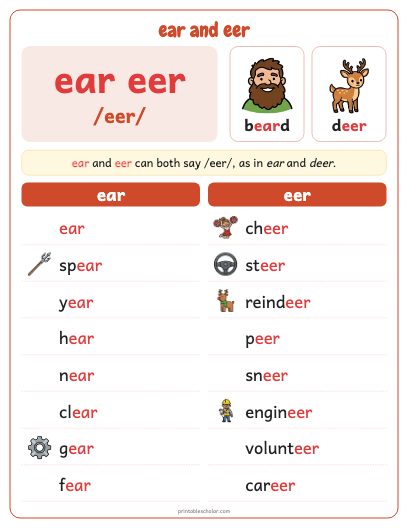
ear and eer can both say /eer/, as in ear and deer.
Download poster (PDF) Worksheets and readers for this skill →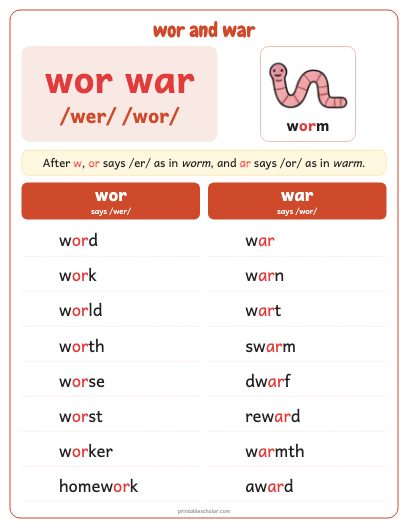
After w, or says /er/ as in worm, and ar says /or/ as in warm.
Download poster (PDF) Worksheets and readers for this skill →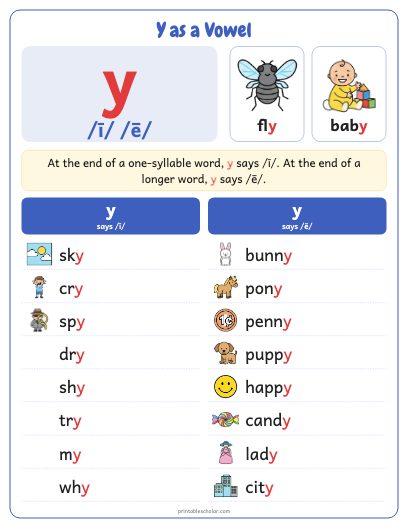
At the end of a one-syllable word, y says /ī/. At the end of a longer word, y says /ē/.
Download poster (PDF) Worksheets and readers for this skill →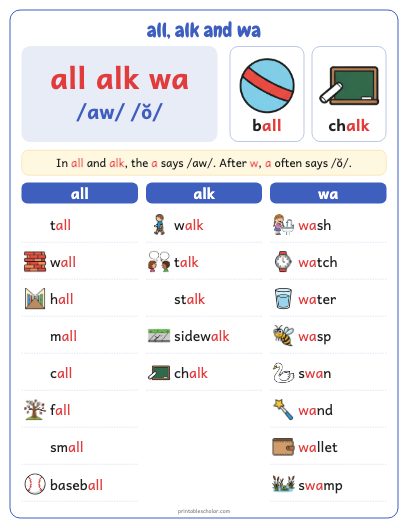
In all and alk, the a says /aw/. After w, a often says /ŏ/.
Download poster (PDF) Worksheets and readers for this skill →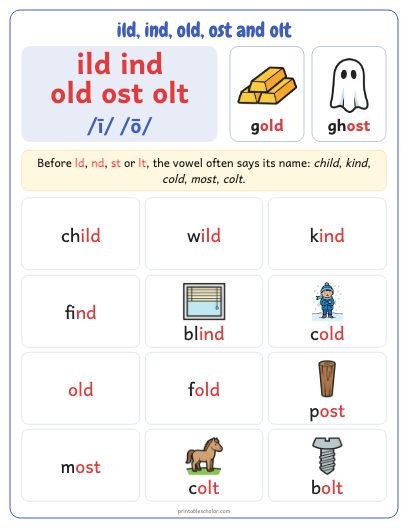
Before ld, nd, st or lt, the vowel often says its name: child, kind, cold, most, colt.
Download poster (PDF) Worksheets and readers for this skill →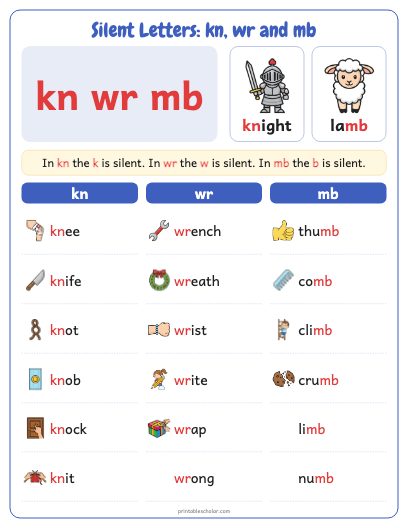
In kn the k is silent. In wr the w is silent. In mb the b is silent.
Download poster (PDF) Worksheets and readers for this skill →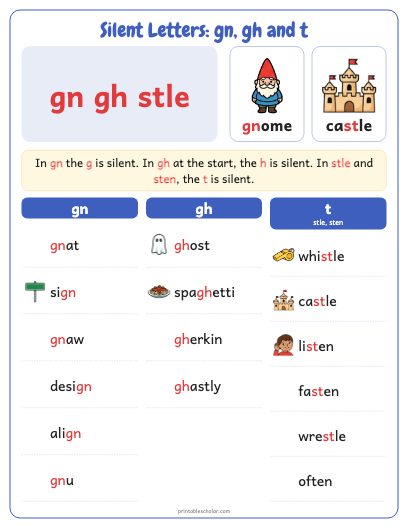
In gn the g is silent. In gh at the start, the h is silent. In stle and sten, the t is silent.
Download poster (PDF) Worksheets and readers for this skill →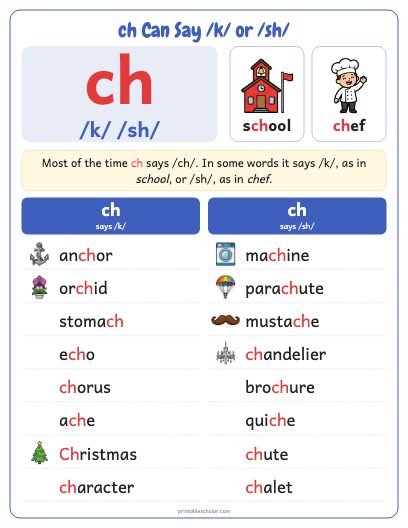
Most of the time ch says /ch/. In some words it says /k/, as in school, or /sh/, as in chef.
Download poster (PDF) Worksheets and readers for this skill →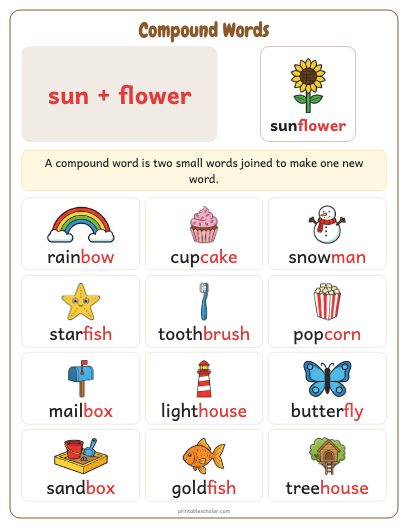
A compound word is two small words joined to make one new word.
Download poster (PDF) Worksheets and readers for this skill →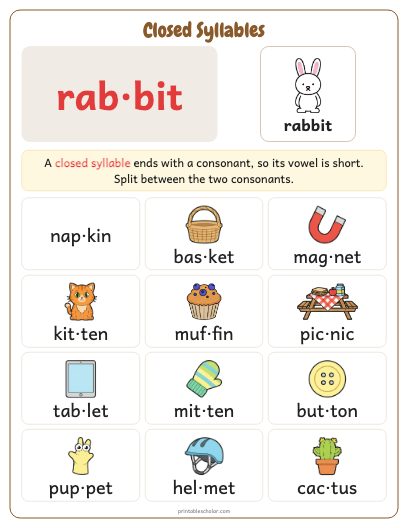
A closed syllable ends with a consonant, so its vowel is short. Split between the two consonants.
Download poster (PDF) Worksheets and readers for this skill →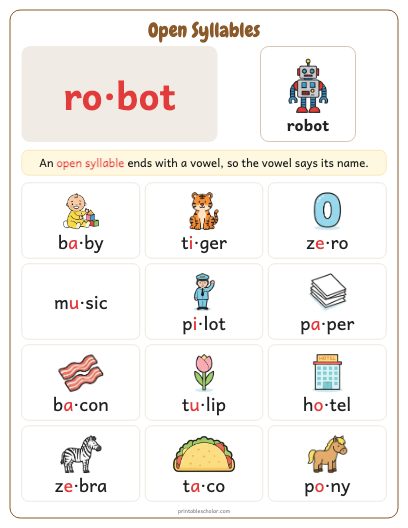
An open syllable ends with a vowel, so the vowel says its name.
Download poster (PDF) Worksheets and readers for this skill →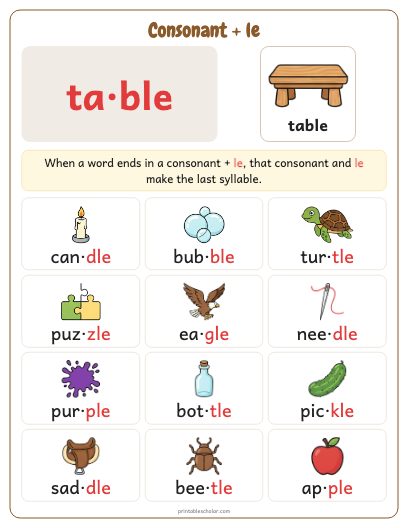
When a word ends in a consonant + le, that consonant and le make the last syllable.
Download poster (PDF) Worksheets and readers for this skill →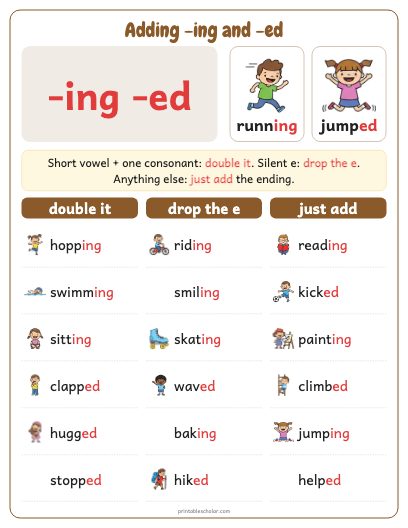
Short vowel + one consonant: double it. Silent e: drop the e. Anything else: just add the ending.
Download poster (PDF) Worksheets and readers for this skill →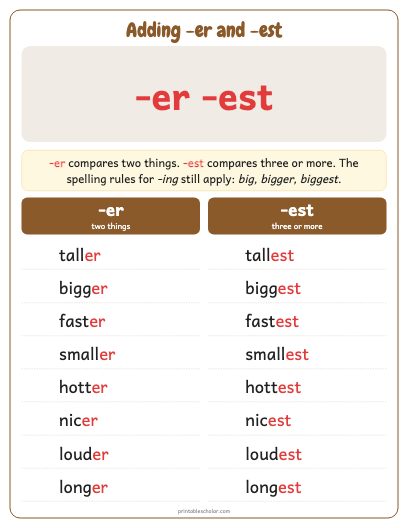
-er compares two things. -est compares three or more. The spelling rules for -ing still apply: big, bigger, biggest.
Download poster (PDF) Worksheets and readers for this skill →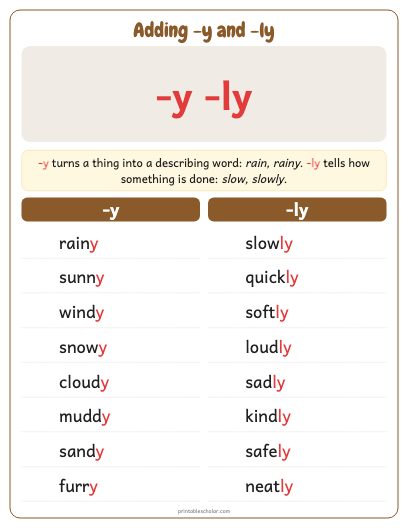
-y turns a thing into a describing word: rain, rainy. -ly tells how something is done: slow, slowly.
Download poster (PDF) Worksheets and readers for this skill →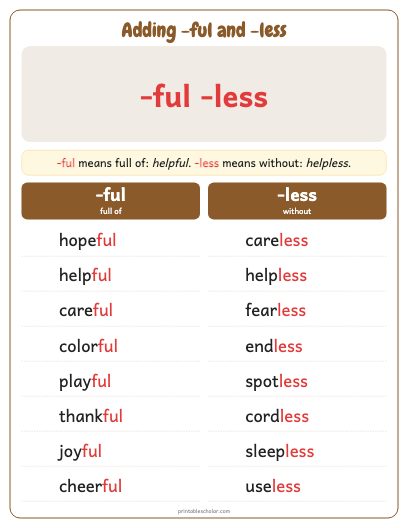
-ful means full of: helpful. -less means without: helpless.
Download poster (PDF) Worksheets and readers for this skill →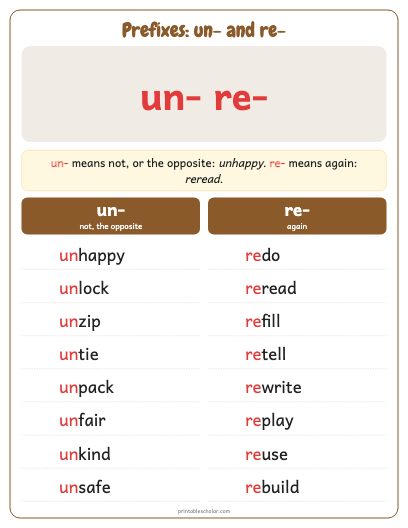
un- means not, or the opposite: unhappy. re- means again: reread.
Download poster (PDF) Worksheets and readers for this skill →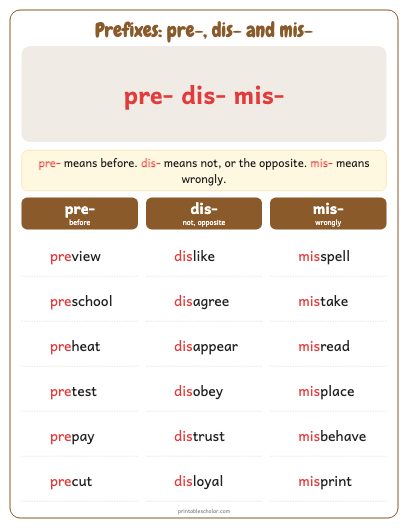
pre- means before. dis- means not, or the opposite. mis- means wrongly.
Download poster (PDF) Worksheets and readers for this skill →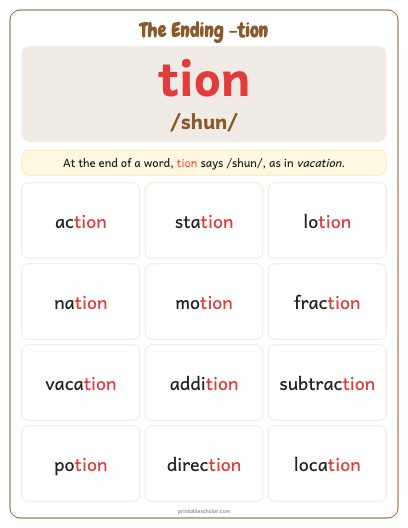
At the end of a word, tion says /shun/, as in vacation.
Download poster (PDF) Worksheets and readers for this skill →Phonics rules (also called spelling rules or spelling generalizations) tell a child which letters to use for a sound and how a pattern changes the sounds around it. The posters follow the order most K-2 phonics programs teach: short vowels, digraphs and blends, the Floss rule and the other spelling-choice rules, silent e, vowel teams, bossy r, and then syllables, prefixes and suffixes.
Each poster matches one of our phonics skills, so the worksheets and decodable readers for the same pattern are one click away. Put the poster up when you start the pattern and leave it up: a child who is stuck can find the rule on the wall instead of guessing.
When a one-syllable word ends in f, l, s or z right after one short vowel, double the last letter: cliff, bell, dress, buzz. It is called the Floss rule because the word floss uses it. A few words break it: if, of, us, bus, yes, gas, this and plus.
Use c before a, o and u (cat, cot, cup). Use k before e, i and y (key, kit). At the end of a short word right after one short vowel, use ck (duck, sock).
Use ai in the middle of a word (rain, nail) and ay at the end of a word (play, day). The same idea works for oi and oy, ou and ow, and au and aw.
When a vowel is followed by one consonant and an e, the vowel says its name and the e is silent: cake, bike, rope, cube.
Right after one short vowel, use tch for /ch/ (match) and dge for /j/ (badge). After anything else, use ch (bench, peach) and ge (cage, huge).
Yes. Every poster is a free color PDF on letter paper. Print it full size for the wall, or print it smaller for a phonics notebook or a reading folder.