Free printable silent e — long u phonics worksheets. Five practice activities: decodable passage, word sort, phrasing cards, rapid naming chart, and word search.
A free illustrated mini-book for Silent E — Long U, plus the same story as a passage sheet for highlighting.

A full-color picture book your student reads on their own. Skill: Silent E — Long U. Print, cut and staple.
 Want the whole level? 44 Level 3 mini-books in one file, $14Every book stays free to print one at a time.
See the pack →
Want the whole level? 44 Level 3 mini-books in one file, $14Every book stays free to print one at a time.
See the pack →
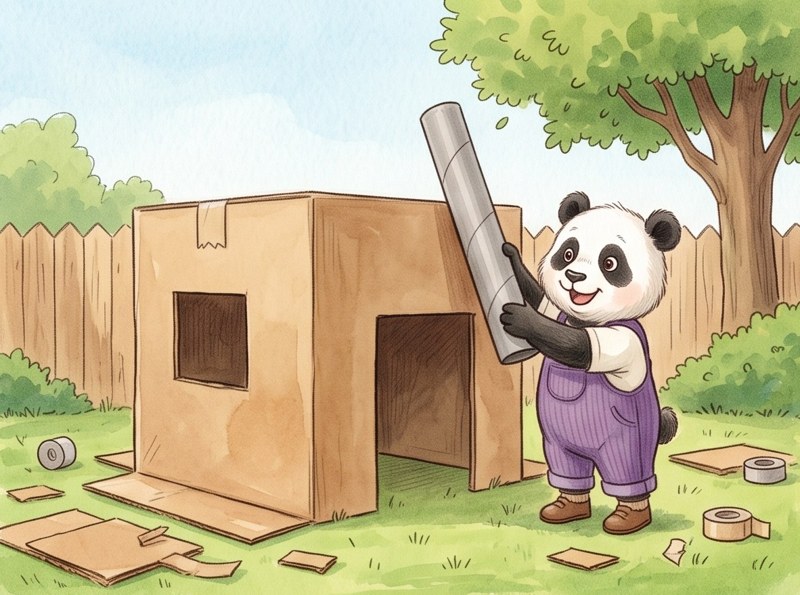
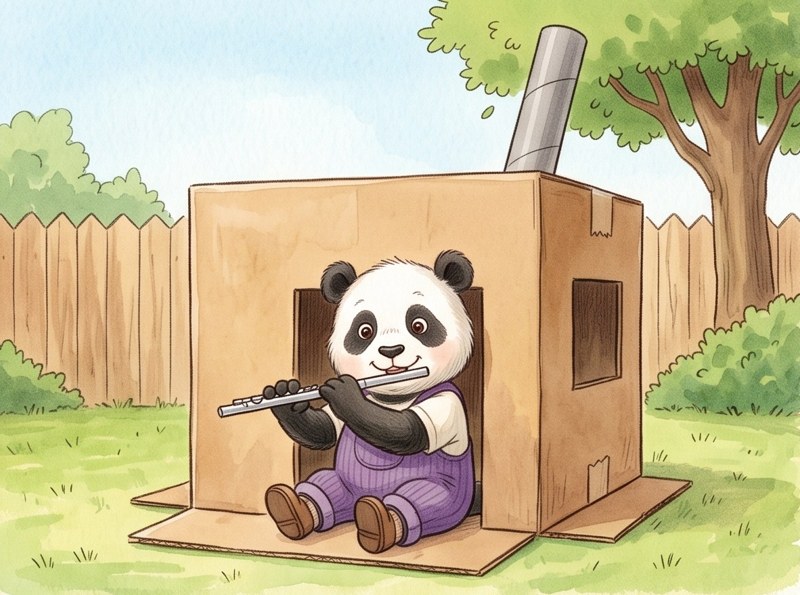
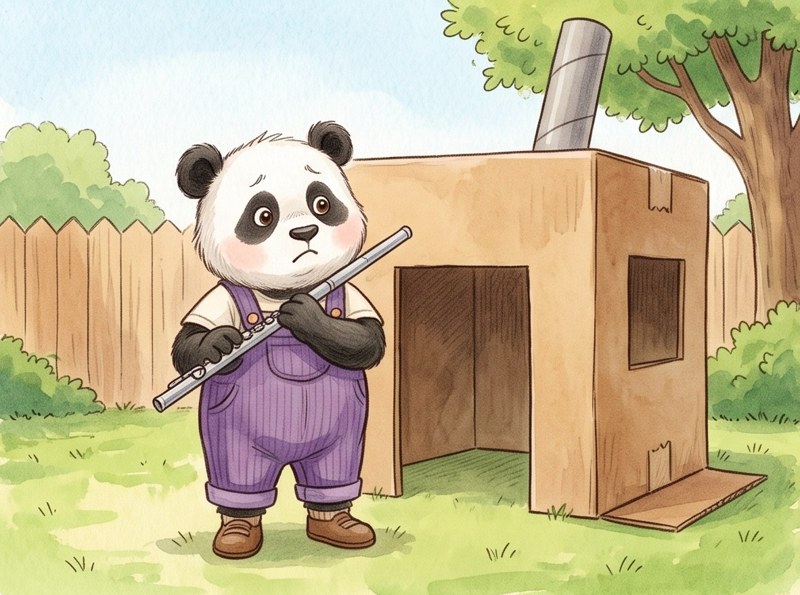
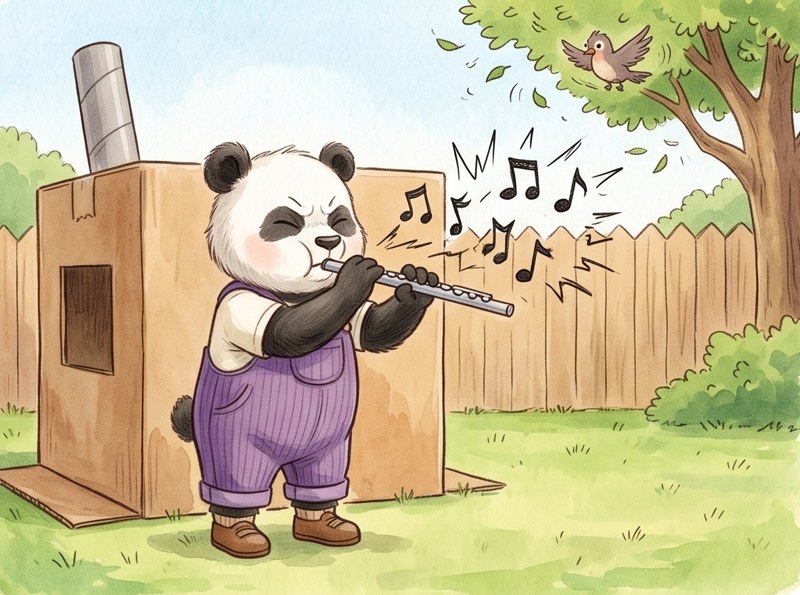
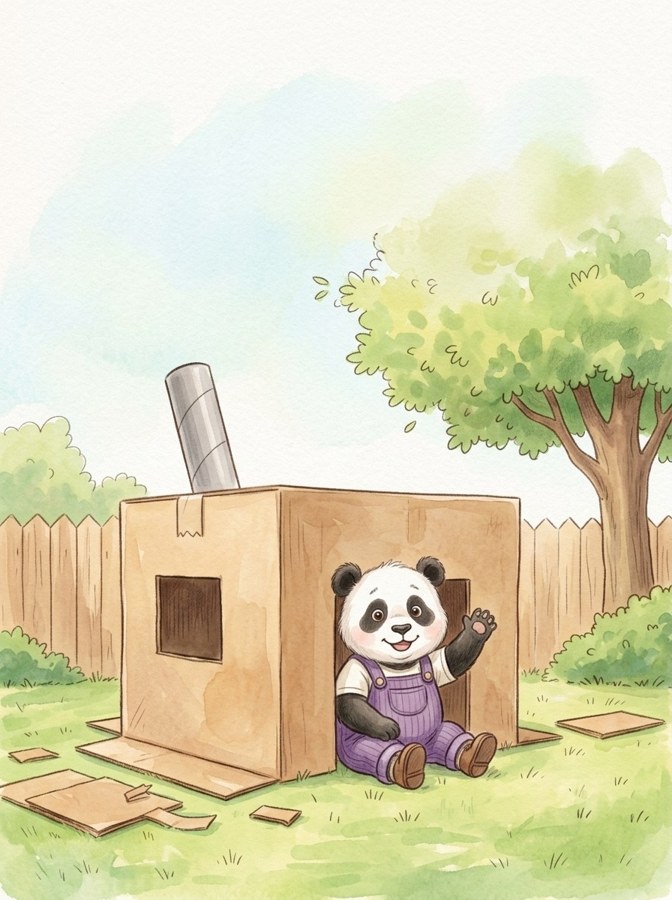
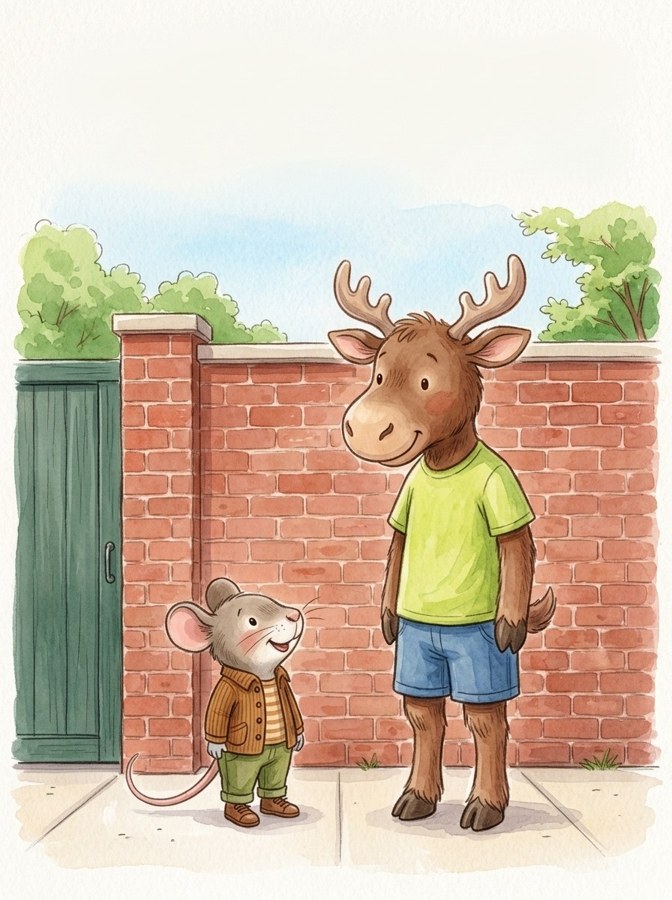
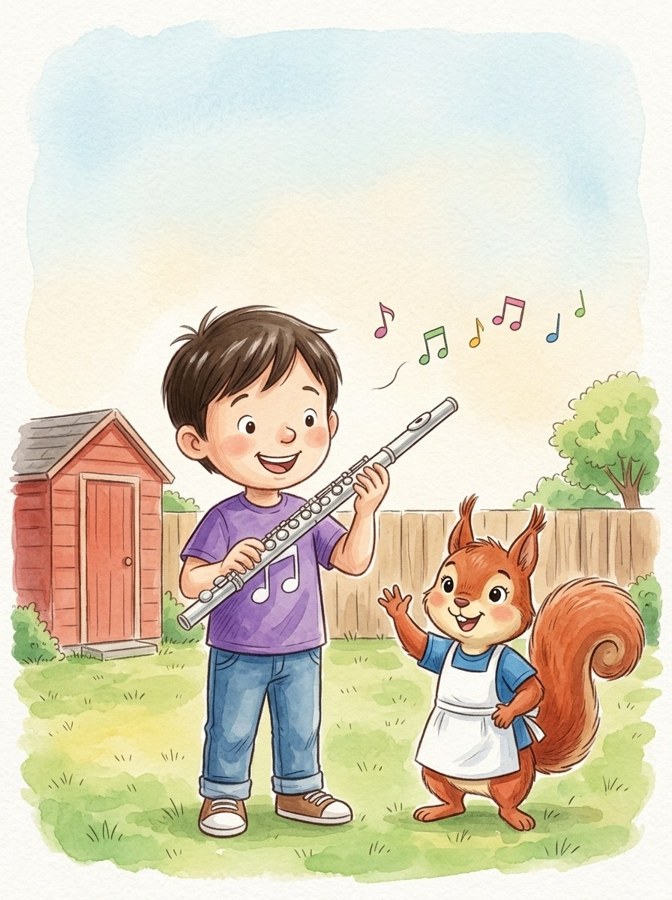
Jane made a huge hut. She used a big box and a long tube. It was the best hut. Jane grabbed her flute to play a tune. She did not know how to play it well. The tune was not cute. It was a rude tone! Jud ran and hid. "Stop that tune!" Jud yelled. "It hurts my skull." Jane felt bad. She put the flute down. "It is a rule," she said. "No rude tunes in my hut." Jud came back to the hut. He gave Jane a big hug. Then they played in the huge hut together.
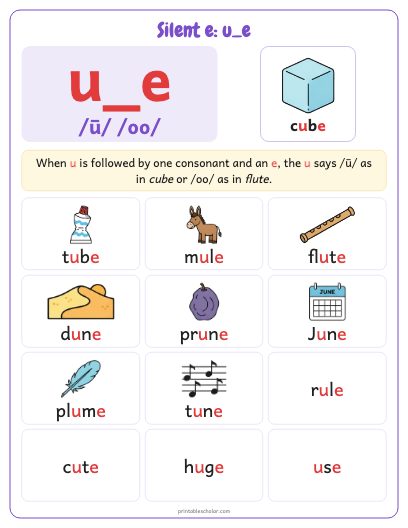
When u is followed by one consonant and an e, the u says /ū/ as in cube or /oo/ as in flute.
Download poster (PDF)Print it full size for the wall, or smaller for a phonics notebook.
See all 63 phonics rules posters → · or get all 63 in one file for $7, with a notebook-size copy
The words this story set practices, in the two groups used by the word sort.
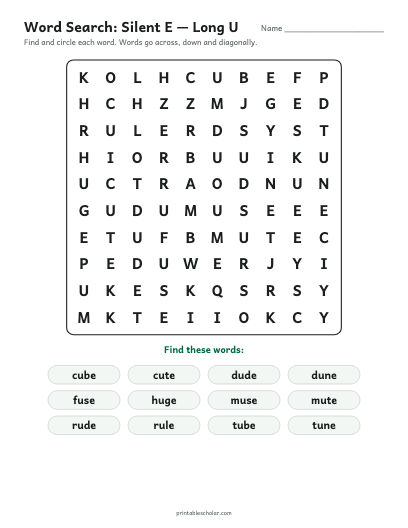
cube, tube, cute, mute, huge, fuse, muse, rude, dude, dune, tune, rule, flute
zube, vute, jume, pune, gude, bluke, mube
Silent e long u words to read, match and write, with pictures. Each PDF has its answer key on page 2.
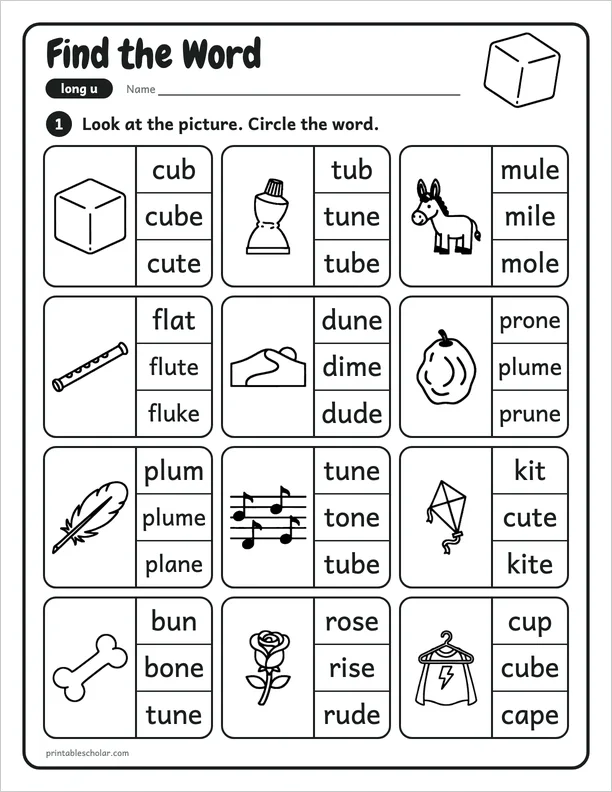
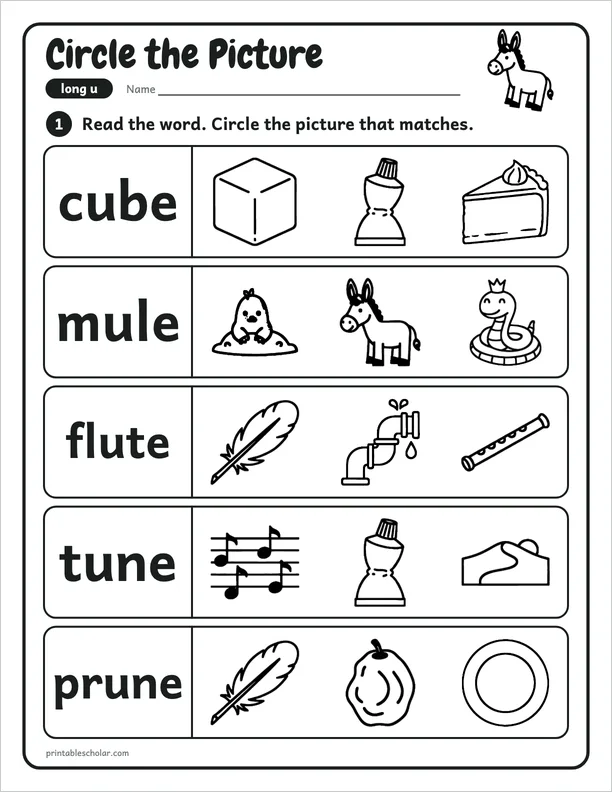
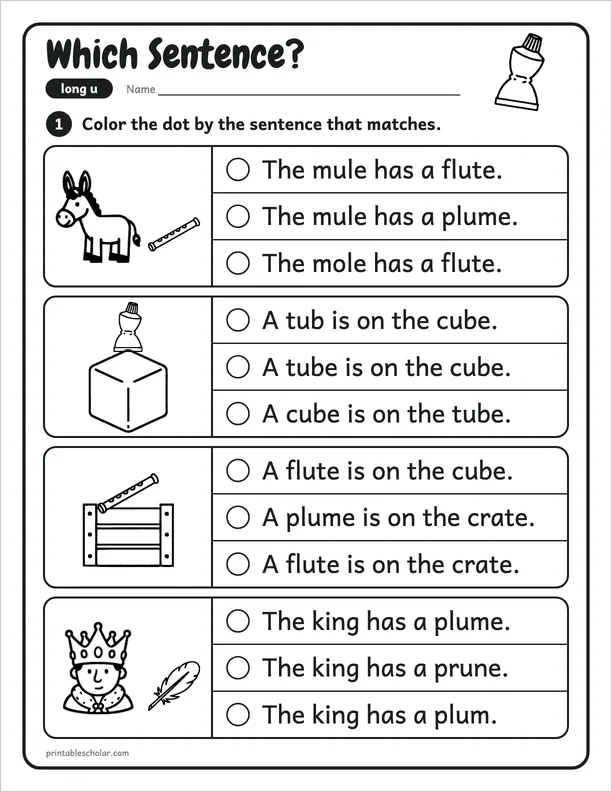
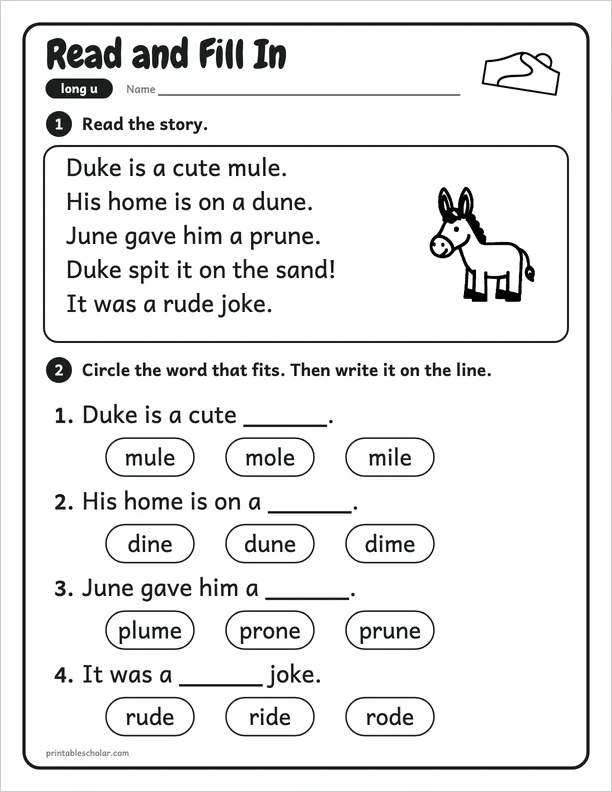
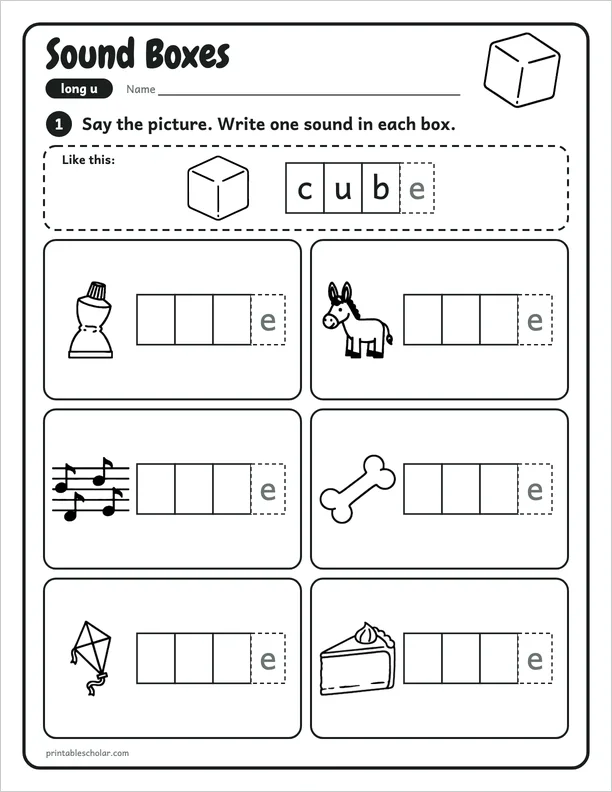
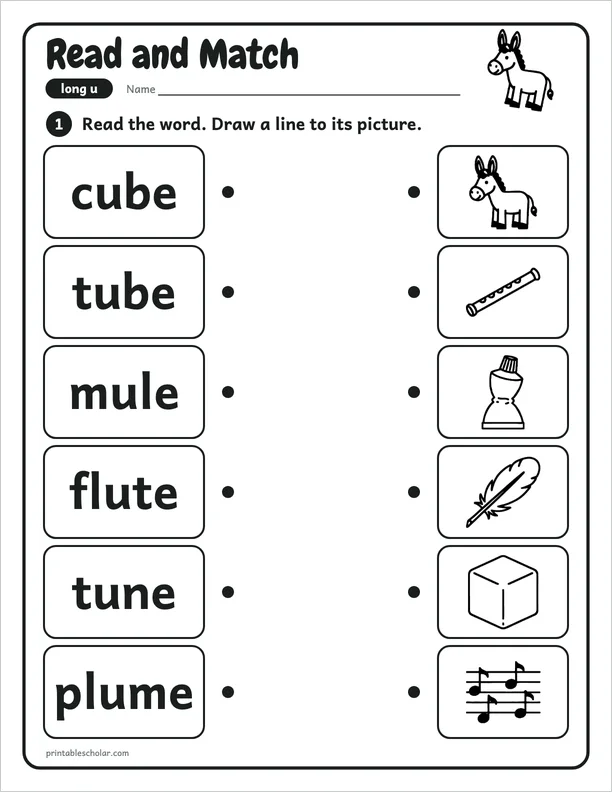
The sheets above are free. The pack is every sheet for a_e, i_e, o_e and u_e, soft c and g, y as a vowel and the all, old and ind words in order, with all the answer keys, ready to print.
Get the pack for $7 See every kind of sheetTeaching more than one level? All 6 levels, 600+ worksheets, for $19.
4 ready-to-print PDFs for this story's silent e — long u words. Each one opens as its own file.
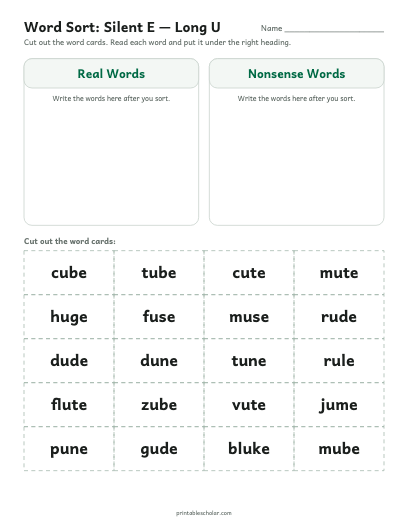
Cut-apart word cards to sort: Real Words or Nonsense Words. Answer key on page 2.
Download PDF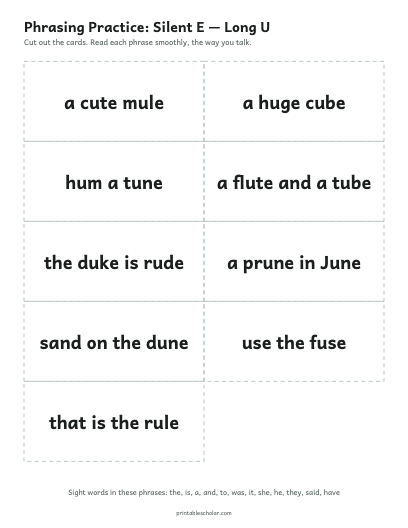
A new decodable story with the same silent e — long u sounds — each comes with its own set of worksheets.
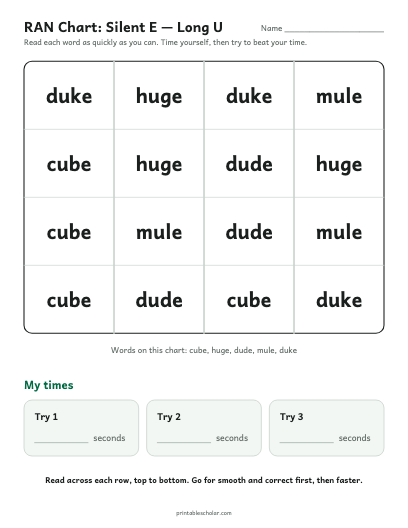
The silent e, or magic e, pattern for long U (u_e) is a crucial step in first-grade phonics, following mastery of short vowels and CVC words. Young learners often find this pattern tricky because the 'e' at the end of words like "cube" or "cute" doesn't make a sound itself but transforms the short 'u' sound into its long counterpart. Without the silent 'e', "cut" sounds very different from "cute," and "tub" from "tube." A common error is for children to mispronounce u_e words with a short 'u' sound, saying "cub" instead of "cube," or "hug" instead of "huge," because they are still relying on their earlier CVC knowledge. Emphasizing that the final 'e' is silent but powerful in changing the vowel sound is key to unlocking these words. To effectively practice the u_e pattern, these worksheets provide a structured approach. Begin with the word sort, guiding children to group words like "flute," "brute," and "prune" by their shared long U sound, reinforcing visual recognition of the u_e pattern. The decodable passage, "Jane's Huge Fort," specifically integrates these target words, allowing children to apply their decoding skills in context. Encourage them to highlight or circle the u_e words as they read. Use the phrasing cards to build fluency, having students read phrases like "a cute mule" or "play the tune" with correct pronunciation and intonation. Finally, utilize the Rapid Automatic Naming (RAN) chart to build quick recognition of u_e words, helping them instantly identify "duke," "lure," and "pure" without hesitation.
For more early literacy resources, explore our sight word flashcards, tracing worksheets, handwriting worksheets, and coloring pages.
 Printable Scholar


