Free printable silent e — mixed phonics worksheets. Five practice activities: decodable passage, word sort, phrasing cards, rapid naming chart, and word search.
A free illustrated mini-book for Silent E — Mixed, plus the same story as a passage sheet for highlighting.

A full-color picture book your student reads on their own. Skill: Silent E — Mixed. Print, cut and staple.
 Want the whole level? 44 Level 3 mini-books in one file, $14Every book stays free to print one at a time.
See the pack →
Want the whole level? 44 Level 3 mini-books in one file, $14Every book stays free to print one at a time.
See the pack →
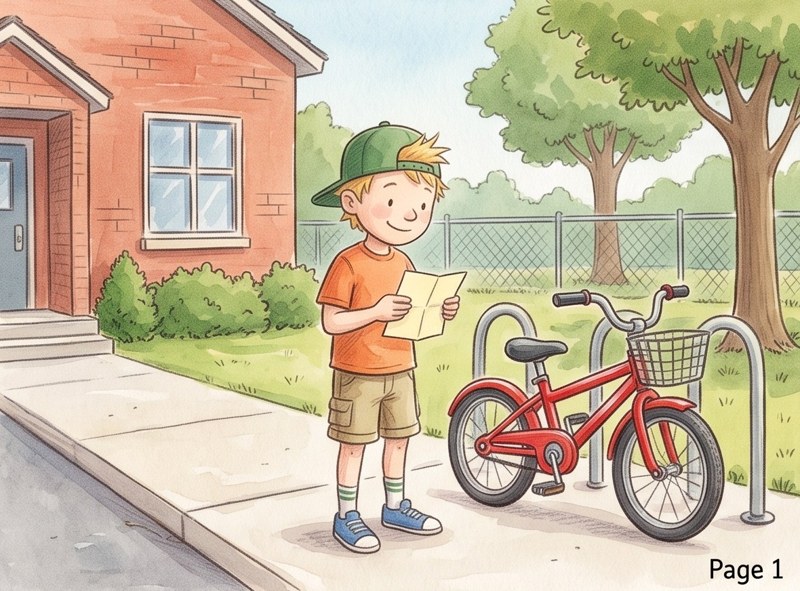
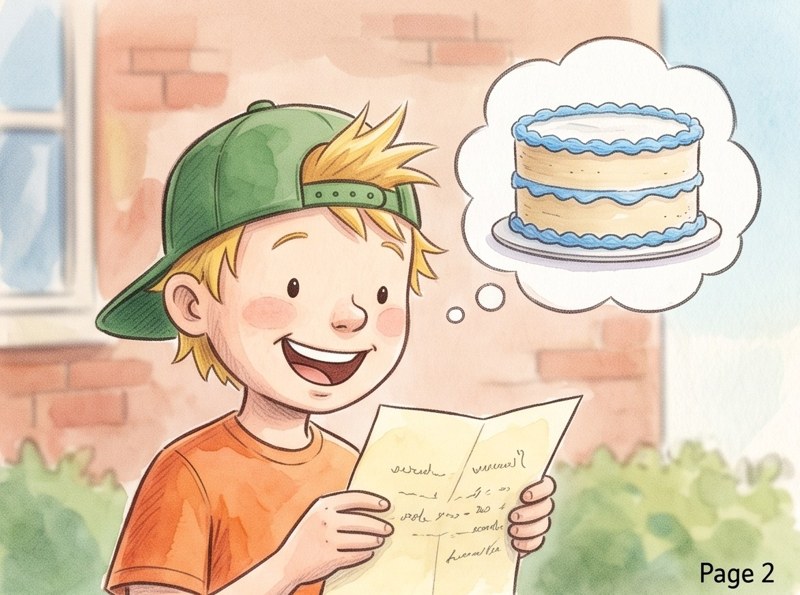
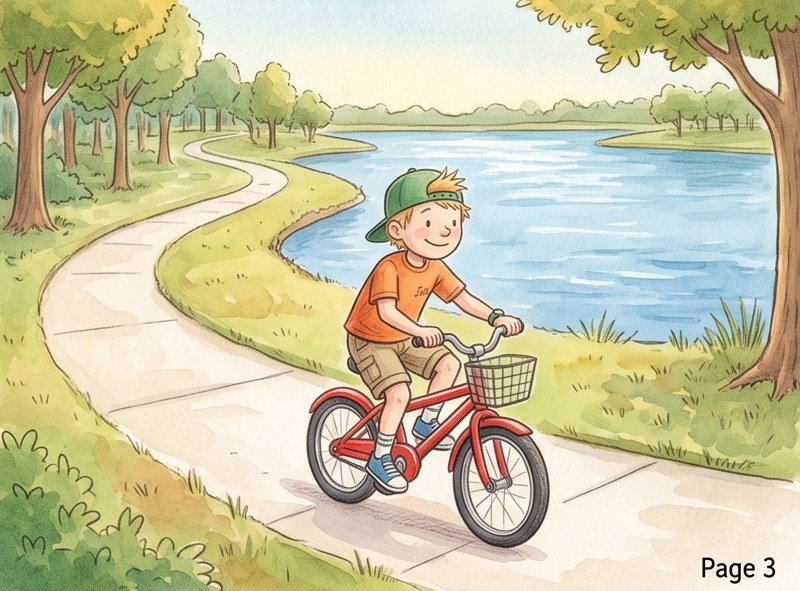
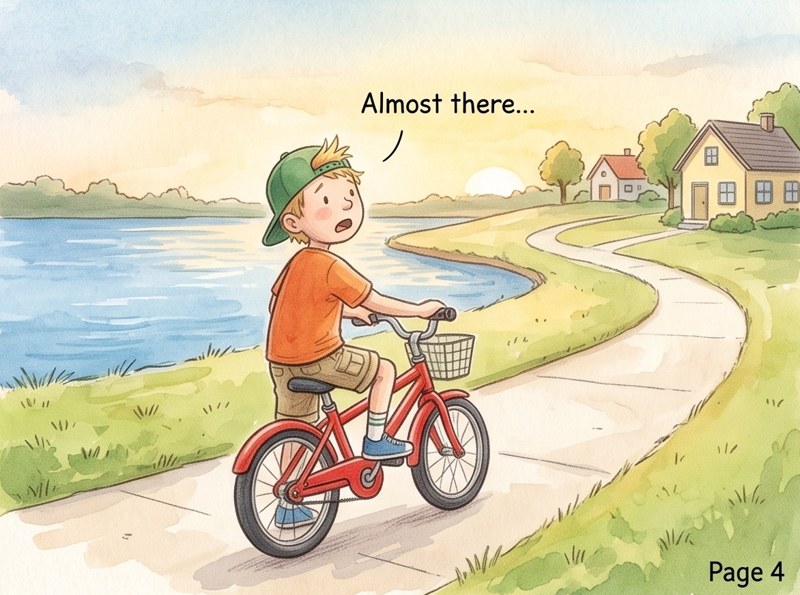
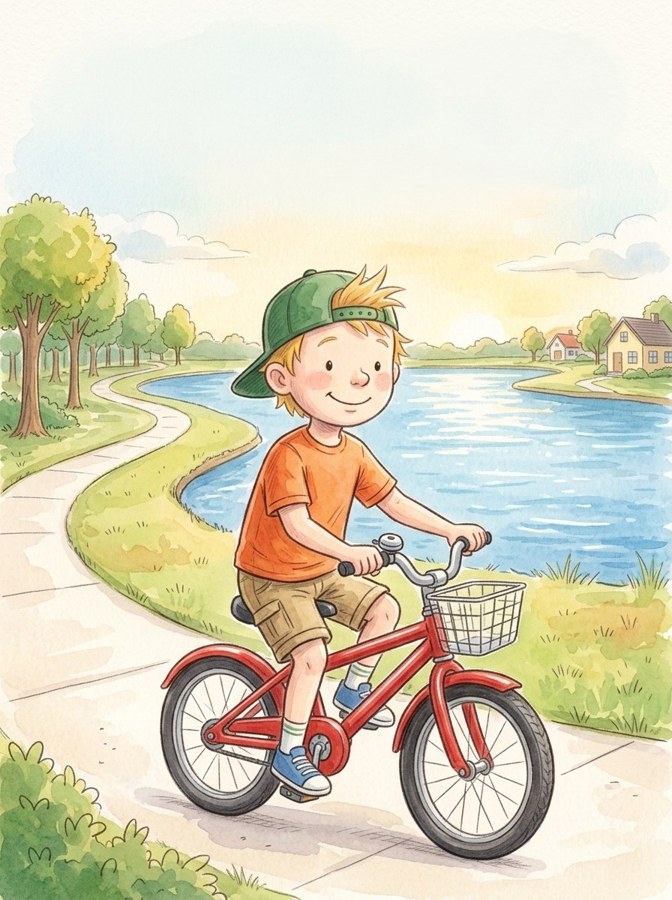
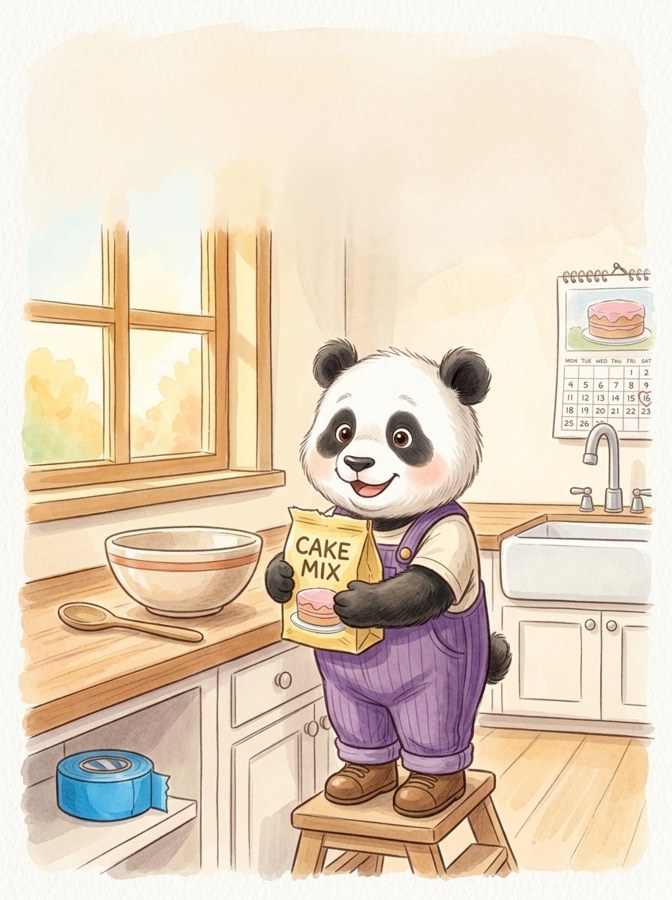
Jake had to ride home. He got a note from his mom. The note said, “Come home for a huge cake!” Jake was a big fan of cake. He hopped on his new bike. It was a long ride past the big lake. “I hope I make it in time,” he said. The path home had a rule: no fast bikes. But Jake had to get home. He went as fast as he could. When he got home, Mom gave him a big slice. The cake had his name on it. “This is a fine cake, Mom!” Jake said. He ate the whole thing.
The words this story set practices, in the two groups used by the word sort.
cake, make, lake, bike, hike, kite, bone, home, nose, cube
mube, taze, dake, fipe, goke, bune, nide, roke, zame, wube
Silent e words to read, match and write, with pictures. Each PDF has its answer key on page 2.
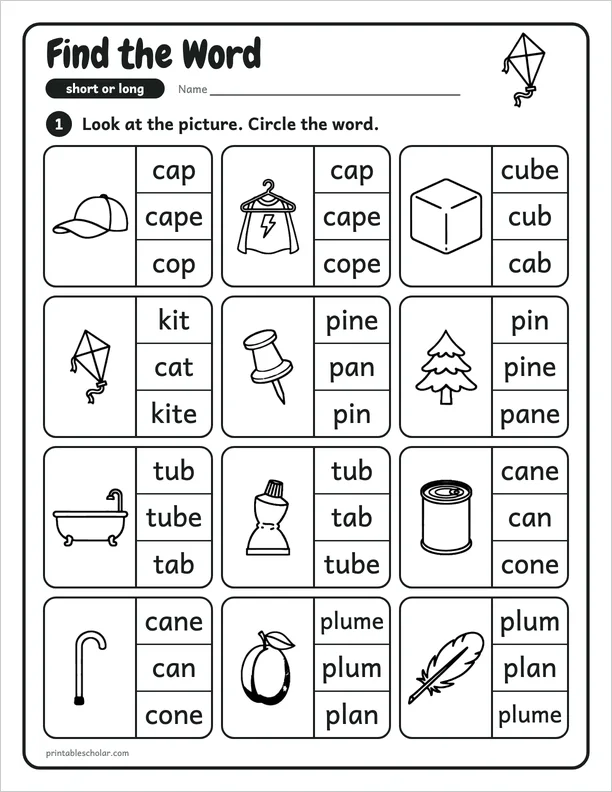
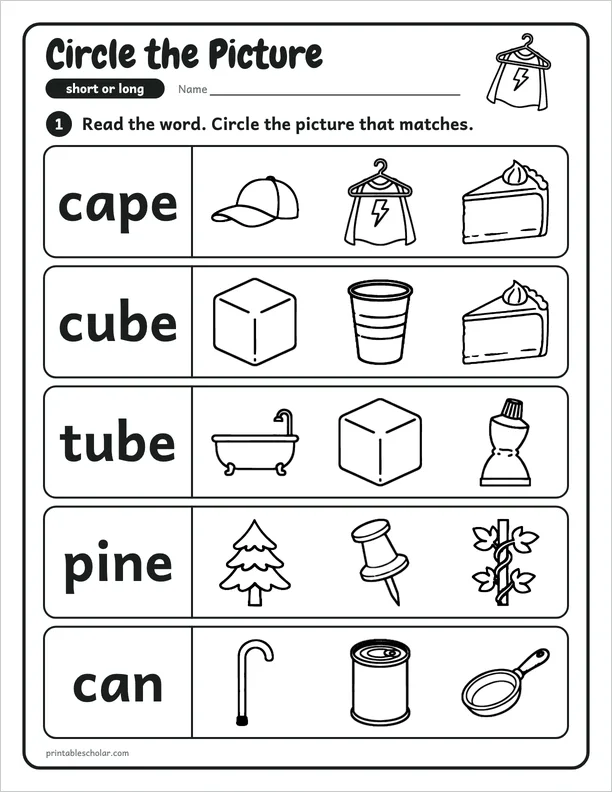
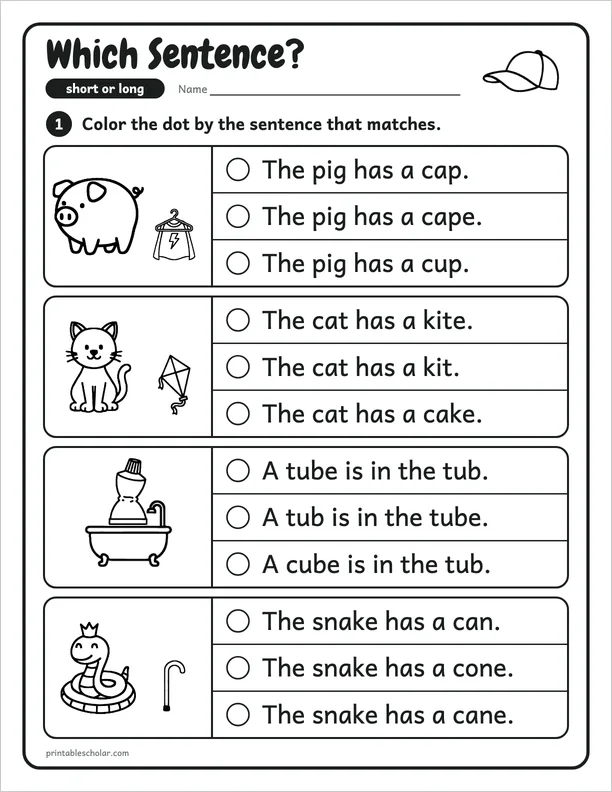
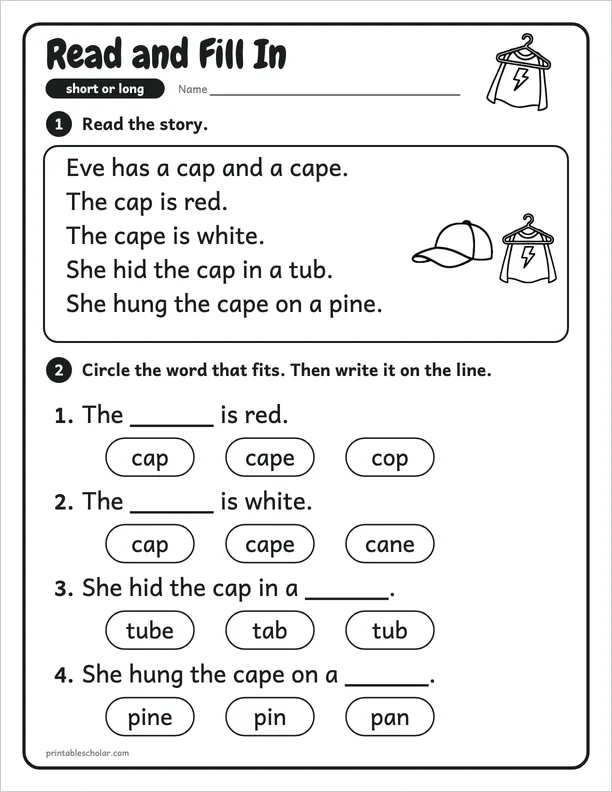
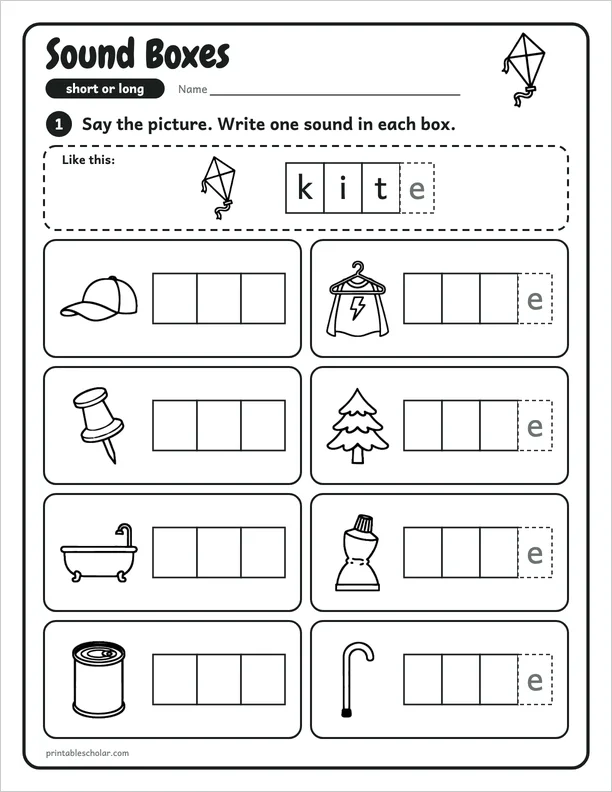
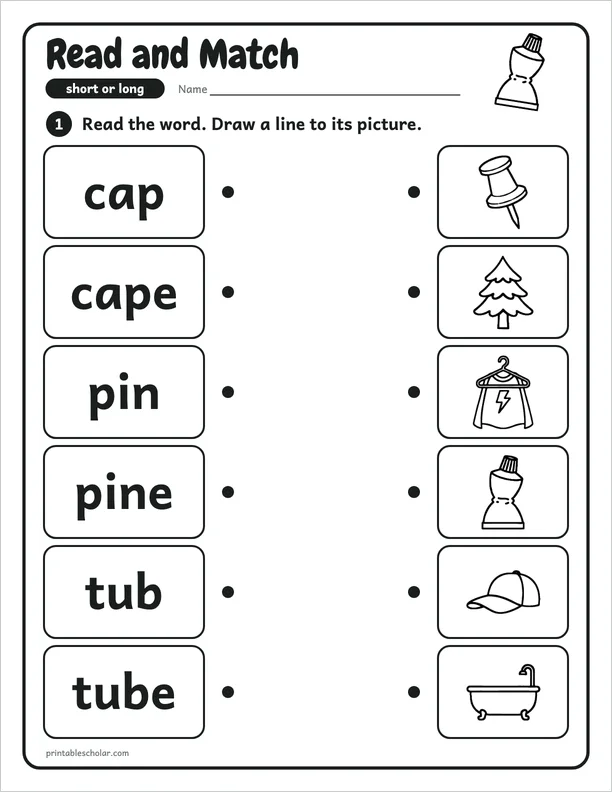
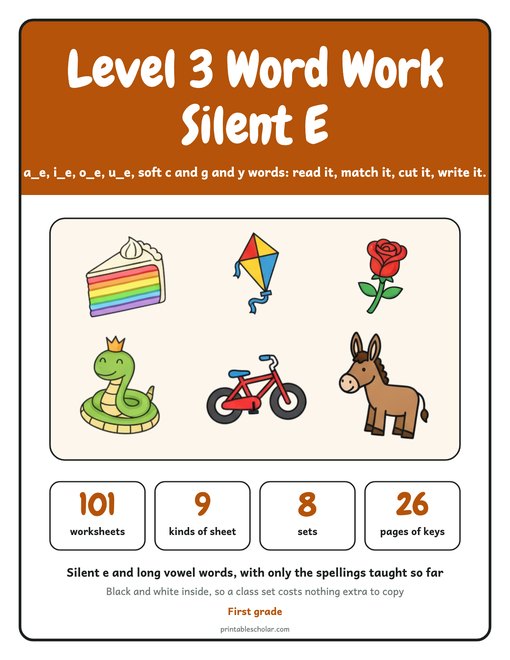
The sheets above are free. The pack is every sheet for a_e, i_e, o_e and u_e, soft c and g, y as a vowel and the all, old and ind words in order, with all the answer keys, ready to print.
Get the pack for $7 See every kind of sheetTeaching more than one level? All 6 levels, 600+ worksheets, for $19.
4 ready-to-print PDFs for this story's silent e — mixed words. Each one opens as its own file.
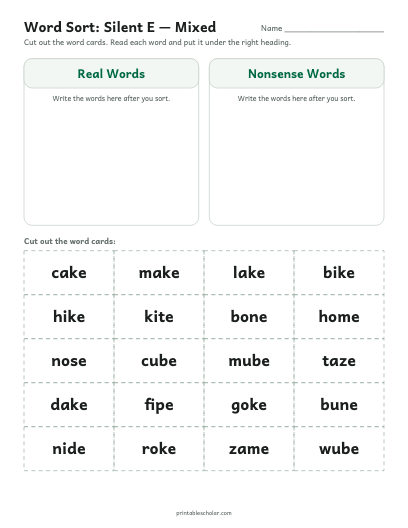
Cut-apart word cards to sort: Real Words or Nonsense Words. Answer key on page 2.
Download PDF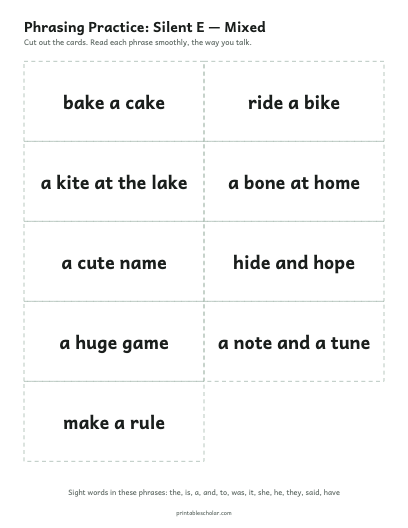
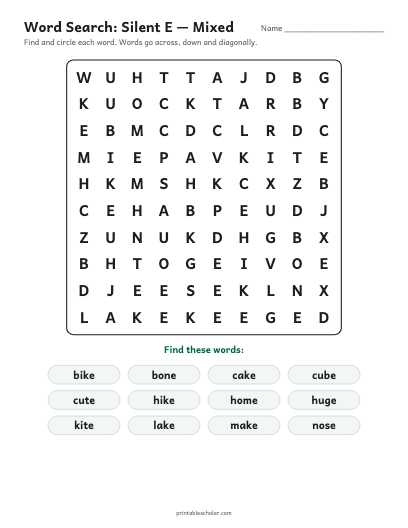
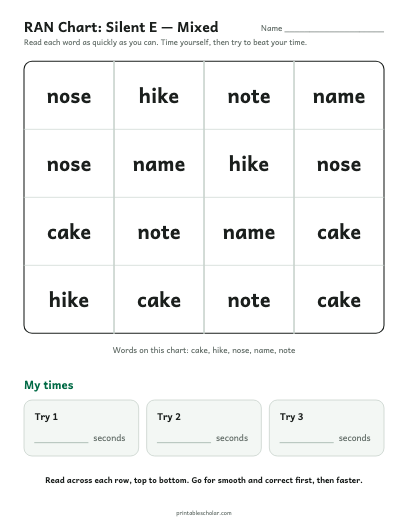
A new decodable story with the same silent e — mixed sounds — each comes with its own set of worksheets.
Understanding the "silent e" pattern is a crucial step in first-grade phonics, marking the transition from short vowel sounds to long vowel sounds. This pattern, often called "magic e" or "bossy e," transforms a short vowel sound into its long counterpart, as seen in words like "cap" becoming "cape" or "kit" becoming "kite." The challenge for young learners often lies in recognizing that the final 'e' is not pronounced but rather signals a change in the vowel sound before it. For instance, a child might initially read "make" as "mack" or "bike" as "bick" if they miss the silent 'e'. Similarly, "bone" might be read as "bon" or "cute" as "cut." Mastering this pattern across all vowels (a_e, i_e, o_e, u_e) is essential for accurate decoding and building a strong foundation for more complex reading. Our silent e worksheets provide targeted practice to solidify this important skill. After reading the decodable story "Jake's Cake Ride," encourage your student to identify all the words containing the silent e pattern. The word sort activity helps them categorize words like "cake," "bike," and "bone" by their specific vowel-consonant-e pattern, reinforcing visual recognition. Use the phrasing cards to practice reading silent e words in context, building fluency and comprehension. Finally, the Rapid Automatic Naming (RAN) chart offers an excellent way to improve automaticity and speed in recognizing these words, helping students move beyond decoding each sound to instantly recalling the whole word. Consistent practice with these varied activities will build confidence and mastery of the silent e pattern.
For more early literacy resources, explore our sight word flashcards, tracing worksheets, handwriting worksheets, and coloring pages.
 Printable Scholar


