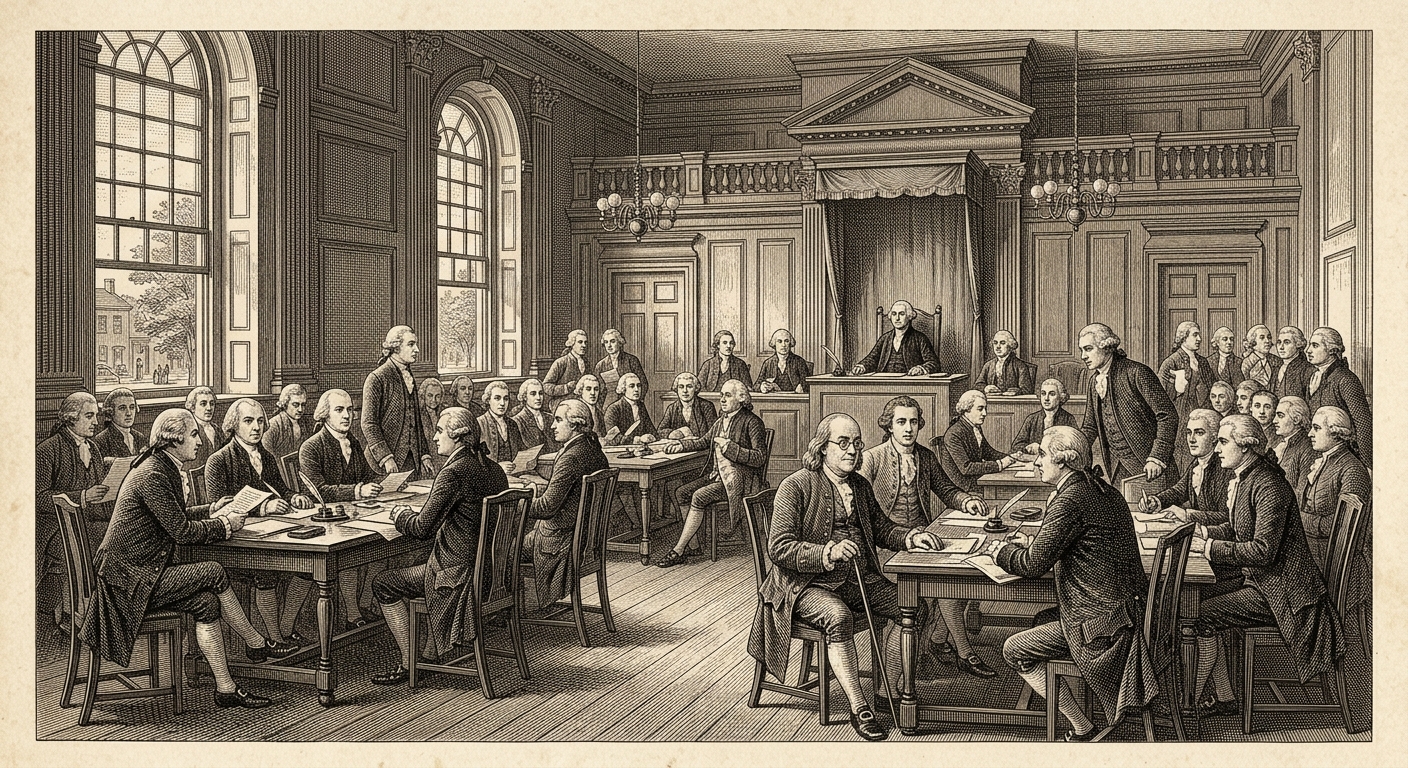
Constitutional Convention Timeline
The Constitutional Convention of 1787 produced the United States Constitution — the world's oldest written national constitution still in use — after the nation's first attempt at self-government had nearly collapsed.
The United States almost didn't make it. When the thirteen colonies declared independence from Britain in 1776, they had a clear idea of what they were fighting against — but no clear idea of what kind of government they wanted to replace it. Their first attempt, the Articles of Confederation, created a central government so weak it couldn't tax, couldn't enforce its own laws, and couldn't stop states from fighting each other over trade. When an armed revolt of Massachusetts farmers — Shays' Rebellion — nearly toppled the state government and the national government could do nothing to stop it, the founders knew something had to change. Fifty-five delegates gathered in Philadelphia in the summer of 1787, supposedly to patch the Articles. Instead, they wrote an entirely new constitution. They argued through brutal July heat over representation, slavery, the power of the presidency, and the rights of states. The compromises they reached — some brilliant, some morally disastrous — created a government that has lasted more than two centuries. They knew what they were doing was imperfect. That's why they included a way to amend it.
- 1776
Declaration of Independence
The Continental Congress declares independence from Britain on July 4, 1776, announcing that the thirteen colonies are now the United States — but leaving the question of how to actually govern the new nation entirely unresolved.
Why it mattered: The Declaration created a nation out of revolution, but revolution is easier than governing — the founders still had to answer the hardest question: what kind of government would replace the king they had just rejected?
- 1781
Articles of Confederation Ratified
The thirteen states ratify the Articles of Confederation — their first constitution — creating a Congress but giving it almost no real power: it cannot levy taxes, regulate trade, or enforce its own laws without unanimous agreement of all states.
Why it mattered: The Articles reflected the founders' deep fear of strong central government after their experience with Britain — but the result was a government so weak it struggled to pay its debts, fund its army, or prevent states from treating each other like foreign nations.
- 1786–87
Shays' Rebellion
Armed farmers in Massachusetts, crushed by debt and taxes after the Revolutionary War, rebel against the state government; the national government under the Articles has no power to raise troops or send help, exposing the complete helplessness of the existing system.
Why it mattered: Shays' Rebellion terrified the founders — if a state government could be threatened by its own citizens and the national government could do nothing, the entire American experiment was at risk; it provided the final push to call the Constitutional Convention.
- May 1787
Constitutional Convention Opens
Fifty-five delegates from twelve states (Rhode Island boycotts) gather at Independence Hall in Philadelphia, officially to revise the Articles — but within days they agree in secret to scrap the Articles entirely and write a new constitution.
Why it mattered: The Convention's decision to start fresh rather than patch the Articles was one of the boldest political acts in American history — the delegates exceeded their mandate and took on the task of inventing a new form of government from the ground up.
- July 1787
The Great Compromise
The Convention deadlocks between large states (wanting representation based on population) and small states (wanting equal votes); Roger Sherman's Connecticut Compromise breaks the impasse by creating a two-chamber Congress — proportional House, equal Senate.
Why it mattered: The Great Compromise saved the Convention from collapse — without it, the small states would have walked out; the two-chamber solution it produced remains the structure of Congress today and gives every state equal power in the Senate regardless of population.
- 1787
The Three-Fifths Compromise
Northern and Southern delegates clash over whether enslaved people count for representation; they agree to count each enslaved person as three-fifths of a free person for determining congressional seats and taxes.
Why it mattered: The Three-Fifths Compromise was the Constitution's original moral failure — it embedded slavery into the nation's founding document, gave Southern slaveholders disproportionate political power in Congress, and planted a contradiction between liberty and bondage that would not be resolved until the Civil War.
- September 1787
Constitution Signed and Sent to States
The Convention produces a finished Constitution on September 17, 1787; thirty-nine of the fifty-five delegates sign it; it is sent to the states, where nine of thirteen must ratify it to take effect.
Why it mattered: The Constitution that emerged was a document of compromises — none of the delegates got everything they wanted, but most believed it was far better than the Articles; the question now was whether the American people would accept it.
- 1787–88
Ratification Debate and The Federalist Papers
A fierce public debate erupts over ratification; Alexander Hamilton, James Madison, and John Jay write 85 essays (The Federalist Papers) defending the Constitution; by June 1788, nine states have ratified, but New York and Virginia only agree after being promised a Bill of Rights.
Why it mattered: The ratification debate produced America's most important work of political philosophy — The Federalist Papers — and the promise of a Bill of Rights secured support from skeptics who feared the new government would repeat Britain's abuses of individual liberty.
- 1789
First Government Begins
George Washington is inaugurated as the first President on April 30, 1789; the first Congress meets; the new government begins to function under the Constitution for the first time.
Why it mattered: The peaceful transfer of power to an elected president under a written constitution was without precedent in the modern world — most nations changed leaders through inheritance or violence; the American model of constitutional government would inspire revolutions and constitutions around the globe.
- 1791
Bill of Rights Ratified
The first ten amendments to the Constitution — the Bill of Rights — are ratified on December 15, 1791, guaranteeing freedom of speech, religion, and the press; the right to a fair trial; and protections against government overreach.
Why it mattered: The Bill of Rights answered the founders' critics who feared the new government would become tyrannical — by explicitly listing what the government could not do to its citizens, it created the legal foundation for individual liberties that Americans still invoke in courts today.
Constitutional Convention Quiz
Check what you learned — read on screen, or use the Printable quiz button above for a worksheet version with an answer key.
What was wrong with the Articles of Confederation that led to the Constitutional Convention?
- A) The Articles gave too much power to the president and not enough to the states
- B) The Articles created a central government so weak it could not tax, enforce laws, or prevent states from undermining each other
- C) The Articles only applied to the original five states and could not easily be extended to new ones
- D) The Articles required all laws to be approved by the king of France, who had helped America win independence
What did Shays' Rebellion reveal about the government under the Articles of Confederation?
- A) That the state governments were too powerful and needed to be brought under federal control
- B) That farmers had too much political power relative to merchants and bankers
- C) That the national government was powerless — it could not raise troops or help when a state government was threatened
- D) That the Articles needed only minor adjustments to create a workable national government
What was the original purpose of the Constitutional Convention when it opened in 1787?
- A) To declare war on Britain and retake territory lost after the Revolutionary War
- B) To revise the Articles of Confederation — though delegates quickly decided to write a new constitution instead
- C) To elect the first president of the United States under the existing Articles of Confederation
- D) To negotiate trade agreements between the thirteen states that were competing with each other
What did the Great Compromise (Connecticut Compromise) resolve?
- A) The dispute over whether to abolish slavery in the Northern states immediately
- B) The deadlock between large and small states over representation — creating the two-chamber Congress with a proportional House and an equal Senate
- C) The conflict between Northern merchants and Southern planters over interstate trade regulations
- D) The argument about whether the president should be elected by the people or by Congress
What was morally problematic about the Three-Fifths Compromise?
- A) It gave wealthy landowners three times as many votes as ordinary citizens in presidential elections
- B) It embedded slavery into the Constitution by counting enslaved people as three-fifths of a person, giving slaveholders extra political power
- C) It allowed three-fifths of the states to override the other states' objections to any law
- D) It required three-fifths of the population to approve any amendment, making the Constitution nearly impossible to change
Why were The Federalist Papers important?
- A) They were a series of newspaper articles by Benjamin Franklin arguing that the Articles of Confederation were working well
- B) Written by Hamilton, Madison, and Jay, they defended the Constitution and remain the most important explanation of what its authors intended
- C) They were letters from George Washington urging delegates to sign the Constitution despite their objections
- D) They were pamphlets written by Anti-Federalists arguing against ratification of the Constitution
Why did New York and Virginia hesitate to ratify the Constitution?
- A) They believed the Constitution gave too much power to small states through the equal Senate
- B) They wanted the capital to be located in their state before they would agree to join
- C) They feared the new government would abuse its powers unless individual rights were explicitly protected — they agreed only after being promised a Bill of Rights
- D) They objected to the Three-Fifths Compromise and wanted slavery abolished before joining the union
What freedoms does the Bill of Rights protect?
- A) The right to own land, form a corporation, and trade freely across state lines
- B) Freedoms of speech, religion, and the press; the right to a fair trial; and protections against government overreach into individual liberties
- C) The right to vote for all citizens, regardless of race or gender, from the nation's founding
- D) The freedom of states to ignore federal laws they disagree with through the process of nullification
Show answer key
1. B · 2. C · 3. B · 4. B · 5. B · 6. B · 7. C · 8. B
Related timelines
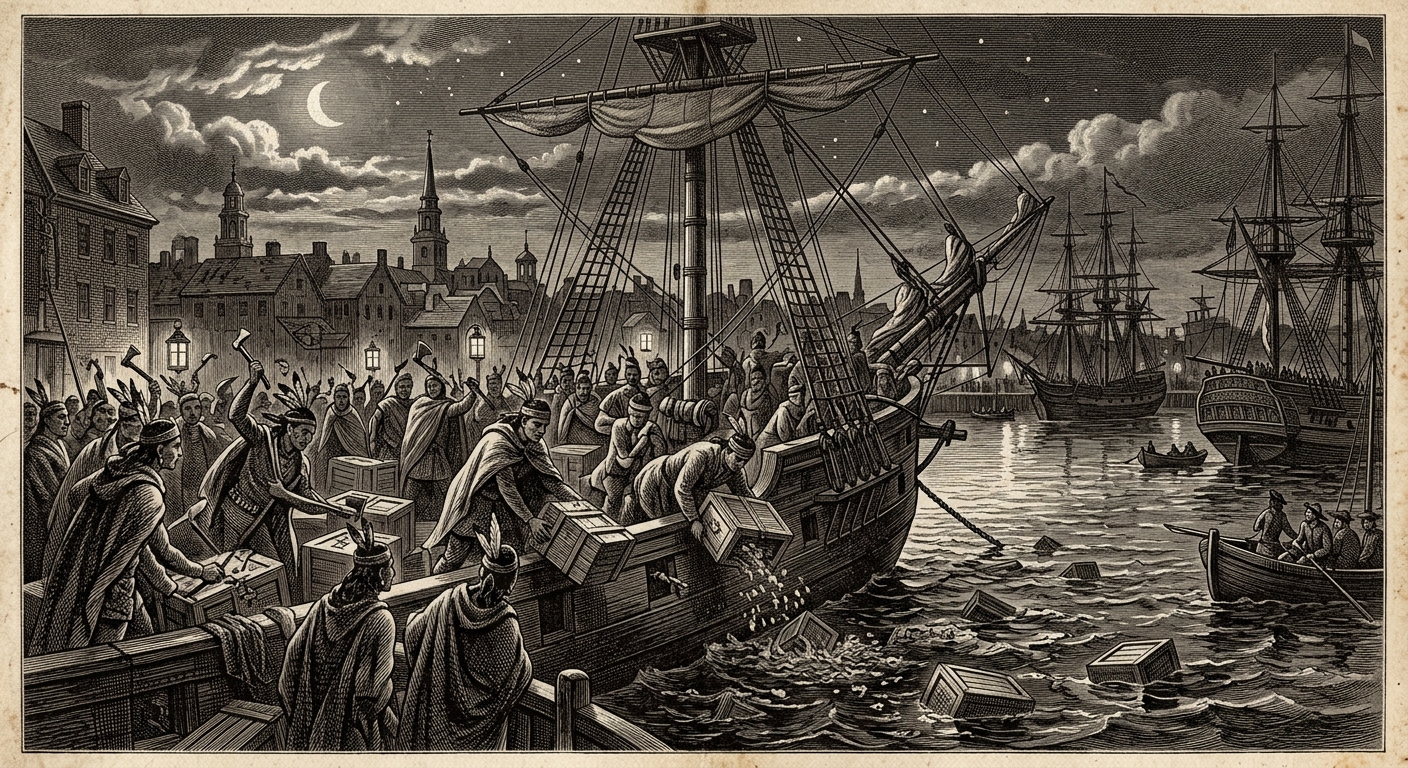 American Revolution Timeline — The American Revolution was the war in which the thirteen colonies broke away from Great Britain and became the United States. Open →
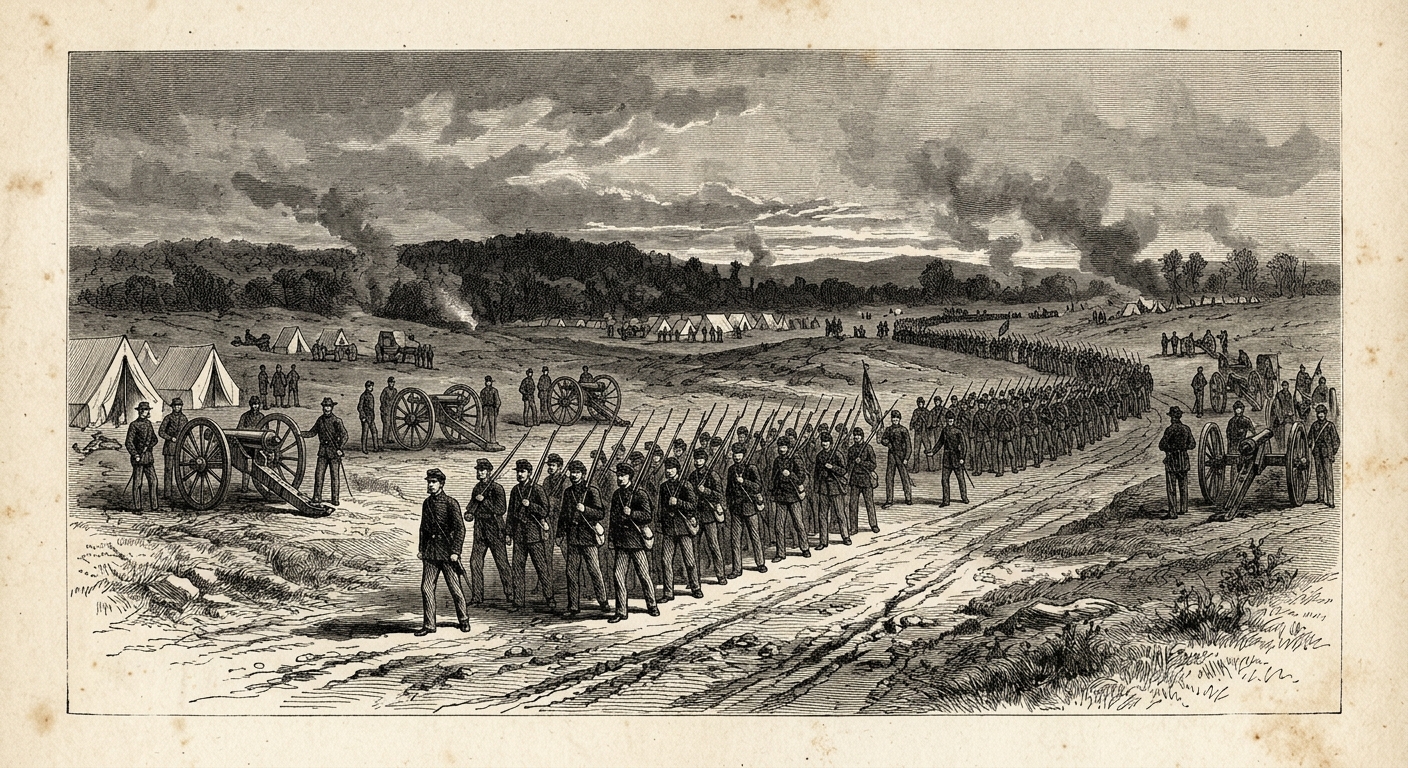 Civil War Timeline — The Civil War was the war between the Northern states (the Union) and the Southern states (the Confederacy) over slavery, states’ rights, and whether states could leave the Union. Open →
How to print
Choose Download PDF for a ready-to-print timeline that fits US Letter paper (8.5 × 11"). The blank fill-in version keeps the dates and gives students empty lines to write each event — great for review and quizzes.
Frequently asked questions
Why is the US Constitution the oldest written national constitution still in use?
The Constitution drafted in 1787 has survived because the founders built in two key features: a mechanism for amendment (allowing it to adapt to changing times without starting over) and a separation of powers between the executive, legislative, and judicial branches (preventing any one branch from dominating the others). Many nations have written constitutions that were later overthrown or replaced; the US Constitution has been amended 27 times but never replaced. Its durability reflects both the genius of its design and the willingness of Americans to work within its framework even during crises like the Civil War.
What is the difference between Federalists and Anti-Federalists?
Federalists (like Alexander Hamilton, James Madison, and John Jay) supported the new Constitution and a stronger central government, arguing that only a powerful national government could protect the country from foreign threats and internal chaos. Anti-Federalists (like Patrick Henry and George Mason) feared that the Constitution gave too much power to a distant central government that would eventually oppress citizens the same way Britain had. Anti-Federalists lost the ratification debate but won a major concession: the Bill of Rights, which was added to protect individual liberties from the new government. Both sides' concerns shaped American political debate for centuries.
What paper size should I print this on?
The timeline is sized for standard US Letter paper (8.5 × 11 in.). The Download PDF button gives you a print-ready file that fits the page automatically.