Printable Scholar
How to Play Oware
Oware is the mancala game of West Africa: two rows of six pits, 48 seeds, and a lot of clever counting. Learn how to play oware and mancala with clear rules, then print the board and play with beans or buttons.
2 players · about 20-40 minutes · ages 8 and up. West African Empires, played for hundreds of years.
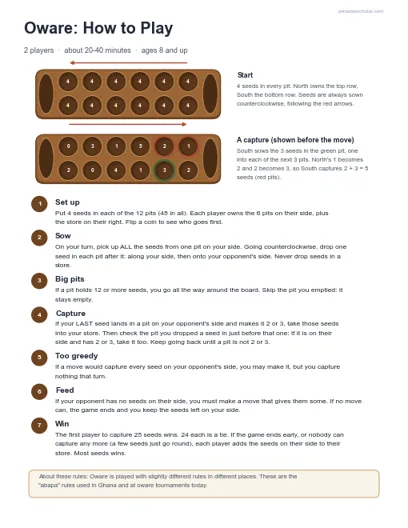
About these rules: Oware is played with slightly different rules in different places. These are the "abapa" rules used in Ghana and at oware tournaments today.
Oware is a seed-sowing game from West Africa. It is played most of all in Ghana, where the Akan people have played it for hundreds of years. It belongs to the mancala family, a group of hundreds of games played across Africa and beyond. The word mancala comes from an Arabic word that means "to move."
An Akan story explains the name. A man and a woman loved playing oware so much that they could not stop, so they got married and kept on playing. In the Twi language, oware is often said to mean "he (or she) marries."
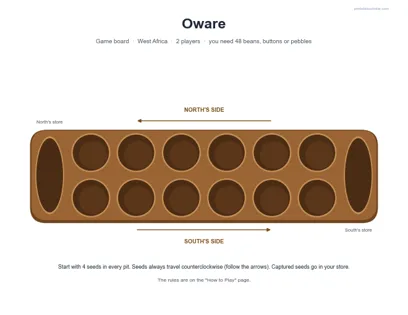
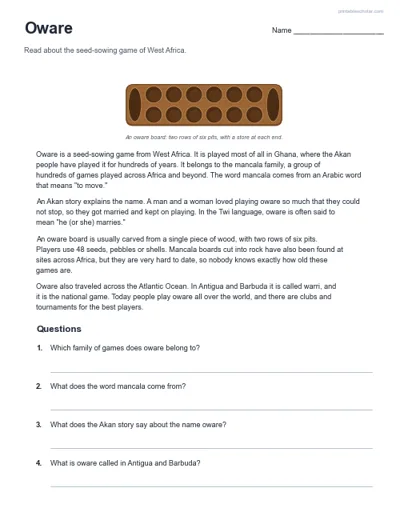
An oware board is usually carved from a single piece of wood, with two rows of six pits. Players use 48 seeds, pebbles or shells. Mancala boards cut into rock have also been found at sites across Africa, but they are very hard to date, so nobody knows exactly how old these games are.
Oware also traveled across the Atlantic Ocean. In Antigua and Barbuda it is called warri, and it is the national game. Today people play oware all over the world, and there are clubs and tournaments for the best players.
Teaching West African Empires? The game fits right into a history unit: play it on the day you teach the civilization, then hand out the reading.
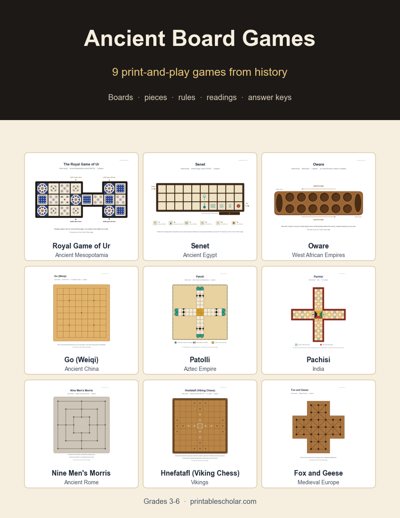
Royal Game of Ur, Senet, Oware, Go, Patolli, Pachisi, Nine Men's Morris, Hnefatafl, Fox and Geese: one print-ready PDF for a whole history year.
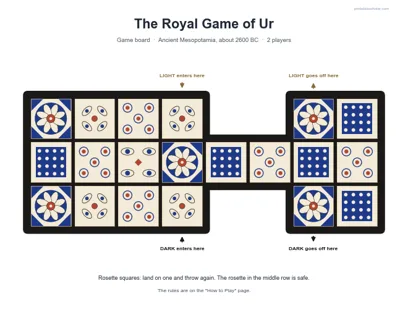 Royal Game of UrAncient Mesopotamia, about 2600 BC · 2 players
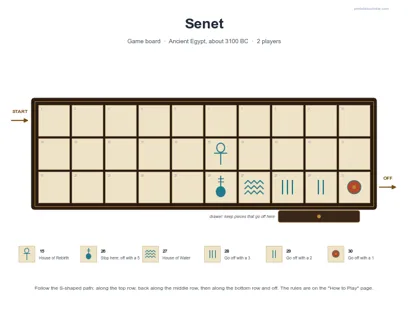 SenetAncient Egypt, about 3100 BC · 2 players
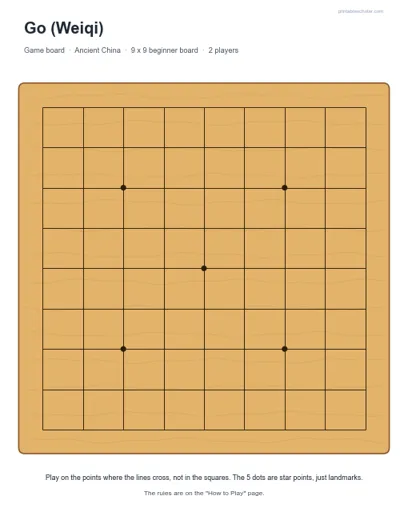 Go (Weiqi)Ancient China, first written mention 548 BC · 2 players
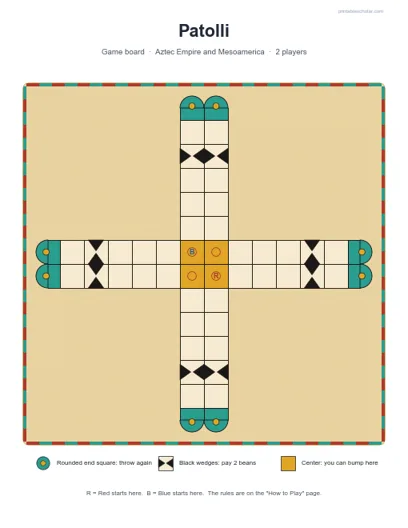 PatolliAztec Empire, played for over 1,000 years, to the 1500s · 2 players
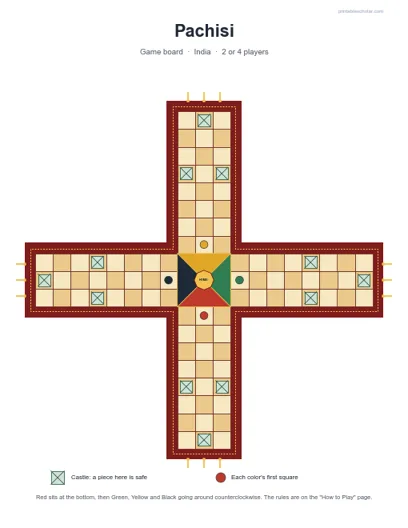 PachisiIndia, known from the 1500s (Mughal India) · 2 or 4 players
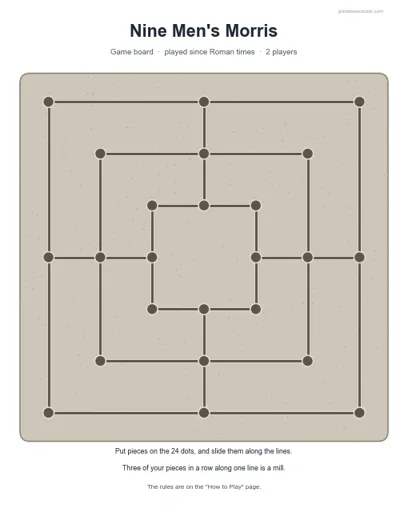 Nine Men's MorrisAncient Rome, about 2,000 years old · 2 players
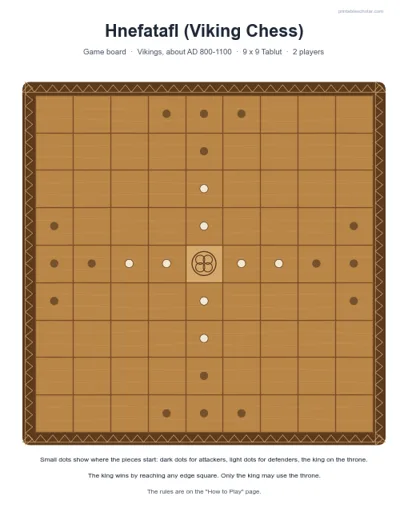 Hnefatafl (Viking Chess)Vikings, about AD 800-1100 · 2 players
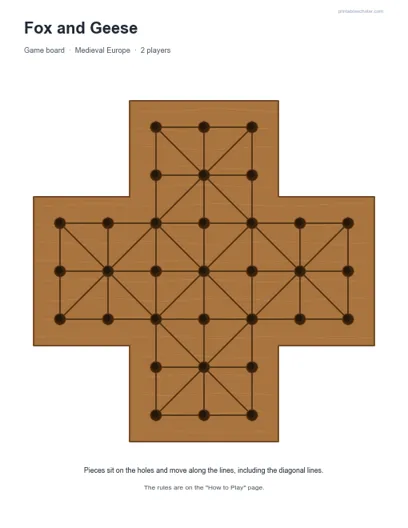 Fox and GeeseMedieval Europe, known from the 1300s · 2 players