Printable Scholar
How to Play Fox and Geese
Fox and Geese is the old European hunting game: one fox against a flock of 13 geese on a cross-shaped board. Learn how to play Fox and Geese with a printable board, pieces and rules.
2 players · about 15 minutes · ages 6 and up. Medieval Europe, known from the 1300s.
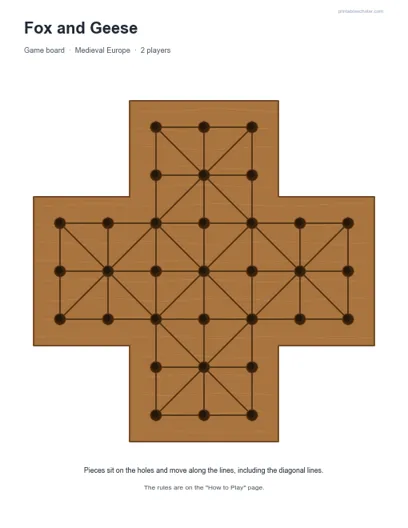
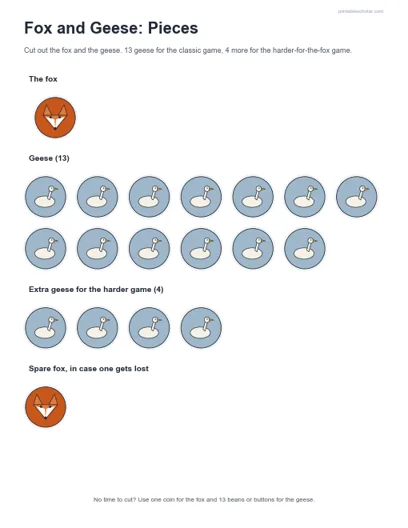
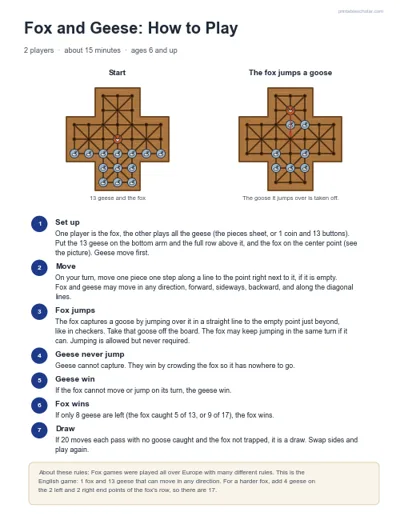
About these rules: Fox games were played all over Europe with many different rules. This is the English game: 1 fox and 13 geese that can move in any direction. For a harder fox, add 4 geese on the 2 left and 2 right end points of the fox's row, so there are 17.
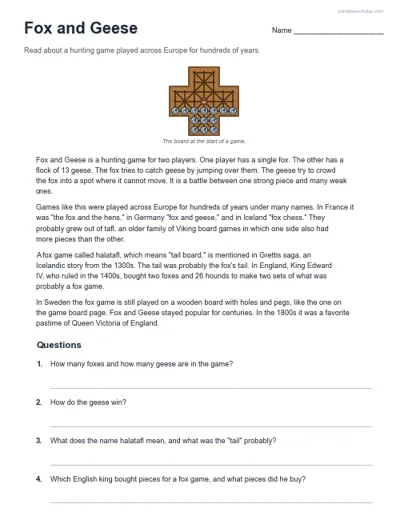
Fox and Geese is a hunting game for two players. One player has a single fox. The other has a flock of 13 geese. The fox tries to catch geese by jumping over them. The geese try to crowd the fox into a spot where it cannot move. It is a battle between one strong piece and many weak ones.
Games like this were played across Europe for hundreds of years under many names. In France it was "the fox and the hens," in Germany "fox and geese," and in Iceland "fox chess." They probably grew out of tafl, an older family of Viking board games in which one side also had more pieces than the other.
A fox game called halatafl, which means "tail board," is mentioned in Grettis saga, an Icelandic story from the 1300s. The tail was probably the fox's tail. In England, King Edward IV, who ruled in the 1400s, bought two foxes and 26 hounds to make two sets of what was probably a fox game.
In Sweden the fox game is still played on a wooden board with holes and pegs, like the one on the game board page. Fox and Geese stayed popular for centuries. In the 1800s it was a favorite pastime of Queen Victoria of England.
Teaching Medieval Europe? The game fits right into a history unit: play it on the day you teach the civilization, then hand out the reading.
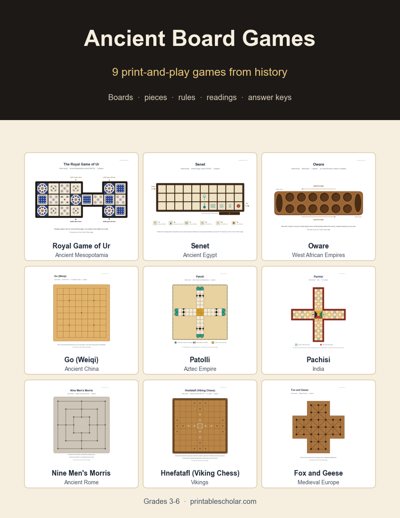
Royal Game of Ur, Senet, Oware, Go, Patolli, Pachisi, Nine Men's Morris, Hnefatafl, Fox and Geese: one print-ready PDF for a whole history year.
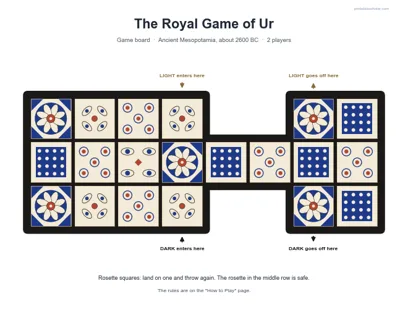 Royal Game of UrAncient Mesopotamia, about 2600 BC · 2 players
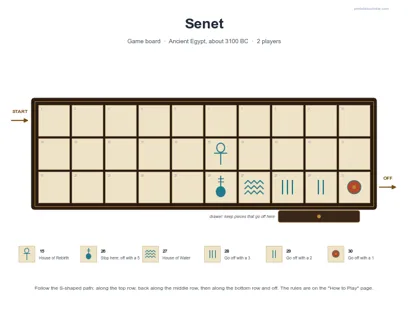 SenetAncient Egypt, about 3100 BC · 2 players
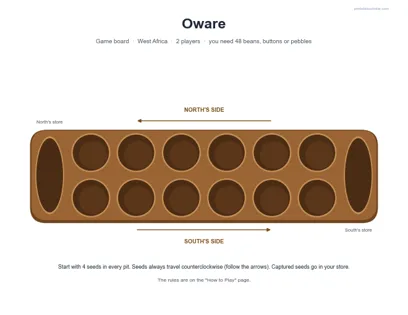 OwareWest African Empires, played for hundreds of years · 2 players
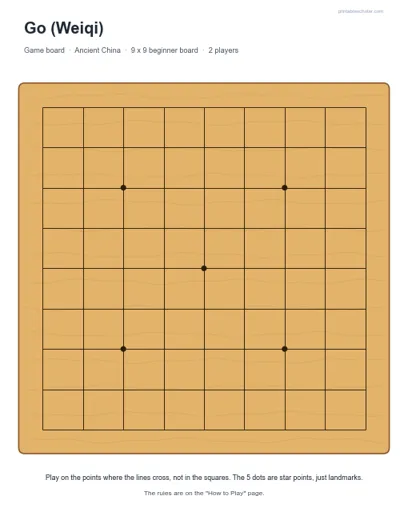 Go (Weiqi)Ancient China, first written mention 548 BC · 2 players
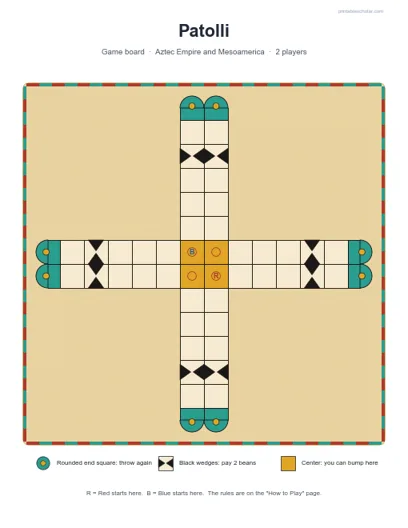 PatolliAztec Empire, played for over 1,000 years, to the 1500s · 2 players
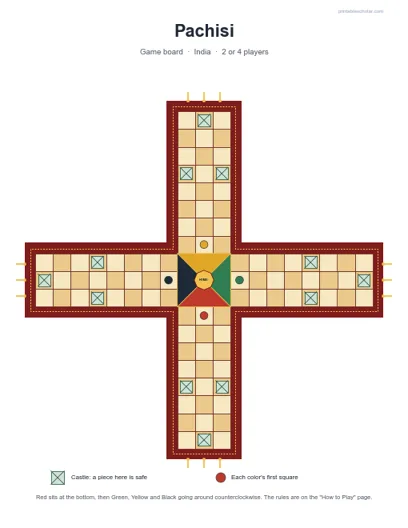 PachisiIndia, known from the 1500s (Mughal India) · 2 or 4 players
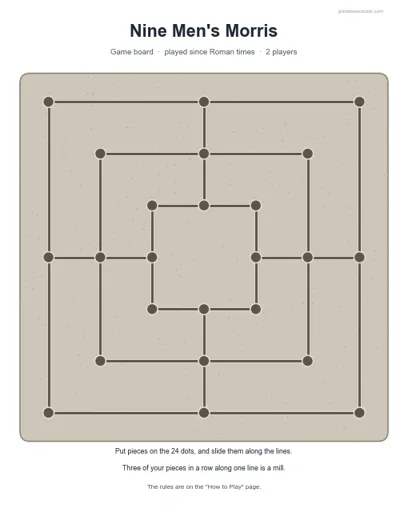 Nine Men's MorrisAncient Rome, about 2,000 years old · 2 players
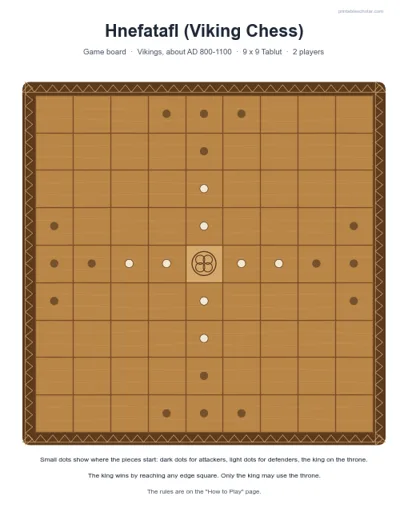 Hnefatafl (Viking Chess)Vikings, about AD 800-1100 · 2 players